
Trump’s New Science Panel Is Stuffed with High-Tech Billionaires
President Donald Trump announced a new President’s Council of Advisors on Science and Technology (PCAST) dominated by high‑tech billionaires and AI specialists, naming 13 members with only one academic scientist. The roster includes Larry Ellison, Mark Zuckerberg, Jensen Huang, Lisa Su, Sergey Brin and Michael Dell, while women are limited to Lisa Su and Safra Catz. Compared with the Biden administration’s PCAST, which featured many National Academy members and 14 women, the new panel reflects a stark shift toward industry leadership. The White House says the council will focus on emerging technologies and workforce implications.

Building Superconducting and Neutral Atom Quantum Computers
Google Quantum AI announced the launch of a neutral‑atom quantum computing program to complement its decade‑long superconducting qubit effort. While superconducting chips have demonstrated millions of gate cycles and aim for tens of thousands of qubits, neutral‑atom arrays already scale...

Inside DOE’s Genesis Mission to Power AI-Driven Science
The Department of Energy’s Genesis Mission is creating an integrated ecosystem that ties together supercomputers, artificial‑intelligence platforms and emerging quantum technologies across its 17 national laboratories. Argonne National Laboratory, leveraging its multidisciplinary CELS Directorate, is positioned to accelerate discovery through...

Silicon Quantum Computing Receives $20 Million NRF Boost
Silicon Quantum Computing (SQC) secured a ~13 million USD investment from Australia’s National Reconstruction Fund to accelerate production of its silicon‑based quantum chips and the Watermelon quantum‑machine‑learning platform. The SAFE‑note funding follows a $50 million USD Series A round in 2023 and aims to scale...

New Supercool Alloy Could Take the Heat Off Helium-3
Chinese researchers have created a rare‑earth alloy, EuCo₂Al₉, that cools to 106 millikelvin using adiabatic demagnetization refrigeration, eliminating the need for scarce helium‑3. The solid‑state material combines ultra‑low temperature performance with high thermal conductivity, enabling compact, moving‑part‑free cooling modules. Laboratory tests...

Every Quantum Strategy Needs Solid Data Behind It
The article stresses that quantum‑focused strategies must be anchored in comprehensive, up‑to‑date data rather than intuition. It highlights the risks of “guess‑work” approaches, such as missed market shifts, supply‑chain shortages, and potential "quantum winter" during economic downturns. Global Quantum Intelligence...

Dell Technologies Integrates Quantum-Ready Security and AI Resilience Across Portfolio
Dell Technologies announced a portfolio‑wide security upgrade that embeds quantum‑resistant cryptography into firmware and BIOS across its commercial PCs and data‑center products. The company also introduced AI‑driven recovery tools in its PowerProtect line, delivering up to twice the backup speed...

Conductor Quantum Launches CODA MCP to Integrate Quantum Tools with AI Agents
Conductor Quantum unveiled CODA MCP, a Model Context Protocol server that lets AI agents such as Claude Desktop and VS Code treat quantum computers as native tools. The platform aggregates access to more than 1,000 qubits across IBM, AQT, IQM,...

IBM Creates New Blueprint for Quantum-Centric Supercomputing
IBM unveiled the industry’s first quantum‑centric supercomputing reference architecture, detailing how quantum processors (QPUs) can be tightly coupled with CPUs, GPUs, high‑speed networking, and shared storage. The blueprint supports on‑premises, research‑center, and cloud environments, enabling coordinated quantum‑classical workflows for scientific...

IQC Showcases Research and Innovation During Defence Minister Visit
Canada’s Minister of National Defence, David J. McGuinty, toured the Institute for Quantum Computing’s Quantum‑Nano Centre at the University of Waterloo, underscoring a federal commitment to fund quantum technologies for defence. The visit highlighted direct government financing aimed at accelerating research,...

Issue 60 - Quantum of Promise
Quantum computing is moving from theory toward deployment as research labs and governments receive their first shipped systems. Issue 60 of DCD Magazine examines the pivotal moment in quantum chip design, where the industry is split between building dedicated superconducting processors...

You Can Now Buy a DIY Quantum Computer
Barcelona‑based Qilimanjaro has unveiled EduQit, a DIY quantum‑computer kit that bundles a superconducting qubit chip, a dilution refrigerator, and the necessary microwave control electronics in a flat‑pack format. The company markets the system as a relatively affordable entry point for...

IBM Offers Special Promotion to Open Plan Users
IBM announced a one‑time promotion for its Open Plan quantum‑cloud users, granting 180 minutes of free runtime over the next 12 months. Eligibility is limited to users who have consumed at least 20 minutes in the prior year, and the...

Post-Quantum Web Could Be Safer, Faster
The IETF’s draft Merkle tree certificates (MTCs) promise a quantum‑resistant web that is both smaller and faster than existing post‑quantum solutions. By compressing certificate data to roughly 840 bytes, MTCs cut bandwidth and latency compared with ML‑DSA signatures that can exceed...
Qilimanjaro Announces SpeQtrum QaaS for Tri-Modal Quantum Computing
Qilimanjaro Quantum Tech unveiled SpeQtrum QaaS, a cloud‑based platform that grants remote access to a Barcelona data centre housing digital QPUs, analog fluxonium QPUs, and classical HPC accelerators. The tri‑modal architecture blends digital gate‑based processing with continuous‑dynamics analog computation to...

Alice & Bob Reduces Quantum Error Correction Decoding Time via NVIDIA CUDA-Q Integration
Alice & Bob announced a 9.25× speedup in quantum error‑correction decoding by moving simulations from a 16‑core AMD Ryzen CPU to an NVIDIA GH200 Grace Hopper GPU using the CUDA‑Q platform. The runtime for 100,000 syndrome‑decoding shots fell from 18 hours 2 minutes...
U.S. Department of Energy (DOE) Announces “Genesis Mission” Which Includes a Goal to Accelerate Quantum Advantage via AI
The U.S. Department of Energy launched the Genesis Mission, a $293.76 million initiative spanning thirty challenge areas to fuse artificial intelligence with quantum information science. Challenges 7 and 8 specifically aim to use AI to discover provable quantum‑advantage algorithms and to enhance the...
Technology Innovation Institute Integrates Quantum Cloud with NVIDIA CUDA-Q and Scales Annealing Simulations
The Technology Innovation Institute (TII) has linked its Quantum Computing Cloud Platform with NVIDIA’s CUDA‑Q environment, giving researchers worldwide direct access to TII’s quantum processors and simulators via a unified Python or C++ interface. The integration delivers a “write‑once, run‑anywhere”...

Pasqal and Kipu Quantum Demonstrate Analog Counterdiabatic Optimization on 100 Qubits
Pasqal and Kipu Quantum have experimentally realized Analog Counterdiabatic Quantum Computing (ACQC) on neutral‑atom platforms, scaling the protocol to 100 qubits to solve the Maximum Independent Set (MIS) problem. By analytically deriving counterdiabatic corrections for Rabi frequency, detuning and phase,...
Building Trust in the Future of Quantum Computing
Researchers at Japan Advanced Institute of Science and Technology (JAIST) have launched a formal‑methods program to make quantum computers trustworthy. Their Laboratory on Formal Methods for Quantum Computing has introduced Concurrent Dynamic Quantum Logic (CDQL), a framework that can model...

Atom Computing Integrates NVQLink Into Quantum Systems
Atom Computing announced that it has successfully integrated NVIDIA’s NVQLink, a low‑latency, high‑bandwidth communication interface, into its proprietary quantum control‑systems stack. The integration delivers ultra‑low latency pathways that accelerate logical‑qubit cycle speeds and support scaling to thousands of qubits. Validation...

Scientists Used 7,000 GPUs to Simulate a Tiny Quantum Chip in Extreme Detail
Berkeley Lab researchers used the ARTEMIS exascale tool on the Perlmutter supercomputer, employing nearly 7,000 NVIDIA GPUs to simulate a 10 mm quantum chip with 11 billion grid cells. The full‑wave, time‑domain electromagnetic model captured material properties, wiring, and resonator geometry, allowing...
Mathematical Foundations for Noise-Tolerant Quantum Catalysts in Real-World Environments
An international team led by Prof. Seok Hyung Lie mathematically proved that most existing quantum catalyst schemes are highly sensitive to even minimal environmental noise, causing degradation and limiting reusability. They introduced catalytic channels, a quantum operation that restores the...

Perovskite Crystals Can Host Qubits, Challenging Long-Held Assumptions
Researchers at Linköping University have shown that perovskite crystals can host spin qubits, a finding published in Nature Communications. By doping halide double perovskites with chromium and synthesizing them at 480 °C, the team created qubits that operate at temperatures far...
The New Threat IBM's Quantum Computing Research Poses to D-Wave
IBM introduced a quantum‑centric hybrid supercomputing architecture in March 2025, blending qubits with classical CPUs and GPUs to accelerate scientific simulations. The model, already tested at the Cleveland Clinic and RIKEN, promises practical enterprise integration. Financially, IBM posted a record...

It’s Time to Get Serious About Post-Quantum Security. Here’s Where to Start.
Quantum computers are nearing practical use, threatening current encryption like RSA and ECC, with a potential "Q‑Day" as early as 2029. The economic fallout of a successful quantum attack could exceed $3 trillion, prompting CISOs and CTOs to prioritize post‑quantum cryptography...

India Advances Quantum Research and Education Across Academia
India approved quantum teaching facilities and laboratories in 23 academic institutions under the National Quantum Mission, with a further 100 institutions under consideration. The programme aims to boost research capacity, provide specialised training in quantum technologies, and foster international collaborations....
IQM and Zurich Instruments Launch Real-Time Quantum Error Correction Demonstrator with NVIDIA NVQLink
IQM Quantum Computers, Zurich Instruments and NVIDIA announced a joint effort to build a real‑time quantum error correction (QEC) demonstrator. The system merges IQM’s 20‑qubit superconducting processor, Zurich’s ZQCS quantum control hardware, and NVIDIA’s NVQLink GPU‑accelerated link. By enabling closed‑loop,...

Telus and Xanadu Sign MOU on Developing Quantum Data Centre Infrastructure
Telus and Xanadu Quantum Technologies have signed a memorandum of understanding to develop a sovereign quantum data centre that blends photonic quantum processors with high‑performance computing. The partnership will leverage Telus’s PureFibre network and secure, Canadian‑controlled infrastructure alongside Xanadu’s expertise...
Reeves to Pledge £1bn for British Quantum Computers
British entrepreneur Sir Jim Reeves announced a £1 billion commitment to accelerate quantum computing in the United Kingdom. The pledge will fund new quantum hardware facilities, software platforms, and a talent pipeline across leading research universities. The initiative aligns with the...

Why Universities Should Anchor State Quantum Computing Initiatives
Universities are urged to become anchors of state quantum computing initiatives, mirroring their early role in the AI boom. As quantum hardware moves from research labs to operational systems, federal agencies and private firms are investing heavily. The article argues...

A Strange New Quantum State Appears when Atoms Get “Frustrated”
Researchers at UC Santa Barbara have discovered a new quantum state that emerges when magnetic and bond frustration coexist in a triangular‑lattice antiferromagnet. The interleaved frustration creates a quantum‑disordered ground state capable of long‑range spin entanglement. By applying strain or...

Quantum Computing Weekly Round-Up: Week Ending March 14, 2026
The U.S. Department of Energy announced a $37 million initiative to accelerate quantum algorithm research, underscoring federal commitment to the field. Finnish quantum‑hardware maker IQM delivered its latest system to Aalto University, marking a significant European deployment. Quantinuum opened a new...
Quantinuum Implements High-Rate Iceberg Codes on Helios Processor
Quantinuum deployed high‑rate iceberg quantum error‑detecting and concatenated error‑correcting codes on its 98‑qubit Helios trapped‑ion processor. The implementation produced 94 logical qubits for error detection and 48 logical qubits for full error correction, achieving a near 2:1 physical‑to‑logical ratio for correction...
Shor, QLDPC Codes, and the Compression of RSA Resource Estimates (Part II)
The latest "Pinnacle Architecture" analysis shows that factoring RSA keys may require only about 100,000 physical qubits, dramatically lowering the hardware threshold for a cryptographically relevant quantum computer. While the quantum breakthrough narrows the theoretical gap, many critical‑infrastructure systems still...
Polynomially Efficient Quantum Enabled Variational Monte Carlo for Training Neural-Network Quantum States for Physico-Chemical Applications
Researchers propose a polynomially efficient, quantum‑enabled variational Monte Carlo (VMC) method to train neural‑network quantum states (NQS). The algorithm scales linearly with circuit width and depth, requires only constant measurements, and avoids mid‑circuit reads, while simultaneously handling amplitude and phase...

Quantum Computers Must Overcome Major Technical Hurdles Before Tackling Quantum Chemistry Problems
A new Physical Review B feasibility study finds that both the variational quantum eigensolver (VQE) and quantum phase estimation (QPE) algorithms face prohibitive technical barriers for quantum chemistry. VQE demands error rates far below today’s noisy devices and can require decades...

SEALSQ and Parrot Expand Partnership to Secure Drones with PQC
SEALSQ Corp and Parrot SA are expanding their partnership to embed post‑quantum cryptography (PQC) into Parrot’s next‑generation professional drones. The collaboration will integrate NIST‑approved CRYSTALS‑Kyber and CRYSTALS‑Dilithium algorithms at the semiconductor level, building on existing SEALSQ secure elements in the...

Institut Quantique Joins Qblox Excellence Center Program to Advance Distributed Quantum Computing
The Institut quantique at Université de Sherbrooke has become a Qblox Excellence Center, integrating Qblox’s modular control electronics into its Quantum FabLab. The partnership targets distributed heterogeneous quantum computing, aiming to build scalable, fault‑tolerant architectures across superconducting, spin and hybrid...

PsiQuantum and National Cancer Center Japan Partner on Quantum Computing
PsiQuantum and Japan’s National Cancer Center have signed a research agreement to explore utility‑scale quantum computing for oncology drug discovery. The collaboration will focus on developing fault‑tolerant quantum algorithms and deploying PsiQuantum’s Construct platform across the healthcare value chain. Additional...

PsiQuantum and National Cancer Center Japan Partner on Quantum Computing
PsiQuantum has signed a research agreement with Japan's National Cancer Center to explore utility‑scale quantum computing for oncology drug discovery. The partnership will focus on developing fault‑tolerant quantum algorithms and clinically relevant applications using PsiQuantum's Construct platform. It also brings...

The Race to Solve the Biggest Problem in Quantum Computing
Quantum computers remain hampered by high error rates that prevent practical use. Recent advances in quantum error correction—particularly the development of logical qubits that spread information across entangled groups—are narrowing the gap to fault‑tolerant operation. Researchers have demonstrated surface‑code implementations...

Local Droplet Etching Yields More Symmetric Quantum Dots for Integrated Photonics
Researchers at Johannes Kepler University and the State University of Campinas have demonstrated a local droplet etching (LDE) technique to fabricate InGaAs quantum dots embedded in AlGaAs with unprecedented symmetry and low surface density. The dots exhibit radiative lifetimes around...
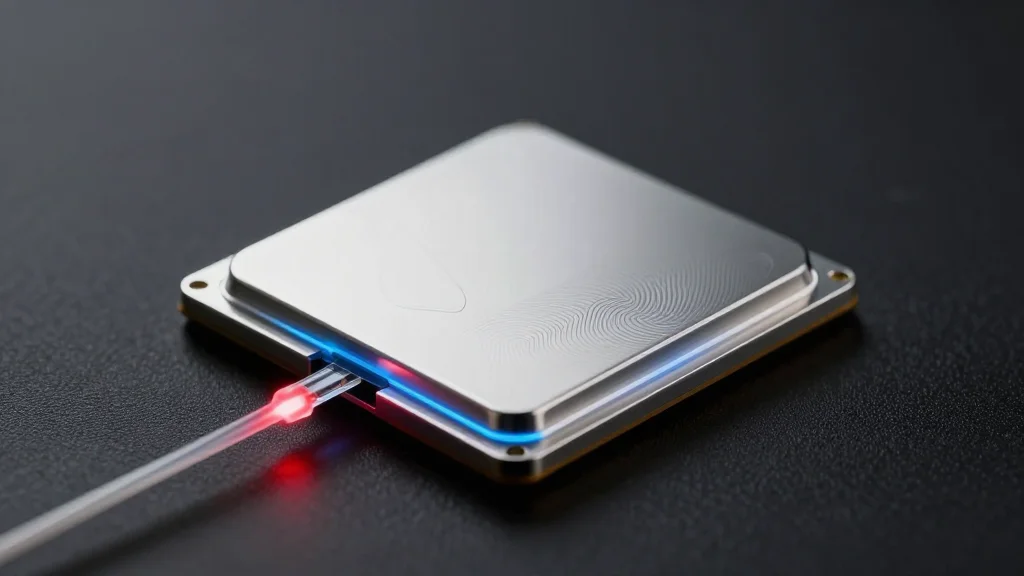
QphoX Launches Quantum Transducer for Distributed Long-Distance Networking
QphoX has released a commercial Quantum Transducer that converts microwave‑based qubit states into optical photons for transmission over standard fiber at room temperature. The device leverages photonic integration, MEMS and superconducting nanofabrication to achieve high‑fidelity, low‑noise state conversion. IBM will...

Four Months Into Its Comeback, Zapata Stakes Its Claim In Quantum Software
Zapata Computing, once a leading quantum‑software startup, collapsed after a mis‑guided SPAC pivot and filed for bankruptcy in late 2024. In September 2025 the company re‑emerged as Zapata Quantum, resolving over $18 million in debt and attracting fresh capital while preserving...

IBM, Signal, and Threema Partner to Fortify Messaging Against Quantum Threats
IBM researchers have teamed up with Signal and Threema to embed post‑quantum cryptography into their messaging platforms. The partnership pivots from classical elliptic‑curve schemes to NIST‑2024 PQC standards, tackling both content and metadata protection. IBM proposes a decentralized gatekeeper model...
RIKEN and IBM Demonstrate Quantum-Centric Supercomputing at Scale
RIKEN and IBM have executed a closed‑loop hybrid workflow that couples the full capacity of Japan’s Fugaku supercomputer with an on‑premises IBM Quantum Heron processor. The integration enabled the largest and most accurate quantum chemistry simulation to date, targeting a...

JIJ Europe Collaborates with ORCA Computing, Bp, and NQCC on Energy Optimization
JIJ Europe Ltd., together with ORCA Computing, bp and the National Quantum Computing Centre, has launched a SparQ‑funded project to validate a quantum‑classical hybrid workflow for the Unit Commitment problem in power generation scheduling. The approach decomposes large mixed‑integer linear...

Xanadu Announces Negotiations Toward Up to CAD $390 Million in Support From the Governments of Canada and Ontario to Advance...
Xanadu Quantum Technologies has entered negotiations with the Canadian and Ontario governments for up to CAD 390 million to fund Project OPTIMISM, a plan to build domestic photonic and semiconductor manufacturing infrastructure. The initiative targets heterogeneous integration, PIC packaging, wafer‑level testing and quantum...

IQM Deploys 20-Qubit Quantum Computer at Aalto University
IQM Quantum Computers has installed its fourth 20‑qubit superconducting system, named Aalto Q20, at Aalto University in Finland. The on‑premises machine follows IQM’s full‑stack model, giving researchers direct control over data and hardware. Aalto University is linking the quantum processor...