
Interview with RFA CEO Indulis Kalnins
In this interview, Rocket Factory Augsburg CEO Prof. Dr. Indulis Kalnins reflects on his first nine months leading a young, international team and outlines the company’s focus on completing the Helix engine development, finalizing the RFA ONE first stage, and preparing the launch site for the upcoming inaugural flight. He reports that the first stage is now being moved to the launch site, with engine acceptance tests ongoing in Sweden and the second stage slated for shipment to SaxaVord soon. The next milestones are launch‑pad commissioning, vehicle integration, and hot‑fire testing, while longer‑term plans include expanding launch services and technical upgrades under the European Launcher Challenge.

ESA Is Preparing to Announce Aeolus-2 Prime Contractor
The European Space Agency has cleared a €70 million award to launch Phase B2 of its Aeolus‑2 weather satellite programme and is set to announce the prime contractor. Aeolus‑2 will consist of two 2.5‑tonne satellites equipped with a Doppler wind lidar, delivering...

OHB Establishes European Moonport Company
German space contractor OHB announced the launch of Luna Europa – the European Moonport Company – to centralise its lunar‑related activities. The subsidiary, founded in May 2025 and disclosed on 4 February 2026, will coordinate work on ESA’s Argonaut lander, the ESPRIT...

Workforce Directive: Restoring NASA’s Core Competencies
NASA Administrator Jared Isaacman issued a Workforce Directive aimed at restoring the agency’s core engineering and operational competencies by reducing reliance on contractors. The plan calls for 30‑day assessments of outsourced work and a 60‑day transition strategy to convert key...

The Exploration Company Completes Nyx Splashdown Tests
The Exploration Company announced the completion of a controlled splashdown test campaign for a 1:4‑scale mockup of its Nyx reusable capsule. Conducted at the National Research Council’s Institute of Marine Engineering in Rome, the program executed 20 drops between 13...

Lufthansa Group to Retain Current IFC Until Starlink Pivot Is Complete
Lufthansa Group announced a fleet‑wide shift to SpaceX Starlink, planning rollout from late 2026 to 2029, while retaining its existing inflight connectivity (IFC) systems—Viasat’s European Aviation Network (EAN) on narrow‑bodies and Panasonic’s multi‑orbit solution on some A330s—until Starlink is fully...
Press Release: Panasonic to Explore LEO IFC Opportunities with Spacesail
Panasonic Avionics announced an MOU with Shanghai Spacesail Technologies to integrate Spacesail’s Low Earth Orbit (LEO) satellite constellation into its in‑flight connectivity (IFEC) network, enhancing global broadband coverage for airlines. The partnership aims to deliver higher speeds, lower latency, and...

Isar Aerospace to Expand Testing Facilities as It Prepares for Next Spectrum Flight
Isar Aerospace announced a purpose‑built acceptance test facility at Sweden’s Esrange Space Center, boosting its capacity to test over 30 Aquila engines per month and conduct full stage acceptance tests. The expansion comes as the company readies the second flight...

CNES to Fill Commercial Launch Facility Vacancy Left by MaiaSpace
The French space agency CNES announced a fresh call for launch operators to occupy the vacancy left by MaiaSpace at its new multi‑user ELM (Ensemble de Lancement Multilanceurs) facility in French Guiana. The site, built on the former Diamant launch...

Tiny Titanium Pillars Move Hydrogen-Powered Flight Closer to Reality
Researchers at the University of Birmingham and Loughborough University have used digital design and laser micromachining to create ultrathin titanium flow distributors for polymer electrolyte fuel cells. The optimized micropillar structures achieved a record peak power density of 1.62 W cm⁻², translating...

NASA Needs To Leverage Its Cool Tech Better
NASA’s Perseverance rover completed the first drive on another planet that was planned entirely by artificial intelligence, showcasing a breakthrough in autonomous space navigation. The mission leveraged Anthropic’s Claude AI models in collaboration with JPL, aligning with the White House...

Small Bodies Assessment Group: 34th SBAG Meeting Draft Findings
The Small Bodies Assessment Group released draft findings from its 34th meeting, urging NASA to preserve a regular cadence of planetary missions to sustain the expert workforce and avoid destabilizing the exploration portfolio. It calls for tighter coordination of ground‑based,...
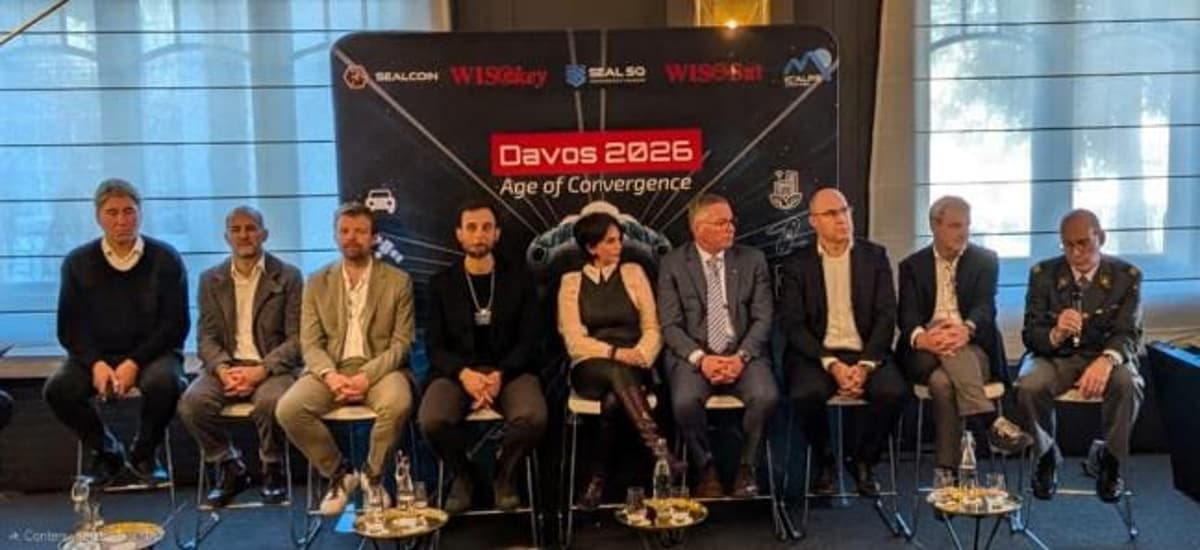
WISeKey Advances Post-Quantum Space Security with 2026 Satellite PoCs
WISeKey International announced proof‑of‑concept testing of post‑quantum cryptography on satellites in late 2025, with a fully operational quantum‑resistant satellite slated for launch in the second quarter of 2026. The initiative combines hybrid Triple Key Encapsulation Mechanisms that blend PQC algorithms with...

EU Awards Three Contracts for Mobile Responsive Launch System Studies
The European Commission has awarded three parallel studies to examine a mobile responsive launch system capable of rapid satellite deployment from non‑permanent ground sites. Consortia led by PwC, GMV and Sirius Space Services will conduct the research over a ten‑month...

The Future of Extraterrestrial Materials Analysis Group (ExMAG)
NASA’s Planetary Science Division announced it will cease formal support for all Analysis and Assessment Groups, including ExMAG, effective May 2026. Despite losing PSD funding, the Extraterrestrial Materials Analysis Group pledges to keep serving as the conduit between the sample‑science...

Reinforcement Learning Achieves 0.9119 Alignment for Satellite-Based Entanglement Sources
Scientists have introduced autonomous optical alignment methods for satellite‑based entanglement sources, comparing a heuristic algorithm with a reinforcement‑learning (RL) approach. The RL agent achieved an AUC‑max of 0.9119, far surpassing the heuristic's 0.7042, and converged within a 60‑minute operational window....

NASA’s Astrobiology Program Is Ignored By NASA Astrobiology Missions
NASA’s Juno spacecraft recently measured the thickness of Europa’s ice shell, data that will inform the upcoming Europa Clipper and ESA’s JUICE missions. The findings highlight Europa’s potential habitability, a core focus of NASA’s three‑decade‑old Astrobiology Program. However, the official...
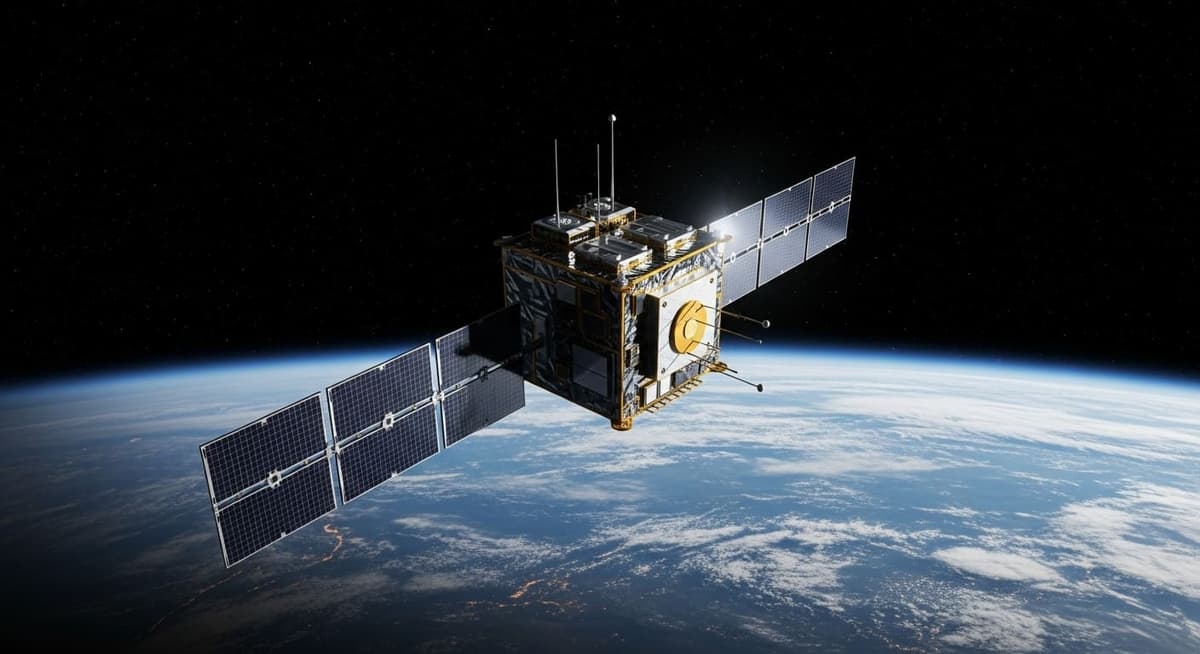
Satellite Quantum-Internet to Reach $1.82B in 2026 with 32.9% CAGR
A new ResearchAndMarkets.com report projects the satellite quantum‑internet market to reach $1.82 billion in 2026, up from $1.37 billion in 2025, representing a 32.9% compound annual growth rate. The market is expected to expand to $5.63 billion by 2030 with a sustained 32.6%...

POLARIS Spaceplanes Wins Contract for Reusable Hypersonic Vehicle
Polaris Spaceplanes has secured a contract from Germany’s Federal Office of Bundeswehr Equipment, Information Technology and In‑Service Support (BAAINBw) to develop and flight‑test a fully reusable, two‑stage hypersonic vehicle dubbed the Hypersonic Test and Experimentation Vehicle (HYTEV). The vehicle, roughly...

Empowering NASA’s Earth Science Fleet
Jon Mikel Walton, former NASA Earth public‑engagement lead, urged Administrator Jared Isaacman on LinkedIn to fully fund and protect NASA’s Earth‑science fleet. The essay stresses the fleet’s unique ability to track climate, water, ice and ecosystem changes, delivering vital data...
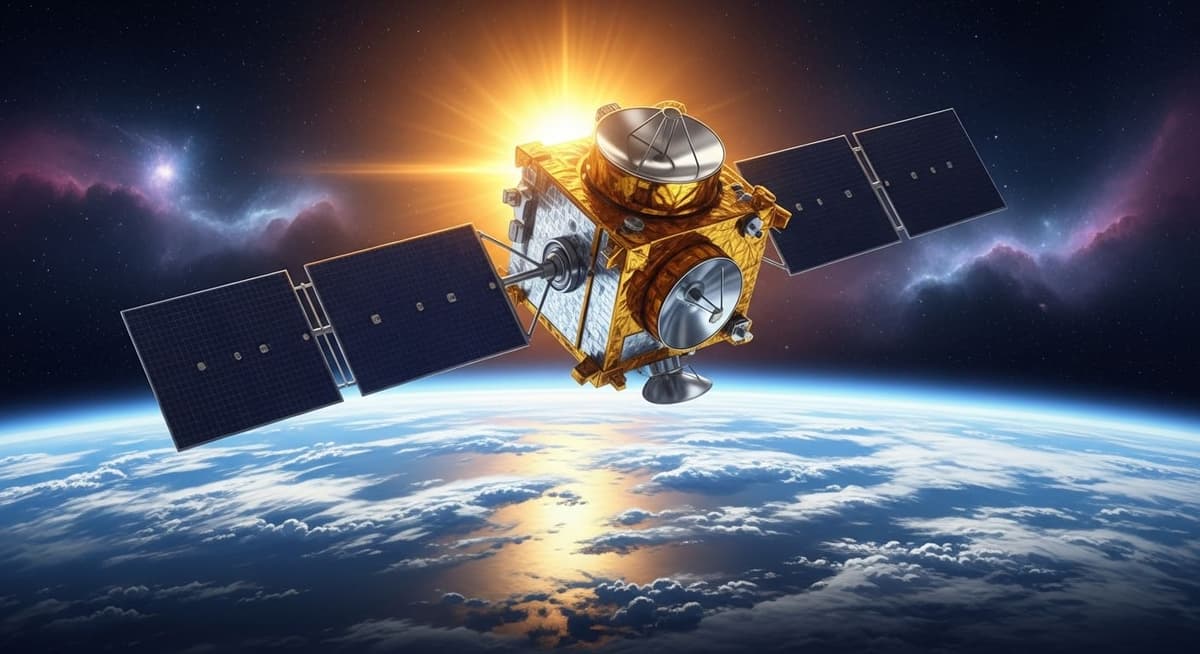
WISeKey Unveils Space-Based Quantum-Resistant Crypto Transactions at Davos 2026
WISeKey International unveiled SEALCOIN, a space‑based, quantum‑resistant crypto platform, at Davos 2026. The system uses the WISeSat low‑Earth‑orbit constellation to generate cryptographic signatures directly onboard satellites, extending blockchain transactions beyond terrestrial networks. Its native QAIT token will fuel machine‑to‑machine value exchange,...

Quantum Neural Networks Achieve Faster Gravitational Wave Data Analysis with 4 Qubits
Researchers evaluated cloud‑based quantum neural networks (QNNs) for LISA’s gravitational‑wave data analysis, testing hardware from IonQ, IQM, Amazon Braket and Microsoft Azure. The QNNs demonstrated markedly faster learning than classical networks, achieving 99% fidelity on a 3‑qubit feature map and...
The Death of the Earth Return Orbiter
The episode examines the abrupt termination of the Mars Sample Return (MSR) program, focusing on ESA’s Earth Return Orbiter (ERO) and the implications of Daniel Neuenschwander’s declaration that the mission will not continue. It delves into the historical context of...

No More Support For NASA SMD Planetary Science Division Analysis and Assessment Groups
NASA’s Planetary Science Division announced it will end formal financial support for the eight Analysis and Assessment Groups (AGs) by the end of April 2026. The AGs, historically funded through a Lunar and Planetary Institute grant, have provided community consensus,...

Current / Former NASA Planetary Science Analysis Groups
NASA’s Planetary Science Division relies on eight community‑driven analysis groups—ExMAG, LEAG, MAPSIT, MEPAG, MExAG, OPAG, SBAG and VEXAG—to gather scientific input for mission planning. These groups operate outside the Federal Advisory Committee Act, providing feedback rather than formal recommendations. Each...

Isaacman Prime Directive: Recognize, Reward, Inspire
NASA Administrator Jared Isaacman issued a Workforce Directive on Jan. 14, 2026 titled “Recognize, Reward, Inspire.” The memo outlines four cultural pillars—duty, mission urgency, ownership, and a recalibrated risk framework—and mandates concrete actions to overhaul recognition, performance evaluation, and reward programs. Within...

Diving Catch To Save U.S. Science
The Senate passed a bipartisan FY 2026 minibus appropriations bill that preserved funding for NASA, the National Science Foundation (NSF) and the National Institute of Standards and Technology (NIST) after the Trump administration proposed drastic cuts. NASA’s budget was set at...

Earth Observation Investments: 2025 Review
Earth observation (EO) venture funding reached a record $2 billion in 2025, up 15% from 2024 and surpassing the 2023 peak. Over 90% of the capital flowed into acquisition and intelligence segments, while processing finally recorded meaningful investment. Late‑stage rounds exploded...

New NASA A.I. Effort For Mars Exploration Ignores The Search For Life (E.g. Astrobiology)
NASA’s Science Mission Directorate announced the Foundational Artificial Intelligence for the Moon and Mars (FAIMM) program, a ROSES‑2025 amendment that funds open‑source foundation models for planetary science. The initiative invites researchers of any background to develop AI applications such as...

Planetary Science Caucus Statement
The U.S. House passed the FY26 Commerce, Justice, Science, Energy and Water Development, and Interior and Environment Appropriations Act with a 397‑28 vote, preserving core NASA funding and rejecting most OMB‑proposed cuts. The bill sustains the NASA Science Mission Directorate...


