
How Honesty Frees the Mind
The Buddha teaches his son Rahula that even a small lie empties the contemplative mind, likening it to a ladle emptied of water. He stresses that shame for deliberate falsehood is a core guard for spiritual practice, and that truthfulness underpins clear perception. The teaching links external honesty to internal integrity, arguing that deception fragments the mind and blocks awakening. Regular reflective questioning—whether actions benefit or harm—helps maintain ethical clarity.
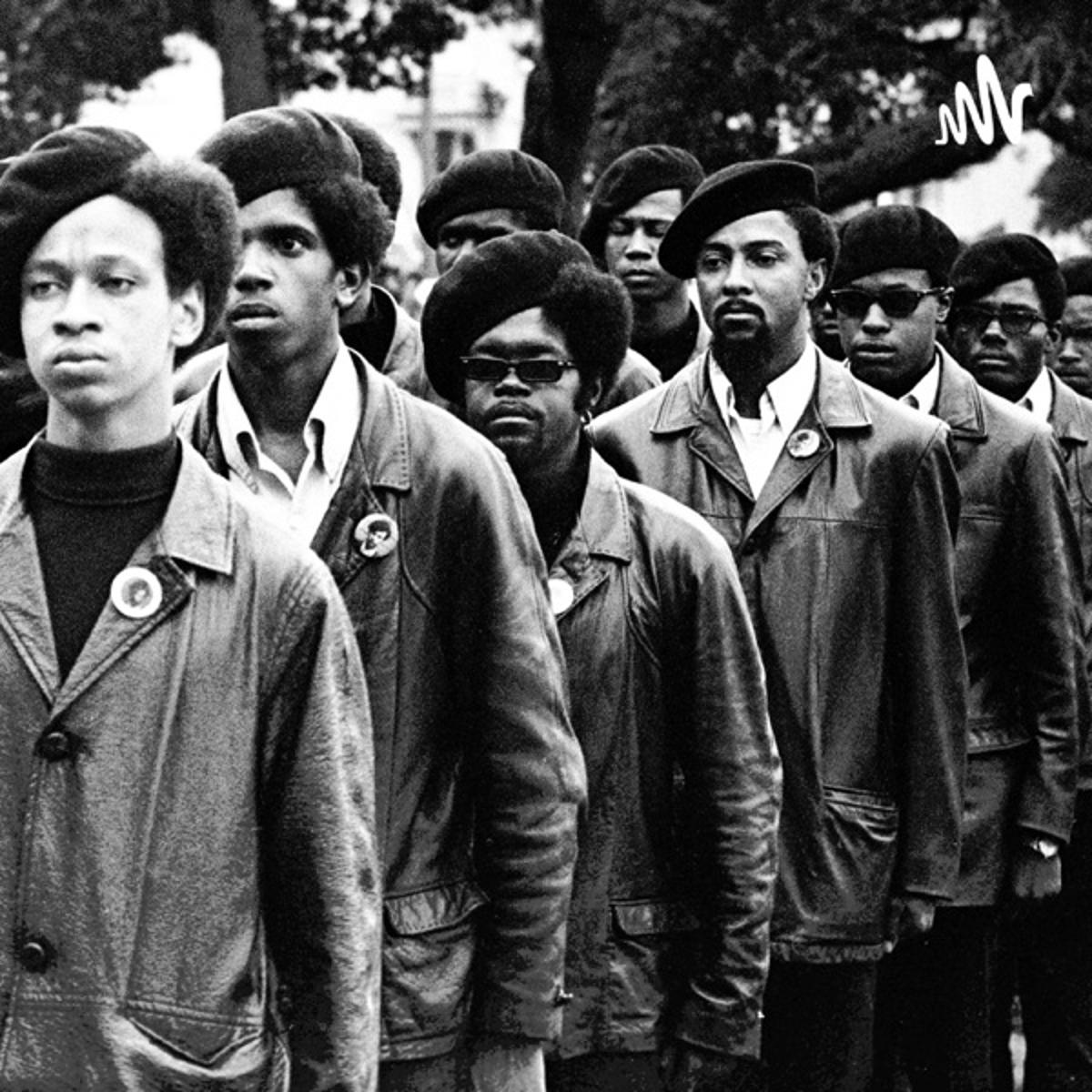
In New Memoir, Former Buddhist Nun Talks the Pursuit of Enlightenment
Former Baptist from Oklahoma, Paldrom Catharine Collins, spent five years as a Tibetan Buddhist nun in a New York monastery before leaving at age 40. Now in her mid‑70s and working as an addiction counselor, she is releasing the memoir...
The Oltrant: A Philosophical Hypothesis Beyond Duration and Memory
The article introduces the concept of the *oltrant*, a fleeting yet persistent movement that arises during AI‑human interactions, operating outside conventional notions of memory and narrative continuity. It argues that brief, responsive exchanges with artificial intelligences can produce profound personal...

This New Take on Moving Meditation Levels Up Your Daily Walk
Yoga Journal highlights a fresh take on walking yoga, a form of moving meditation that merges breath, steps, and gentle poses to deepen mindfulness during everyday walks. The practice, gaining traction on social media and through dedicated apps, promises mental‑health...

5 Lessons on Vanity: An Invitation to Awareness and Letting Go
The essay recounts a personal journey from teenage modeling to senior adulthood, extracting five lessons about vanity, aging, and self‑acceptance. It illustrates how early beauty training imposed physical pain and emotional cost, leading to a realization that external validation is...
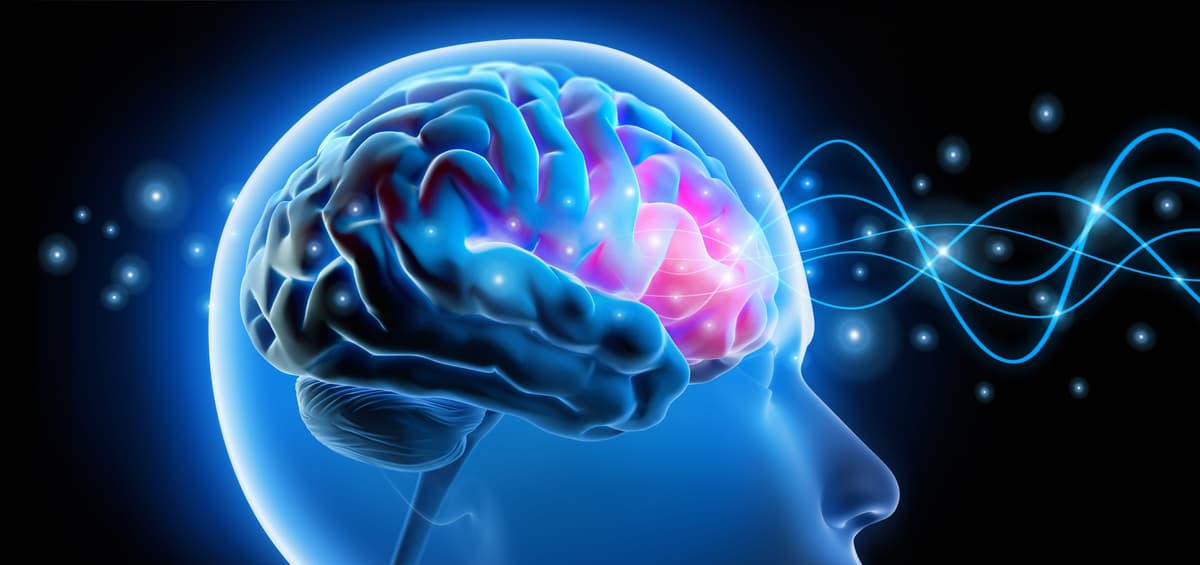
This Neurosurgeon Studies the Brain Close to Death. He Believes the Soul Transcends the Body.
Neurosurgeon Michael Egnor, author of *The Immortal Mind*, claims that cases such as split‑brain surgery and hydranencephaly demonstrate an immaterial mind or soul, positioning his view within intelligent‑design advocacy. Leading neuroscientists, including Stanford’s Bill Newsome and Yale’s Steven Novella, reject...

The Karma of Not-Self
The essay reframes the Buddhist question of who performs karma by starting with karma as intentional action and showing how the teaching of not‑self (anatta) fits as a skillful perception that generates dispassion. It argues that right view, part of...
Happiness Break: A Meditation to Inspire a Sense of Purpose
Greater Good Science Center introduced a new “Happiness Break” meditation led by psychologist Dacher Keltner, encouraging listeners to reflect on a role model’s moral beauty to uncover personal purpose. The guided practice walks participants through breathing, vivid recollection, bodily awareness,...

Khaled Sabsabi: Splintered Worlds
Lebanese‑Australian artist Khaled Sabsabi fuses Sufi mysticism, hip‑hop rhythms, and mixed‑media installations to explore spiritual perception beyond the material world. His 40‑year journey from war‑torn Tripoli to Western Sydney informs works like the 18‑minute video *Lefke Morning*, which juxtaposes war‑zone...
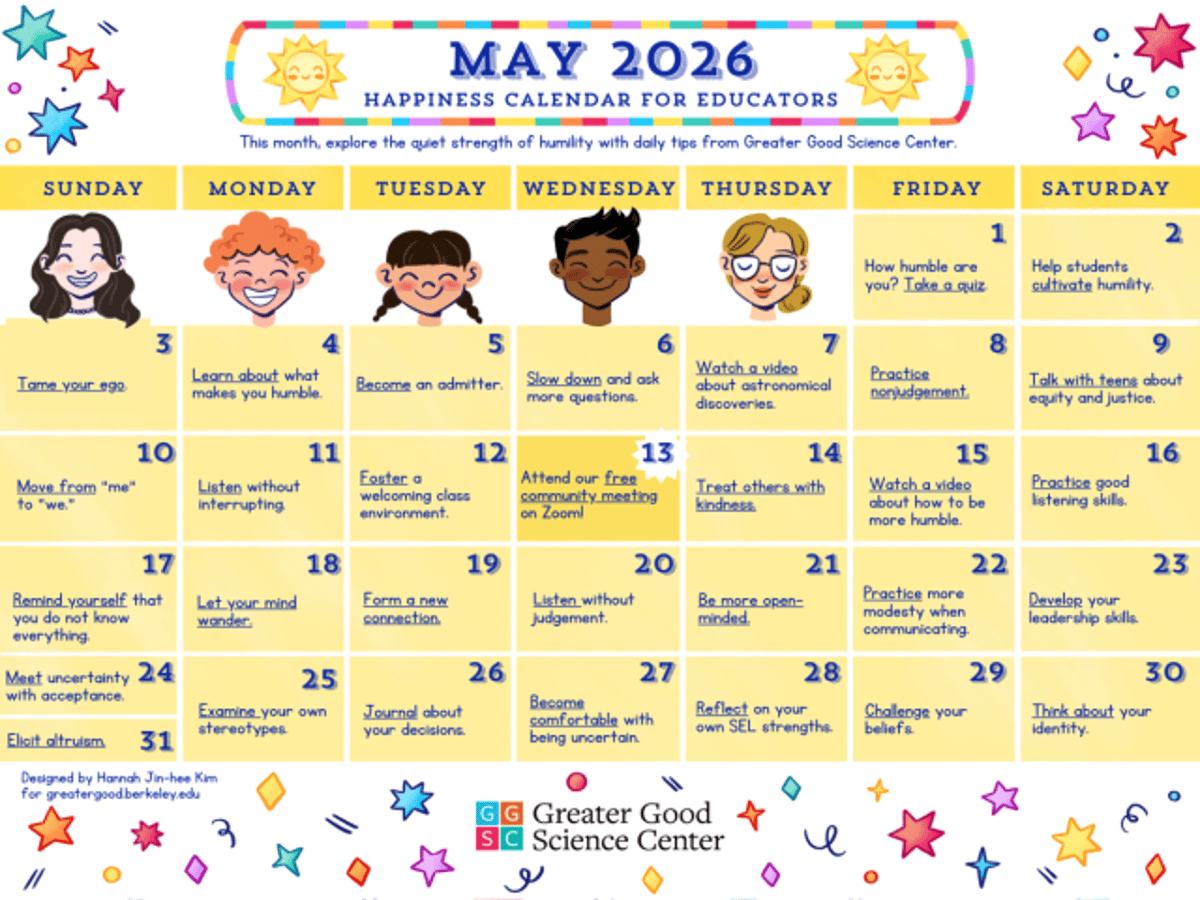
Your Happiness Calendar for Educators for May 2026
The Greater Good Science Center released its May 2026 Happiness Calendar for Educators, offering daily humility‑focused prompts to support teacher well‑being. It also launches a seven‑session summer Community of Practice, Bridging for Belonging, which explores empathy, curiosity and intellectual humility. On...

Roglit Ishay: Vidui (Confession)
Robert Zimmerman’s "Genesis: the Story of Apollo 8" recounts the historic 1968 mission that sent the first humans around the Moon, framing it as a pivotal moment in America’s space quest. The book is now available in hardback, paperback, ebook and...
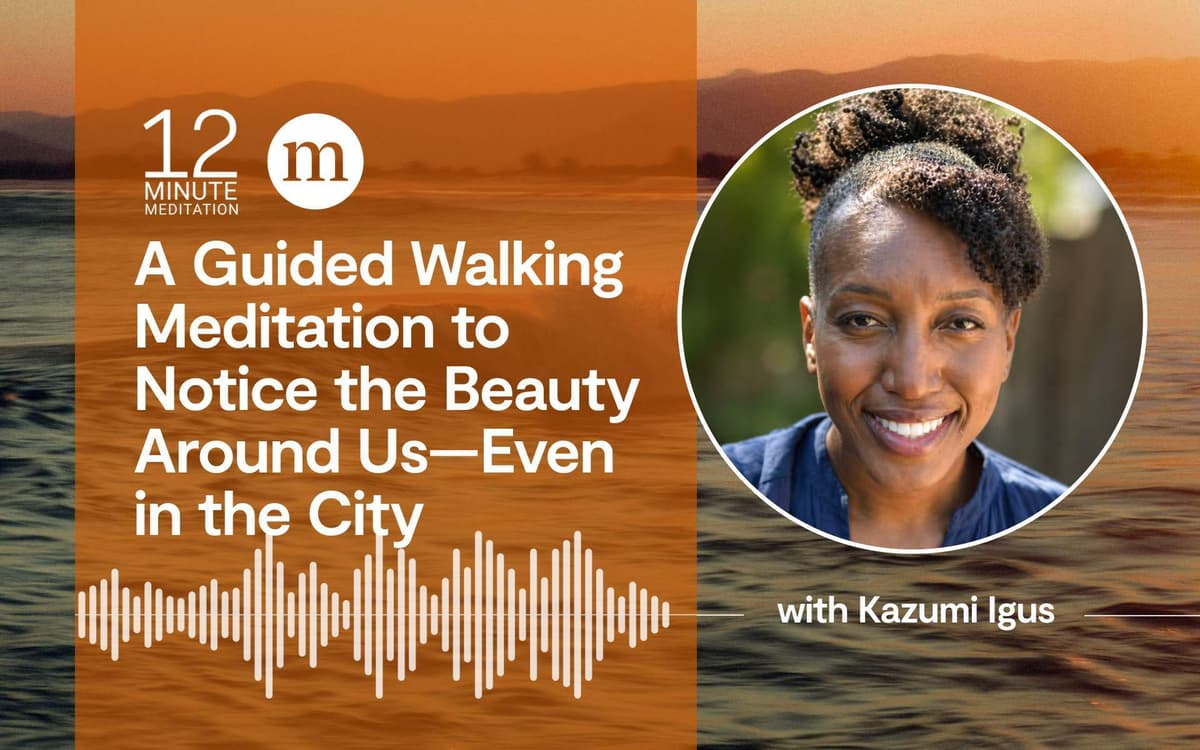
A Guided Walking Meditation to Notice the Beauty Around Us—Even in the City
Kazumi Igus, a science teacher and mindfulness facilitator, released a guided walking meditation designed for city environments. The practice blends deep breathing, sensory awareness of sounds, smells, colors, and wildlife, and gratitude to help participants slow down amid urban bustle....

Tabletop Games Like D&D Act as “Drama Therapy in the Wild” To Boost Players’ Self-Concepts
A new study in Transcultural Psychiatry shows that strong personal bonds with tabletop role‑playing game characters can significantly improve players' real‑world self‑concept, self‑esteem, and sense of belonging. The research, led by Colorado State University anthropologist Jeffrey G. Snodgrass, surveyed 149...

Your Partner Is Not Your Project
The essay explores how the Buddhist concept of upadana—subtle clinging—manifests in intimate relationships when partners project their own expectations onto each other. By describing a simple fist‑tightening exercise, the author illustrates how mental contracts tighten and release, urging practitioners to...

Nobody Warns You About the Part of Aging Past 70 that Actually Lands Hardest, and It Isn’t the Body or...
Aging past seventy often feels like watching your contact list turn into a graveyard, as friends and family who knew the younger you disappear. The author describes how older adults begin presenting a curated, "resume‑like" version of themselves, hiding the...

Astronauts Call It the “Overview Effect” — but You Don’t Need to Leave Earth to Feel It
The "overview effect"—a cognitive shift astronauts feel when viewing Earth from orbit—was first identified by Frank White in 1987 after interviewing dozens of crew members. Neuroscience now shows that awe, the emotional core of the effect, can lower inflammation markers...
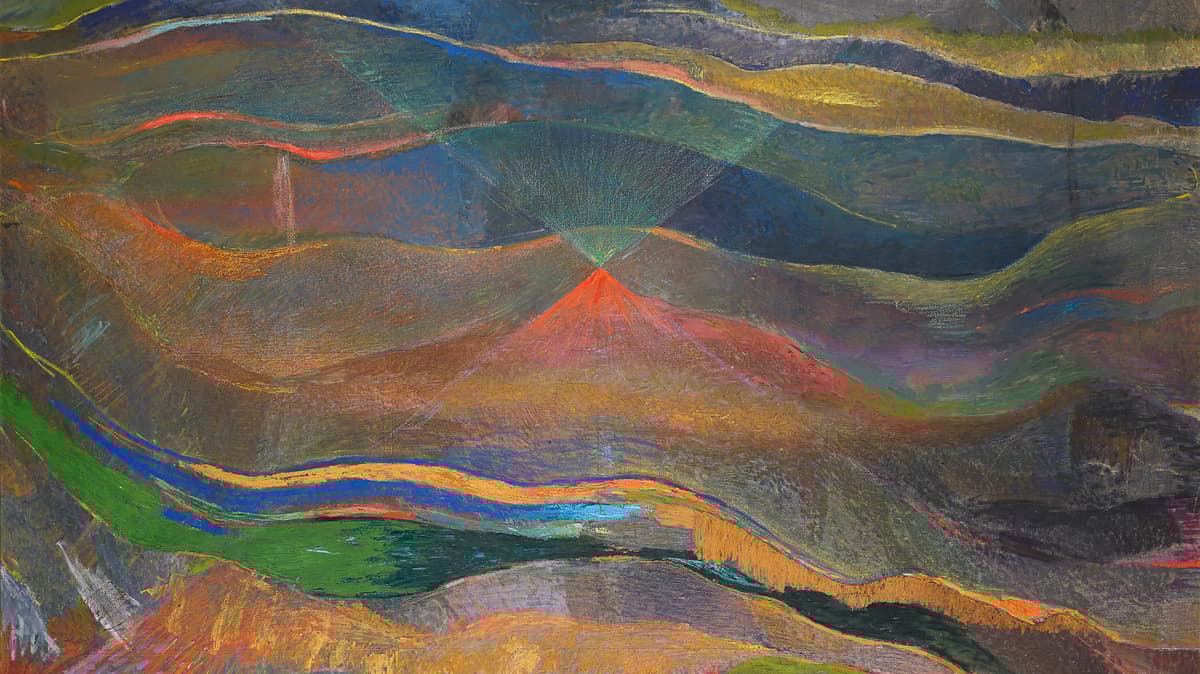
The Avant-Garde Path to God
James K. A. Smith’s new book argues that abstract and experimental contemporary art can foster mystical contemplation, countering traditionalist critics like Roger Scruton who dismiss modern art as merely provocative. Smith illustrates his point with visits to works by Agnes Martin...

The Internet Made Us Archive Our Lives – Now We Want Out
Artists, celebrities and everyday creators are increasingly wiping their Instagram grids to reset their online personas. The practice, popularized by figures like Taylor Swift and Flex Mami, reflects a desire for a clean slate amid growing concerns over digital permanence and employer...
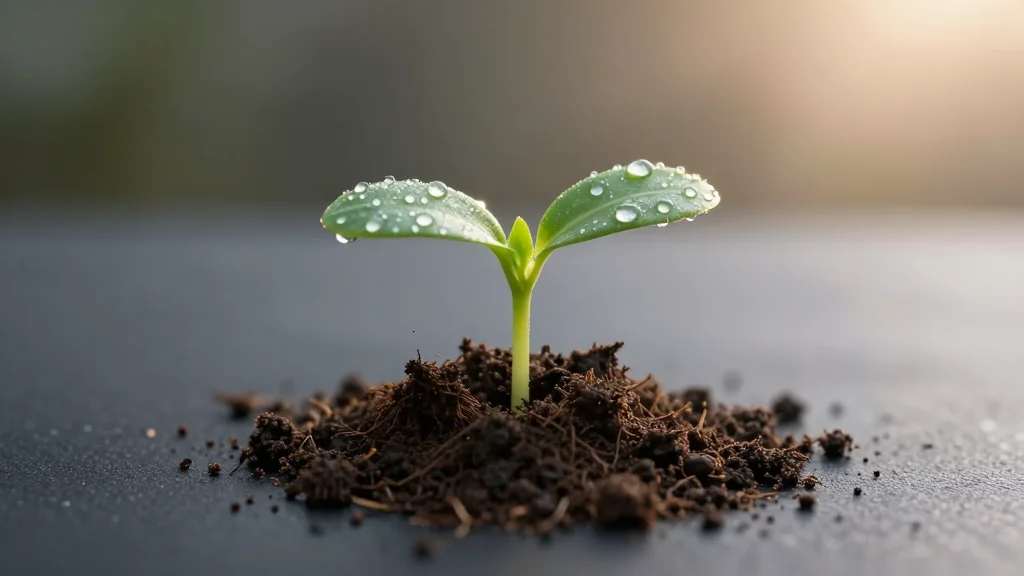
Foraging Weeds
The article explores urban foraging as a slow, mindful practice that reconnects people to local ecosystems and addresses broader polycrisis challenges. It highlights how Colorado’s plant phenology is shifting 2‑4 weeks earlier, underscoring climate urgency, and stresses harvesting native species...

Learning to Be Content
Christiane Wolf frames daily decision‑making around a Buddhist question: does an action foster more contentment or more craving? She argues that modern abundance fuels an insatiable “more‑more” mindset, leading to chronic dissatisfaction. By treating mindfulness as a flashlight that illuminates...
New Research Is Focused on Finding the Best Mindfulness Practice for You
Harvard Medical School and Massachusetts General Hospital have broadened their Meditation Research Program to map the brain activity of long‑term meditators, focusing on so‑called “meditative endpoints” such as enlightenment and the rare state of consciousness cessation. The study, led by...

My Wife Asked Me when I Last Felt Joy — Not Relief, Not Gratitude, Not the Quiet Satisfaction of Getting...
A 66‑year‑old electrician reflects on a pivotal moment when his wife asked when he last felt real joy, revealing years of emotional numbness. He describes how the realization spurred a deliberate experiment: granting himself small permissions, saying no to unnecessary...
Feeling Like Oneself
The article explores John Campbell’s claim that our thoughts feel owned because they arise from a stable, idiosyncratic background of beliefs, desires, and emotions. It argues that this personal psychological backdrop creates a sense of self‑continuity, which acts as a...

The Inner Game
Lisa Towles argues that today’s CEOs must go beyond financial metrics and embrace deep self‑reflection. A surge in ethical dismissals, younger first‑time CEOs, and heightened transparency have reshaped the leadership calculus. Studies from PwC, Spencer Stuart and Egon Zehnder show ethics,...

Affirmations vs Mindfulness: How They Complement Each Other
Sean Fargo explains that mindfulness and affirmations are not competing practices but complementary tools for mental well‑being. Mindfulness cultivates present‑moment awareness without judgment, while affirmations provide intentional, positive self‑talk that guides the mind. Together they create a feedback loop that...

The Surprising Way People Are Healing From Trauma, According To Research
Researchers published in *Traumatology* examined whether lucid dreaming can alleviate PTSD. In a six‑day online workshop, 49 adults with chronic PTSD attempted lucid‑dream techniques; 76% achieved at least one lucid dream and more than half reported a "healing" dream. Participants...

Tools for Advancing Your Practice
Breathworks is launching a six‑week online mindfulness program called "Going Deeper" from 11 May to 22 June. The course blends one‑to‑one mentorship, three live Zoom sessions, and self‑study, requiring roughly 4‑5 hours per week. Pricing is £308 ($391) for individuals, £250 ($318) for...

Physician, Heal Thyself
The New York Zen Center for Contemplative Care’s year‑long Contemplative Medicine Fellowship blends Zen Buddhist teachings with clinical training to address the U.S. health‑care workforce crisis. Peer‑reviewed studies of the 2021‑2024 cohorts show statistically significant reductions in emotional exhaustion, depersonalization,...
Jamie Bristow – The Work That Reconnects
The Mind & Life podcast’s April 24 episode features Jamie Bristow alongside Shayontoni Ghosh, Chris Johnstone, Stephanie Kaza and Phoebe Tickell to discuss Joanna Macy’s Work That Reconnects, a contemplative framework that moves participants from gratitude and grief to courage...

How to Let Go of Grudges— And Why It Could Be Good for Your Health
A new NPJ Mental Health Research study finds a correlation between the ability to let go of grudges and better long‑term emotional and social health. The research, led by Everett Worthington Jr. of Virginia Commonwealth University, expands on decades of...
On Grace, Melancholy, and Taking Over Our Narratives
Lauren Groff’s new short‑story collection *Brawler* delves into generational trauma, melancholy, and the Buddhist concept of bardo, framing life’s impermanence as a creative portal. In the interview she explains how her Florida bookstore The Lynx, which displays banned titles, serves...

How to Access the Subconscious and Unlock Creativity Through Dreamwork
Kim Gillingham introduced Creative Dreamwork at Sundance Collab, a Jungian‑inspired practice that invites artists to treat dreams as active collaborators. By guiding participants through gentle movement, breath work and body‑centered cues, she helps them drop into sensation and retrieve subconscious...
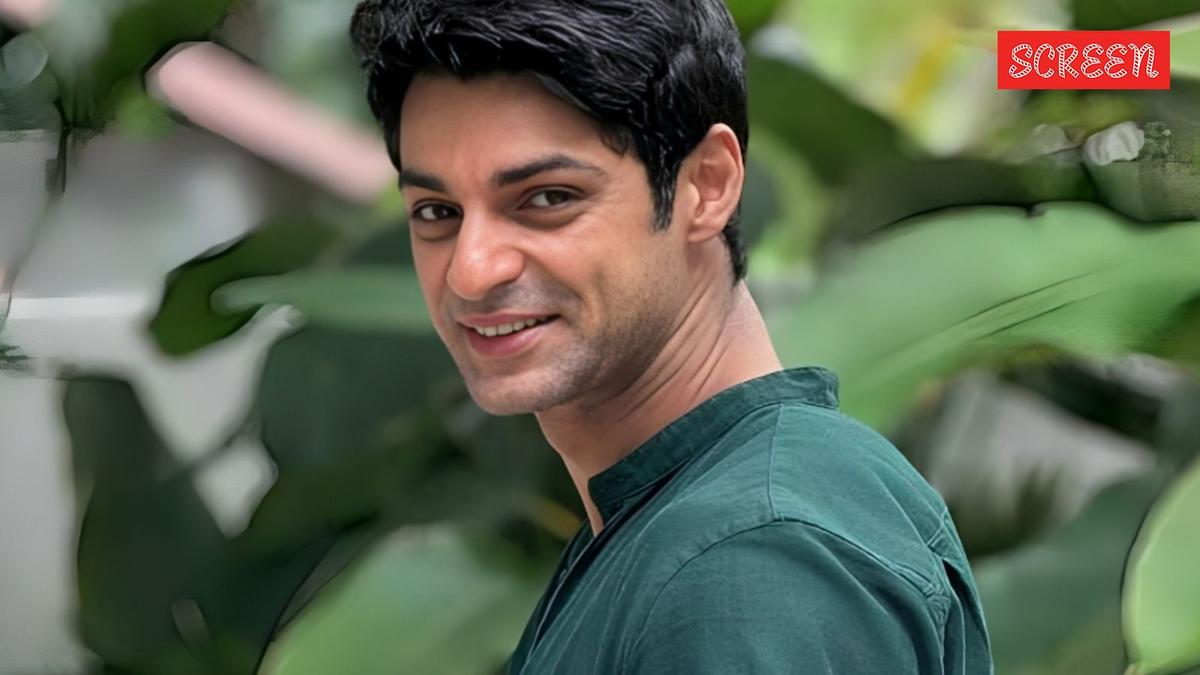
Karan Wahi Reveals How a Tulsi Mala, Doing Naam Jaap, and Leaving Non-Veg Food Made Him Calmer
Indian actor Karan Wahi disclosed that wearing a tulsi mala, practicing daily naam jaap chanting, and adopting a vegetarian diet have markedly calmed his temperament and improved his skin health. He shared these changes on the Abraa Kaa Dabra Show,...

The Truth We Sense but Don’t Acknowledge
The essay argues that most people silence an inner sense of truth, replacing it with comforting narratives that mask discomfort. This denial generates a low‑grade, persistent emotional fatigue that often masquerades as confusion or overthinking. When the suppressed feeling finally...
A Meditation to Meet Yourself Where You Are—No Matter What
Mindfulness instructor Cheryl Jones offers a ten‑step guided meditation designed to foster self‑acceptance regardless of circumstance. The practice walks participants through posture, breath awareness, and neutral observation of thoughts, feelings, and bodily sensations. Jones, a two‑book author and award‑winning corporate...

A Shakedown From the Great Beyond
The piece juxtaposes two modern phenomena: unsettling emails that appear to come from deceased friends, and a grassroots waste‑free initiative in Paddington’s Tool, Furniture and Toy Library. The author recounts receiving a post‑mortem invitation, underscoring the rise of digital hoaxes....

What Is Education For in the Age of Artificial Intelligence?
The rise of generative AI has exposed the limits of education’s instrumental model that focuses on job‑ready skills, as machines now perform many classroom tasks instantly. This mismatch forces a reassessment of what schools should teach, shifting from procedural mastery...

The People Who Mistake Self-Sufficiency for Healing and Don’t Realize They’ve Just Gotten Better at Hiding What Still Hurts
Self‑sufficiency is widely praised, but the article argues it often disguises unresolved emotional pain rather than true healing. It distinguishes between genuine processing—where people can articulate hurt—and mere containment, which appears as high performance but erodes connection over time. The...

Reconstructing Faith
Dr. Dick Daniels has released "Reconstructing Faith: 365 Days to Reconsider Jesus," a daily devotional designed for anyone wrestling with doubt. The book offers 365 concise readings that blend Scripture, historical insight, and personal reflection, guiding readers through a three‑stage...

Helping Your Teen Trust in God’s Existence
Lee Strobel, former atheist turned Christian apologist, joins Jim Daly on Focus on the Family to discuss how parents can help teens trust in God’s existence. He recounts his own teenage doubts and the lack of answers that pushed him...

I Hit Every Goal I Set – the Title, the Income, the House – and Sat in My Car in...
The article explores the "achievement trap," where reaching long‑held goals—like a dream house, a big contract, or financial security—leaves many professionals feeling empty. Citing psychologists such as Tim Kasser and concepts like hedonic adaptation, it shows that extrinsic milestones often...

Why High Achievers Can Feel Lost After Success
High achievers often experience a sharp emotional dip after reaching major milestones because the brain’s dopamine surge fades once the goal is met. The pursuit of goals provides structure and a sense of identity, turning performance into a proxy for...

I Want to Say Something that My Generation Rarely Says Out Loud: Being Tough Your Whole Life Doesn’t Actually Protect...
A 66‑year‑old tradesman reflects on a lifetime of "tough‑guy" conditioning that concealed deep loneliness, revealing that a full phone book does not guarantee genuine connection. He recounts how his stoic persona kept friends and family at arm’s length, even as...

Is Hurry the Great Enemy of Spiritual Life?
John Mark Comer, a bestselling evangelical author, argues that hurry—an incessant sense of urgency amplified by technology—is the chief obstacle to spiritual life. His 2019 bestseller "The Ruthless Elimination of Hurry" and the 2024 follow‑up "Practicing the Way" outline nine...

Akshaya Tritiya 19th April 2026: What the Scriptures Actually Say
Akshaya Tritiya, observed on 19 April 2026, is a self‑auspicious tithi in the Vedic calendar that requires no individual muhurta. Classical texts such as the Bhavishya Purana and Skanda Purana describe the day as a time when charitable actions—especially offering water and food—generate merit that...

Defending Our Consciousness Against the Algorithms
Influencers on Instagram have launched a viral “do nothing” challenge, urging participants to embrace boredom to stimulate the brain’s default mode network. The article argues that constant scrolling hands over attention to social‑media algorithms, shrinking the mental space for spontaneous...
The Bliss of Blamelessness
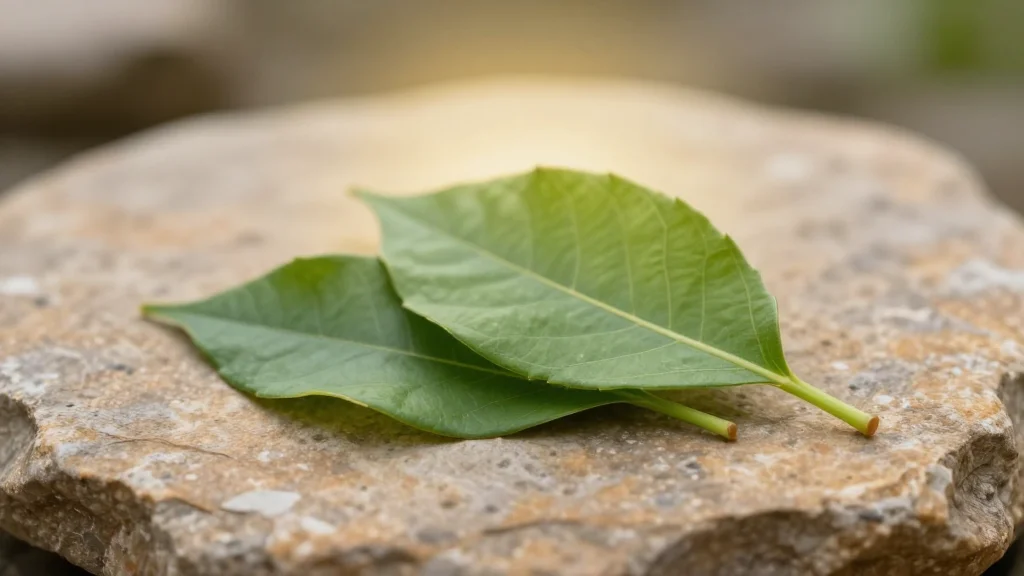
The Buddha’s “handful of leaves” parable illustrates that the vast knowledge of enlightenment can be distilled into a small, practical set of teachings. In Buddhism this set comprises three pillars—generosity (dāna), ethical conduct (sīla), and mental cultivation (bhāvanā). The article...

Quieting the Chaos
The author revisits a video of her masked wedding during the Philippines’ ECQ lockdown in April 2021, finding unexpected beauty in the constrained ceremony. She uses that memory to illustrate how moments of love can thrive amid pandemic chaos. The...

The New Science of the Near-Death Experience
A new study led by Belgian neuroscientist Charlotte Martial recorded the first EEG data from patients undergoing near‑death experiences (NDEs). Among 180 resuscitated patients, 12 reported NDEs and showed markedly higher brain‑complexity measures than those who did not. The research...

6 Yoga Retreats That Center Wildlife and Conservation
A new wave of luxury yoga retreats is merging mindfulness with wildlife conservation across six global locations. Programs range from Kenya’s ultra‑low‑density safari camp to a Maldives yacht‑based manta‑ray research expedition, each offering immersive animal encounters alongside daily yoga. The...