
Bloomberg Surveillance 2/25/2026
Bloomberg Surveillance aired on February 25, 2026 centered on President Donald Trump’s State of the Union address and its implications for the U.S. economy and markets. The hosts highlighted a surprisingly resilient macro backdrop—low mortgage rates, a declining inflation headline, and a strong wealth effect—while noting that the president framed these gains as the result of tariffs and trade policy. The discussion turned to sector‑specific catalysts, especially NVIDIA’s upcoming earnings, which analysts expect to move the market given the $650 billion AI‑related capex pipeline. At the same time, consumer‑level concerns—food, beef, electricity bills—remained front‑page issues in polling, with a majority of Americans skeptical of the administration’s focus on macro metrics. Notable remarks included Trump’s claim that America is “bigger, richer, and stronger than before,” and a poll indicating a 57 % disapproval rating of his economic handling. Analysts also warned that bond yields have slipped to 4 % on the 10‑year, but options market skews suggest investors are hedging against potential geopolitical shocks, particularly around Iran. For investors, the mix of solid growth data, policy uncertainty, and heightened geopolitical risk implies a cautious optimism: AI‑driven earnings can boost equities, yet affordability pressures and tariff debates may temper consumer spending and introduce volatility in fixed‑income markets.
Trump to Hike US Tariff to 15% "Where Appropriate," Greer Says #shorts #tariffs #trump #trumptariffs
The briefing focused on the Trump administration’s intent to lift the Section 122 tariff from the current 10% to 15% “where appropriate,” a move the White House says will be announced in the coming days. The increase is framed as...
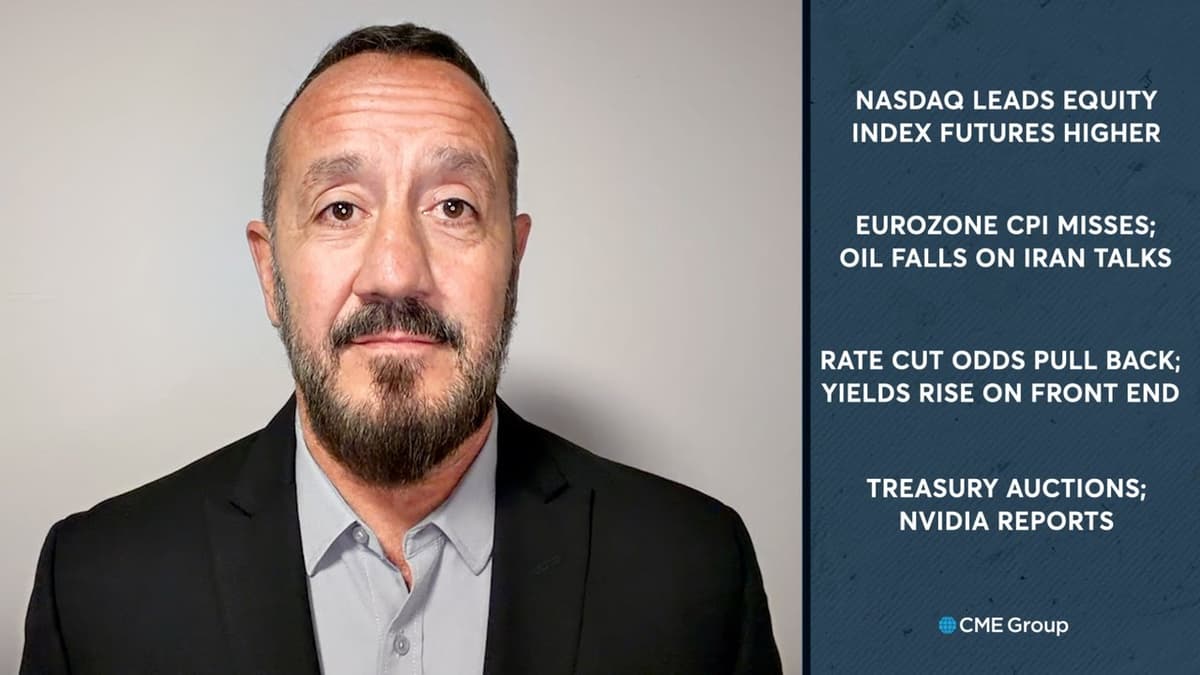
Stocks Rise as Oil Volatility and NVIDIA Earnings Loom. 2/25/26
U.S. equity futures rose, led by Nasdaq gains, as investors weigh oil volatility and upcoming Nvidia earnings. Eurozone CPI missed expectations while Japanese inflation cooled, prompting a shift in Fed rate‑cut expectations to July. Treasury will auction $70 billion of five‑year...
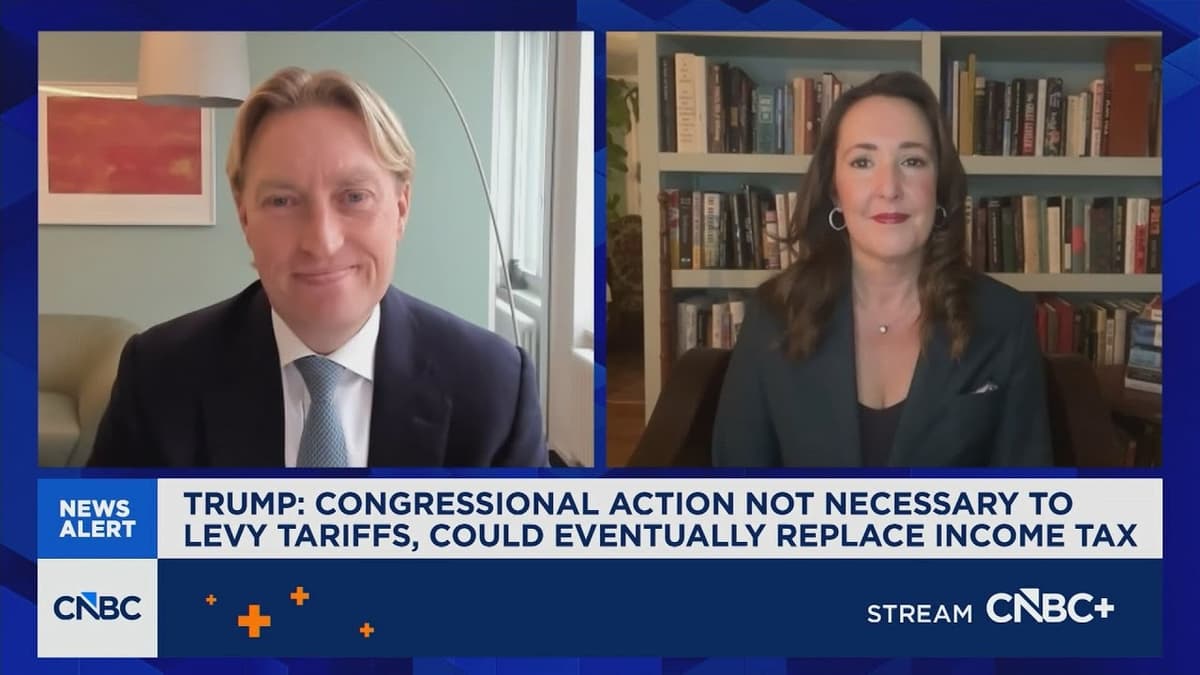
Tariffs, Taxes and AI Power Plans Dominate Outlook After the State of the Union
The recent State of the Union, though lengthy, offered few new policy announcements but highlighted three pillars—tariffs, health‑care subsidies, and a power‑infrastructure push for AI firms—that will shape market expectations. Both UBS’s Marc Anderson and Veda Partners’ Henrietta Treyz agreed that...
How History Will Judge Fed Chair Jerome Powell | Trader Talk
The Trader Talk episode centers on Jerome Powell’s legacy and the looming transition to new Fed Chair Worsh. Panelists dissect how Powell’s insistence that inflation was "transitory" clashed with reality, and they argue that his backward‑looking stance delayed the...
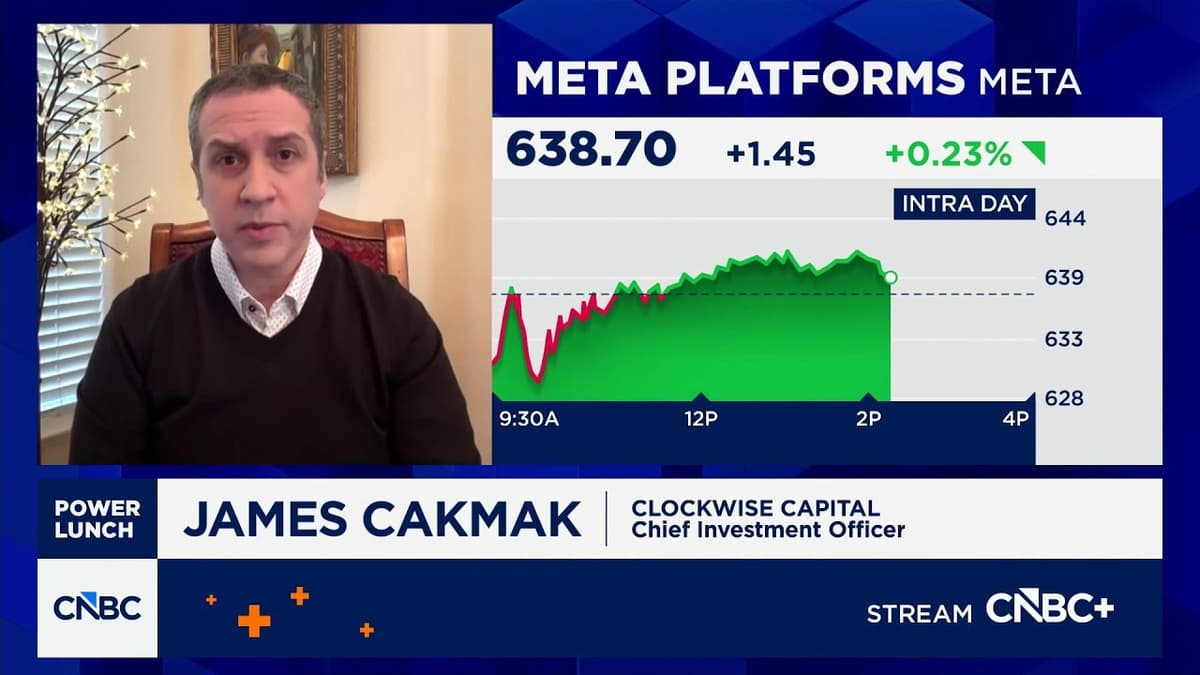
Meta-AMD Deal Makes Sense for Meta but Less so for AMD, Says Clockwise Capital's Jams Cakmak
The discussion centered on Meta’s recent agreement with AMD to secure AI‑chip capacity in exchange for a minority equity stake. Clockwise Capital’s chief investment officer, James Cakmak, framed the deal as a strategic move for Meta, allowing the social‑media giant...

Rick Rieder: Market Will Have a Pretty Good Year but Not in a Straight Line
BlackRock’s senior portfolio manager Rick Rieder told a Miami conference that the U.S. equity market is poised for a “pretty good year,” but the path will be uneven. He linked the outlook to upcoming fiscal policy, Federal Reserve actions, and...
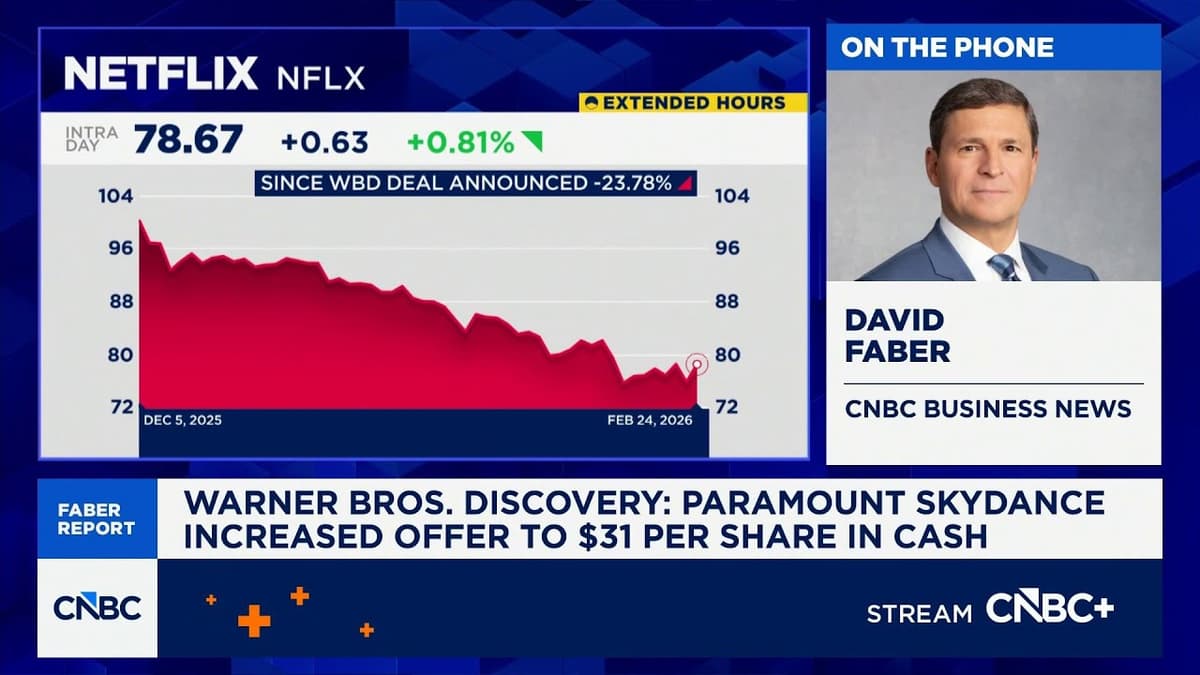
Warner Bros. Discovery: Paramount Increased Offer to $31 per Share in Cash
Warner Bros. Discovery’s board has signaled that Paramount Global’s revised proposal – a $31‑per‑share cash offer – is now considered a superior bid, positioning Paramount as the frontrunner in the contested acquisition. The move follows a brief period in which...
Mad Money 02/24/26 | Audio Only
Jim Kramer opened today’s Mad Money by dismissing the buzzword “halo” – heavy‑asset, low‑obsolescence stocks – as a misnomer for what investors really crave: tangible businesses they can understand. He argued that the market’s current rotation away from once‑loved software...
FedEx Sues for Refund of Trump Tariffs, Days After Supreme Court Ruling
FedEx has filed a lawsuit seeking a refund of duties imposed under the Trump administration’s tariff regime, marking the first major U.S. corporation to act after the Supreme Court’s recent decision that companies can pursue such refunds. The carrier is asking...
SF Fed Pres. Mary C. Daly on How the Fed Is Strategically Adopting AI
In a recent briefing, Federal Reserve President Mary C. Daly outlined the central bank’s strategic push to embed artificial intelligence across its operations. She emphasized that modern AI tools are essential for maintaining efficiency, effectiveness, and resilience while safeguarding the...
Supreme Court Strikes Down President Trump’s Tariffs
The Supreme Court issued a 6‑3 decision striking down President Trump’s use of the AIPA law to impose tariffs, effectively nullifying the broad tariff regime introduced earlier this year. The ruling reveals that importers have paid an estimated $160 billion in...

Stimulus Sneak, Secret Corporate Bailout
The video dissects a little‑known Federal Reserve operation that effectively acted as a corporate bailout during the COVID‑19 crisis. Using language of “unusual and exigent circumstances,” the Fed tapped more than $450 billion of Treasury appropriations authorized by the CARES Act...

Credible Threat Theory For The Win
The video introduces the creator’s "Credible Threat Theory," arguing that mainstream economic narratives—particularly around tariffs and inflation—are deliberately crafted to manipulate expectations and give the Federal Reserve policy ammunition. By framing tariffs as a looming threat, policymakers can elevate...

Property Tax Base Fragmentation and Metropolitan Inequality in the U.S. Robert Manduca, ISR Insights
Robert Manduca’s ISR Insights talk examined how the United States’ patchwork of local governments creates stark fiscal inequality through property‑tax base fragmentation. He outlined the outsized role of municipal property taxes—accounting for up to 80% of local revenue—and illustrated how...

Why Tariff Rebates Don’t Work
The video critiques a recent proposal to issue tariff rebates, arguing that the approach fails to address the core problem of consumer and business costs imposed by existing tariffs. The speaker notes that while officials portray tariffs as payments made by...
Tariff Wars! What Are the Rates? Who Pays? What’s Next?
The event featured Brent Nyman, a former Treasury deputy under‑secretary, presenting his latest research on U.S. import tariffs. He explained how statutory tariff rates—those set by law—jumped from near‑zero to about 28% after the 2024‑25 Trump‑era announcements, while the...

Raising Inflation Lowers Rates
The video explains how rising inflation lowers real interest rates, making borrowing cheaper and benefiting higher‑income households that can access new debt. It demystifies the relationship between nominal yields and inflation, showing that a 5% loan yields zero real return...

Homebuilders Sentiment Deeply Negative
The video focuses on the sharply deteriorating sentiment among U.S. homebuilders and its ripple effect on the lumber market. Recent NAHB/HMI surveys show the builder‑traffic index sinking to 22 and the overall sentiment gauge hovering around 40, both well below...
The February 2026 CBO Baseline: What It Says (and What It Means)
The webinar presented the Congressional Budget Office’s February 2026 baseline, outlining the projected trajectory of the federal budget and economy over the next decade assuming current laws remain unchanged. CBO warns that debt held by the public will climb to roughly...
2026 State Tax Policy Boot Camp | Part 2: Corporate Income Taxes
The Tax Foundation’s State Tax Policy Boot Camp video explains that corporate income taxes, while historically modest, now generate about five percent of state revenues and roughly two percent of overall general funds. Rates differ dramatically across the nation, ranging...
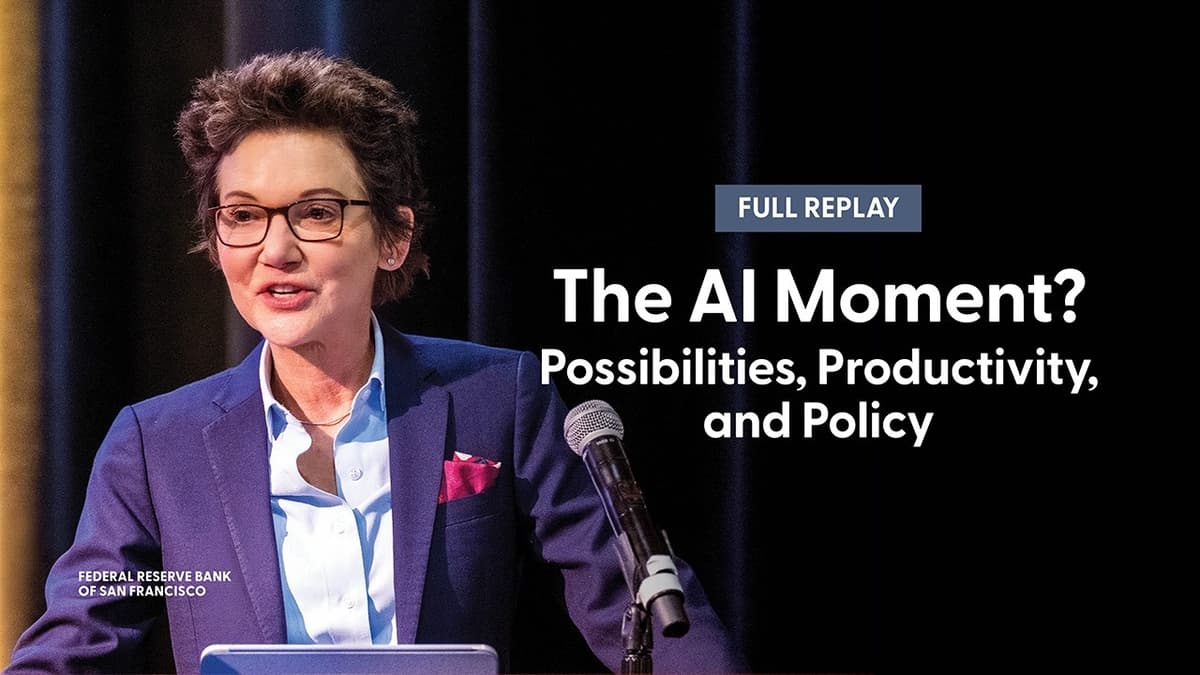
SF Fed's Mary C. Daly: AI, Productivity, and Lessons From the 1990s
In a Silicon Valley address, San Francisco Fed President Mary C. Daly examined artificial intelligence as the latest general‑purpose technology, drawing a parallel to the century‑long diffusion of electricity. She argued that, like electricity, AI’s macroeconomic impact will unfold over...

A Banking Crash May Start Soon If You See What People Are Saying...
The video warns that a banking collapse could materialize soon as higher interest rates and reduced central‑bank stimulus tighten liquidity, forcing banks to scramble for deposits. It contrasts the traditional bailout approach with a possible bail‑in, where depositors might receive...

People Are Starting To Fear A 1929 Style Crash Is About To Happen
Economic Ninja warns that investors are increasingly fearing a 1929‑style market collapse, citing a surge of pessimistic sentiment online. He frames the anxiety around historic stock valuations, concentration in mega‑cap stocks, and mounting debt across government, corporate and consumer sectors. The...

Markets Weekly February 14, 2026
Markets Weekly highlighted a turbulent week in equities, with the S&P 500 slipping below its 50‑day moving average and flirting with the 100‑day line, prompting fears of a test of the 200‑day support around 6,500. The host tied this technical...

Dollar Funding Stresses
The Federal Reserve Bank of Boston’s November 2022 working paper examines China’s dollar‑funding stresses, highlighting how the pandemic‑induced market shock in March 2020 exposed a massive reliance on U.S. dollars among Chinese banks and non‑financial firms. While most analysts focus on domestic...

The Next Chapter of Community Development Finance and Place-Based Investment
The Urban Institute unveiled its new Center for Local Finance and Growth, positioning it as a nonpartisan hub for research, tools, and dialogue on community development finance. The launch event, attended by over 1,200 online registrants and a slate of...
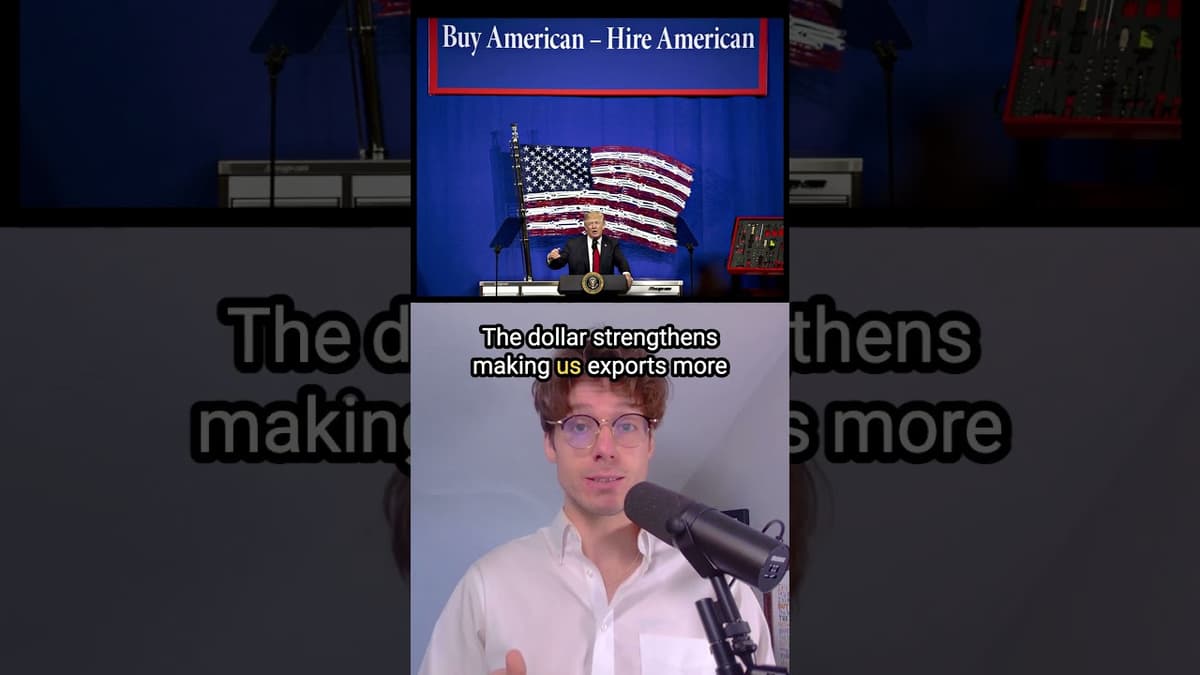
Trump Says Tariffs “Pay Off Later.” History Says Otherwise.
Donald Trump argues that tariffs inflict short‑term pain but will ultimately benefit the United States, a claim he repeats while defending “Buy American” policies. However, a 50‑year study covering 151 countries finds higher tariffs consistently depress wages, eliminate jobs and...