
Canada Opens Applications for AI Supercomputing Infrastructure Program
Canada has opened the AI Sovereign Compute Infrastructure Program, a competitive call for proposals to design, build, and operate a large‑scale AI‑optimized supercomputer. The initiative is funded by historic investments announced in the 2024 and 2025 federal budgets and forms a core pillar of the Canadian Sovereign AI Compute Strategy. The government aims to provide domestic high‑performance compute capacity for research in health care, energy, advanced manufacturing and scientific discovery. Successful projects will secure Canadian data, foster innovation, and enhance the nation’s global AI competitiveness.

Claude Usage Rose by over 40% Amid Increased Attention Last Month, but Remains Far Behind ChatGPT
Claude, Anthropic’s AI chatbot, saw US usage jump over 40% in March, climbing from 2.96% to a peak of 4.38% before settling at 4.27% in early April. The surge translates to several million new weekly users, according to the poll’s...

True Positive Weekly #157
The latest True Positive Weekly roundup spotlights Stanford’s 2026 AI Index Report, a BBC piece on a monkey selfie as a guard against AI‑generated misinformation, and Google’s Gemini now pulling personal photos to craft bespoke AI images. It also highlights...

Inventors Have Looked to Perfect ‘Robot Umpires’ for Better Part of a Century
Major League Baseball officially launched an automated ball‑strike (ABS) system this season, ending a century‑long quest for robot umpires that began with a 1938 patent. The technology gives each team two challenges per game, letting players contest calls by tapping...

AI Is Bringing Added Complexity for HPC Sites. How Are They Handling It?
AI workloads have transformed CINECA’s supercomputing environment, adding layers of software, storage and orchestration beyond traditional HPC. Since 2023 the Italian consortium expanded from a single Slurm‑based stack on Lustre to include Kubernetes, OpenStack, S3 object stores and AI‑focused frameworks...

An AI View of SentinelOne
McKinsey warns that AI is enabling cybercriminals to launch attacks in minutes rather than days. Attackers leverage AI for hyper‑personalized phishing, deepfakes, instant malicious code, and adaptive tactics. In response, 77% of organizations have integrated AI into security functions, automating...

A Professor’s Use Case for AI Generated Papers
A professor at the Social Catalyst Lab demonstrates that AI agents can generate fully fledged empirical papers, from data collection to robustness checks, in minutes. While he bans AI use for student assignments to preserve deep learning, he leverages the...

Why Generative AI Training Is Becoming the Next Tech Talent Battleground
New research from the Federal Reserve Bank of New York shows that only 39% of U.S. workers used generative AI tools at work in the past year, with adoption heavily skewed toward college‑educated and high‑income employees. While 66% of AI...

Open-World Evaluations for Measuring Frontier AI Capabilities
The paper introduces “open‑world evaluations,” a new class of AI testing that places agents in messy, real‑world tasks rather than tidy benchmarks. It surveys ten recent experiments, outlines best practices, and launches the CRUX collaboration of 17 researchers to run...

Israel’s Unit 8200 Is an Early Adopter of AI in Warfare
Unit 8200, Israel’s largest intelligence formation with about 5,000 soldiers, handles signals, open‑source, cryptanalysis and cyber‑warfare, and is often likened to the U.S. NSA. Historically it contributed to the Stuxnet virus and the 2024 Hezbollah pager attacks. Since the October 2023...

Automate Your Job
The post details how a Portland logistics broker reclaimed 15 hours a week by linking OpenClaw, an open‑source AI agent, with OpenAI’s new Codex desktop app. OpenClaw reads vendor PDFs, extracts tracking data, and hands it to Codex, which updates...

Inside the Bank Where Employees Built 20,000 AI Tools in 18 Months
BBVA rolled out a bottom‑up generative‑AI platform that enabled 120,000 employees across 25 countries to build roughly 20,000 custom GPTs in just 18 months. By allocating only 3,000 licences and empowering a peer‑led "Champions and Wizards" network, daily active usage...

The Pulse: ‘Tokenmaxxing’ as a Weird New Trend
Developers at firms like Meta, Microsoft and Salesforce are deliberately inflating AI usage by burning tokens to hit internal metrics, a practice dubbed "tokenmaxxing." At the same time, companies such as Uber have exhausted multi‑year AI token budgets in months,...

XAI Renting GPUs to Cursor – Further GPU Rents Enables Breakeven
Elon Musk’s xAI is set to lease tens of thousands of GPUs to AI‑coding startup Cursor, with hourly rates between $2.5 and $18. Renting 10,000 GPUs would cost $15‑$40 million per month, while 50,000 GPUs would run $75‑$200 million. If xAI rents...

You Already Know This. So Why Isn't It Happening?
The post argues that AI has made rapid, low‑cost experimentation possible, but most enterprises still punish provisional decisions. Sense & Respond Learning demonstrated the speed advantage by re‑positioning its curriculum in two days using Claude AI. The author stresses that...

AI Gmail Brain: Read, Sort, Label, Draft — All on Autopilot
A developer built an n8n workflow that uses Google Gemini to read, classify, and act on every incoming Gmail message automatically. The system labels emails, drafts personal replies, sends instant sales auto‑replies, logs social messages to a Google Sheet, and...

Lisa Willis: Florida’s AI Rules Signal New Era of Accountability for Lawyers
Florida has become a national frontrunner in regulating legal AI by issuing new Bar rules and court orders that mandate attorney oversight of AI tools. The directives cover everything from research platforms to AI‑generated court filings, insisting that technology assist...

Krishnan Nair: When Clients Learn to Love AI
Krishnan Nair observes that clients are increasingly turning to AI for quick legal answers and to streamline costly Big Law services. While AI can draft queries and provide preliminary research, it cannot assume liability for outcomes. The article argues that...

Never Used AI Seriously? Start Here.
The post outlines eight no‑code AI tools—Claude, Perplexity, Nano Banana Pro, Seedance 2.0, OpenClaw, NotebookLM, Claude (again for coding), and Gamma—each paired with a quick‑start guide and a pro tip. It frames these services as ready‑made productivity boosters for anyone without...

Less Liability Could Solve the AI Chatbot Suicide Problem
AI chatbots are increasingly used for mental‑health support, with more than a million Americans turning to them weekly for anxiety, depression and relationship advice. Studies of Replika and other bots show users describe them as confidants, and dozens credit them...

Who’s Measuring What AI Actually Fixes In the Revenue Cycle?
Health systems are rapidly deploying AI across revenue‑cycle functions, touting reduced denials and faster authorizations, yet most lack a clear, independent measurement plan. Inger Sivanthi argues that without pre‑defined success metrics and ongoing accountability, AI risks automating broken processes rather...

The AI Ultimatum: Preparing for a World of Intelligent Machines and Radical Transformation
Steve Brown, a former DeepMind futurist, joins the Code Story podcast to discuss his new book, "The AI Ultimatum: Preparing for a World of Intelligent Machines and Radical Transformation." The conversation outlines a step‑by‑step framework for leaders to identify AI...

Standing Waves
The article introduces the "standing wave" metaphor to describe how extended interactions with large language models develop persistent, resonant patterns that shape subsequent outputs. These patterns are neither pure repetition nor simple drift; they act like interference fields that can...

How Will AI Affect Financial Planning for Retirement?
Artificial intelligence is moving from niche note‑taking utilities to comprehensive data‑overlay platforms that can synthesize a client’s accounts, tax returns, and CRM notes in a single query. Advisors who adopt these tools can model tax‑efficient withdrawal strategies, such as allocating...

Will the AI Bubble Burst?
Artificial intelligence is driving a wave of venture capital, soaring startup valuations and massive hardware demand, prompting concerns of a speculative bubble reminiscent of the dot‑com era. Critics point to inflated prices, untested revenue models and high compute costs as...

The President Who Would Be God.
On Orthodox Easter Sunday, former President Donald Trump posted an AI‑generated image on Truth Social showing himself in white robes, healing a sick man while surrounded by patriotic and religious symbols. The visual sparked immediate outrage from Christian groups and...

AI May Disrupt The Internet
Anthropic’s new AI coding tool Mythos can turn natural‑language prompts into functional software, putting code creation in the hands of non‑experts. The same system also excels at discovering and exploiting security flaws, prompting the company to warn that unchecked deployment...

The Future of Everything Is Lies, I Guess: Where Do We Go From Here?
The author argues that the rapid adoption of large language models (LLMs) is reshaping society much like the automobile did in the 20th century, creating cultural, economic, and safety hazards while eroding core skills such as deep thinking and writing....

The Backbone of the Agentic Economy: Building Intelligent Enterprises
At the Semafor World Economy summit, Morningstar CEO Kunal Kapoor and OutSystems CEO Woodsen Martin warned that AI is reshaping the software backbone of the global economy. They introduced the concept of an "Agentic Economy" where enterprises must move from...

Reveal: From Costs to Gains: Measuring Legal Efficiency with AI eDiscovery
Reveal’s latest article explains how AI‑driven eDiscovery can turn legal operations from a cost center into a measurable profit driver. By embedding analytics that track review speed, workflow efficiency and risk mitigation, the platform gives corporate counsel concrete ROI data....

Chris Wade, Cellebrite: The Myths of Claude Mythos and the Future of Digital Forensics: Evolution, Not Revolution
Anthropic unveiled Claude Mythos, touting autonomous vulnerability discovery and exploit creation, but the claims remain unverified. Access to Mythos is limited to a small group of defensive partners, including Apple, Google, Microsoft, and the Linux Foundation. Cellebrite’s Chris Wade counters...

Jae Um: In the AI Era, Coherent Investment Is the Cost of Entry
Jae Um argues that in the AI era legal services are becoming a utility rather than a discretionary tool, making coherent investment the baseline cost of entry. AI’s impact varies by user capability and is hard to measure, breaking the...

10 AI Prompts for Worldbuilding: Settings, Lore, and Rules that Hold Together
The article presents a set of ten AI‑driven prompts that help tabletop‑RPG designers and fiction writers construct deep, internally consistent worlds. It starts with a "founding pressure" prompt to define the core survival problem, then adds a creation myth, geography,...

Building Todoist Ramble: How Doist Turned Voice Braindumps Into Real-Time Task Capture
Doist introduced Ramble, a Gemini‑powered voice‑to‑task feature inside Todoist that captures tasks in real time without transcribing speech. The feature emerged from a 2‑3 month AI exploration and leverages live audio processing, tool calls, and direct context injection for project...

Anthropic: 5 Multi-Agent Collaboration Methods and Use Cases
Anthropic released an in‑depth guide outlining five multi‑agent collaboration patterns—Generator + Verifier, Orchestrator + Sub‑Agents, Agent Team, Message Bus, and Shared State. The guide explains each architecture’s ideal use cases and highlights when a single‑agent approach may be preferable. It urges teams to start...
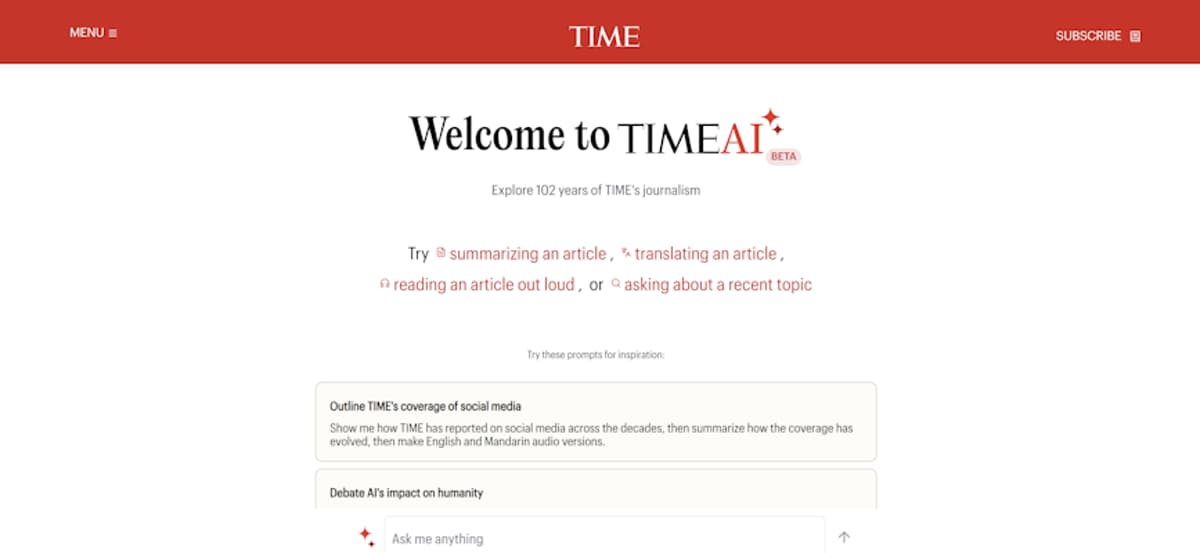
Inside TIME’s Rollout of Its TIMEAI Interactive Agent
TIME has launched TIMEAI, an interactive AI agent built on its 103‑year archive and now visible on almost all site content. The tool, initially tested on Person of the Year features, offers translation, summarization, voice output and custom prompts in...

Agent Washing: Disclosure Risks in the Emerging Market for AI Agents
The article introduces “agent washing,” a new disclosure risk where companies label ordinary automation as autonomous AI agents or exaggerate agents’ capabilities and business impact. Overstated claims make firms vulnerable to regulator, plaintiff, and investor scrutiny because specific agent functions...

LLM System Design Interview #26 - The Attention Optimization Trap
In a senior AI engineer interview at OpenAI, candidates are asked why a speedup achieved by optimizing attention on a 1.4 B model would not translate to a 175 B model. The post explains that as models grow, the FLOP budget shifts...

The Next Billion-Dollar AI Companies Won’t Build Models #158b
The AI landscape is shifting from building ever‑larger models to orchestrating them as part of system‑level intelligence. Model quality has become a baseline requirement, while the real competitive edge lies in workflow design and execution platforms. Persistent agents, multi‑step planning,...

The Sequence Opinion #844: Harness Engineering: The Operating System for Agentic Software
The Sequence Opinion #844 introduces "harness engineering," a discipline that shifts focus from prompting large language models (LLMs) to building robust surrounding systems. By treating models as powerful yet imperfect operators, teams design tools, constraints, observability, and recovery mechanisms that...

Regulators Confront AI-Driven Cyber Risk After Anthropic Warning
British regulators—including the Bank of England, FCA and NCSC—are urgently assessing Anthropic’s new AI model Claude Mythos Preview after it flagged thousands of serious software vulnerabilities. The model, released as a gated research project called Glasswing, has prompted parallel concern...

AI Model Finds Hidden High-Performance Dielectric Materials by Learning the Underlying Physics
Researchers at Tohoku University have created a physics‑based AI model that predicts ionic dielectric tensors by first estimating Born effective charges and phonon properties. The approach was used to screen over 8,000 oxide compounds, uncovering 31 previously unknown high‑dielectric materials....

AI System Removes Coding Barrier in Search for Stable Energy Materials
A new AI tool called StableOx‑Cat lets researchers discover stable metal‑oxide electrocatalysts using everyday language instead of code. The system pairs a large‑language model with physics‑based calculations to evaluate material stability across pH and electrical‑potential conditions. By grounding its predictions...

Human Trust of AI Agents
Researchers conducted the first monetarily‑incentivized lab experiment comparing human behavior in a multi‑player p‑beauty contest against human opponents versus Large Language Model (LLM) opponents. Participants chose significantly lower numbers when facing LLMs, with a notable surge in zero‑choice Nash‑equilibrium selections....

ByteDance Bringing Doubao AI to Car Cabins in New Tech Rivalry
ByteDance is building a smart‑cabin solution for cars using its Doubao AI large‑language model, partnering with Chinese automaker Seres and investing roughly $14.7 million. The company will run a 30‑billion‑parameter model on Nvidia Thor Z chips housed in an external computing box,...

Doctor Care Anywhere Selects Tandem Health as AI Care Partner for Virtual Clinical Workflows
Doctor Care Anywhere, a leading UK digital health provider, has partnered with Tandem Health to embed its AI operating system into the virtual primary‑care platform. The integration will automatically capture consultations and generate structured medical records for the company’s 60,000...

AM And AI For Wind Turbine Blades At Scale
A new review in Frontiers in Mechanical Engineering evaluates how additive manufacturing (AM) and artificial intelligence (AI) could transform wind turbine blade production. It finds that large‑format AM excels at printing near‑net‑shape tooling—molds, fixtures, and jigs—cutting lead times from months...

Do You Need A Digital Twin To Get Hired? The Hype, Reality, And What Comes Next
Digital twins—AI‑driven replicas of a candidate’s skills, communication style, and work habits—are moving from speculative concept to early‑stage recruitment tools. Companies are experimenting with twins to automate résumé tailoring, application submission, and initial recruiter interactions, aiming to process large applicant...

Bloomberg Unveils ASKB Roadmap for Clients to Augment Their Investment Process with Agentic AI
Bloomberg announced a 2026 roadmap for its ASKB conversational AI, now in beta, to embed agentic AI across the Terminal’s investment workflow. The plan adds enterprise‑grade integrations with Portfolio & Risk Analytics, Research Management Solutions, alternative‑data feeds and expert‑network content,...

Omar Oakes: What Is Your Content Actually Worth when the AI Crawlers Come for It?
Media executives are confronting a new dilemma: how much their content is worth to AI firms that harvest it for massive language models. Le Monde has signed licensing deals with OpenAI, Perplexity and Meta, while Wikipedia’s editors voted to ban...


