
Immunome Announces Detailed Phase 3 RINGSIDE Data for Varegacestat in Adults with Progressing Desmoid Tumors at the 2026 ASCO Annual...
Immunome presented detailed Phase 3 RINGSIDE data for its gamma secretase inhibitor varegacestat at the 2026 ASCO meeting. The trial met its primary endpoint, showing an 84% reduction in progression‑free survival risk and a 56% objective response rate versus 9% with placebo, alongside rapid pain relief. Safety was manageable, with most adverse events grade 1‑2 and 20% discontinuations. An NDA has been submitted to the FDA and an EMA filing is slated for late 2026.

Encouraging Global Phase II Ivonescimab Data in First-Line Metastatic Colorectal Cancer Presented at ASCO 2026
Summit Therapeutics presented interim Phase II data from the AK112‑206 trial at ASCO 2026, evaluating ivonescimab combined with mFOLFOX6 in treatment‑naïve, microsatellite‑stable metastatic colorectal cancer. In 49 patients, the regimen achieved a 70.8% objective response rate and a disease control...

Tune Therapeutics Presents Positive Phase 1b/2a Proof of Concept Data on TUNE-401: A First-in-Class Epigenetic Silencer for Patients with Hepatitis...
Tune Therapeutics reported Phase 1b/2a data for TUNE‑401, an IV‑delivered LNP‑RNA epigenetic silencer, at the EASL 2026 Congress. The study showed dose‑dependent, durable repression of all key HBV biomarkers, including direct loss of cccDNA‑derived pgRNA and HBeAg in a subset of...

Six ASCO Trials Decoded: Data, Gaps, and Implications
ASCO’s opening day was filled with superlatives, yet the real insight lies in a deeper look at six highlighted trials. Those trials deliver promising efficacy signals but expose gaps such as limited safety follow‑up, short‑term endpoints, and weak control arms....
Corcept Presents New Data at ASCO 2026: Lifyorli™ Overall Survival Across All Subgroups of Patients with Platinum-Resistant Ovarian Cancer, Including...
Corcept Therapeutics reported overall survival data from its Phase 3 ROSELLA trial of Lifyorli (relacorilant) plus nab‑paclitaxel in platinum‑resistant ovarian cancer at ASCO 2026. The combination cut the risk of death by 35% (HR 0.65, p = 0.0004) and extended median overall survival to 16.0...

Pharmaceutical Executive Daily: WHO Identifies Priority Treatment Candidates for Ebola
The World Health Organization has named three experimental therapies—from Mapp Biopharmaceutical, Regeneron and Gilead Sciences—as priority candidates for treating the Bundibugyo strain of Ebola amid a spreading outbreak in the Democratic Republic of the Congo and Uganda. In a separate...

Tempus Receives FDA Approval for Tumor Only xT CDx, Enabling Migration of Its Entire DNA Solid Tumor Portfolio
Tempus AI announced that the FDA has approved its xT CDx next‑generation sequencing platform for a tumor‑only indication, making it the first lab to hold companion diagnostic clearance for both tumor‑only and tumor‑normal comprehensive genomic profiling. The 648‑gene assay can now...

NeuroPace Announces FDA Approval of ECoG Assistant™, Advancing AI-Driven Epilepsy Care
NeuroPace received FDA clearance for ECoG Assistant™, its first AI‑driven clinician‑enabled feature for the RNS System. The tool leverages a proprietary dataset of 124,450 epileptologist‑labeled intracranial EEG records to flag ECoGs of interest and present trends in a single view....

Seven-Year Analysis From Pfizer’s LORBRENA CROWN Trial Shows Longest Progression-Free Survival Reported to Date in Advanced Non-Small Cell Lung Cancer
Pfizer reported seven‑year follow‑up from the Phase 3 CROWN trial, showing that lorlatinib (LORBRENA) achieved a 55% progression‑free survival (PFS) rate versus just 3% for crizotinib (XALKORI). Median PFS was not reached for LORBRENA, translating to an 81% reduction in risk...

BREAKING: Largest Human Cancer Study of Ivermectin + Mebendazole Is Now PEER-REVIEWED and PUBLISHED in a Major Cancer Journal
A prospective real‑world cohort of 197 cancer patients treated with a compounded ivermectin‑mebendazole capsule (25 mg ivermectin, 250 mg mebendazole) has been peer‑reviewed and published in Anticancer Research. After roughly six months, 84.4% of participants reported a clinical benefit—remission, tumor regression, or...

WHO Prioritizes Three Experimental Treatments for Bundibugyo Ebola Strain
The World Health Organization has named three experimental therapies—Mapp Biopharmaceutical’s MBP134, Regeneron’s maftivimab, and Gilead’s remdesivir—as priority candidates for treating the Bundibugyo strain of Ebola. The agency urges immediate clinical trials as the outbreak spreads across the Democratic Republic of...

GSK Functionally Cures Hepatitis B, Lilly's $3.8B Vaccine Pivot, and Base Editing Holds for 18 Months – This Week in...
GSK and Ionis reported Phase 3 data showing bepirovirsen achieved roughly a 20% functional cure rate in chronic hepatitis B, a potential paradigm shift for a disease affecting over 250 million people. Eli Lilly announced up to $3.8 billion in vaccine acquisitions targeting shingles,...

Regulatory and Scientific Frontiers in Drug Repurposing: Accelerating Therapeutic Innovations for Unmet Medical Needs + Examples of Repurposed Drugs
On May 11, 2026 the FDA unveiled a formal drug‑repurposing program aimed at accelerating clinical trials for approved compounds targeting chronic, rare and underserved conditions. The initiative builds on prior legislation such as the Best Pharmaceuticals for Children Act and...

Floral-Scented Fungus (Engineered by Scientists) Lures Mosquitoes to Their Doom
Scientists at the University of Maryland have engineered a strain of Metarhizium fungus that releases the floral compound longifolene, luring mosquitoes and killing them within days. Laboratory tests showed 90‑100% mortality even in rooms with competing human and flower scents....

Beren Therapeutics Announces FDA Extension of Review Period for New Drug Application (NDA) for Adrabetadex for the Treatment of Infantile-Onset...
Beren Therapeutics announced that the FDA has extended the review period for its New Drug Application for adrabetadex, a cyclodextrin‑based therapy for infantile‑onset Niemann‑Pick disease type C, by three months. The new PDUFA target action date is November 17, 2026, following a major...

Cat Amongst the Pigeons
Merck secured FDA approval for its antibody‑drug conjugate sacituzumab tirutecan (sac‑TMT) in advanced endometrial cancer, marking a rare ADC win in a solid‑tumor indication. The drug targets the Trop‑2 protein and delivers a potent cytotoxic payload, offering a new therapeutic...

FDA’s Advisory Panel Votes in Favor of Updating Covid-19 Vaccine Shots to Target XFG Variant
The FDA’s Vaccines and Related Biological Products Advisory Committee voted to update COVID‑19 vaccine compositions for the 2026‑2027 season to target the XFG variant, which now accounts for more than half of U.S. cases. The recommendation follows a WHO call...

How ASGCT and OTXL Are Working to Revive Shelved Cell and Gene Therapies
The American Society of Gene & Cell Therapy (ASGCT) and Orphan Therapeutics Accelerator (OTXL) have launched CGTxchange, an AI‑driven matchmaking platform designed to revive cell and gene therapies that were shelved for ultra‑rare diseases. By aggregating confidential and public data...

The Evolving Biopharma Regulatory Landscape: Q&A with Harpreet Singh, MD
Harpreet Singh, former FDA oncology division director and now chief medical officer at Precision for Medicine, explains how the FDA is reshaping biopharma regulation through a shift to single pivotal trials for high‑risk cancers, the expanding but opaque National Priority...

Colossal Bio Grows Chicks in 3D-Printed Artificial Eggs. Breakthrough or Copycat Technology?
Colossal Biosciences unveiled a 3D‑printed, silicone‑lined “artificial egg” that allowed baby chicks to develop inside transparent plastic cups at its Dallas lab. The company touts the invention as a step toward resurrecting extinct birds such as the dodo and giant...

ClearNote Health Secures $52 Million in Series D Financing and Strengthens Leadership Team to Accelerate Growth in Early Cancer Detection
ClearNote Health announced a $52 million Series D financing round, bringing its total capital to over $185 million. The company also appointed Kevin Keegan, a veteran of Illumina, BD and Hologic, as President and COO. Proceeds will fund commercial expansion, clinical studies, and further...
Junevity to Present Breakthrough Research on siRNA Therapeutics at American Aging Association’s 2026 Annual Meeting
Junevity will present pioneering in‑vivo data showing an siRNA therapeutic can restore global gene networks to a healthier state. Co‑founder Dr. Janine Sengstack will share results from diabetic mouse studies and safety data in rats and non‑human primates, marking the...

10 Obesity Drug Companies to Watch in 2026
Obesity drug development is diversifying beyond injectable GLP‑1s, with companies pursuing oral pills, dual/triple agonists and amylin‑based therapies. Major players such as Eli Lilly and Novo Nordisk are expanding pipelines—Lilly’s retatrutide delivered up to 28% weight loss in Phase III, while Novo’s oral...

Injectable Peptides – The New Snake Oil
Steven Novella warns that injectable peptides are the latest wave of snake‑oil products, exploiting loopholes created by the 1994 Dietary Supplement Health and Education Act. While legitimate peptide drugs like insulin and GLP‑1 agonists exist, many unapproved compounds are marketed...
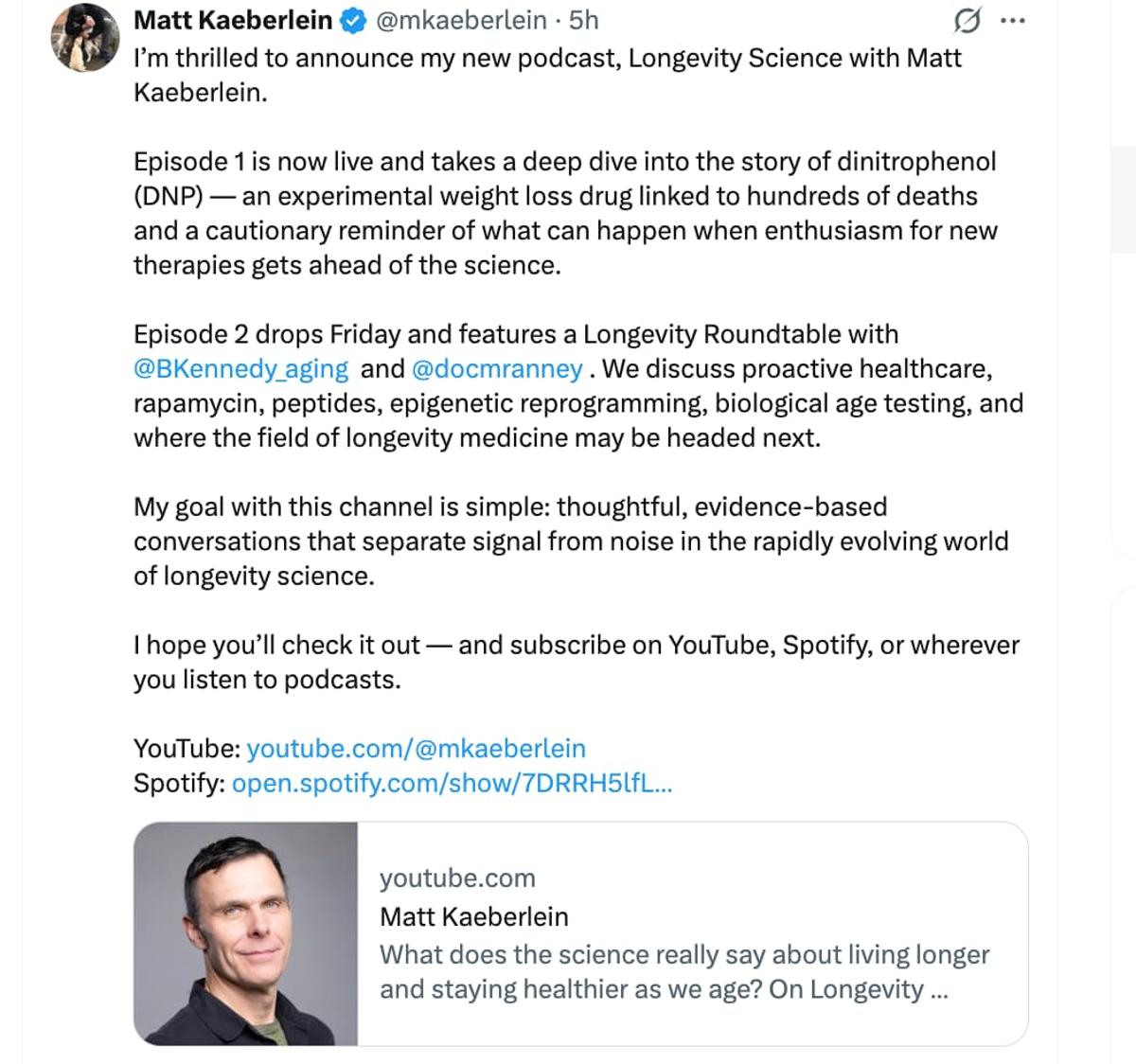
Matt Kaeberlein's New Longevity Science Podcast / Youtube Channel (May, 2026)
Dr. Matt Kaeberlein’s Longevity Science podcast provides a biochemistry‑focused audit of the burgeoning peptide market, clarifying that true peptides are short amino‑acid chains and excluding compounds like NAD+ and rapamycin. He evaluates leading peptides—synthetic mitochondrial agent Elamipretide and the popular...
Pharmaceutical Executive Daily: FDA Approves Hepcludex
Eli Lilly announced three acquisitions valued at roughly $3 billion to broaden its pipeline beyond diabetes and obesity, targeting oncology, immunology and other growth areas. The FDA approved Hepcludex, the first U.S. therapy for chronic hepatitis delta virus infection, offering a new...

An Update on Progress at Repair Biotechnologies, Developing Means to Regress Atherosclerotic Plaque
Repair Biotechnologies announced that its lead candidate, now designated REP-0004, is a liver‑targeted mRNA lipid‑nanoparticle that produces a fusion protein to break down intracellular free cholesterol. The approach triggers a rapid, systemic pull of cholesterol from plaques, delivering dramatic regression...
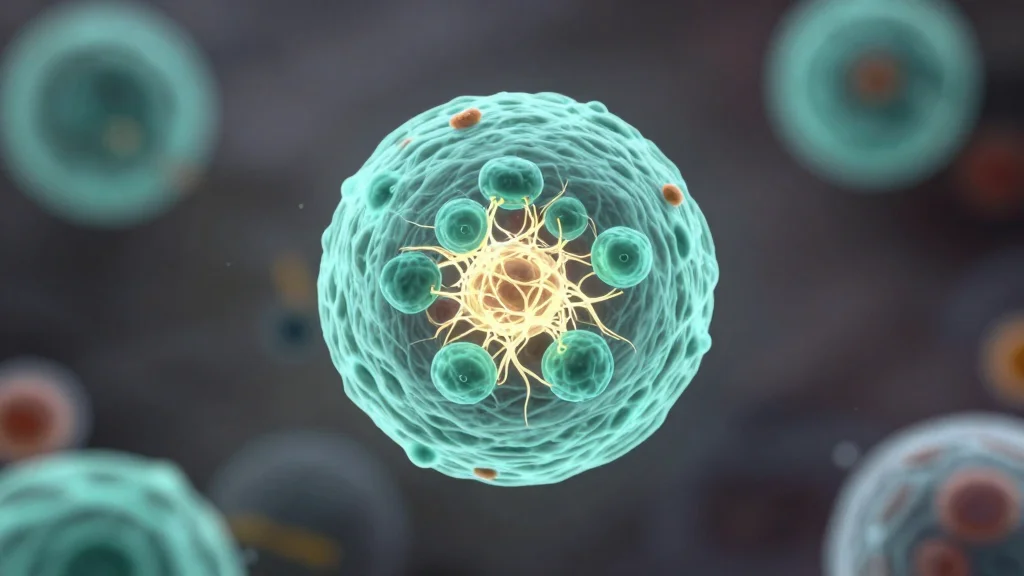
Self-Assembling Peptide Helps Liver Cancer Drugs Escape Lysosome Traps
Researchers engineered a self‑assembling peptide, RS‑FS, that remains as nanospheres in blood but converts to nanofibers inside the acidic, reducing environment of hepatocellular carcinoma lysosomes, where it damages the organelle and frees trapped drugs. In mouse models, RS‑FS combined with...

Peptides / Bioregulators
Therapeutic peptide development has accelerated over the past decade thanks to new synthesis, modification, and analytical platforms, positioning peptides as a fast‑growing drug class. While FDA‑approved peptides remain limited to GLP‑1 analogues and a handful of niche indications, a flood...

World Blood Cancer Day 2026: New FDA Approvals and Phase III Readouts
World Blood Cancer Day 2026 highlights a projected 180,000 new U.S. blood‑cancer cases, underscoring the disease’s growing burden. The FDA granted several approvals, including an all‑oral decitabine/cedazuridine‑venetoclax regimen for older AML patients and Beqalzi for relapsed mantle‑cell lymphoma. Janssen’s Tecvayli...

Fragments in the Clinic: VVD-214
Vividion’s covalent WRN inhibitor VVD‑214 evolved from a vinyl‑sulfone fragment hit (compound 1a) to a clinically viable candidate through a series of empirical SAR steps. Introducing a methyl group (2a) boosted stability and sub‑micromolar cellular potency, while a tert‑butyl cyclopentyl...

Clinical Trial Endpoint by Counting Hairs - Story of Clinical Trials in Androgenetic Alopecia (Hair Loss)
Veradermics announced that its extended‑release oral minoxidil (VDPHL01) met primary endpoints in a pivotal Phase 2/3 trial of 519 men with androgenetic alopecia. The study showed a mean increase of 30.3 hairs/cm² (once‑daily) and 33.0 hairs/cm² (twice‑daily) in non‑vellus target‑area hair...
Deep Generative Molecular Design and Its Value in Modern Drug Discovery (Paper Feb 26)
The February 2026 review maps the rapid rise of deep generative molecular design in drug discovery, arguing that AI is moving from virtual screening toward the creation of new, testable drug hypotheses. It categorises the field into three technical families—graph‑based...

Eli Lilly’s Triple Agonist Retatrutide Hits 28.3% Mean Weight Loss in TRIUMPH-1 Phase 3, Blowing Past Tirzepatide Benchmarks & Rewriting...
Eli Lilly’s triple‑agonist retatrutide delivered a 28.3% mean body‑weight reduction (about 70 lb) after 80 weeks in the phase‑3 TRIUMPH‑1 trial, far surpassing tirzepatide’s ~22.5% peak. The 12 mg dose drove 62.5% of participants to lose at least 25% of their weight, with 27.2%...

Inocras Announces ASCO 2026 Online Publication: Whole-Genome HRD Phenotyping as a Predictor of PARP Inhibitor Benefit in First-Line Maintenance High-Grade...
Inocras announced that whole‑genome sequencing‑based HRD phenotyping predicts benefit from PARP inhibitor maintenance in high‑grade serous ovarian cancer. In a real‑world study of 84 patients at Severance Hospital, HRD‑positive tumors had a median progression‑free survival of 27.5 months versus 12.0...

Galderma Receives U.S. FDA Approval for Differin® Epiduo® Acne Gel Prescription-to-OTC Switch
Galderma announced that the U.S. FDA has approved Differin Epiduo® Acne Gel for over‑the‑counter sale to consumers aged 12 and older. The switch moves a prescription‑strength combination of adapalene 0.1% and benzoyl peroxide 2.5% into the retail market, leveraging more than...

Avanzanite Bioscience’s Partner Agios Announces PYRUKYND® (Mitapivat) Approval in the European Union for Adults with Thalassaemia
Avanzanite Bioscience announced that the European Commission has granted marketing authorisation for PYRUKYND® (mitapivat) to treat anaemia in adults with transfusion‑dependent or non‑transfusion‑dependent alpha‑ or beta‑thalassaemia. The approval follows positive CHMP opinion and data from the Phase 3 ENERGIZE and ENERGIZE‑T...

PharmaEssentia to Present New Clinical Data Supporting the Use of Ropeginterferon Alfa-2b in Essential Thrombocythemia at ASCO and EHA 2026
PharmaEssentia will unveil new Phase 3 SURPASS‑ET data at ASCO and EHA 2026, highlighting that early initiation of ropeginterferon alfa‑2b yields markedly higher two‑year progression‑free survival (76.9% vs 43.1%) in high‑risk essential thrombocythemia (ET). Integrated analyses of SURPASS‑ET and Phase 2b EXCEED‑ET,...

Researchers Successfully 3D Print Living Cornea
Researchers have successfully 3D‑printed a living cornea using decellularized donor tissue as a scaffold and stem cells to repopulate it. By applying extrusion shear forces, they aligned collagen fibers to replicate the natural architecture, achieving 90% cell viability and observable...

Cyclarity Therapeutics Reports Safety Data for 7-Ketocholesterol Clearance
Cyclarity Therapeutics reported first clinical evidence that its AI‑engineered cyclodextrin drug, UDP‑003, can safely bind and promote urinary excretion of 7‑ketocholesterol, a toxic oxysterol linked to atherosclerosis. The Phase 1 safety trial demonstrated favorable pharmacokinetics and pharmacodynamics, with no serious adverse...

Reflections on Potentially Practice Changing Trials
The ASCO 2026 abstract session lifts its embargo, unveiling what analysts call the richest slate of phase‑3 oncology trials in a decade. Several late‑stage studies are poised to deliver practice‑changing data that could redefine standards of care across multiple tumor...

KHL Foundation Launches a Medical Tourism Gene Therapy Program for Older Patients
The KHL Foundation, founded by longevity veterans Ken Scott and Helga Sands, has launched a medical‑tourism program that offers a gene‑therapy cocktail to people over 60. The Rejuvenation Cocktail combines intramuscular follistatin with intranasal klotho and SIRT1, targeting muscle, brain...

Billion Cell Atlas: AI to Build ‘Most Comprehensive Map of Human Disease Biology’ Yet
Illumina announced the Billion Cell Atlas, a project to profile one billion cells with CRISPR perturbations across more than 200 disease‑relevant cell lines. The effort, backed by AstraZeneca, Merck and Eli Lilly, will generate roughly 20 petabytes of single‑cell RNA‑seq data in...

Scribe Therapeutics Achieves Regulatory Clearance to Initiate First-in-Human Clinical Study of STX-1150 for LDL-C Reduction
Scribe Therapeutics received clearance from Australia’s TGA to start a first‑in‑human Phase 1 study of STX‑1150, an in‑vivo CRISPR‑based therapy that epigenetically silences PCSK9 to lower LDL‑C. The open‑label, single‑ascending‑dose trial will enroll up to 64 high‑risk hypercholesterolemia patients across Australia...

Merck Announces First Patient Dosed in Phase 3 Study for Investigational Antibody-Drug Conjugate in Colorectal Cancer
Merck has dosed the first patient in the Phase 3 PROCEADE‑CRC‑03 trial of Precem‑TcT, the company’s inaugural anti‑CEACAM5 antibody‑drug conjugate (ADC) featuring an exatecan payload for metastatic colorectal cancer (mCRC). In Phase 1, the ADC achieved a 20.7% confirmed objective response rate...

ASCO 2026: Bayer to Present New Data Across Oncology Portfolio
Bayer announced that it will unveil 16 new oncology abstracts at the ASCO 2026 meeting in Chicago, spanning prostate, breast, lung, renal‑cell, colorectal and salivary‑gland cancers. The headline presentation will feature Phase II head‑to‑head data comparing NUBEQA (darolutamide) with enzalutamide in...

Secret World of Cellular Communication Visualized in 3D Thanks to New Nanoscopy Method
Australian National University researchers unveiled RO‑iSCAT, a label‑free nanoscopy method that captures living cells in three dimensions over days. By rotating illumination and stacking images, the technique amplifies weak light signals tenfold, revealing dynamic, thread‑like nanoscale bridges that mediate cell‑to‑cell...

How Ossium Health Is Building an Off-the-Shelf Bone Marrow Transplant Model
Ossium Health is developing an off‑the‑shelf bone‑marrow product sourced from deceased organ donors, aiming to eliminate the timing and dose constraints of traditional live‑donor transplants. The company’s first‑in‑human PRESERVE I trial has treated about 25 patients with cryopreserved marrow and...

What Does the Regulatory Landscape Look Like From the Other Side of FDA?
Harpreet Singh, MD, former FDA Oncology Division Director and now chief medical officer at Precision for Medicine, explains that industry sponsors find the oncology regulatory landscape more navigable when they leverage insider experience. He stresses three pillars: early and frequent...

Looking for a Lifeline: New Compounds Show Promise Against AMR
Scientists at Umeå University have created a new class of synthetic tricyclic compounds, called TriPcides, that effectively kill MRSA strains resistant to earlier GmPcide antibiotics. By redesigning the molecular scaffold to evade the lmrB efflux pump, the compounds prevent the...