Today's Bonds Pulse

Bond Yields Surge to 19-Year High, Sparking Stock Market Concerns
The 30‑year Treasury yield climbed to a 19‑year peak while the 10‑year rose from 4.03% to 4.69% before easing to about 4.5%. Goldman Sachs research notes that half‑percentage‑point spikes in yields typically turn short‑term S&P 500 returns negative, heightening correction risk. Inflation is running at 3.8% year‑over‑year, fueling the sell‑off.

Moody's Puts Corpus Christi Under Downgrade Review Again
Moody's has placed Corpus Christi, Texas, under a second downgrade review within seven months as the city’s water emergency timeline accelerates from November to late summer. The agency previously cut the city’s general‑obligation and utility‑enterprise bonds to A1 in December, attaching negative outlooks. City officials are pursuing $1 billion of water‑supply projects, including a desalination plant, while anticipating higher utility rates and increased leverage. Fitch also moved its outlook to negative, underscoring mounting rating pressure.

FX Curbs Lift Hedging Costs 70 Bps, Dampening Demand for Indian Bonds
India's Reserve Bank has tightened foreign‑exchange rules, sending onshore hedging costs up 30 basis points and offshore non‑deliverable forward (NDF) costs up nearly 70 basis points. The surge in hedging expenses wipes out most of the carry on Indian government...

Ceasefire Doesn't Move Muni Yields
Municipal bond yields held steady on Thursday despite a 10‑day cease‑fire between Israel and Lebanon, which some investors expected to boost confidence. Treasury prices slipped slightly and equities rose, but headline risk remained dominant. In the primary market, BofA Securities...

State Bond Banks Uniquely Positioned to Weather Muni Credit Challenges
State bond banks, representing a low‑mid single‑digit slice of the $4.3 trillion municipal bond market, issue highly rated revenue bonds that are insulated from a state’s general‑obligation debt limits. Their pooled‑loan structure, over‑collateralization and state‑aid intercept provisions routinely earn AAA or...
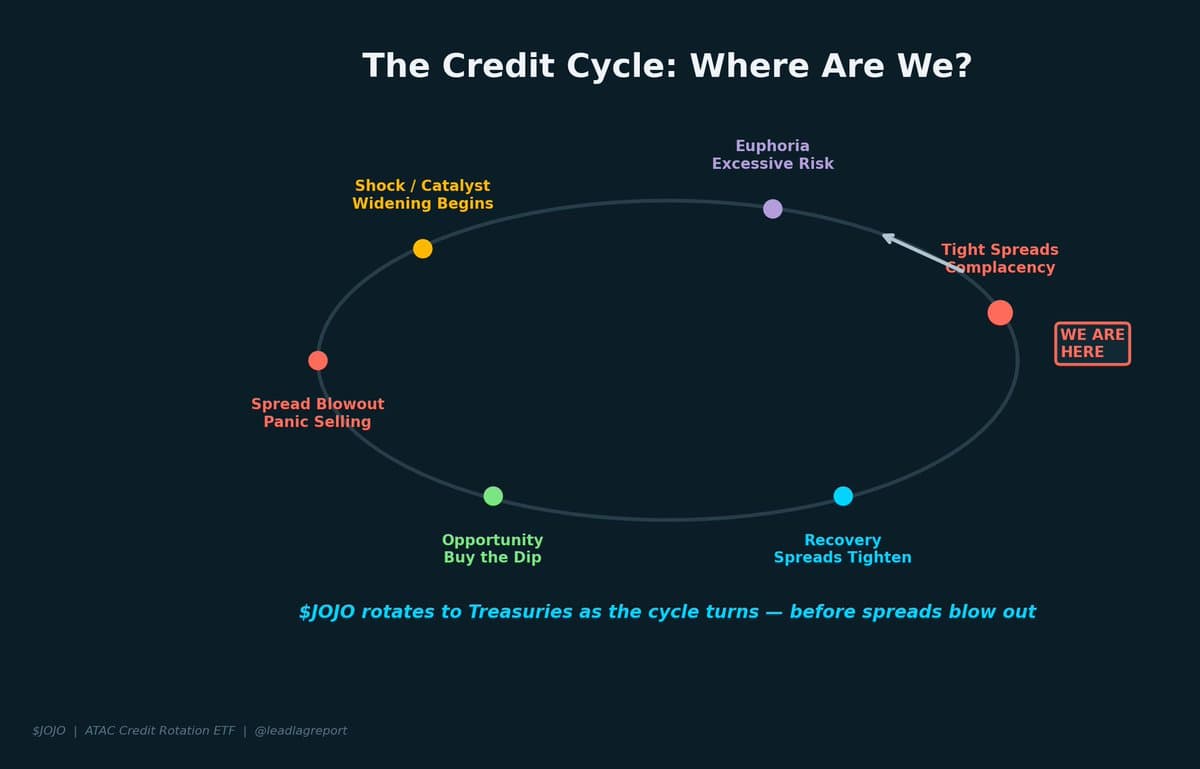
Anticipate Credit Widening Early, Before Market Realizes
The best time to prepare for credit widening is when no one thinks it's coming. That's the pattern. 2007. 2019. It repeats. $JOJO rotates before the crowd. https://t.co/w9KYmmLAug
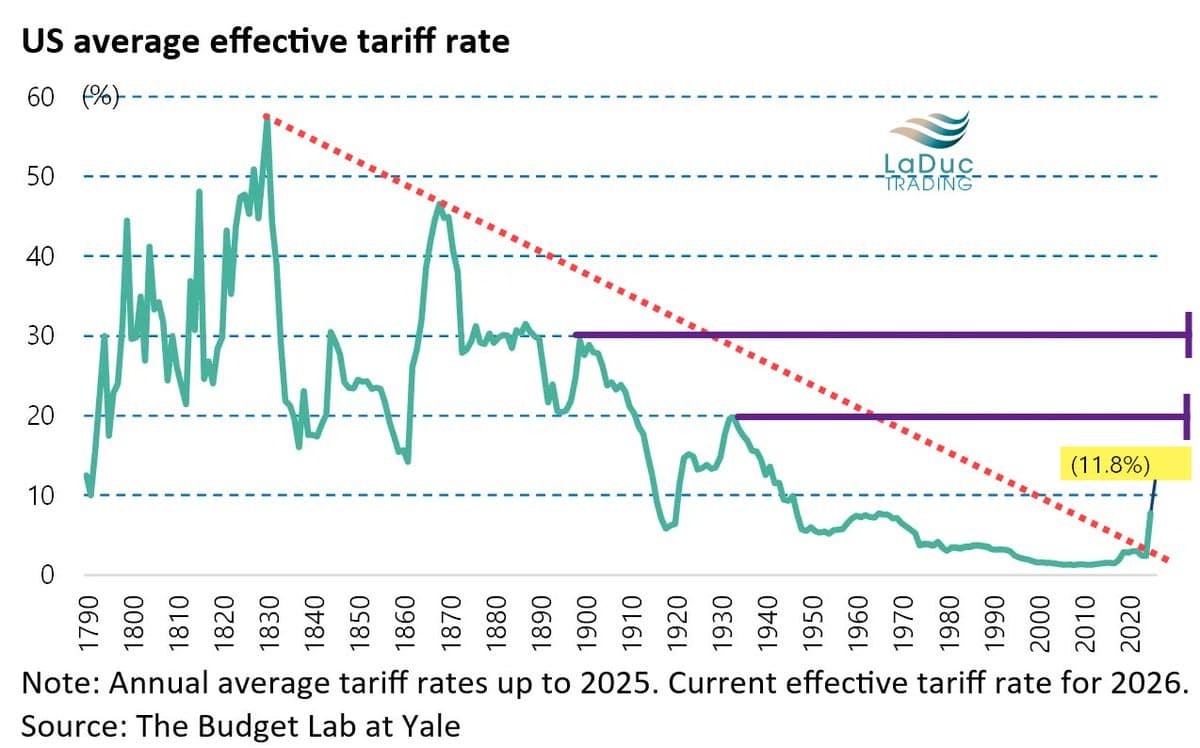
War and Energy Crisis Fuel Yield Surge, Bonds Bearish
Yes, higher yields for all kinds of reasons, namely: WAR IS INFLATIONARY in general, but when combined with global energy crisis? 🚀 Also, TARIFF REFUNDS are bearish bonds. And so are rising effective tariff rates... (yes, I do Technical analysis on everything.) #Paulson https://t.co/Z68kjUi0vF

Potential Space Florida Deal for 'Project Jaguar' Could Be First to Use New Spaceport PABs
Space Florida is preparing a conduit financing package for the confidential "Project Jaguar," authorizing up to $235 million in taxable and tax‑exempt bonds. The deal would be the first to employ private‑activity bonds (PABs) for a spaceport under the One Big Beautiful Bill Act,...

HYG Options Shockingly Cheap, IV30 at 5.1%
Always seems crazy how cheap $HYG options May be first time I actually looked at the IV30, it is 5.1% lmao
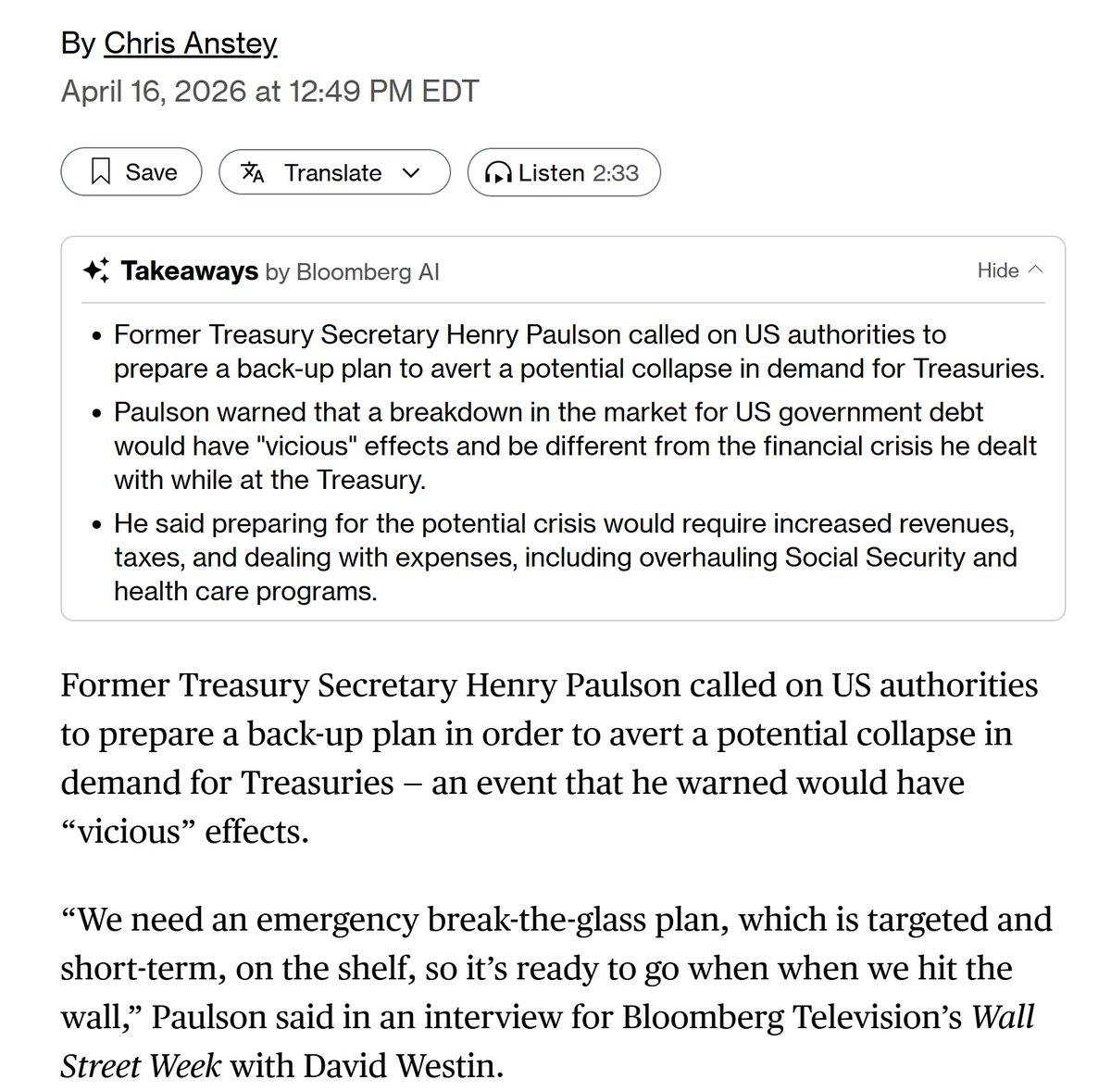
Paulson Warns of Imminent Vicious Bond Market Crash
Henry Paulson Says US Should Prepare for a ‘Vicious’ Bond Crash - BBG, 4/16/26 Conspicuous in its timing, IMO. "Why am I reading this now?" https://t.co/odjQGdaGW5

Baird's Diederich: Yields Look Attractive Amid Short-Term Inflation Rise
In this episode, Baird Portfolio Manager Gabe Diedrich explains why bond yields remain attractive despite a short‑term uptick in inflation, emphasizing that the Federal Reserve is likely to pause rate cuts until more data arrives. He notes that the labor...

Colombia Readies $4 Billion Bond Buyback, Buys Dollars to Support Peso
The Colombian government is purchasing U.S. dollars this week as it gears up for a $4 billion external‑debt buyback. The dollar purchases have pulled the peso away from a five‑year high and sparked a rally in Colombian sovereign bonds.
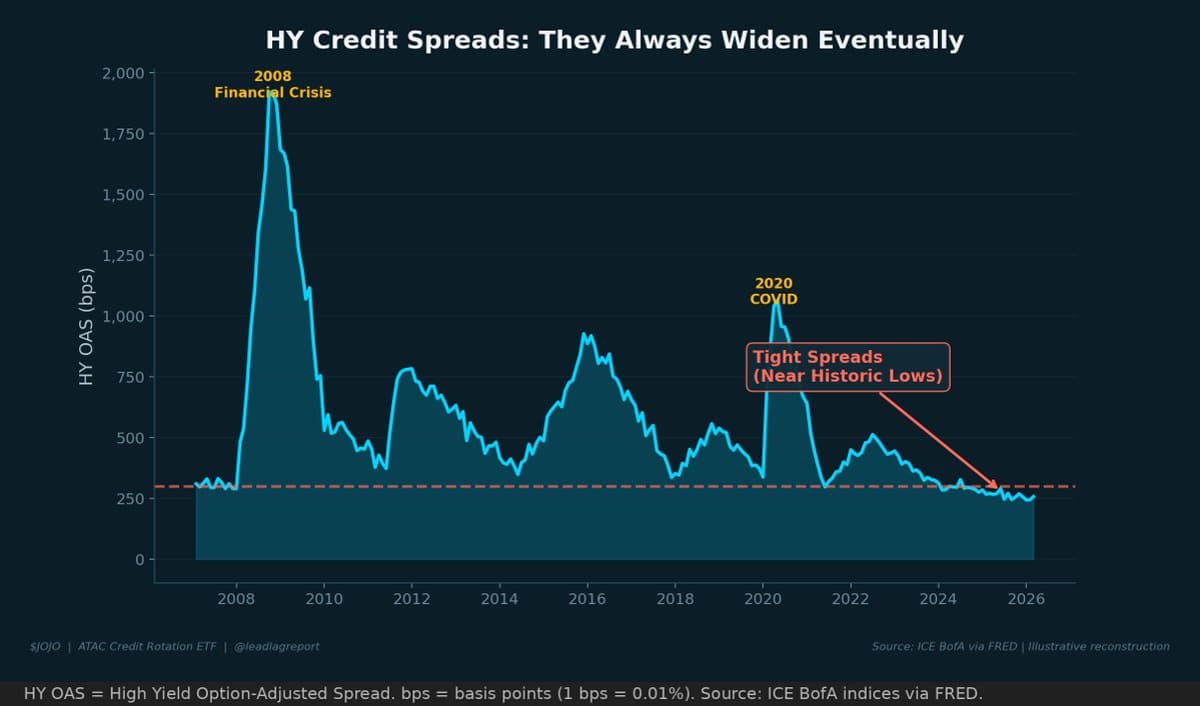
Extreme Credit Spread Lows Always Precede Inevitable Widening
Credit spreads have never stayed at extreme lows forever. Every cycle of historic tightness has been followed by widening. Every single one. $JOJO handles the timing. https://t.co/igf5Sab4bP

Beasley Extends Exchange Offers
Beasley Broadcast Group announced that it has extended the settlement deadline for its tender and exchange offers to 5:00 p.m. ET on April 24, 2026. The company confirmed that 100% of its existing first‑lien notes, representing $15.9 million in principal, were tendered and...
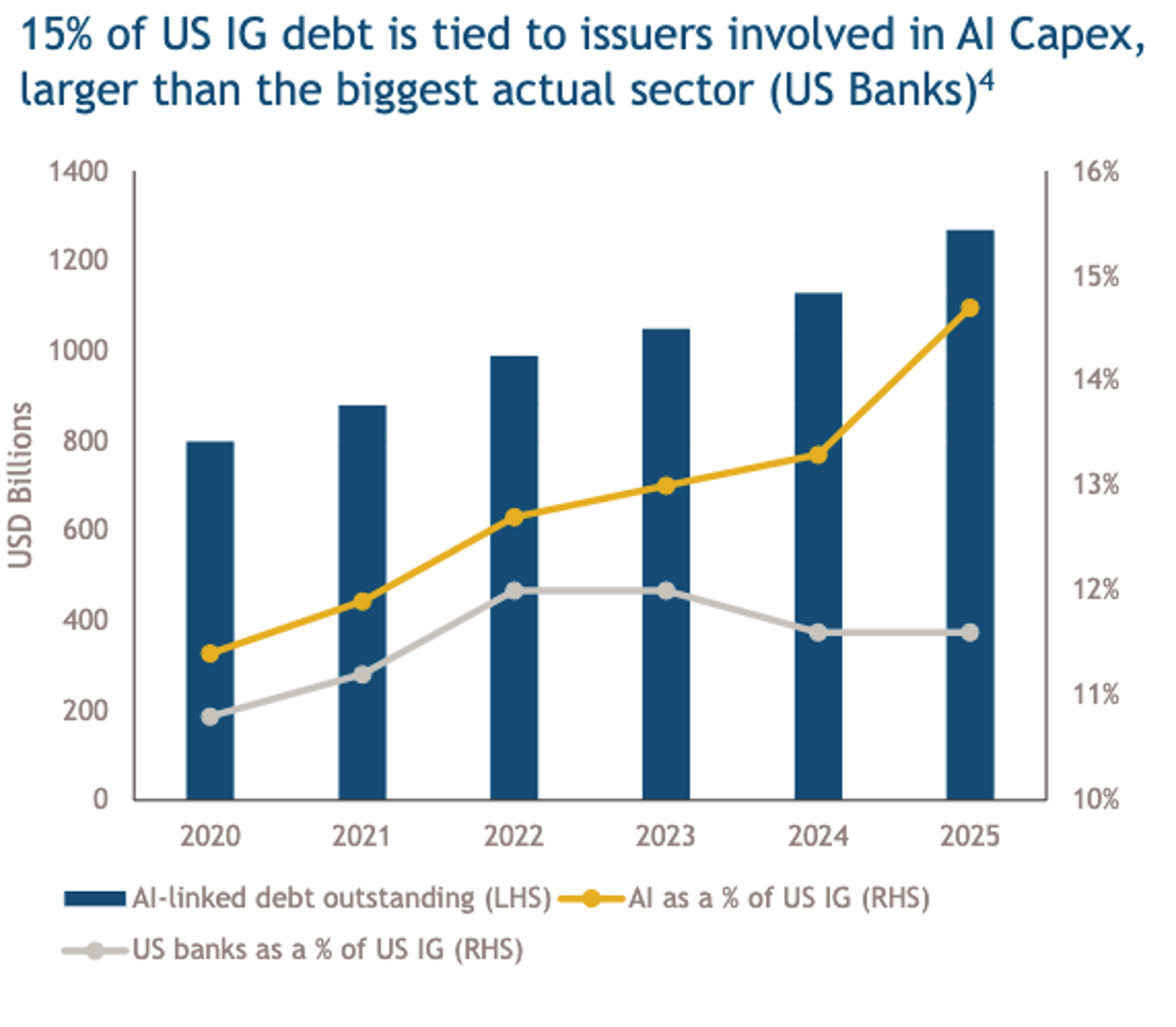
15% of US IG Debt Now Tied to AI Capex
Some 15% of US IG debt is now tied to issuers involved in AI Capex (chart via Muzinich & Co) https://t.co/5F2NY2AnxN

Chicago to Sell Water Bonds as City Looks to Become Regional Supplier
Chicago’s finance office will issue $875 million of second‑lien water revenue bonds next month, split into three series to fund capital upgrades and refinance older debt. Series 2026A allocates $661 million for new projects such as plant upgrades, meter replacements, 20 miles of pipe...

ECB Minutes Suggest Governing Council May Need More Evidence Before Raising Rates
The European Central Bank’s latest meeting minutes reveal that the governing council is reluctant to raise interest rates without clearer evidence that inflation pressures are persisting. Officials highlighted mixed data on price growth, especially in services, and stressed the need...
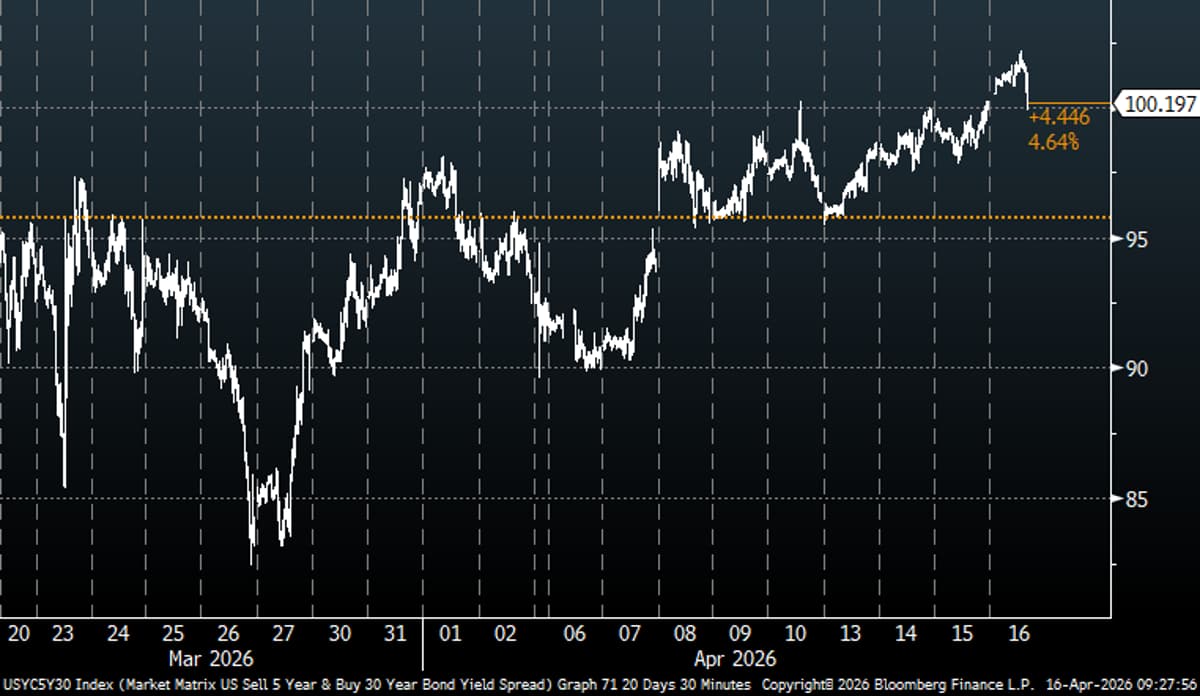
UST 5s30s Struggles Above 100bps, Steepeners Fade
UST 5s30s having trouble holding above 100 bps which makes sense. It has been a nice ride for steepeners the past few weeks so a nice round number spot to lean against 5s here https://t.co/Z59ZwWo3hI

Bank of England Adds U.S.-backed Bail‑in Tool to Bank Resolution Playbook
The Bank of England has revised its resolution guidance to introduce a provisional rights mechanism (PROPPs) for bail‑in scenarios, backed by a U.S. Securities and Exchange Commission no‑action letter. The change, driven by lessons from Credit Suisse and Silicon Valley...

Nationwide Mutual Returns with $200m Target for Aquila Re I 2026-1 Catastrophe Bond
Nationwide Mutual Insurance Co. is re‑entering the catastrophe‑bond market with a target of at least $200 million in multi‑peril reinsurance through the Aquila Re I Ltd. Series 2026‑1 transaction. The deal will issue two $100 million tranches—Class A‑1 priced at 4‑4.75% and Class B‑1 at...

US BSL CLO Rankings – March 2026
Bain topped the US BSL CLO market in the first quarter of 2026, pricing just under $4 bn of transactions, according to Creditflux data. Among arrangers, Bank of America captured the largest slice, holding a 17.64% market share for Q1. The...

How Bond Optimizers Can Work More Optimally—And Why It Matters
Bond optimizers are evolving from simple allocation tools into fully integrated digital platforms that combine market data, detailed bond analytics, and portfolio managers' research insights. By digitizing core scores, scenario risk ratings, and liquidity metrics, these systems can rank thousands...

Tower Hill Lifts Winston Re 2026-1 Cat Bond Target to as Much as $375m
Tower Hill Insurance Exchange has increased its target for the Winston Re Ltd. Series 2026‑1 catastrophe bond to as much as $375 million, up from the original $225 million goal. The upsized issuance covers three tranches—Class A, B and C—with each tranche’s size and...

Meeting of 18-19 March 2026
The ECB Governing Council met on 18‑19 March 2026 and flagged a sharp uptick in inflation risk after the Middle‑East war drove Brent crude above $100 a barrel and pushed European gas prices up 52%. Market participants now price roughly...

Pimco Goes Overweight on European Sovereign Debt After War‑Driven Selloff
Pimco has shifted its stance to overweight European sovereign debt, adding exposure across its global bond funds after a sharp selloff sparked by the Middle East conflict. Chief Investment Officer Andrew Balls says the war‑driven unwind created a pricing gap...

China to Raise $2.3 Billion via Hong Kong Dim Sum Bond Sale, Largest Since 2023
China's Ministry of Finance announced a 15.5 billion‑yuan ($2.3 billion) sovereign bond offering in Hong Kong on April 22, the biggest dim‑sum issuance since 2023. The sale comes as global investors seek refuge in Chinese assets amid heightened US‑Iran tensions, pushing yields lower...

Amundi Lists the USD-Hedged Version of Its Ex-US Global Government Bond ETF on the LSE
Amundi has listed the USD‑hedged share class of its Global ex‑US Government Bond UCITS ETF on the London Stock Exchange on 16 April 2026, completing the product’s European share‑class lineup. The ETF tracks the Bloomberg Global Treasury Large Markets DM ex US...

China Trims US Treasury Holdings Amid Rising Debt Supply as Global Ownership Hits Record
China’s central bank modestly reduced its U.S. Treasury holdings in February, continuing a multi‑year trend of diversifying its foreign‑exchange reserves. The cut came even as total foreign ownership of U.S. sovereign debt reached an all‑time high, buoyed by private investors...

BOE’s Greene Confirms Traders Correctly Cut Rate Hike Bets
BOE’s Greene says traders were right to trim rate hike bets https://t.co/TDPziGklgr via @irinaanghel12 @flacqua https://t.co/UsKWcSk4T7

Personality of the Year: Marjan Divjak
Marjan Divjak spearheaded Slovenia’s first sustainability‑linked sovereign bond, a pioneering move that ties borrowing costs to environmental performance. The €500 million issuance, launched in 2024, links coupon adjustments to verified climate‑reduction targets. Divjak oversaw the bond’s structuring, pricing, and post‑issuance reporting,...

Treasury Direct: The Only Safe Bet (TINA)
There is no alternative (TINA) for US Treasury. I am personally an investor via treasury direct :-)

BoE Dovish Shift Fuels Euro Gains Over Pound as UK Yields Lag
ING's Francesco Pesole says the Bank of England's increasingly dovish tone and a 10‑basis‑point drop in pricing for December tightening to 34 bp have pushed the euro‑pound pair higher. The divergence in rate expectations between the BoE and the ECB is set...

Foreign Share of US Treasury Demand Likely Overstated
The Largest Foreign Holders of US Treasury Securities and the “Basis Trade”: April 2026 Update. Foreign demand for the ballooning US Treasury debt is an increasingly important issue. But how much of that demand is actually “foreign?” https://t.co/qUbusfuVOx https://t.co/HYoQrWI8cP

China’s Outperformance Driven by Excess Liquidity Recycling
China’s outperformance is symptomatic of its liquidity glut, said @Trinhnomics , a senior economist covering emerging Asia at Natixis in Hong Kong. “That excess liquidity is being recycled into high-quality Chinese credit.” https://t.co/3rIShLlAgS

JLS: Mortgages Are Attractive
Nuveen Mortgage and Income Fund (JLS) is a leveraged closed‑end fund that overweights RMBS and CMBS while maintaining a low‑duration profile. Recent interest‑rate volatility has depressed mortgage‑bond prices, creating a favorable risk‑reward balance for the fund. JLS trades near the...

Zillow and Redfin Forecast Stable Mortgage Rates Near 6.4% as Housing Activity Gains Momentum
Zillow and Redfin released forecasts that mortgage rates will stay near 6.4% and that housing‑market activity is accelerating. Zillow reported a 32% jump in daily page views per listing and a 4.6% year‑over‑year rise in newly pending homes, while Redfin...

Treasury Yields Rise 2‑4 Bps as Oil Prices Stabilize Amid Iran Conflict
U.S. Treasury yields jumped 2‑4 basis points on Wednesday, reversing a two‑week decline after oil prices steadied following the U.S. war on Iran. The move reflects heightened caution among investors as energy‑driven inflation pressures linger.

Taiwan Insurers’ Hedging Pivot Cements Global Bond Prowess
Taiwan’s life insurers are reshaping the management of their roughly $700 billion overseas bond portfolio, a move that solidifies the island’s standing as a major global fixed‑income investor. New accounting standards introduced this year require insurers to seek higher foreign returns...

NAC: A Buy For Long-Duration Muni Value
Nuveen California Quality Municipal Income Fund (NAC) is a leveraged closed‑end fund that provides investors with exposure to long‑dated, investment‑grade California municipal bonds. The fund delivers a 7.5% nominal yield, which translates to a 16.34% tax‑equivalent yield for top‑bracket California...

Understanding Government-Sponsored Enterprises: GSE Definition & Examples
Government‑sponsored enterprises (GSEs) are privately held, congress‑chartered entities that boost credit flow to key U.S. sectors such as housing, agriculture, and education. They purchase loans from lenders, issue agency bonds, and recycle capital, enabling lenders to originate more credit. Notable...

Canadian Natural Resources Limited: Credit Rating Report
On February 27, 2026, DBRS, Inc. upgraded the outlook on Canadian Natural Resources Limited (CNRL) from Negative to Stable. The agency reaffirmed the issuer’s A (low) rating for both its overall credit and unsecured long‑term debt, and kept the commercial...
Morningstar DBRS Finalizes Provisional Credit Ratings on Brean Asset Backed Securities Trust 2026-RM15
Morningstar DBRS has issued provisional credit ratings for the Brean Asset Backed Securities Trust 2026‑RM15 reverse‑mortgage RMBS. The senior Class A1, A2 and AM tranches totaling $472 million received AAA (sf) ratings, while subordinate tranches span AA to B ratings. The...
Brean Asset Backed Securities Trust 2026-RM15: Credit Rating Report
DBRS, Inc. issued provisional final ratings for Brean Asset Backed Securities Trust 2026‑RM15 on April 15, 2026. The senior tranches—Classes A1, A2 and AM—received AAA ratings, while Class M1 was rated AA and Class M2 received an A rating. Subordinate...

Allspring Acquires GIA Partners' Fixed‑Income Team to Boost Emerging‑Market Credit
Allspring Global Investments announced a definitive agreement to acquire the specialist fixed‑income investment team of GIA Partners, led by Eduardo Cortes. The deal, expected to close in early Q3, adds a multilingual credit team with four decades of emerging‑market experience...

Yield Curve ‘Un‑Inversion’ Signals Recession Risk Not Seen Since 1970
Early April saw the 10‑year/2‑year Treasury spread widen to 0.52 percentage points, ending a multi‑year inversion. Analysts note that such “un‑inversions” have preceded every U.S. recession since 1970, prompting renewed caution across markets.
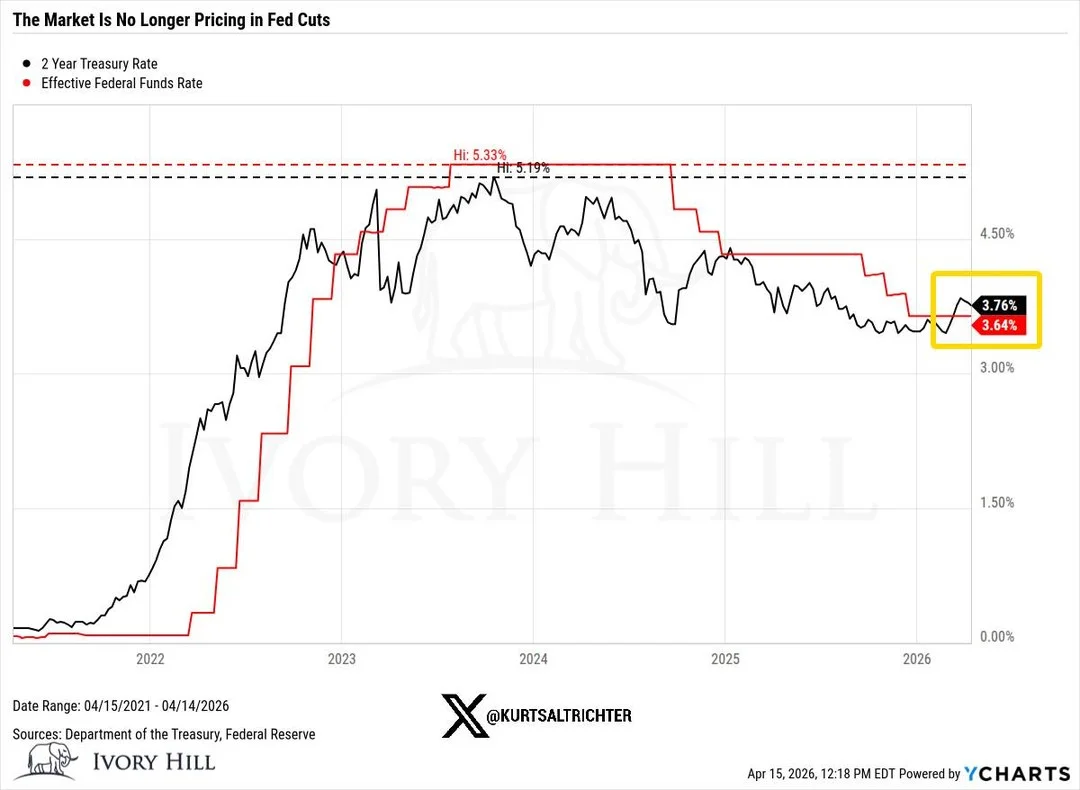
2-Year Treasury Signals No Rate Cuts, Hikes Expected
The 2-year doesn't lie. It tracks Fed expectations closer than anything else in the market. And right now it's sitting above the Fed funds rate for the first time in a while. That's not pricing in rate cuts. That's pricing in rate...
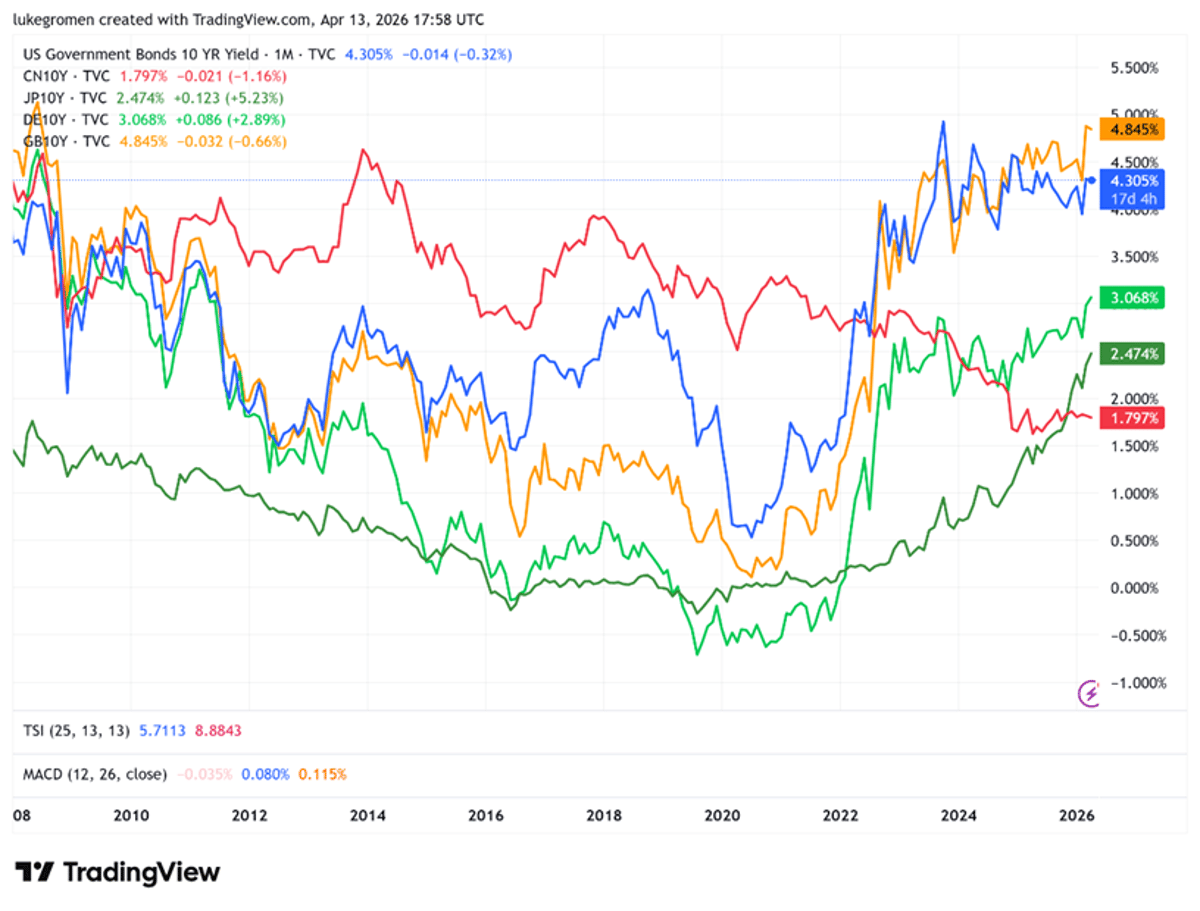
Yield Gaps Reveal Overlooked Oil Supply Risks
Orange: UK 10y yields Blue: US 10y yields Light Green: German 10y yields Dark Green: Japan 10y yields Red: China 10y yields 2008 to today. Everyone is focused on sovereign oil supplies; no one is considering oil supplies in context of the chart below. Big mistake...big...yuge https://t.co/BrA762Bo13

SEC Approves Exemptive Order and Proposed Rule Change to Permit Customer Cross-Margining in the U.S. Treasury Market
The SEC issued a conditional exemptive order that permits broker‑dealers registered as futures commission merchants to cross‑margin customer cash Treasury positions cleared by FICC with Treasury futures cleared by CME. In parallel, the SEC approved a FICC rule change to...

KBRA Assigns Preliminary Ratings to Harvest Funding PLC
Kroll Bond Rating Agency UK (KBRA) has issued preliminary ratings for seven classes of notes issued by Harvest Funding PLC. The notes are backed by a static residential mortgage‑backed securitisation (RMBS) containing roughly £2 bn (about $2.5 bn) of first‑lien UK mortgages,...

Agree Realty Boosts Q2 Investment to $725M, Raises Full-Year Guidance to $1.6B
Agree Realty (ADC) announced a $725 million investment across three external growth platforms in Q2 2025 and lifted its full‑year investment guidance to $1.4‑$1.6 billion. The REIT also reported $2.3 billion in liquidity, a 1.3% rise in core FFO per share, and a 15%...

I Bond Rates Jump to 4.26% as Inflation Spikes, Sparking New Wave of Investor Demand
The Treasury’s latest inflation data pushed the variable component of Series I savings bonds to an estimated 4.26% annualized, reviving investor interest that had waned after 2022’s rate peak. Savers are turning to the inflation‑indexed bonds as stock markets wobble...