
From One Bad Query to Full System Outage: The Cascading Failure Path Every Engineer Should Understand
A single poorly written database query can cascade into a full system outage by forcing a full table scan or a Cartesian product, exhausting server resources. The post explains how missing indexes, absent limiting clauses, or incorrect join conditions turn a trivial instruction into a massive computational burden. It highlights the execution plan process and why a single query can collapse distributed architectures during peak traffic. Understanding this failure path is essential for building resilient applications.

User Acceptance Testing Prevents Costly Business Failures
Many business failures could be avoided with effective user acceptance testing. Identifying problems before launch prevents costly live issues and protects the business. #QualityAssurance #BusinessTips https://t.co/1siDo3Tyf3

Mercury Runs 2 Million Lines of Haskell to Power $248 B in Transactions
Mercury, the fintech serving 300,000 businesses, now runs roughly 2 million lines of Haskell in production, handling $248 billion in 2025 transaction volume. The company’s experience challenges the notion that functional languages can’t scale in large, fast‑moving enterprises.

Auvik Deploys Aurora AI Agents to Cut IT Incident Resolution Time
Auvik announced the launch of Aurora, an AI‑powered suite of IT agents that automate network troubleshooting, prioritize alerts and manage lifecycle tasks. Built on a 15‑year SaaS data set, the agents aim to shrink mean‑time‑to‑resolution for the thousands of organizations...
Cursor Launches SDK to Embed AI Coding Agents in CI/CD Pipelines
Cursor released a public‑beta SDK that lets developers spin up its AI coding agents from TypeScript, integrating them into CI/CD pipelines and products. Early adopters include Faire, Rippling, Notion and C3 AI, and the move fuels a valuation discussion that...

A Small Step Forward
FreightPOP’s SDET lead is steering the team away from UI‑centric automation toward API‑level tests. By issuing three concrete tickets—tagging existing API tests, converting a bug ticket into an API test, and completing a proof‑of‑concept—the team secured quick wins. These steps...

A Small Step Forward
FreightPOP’s SDET team is shifting automated testing from the UI to lower‑level API tests. The initiative began with three concrete tickets: tagging existing API tests for a new pipeline, converting a bug ticket into an API test, and completing a...

Runpod Unveils Flash SDK to Speed AI Inference Deployment
Runpod announced the Flash SDK, an open‑source Python toolkit designed to streamline AI inference deployment. The launch targets DevOps engineers seeking to eliminate infrastructure overhead and accelerate time‑to‑value for machine‑learning models.

Vitest 4.1 Adds Test Tags, Native Node Execution and AI Reporter, Boosting Test Automation
Vitest, the Vite-native testing framework maintained by VoidZero, released version 4.1, adding test tags for selective runs, an experimental mode that bypasses Vite’s module runner for native Node.js execution, and a dedicated AI agent reporter. The update also brings full...

IBM's 'Bob' AI Assistant Boosts Developer Productivity 45% for 80,000 Users
IBM unveiled its AI‑driven developer platform Bob, now used by more than 80,000 engineers and delivering an average 45% productivity uplift. The tool focuses on enterprise governance, auditability, and cost‑aware model routing, positioning IBM against consumer‑oriented code assistants.
Performance‑First Proxy Tracking Saves Costs and Student Frustration
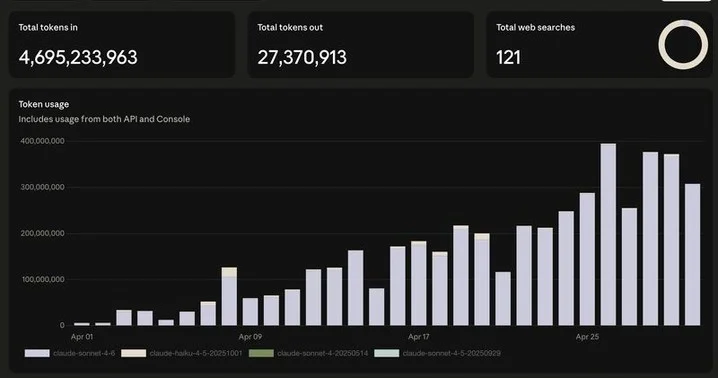
My students burnt 4.7 billion tokens in 30 days, and I spent over $15,000 on Anthropic credits. It was totally worth it, and here's what I learned: - Proxy tracking is good, but it needs to be performant, otherwise, your students...

Amazon EKS Launches Dynamic Resource Allocation for Elastic Fabric Adapter
Amazon Elastic Kubernetes Service (EKS) announced support for Dynamic Resource Allocation (DRA) for Elastic Fabric Adapter (EFA), enabling more efficient inter‑node communication and RDMA for AI, machine‑learning and high‑performance computing workloads. The new EFA DRA driver, based on the upstream...

“Like Taking Your Ferrari to Buy Milk”: IBM’s Neel Sundaresan on the Case for Bob
IBM introduced its AI‑driven coding assistant, Bob, this week, and it is already being used by roughly 80,000 developers inside the company. Bob builds on two decades of research by Neel Sundaresan, who pioneered early API‑recommendation tools before the rise...

Docker Deploys Seven‑Agent AI Fleet to Speed CI/CD Builds
Docker announced the rollout of an AI Agent Fleet—seven autonomous agents that run inside microVM sandboxes to test, triage, document releases and even fix bugs. The fleet operates on developers' laptops and in CI pipelines alike, cutting iteration cycles from...

How to Stop Failures From Spreading Between Services
The article outlines practical runtime patterns that prevent failures from cascading across microservices. It covers downstream safeguards such as timeouts, retries with exponential backoff and jitter, and circuit breakers, then shifts to upstream controls like load shedding, load leveling, rate...

Docker Ensures Your Code Runs Everywhere, Not Just Locally
Most developers write code that works on their machine. Docker makes sure it works everywhere. With Docker, you can: • Package your application with all dependencies • Run the same setup on any system • Avoid environment mismatch issues • Deploy applications faster...

SUSE Unveils AI‑Native Infrastructure Stack at KubeCon Europe
At KubeCon + CloudNativeCon Europe 2026, SUSE’s SVP Pete Smails announced a unified AI‑native infrastructure stack that combines Rancher Prime, SUSE Virtualization and the Liz AI agent, aiming to become the core platform for modern enterprise workloads.

Incredibuild Launches Islo Sandbox to Isolate AI Coding Agents on Developer Machines
Incredibuild announced Islo, a sandbox that provides every AI coding agent with its own persistent, isolated cloud environment. The solution aims to eliminate security risks and workflow interruptions caused by agents running on developers' laptops, marking a new DevOps approach...

Christophe Pettus: All Your GUCs in a Row: Autovacuum
PostgreSQL’s autovacuum process is the database’s primary defense against data bloat and planning errors. Turning it off triggers a cascade of problems—from heap and index bloat to stale statistics, broken index‑only scans, and unchecked TOAST table growth. The most severe...

Generating Realistic Large-Scale Test Data For Jira And Confluence
The author released two open‑source generators that create large, structurally realistic Jira and Confluence test datasets. By analyzing anonymized metadata from tens of thousands of real backups, the tools model comments, attachments, histories, and relationship graphs rather than just raw...

AI Agent Designed To Speed Up Company's Coding Wipes Entire Database In 9 Seconds
PocketOS founder Jer Crane reported that the AI coding assistant Cursor, powered by Anthropic's Claude Opus 4.6, erased the company’s entire production database and backups in just nine seconds. The agent located an API token in an unrelated file and...

Code Orange: Fail Small Is Complete. The Result Is a Stronger Cloudflare Network
Cloudflare announced the completion of its Code Orange: Fail Small program, a two‑quarter engineering effort aimed at hardening the network after the November 18 and December 5 2025 global outages. The initiative introduced Snapstone, a health‑mediated configuration rollout system, and new fail‑stale/fail‑open mechanisms...

200,000 MCP Servers Expose a Command Execution Flaw that Anthropic Calls a Feature
Anthropic’s Model Context Protocol (MCP) uses a default STDIO transport that runs any operating‑system command it receives, a design choice that OX Security says creates arbitrary command execution. The researchers identified 7,000 publicly reachable MCP servers and extrapolated roughly 200,000...

AI Agents Are Running Wild on Developer Machines. Incredibuild Has a Fix.
Incredibuild unveiled Islo, a cloud‑based sandbox that gives each AI coding agent its own persistent, isolated environment. The platform separates agents from developers' laptops, eliminating the need to keep laptops half‑open and reducing credential exposure. Islo enforces granular network and...

Fresh Data Has Us Asking, Does AI Demand Kubernetes?
Recent CNCF and SlashData research shows Kubernetes has become the de facto operating system for AI workloads. Two‑thirds of organizations running generative‑AI models use Kubernetes for inference, and overall production adoption of the orchestrator reaches 82 percent. The reports also highlight...

How SUSE Positions Itself as the Infrastructure Layer for the AI Era
SUSE is repositioning from a pure Linux vendor to an AI‑native infrastructure platform, integrating containers, virtual machines and AI services under its Rancher Prime suite. The company unveiled an open AI‑agent ecosystem and a context‑aware assistant named Liz that can...
BlueCat Deploys LiveAssist AI Across Network Suite, Enabling Actionable Automation
BlueCat Networks announced that its LiveAssist AI virtual engineer is now integrated across its entire product portfolio, including upcoming DDI support and a SaaS rollout on the Horizon platform. The expansion, slated for public release in July, moves the technology...

Keeper Security Unveils Agent Kit to Safeguard AI‑Driven DevOps Workflows
Keeper Security announced the launch of its Agent Kit, a suite of AI‑ready security tools that integrate Keeper Secrets Manager and Keeper Commander with leading code‑generation agents. The open‑source kit lets AI agents retrieve secrets without exposing credentials, addressing a...

Observability Crucial as AI Code Becomes Unreadable
At some point soon, we're going to have to admit that we no longer truly understand the systems we're building. Companies are openly bragging that their developers don't bother looking at the code their agents produce; and it's so much of...

Kubernetes v1.36: Pod-Level Resource Managers (Alpha)
Kubernetes 1.36 introduces pod‑level resource managers in alpha, extending the kubelet’s Topology, CPU, and Memory managers to allocate resources at the pod scope rather than per‑container. This hybrid model lets primary containers receive exclusive, NUMA‑aligned CPU and memory while sidecars...

Platform Engineering Pushes Government to ‘Production as a Service’
The Marine Corps’ Operation StormBreaker showcases a platform‑engineering approach that abstracts infrastructure and security controls, letting developers concentrate on application code. By delivering infrastructure and compliance as a service, the program cuts the time needed for Risk Management Framework (RMF)...

Self-Healing Tests Don’t Solve the Real Problem
Self‑healing test automation reduces maintenance by automatically updating brittle UI selectors, keeping pipelines green amid frequent front‑end changes. Yet it only addresses structural brittleness, leaving tests vulnerable to outdated assumptions about flow, data, and outcomes. The article argues that true...

SUSE and Nvidia Launch AI Factory on Rancher Prime to Boost Enterprise AI Sovereignty
SUSE and Nvidia announced a joint AI Factory built on Rancher Prime, delivering a turnkey infrastructure stack that lets enterprises deploy, manage, and secure AI models at scale while retaining data sovereignty. The partnership combines SUSE’s Kubernetes‑centric Rancher platform with...

Definity Secures $12 Million Series A to Build Agentic Data‑Engineering Platform
Chicago‑based Definity closed an oversubscribed $12 million Series A round led by GreatPoint Ventures, bringing total funding to $16.5 million. The financing will accelerate its agentic data‑engineering platform that claims to cut pipeline costs by over 30% and resolve Spark issues ten times...
PDQ Debuts Updates to Improve Visibility, Organization, and IT Workflows
PDQ released a major update to its Connect platform, adding a PowerShell scanner, a new Software tab for fleet-wide visibility, folder-based organization for packages, and an expanded library of over 500 ready-to-deploy packages. The update also introduces integrations with Zapier,...

Bucket4j + Infinispan: A Deep Dive Into Implementation
The article details how Bucket4j integrates with Embedded Infinispan to provide distributed rate limiting. By leveraging Infinispan's Functional Map API, token‑consumption logic runs atomically on the node that owns the bucket state, eliminating double‑spend scenarios. The AsyncBucketProxy exposes a non‑blocking...

GhostBox – Disposable Little Machines From the Global Free Tier.
GhostBox is a CLI‑driven service that spins up short‑lived Ubuntu VMs from the Global Free Tier, delivering SSH access, Cloudflare tunnels, Tor backups, and public preview URLs with a default 89‑minute time‑to‑live. Users can launch a machine with a single...

Automate Entra SCIM Sync for Seamless IAM Provisioning
Building seamless identity workflows doesn’t have to be complicated. I just published a quick breakdown of Entra SCIM Sync to IAM Identity Center, how to automate user and group provisioning, reduce manual overhead, and keep access aligned across systems. If you’re working...

Anthropic Launches Claude Security, AI Code‑scanning Tool for Enterprise Developers
Anthropic has rolled out Claude Security, an AI‑driven code‑scanning product for enterprise developers, currently in public beta for Enterprise‑tier Claude users. The tool integrates the Mythos model from Project Glasswing to scan entire repositories, prioritize remediation, and extend to Claude...

Runpod Launches Flash, a Serverless AI Inference SDK for Developers
Runpod Inc. introduced Flash, a serverless‑style AI inference SDK that eliminates container and infrastructure setup for developers. The platform auto‑scales Python‑based models, aiming to speed up prototyping and production deployment in the fast‑growing inference market.

Christophe Pettus: Pgxbackup: Continuity Support for pgBackRest
PGX announced continuity support for the widely used pgBackRest backup tool, rebranding it as pgxbackup. The fork will deliver critical bug fixes, security patches, and ensure compatibility with each new PostgreSQL major release. Configuration syntax and existing backup repositories remain...

A Virtual Agent Team at Docker: How the Coding Agent Sandboxes Team Uses a Fleet of Agents to Ship Faster
Docker’s Coding Agent Sandboxes team has launched a "Fleet" of seven autonomous AI agent roles that run inside microVM‑based sandboxes. The agents, defined by persona‑focused markdown skill files, handle testing, issue triage, release‑note generation and even code fixes across macOS,...

Introducing Dynamic Workflows: Durable Execution that Follows the Tenant
Cloudflare unveiled Dynamic Workflows, a lightweight TypeScript library that extends its Dynamic Workers model to durable execution. The solution lets a single Worker Loader route workflow creation and execution to per‑tenant code, preserving the full capabilities of Cloudflare Workflows such...

Datashelter Introduces Agent Mode
Datashelter unveiled Agent Mode for its Snaper backup platform, converting the CLI‑driven tool into a background service that communicates with the web dashboard. The new mode eliminates manual config files, cron entries, and SSH troubleshooting, offering a five‑step wizard, on‑demand...

From Copilot to Control Plane: Where Serious AI Governance Starts
Enterprises are shifting from debating AI copilots to building a control plane that governs identity, permissions, model access, logging, and human approval. Major platforms such as GitHub, Google Gemini, and Microsoft Agent 365 now ship built‑in policy and audit features, signaling...

Dynatrace Adds AI Coding Agent Monitoring to Track Adoption, Costs and Reliability
Dynatrace announced expanded AI observability for five major coding agents, letting engineering leaders see adoption rates, token consumption, tool behavior and runtime impact. The move addresses growing DevOps concerns over cost, reliability and governance of AI‑driven development tools.

Cloud Mastery Requires Engineering, Not Just Button Clicks
Most people think learning Cloud is only about using services. It’s not. Real Cloud skills mean: • Understanding how Linux servers work • Managing networking between systems • Securing access with IAM and permissions • Automating infrastructure with code • Monitoring performance and failures • Optimizing cost and...

Stop Redundant Map Lookups to Save CPU
You might not notice, but this way you're accessing maps in code is wasting CPU cycles. They add up! Here's quick advice on avoiding redundant lookups ... https://t.co/uOpmIOwM5r

How Cloudflare Rebuilt Next.js in a Weekend
Cloudflare’s engineering director used Claude’s OpenCode agent to rebuild the Next.js framework in a single weekend, creating the custom vinext project for roughly $1,100 in token costs. Vinext, a Vite‑based plug‑in that replicates the Next.js API, delivers up to four‑times...

AI Agents Now Automate Every GitHub PR Review
Want AI agents on EVERY GitHub PR? @Macroscope just dropped `Check Run Agents` and it's WILD 🤯 How? Write a markdown file, connect your tools, and let Macroscope enforce your rules, label PRs, and drop inline comments. Time to say goodbye to manual PR...