
Stop Measuring Fast. Start Measuring Better
The article argues that AI‑assisted pull‑request (PR) reviews boost throughput but can destabilize the broader delivery system. While teams like Honeycomb saw merges rise from about 30 to 74 per day, defect escape rates remain flat, meaning more change reaches production and downstream load grows. The author warns that measuring only speed masks rising rework, incidents, and engineer burnout. Instead, leadership should shift metrics toward PR quality, downstream impact, and capability uplift, using AI to make reviews better rather than merely faster.

NASA’s Jet Propulsion Laboratory Advances Deep Space Mission Operations with Red Hat OpenShift Virtualization
NASA’s Jet Propulsion Laboratory has transitioned its mission‑critical IT environment to Red Hat OpenShift Virtualization. The move consolidates virtual machine workloads onto a unified hybrid‑cloud platform that offers automated VM provisioning, robust security and compliance tools. Red Hat’s built‑in SELinux,...

Database Selection in AI-Powered Software Engineering
Database selection has become a strategic cornerstone for AI‑powered software engineering, influencing model training speed, real‑time inference, and overall system reliability. The article outlines the strengths of relational, NoSQL, NewSQL, time‑series, and emerging vector databases, showing how each aligns with...

My AI Learning Journey – Part 11 – AI Assisted Coding – Good or Bad?
The author frames AI‑assisted coding as the latest abstraction layer built on decades of software stack evolution, from transistors to DevOps. While large language models can generate and refactor code quickly, the piece warns that without deep understanding of lower‑level...

SRE Weekly Issue #516
SRE Weekly Issue #516 curates a range of SRE insights, from incident.io’s four‑step incident workflow framework to Datadog’s 99% query‑latency reduction by optimizing index scans. The issue also examines AI’s realistic role in SRE by 2026, critiques superficial blameless postmortems,...

Built and Deployed an AI Agent
Engineers often stall after building a local AI demo, hitting a deployment wall. This post provides a step‑by‑step guide that lets anyone spin up a fully functional AI task‑agent on Render in about 30 minutes, complete with a public URL....

Axboe Hacking On New Linux Patches For 60% Increase To Per-Core I/O Performance
Linux kernel maintainer Jens Axboe released a proof‑of‑concept patch series that lifts per‑core storage I/O performance by roughly 60%. The changes extend io_uring’s registered buffers with pre‑allocated bios and DMA mapping, eliminating bio allocation and map/unmap overhead. The patches target...

Debian Release Team: Debian Must Now Ship Reproducible Packages
The Debian release team announced that Debian 14 “Forky” will be the first major release to mandate reproducible packages, enforcing bit‑for‑bit identical builds from source to binary. A new migration check now blocks any package that fails reproducibility or regresses...

Day 163: Build Service Dependency Mapping
The post outlines building an automated service‑dependency mapping system that parses logs to generate a real‑time graph of microservice interactions. It details four core components—a log parser, graph builder, visualization dashboard, and health‑impact analyzer. By weighting edges with call frequency...
Week 3 Integrated Logging Pipeline (MVP): From Serialization to Production-Style Observability
The post walks developers through building an end‑to‑end logging pipeline MVP that mirrors a production observability path: ingestion, normalization, optional validation, enrichment, and output. It reuses Week 3 course lessons—JSON logs (Day 15), canonical normalization (Day 18), and context enrichment (Day 21)—and stitches them...

The AI Code Review Checklist that Prevents the Next $1M Production Incident
A series of high‑profile AI‑driven code failures—including Replit’s agent that erased SaaStr’s production database—has exposed a growing gap between rapid AI code generation and human review capacity. Data from GitClear, Apiiro, Veracode and other studies show AI‑generated code now carries...
Build a Distributed Logging Pipeline(TCP, UDP, Batching, Compression, TLS) – Week 2 Integration Project
The blog post showcases a merged repository that consolidates days 8‑14 of a distributed logging course into a runnable demo platform. It includes producers that ship logs, receivers that persist them, and a dashboard for health metrics, all configurable with...

Handling "Hot Keys" In Distributed Databases: Detection and Splitting Strategies
A hot key occurs when a single cache or database key draws a disproportionate share of traffic, overloading the node that owns it despite the rest of the cluster being idle. In Redis clusters this manifests as extreme CPU usage,...

The Openclaw Bill Shock No One Sees Coming
OpenClaw agents run continuously, often while users sleep, and can generate hidden costs when heartbeats reload full conversation history. Recent GitHub issues revealed regressions where light‑context flags were ignored, causing millions of input tokens to be consumed daily. The post...

271 Bugs Found in Firefox, Zero Written by a Human Attacker. What This Means for the Future of Safe Code...
Mozilla’s Mythos AI, built by Anthropic, scanned Firefox and uncovered 271 security‑sensitive bugs, all originating from machine‑generated code. The previous scan with a general model found only 22 issues, highlighting the power of purpose‑built AI for vulnerability research. The findings...

The Code Is Writing Itself. The Risks Aren’t Waiting.
Developers are increasingly using AI systems that can write, test, and deploy code autonomously, accelerating software delivery but creating opaque security gaps. Operant AI introduced Endpoint Protector, a runtime‑focused solution that watches AI‑driven coding agents for suspicious behavior, aiming to...

Spring Boot Interview Question — Your API Went Viral Overnight
A merchant checkout API built with Spring Boot saw traffic surge from 2,000 to 250,000 requests per minute after a partner’s retry bug, overwhelming CPU, DB connections, Redis, and downstream gateways, dropping availability to 62%. Investigation revealed 80% of the...

How to Set Up Claude Code Channels Locally
Claude Code Channels provides a lightweight, locally‑run alternative to OpenClaw for connecting Claude AI to Discord. The setup requires a running Claude Code session, a Pro or Max Claude.ai subscription, and the installation of Bun and official Claude plugins. Users...

Shepherd Model Gateway Cuts GPU Idle Time With Rust
The LightSeek Foundation unveiled Shepherd Model Gateway (SMG), a Rust‑based service layer that offloads all CPU‑bound tasks—tokenization, detokenization, and multimodal preprocessing—from Python‑driven LLM serving pipelines. By replacing the Python Global Interpreter Lock bottleneck with a native gRPC data plane, SMG...
Database Schema Migrations with Zero Downtime: The Expand-Contract Pattern
A contract forces a split of a 200 million‑row `full_name` column into `first_name` and `last_name`. The naïve ALTER TABLE approach acquires an ACCESS EXCLUSIVE lock, taking dozens of minutes and taking the application offline. The article introduces the Expand‑Contract pattern, which...

DORA Metrics Are Lying to You and AI Is Making It Worse
DORA metrics have long served as a DevOps shorthand for delivery performance, but they only measure the flow of changes, not the team’s grasp of the underlying systems. The rise of AI‑generated code lets engineers ship faster while the code’s...

Microsoft Enables Hotpatching by Default: Windows Updates without Restarts Become a Reality
Microsoft will enable Hotpatching by default for eligible Windows 11 24H2+ and Windows Server 2025 devices starting in May 2026. The feature lets security‑relevant updates be applied directly in memory, removing the need for a system restart. Hotpatching is limited to devices managed...

If You Struggle with Designing Rate Limiters, Learn the Token Bucket Algorithm
The blog teaches the token bucket algorithm, the core technique behind rate limiters used by AWS API Gateway, Stripe, Shopify and many other production services. It breaks down the algorithm step‑by‑step, defines the five essential parameters, and shows how to...

Qt's Latest AI Push Is Letting AI Agents Deal With Performance Profiling
Qt Group unveiled the QML Profiler Skill, enabling AI agents to automatically profile performance of 2D Qt Quick applications. The skill can detect rendering, logic, and memory bottlenecks and generate concise diagnostic reports. It has been tested with GitHub Copilot,...

How Terraform Works
Terraform streamlines infrastructure provisioning by treating cloud resources as code written in HashiCorp Configuration Language (HCL). Users define resources, providers, variables, and modules in .tf files, then run terraform plan to preview changes against the current state. After approval, terraform apply executes the plan,...

Shift Left Did Not Fix It
The article argues that the popular "shift left" approach—moving testing earlier in the software delivery pipeline—has not solved quality problems because organizations failed to shift decision‑making authority upstream. While testers are placed in early meetings and automation coverage rises, the...
Why AI Coding Tools Still Fail in Production
The piece argues that AI coding tools still stumble in production because reliability, not raw capability, remains the biggest hurdle. Hallucinated dependencies, subtle logic bugs, and context‑drift force developers into a costly verification loop. Leading teams now treat AI as...
Testing SQL Like a Software Engineer: Unit Testing, CI/CD, and Data Quality Automation
The article shows how to treat SQL like production code by adding unit tests, CI/CD pipelines, and data‑quality checks. Using an Amazon interview problem, the author wraps a complex query in a Python function, defines expected results, and validates them...
Day 56: Real-Time Indexing of Incoming Logs
A near‑real‑time indexing pipeline now indexes incoming logs within 100 ms, using a distributed inverted index optimized with LSM‑trees for high write throughput. An index coordination layer manages shard distribution and replication across nodes, while a low‑latency query API provides millisecond‑scale...
RAM, Disk, and Network: The Speed Differences That Explain Caching, Batching, and CDNs
The post explains how the three primary data‑movement layers—RAM, disk, and network—differ dramatically in latency, shaping modern backend architecture. RAM delivers nanosecond‑scale access, while disks operate in the millisecond range, and network calls add tens to hundreds of milliseconds. These...

Artificial Intelligence Choosing My Tools and Services
While building a signup form for CentralPark.Guide, the author used Claude, an AI assistant, to generate a Cloudflare Worker that processes form submissions and emails. Claude prompted the author to choose an email provider, defaulting to Resend because of its...

Last Week Ignite - 5.3.26
OpenAI unveiled Symphony, an open spec that turns Linear into a control plane for autonomous coding agents, while its partnership with Microsoft was rewritten to allow multi‑cloud deployment and AWS added OpenAI models to Bedrock. The week also saw the...
The Claude Code System that Replaces a 5-Person Team
The blog post unveils an eight‑system Claude Code framework that stitches together 6‑12 AI hacks into fully autonomous production workflows. Running all eight systems costs roughly $200‑$500 per month, yet the suite claims to replace a five‑person engineering team valued...
Capacity Planning Modeling: Using Little's Law to Predict Hardware Needs
The post explains how Little’s Law (L = λW) provides a precise framework for capacity planning by tying together concurrency, request rate, and latency. Using a 500 RPS API with 200 ms response time, it shows that 100 concurrent requests are required, and that...
From One Bad Query to Full System Outage: The Cascading Failure Path Every Engineer Should Understand
A single poorly written database query can cascade into a full system outage by forcing a full table scan or a Cartesian product, exhausting server resources. The post explains how missing indexes, absent limiting clauses, or incorrect join conditions turn...

A Small Step Forward
FreightPOP’s SDET lead is steering the team away from UI‑centric automation toward API‑level tests. By issuing three concrete tickets—tagging existing API tests, converting a bug ticket into an API test, and completing a proof‑of‑concept—the team secured quick wins. These steps...

A Small Step Forward
FreightPOP’s SDET team is shifting automated testing from the UI to lower‑level API tests. The initiative began with three concrete tickets: tagging existing API tests for a new pipeline, converting a bug ticket into an API test, and completing a...

How to Stop Failures From Spreading Between Services
The article outlines practical runtime patterns that prevent failures from cascading across microservices. It covers downstream safeguards such as timeouts, retries with exponential backoff and jitter, and circuit breakers, then shifts to upstream controls like load shedding, load leveling, rate...

Generating Realistic Large-Scale Test Data For Jira And Confluence
The author released two open‑source generators that create large, structurally realistic Jira and Confluence test datasets. By analyzing anonymized metadata from tens of thousands of real backups, the tools model comments, attachments, histories, and relationship graphs rather than just raw...

Datashelter Introduces Agent Mode
Datashelter unveiled Agent Mode for its Snaper backup platform, converting the CLI‑driven tool into a background service that communicates with the web dashboard. The new mode eliminates manual config files, cron entries, and SSH troubleshooting, offering a five‑step wizard, on‑demand...

How Cloudflare Rebuilt Next.js in a Weekend
Cloudflare’s engineering director used Claude’s OpenCode agent to rebuild the Next.js framework in a single weekend, creating the custom vinext project for roughly $1,100 in token costs. Vinext, a Vite‑based plug‑in that replicates the Next.js API, delivers up to four‑times...

How Traversal Prevents Million-Dollar Outages
Major cloud providers have suffered multi‑hour outages, costing millions per hour. As AI‑generated code proliferates, outages become harder to diagnose, leading to executive turnover and massive fines. Traversal, founded by MIT researcher Anish Agarwal, offers an AI‑powered Site Reliability Engineer...

Observability in Practice: Finding the Why Behind System Failures
The post explains why traditional monitoring falls short and how observability provides the “why” behind system failures. It outlines the three pillars—metrics, logs, traces—and shows how a Prometheus‑Grafana stack can be deployed in under 30 minutes. Real‑world data from a...
Immutable Infrastructure: Why You Should Never Patch Production Servers
The article argues that patching live production servers creates configuration drift and operational risk, and proposes immutable infrastructure as the antidote. It defines immutability as deploying a baked machine image that is never altered in place; any change requires building...

Generate Partial Device Configurations with Netlab
At ITNOG 10 the author used netlab to automate a complex, multi‑vendor lab consisting of a leaf‑and‑spine fabric, BGP route reflectors, and edge devices. By defining the topology in a YAML file, netlab produced a wiring diagram, an IP‑addressing plan, and...
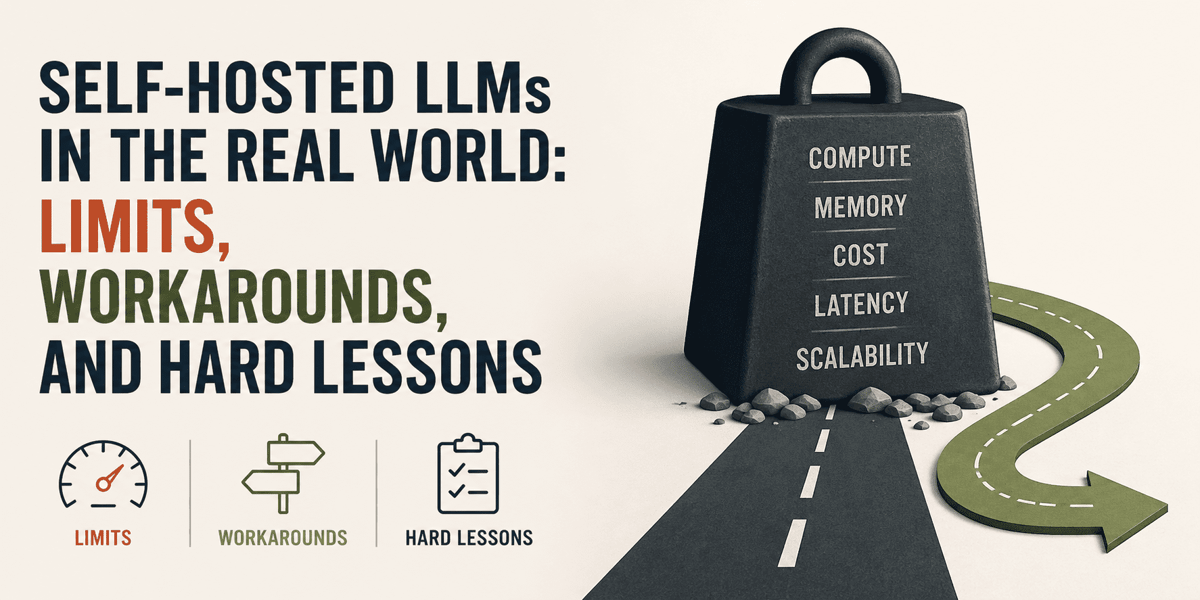
Self-Hosted LLMs in the Real World: Limits, Workarounds, and Hard Lessons
The article demystifies the gap between the hype of self‑hosted large language models and the gritty operational reality. Running a 7 B‑parameter model already demands 16 GB of VRAM, while larger 13 B‑ or 70 B‑parameter models require multi‑GPU rigs or aggressive quantization. Quantization...

TinyLog: Self-Hosting Is Back
The author of TinyLaunch is leaving Vercel for self‑hosting after monthly bills surged from $20 to a projected $170, only mitigated to $45 by adding caching. Rising function‑invocation limits and Vercel‑specific code have made the platform increasingly costly and restrictive....
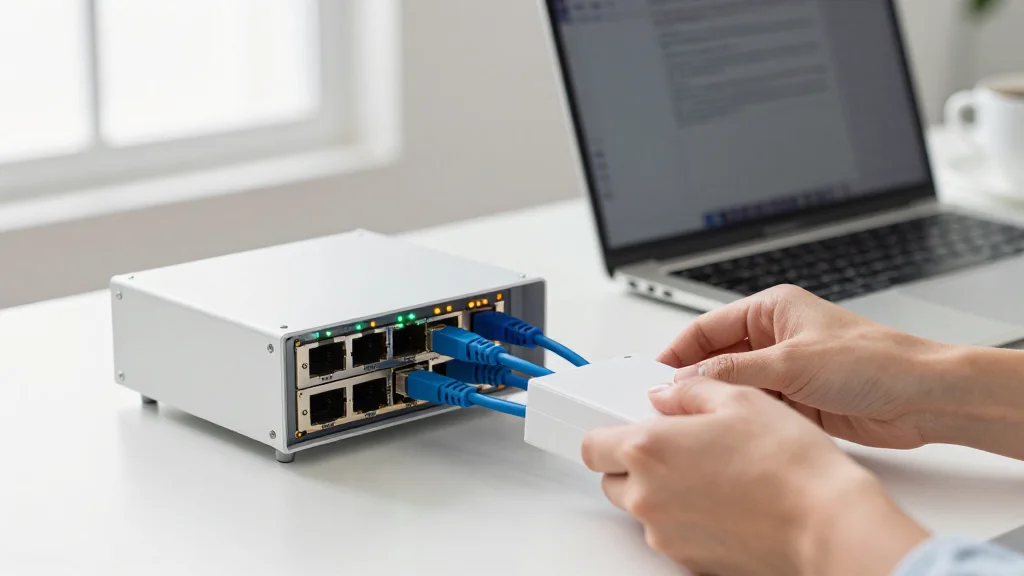
Worth Reading: Lab as Code (Containerlab and Netlab)
The open‑source lab‑as‑code tools containerlab and netlab received a major update in netlab release 26.04. The release introduces a new bgp.advertise attribute, enables dual‑stack bgp.originate via static discard routes, and resolves several long‑standing bugs such as the bgp.policy plugin conflict. Documentation...

Why the “SaaSpocalypse” Is More Hype Than Obituary
The article debunks the "SaaSpocalypse" hype, arguing that AI agents and vibe coding are transformative but not fatal to SaaS. While agentic AI offers faster development, it brings serious security flaws, token‑driven cost spikes, and code‑quality issues. SaaS spending is...

BDD Gherkin Guidelines for AI Coding and Testing
An open‑source Gherkin Guidelines file has been published on GitHub to steer AI coding agents toward disciplined BDD scenario writing. The markdown file can be attached to tools such as Cursor, Claude, Copilot, or Codex, ensuring AI‑generated Given‑When‑Then steps stay...