
Google Cloud Next ’26: Broadcom Expands Collaboration with Google Cloud on Cloud Network Insights
Broadcom announced an expanded partnership with Google Cloud to launch Cloud Network Insights, a service powered by Broadcom’s AppNeta technology. The offering delivers end‑to‑end network observability across multi‑cloud, hybrid and on‑premises environments, helping organizations pinpoint network versus application issues. By integrating AppNeta’s deep diagnostics with Google Cloud’s scale, the service aims to cut mean time to resolution and enable proactive synthetic monitoring. Cloud Network Insights is now available to Google Cloud customers as a first‑party solution.

ECSite, VIAVI Partner to Drive Hyperscale Data Center Fiber Testing
ECSite has integrated its end‑to‑end automation platform with VIAVI’s SmartClass Fiber MPOLx test sets, creating a streamlined workflow for hyperscale data‑center fiber testing. The combined solution automates test execution, validation, and cloud‑based reporting, cutting manual error rates from 10% to...

The 3-Question Framework for Choosing Between Fail-Fast and Graceful Degradation
The post explains how to decide between fail‑fast and graceful degradation for system components. Graceful degradation maintains core functionality by falling back to simple, static responses when non‑critical services fail, while fail‑fast returns an immediate error for critical failures to...

Chapter 10: Production Deployment Patterns (Claude Code Vs. Hermes Agent)
The post compares two production‑deployment philosophies for AI agents: Claude Code’s SDK‑first, async‑generator model and Hermes Agent’s CLI/gateway‑first approach. Claude Code exposes a streaming API, 30 compile‑time feature flags, multi‑provider abstraction and a detailed deployment checklist. Hermes Agent relies on a standalone CLI,...

Secret Management in Production: Vault, KMS, and Rotation Strategies
The post outlines a three‑layer secret‑management model that separates key management (KMS), secret storage (Vault or cloud secret managers), and application consumption. It explains envelope encryption, showing how KMS protects data‑encryption keys while Vault handles lifecycle tasks such as rotation,...
The 4-Layer Metrics Pipeline: OpenTelemetry, Kafka, Time-Series Storage, and Grafana
The blog outlines a four‑layer real‑time metrics pipeline—instrumentation with OpenTelemetry, transport via Kafka, time‑series storage (Prometheus, Mimir, InfluxDB), and visualization in Grafana. It argues that pull‑based scraping introduces multi‑minute latency and drops short‑lived workloads, while a streaming architecture delivers sub‑second...
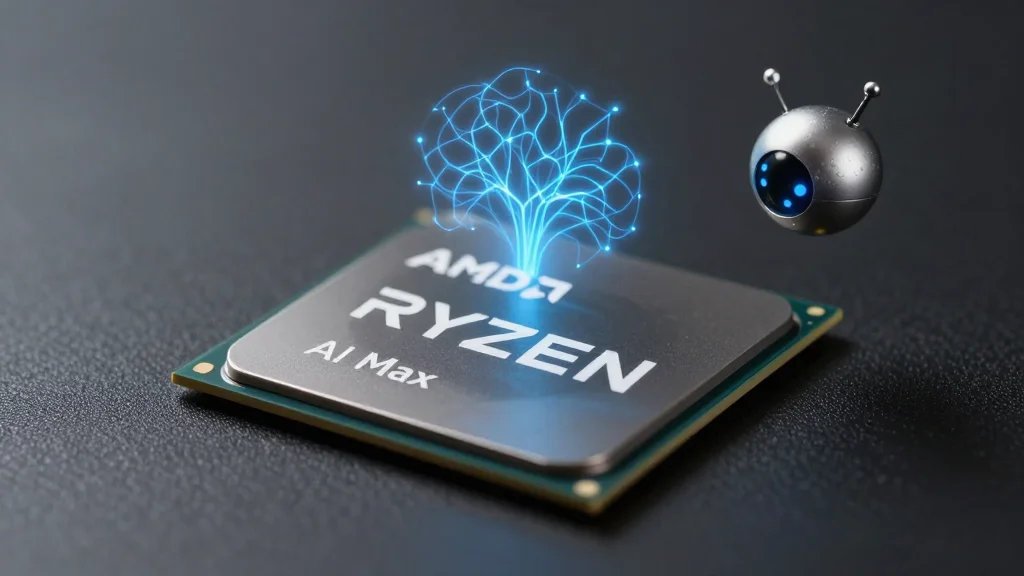
The New Linux Kernel AI Bot Uncovering Bugs Is A Local LLM On Framework Desktop + AMD Ryzen AI Max
Greg Kroah‑Hartman’s new AI‑driven fuzzing bot, gkh_clanker_t1000, has been actively hunting Linux kernel bugs on a Framework Desktop equipped with an AMD Ryzen AI Max processor. Since April 7, the tool has helped merge nearly two dozen patches covering subsystems such as ALSA, HID,...

Seven Assets That Make Vibe Coding Safe to Ship Inside Your Company
AI Adopters released a free companion kit containing seven practical assets designed to make AI‑generated, or “vibe,” coding safe for enterprise deployment. The kit bundles PDFs—including a traffic‑light decision checklist, a spotter‑role brief, a corporate hackathon facilitator guide, a post‑hackathon...

Shell Security Plugin
The new Shell Security plugin links OpenClaw’s built‑in security audit with KiloCode’s Security Advisor API, turning raw JSON findings into a prioritized, plain‑language remediation report delivered inside chat platforms like Slack or Telegram. It runs the audit locally, sends only...
Consistent Hashing Is HARD Until You Learn How Dynamo Actually Uses It
The post demystifies consistent hashing by showing how Amazon Dynamo (the engine behind DynamoDB) implements it in production. It explains why naive modular hashing fails, introduces the hash ring and virtual nodes, and details Dynamo's replication, preference lists, and coordinator...

GrafanaCON 2026: Grafana Labs Targets the “AI Blind Spot” With New Observability Tools Announced
Grafana Labs unveiled a suite of AI‑focused observability tools at GrafanaCON 2026, including AI Observability in Grafana Cloud, an expanded Grafana Assistant, the Grafana Cloud CLI (GCX), and the open‑source o11y‑bench benchmark. AI Observability entered public preview, letting teams monitor...
Distributed Tracing Sampling Strategies: Balancing Visibility Vs. Storage Costs
Distributed tracing at massive scale generates terabytes of span data, making full‑trace storage impractical. Sampling trims this flood, but the choice of strategy—head‑based, tail‑based, or adaptive—determines what information survives. Head sampling decides early and saves resources but can miss critical...

State of Network Automation with Urs Baumann
Urs Baumann, guest on Software Gone Wild Episode 206, bluntly noted that the core slides he uses to discuss network automation are unchanged from a decade ago, underscoring the sector’s slow evolution. While the conversation highlighted the persistent reliance on...
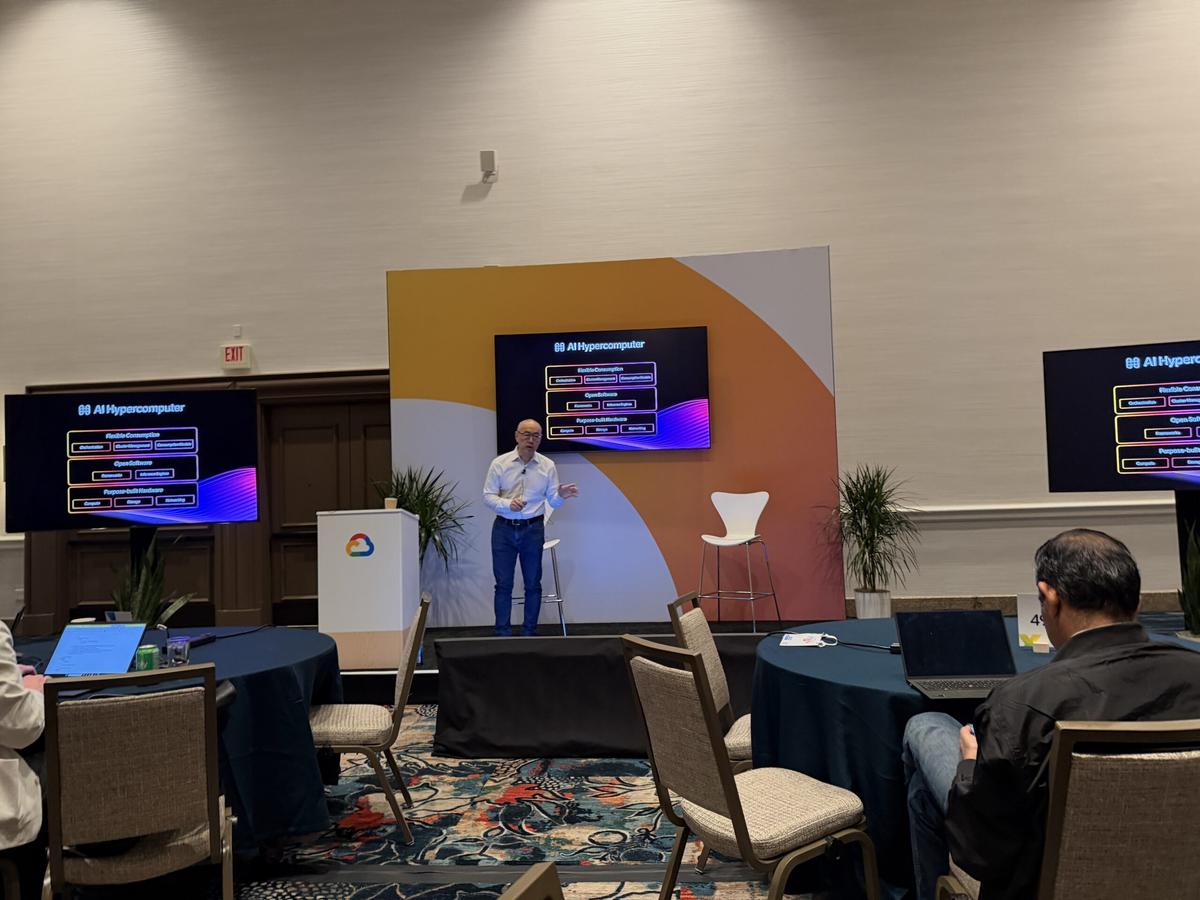
I Just Wanted Endpoints
The author highlights a missing orchestration layer—dubbed Layer 2C or the Reasoning Plane—between AI hardware and inference endpoints. On a single NVIDIA DGX Spark, they manually juggle vLLM and Ollama containers, deciding model placement, memory swaps, and runtime selection. At cloud...
New VS Code Extension - Week Three: Memory, Stability, and Moving at Kilo Speed Into the Future
Kilo released its third weekly update for the rebuilt VS Code extension, focusing on two long‑standing pain points: Windows memory consumption and session stability. The v7.2.20 build moves Agent Manager’s git work into the extension host, caps diff sizes and tunes...

Beyond Alerts and Logs: How SaaS Platforms Are Rethinking Observability with AI
SaaS companies are shifting observability from raw alerts to AI‑driven insight that ties system metrics to user outcomes. Traditional monitoring shows spikes but fails to explain root causes, leading to alert fatigue and slow incident response. New AI observability platforms...

HubSpot's 37-Minute Lesson in Why HTTP 200 Can Lie
HubSpot’s rollout of a new permissions framework unintentionally omitted role assignments, causing UI workflows for contacts, companies, orders, and projects to disappear for all customers. The access‑control endpoint kept returning HTTP 200 with a restrictive payload, so monitoring systems saw a...

Ubuntu Rust Coreutils Audit Revealed 113 Issues, Ubuntu 26.10 Aims For "100% Rust Coreutils"
Canonical announced an independent security audit of Ubuntu's Rust Coreutils, uncovering 70 CVEs and 73 additional issues for a total of 113 findings. Most of the vulnerabilities have been patched, and Ubuntu 26.04 LTS ships with Rust Coreutils 0.8 containing those...

Production ML: A Reality Check on MLOps
A UC Berkeley study of 18 machine‑learning engineers reveals a stark gap between MLOps hype and day‑to‑day practice. The authors introduce a "Three Vs" framework—Velocity, Validation, Versioning—to describe mature production pipelines. They argue that the oft‑cited 85‑90% model‑to‑production failure rate actually...
Chapter 5: Tool Orchestration and Execution (Claude Code Vs. Hermes Agent)
The post dissects tool orchestration in AI agents, contrasting Claude Code’s batch‑based safety model with Hermes Agent’s heuristic safe‑list approach. Claude Code groups tool calls into concurrency‑safe batches, executing each batch either fully parallel or fully serial, while streaming results as they complete....
Ubuntu Looks Toward More Snap-Based Devpacks Moving Forward
Canonical announced its roadmap for Ubuntu’s developer toolchains, extending the Snap‑based devpack model beyond Java, .NET and Go. The new plan envisions dedicated dev stacks for GCC, LLVM/Clang and Rust, plus additional packs for Python Conda, game engines and other...
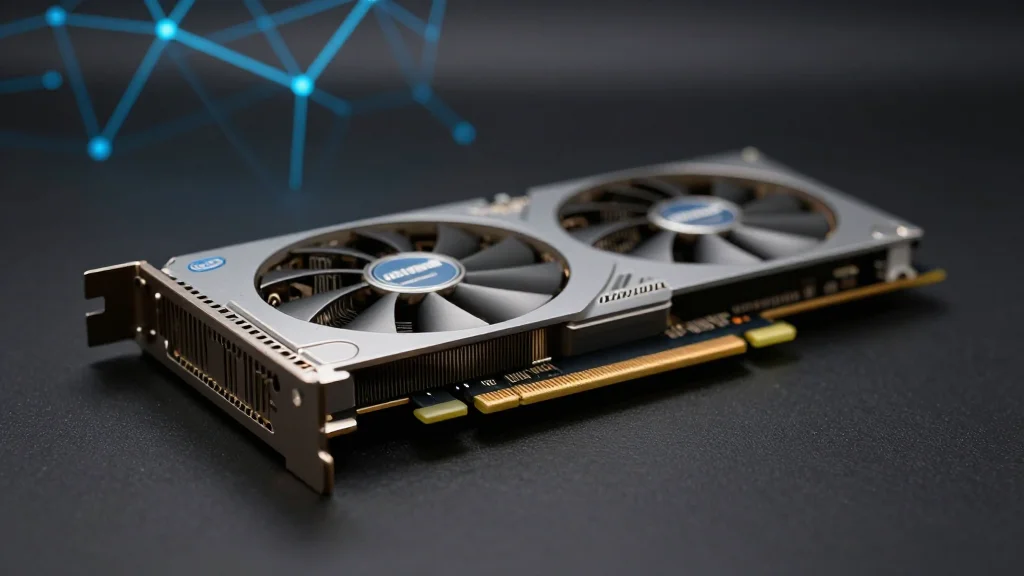
Intel LLM-Scaler vllm-0.14.0-b8.2 Released With Official Arc Pro B70 Support
Intel released LLM‑Scaler vllm‑0.14.0‑b8.2, officially adding support for the Arc Pro B70 GPU. The update refreshes the Docker platform image to intel/llm-scaler-platform:26.18.8.2 and continues the Project Battlematrix push for multi‑GPU AI inference on Intel Arc hardware. The B70, a 32 GB VRAM card...

Day 53: Distributed Indexing Across Multiple Nodes
The post outlines a distributed indexing architecture that spreads a partitioned search index across three or more nodes using consistent hashing, a scatter‑gather query coordinator, and a primary‑replica replication layer. It highlights the limitations of single‑node indexes—RAM exhaustion, I/O‑bound write...
Designing for "Noisy Neighbors" — Multi-Tenant Resource Limits and Quotas
The blog outlines the noisy‑neighbor problem where a single tenant’s burst traffic can cripple latency and cause silent SLA breaches in multi‑tenant SaaS platforms. It explains that logical isolation requires enforceable, tier‑aware resource quotas across request rate, concurrency, compute, bandwidth,...
The 3 Caching Tools That Power Modern Backend Systems (Redis, Memcached, KeyDB)
Caching is essential for modern back‑ends, storing frequently accessed data in RAM to avoid costly database hits. The blog breaks down the three dominant in‑memory caches in 2026—Redis, Memcached, and KeyDB—highlighting their architectures, data‑structure support, and persistence models. It notes...
API Gateway vs Service Mesh vs Sidecar Proxy: A Decision Framework
The blog clarifies the distinct roles of API gateways, service meshes, and sidecar proxies in microservice architectures, emphasizing their placement in the stack and traffic direction. It explains north‑south traffic (external client requests) versus east‑west traffic (internal service calls) and...

Git 2.54 Released With New Experimental "Git History" Command
Git 2.54 has been released, featuring an experimental “git history” command that simplifies repository history rewriting. The new command supports “reword” and “split” sub‑commands, enabling in‑place commit message edits and interactive commit splitting. Additional enhancements include configurable hooks outside the...

OpenClaw AI Deployment on Dedicated Servers: A Practical Infrastructure Guide
OpenClaw AI agents require dedicated server infrastructure to meet their persistent, memory‑intensive workloads. Shared or virtual environments cause CPU throttling, I/O latency, and unreliable context handling, forcing costly migrations later. The guide outlines hardware baselines—32 GB RAM, NVMe storage, and dedicated...

OpenAI Just Published Their Internal Agent Playbook. What It Says Changes Everything.
On February 11, OpenAI released a detailed 7,000‑word internal agent playbook outlining how a three‑person team built a million‑line production app without writing a single line of code. Anthropic followed weeks later with papers that demonstrate a 22‑fold cost increase...

Why Your Pipeline Finishes Later Every Month
Data pipelines increasingly finish later each month, a phenomenon the author calls “shifting right.” A junior engineer’s daily timestamps revealed a steady drift from 5:47 AM to 7:23 AM, threatening a 9 AM SLA. The article explains why slow‑down is harder to detect...

SFDX in Salesforce (Salesforce DX) – Complete Guide
Salesforce DX (SFDX) is a modern developer toolkit that adds a command‑line interface, scratch orgs, and source‑driven development to the Salesforce platform. It shifts development from org‑centric sandboxes to version‑controlled code, enabling faster builds, automated testing, and continuous integration. The...

Python Project Setup 2026: Uv + Ruff + Ty + Polars
In 2026 the recommended Python project stack consolidates environment management, linting, type checking, and data processing into four tools: uv, Ruff, Ty, and Polars. uv acts as a one‑stop installer, virtual‑environment manager, and dependency locker, eliminating the need for pyenv,...

Docker for Python & Data Projects: A Beginner’s Guide
The article walks beginners through using Docker for Python‑based data projects, starting with containerizing a simple data‑cleaning script and emphasizing pinned dependencies. It then shows how to serve a machine‑learning model via FastAPI in a lightweight container, followed by building...
![[AINews] RIP Pull Requests (2005-2026)](/cdn-cgi/image/width=1200,quality=75,format=auto,fit=cover/https://substackcdn.com/image/fetch/$s_!DbYa!,w_256,c_limit,f_auto,q_auto:good,fl_progressive:steep/https%3A%2F%2Fsubstack-post-media.s3.amazonaws.com%2Fpublic%2Fimages%2F73b0838a-bd14-46a1-801c-b6a2046e5c1e_1130x1130.png)
[AINews] RIP Pull Requests (2005-2026)
The post argues that pull requests, a cornerstone of Git‑based development since 2005, are on the brink of obsolescence as generative AI reshapes code contribution workflows. Prominent voices like Pete Steinberger and Theo advocate for "Prompt Requests" that avoid merge...
Testing FRRouting Pull Requests with Netlab
The article outlines a straightforward workflow for testing FRRouting pull requests using the netlab automation framework. By cloning the FRR repository, checking out a PR branch, and building the FRR Docker image, users can configure netlab to launch a lab...

Practicalities of Co-Locating Tests with Source Code
The article outlines a shift from traditional mirrored test directories to co‑locating unit tests alongside their source files in embedded projects. It highlights the friction of navigating separate test trees and the risk of test drift as codebases evolve. The...

My AI Learning Journey – Part 6 – A Reverse Proxy for the LLM GUI
The author explains how to secure Open WebUI (OWUI) for Ollama by adding a reverse proxy, since OWUI only offers HTTP. Because the OWUI host lacks a public IP, a double‑proxy setup is used: an external Caddy instance forwards requests...

7 Steps to Mastering Language Model Deployment
The article outlines seven practical steps for moving a large language model (LLM) from a prototype to a production‑ready system. It stresses the importance of a clearly defined use case, selecting a cost‑effective model, and building a modular architecture with...

Why Parallel Workflows in Devin AI Are Changing Software Deployment
Devin AI introduces parallel workflows that let multiple AI agents tackle distinct coding tasks at the same time, dramatically cutting development bottlenecks. Integrated directly with GitHub, the platform audits repositories, generates contextual pull requests, and synchronizes updates with project objectives....

Claude Code Routines: 24/7 Cloud Dev, Fixes Bugs & PRs Even Offline
Anthropic has introduced Claude Code Routines, an automated task engine for its Claude Code model, now available in a research preview. After a one‑time configuration of prompts, repositories, and connectors, the system runs continuously on Anthropic’s cloud, handling backlogs, code...
Database Connection Storms: Prevention and Recovery in Production
A database connection storm occurs when many services simultaneously open PostgreSQL connections, quickly exhausting the max_connections limit. The article explains how Kubernetes rollouts, replica failovers, and connection‑pool leaks can generate hundreds of concurrent attempts within seconds. Because PostgreSQL lacks admission‑control,...

Why Smart Openclaw Operators Are Getting More Careful with Updates
OpenClaw operators are treating updates as formal change‑management events after recent regressions broke critical messaging channels. The April 2026 packaging bug omitted essential files, causing the gateway to fail, while a February issue showed a bot that appeared connected yet...

Stanford AI Engineering: 10 Lessons Most Builders Get Wrong
Stanford’s CS230 AI engineering session distills ten hard‑won lessons about why most AI products fail at the engineering layer, not the model. A BCG‑led study showed that untrained AI performs worse than no AI, highlighting prompt training as the highest‑leverage...

SEA Sets Out Fast-Update Sonar Approach at UDT 2026
At UDT 2026, SEA showcased its KraitSense towed sonar system and unveiled a fast‑update software architecture aimed at shortening sonar processing development cycles. The compact system combines a thin‑line KraitArray with low‑weight, low‑power processing suitable for small crewed, remotely operated...

Why Developers Are Adding the Open-Source Superpowers Plugin to Claude Code
The open‑source Superpowers plugin, built by Jesse Vincent for Claude Code, introduces a five‑phase workflow that automates brainstorming, design, planning, coding, and verification. Controlled tests show a 14% drop in token usage and roughly a 9% reduction in overall costs...

Top 7 Docker Compose Templates Every Developer Should Use
The article spotlights seven ready‑to‑use Docker Compose templates that accelerate local development for a range of stacks—WordPress, Next.js, PostgreSQL, Django, Kafka, n8n AI, and Ollama/OpenWebUI. Each GitHub‑hosted template bundles core services such as databases, web servers, message brokers, and AI...
Day 51: Build Dashboards for Visualizing Analytics Results
The post outlines how to build a real‑time analytics dashboard that consumes aggregated metrics from Kafka streams and pushes updates via WebSockets. It highlights a query‑optimization layer that combines Redis caching with PostgreSQL time‑series partitioning to keep latency sub‑second. Multi‑dimensional...

API Spector Open Source API Testing Tool
API Spector is a newly released, free, open‑source tool for testing HTTP APIs and WebSocket services. It stores every request in files, enabling version control and Git integration, a rarity among free testers. The tool imports collections from Postman, Insomnia,...
Why Your Cache Is Serving Stale Data (5 Invalidation Bugs Explained)
The article explains why caches often serve stale data, focusing on five real‑world invalidation bugs that surface as systems scale. It highlights how missed write paths, misaligned TTLs, and other patterns let outdated information linger despite a healthy‑looking stack. By...

Adventures in Vibe Coding: How and Why I Built RedMonk’s MonkCast.com
RedMonk analyst Kate Holterhoff built a dedicated site for the MonkCast podcast using Astro and AI‑driven “vibe coding.” By prompting models such as Claude Code, Kiro, and Copilot, she automated UI design, RSS image scraping, and an accessibility audit. The...