
Australia’s Labour Market Right on the Edge
The U.S. labor market has added only 251,000 jobs over the past 12 months, a pace comparable to the immediate post‑recession period. Despite this slowdown, the unemployment rate has held steady at around 4.3% for nearly two years. The stability stems largely from minimal net migration, which reduces the need for higher job creation to keep unemployment low. Analysts suggest that, on paper, this labor market structure could better absorb a potential global recession triggered by the Middle‑East crisis.

Week Ahead: US Economic Resilience Supports the Dollar
U.S. economic activity rebounded sharply, with the Atlanta Fed’s GDP tracker suggesting a 4.3% annualized pace in Q1 2026, outpacing Bloomberg’s median forecast of 2.1%. The stronger outlook lifted Fed‑funds futures, implying an 85% probability of a rate hike this...

The Worst Consumer Sentiment Report Ever. Again.
The University of Michigan’s consumer sentiment index plunged to 44.8 in May, marking the lowest reading since the series began in 1978 and the steepest month‑to‑month drop on record. The current‑conditions sub‑index hit a new low of 45.8, while the...

Headline Inflation Surges, but Core Measures Keep the Fed on Hold
Headline inflation has surged as Middle East energy shocks lift food and energy prices, while core inflation measures remain comparatively steady. The Federal Reserve kept interest rates unchanged at its latest meeting, and futures markets still price in a series...

Debt, Inflation, and Populism Renewed Inflation and Is Killing the Bond Market
The Federal Reserve is expected to keep rates steady as inflation remains above target and the U.S. fiscal deficit swells to an unprecedented 6.2% of GDP through 2026. Treasury yields have surged, with the 30‑year hitting a 19‑year high of...
US Growth Nowcast for Q2 Holds Firm as Inflation Risks Mount
The median nowcast from CapitalSpectator shows U.S. real GDP growing 2.4% in Q2, up from 2.0% in Q1. The revision follows a previous 2.2% estimate and reflects stronger payroll, industrial production and retail sales data. Inflation risks are rising due...

Kevin Warsh Versus ‘Vast Majority’
The April FOMC minutes, released just before the Nvidia earnings lull, show the Federal Reserve overwhelmingly warning that the war‑driven surge in oil and commodity prices will keep inflation elevated longer than expected. Policymakers dropped the easing‑bias language from the...

A Foretaste of Warsh as Chair of the Federal Reserve
Kevin Warsh was confirmed by the Senate and sworn in as the new Federal Reserve chair, succeeding Jerome Powell. Warsh argues that inflation is largely a policy choice driven by central‑bank actions and fiscal spending, not external shocks. He criticizes...

Warsh's Challenges: Monetary Policy
Kevin Warsh was nominated to lead the Federal Reserve in January, sparking a debate over whether the Fed should accelerate interest‑rate cuts based on expectations that artificial‑intelligence‑driven productivity would lower prices and boost wages. That optimism has been upended by...

The Daily Feather — Margin Squeeze Cycle Far From Resolution
The Daily Feather notes that the current margin‑squeeze cycle in U.S. corporate earnings shows no sign of ending. Rising input costs, tighter credit conditions, and persistent inflation are compressing profit margins across sectors. Meanwhile, the 24/7 digital news cycle amplifies...

Iran War Sends Energy Costs Surging, Pushing April Inflation to 3.8%
April’s unadjusted CPI showed inflation at 3.8% year‑over‑year, driven largely by soaring energy costs linked to the ongoing Iran conflict. The energy index alone accounted for more than 40% of the month’s price rise, with motor fuel up 29.1% and...

What Does a Smaller Fed Balance Sheet Mean for Inflation & Interest Rates?
The Federal Reserve is considering a $2‑3 trillion reduction in its balance sheet, primarily by off‑loading the $2 trillion of mortgage‑backed securities (MBS) held in the SOMA. Treasury could respond by issuing longer‑duration debt, which would let the Fed keep short‑term rates...

Nowcasts of GDP Diverge
The Atlanta Fed’s GDPNow model now projects a 4% quarterly‑annualized increase for Q2 2026, while the St. Louis Fed’s nowcast sits at just 0.8%. A parallel “core GDP” measure—final sales to private domestic purchasers—shows a 3.1% q/q annualized rise, outpacing the...

Business Cycle Indicators as of Mid-May
The latest macro data show monthly GDP growth through March, while April’s CPI‑deflated retail sales slipped. Real retail sales excluding gasoline stations fell, reflecting the recent gasoline price surge. Employment remains robust, with NFP and civilian job metrics holding steady....

U.S. Unemployment Claims Climb To 211,000 As Energy Prices Threaten Stable Labor Market
U.S. initial unemployment claims rose to a seasonally adjusted 211,000 for the week ending May 9, surpassing the Reuters forecast of 205,000. Continuing claims also increased, reaching 1.782 million, a proxy for hiring trends. The surge coincides with higher energy and commodity...

The US Consumer Refuses To Crack
U.S. retail sales rose 0.5% in April, matching the headline gauge, and the control‑group index—excluding autos, gas stations, and food services—accelerated to an 8% annualized pace, the fastest since mid‑2022. Despite higher nominal prices for gasoline and groceries, nine of...

From Cuts to Hikes: The Fed's Shifting Calculus
The Federal Reserve’s April FOMC statement included an easing bias, suggesting future rate cuts, but three voting members—Hammack, Kashkari, and Logan—voiced dissent, and Boston Fed President Susan Collins has now joined them. Market participants anticipate the bias will be dropped...

War Inflation Triggers Sharp Jump In US Mortgage Rates
War‑driven inflation pushed the 30‑year fixed mortgage rate up 15 basis points, reaching 6.57% according to Mortgage News Daily. Purchase applications rose, surpassing last year’s pace despite the rate jump. Sellers continue to dominate, holding a 46.5% advantage over buyers,...

Producer Price Index PPI Surges 1.4 Percent in April, Fed Behind the Curve?
The Bureau of Labor Statistics reported a 1.4% month‑over‑month rise in the Producer Price Index for final demand in April 2026, the strongest gain since March 2022. Services accounted for roughly 60% of the increase, with trade‑service margins jumping 2.7%,...

The Inevitable Decline of the Dollar | Former Fed Governor Tom Hoenig
Former Kansas City Fed chief Thomas Hoenig warned that under incoming Fed Chair Kevin Warsh the dollar’s purchasing power will keep eroding. He said the US‑Iran war‑driven oil price shock could keep inflation high, making rate cuts unlikely and modest...

Time For Rate Hikes
The blog post "Time For Rate Hikes" highlights two alarming macro data releases that, together with recent Fed commentary, suggest the central bank is edging closer to another interest‑rate increase. The author points to deteriorating inflation and labor‑market signals as...

Grocery Prices (and Forecasts)
The April 2026 CPI release shows food‑at‑home prices climbing faster than expected, leaving 2025 grocery inflation 0.9 percentage points above the January 2025 ERS forecast. Visual data reveal that staple commodities such as coffee, steak, tomatoes and fruit‑vegetable baskets have followed divergent paths...

The U.S. Economy Keeps Adding Jobs That Men Aren’t Taking
The U.S. labor force is seeing a continued decline in male participation, with the employment‑to‑population ratio for men falling to 64.1% in April, well below the 70.9% level of the 1990s. Most private‑sector job growth over the past year has...

Price Levels Relative to January 2025
The AIER Everyday Price Index (EPI) is climbing faster than traditional CPI measures, with April nowcasted via a gasoline‑price regression that explains 87% of its variance. Core CPI inflation has also picked up, except for the supercore index that excludes...

Convoluted US Inflation Report Won’t Answer Any Questions
Core CPI rose 0.4% month‑over‑month in April, the fastest increase since January 2025, and the year‑over‑year core rate ticked up to 2.8%, beating forecasts. The headline CPI climbed 0.64% MoM and 3.8% YoY, outpacing wage growth, while gasoline surged 5.4%...

Trump's Federal Gas Tax Holiday Is A Con
President Trump urged a temporary suspension of the 18‑cent‑per‑gallon federal gasoline tax, proposing a 122‑day holiday that could be introduced by House Republicans before the midterm elections. The Penn Wharton Budget Model estimates the cut would shave roughly $13 billion from...

Daily Bulletin...
President Donald Trump announced support for a temporary suspension of the 18.4‑cent federal gasoline tax as national pump prices rose to $4.52 per gallon amid the Iran‑related energy shock. The administration also dispatched a delegation of corporate executives to Beijing...

2026 S&P 500 Forecast Update - May 11, 2026
The research firm released an updated 2026 S&P 500 forecast after the index surged past its April target zone, reaching levels well above the 6,800 mark that framed the original outlook. The rally occurred despite persistent geopolitical tension from the...

Anticipating Real Hourly Wages for April
Analysts are projecting April’s real hourly wages using two price deflators: the traditional CPI and the AIER Everyday Price Index (EPI). The EPI is derived from a regression linking monthly gas price changes to the index, yielding an adjusted R²...

U.S. Treasury Auctions Off $58 Billion of Three-Year Notes at a High Yield of 3.965%
On Tuesday, the U.S. Treasury auctioned $58 billion of three‑year Treasury notes, yielding 3.965%, the highest in recent weeks. The auction’s bid‑to‑cover ratio slipped to 2.54×, under the six‑month average of 2.67×, and featured a modest positive tail of 0.6 basis...

Real Gasoline Prices Are (Relatively) Low; Gas Prices Are Rising Sharply
Real gasoline prices are low in inflation‑adjusted terms, yet they have surged sharply, rising about 23% from February to April 2024. This jump exceeds the month‑on‑month growth seen after the 2022 Russian‑invasion price spike and the pre‑Great Recession surge. Retail...
![Hassett: GDP Growth “North of Four, North of Five, North of Even Six [Percent]”](https://hixhlmpcokxhartfkpyi.supabase.co/storage/v1/object/public/images/thumbnails/90da7d420c755d515e52241cf2cc7f53.webp)
Hassett: GDP Growth “North of Four, North of Five, North of Even Six [Percent]”
National Economic Council Director Kevin Hassett told "Sunday Morning Futures" that U.S. GDP could accelerate to "north of four, north of five, north of even six percent" as a capital‑spending boom gathers pace, especially if the Iran conflict de‑escalates. He...

Home-Buying Season In America Off To Slow Start
Existing home sales in the U.S. edged up just 0.2% in April, far short of the 2% analysts expected. The National Association of Realtors reported a median price of $417,700, up 0.9% from a year earlier and marking an April...

Grocery Price Pressures: A Major Vibe Source
The shutdown of the Strait of Hormuz has pushed diesel prices up about $2 per gallon—a 55% jump—raising transportation costs for the 80% of U.S. food that moves by truck. Simultaneously, the war has disrupted global fertilizer supplies, foreshadowing higher...

U.S. Employers Added 115,000 Jobs in April Despite Global Economic Pressure
U.S. employers added 115,000 jobs in April, far exceeding the 65,000 forecast and keeping the unemployment rate steady at 4.3%. Hiring slowed from March’s 185,000 gains but remained robust despite rising fuel prices triggered by the Iran‑related oil shock. Healthcare...

Nowcast Points to Steady US Growth in Q2
CapitalSpectator’s median nowcast indicates U.S. GDP will grow at a 2%‑plus rate in the second quarter, marking a steady expansion despite geopolitical headwinds. The forecast aggregates multiple real‑time models, offering an early glimpse into quarterly performance. Analysts interpret the reading...

Repeat After Me: Higher Minimum Wages Are Good for Business
Economists have long argued that higher minimum wages do not automatically cut jobs, and a new study by Nirupama Rao and Max Risch confirms this for the most vulnerable firms—small independent businesses. Using state‑level wage changes as a natural experiment,...

Guest Contribution: “Does the Yield Curve Still Predict Recessions? U.S. and OECD Evidence”
Academic Mufan Chen revisits the yield curve’s recession‑predictive power across the United States and seven OECD economies using monthly data from 1995‑2025. Probit models forecast recession risk 12 months ahead, comparing a spread‑only specification, one adding short‑term rates, and another...

Fed Balance Sheet Can Only Be Reduced by Eliminating Interest on Reserves
Fed Chair nominee Kevin Warsh wants a smaller balance sheet, but the net size of the Federal Reserve’s balance sheet is largely dictated by the target Fed Funds rate. During the pandemic the Fed bought $9 trillion of securities and used...

We Could End Every Blue State’s Budget Deficit With One Policy. Even a Five-Year-Old Could Explain It.
The post argues that public banking—state‑owned banks like North Dakota’s—could eliminate budget deficits for blue states and cities. It cites the Bank of North Dakota’s 2024 performance, returning $335 million and $430 per resident, and scales those per‑capita returns to estimate...

‘Matter Of When’: Core CPI, Real Spending On Borrowed Time
U.S. inflation data this week is set to show headline CPI climbing 0.6% month‑over‑month, the quickest rise since October 2022, while core CPI is expected to increase 0.3%, roughly half the headline pace. The surge is tied to lingering energy‑price...

Mission Impossible
The article challenges Kevin Warsh’s claim that the Federal Reserve can remain independent under a Trump administration, arguing that political pressure makes true autonomy impossible. It highlights core personal consumption expenditures (PCE) inflation, now 0.6 percentage points above its April 2025...

From Civilian To Military Economy: This Is What A Declining Empire's Economy Looks Like
The U.S. Census Bureau reported that March 2026 defense capital‑goods orders jumped 80% year‑over‑year, while non‑defense capital‑goods fell 1.2%, marking the sixth consecutive contraction. The Pentagon’s FY 2027 budget request now exceeds $2.5 trillion, and federal interest expense has crossed $1 trillion in...

Week Ahead: Trump-Xi and US-China CPI
Investors are betting that the Middle East cease‑fire will hold, lifting risk assets as oil prices retreat. WTI slipped 7% to about $95 a barrel and Brent fell 6.6% to $101, reversing two weeks of gains. The week’s data focus...

Business Cycle Indicators – Employment and Coincident Index
The latest data show non‑farm payrolls (NFP) increasing, while household‑survey‑based employment measures remain below their January peaks. Civilian employment adjusted for population growth also lags, indicating a divergence between employer‑reported and survey‑based job counts. The coincident index, which aggregates industrial...
April Job Gains Suggest Labor Market Is Stabilizing, for Now
The Bureau of Labor Statistics reported that April added 115,000 jobs, far surpassing the 55,000 economists expected, while the unemployment rate held steady at 4.3%. Revised figures show March’s gains rose to 185,000 and February’s losses were trimmed to 156,000,...
Bad Government Statistics Can Cost the Economy Billions
U.S. government statistical surveys are seeing sharply declining response rates, threatening data reliability. The Current Population Survey’s participation fell from nearly 90% a decade ago to under 70% today, while the Consumer Expenditure Survey dropped from 68% to 40%. These...
Mortgage Rates End Week Slightly Lower
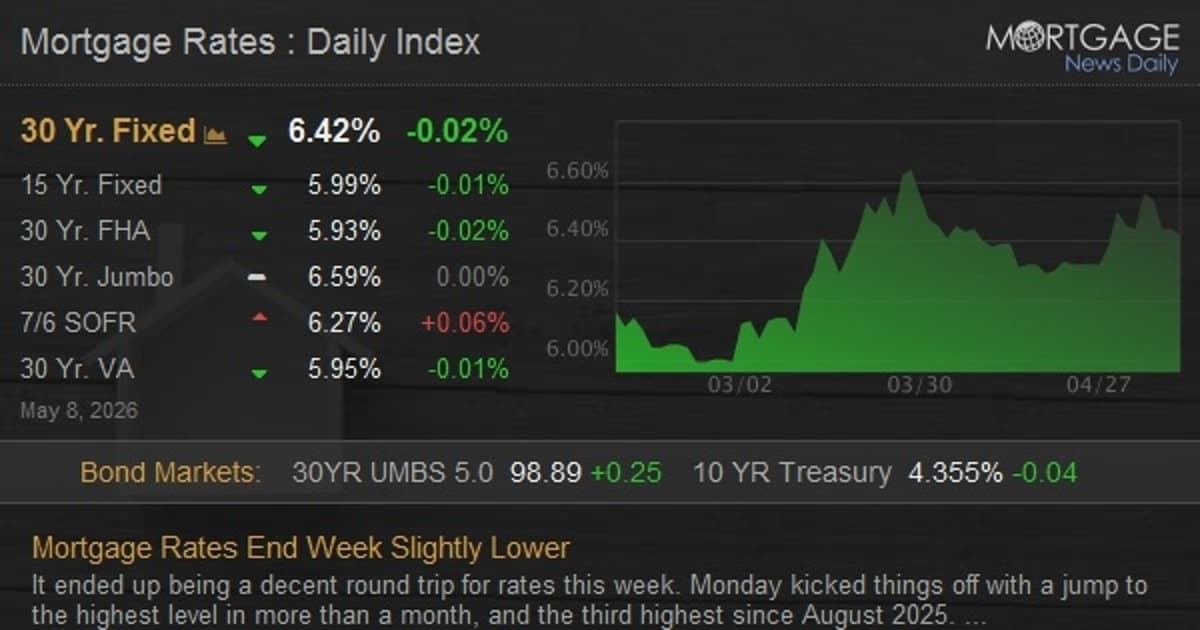
Mortgage rates slipped modestly this week, with the MND daily rate index closing at 6.42%, down from 6.44% the prior week. After a Monday spike to the highest level in over a month, Wednesday delivered the biggest decline of 0.10%,...

Next Week’s Menu: May 9-15, 2026
Larry Greenberg’s weekly menu outlines a dense slate of economic releases for May 9‑15, 2026, covering U.S. indicators such as producer prices, retail sales, and industrial production, alongside key data from China, Japan, the Eurozone, and emerging markets. The calendar also notes...
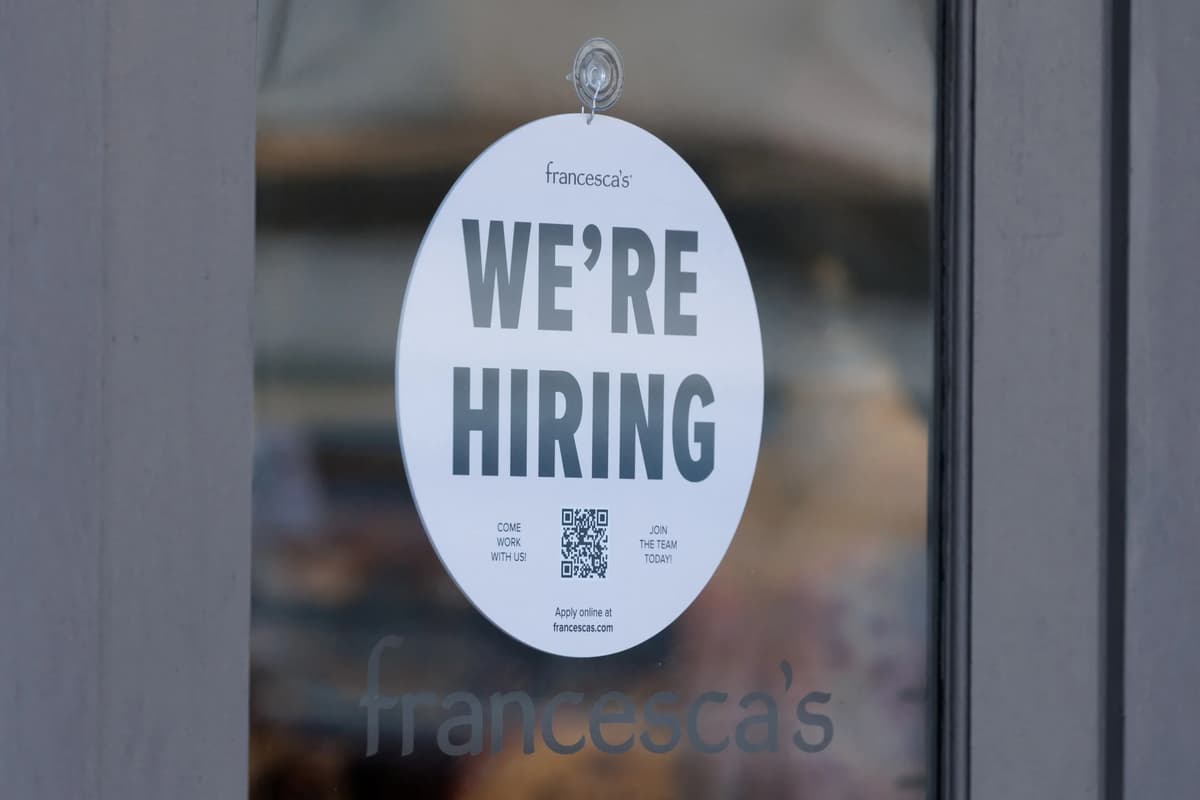
Healthcare Hiring Is Keeping the U.S. Job Market Afloat
U.S. employment rose by 115,000 jobs in April, far exceeding the 62,000 forecast, with health‑care leading the gains by adding 37,000 positions. Part‑time work for economic reasons surged 445,000 to 4.9 million, indicating lingering under‑employment. The headline unemployment rate held steady...