What Will the U.S. Choose: Recession or Printing More Money?
The United States faces a fiscal dilemma: a recession would cut tax collections, widen the federal deficit, and pressure the Treasury bond market, while the alternative is to inject more liquidity through money printing. With debt already exceeding $31 trillion and the debt‑to‑GDP ratio at historic highs, the fiscal cushion for a deep slowdown is minimal. Policymakers risk a feedback loop where falling revenue forces higher borrowing, pushing yields up and further slowing growth. Consequently, investors must weigh short‑term recession risks against the long‑term inflationary fallout of expanded monetary support.

Inflation Surges, Gas Prices Spike as Trump’s War Batters U.S. Economy
U.S. consumer inflation jumped to 3.5% in March, driven largely by a 21% surge in gasoline prices amid the Iran‑Russia conflict. Pump prices now average $4.30 per gallon, with diesel climbing to $5.50, pressuring household budgets. The Federal Reserve signaled...

Purchase Applications Rise Again Despite Higher Rates and Fewer Refis
Mortgage applications slipped 1.6% week‑over‑week as rates edged up to 6.37%, but purchase demand stayed strong, with the Purchase Index rising 1% and sitting 21% above a year ago. Refinance activity fell 4% and now accounts for just 42.5% of...

The Wrap: FOMC Rejects Rate Cut; Mag7+ Dominates Equity Markets
The Federal Open Market Committee voted 8‑4 to keep rates steady, marking the strongest dissent since 1992, while Senate leaders moved forward with Kevin Warsh’s nomination to replace Jerome Powell as Fed chair. Powell will remain on the Board of...

U.S. Labor Costs Rise As Benefit Growth Outpaces Wages In Cooling Job Market
The Labor Department reported that the Employment Cost Index rose 0.9% in the first quarter, slightly above the 0.8% consensus. Annual labor‑cost growth held steady at 3.4%, while benefits surged 1.2% quarter‑over‑quarter, outpacing wage growth which ticked up 0.8%. The...
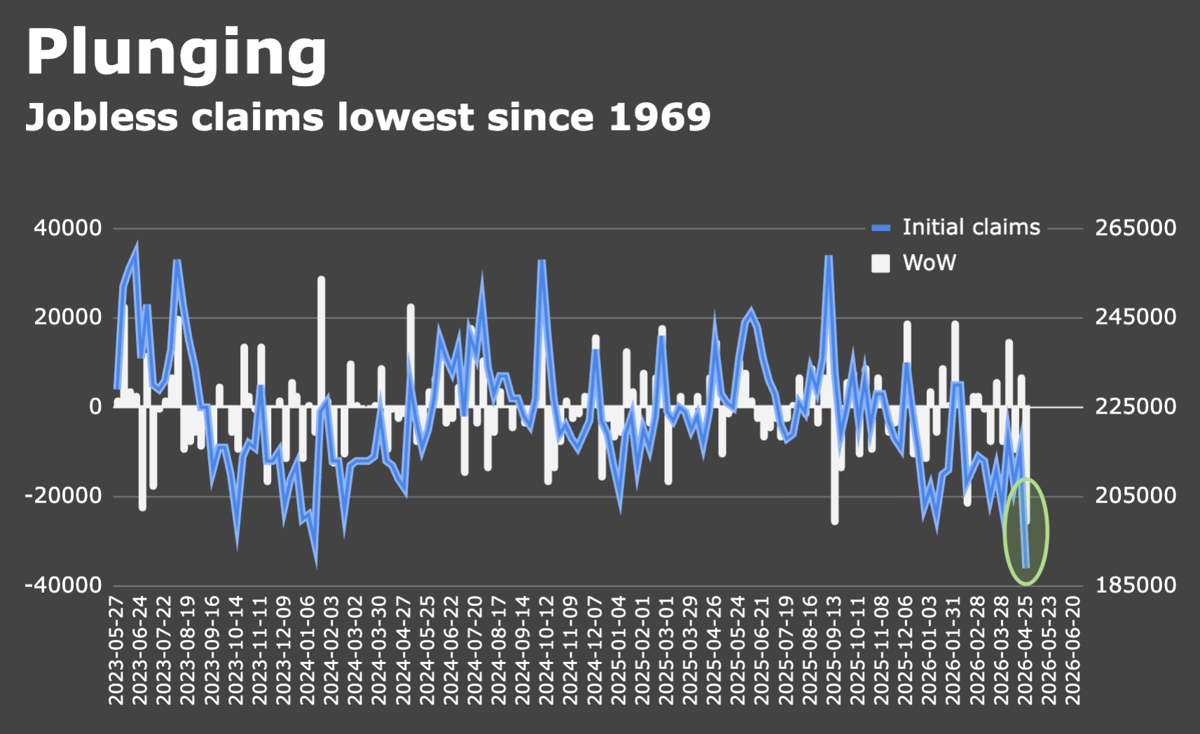
‘Labor Crisis’? Someone Forgot To Tell Jobless Claims
U.S. initial jobless claims fell to 189,000 for the week ending April 25, the lowest level since late 1969. Continuing claims also dropped to 1.785 million, a two‑year low. Both figures beat economists’ expectations, underscoring a labor market still resilient despite...

The Daily Feather — Spiritus Animalis
The article traces the etymology of “animal spirits” from the medieval concept of spiritus animalis—a Latin notion of vital breath—to its modern incarnation in behavioral economics and Keynesian theory. It highlights how early physiologists linked the term to bodily vigor,...

The Long Bond Yield Is Signaling a Huge Fear of Inflation
The 30‑year U.S. Treasury long‑bond yield rose to 5.01%, just 17 basis points shy of an 18‑year peak. A 7% oil price surge to $107 per barrel has added upward pressure, while technical charts point to a potential breakout toward...

FOMC Dissent Architecture: How Internal Fracture Engineers Bear Flattening
On April 29, 2026 the Federal Open Market Committee held rates at 3.50‑3.75% while four members cast bidirectional dissent – one for a cut and three against easing language. The split created immediate policy uncertainty, driving the two‑year Treasury yield...

SPECIAL REPORT: Chaos At The Fed? | Axel Merk
The Federal Reserve’s Open Market Committee left its policy rate unchanged, but a record three members dissented, warning that the escalating Iran‑Israel conflict could reignite inflation and strain supply chains. The vote marked the final meeting chaired by Jerome Powell,...

Today's Weakness Mostly War-Related With Small Boost From Fed
U.S. Treasury yields climbed to 4.42% on Wednesday, driven primarily by heightened geopolitical risk from a potential Strait of Hormuz blockade. The Federal Reserve’s policy announcement added only a marginal uptick, with yields rising one basis point after the meeting....
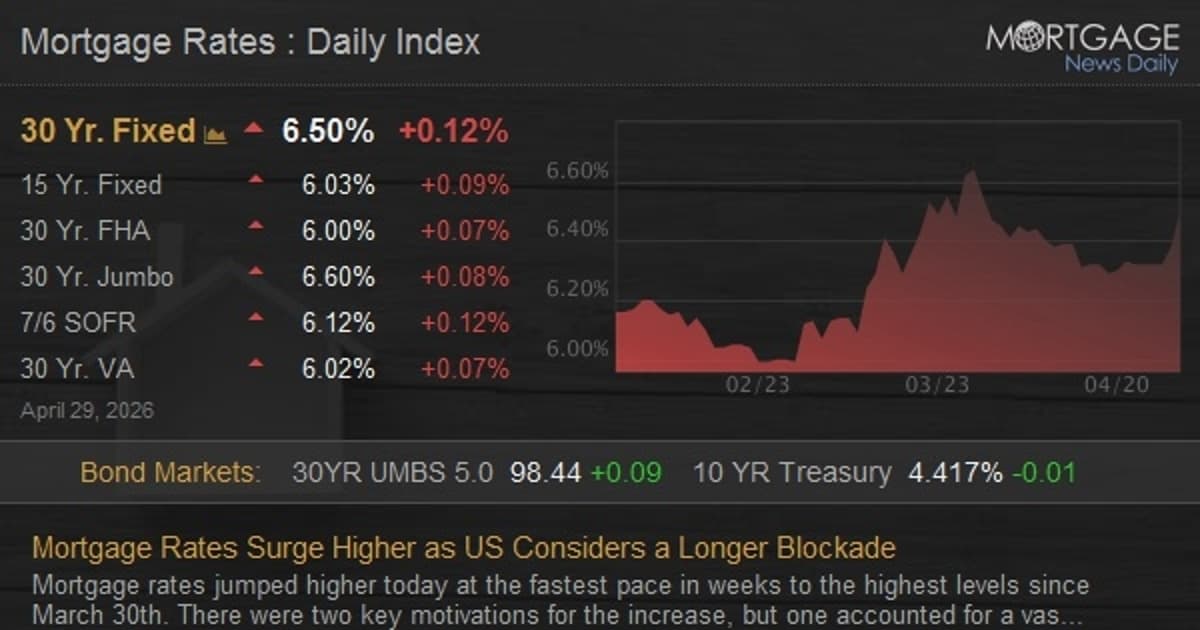
Mortgage Rates Surge Higher as US Considers a Longer Blockade
Mortgage rates jumped to a 30‑year fixed average of 6.50%, the highest since March 30, after a rapid surge driven primarily by geopolitical tension over a potential Strait of Hormuz blockade. The blockade fears lifted oil prices and Treasury yields,...
This Fed Meeting Must Have Been a Hoot. Fed Holds Rates Amid 4 Dissents, Most Since 1992: 1 Dovish, 3...
The Federal Open Market Committee kept the federal funds target range at 3.5 %‑3.75% for a third straight meeting, marking a pause after three cumulative 75‑basis‑point cuts in 2025 and 100‑basis‑point cuts in 2024. Four members dissented – the most since...

Comments on FOMC Statement and Press Conference
The Federal Open Market Committee left the federal‑funds target range unchanged at 3.5 %‑3.75 %, with only Governor Miran dissenting in favor of a 25‑basis‑point cut. Three regional presidents—Cleveland’s Beth Hammack, Dallas’s Lorie Logan and Minneapolis’s Neel Kashkari—opposed adding an easing bias...

There’s Upward Pressure on Interest Rates With a Slight Bias for Fed Hikes
The market’s FedWatch data shows a modest bias toward rate hikes, with the most likely outcome being a 3.50‑3.75% target in April 2027 (67.6% probability). A recent 8‑basis‑point shift from a cut bias to a hike bias coincides with a...

Inside the Fed's Balance Sheet
A new video and podcast interview with finance professor Darrell Duffie examines the Federal Reserve’s balance sheet. Duffie draws on his recent paper to explain how the Fed’s roughly $8 trillion asset base shapes the U.S. payments system and monetary policy....
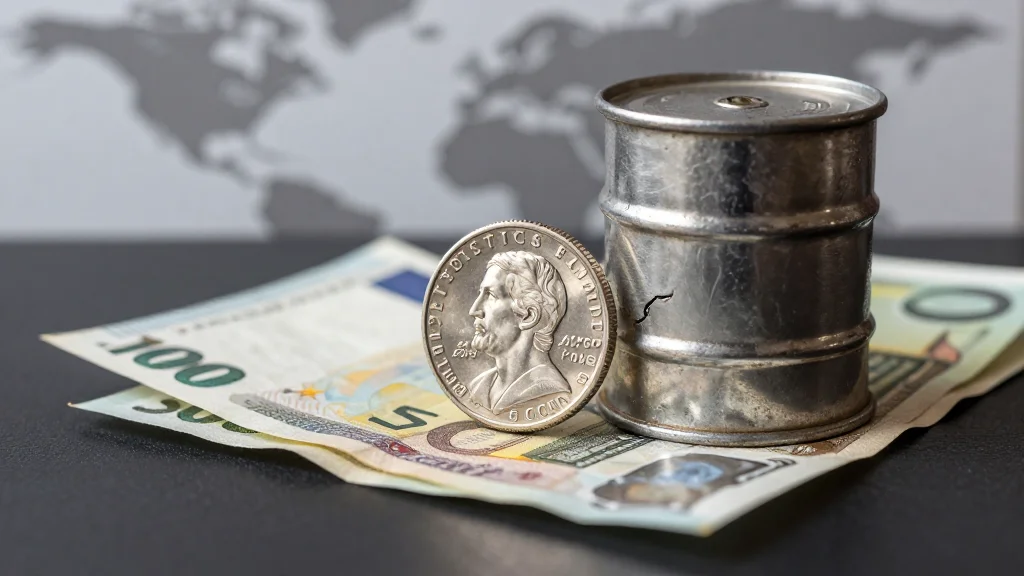
FOMC Preview
The Federal Reserve is expected to leave its benchmark rate unchanged at the 3.5‑3.75% target range as the Middle‑East conflict drags on, keeping oil prices about 7% higher than in March. Inflation forecasts have been nudged upward while economic activity...

US Business Investment, Residential Construction Soar
U.S. core capital goods orders jumped 3.3% month‑to‑month in March, the strongest gain since June 2020, while shipments rose 1.2% for a second straight month. Residential construction also accelerated, with overall housing starts up 11% and single‑family starts near 10%, the...
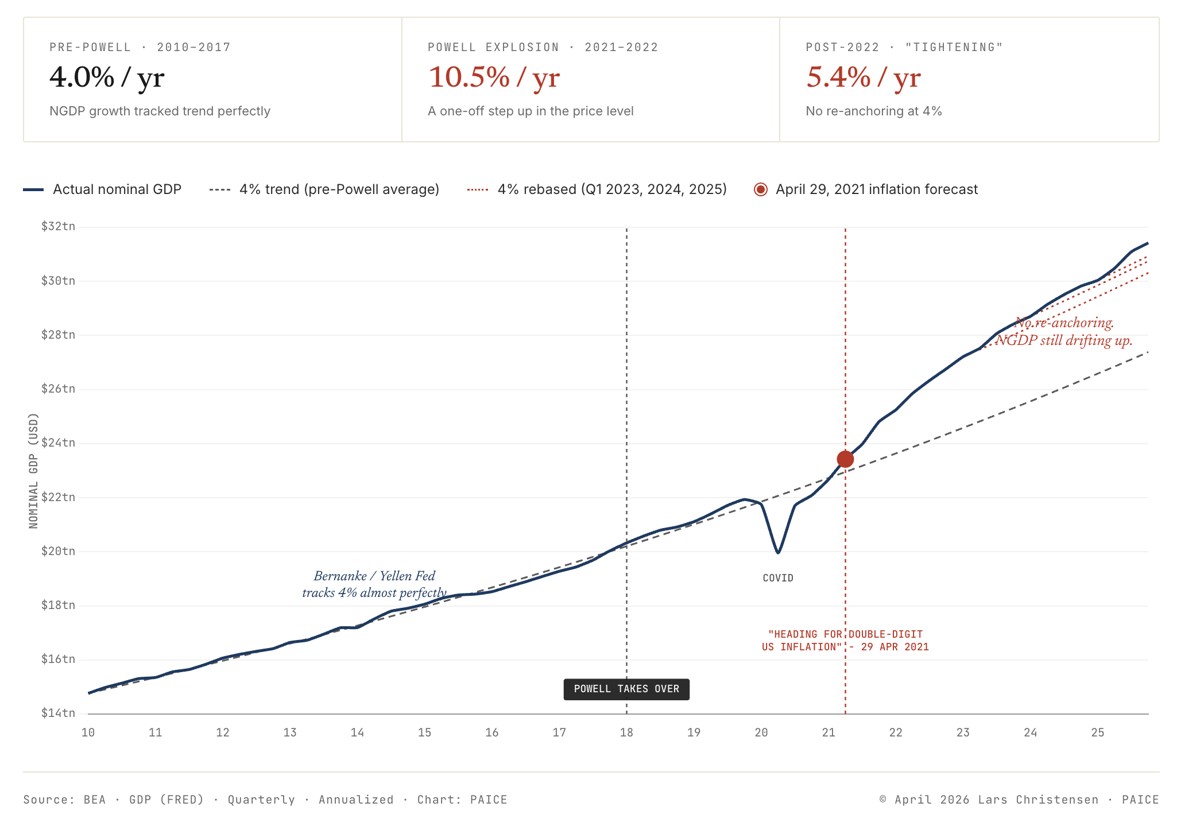
Powell’s Last Meeting
Jerome Powell is set to leave the Federal Reserve after his term ends May 15, with the FOMC likely holding rates at 3.50‑3.75%. The article argues that despite political criticism of “tight” policy, the Fed under Powell pursued the easiest monetary...

Middle East Turmoil Fuels Inflation Fears, Testing Fed’s Patience
The Federal Reserve is poised to leave its policy rate unchanged as it confronts a volatile inflation outlook sparked by renewed Middle East conflict. Escalating tensions have pushed crude oil prices up roughly 8%, feeding higher headline and core consumer‑price...
The Daily Feather — “Who’s Bad?”
The Daily Feather explores the origins of Michael Jackson’s 1987 hit “Bad,” revealing how the song merged gritty street narratives with cinematic ambition. Released as the title track of the follow‑up to Thriller, “Bad” was crafted to showcase Jackson’s evolving...
Powell's Swan Song
Jerome Powell will deliver his final Federal Reserve press conference tomorrow before the Senate confirms Kevin Warsh as his successor. Powell is expected to argue that the Fed will keep rates steady because inflation risks have risen, even as unemployment...

THE FED IS ALREADY PRINTING: $170B in Balance Sheet Expansion in 2026, the $2.4T Deficit, the Collapse of Foreign Demand,...
The Federal Reserve has quietly expanded its balance sheet by $170 billion year‑to‑date, a $510 billion annualized run‑rate representing more than 7.5% growth. This comes as the U.S. Treasury faces a $2.4 trillion budget deficit that will swell with additional war, defense, grid...

InvestingLive Americas Market News: UAE Leaves OPEC, Trump Says Iran Wants to Open Strait
The United Arab Emirates announced its departure from OPEC and OPEC+, cutting its production quota by roughly 300,000 barrels per day. President Trump said Iran has signaled a willingness to reopen the Strait of Hormuz, a claim echoed by U.S....
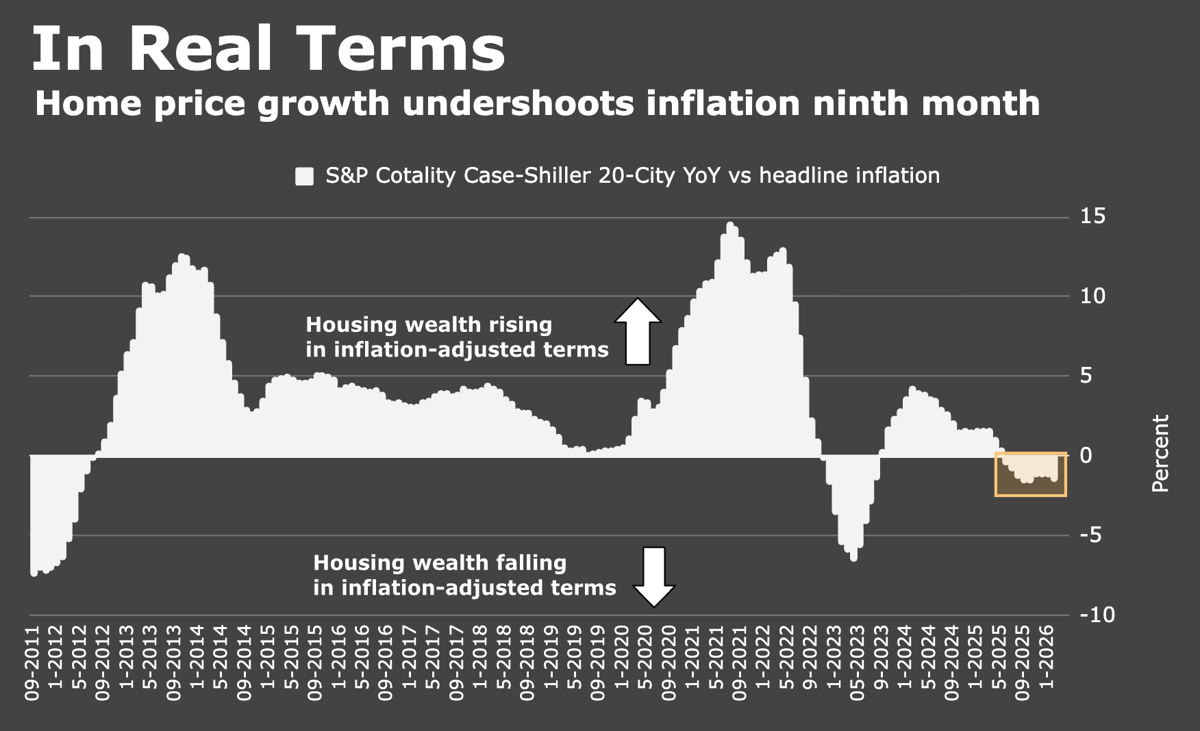
Real US Housing Wealth Contracts Ninth Month
The Case‑Shiller 20‑city index posted a modest 0.9% gain in February, the slowest pace since July 2023, marking the ninth consecutive month that real U.S. housing wealth has shrunk. Price growth is now negative in more than half of the...
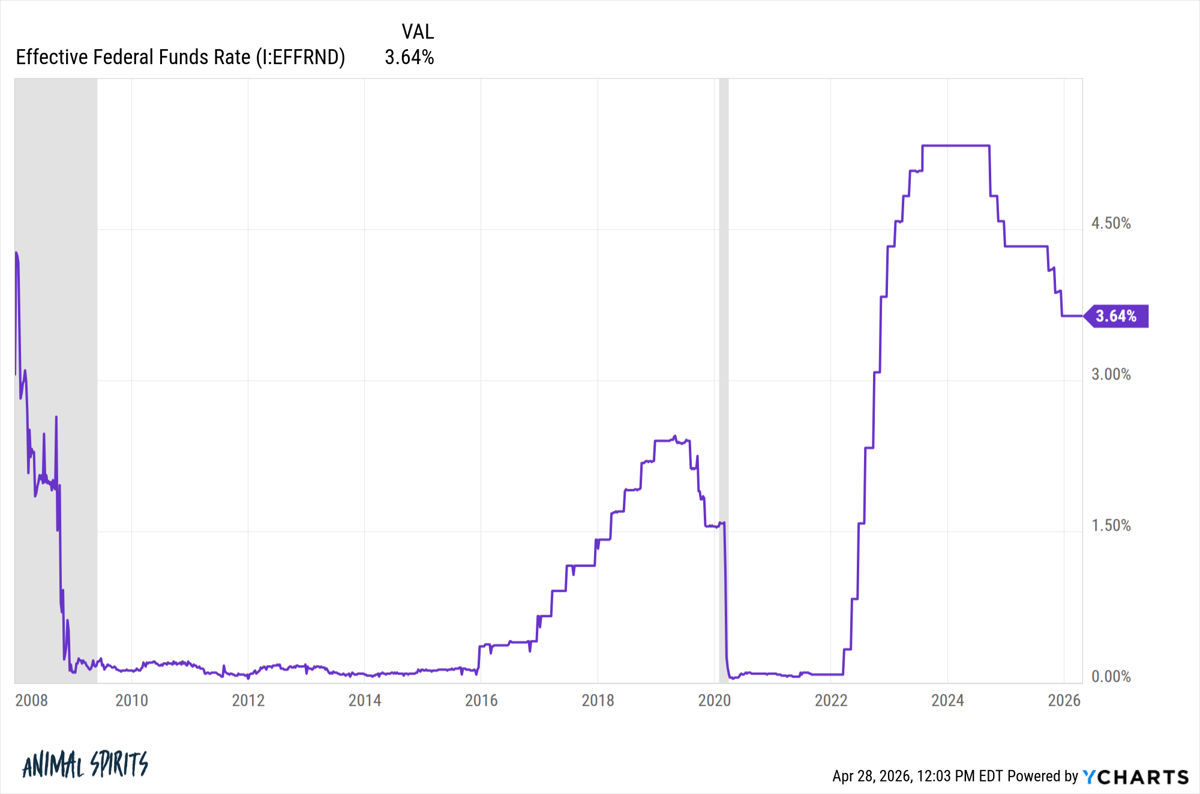
The Financial Crisis That Didn’t Happen
The Federal Reserve kept policy rates at 0% for roughly eight to nine years after the 2008 crisis, using quantitative easing to stabilize banks. Despite widespread fears, this ultra‑low‑rate environment did not spark a new financial crisis or hyperinflation. Inflation...

The Federal Deficit Is a Mess – but Fixing Social Security Could Help a Lot
The Congressional Budget Office warns that federal deficits will rise from 5.8% of GDP in 2026 to 6.7% by 2036, with public debt climbing to 120% of GDP. While the primary deficit is projected to fall modestly, it remains a...

The Return of Nonlinear Inflation: Part I
The article warns that the Iran‑related Hormuz disruption could spark a new wave of nonlinear inflation, where supply‑chain stress propagates through the entire production system rather than fading with oil prices. It highlights the Global Supply Chain Pressure Index (GSCPI)...
A Perfect Storm Awaits Warsh At The Fed
Kevin Warsh is on track to become the next Federal Reserve chairman when Jerome Powell’s term ends in mid‑May. Senate obstruction was lifted after Sen. Thom Tillis withdrew his hold following the Department of Justice’s decision to close its criminal...
The Daily Feather — Just Passing Through
The Daily Feather post explores the shortest and longest coast‑to‑coast drives across the contiguous United States, noting the shortest route is about 2,800 miles and the longest exceeds 3,000 miles. It also embeds four Dallas Fed manufacturing charts covering 2004‑2025,...

Rand Paul’s “Six Penny Plan” To Balance the Federal Budget in Five Years
Senator Rand Paul introduced the “Six Penny Plan,” a bill that would shrink the federal budget by six percent each year for five years. The across‑the‑board cuts would apply to every department, leaving agency heads to allocate reductions internally. If...

Q1 GDP Set to Rebound, But Gulf War Stalemate Clouds Outlook
The median nowcast from CapitalSpectator projects first‑quarter U.S. GDP to rise at a 2.3% annualized pace, a sharp rebound from the 0.5% gain recorded in Q4. The Bureau of Economic Analysis is set to release the official figure later this...

Data Deluge Meets Tech Earnings, FOMC In Blockbuster Week
The week ahead packs a heavyweight macro and earnings calendar, starting with the Federal Reserve’s April FOMC meeting and the Bureau of Economic Analysis’s first‑guess Q1 GDP estimate, projected at 2.2% annualized. Inflation data will follow, with core PCE expected...

What To Expect From Powell’s Fed Chair Swan Song
Jerome Powell faces what could be his final public remarks as Federal Reserve Chair ahead of this week’s FOMC meeting. The central bank is expected to keep policy rates unchanged while the March core PCE inflation figure is projected at...
EVERY QUANTITATIVE TIGHTENING HAS FAILED: Kevin Warsh's Balance Sheet Fantasy, the $9T Debt Wall & Why the Fed's Inevitable Pivot...
Kevin Warsh, President Trump’s pick to replace Jerome Powell, testified before Congress urging a reduction of the Federal Reserve’s balance sheet. He warned of a $9 trillion debt wall and $2 trillion structural deficits, but offered no timeline for Quantitative Tightening (QT)....

Global Liquidity And ‘Treasury QE’: Why the Incoming Warsh Fed Is No Longer in Full Control
The Federal Reserve’s traditional role as the chief driver of U.S. growth is waning as the Treasury reclaims liquidity management. Starting in 2025, a covert revision of the 1951 Fed‑Treasury Accord allows the Treasury to conduct its own quantitative easing...

All Quiet on the Long-Bond Front. How Long Can This Last?
The U.S. 30‑year Treasury yield has been unusually steady since March 29, trading in an 8.2‑basis‑point band between 4.858% and 4.940%, even as oil prices swung more than 30% and equities experienced sharp moves. Analysts attribute the calm to market uncertainty...

‘Labor Crisis’ Warnings Rekindled By Tech Job Cuts
The U.S. big‑cap employment picture recorded its first annual decline in a decade, driven largely by tech giants Meta and Microsoft announcing up to 25,000 job cuts, roughly 7‑10% of their workforces. While overall payroll growth slowed last year, AI‑focused...

Rates End Week Close Enough to Recent Lows
The 30‑year fixed mortgage rate index held steady at 6.32% this week, barely above Friday’s 6.29% low, marking the lowest level in more than a month. The flat movement reflects heightened uncertainty over the ongoing Iran conflict and its potential...

Senate Confirmation of Warsh, Who Wants to Reduce the Fed’s Balance Sheet, Gets Unstuck as DOJ Ends Powell Investigation
The Department of Justice announced it is closing its investigation into cost overruns for Federal Reserve buildings, removing the political obstacle that stalled Kevin Warsh's Senate confirmation. With Senator Thom Tillis lifting his hold, the Senate Banking Committee can now...

Updated April Michigan Survey Results
The University of Michigan’s Survey of Consumers released its April update, showing one‑year‑ahead median CPI inflation expectations slipping 10 basis points to 2.9%. At the same time, the consumer‑sentiment index rose two points, its strongest reading since early 2022. The...

One Year Inflation Expectations: A Survey of the Latest
The article aggregates the latest one‑year‑ahead inflation expectations from the University of Michigan, the New York Fed, the Cleveland Fed’s Survey of Professional Forecasters and its firm‑level SoFIE, all showing a steady climb toward the mid‑3 percent range by mid‑2026. The...

Trump’s Numbers, April 2026 Update
Under President Donald Trump’s second term, job creation slowed to 369,000 jobs by March and the unemployment rate edged up to 4.3%. Inflation ticked higher, pushing gasoline prices up after U.S.-Israeli airstrikes on Iran, while private‑sector weekly earnings rose 1%...

The Wrap: Energy Prices Surge, Stocks Ooze Up, Gold Edges Sideways
Energy prices have surged as the Israel‑U.S. conflict with Iran persists, prompting airlines to slash flights and driving a $500 million Treasury bailout for Spirit Airlines. The FHA, Fannie Mae and Freddie Mac announced a pilot to accept VantageScore 4.0 and FICO 10T...

Declining Survey Response and Government Data
Survey participation in key federal household and business questionnaires has plummeted, with the Current Population Survey dropping from nearly 90 % a decade ago to about 60 % today. Similar declines affect business surveys such as the Current Employment Statistics and CPI‑C&S,...

Decoding the Warsh Testimony: What the Next Fed Chair Actually Said
Kevin Warsh’s Senate Banking Committee testimony signals a sweeping Fed regime change. He blames the 2020 “FAIT” framework shift for today’s 25‑30% price surge and proposes a new inflation target, trimmed‑mean data, and the end of forward guidance. Warsh also...

Warsh, Rinse, Repeat
Former Fed governor Kevin Warsh told the Senate Banking Committee he would curtail the Federal Reserve’s forward‑guidance routine, eliminating quarterly Summary of Economic Projections and the dot‑plot, and limiting post‑FOMC press conferences to truly "important" news. He also attacked the...

178k JOBS? NOT SO FAST
A recent San Francisco Federal Reserve paper challenges the headline figure of 178,000 new jobs, arguing that the underlying labor market is weaker than reported. The report highlights that much of the growth stems from part‑time, low‑skill positions rather than...

Five Year Inflation Expectations, April 22
The five‑year inflation breakeven rate rose to 2.61% as of April 22, up from the 2.4% spread reported on February 27. The NY Fed’s median five‑year‑ahead inflation forecast for March sits at 3.05%, while the University of Michigan survey reads 3.2%. Treasury‑TIPS break‑even...

WEEKLY WEBCAST: Debating Warsh
Kevin Warsh, the leading candidate to succeed Jerome Powell as Fed chair, is pushing for an earlier cut to the federal funds rate. Ed and Elias argue his rationale—based on a declining labor share and an AI‑driven productivity boom—misreads the...