
March Retail Surge Hides Warning Signs for Consumers
U.S. retail sales jumped 1.7% in March, the strongest month‑over‑month gain in over three years, but the surge was largely powered by a spike in gasoline purchases linked to the Iran‑related energy shock. Stripping out the fuel effect leaves a more modest 0.6% underlying increase, while year‑over‑year sales rose 4.0%, indicating steady demand. The Visa Spending Momentum Index reached a four‑year peak, suggesting consumer confidence remains resilient. Analysts caution that tax refunds and household savings are temporarily masking budget pressure from higher inflation and energy costs.

Dot Plot Abolition Signal: How Forward Guidance Removal Concentrates Information-Cost Premium at the Short End
The article argues that central‑bank forward guidance acts as a market‑wide coordinate system, and its credible removal instantly forces short‑duration bond holders to demand higher compensation. A credible signal on April 21, 2026—when Fed nominee Kevin Warsh dismissed the dot...
US Pending Home Sales Accidentally Rise
Contract signings for existing U.S. homes unexpectedly rose 1.5% in March, marking the second consecutive monthly gain and defying forecasts of a flat reading. The increase came despite mortgage rates climbing roughly 40 basis points as oil price spikes lifted...

Record Surge In Gas Receipts Fails To Deter US Shoppers
U.S. retail sales jumped 1.7% in March, the strongest month‑to‑month gain in over three years, driven largely by a 15.5% surge in gasoline station receipts—the biggest sequential rise on record since 1992. Excluding fuel, underlying retail activity grew a modest...

The Daily Feather — Quality, Value, and Convenience
QVC, short for Quality Value Convenience, debuted on November 24, 1986, reaching 58 cable systems in 20 states. Founded by Joseph Segel—also known for the Franklin Mint—the network introduced a televised shopping experience that blended product curation with instant purchase...
The Fed and Inflation: Origins of the 2 Percent Target Rate
The Federal Reserve’s 2 percent inflation target, formally adopted in January 2012, remains the cornerstone of its monetary policy framework. The target directs the FOMC to raise or cut the fed funds rate to keep inflation near 2 percent while supporting maximum employment....

Gallup, U.Michigan, Conference Board Compared, Plus Morning Consult
The latest release from the University of Michigan, Gallup, and the Conference Board shows their standardized consumer‑sentiment indices moving in lockstep from 2020 through early 2025, then plunging sharply after the political event dubbed “Liberation Day” in early 2026. All...
Fed Chair Apprentice
Kevin Warsh, a former Fed governor, is undergoing a Senate confirmation hearing that could make him the next Fed chair, pending President Trump’s backing and a pending DOJ investigation into current Chair Jerome Powell. Warsh emphasizes that the Fed’s operational...

U.S. Treasury Rates Weekly Update for April 17, 2026
U.S. Treasury yields fell for the third week in a row, extending a short‑term downward trend. The 30‑year note slipped 0.03%, while the benchmark 10‑year yield dropped 0.05% to 4.26%. The 3‑year Treasury rate settled at 3.72% as of April 17, 2026....
The Daily Feather — A Change Is Gonna Come
The S&P 500 hit a fresh record high as markets cheered an Israel‑Lebanon ceasefire and the declaration of a fully open Strait of Hormuz, easing shipping‑route worries. Bank of America CEO Brian Moynihan told investors that stable initial jobless claims...

Incendiary Inflation
The Labor Department reported a 3.3% year‑over‑year rise in March CPI, the highest pace in two years and the sharpest monthly jump in four years. Gasoline prices surged 21% in a single month, underscoring volatile energy costs. Since President Biden...

What Drives the Administration’s Trend GDP Forecast?
The White House’s 2026 GDP outlook projects a growth path that outpaces the Wall Street Journal’s median forecast and an error‑correction model anchored in historical GDP‑population trends. The administration attributes the upside to an accelerated labor‑productivity rate of 2.9% annually,...
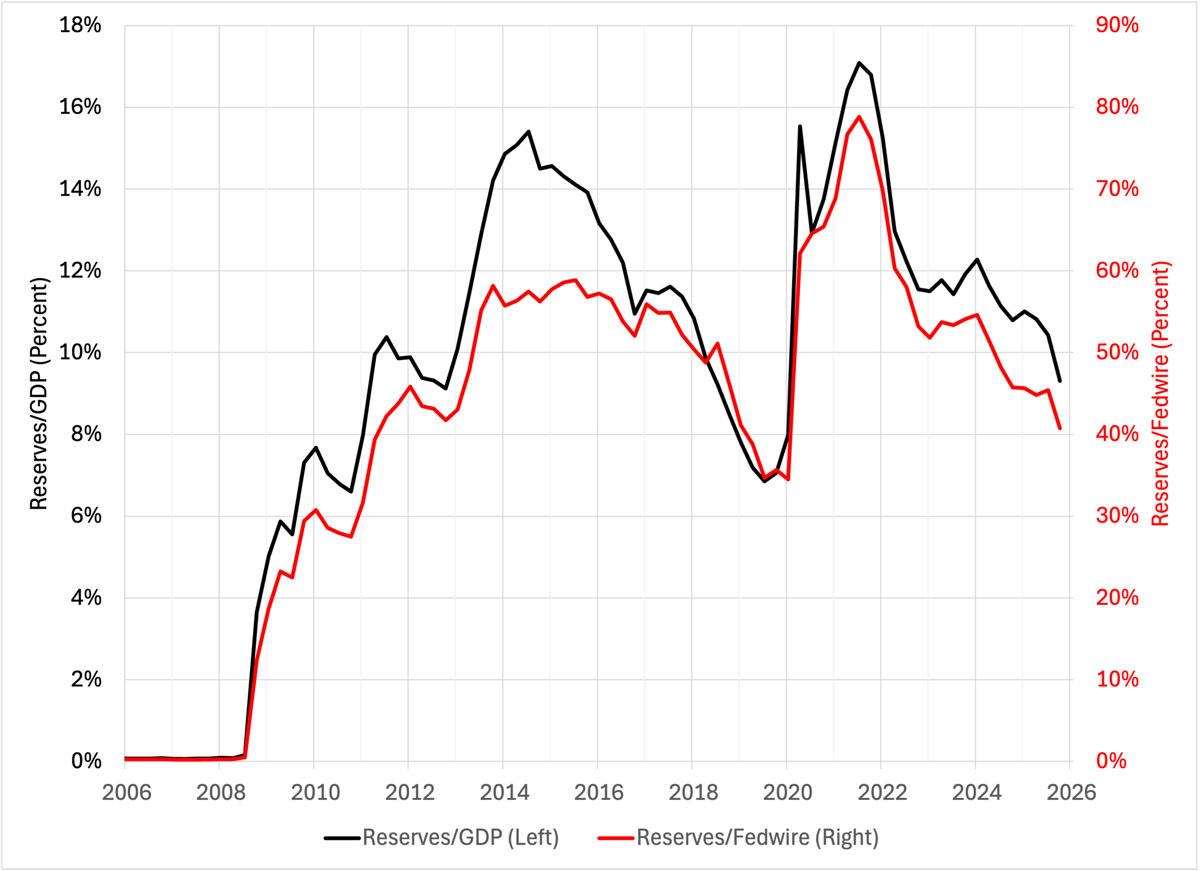
The Fed's Reserve Management Revisited
The Federal Reserve faces a delicate dilemma: shrinking its balance sheet without sparking interest‑rate volatility. Recent research by Darrell Duffie and Fed officials highlights that today’s payment system, especially Fedwire, is the primary driver of banks’ structural reserve demand. Policymakers...

Auto Prices – Adjusting for Quality and Mix
The average transaction price of a new car jumped from $1,900 in 1960 to over $50,000 in October 2025. When adjusted for quality improvements and a shift toward larger, feature‑rich models, the price increase is about 125%, far lower than the...

1.5% M/M Ann’d: What Headline CPI Inflation Have to Be to Restore Pre-War Trend by Dec. 2026
The analysis estimates that a 1.5% month‑over‑month annualized CPI increase from May through December 2026 would bring the headline consumer price index back to its pre‑war stochastic trend. This target assumes oil prices remain elevated until the Strait of Hormuz...
The Daily Feather — Building a Better Parachute
The Daily Feather explores how James Floyd Smith’s 1914 near‑fatal flight sparked the modern parachute industry. After his plane’s wing failed, Smith designed a “parachute‑type” safety device that later became the first reliable sky‑diving rig. The post traces the invention’s...

‘The Macro Says Cuts Not Hikes’
Bank of America strategist Michael Hartnett warned that a combination of record‑low consumer sentiment and a sharp rise in energy costs is eroding pricing power for firms and could force the Federal Reserve toward rate cuts rather than further hikes....

5 Things the Working Class Can’t Afford Anymore Due To Inflation and the Cost of Living Crises
Rising inflation, stagnant wages and higher interest rates have pushed five once‑routine expenses out of reach for many American workers. As of April 2026 the median home price sits at $408,800, a fast‑food family meal costs $14, and a new car...

Consumer Sentiment Has Never Been This Bad
The University of Michigan’s Index of Consumer Sentiment plunged to 47.6 in the preliminary April 2026 reading, the lowest level since the survey began in the 1970s and below the previous record set in mid‑2022. The current‑conditions sub‑index fell to...

"Look Through" The Hormuz Shock if You Want. U.S. Inflation Is Still Running Hot.
The closure of the Strait of Hormuz has forced Saudi Arabia, Kuwait, Iraq and the UAE to cut roughly 7.5 million barrels per day of crude output in March, with shut‑ins expected to reach about 9 million barrels per day in April...
Taxing, Borrowing, and Printing: Three Ways America Pays for Government
America finances government through three mechanisms—taxes, borrowing, and inflation. Taxation claims about 39% of a median two‑income family’s earnings and adds roughly $7,100 per person in state and local levies, plus an estimated $600 tariff‑related charge per household in 2026....

Industrial Production Declines 0.5 Percent in March but Feb Revised Higher
The Federal Reserve’s March 2026 industrial production report showed a 0.5% month‑over‑month decline, yet the index still reflected a 2.4% annualized growth rate for the first quarter. Manufacturing output slipped 0.1% in March but posted a 3.0% quarterly gain, while...

How Are Consumers Still Spending So Much?
U.S. consumer spending remains robust despite higher inflation, gas price spikes and a softer labor market, with retail sales climbing to $638 billion in April 2026. Household balance sheets have shifted dramatically: consumer debt rose to $18.8 trillion, yet total assets surged to...

US Initial Jobless Claims 207K vs 215K Expected
U.S. initial unemployment claims dropped to 207,000, comfortably beating the 215,000 forecast and marking a decline from last week’s revised 218,000. The four‑week moving average steadied at 209.75 K, signaling a still‑tight labor market despite seasonal noise. Continuing claims rose modestly...

US April Philly Fed Business Index +26.7 vs +10.0 Expected
The Philadelphia Fed’s March manufacturing survey posted a robust index of +26.7, far outpacing the +10.0 forecast. New orders surged to 33.0 and shipments rose to 34.0, marking the strongest activity in months. However, the employment component slipped into negative...

INFLATION BREAKEVENS HAVE NOT COLLAPSED!
The author argues that 12‑month inflation breakevens have not collapsed, despite social media chatter linking a recent equity rally to a dramatic drop in inflation expectations. Recent Treasury data shows the 1‑year breakeven rate hovering around 3.0%, essentially unchanged from...

America's Top Bankers Confirm: The Economy Remains Resilient 💪
America's leading bankers say the U.S. economy remains resilient despite a dip in household finances. While surveys show savings rates falling and debt ratios rising, overall financial health is still sufficient to sustain consumer spending. Personal consumption, which accounts for...

THE 40% WEALTH CONFISCATION: Positioning for Debasement, M2 Money Supply Explosion Coming as Fed Inevitably Returns to Money Printing, Drives...
The article warns that the Federal Reserve will likely resume aggressive money‑printing to buy Treasury securities as soaring debt‑service costs strain the U.S. fiscal balance. By expanding the M2 money supply well above its 6.8% historical average, the Fed will...

Fed Beige Book Highlights
The Fed’s Beige Book released on April 15 shows a patchwork of regional activity: New York and Boston districts slipped into slight contraction, while Cleveland, Richmond and Atlanta posted modest growth and other districts were flat or only slightly positive. Across the...
Beige Book Confirms Uncertainty, Fuel Costs Surged On Iran War As Economy Grew At "Slight To Modest" Pace
The Federal Reserve’s Beige Book shows U.S. economic activity expanding at a slight‑to‑modest pace, but the Iran‑Israel conflict has driven fuel prices above $4 per gallon and heightened uncertainty. Eight of the twelve districts reported modest growth, while Boston and...

Tax Freedom Day Underestimates How Long You Work For The Government
Tax Freedom Day, the date when Americans have earned enough to cover federal taxes, landed on April 16, 2025 according to the Tax Foundation’s last calculation. Economists argue that this metric understates the true fiscal burden because it ignores government spending that...

Interview with Ellen McGrattan: Business Cycles and Intangible Capital
Interview with Ellen McGrattan, a leading macroeconomist at the Richmond Fed, highlights her adoption of the Kydland‑Prescott model‑data matching approach to study business cycles and total factor productivity. She explains how intangibles—customer lists, trademarks, recipes—are omitted from balance sheets, creating a...

US Homebuilder Depression Enters Second Year
The NAHB builder‑mood index fell to 34, a seven‑month low and the 24th straight month below the optimism threshold. The slump follows the Federal Reserve’s aggressive inflation‑fighting measures and is compounded by the Iran war, rising energy costs, and weak...
Against the Odds: US Is Relatively Resilient Despite Global Turmoil
Despite heightened policy uncertainty, trade barriers and a war in the Middle East, the U.S. economy remains on a growth path. Real‑time indicators such as the Dallas Fed’s Weekly Economic Index (2.7% YoY) and the Johnson Redbook Index show solid...
The Daily Feather — People-Watching Main Street
The Daily Feather uses a people‑watching metaphor to dissect four charts that track small‑business revenue, employment, loan activity, and digital adoption across the United States from 2005 to 2026. The data reveal a 45% rise in revenue per employee, a...

Fed Report Shows Trump Tariffs Prevented Trump From Meeting Inflation Goals
A Federal Reserve report found that Trump‑era tariffs added roughly 0.8% to overall U.S. prices and were responsible for the entire excess core‑goods inflation observed in 2025. The analysis shows tariffs kept inflation above the pre‑pandemic 2% target, undermining the...

Former Fed Chair Yellen Sees One Fed Cut Possible as Iran-Driven Inflation Clouds Outlook.
Janet Yellen, former Fed chair and current Treasury secretary, said a single Federal Reserve rate cut could still occur later in 2024 despite heightened inflation risks from the Iran‑driven energy shock. She noted that short‑term inflation expectations have edged higher...
The Closer – Reasons for Optimism, PPI, BDCs – 4/14/26
Truck orders surged 211% year‑over‑year in the three months ending February, underscoring robust demand for commercial vehicles before the war. ADP reported 157,000 private‑sector jobs added in the week to March 27, the strongest weekly hiring stretch on record. Yet consumer...

GDP Projections: One of These Is Not Like the Others
The latest chart juxtaposes U.S. real GDP growth forecasts from the Biden administration, the IMF’s World Economic Outlook, the Survey of Professional Forecasters, the Wall Street Journal poll, the Fed’s GDPNow model, and Goldman Sachs. The administration’s projection, built on...
Bessent Says “Inflation Is Transitory” But the Fed Should Wait for Clarity
Bessent told Semafor that the recent surge in prices is "transitory" and that the Federal Reserve should adopt a "wait‑and‑see" approach before lowering interest rates. March consumer‑price data rose three times faster than February, largely because of higher oil and...

Producer Price Index Jumps 0.5 Percent, Fourth Straight Month of Big Increases
The Bureau of Labor Statistics reported that the Producer Price Index (PPI) final demand rose 0.5% month‑over‑month in March 2026, well below the Bloomberg consensus of 1.2%. The goods component drove the increase, climbing 1.6% on sharp energy price gains,...

How Do Fertility Rates Affect US Fiscal Sustainability?
The United States’ fertility rate has fallen to a record low of 1.57 births per woman in 2025, well below the 2.1 replacement threshold. Historical spikes during the Baby Boom created a surge in the old‑age dependency ratio, pushing entitlement...

US Wholesale Inflation Much Cooler Than Feared
U.S. wholesale inflation slowed dramatically in March, with the Producer Price Index rising just 0.5% month‑over‑month, half of the 1.1% analysts expected. The modest increase was largely offset by a sharp 1.6% jump in a specific core component, while most...

Trump Administration Proposes 2027 Budget with Pell Grant Increase and Sweeping Education Cuts + History, Curiosity, and a Classroom That...
The Trump administration released its FY 2027 budget, allocating roughly $76.5 billion to the Department of Education—a $2.3 billion reduction from the prior year. While the proposal raises Pell Grant funding, it simultaneously trims student aid, institutional support, and federal research dollars, and...
Connecticut GDP Outperformed National Economy In 2025
Connecticut’s economy posted a 2.4% GDP increase in 2025, outpacing the nation’s 2.1% growth and tying Massachusetts for the top spot in New England. The state recorded net positive job creation for the fifth consecutive year, highlighted by an additional...
Bernanke’s Broken Promise: Is It Time To Shrink the Fed Yet?
In 2011 Federal Reserve Chairman Ben Bernanke testified that quantitative easing (QE) was a temporary measure that would be reversed. Fifteen years later the Fed’s balance sheet has swelled to about $6.6 trillion—more than seven times its 2007 size—driven by $1.6 trillion...
U.S. Treasury Rates Weekly Update for April 10, 2026
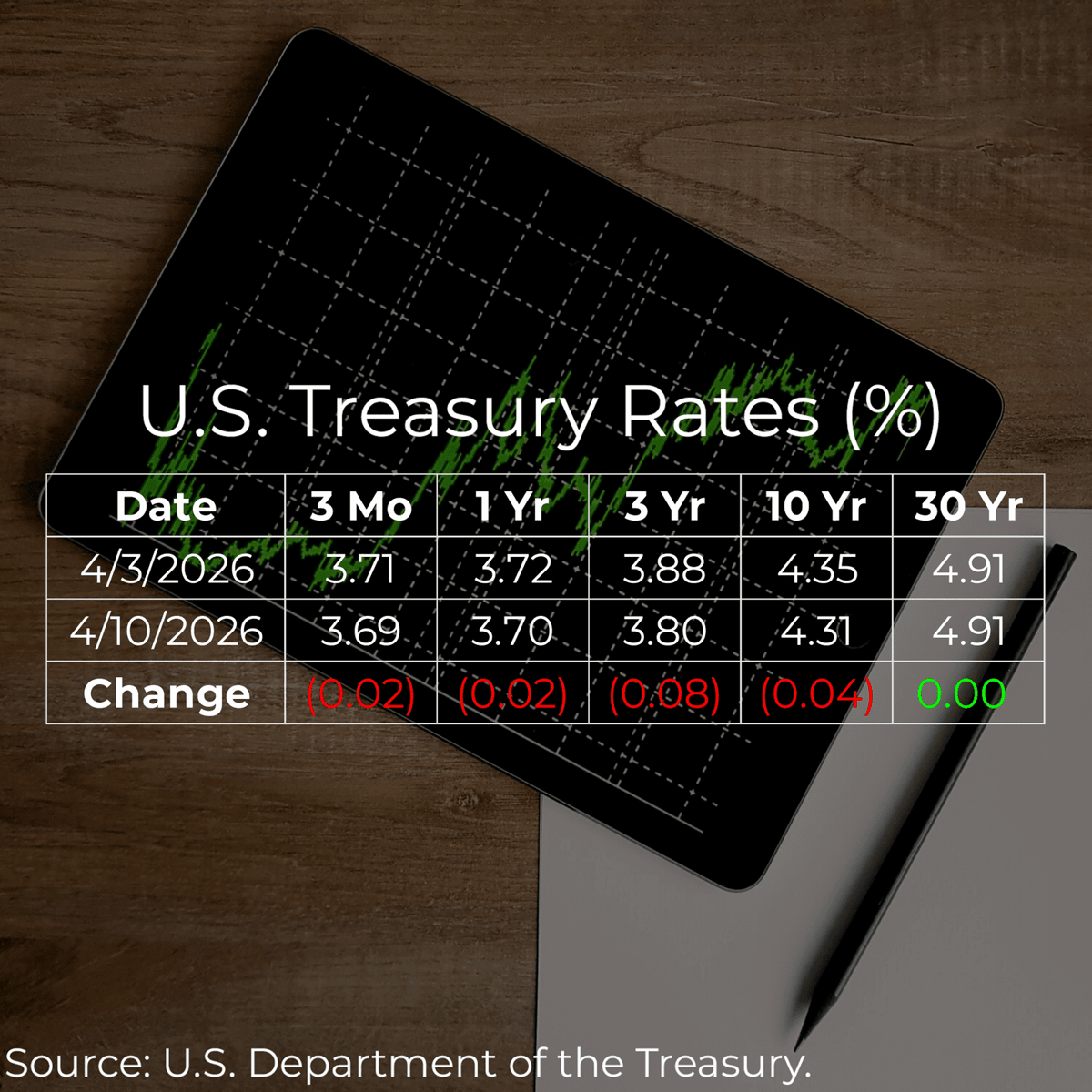
U.S. Treasury yields softened across most maturities for the week ending April 10, 2026, with the benchmark 10‑year rate slipping 0.04 percentage points to 4.31%. The 3‑year note posted a yield of 3.80%, while the 30‑year Treasury held steady at...

Fed Study Shows Tariffs Boosted Goods Inflation by a Cumulative 3.1 Percent
The Federal Reserve’s latest research quantifies the inflationary impact of the 2025 U.S. tariffs, finding a cumulative 3.1 percent rise in core goods personal consumption expenditures (PCE) through February 2026. The analysis shows that tariff costs are fully passed through to consumer...

The Closer – Fedspeak, Housing Affordability, Positioning – 4/13/26
The Federal Reserve’s recent commentary has turned noticeably more hawkish, a shift that historically dampens forward equity returns. At the same time, mortgage rates have rebounded to roughly 6.5%, squeezing housing affordability. Existing‑home sales have slumped to their lowest level...

Everyday Prices Jump
AIER’s proprietary Everyday Price Index (EPI) surged 2.5% in March 2026, reaching 307.4 – the second‑largest monthly gain since January 2020. Fourteen of the 24 component categories rose, led by motor fuel, housing fuels, utilities and food away from home,...