
The Typical U.S. Homeowner Hangs Onto Their House For 12 Years. In Los Angeles, It’s 20 Years.
Redfin’s 2025 analysis shows the median U.S. homeowner now stays in a home for 12 years, the longest tenure since 2022. Tenure peaked at 13.4 years in 2020, fell during the pandemic‑driven buying surge, and rebounded slightly in 2025. California leads the nation, with Los Angeles owners holding properties for 20 years, followed by San Jose at nearly 19 years. In contrast, affordable metros such as Louisville and Las Vegas see turnover under nine years.

Are Data Centers Driving up Utility Costs? (Episode 27)
Utility electricity rates in the U.S. have risen faster than inflation since 2022, driven primarily by higher natural‑gas prices, pandemic‑induced residential demand, and under‑invested transmission infrastructure. While data centers add load in specific markets, they do not align with the...

TPM26: Iran Conflict Puts New Risk on US Economic Growth: Yellen
Former Treasury Secretary Janet Yellen warned that the Iran‑Israel conflict threatens to choke oil flows through the Strait of Hormuz, sending crude futures to their highest level in over a year. Higher energy prices could lift inflation and undermine the...

Private Residential Construction Spending Edges Higher in December
Private residential construction spending rose 1.5 % in December 2025, driven by gains in single‑family builds and home‑improvement projects. Single‑family construction increased 1.6 % month‑over‑month but remains 3.6 % below a year earlier, while multifamily spending edged up 0.1 % for a seventh straight...

U.S. Retail Sales Up in October 2025, Building Materials Sector Sees Decline
U.S. Census Bureau reports October 2025 retail sales rose 2.2% year‑over‑year. Thirteen states and the District of Columbia posted positive changes, with New York leading at a 6.1% increase. Building‑materials and garden‑equipment dealers fell 5.4% YoY, while West Virginia saw a 16.1%...

Market Outlook for the Week of 2nd-6th March
The week of March 2‑6 is packed with macro releases, including Eurozone, UK and US manufacturing PMIs, Eurozone CPI flash estimates, Australian Q4 GDP, and a full slate of US labor market data. Analysts expect the ISM manufacturing PMI to dip...

Consumer Price Index Isn’t Properly Accounting For Healthcare Costs
The U.S. Bureau of Labor Statistics’ Consumer Price Index (CPI) omits key out‑of‑pocket healthcare expenses, masking true inflation for many Americans. While the CPI shows a modest 3% rise since President Trump’s second inauguration, premiums on the ACA marketplace have...

Week Ahead: US Dollar Slips on Trade Uncertainty as NFP, Eurozone HICP Loom
US Dollar slipped this week, trading near 97.60 on the DXY, down about 0.2% as traders digest the Supreme Court’s decision that declared Trump‑era tariffs illegal and the administration’s subsequent new levies. A stronger‑than‑expected Producer Price Index failed to lift...
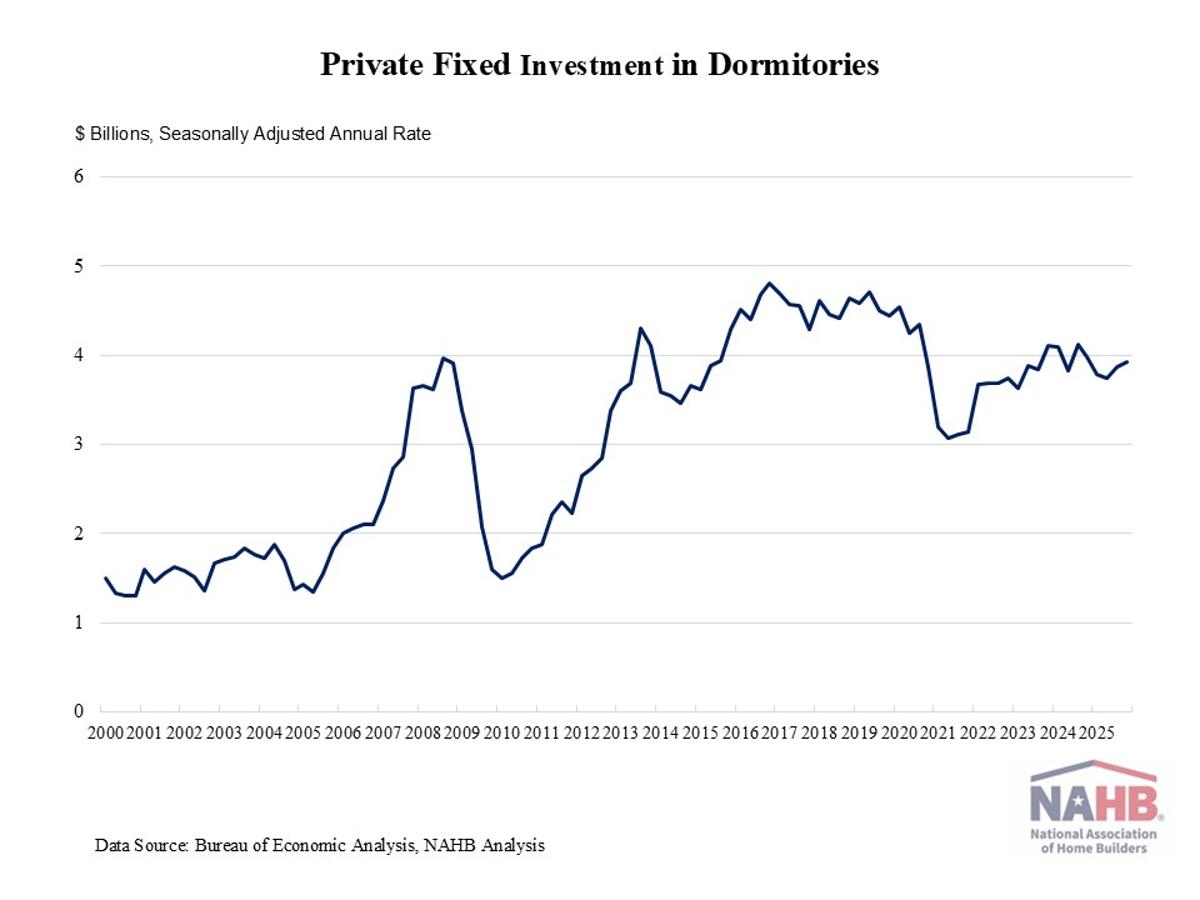
Gains for Student Housing Construction in the Last Quarter of 2025
Private fixed investment in student dormitories rose 1.5% in Q4 2025, reaching a seasonally adjusted annual rate of $3.9 billion. The gain follows three quarters of decline but remains 1.3% below the same quarter a year earlier. Pandemic‑induced drops had pushed investment...

Atlanta Fed GDPNow Growth Estimate for Q1 3.0% versus 3.1% Last
The Atlanta Federal Reserve’s GDPNow model now estimates first‑quarter 2026 real GDP growth at 3.0%, a slight dip from the 3.1% forecast three days earlier. The revision follows fresh data from the Census Bureau and the Bureau of Labor Statistics,...

Bitcoin Drops 3% as Inflation Hots up Again, and a Quiet Services Spike Just Changed the Rate Cut Story
Bitcoin fell about 3% after January's producer‑price index (PPI) posted a 2.9% year‑over‑year rise, outpacing the 2.6% consensus. The surprise was driven by a services‑inflation spike, with trade‑service margins up 2.5%, while consumer‑price inflation (CPI) cooled to 2.4% YoY. The...

Sticky US PPI Sour Risk Mood; Sterling Hit by UK Political Blow
US producer‑price index jumped 0.5% month‑on‑month in January, outpacing expectations and reigniting concerns that inflationary pressures remain entrenched. The surprise lift pushed Dow futures down over 500 points and nudged the 10‑year Treasury yield below the 4% threshold, suggesting markets...

America’s Most Expensive ZIP Codes – 2026
The 2026 luxury housing report shows the median entry price for the nation’s top 10 % of homes steady at about $1.2 million, while the elite “ultraluxury” ZIP codes now start at $5.5 million. Newport Coast, CA (92657) displaced Fisher Island, FL to...
SF FedViews: Prospects for AI-Related Activity Add to Uncertainty Around the Economic Outlook in 2026
Despite a fourth‑quarter slowdown to 1.4% annualized, the U.S. economy is projected to resume solid, above‑trend growth in the first half of 2026. Labor market indicators show stabilization, with January adding 130,000 jobs and the unemployment rate edging down to...

Fed’s Miran Backs Four Rate Cuts
Federal Reserve Governor Stephen Miran urged a faster easing path, calling for four quarter‑point rate cuts in 2026 to support the labor market. He argued inflation is largely contained and that the Fed should act sooner rather than later. Miran...
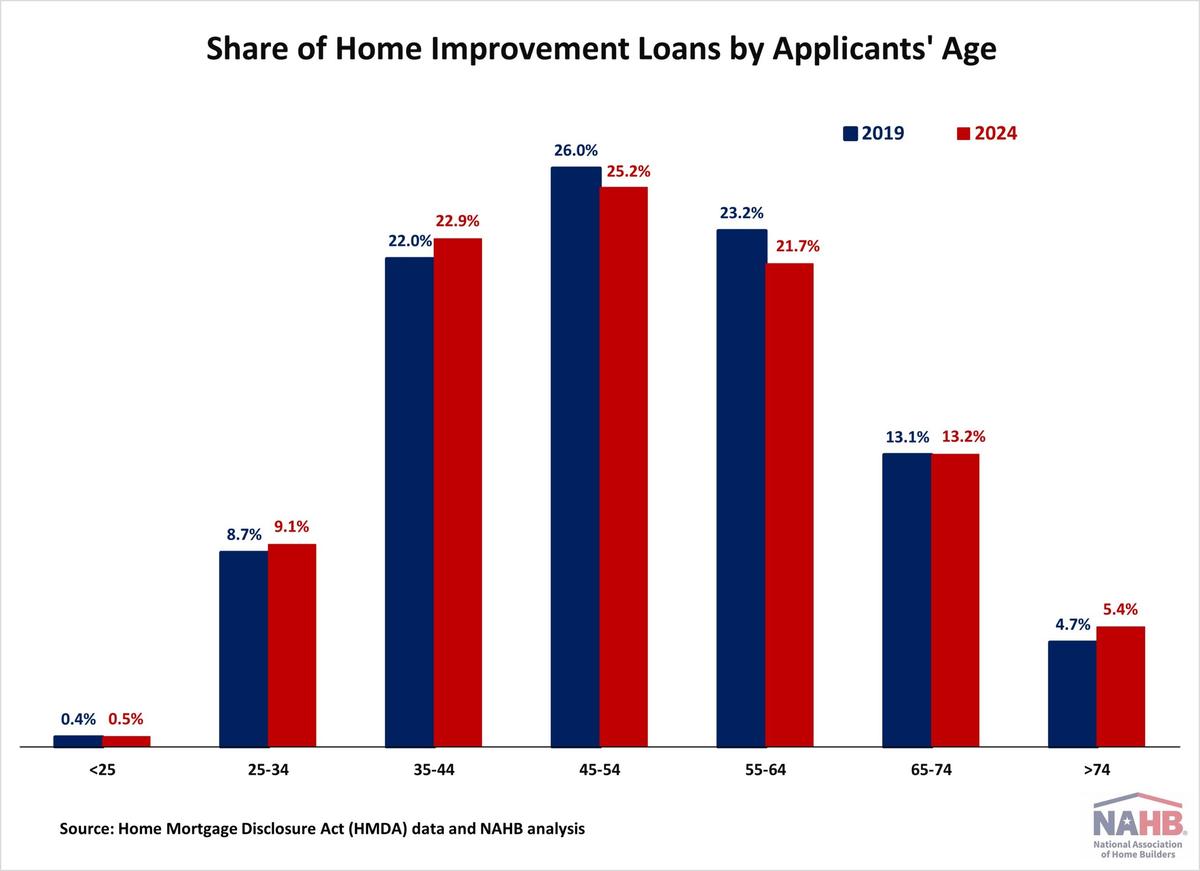
Home Improvement Loan Applications Moderate as Borrower Profile Gradually Ages
Home‑improvement loan applications peaked at 1.49 million in 2022 and have moderated to 1.20 million in 2024, remaining above pre‑pandemic levels. The borrower age profile is gradually aging, with the 65‑74 and 75+ cohorts expanding modestly. Meanwhile, the 45‑54 group stays the...
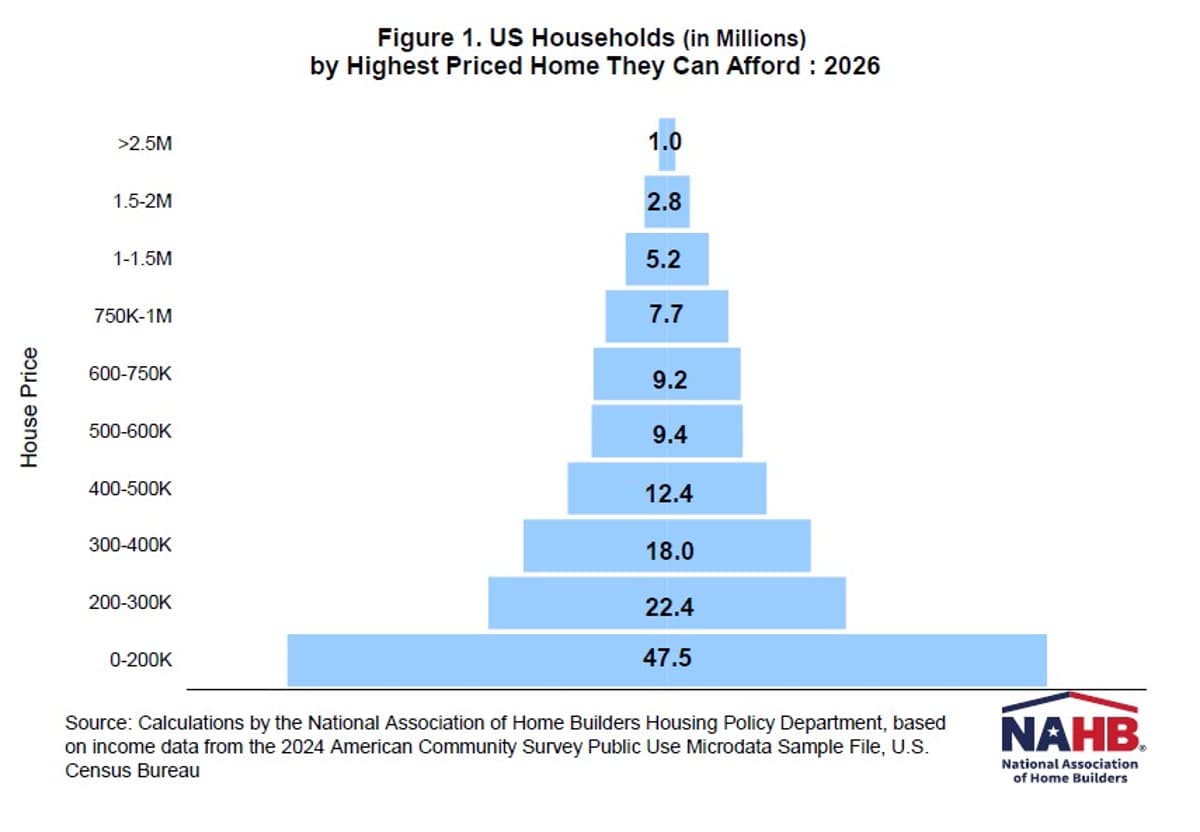
Affordability Pyramid Shows Over Half of U.S. Households Cannot Buy a $300,000 Home
The National Association of Home Builders' 2026 Priced‑Out Analysis reveals that 52 % of U.S. households—about 70 million—cannot afford a $300,000 home, while the median new‑home price is expected to reach $410,000. The affordability pyramid shows 47.5 million households limited to homes under...

Differences in Cost of Living Across the US : Regional Price Parities by State and Metro Area for 2024
On February 19, 2026, the Bureau of Economic Analysis released 2024 Regional Price Parities (RPPs) for all U.S. states and metro areas. The index, where 100 equals the national average, shows California at the highest cost of living (110.7) and...

US Airforwarders Warn New Tariffs Will Create Disruption
U.S. President Donald Trump announced a temporary 10% global tariff under Section 122 of the 1974 Trade Act, to be applied for 150 days after a Supreme Court decision nullified the prior regime. The Airforwarders Association (AfA) warned the measure will...

What Will the Fed’s “Warsh Era” Bring?
Kevin Warsh’s nomination to replace Jerome Powell places a deeply divided Federal Reserve at a crossroads. Warsh argues the institution needs a revamped analytical framework and a “balance‑sheet theory” rather than a singular focus on rate cuts. He suggests structural...

Measure of CEO Confidence Survey
The Conference Board’s Measure of CEO Confidence™ jumped to 59 in Q1 2026, an 11‑point gain from Q4 2025, reflecting renewed optimism among 142 surveyed CEOs. CEOs reported improved views of overall economic conditions and their own industries, with 43% expecting short‑term...

LEI for the Global Economy Was Unchanged in December
The Conference Board reported that the Global Leading Economic Index (LEI) held steady at 0.0% in December, marking the first month of flat growth since the index’s inception. Major economies displayed mixed signals: the United States slipped 0.2%, China declined...

Why Adjustable-Rate Mortgages Are Surging in a Falling-Rate Market
Adjustable‑rate mortgages (ARMs) have surged to about 21% of U.S. mortgage originations, the highest share in three years, even as rates fall. In high‑cost states such as California, ARMs account for over 31% of loans, driven by a widening affordability...

Grocery Prices Will Continue to Increase in 2026: USDA
The USDA Economic Research Service forecasts a 2.5% rise in overall grocery prices for 2026, slightly below the 20‑year average of 2.6%. Seven of the 15 food‑at‑home categories, including beef, fish, sugar and non‑alcoholic beverages, are expected to outpace the...

Why Wall Street Panicked over a Sci-Fi Blog Post
Wall Street’s recent tumble was triggered by a speculative memo from Citrini Research that painted a dystopian AI future where productivity booms coexist with massive white‑collar job loss and collapsing consumer demand. The Substack‑style piece, framed as a 2028 science‑fiction...

The New Age of Western Industrial Policy: Is There a New Playbook?
A virtual “Trade Winds” event on March 11, 2026 gathered top economists and policymakers to assess the resurgence of Western industrial policy. Speakers outlined a growing toolbox—including procurement preferences, subsidies, and public‑private partnerships—driven by competitiveness, innovation, and economic‑security concerns. The measures aim...

The Trump Administration's America First Investment Pledges
The Trump administration announced an "America First" investment drive that has secured more than $5 trillion in pledges from foreign governments for projects across defense, technology, energy and infrastructure. The deals are framed as reciprocal arrangements, linking tariff relief to partner...

AI + Work: Understanding AI's Impact on the Labor Market
Leading research institutions—Yale's Budget Lab, Brookings' Hamilton Project, and the Peterson Institute for International Economics—are convening a virtual event to dissect AI's influence on employment. The discussion will spotlight the most informative data sources, from real‑time job postings to wage...

The State of US-Japan Economic Relations in a Changing Global Economy
A recent webinar examined the evolving economic partnership between the United States and Japan, highlighting trade, investment, and supply‑chain dynamics amid shifting global patterns. Experts discussed how post‑pandemic realignments and technological change are reshaping bilateral ties. The dialogue also addressed...

Dollar Supported by a Weak Yen and Strength in US Consumer Confidence
The dollar index rose modestly as a two‑week low yen boosted USD/JPY and stronger US consumer confidence lifted the greenback. Dec S&P composite‑20 home‑price data also outperformed expectations, while a rally in the yuan limited gains. The euro slipped on...

Reduce Inequality to Address Affordability
U.S. income inequality has deepened sharply from 1974 to 2024, with the bottom four quintiles’ share of total earnings falling from 62 % to under 55 % while the top 20 % rose to 52.2 %. The top five percent’s income share surged 40 %,...

Douglas Irwin on Tariffs in America and the Supreme Court Case
Supreme Court ruled on Feb 20, 2026 that the International Economic Emergency Powers Act does not give the president authority to impose tariffs. The decision directly challenges the wave of tariffs enacted by President Donald Trump during his second term,...

Commentary: Case-Shiller Home Price Index Price Growth Slowing Through December
The S&P CoreLogic Case‑Shiller National Home Price Index rose 1.3% year‑over‑year in December, a slight dip from 1.4% in November, indicating a slowdown in price growth. Existing‑home sales fell to a 1995 low while national inventory more than doubled since...

Young Adult Headship Rates in 2024: Cyclical Slip or New Equilibrium?
Young adult headship rates slipped to 43.7% in 2024, reversing the post‑pandemic rise that peaked at 44.2% in 2023. While this figure still exceeds the 40.2% level recorded in 2017, it remains below the roughly 46% benchmark of the 1990s‑early...

State and Metro Employment: Fourth Quarter 2025
FRED’s latest maps reveal nonfarm employment changes for Q4 2025. North Carolina led states with a 22,700‑job gain, while Virginia and Washington, DC each shed over 17,000 jobs. At the metro level, the New York‑Newark‑Jersey City area added 31,200 jobs, whereas the...

A Growing Number of Workers Went on Strike in 2025
New Bureau of Labor Statistics data reveal that 306,800 workers participated in 30 major work stoppages in 2025, a 13% rise from the previous year. Public‑sector strikes dominated, accounting for 17 of the incidents, while private‑sector actions included a 46‑day...

Quarterly Services Survey
The U.S. Census Bureau announced an updated release calendar to address a recent lapse in federal funding, postponing the next Quarterly Services Survey (QSS) revisions and benchmark releases. The delay affects historical corrections, new seasonal factors, and data from the...

HUD Moves to Close 'Mixed Status Households' Roommate Loophole
HUD Secretary Scott Turner announced a proposed rule that would require proof of U.S. citizenship or eligible immigration status for every resident in HUD‑funded housing, targeting so‑called “mixed‑status households.” The rule follows a HUD‑DHS audit that identified roughly 200,000 units...

The Link Between Interest Rates and Exchange Rates : The Uncovered Interest Parity
The post examines how the 10‑year US‑German bond yield spread correlates with the USD/EUR exchange rate, showing that higher US yields usually coincide with dollar appreciation. A notable exception occurred after April 2 2025, when a sharp US yield rise was followed...

Advance Wholesale Inventories
The U.S. Census Bureau has postponed the Advance Economic Indicators Report, originally slated for January 28, 2026, to February 19, 2026 due to a recent lapse in federal funding. The report, which provides forward‑looking data on international trade, retail inventories,...

U.S. International Trade in Goods and Services
The U.S. Census Bureau announced USA Trade Online: Reimagined, a modernized, login‑free platform that retains core trade data while offering a streamlined interface. A processing error in Exhibit 15 was corrected and the updated FT900 PDF and XLSX were posted on...

January 2026 Rental Report: Renter Conditions Improve Across U.S. Markets, With Notable Increases in Vacancies
Realtor.com’s January 2026 Rental Report shows the 29th consecutive month of year‑over‑year rent declines for 0‑2‑bedroom units, with the median asking rent falling 1.5% to $1,672. Vacancy rates in the nation’s 50 largest metros rose to 7.6%, the highest since...

Online Labor Demand Increased in January
The Conference Board‑Lightcast Help Wanted OnLine® (HWOL) Index rose to 100.4 in January 2026, a modest 0.4 % gain from December’s revised 100.0 reading. The increase follows a 5.6 % decline between November and December and leaves the index 15.4 % lower than a...

Report: America’s $38 Trillion Debt Demands Bipartisan Action
A new report from the Committee for Economic Development warns that the United States’ national debt has surpassed $38 trillion, matching the size of the economy and rising rapidly. The report urges Congress to create a bipartisan fiscal commission to devise...

The Conference Board Employment Trends Index™ (ETI) Improved in January
The Conference Board Employment Trends Index rose to 105.06 in January 2026, up from 104.51 in December, indicating a modest acceleration in payroll growth. Unemployment insurance claims continued to fall and the share of involuntary part‑time workers slipped to 17.6%,...