
Anthropic Pays $400M for Biotech; Praxis Epilepsy Drug Hits in Phase 1/2 Trial
San Francisco AI firm Anthropic announced a $400 million acquisition of stealth biotech Coefficient Bio, signaling its push into drug discovery. The purchase aims to integrate Anthropic’s large‑language‑model capabilities with biotech research pipelines. In parallel, Praxis Therapeutics disclosed encouraging Phase 1/2 data for its epilepsy candidate, showing dose‑dependent seizure reduction. The announcements come alongside new debt financing rounds for Apnimed and Opus Genetics, underscoring heightened capital flow into AI‑enabled life‑science ventures.
Takeda Ends Partnership with Denali Amid Restructuring
Takeda announced the termination of its eight‑year partnership with Denali Therapeutics, returning full rights to the experimental drug DNL593 ahead of its upcoming Phase I trial. The move is part of Takeda's broader restructuring aimed at streamlining its portfolio and...

From Prenatal DNA Test to $4B Cancer Detection Promise
1 in 11 babies born in America this year will be screened by a genetic test that didn't exist a decade ago. Biotech startup @BillionToOneInc turned a simple but radical idea—detecting rare fragments of fetal DNA in a mother's blood—into one...

African Patients and Trialists Largely Left Out of CV Research
A new study reveals that African populations are dramatically underrepresented in cardiovascular clinical trials, with less than 4 % of 2,472 randomized controlled trials (RCTs) conducted exclusively in Africa and only 0.6 % appearing in top cardiology journals. Lead author Bamba Gaye...

STAT+: Pharmalittle: We’re Reading About an FDA Delay Forcing a Biotech to Close, a Neurocrine Deal, and More
In February, Kezar Life Sciences secured an FDA agreement for a clinical trial on autoimmune hepatitis, but the meeting was cancelled four months late, prompting the biotech to begin winding down. Meanwhile, U.S. physicians are increasingly prescribing oral GLP‑1 weight‑loss...

Rethinking eCOA: Why Earlier Input by Data Managers Is Needed
Electronic clinical outcome assessment (eCOA) is a mature technology, yet its adoption lags behind other digital trial tools. The traditional siloed approach forces data managers to engage only after data collection, inflating costs and extending timelines. Involving data managers early...

Engineered Antibodies Pry Apart The Most Difficult Viruses
Researchers have engineered a bifunctional antibody fragment that simultaneously blocks Marburg virus attachment and neutralizes the exposed receptor‑binding site after the virus undergoes its conformational change. By mimicking the host cell receptor, the antibody tightly binds the viral protein, shutting...

Neurocrine to Acquire Prader-Will Drug in $2.9B Soleno Buyout
Neurocrine Biosciences agreed to acquire Soleno Therapeutics for $2.9 billion, securing the rare‑disease drug Vykat XR. Vykat generated $190 million in 2025 sales, including $92 million in the fourth quarter, but recent safety concerns and a slowdown in new patient starts have clouded its...

‘Over and Above’ Responses Seen with Envudeucitinib for Plaque Psoriasis
Phase 3 ONWARD 1 and ONWARD 2 trials showed that envudeucitinib, an oral next‑generation TYK2 inhibitor, produced rapid and deep skin clearance in moderate‑to‑severe plaque psoriasis. At week 16, 76.5% and 70.4% of patients achieved PASI‑75, with rates climbing above 78% by week 24, and...
CuraTeQ Biologics Gets ‘Positive’ Results in Phase Study of Omalizumab
CuraTeQ Biologics, a subsidiary of Aurobindo Pharma, announced positive top‑line results from its Phase 3 trial of BP11, a biosimilar to omalizumab (Xolair). The study enrolled 608 patients across 80 sites in seven European countries and India, meeting all primary endpoints...

From Noncovalent Fragment to (Non)covalent Leads Against PLPro
Researchers at Vanderbilt have leveraged a protein‑observed NMR fragment screen to revive interest in SARS‑CoV‑2 papain‑like protease (PLPro), an essential viral enzyme with few existing inhibitors. From 13,824 fragments, 77 hits were confirmed, leading to a non‑covalent series that progressed...

STAT+: Stealth Biotech Stipple Bets on Secretive ADCs
Stealth biotech Stipple is quietly advancing secretive antibody‑drug conjugates (ADCs) as the market races toward targeted cancer therapies. A recent four‑month FDA review delay forced a cash‑strapped small biotech to shut down, underscoring the existential risk of regulatory setbacks for...

Quemliclustat
Quemliclustat (AB680) is a highly potent (5 pM) selective CD73 inhibitor that completed a Phase I trial in healthy volunteers, demonstrating a pharmacokinetic profile suitable for biweekly intravenous dosing. Early clinical data showed promising activity, prompting a successful Phase II study in pancreatic...

FDA Grants IND and Fast Track for Cartography Bio’s T‑Cell Engager CBI‑1214 in Colorectal Cancer
Cartography Bio secured FDA approval of an investigational new drug application and fast‑track designation for its T‑cell engager CBI‑1214, aimed at colorectal cancer. The clearance lets the company launch a Phase 1 study, marking a milestone for cellular immunotherapy in a...

Module 3, Section 2: Quality Not Quantity
The article emphasizes a shift in high‑throughput screening toward curated, high‑quality compound libraries rather than sheer volume. It cites literature on global pharmacological mapping that shows enhanced hit relevance when nonspecific inhibitors are minimized. Phenotypic versus target‑based discovery is highlighted...

Pharma Pipeline Stalls for First Time in Decades: Citeline
The Citeline Pharma R&D report shows the first decline in investigational drug candidates since the mid‑1990s, with the pipeline falling 3.92% to 22,940 assets at the start of 2026. While a methodological tweak may have softened the drop, the contraction...

Media Networks Sydney Pty Limited - 687044 - 09/18/2024
The U.S. Food and Drug Administration issued a closeout letter to Media Networks Sydney Pty Ltd confirming that the company has discontinued its U.S. listings for Mylanta 2go Antacid Double Strength and Microlax Enema after corrective actions. The agency noted that...

AI Is Coming for Superbugs
Antibiotic resistance could cause over 39 million deaths by 2050, with more than 8 million annual fatalities by mid‑century. Traditional drug discovery is slow, expensive, and the pipeline for new antibiotics has been shrinking for decades. Artificial‑intelligence models can screen tens to...

5-MeO-DMT Shows Remarkable Clinical Results and Unmeasured Benefits
The clinical data for 5-MeO-DMT in $ATAI ‘s treatment-resistant-depression trials is outstanding. Yet beyond the measurable endpoints, there’s indeed an additional layer of impact - difficult to capture in standard metrics, but consistently reported. @bryan_johnson captured this beautifully. And I...

The Dangerous Trap of “One-Drug Cancer Cures”
Recent commentary warns against the allure of one‑drug cancer cures, arguing that such reductionist approaches echo past failures in oncology. While repurposed agents like ivermectin and fenbendazole demonstrate laboratory activity, the author cites severe side effects, including a patient death,...

AI Giant Anthropic Leans Into Life Sciences With $400M Coefficient Bio Catch
Anthropic is buying New York‑based biotech startup Coefficient Bio for an estimated $400 million, folding the stealth‑mode firm into its newly created Claude Life Sciences team. Coefficient’s founders bring machine‑learning experience from Roche’s Genentech, bolstering Anthropic’s push into drug‑discovery, clinical‑trial, and...

Oncology Revenue Dominated by Few Classes, KRAS Next.
Great tables from Wedbush listing small molecule oncology and hemonc drugs ordered by approval date. I counted ~20 different classes for solid tumors and ~6 for liquid, most revenues are driven by a handful of classes that reached multi...

Takeda Breaks Up With Denali, Dumps Dementia Drug
Takeda Pharmaceutical has ended its eight‑year partnership with Denali Therapeutics, returning all rights to the frontotemporal dementia candidate DNL593. The split follows earlier termination of the joint Alzheimer’s program DNL919 and is attributed to strategic considerations rather than safety or...

Wireless Oxygen Implant Powers Engineered Cells Inside Body
What happens when you give engineered cells their own wireless oxygen supply inside a thumb-drive-sized implant? https://spectrum.ieee.org/biologic-drugs-implant-bioelectronics-medicine?share_id=9322774

Nanotube Injector Boosts Mitochondrial Performance Through Cytoplasmic Transfer
Researchers at Waseda University unveiled a gold‑membrane nanotube injector that can extract and deliver cytoplasmic material—including intact mitochondria—between living cells. By fine‑tuning nanotube dimensions and internal air pressure, the system achieves over 90% transfer efficiency while preserving roughly 95% cell...

Affinia Therapeutics Receives Approval From Health Canada to Initiate the UPBEAT© Trial, a Phase 1/2 Clinical Trial to Investigate AFTX-201...
Affinia Therapeutics has secured Health Canada approval to launch the UPBEAT© Phase 1/2 trial of its gene‑therapy candidate AFTX‑201 for BAG3‑associated dilated cardiomyopathy. The investigational product delivers a full‑length BAG3 transgene via a proprietary low‑dose AAV capsid, aiming for a one‑time...

Neurocrine Will Pay $2.9B for Soleno and Its Prader-Willi Medicine
Neurocrine BioSciences announced a $2.9 billion acquisition of Soleno Therapeutics, paying $53 per share for the rare‑disease specialist. The deal brings Soleno’s late‑stage Prader‑Willi syndrome therapy into Neurocrine’s growing portfolio. Soleno, a profitable company, adds a commercial platform and additional rare‑disease...

Databricks Launches AiChemy Multi-Agent AI for Drug Discovery
Databricks unveiled AiChemy, a reference architecture for a multi‑agent AI system that merges internal enterprise data with external scientific databases via its Model Context Protocol. The platform leverages Delta Lake, Mosaic AI and Agent Bricks to create domain‑specific skills such...

RA Capital Boosts Wave Stake Amid Clinical Setback
🚨Here is an interesting report from this week’s @barronsonline regarding a major investment made in $WVE by RA Capital - despite Wave’s recent disappointing clinical readout of its obesity candidate $WVE-007 🧵👇. According to the report RA Capital has raised...
Myeloma Survival Breakthrough: Two Decades After Dalton’s Wish
I remember interviewing Bill Dalton in 2005 about new developments in myeloma and how he wished for new regimens to take OS out beyond 3-4 yrs. Two decades on we've hit jackpot...

Neurocrine Expands Into Metabolic Diseases with $2.9 Billion Soleno Buyout
Neurocrine Biosciences announced a $2.9 billion cash acquisition of Soleno Therapeutics, marking its first foray into metabolic diseases. The deal secures Vykat XR, the inaugural FDA‑approved treatment for hyperphagia in Prader‑Willi syndrome, expanding Neurocrine’s rare‑disease portfolio. Soleno shareholders receive $53 per share,...
Promoting OSKM Therapy with MYC Is Borderline Criminal
The fact that some scientists are still touting OSKM as a therapy, which includes the cancer-causing oncogene MYC, is borderline criminal

FDA Backs Permanent Re‑authorization of Pediatric PRV Program
FDA calls to permanently re-authorize the rare pediatric disease PRV program in Friday's 2027 budget plan -- far cry from the FDA that complained to the GAO about PRVs as distracting from their public health priorities https://t.co/i79F7X1ECw
Stipple Bio Launches with $100M to Find More Precise Targets on Cancer Proteins
Stipple Bio, founded by cancer biologists Aaron Ring and colleagues, announced its launch with a $100 million Series A round. The company’s mission is to pinpoint highly precise binding sites on cancer‑related proteins, steering clear of oversaturated targets like PD‑1×VEGF or HER2....

FDA Delay Shuts Down Small Biotech in Four Months
How a four-month FDA delay forced a small biotech company to close its doors https://t.co/6vMGJM5SjH

Rust Prototype Brings Terminal Transcriptome Browser to Life
Almost done with a prototype Rust port of my Scriptoscope python app for transcriptome browsing, all in-terminal. Inspired by @Psy_Fer_'s ask to read from the holy books of Rust. https://t.co/OPr8rjFKj6

Parkinson’s Awareness Month 2026: Alpha Synuclein Emerges as Leading Target in Disease Pipeline
During Parkinson’s Awareness Month 2026, GlobalData reports a clear shift in the drug development landscape toward alpha‑synuclein as the top therapeutic target. While 53% of the 64 approved Parkinson’s drugs still focus on dopamine receptors, the pipeline now includes 62...

Low‑Cost Covid Vaccine Tech Delivers 100M Doses, Bypassing Big
So to clarify, Baylor Coll Med licensed our low-cost protein Covid vaccine technology to four entities: BioE (India), BioFarma (Indonesia), Incepta (Bangladesh), ImmunityBio (U.S./S. Africa). The first two produced and delivered 100 million vaccine doses as Corbevax for India and...

China's Syneron Raises $150M for Peptides, Adding to Last Year's $100M
Chinese biotech Syneron Bio announced a $150 million Series B financing round, bringing its total capital raised to $250 million after a $100 million round last year. The funds will be allocated to advance its peptide therapeutic platform, a drug...

Higher BMI Predicts Late-Life Mobility and IADL Disability
Late-life disability following the action for health in diabetes (Look AHEAD) trial 😷Regardless of age, those with higher BMI had increased late-life mobility and IADL disability. https://t.co/QeU9TJhf9y https://t.co/zeCNrGcO7x

$31 Million Federal Study Finds Daily Multivitamins Don't Prevent Disease in Healthy Adults
A federally funded COSMOS trial involving 21,442 healthy adults over 3.6 years found daily multivitamins did not lower cardiovascular events or cancer rates. The $31 million study challenges a habit followed by roughly 86 million Americans and could prompt revisions to clinical...

A Review Focused on Exerkines in Extracellular Vesicles Generated by Muscle Tissue
A new review examines how muscle‑derived extracellular vesicles (EVs) act as carriers of exercise‑induced exerkines, linking physical activity to systemic health benefits. It details the molecular cargo—proteins, lipids, and non‑coding RNAs—that modulates muscle stem‑cell activation, combats sarcopenia, and influences distant...

UCSF Researchers Reverse Mouse Brain Aging by Targeting FTL1 Protein
Scientists at UCSF pinpointed the FTL1 protein as a molecular trigger of brain aging and demonstrated that reducing its levels in aged mice restores neuronal connectivity and memory performance. The discovery offers a concrete target for biohackers seeking to reverse...

Novo Nordisk: Downgrading To 'Sell' As GLP-1 Pipeline Faces Many Risks
Novo Nordisk was downgraded from Buy to Sell as its GLP‑1 pipeline encounters multiple headwinds. The CagriSema obesity candidate failed to prove non‑inferior weight loss against Eli Lilly’s tirzepatide in the REDEFINE‑4 trial, dampening pipeline momentum. Meanwhile, the oral Wegovy launch is...
CS Analytical Adds Raw Material & Excipient Testing Ahead of Interphex 2026
CS Analytical Laboratory announced a suite of new raw material, excipient, gas and microbiology testing services as it prepares to exhibit at Interphex 2026 in New York. The expansion positions the cGMP, FDA‑registered lab as a one‑stop source for regulatory...

Swiss-U.K. Team Shows Nanoparticles Reverse Alzheimer’s in Mice
Scientists from the Paul Scherrer Institute and University College London unveiled a bioactive nanoparticle that crossed the blood‑brain barrier, removed up to 60% of toxic amyloid proteins in an hour, and fully restored cognitive function in aged mice. The breakthrough...
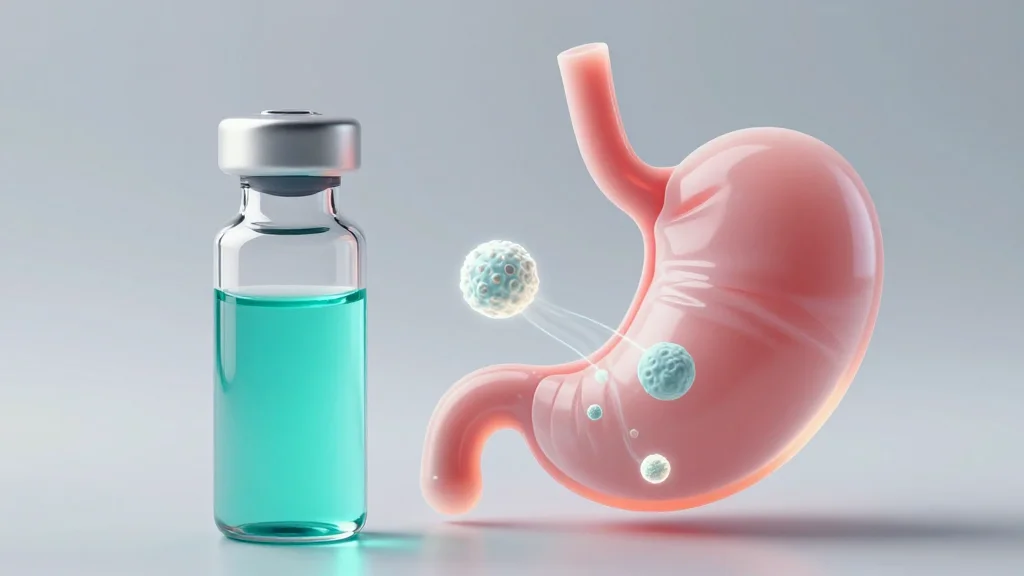
FDA Clears AstraZeneca’s Imfinzi‑FLOT Combo, First Immunotherapy for Resectable Gastric Cancer
The FDA has approved AstraZeneca’s Imfinzi (durvalumab) combined with standard FLOT chemotherapy for resectable gastric and gastro‑esophageal junction cancers, citing a 22% overall‑survival improvement in the Phase III MATTERHORN trial. The decision creates the first immunotherapy regimen for early‑stage disease and...

Study: Toxic Exposure in Pregnancy May Drive Disease Risk Across Generations
A Washington State University study found that a single exposure to the fungicide vinclozolin during pregnancy can trigger disease patterns that persist for up to 20 generations in rats. The epigenetic alterations in germline cells act like stable mutations, with...

Bringing the Bayesian Method to Clinical Trials: Q&A with Dr. Stacy Lindborg
The FDA issued a January 2026 draft guidance formally recognizing Bayesian methods for drug and biologic trials, offering sponsors a clear regulatory pathway to incorporate prior data and adaptive designs. Imunon CEO Dr. Stacy Lindborg explains how the guidance could...
Novonesis & DTU to Convert Carbon Into Protein As Part of Bill Gates-Backed Project
Novonesis has teamed up with the Technical University of Denmark’s Bright hub to engineer microbes that convert waste carbon dioxide into protein using acetate as feedstock. The collaboration is part of the Gates‑ and Novo Nordisk‑backed Acetate Consortium, which has...