
Novartis to Spend up to $2B on Excellergy and Its Next-Gen Xolair Candidate
Novartis announced it will pay up to $2 billion upfront to acquire Excellergy Inc., securing the biotech’s next‑generation anti‑IgE candidate. The move comes as Xolair, Novartis’ blockbuster allergy drug, prepares for imminent biosimilar competition that could erode its market share. By adding Excellergy’s high‑affinity, long‑acting antibody, Novartis aims to refresh its allergy portfolio and sustain revenue streams. The acquisition underscores the company’s strategy to invest heavily in innovative biologics to offset upcoming patent cliffs.

Recursion Appoints Former Exelixis CMO; More Executive Moves at Incyte
Recursion Therapeutics announced the appointment of Vicki Goodman as its new chief medical officer, bringing her extensive oncology and drug‑development experience from a decade as CMO at Exelixis. Goodman will oversee clinical strategy for Recursion’s AI‑driven pipeline, aiming to accelerate...
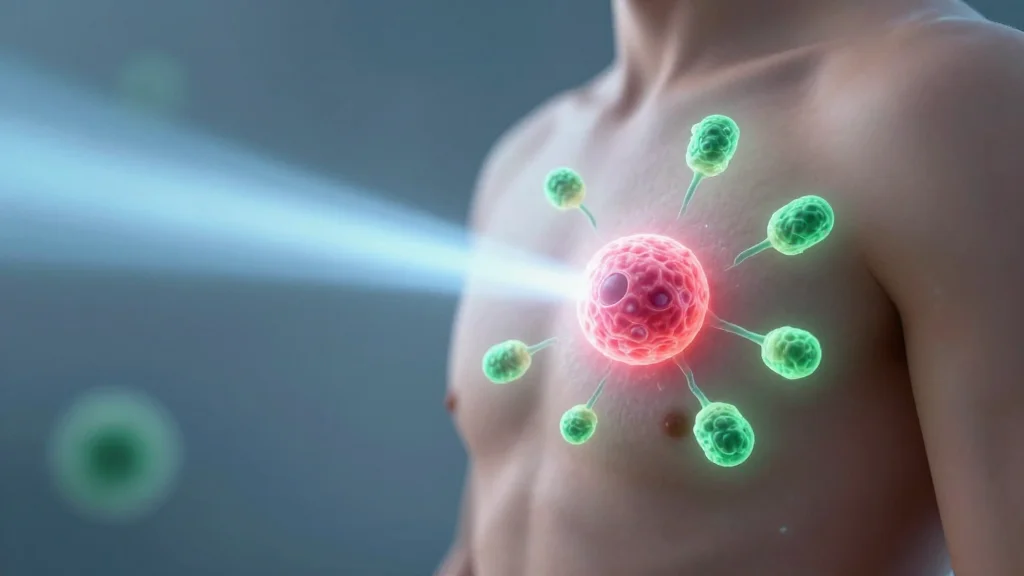
Triple Pre-Surgery Therapy May Boost Immunity Against Soft Tissue Sarcoma
Researchers at UCLA Health and Stanford Medicine reported that a neoadjuvant regimen combining hypofractionated radiation, the experimental immunomodulator BO‑112, and anti‑PD‑1 therapy (nivolumab) can reshape the tumor microenvironment of soft‑tissue sarcoma. Preclinical mouse work and a Phase I trial in 14...

‘Milestone’ Research Method Measures Gene Activity Across Whole Mice
Researchers at the University of Chicago have unveiled a whole‑body spatial transcriptomics method that slices frozen mice and maps gene expression across millions of cells in a single cross‑section. Using a cryomacrotome and 600,000 spatial spots, the technique captured activity...

Biomarker Panel Distinguishes Alcohol Vs. Metabolic Liver Disease
Researchers at UC San Diego introduced the MetALD‑ALD Prediction Index (MAPI), a biomarker panel that leverages routine blood tests to differentiate alcohol‑associated liver disease from metabolic steatotic liver disease. In a 503‑patient US cohort, MAPI achieved 60% sensitivity, 80% specificity,...

AstraZeneca’s COPD Antibody Gets Phase 3 Wins in Broader-than-Expected Population
AstraZeneca announced that its investigational COPD antibody achieved positive results in two Phase 3 trials, marking a turnaround after a previous mid‑stage failure. The studies demonstrated statistically significant improvements in lung function and exacerbation rates across a broader patient population...

Microbiome-Activated Nanogel Successfully Delivers Butyrate in Mice
A preclinical study in Small describes an inulin‑butyrate nanogel that releases butyrate directly in the inflamed colon of mice, markedly improving colitis outcomes. The nanogel remains stable through the upper GI tract and is enzymatically activated by colonic microbes, delivering...

Simulations Plus and Three Pharma Companies Collaborate on AI-Driven Drug Development
Simulations Plus has launched strategic partnership programmes with three pharmaceutical companies to embed AI‑driven modelling into the drug development lifecycle. The collaborations will integrate Simulations Plus platforms—ADMET Predictor, GastroPlus, Thales and MonolixSuite—into model‑informed drug development (MIDD) workflows, enabling natural‑language interaction and automated...

HaemaLogiX – Precision Immunotherapy for Multiple Myeloma
HaemaLogiX, an Australian clinical‑stage biotech, is developing precision immunotherapies for multiple myeloma by targeting novel antigens KMA and LMA that appear only on malignant plasma cells. Peer‑reviewed research validates these targets, allowing the company to spare healthy plasma cells and...

Novartis Agrees to Acquire Excellergy, Building on Allergy Leadership With Next-Generation Anti-Ige Innovation
Novartis announced a definitive agreement to acquire Excellergy, a private biotech developing next‑generation anti‑IgE therapies. The deal values Excellergy at up to $2 billion in upfront and milestone payments, with closing targeted for the second half of 2026. Exl‑111, Excellergy’s lead...

Insilico Medicine Expands AI-Driven CNS Collaboration with Tenacia in a ~$94.75M Deal
Insilico Medicine and Tenacia Biotechnology have expanded their AI‑driven partnership to create a second central‑nervous‑system (CNS) candidate, now advancing to the preclinical stage. The original March 2025 collaboration combined Insilico’s Pharma.AI platform with Tenacia’s expertise in blood‑brain‑barrier‑permeable small‑molecule inhibitors. Under...

Abcuro Presents the P-II/III (MUSCLE) Study Data on Ulviprubart for Inclusion Body Myositis at GCOM 2026
Abcuro presented Phase II/III MUSCLE trial data for ulviprubart (ABC008) in inclusion body myositis (IBM) at the GCOM 2026 meeting. The study enrolled 272 patients who received either 0.5 mg/kg, 2 mg/kg, or placebo. Across the entire cohort the drug showed only...

AstraZeneca Drug Reduces Flare-Ups of Chronic Lung Disease in Late-Stage Trials
AstraZeneca’s experimental antibody tozorakimab cut moderate‑to‑severe COPD flare‑ups in two phase‑III trials, meeting its primary endpoint. The drug showed a statistically meaningful reduction across both current and former smokers, including those with varying lung damage. The positive data lifted AstraZeneca...

Two GA Tech ATDC Startups — Nephrodite and OrthoPreserve — Secure FDA Breakthrough Device Designation
Georgia Tech’s Advanced Technology Development Center announced that two of its HealthTech portfolio companies, Nephrodite and OrthoPreserve, have each received the FDA’s Breakthrough Device designation. The program promises accelerated regulatory interaction, more frequent agency meetings, and priority review. Nephrodite’s solution...

Innovent Shares Jump on First Profit, Obesity Drug Momentum
Innovent Biologics reported its first annual profit, propelled by strong demand for its weight‑loss medication. The Hong Kong‑listed company’s shares surged as much as 7.75%, the biggest jump since late October. The profit milestone underscores the rapid growth of China’s...

STAT+: FDA Approves Rocket Gene Therapy for Rare Immune Disorder
The FDA has granted approval to Rocket Pharma's gene therapy Kresladi for severe leukocyte adhesion deficiency type 1 (LAD‑1), an ultra‑rare immune disorder. The therapy was previously rejected in 2024 due to manufacturing concerns, but the agency cleared it after the...

Eye Drops Made From Pig Semen Deliver Cancer Treatment to Mice
Scientists at Shenyang Pharmaceutical University have engineered eye drops using exosomes derived from pig semen, loaded with a carbon‑dot nanozyme, to breach the retinal barrier in mice. The formulation halted retinoblastoma tumor growth and preserved normal vision over a 30‑day...

Clarity Secures Large-Scale Manufacturing Agreement for Copper-64
Clarity Pharmaceuticals has signed a manufacturing supply agreement with Theragenics to scale up production of copper‑64, a radiometal used in its investigational prostate‑cancer tracer 64Cu‑SAR‑bisPSMA. The deal leverages Theragenics’ Atlanta‑area facility, which houses 14 cyclotrons capable of producing roughly 100...

New Synthetic Origin of Replication Lets Multiple Plasmids Coexist in One Bacterial Cell
Rice University researchers have engineered a synthetic origin of replication that lets scientists control plasmid copy number and avoid incompatibility by using custom RNA control elements. The modular design was validated by co‑expressing six different plasmids in a single bacterial...

Beyond Lipid Nanoparticles: How Custom Polymers and AI May Reshape Gene Therapies
Researchers at Helmholtz‑Zentrum Hereon and partners propose a payload‑driven approach to nucleic‑acid delivery, designing polymeric carriers that are chemically tuned to each DNA, RNA or mRNA payload. The strategy contrasts with the one‑size‑fits‑all lipid nanoparticles that dominate current vaccines and...

LeonaBio Reports Full Year 2025 Financial Results and Provides Business Update
LeonaBio announced it has secured an exclusive global license for the Phase 3 lasofoxifene program, a novel selective estrogen receptor modulator aimed at ESR1‑mutated metastatic breast cancer, and raised $90 million in a private placement that could expand to $236 million with warrant...

Colossal Biosciences Spins Out AI Startup Astromech at $2B Valuation
Colossal Biosciences, the company aiming to resurrect the woolly mammoth through genetic engineering, has spun out its artificial‑intelligence venture Astromech. The new startup, founded by Colossal co‑founders Ban Lamm and renowned geneticist George Church, secured a $2 billion valuation, making it...

Egg-Based Biologics Drive Neion Bio Pharma Deal
Neion Bio, fresh from stealth mode, signed its first co‑development and supply agreement with a major global pharmaceutical company to produce recombinant biologics using its egg‑based Raptor™ platform. The deal provides upfront and milestone payments plus profit‑sharing after commercialization, delivering...

AI Tool Can Screen Unknown Bacteria for Disease-Linked Genes, Moving Closer to Preventing Pandemics
Researchers at Denmark's DTU unveiled PathogenFinder2, an AI system that screens unknown bacteria for disease‑linked genes using protein language models. Trained on over 21,000 genomes, the tool predicts pathogenic potential even for species with no known relatives and highlights the...

Nanoplastics Released by ‘Eco-Friendly’ Bioplastics May Slow Fetal Development in Mice
A study by Anhui Medical University and Fudan University shows that polylactic acid (PLA), a widely used biodegradable bioplastic, breaks down into oligomeric lactic acid (OLA) nanoplastics that cross the placental barrier in mice. Exposure to environmentally relevant OLA doses...

Association Between Apolipoprotein E Gene Polymorphisms and the Effects of High-Intensity Interval Training on Body Composition in University Students
A 12‑week high‑intensity interval training (HIIT) program was administered to 236 non‑athletic Han Chinese university students and genotyped for APOE variants. The promoter SNP rs405509 emerged as the sole polymorphism linked to body‑composition outcomes, with the GG genotype showing higher...

Antibodies Connect Cancer with Autoimmune Brain Disease
Researchers at Cold Spring Harbor Laboratory published a Nature paper showing that antibodies generated against NMDA‑receptor‑expressing tumors can both boost anti‑cancer immunity and trigger autoimmune encephalitis. In mouse models, strong anti‑NMDA antibody responses correlated with robust tumor control, yet the...

Pinnacle Medicines Raises $89M Series B
Pinnacle Medicines announced the closing of an oversubscribed $89 million Series B financing, co‑led by LAV and Foresite Capital. The biotech firm leverages a proprietary platform that blends physics‑based molecular simulations, AI‑driven design, and advanced peptide chemistry to create oral peptide therapeutics....

The Natural “Biological Clock” Of Stroke Recovery
The ESPRESSO trial tested whether adding 90 minutes of high‑intensity hand and arm therapy each day for the first two weeks after stroke improves recovery. Sixty‑four participants received either immersive video‑game‑based or conventional therapy alongside standard care, but three‑month outcomes...

Biopharma Industry Pushes Back on FDA's 'America First' User Fee Proposals
The FDA’s upcoming user‑fee framework, dubbed "America First," seeks to tighten eligibility for the small‑business waiver, limiting it to U.S.‑based applicants. Industry groups argue the change politicizes fee policy and could disadvantage foreign‑owned biotech firms that rely on the waiver...

Pan-Cancer Variance Decomposition Nominates Translationally Actionable Therapeutic Antigen Candidates Across 33 Cancer Types
Researchers applied a genome‑wide variance decomposition across TCGA’s 60,656 genes and 33 cancer types to prioritize therapeutic antigens, moving beyond traditional mean‑expression screens. The analysis yielded 17 candidates that met functional dependency, safety, and immune‑cold criteria, with three highlighted: CRIPTO/TDGF1,...

Identification of Crucial Genes and Biological Pathways in Lung Adenocarcinoma by Network Pharmacology, Molecular Docking, and Simulation Studies
Researchers applied network pharmacology, molecular docking, and molecular dynamics to assess bioactive compounds from Pleurotus membranaceus for lung adenocarcinoma therapy. Four compounds passed drug‑likeness filters, linking to 226 overlapping disease targets and highlighting five hub genes. Docking showed isosorbide binding...

Phenylalanine-Associated Ocular Risk Stratification in Early-Treated Children with Phenylketonuria: A Cross-Sectional Study
A cross‑sectional study of 33 early‑treated PKU children found ocular abnormalities common, linked to higher serum phenylalanine. Comprehensive eye exams revealed anterior and posterior segment issues. ROC analysis defined phenylalanine thresholds that predict elevated ocular risk. Findings suggest metabolic control...
Valneva to Participate in Multiple Events at the 26th World Vaccine Congress in Washington DC
Valneva SE announced its participation in the 26th World Vaccine Congress in Washington, D.C., from March 31 to April 2, 2026. The company’s CEO, Thomas Lingelbach, and senior executives will present data on the chikungunya vaccine IXCHIQ® and join a...

Transgene to Deliver an Oral Presentation on Its Individualized Neoantigen Therapeutic Vaccine TG4050 at the World Vaccine Congress
Transgene (Euronext: TNG) will deliver a 30‑minute oral presentation on its individualized neoantigen therapeutic vaccine TG4050 at the World Vaccine Congress in Washington, D.C. on April 1, 2026. TG4050, built on the AI‑driven myvac® platform, targets patient‑specific tumor mutations. Phase 1 data in...

Editorial. Weighty Matter
The GLP‑1 drug semaglutide has entered the Indian market as generic versions after its patent expired last week, driving monthly prices down from roughly $144 to $36. The steep discount makes the medication affordable for a broader segment of diabetics...

Twist Biosciences: Keeping Synthetic Biology Alive
Remember synthetic biology? It was a technology platform that would allow mankind to play God. Not long after Craig Venter created the first synthetic life form in 2010, synthetic biology darling Intrexxon went public making its prolific founder an instant...

Jona and Everlywell Partner to Launch AI-Powered Gut Microbiome Test
Jona, an AI‑driven gut microbiome startup, has teamed up with Everlywell to bring a high‑resolution microbiome test to the U.S. consumer market. The test employs deep shotgun metagenomic sequencing, delivering strain‑level data on bacteria, fungi, viruses and parasites. Jona’s proprietary...

Kodiak’s Phase 3 Eye Drug Success; Innate Discontinues Anti-CD20 Program
Kodiak Sciences announced that its experimental eye drug Zenkuda (tarcocimab tedromer) achieved positive topline results in the GLow2 Phase 3 trial for diabetic retinopathy, outperforming sham treatment. The study met its primary endpoint, delivering a statistically significant gain in visual acuity...

Researchers Gene-Edit the Bitterness Out of Grapefruit
Researchers at Israel's Volcani Center used CRISPR/Cas9 to inactivate the 1,2RhaT gene in Citrus paradisi, effectively halting production of bitter compounds such as naringin, neohesperidin, and poncirin in leaf tissue. The gene edit eliminates the bitter taste pathway, and the...

Frozen Does Not Mean Stable: Rethinking Cryopreservation in Cell and Gene Therapy Manufacturing
Cryopreservation remains a linchpin for cell and gene therapy (CGT) manufacturing, yet frozen material is not inherently stable. Real‑world operations introduce transient warming events (TWEs) when products are moved, accessed, or shipped, silently degrading viability and potency. Traditional reliance on...

PharmaShots CXO Talks | Women’s History Month Special: A Conversation with Dr. Emanuela Offidani of Tris Pharma
Dr. Emanuela Offidani, Tris Pharma’s Medical Director of Digital Health Strategy, highlighted that ADHD is increasingly recognized as a lifelong condition that often goes undiagnosed in women because symptoms are less overt. She explained that Tris Pharma’s proprietary LiquiXR delivery...

Pistoia Alliance Publishes First Best-Practice Framework for Ethical Social Media Use in Drug Development
The Pistoia Alliance has published a peer‑reviewed best‑practice framework guiding ethical use of social‑media listening in drug development. The framework, co‑authored by experts from Bayer, Roche, Boehringer Ingelheim, Chiesi and Semalytix, outlines standards for data anonymization, bias mitigation, and AI‑driven...

How to Turn a Chicken Egg Into a Drug Factory
Biotech start‑up Neion Bio is pioneering a method to turn chicken embryos into miniature drug factories. Scientists micro‑inject genetic constructs into three‑day‑old embryos, reprogramming the developing bird to synthesize pharmaceutical compounds within the egg. The approach promises faster, cheaper production...

Novocure Reports Topline P-II (PANOVA-4) Trial Data on TTFields Therapy for Metastatic Pancreatic Ductal Adenocarcinoma (mPDAC)
Novocure disclosed topline Phase‑2 PANOVA‑4 data showing that Tumor‑Treating Fields (TTFields) combined with Tecentriq and gemcitabine/nab‑paclitaxel achieved a 74.4% disease‑control rate in metastatic pancreatic ductal adenocarcinoma (mPDAC). The trial, enrolling 78 patients, outperformed the historical MPACT control arm’s 48% DCR. Secondary...

Vitamins B3 Plus B6 May Boost Muscle Repair After High Intensity Exercise: Nestlé Study
A Nestlé‑backed randomized trial gave healthy men 714 mg nicotinamide and 19 mg pyridoxine daily for nine days after intense eccentric exercise. The B‑vitamin combo boosted muscle stem cell numbers by 29% and accelerated differentiation markers—MyoD+ cells rose 67%, myogenin+ cells 34%,...

Oral Peptides Biotech Pinnacle Medicines Gets $89M From US, China Investors
Pinnacle Medicines, a two‑year‑old biotech focused on oral peptide therapeutics, secured $89 million from a mix of U.S. and Chinese investors. The financing will fund its platform that converts injectable peptides into pill form, building on the recent success of Novo...