
Google Ads API to Require Multi-Factor Authentication
Google is rolling out mandatory multi‑factor authentication (MFA) for new OAuth 2.0 refresh tokens generated through the Google Ads API, starting April 21, 2026. Existing tokens will keep working, but any new authentication will require a second verification step such as a phone code or authenticator app. The change applies to user‑based authentication workflows, while service‑account flows remain exempt. The requirement also extends to related tools like Google Ads Editor, Scripts, BigQuery Data Transfer, and Data Studio.

The Wall Around Claude 4.7 Does Not Extend to Dread
Anthropic unveiled Claude Opus 4.7 on April 16 2026, intentionally reducing its offensive cyber capabilities while adding automated safeguards and a Cyber Verification Program for vetted defenders. Simultaneously, underground forums on Dread, Reddit, and Telegram circulated jailbreaks and a cross‑vendor prompt‑injection attack called...

Pro-Iran Hackers Appear to Increase Critical Infrastructure Cyberattacks
Pro‑Iran hacktivist group Ababil of Minab claimed responsibility for a March intrusion of the Los Angeles County Metropolitan Transportation Authority, though analysts say the evidence remains unverified. Federal agencies, including CISA, have warned that Iran‑linked actors are increasingly targeting operational...

Three Existential Threats Facing Global Banks in 2026: How the Industry Is Fighting Back?
In 2026 global banks confront three converging existential threats: AI‑driven cyberattacks exemplified by Anthropic’s Claude Mythos, a projected $5‑$6 trillion revenue erosion to fintech and digital finance, and rising loan delinquencies highlighted by Argentina’s 11% household default rate. Regulators and banks...

Cyber-Attacks One Year On: Is Fashion Retail More Secure?
Last year’s high‑profile cyber‑attacks on leading fashion chains forced the sector to overhaul its digital defenses. Since then, retailers have collectively boosted security budgets by roughly a third and deployed advanced threat‑intelligence platforms. Despite the spending, a recent Drapers survey...

Introducing the Future of Salesforce Data Protection: Backup & Recover Next
Salesforce announced Backup & Recover Next, its first native backup solution to achieve FedRAMP High compliance. The service offers automated daily backups of standard and custom objects, files, attachments, and sandboxes while staying inside the Salesforce trust boundary. It claims...

CoChat Launches AI Collaboration Platform to Combat Shadow AI
CoChat debuted in early April 2026 as an AI collaboration platform aimed at curbing the rise of shadow AI within enterprises. By consolidating access to leading large language models (LLMs) and autonomous agents, it eliminates fragmented, unmanaged AI silos. The...

Every Old Vulnerability Is Now an AI Vulnerability
Microsoft patched CVE‑2026‑26144, an XSS flaw in Excel that now exploits the Copilot Agent to silently exfiltrate spreadsheet data. The vulnerability demonstrates how AI agents can amplify traditional bugs, granting them autonomous, privileged actions beyond the original exploit. Security experts...

Advancing Secret Sync with Workload Identity Federation
HashiCorp released Vault Enterprise 2.0, extending its secret sync feature with workload identity federation for AWS, Azure and Google Cloud. The new capability replaces long‑lived static cloud credentials with short‑lived, automatically refreshed federated tokens. This change makes secret distribution fully...
EU Clears Anonymous Age Verification App for Deployment
The European Commission announced that its continent‑wide age‑verification app is technically ready and will be rolled out to member states in the coming weeks. The app lets users upload a passport or national ID and generates a zero‑knowledge attestation that...

Secure-by-Design: 3 Principles to Safely Scale Agentic AI
Enterprise adoption of agentic AI is shifting from experimental copilots to autonomous agents that execute decisions across environments. This expands the attack surface, prompting a secure‑by‑design shift championed by a CrowdStrike‑NVIDIA blueprint. The article outlines three core principles: treating AI...

VMRay Announces Sovereign European Cloud for Advanced Threat Analysis
VMRay unveiled the VMRay Sovereign European Cloud, a SaaS platform that delivers advanced threat analysis while guaranteeing full data residency within Europe. The service runs on the AWS European Sovereign Cloud and is operated by a Luxembourg‑incorporated entity, providing physical...

Ukraine Confirms Suspected APT28 Campaign Targeting Prosecutors, Anti-Corruption Agencies
Ukrainian officials confirmed that a Russian‑linked APT28 campaign has compromised more than 170 email accounts belonging to prosecutors and investigators. The attacks exploited a zero‑day in the open‑source Roundcube webmail platform, allowing code execution simply by opening an email. CERT‑UA...

Legal Advice for Mitigating Cyber-Risks
Partner Mark Chapman of Herrington Carmichael outlines practical legal steps for firms to reduce cyber‑attack exposure. He stresses the need for systematic risk assessments, robust incident‑response frameworks, and appropriate cyber‑insurance coverage. The advice also highlights employee training and vendor due‑diligence...
Inside an Underground Guide: How Threat Actors Vet Stolen Credit Card Shops
An underground guide uncovered by Flare analysts reveals how cyber‑criminals now vet stolen‑card marketplaces. The document outlines a disciplined vetting process—checking domain age, SSL, WHOIS, mirror sites, and community reputation—to avoid scams and law‑enforcement takedowns. It also highlights the adoption...

Critical Exploits, AI Shifts, and Major Breaches Redefine Cybersecurity This Week
This week’s cybersecurity briefing highlighted a wave of active exploits, including a critical Nginx UI authentication bypass, an Android SDK flaw affecting over 50 million users, and the NWHStealer infostealer spreading via fake VPN sites. Anthropic’s Project Glasswing showcased AI‑driven vulnerability...
New Mirai Variant Nexcorium Hijacks DVR Devices for DDoS Attacks
Fortinet’s FortiGuard Labs uncovered Nexcorium, a new Mirai‑derived malware that hijacks TBK DVR‑4104 and DVR‑4216 video recorders via the CVE‑2024‑3721 command‑injection flaw. The variant spreads across IoT devices, installs persistence mechanisms, and uses hard‑coded default passwords to recruit additional cameras...

AI Upgrades, Security Breaches, and Industry Shifts Define This Week in Tech
This week’s tech headlines were dominated by a surge of AI upgrades, from Anthropic’s Claude Opus 4.7 with self‑verification to OpenAI’s expanded Codex app and the cybersecurity‑focused GPT‑5.4‑Cyber. Major vendors also rolled out security fixes, with Microsoft patching 165 Windows flaws...
Bluesky Outage: Coordinated Traffic Attack Causes Widespread Errors
Bluesky experienced a coordinated distributed denial‑of‑service (DDoS) attack that began early Thursday, April 17, 2026, and stretched into a second day. The flood of traffic crippled core functions such as feeds, notifications, threads, search and the Discover section, producing rate‑limit...
He Was Laid Off, Posted on LinkedIn — Then Scammers Started Impersonating Real Recruiters to Target Him
Nick Russell posted his layoff from Epic Games on LinkedIn and was immediately swamped with recruiter messages, one of which turned out to be a scam. Cybercriminals are now hijacking real recruiters' LinkedIn profiles, referencing actual resumes and job openings,...

Commercial AI Models Show Rapid Gains in Vulnerability Research
Forescout’s Verde Labs reports that commercial AI models have closed the gap in vulnerability research, with all tested models now completing full research tasks and half generating working exploits autonomously. The most capable models, Claude Opus 4.6 and Kimi K2.5, can discover...

Arnold Clark Faces Group Legal Action over Cyber Breach
A Scottish court has granted permission for roughly 15,000 Arnold Clark customers to pursue a US‑style class‑action lawsuit after a December 2022 cyber‑attack exposed passports, driver’s licences, National Insurance numbers and other personal data. The Court of Session ruled the dispute belongs...

Data-Centric Security and NATO Confidentiality Labelling: Securing Information in Modern Defence Networks
Modern defence networks are shifting from perimeter‑based protection to data‑centric security, embedding classification and handling rules directly into each data object. NATO’s new confidentiality‑labelling standards, STANAG 4774 and STANAG 4778, provide machine‑readable metadata and cryptographic binding to enforce access controls across multinational...

Data Sharing: Is It Safe? Is It Secure? Everything You Need to Know
Salesforce’s guide explains how SMBs can share data safely by using a unified CRM platform that enforces granular permissions and AI‑driven security checks. It cites that 51% of organizations saw a rise in cyber attacks in 2025, while 80% of...

Coast Guard's New Cybersecurity Rules Offers Lessons for CISOs
The U.S. Coast Guard has enacted its first mandatory cybersecurity framework for all U.S.-flagged vessels, ports and offshore facilities, with full compliance required by July 2027. Operators must create a cybersecurity plan, appoint a dedicated cybersecurity officer (CySO), conduct annual assessments...
_(1)_(1).jpg?width=1280&auto=webp&quality=80&disable=upscale)
Standard Bank Customer Data Leaked Online
Standard Bank disclosed that hackers have published a trove of customer data stolen in March, including names, ID numbers, contact details, bank account numbers and B‑BBEE classifications. The breach, claimed by the Rootboy group, involved roughly 1.2 TB of information but...

SEO Poisoning Attack Uses Microsoft Binary to Install RMM Tool
Researchers uncovered an SEO‑poisoning campaign that tricks users searching for the open‑source recovery tool TestDisk into downloading a trojanized installer. The fake installer is a Microsoft‑signed Setup binary that uses DLL sideloading to load a malicious autorun.dll, which then installs...

Organisations Delusional About Ransomware Recovery Capability
Veeam’s Data Trust and Resilience Report 2026 reveals a stark gap between confidence and reality: while 90% of organisations say they can recover from a cyber incident, fewer than one‑third of ransomware victims fully restore their data and the average recovery...

The Cyber Express Weekly Roundup: Crypto Breaches, State-Linked Schemes, and Platform Exploits
The Cyber Express weekly roundup highlighted a series of high‑profile cyber incidents. Grinex halted trading after a coordinated wallet breach that stole more than $15 million in USDT, while two U.S. citizens were sentenced for a North Korea‑linked scheme that generated...
Brussels Launched an Age Checking App. It Took 2 Minutes to Hack It.
European Commission President Ursula von der Leyen unveiled a mobile age‑verification app intended to protect minors online. Within minutes, cybersecurity researchers demonstrated that the app could be hacked, exposing hard‑coded credentials and insecure data handling. The flaws raise serious privacy...

State to Audit Ohio School Districts’ Cybersecurity Plans
The Ohio Auditor of State will launch audits of school districts' cybersecurity programs in July, as mandated by House Bill 96. The legislation requires districts to establish policies that protect data, information technology, and related resources while ensuring availability, confidentiality,...

Oklahoma State Tax Commission Fails To Notice Data Breach for 18 Months
The Oklahoma Tax Commission (OTC) experienced a data breach that went undetected for 18 months, spanning from July 2024 to December 2025. Unauthorized actors accessed W‑2 and 1099 files through the agency’s online taxpayer portal, exposing personal information. The breach was only...

Northern Ireland School IT Systems ‘Largely Restored’ After Cyber Attack
The Education Authority (EA) confirmed that the C2K network, which powers all IT services for Northern Ireland schools, has been largely restored after a cyber attack last week. The breach temporarily disabled online platforms, email, and learning management systems across...

Teen Arrested in Northern Ireland over Cyberattack on School Network
A 16‑year‑old was arrested in Portadown, Northern Ireland, on suspicion of breaching the Computer Misuse Act after a cyberattack crippled the region’s school network. The intrusion blocked access to online learning platforms used by potentially hundreds of thousands of students,...
White House Moves to Give Federal Agencies Access to Anthropic’s Claude Mythos
The White House Office of Management and Budget announced it is preparing to allow major federal agencies to use a modified version of Anthropic’s Claude Mythos AI model. Claude Mythos has demonstrated the ability to locate thousands of zero‑day vulnerabilities...

Microsoft Closes Book on Rogue Windows Server 2025 Upgrades
Microsoft finally marked the rogue Windows Server 2025 upgrade as resolved after more than a year of disruption. The unintended upgrade, which auto‑installed on many servers in 2024, was mitigated with cumulative update KB5082063. However, that same patch introduced a new...
Security Update: Retiring Weak TLS Cipher Suites
Zoho Corp announced that it will retire all weak TLS cipher suites across its data centers, with the change taking effect on June 30, 2026. Going forward, only strong TLS 1.2 and TLS 1.3 suites such as ECDHE‑ECDSA and CHACHA20‑POLY1305 will be...

Webinar: From Phishing to Fallout — Why MSPs Must Rethink Both Security and Recovery
BleepingComputer will host a live webinar on May 14, 2026 featuring Kaseya experts to discuss why managed service providers (MSPs) must align security and recovery strategies. The session highlights the rise of AI‑driven phishing, business‑email compromise, and targeted ransomware that...
Team Cymru Launches Total Insights Feed to Replace Legacy Threat Intelligence Lists
Team Cymru Inc. launched Total Insights Feed, a unified threat‑intelligence platform that replaces traditional indicator‑list feeds with machine‑actionable, scored data across the entire internet. The service evaluates over 57 million IP addresses and 400 million domains each day, assigning 0‑to‑100 risk scores...

New Vodafone Research Highlights Growing Mobile Devices Security Concerns Among Irish SMEs
Vodafone’s latest Business Cybersecurity Report shows that 70% of Irish SMEs are increasingly worried about mobile‑device attacks, yet more than 40% let employees access corporate resources on personal phones without dedicated security controls. Mobile‑based threats now represent over 42% of...

In Other News: Satellite Cybersecurity Act, $90K Chrome Flaw, Teen Hacker Arrested
The Senate advanced the bipartisan Satellite Cybersecurity Act of 2025, directing the Commerce Department to create a central hub for satellite security best practices as half of commercial satellite signals remain unencrypted. Law enforcement agencies dismantled the W3LL phishing‑as‑a‑service operation...
Another Microsoft Defender Privilege Escalation Bug Emerges Days After Patch
Researchers have disclosed a new local privilege escalation exploit called “RedSun” that abuses Microsoft Defender’s handling of cloud‑tagged files to rewrite protected system binaries and gain SYSTEM rights. The proof‑of‑concept works on Windows 10, Windows 11 and Windows Server 2019+...
DDoS-For-Hire Services Disrupted by International Police Action in ‘Operation PowerOff’
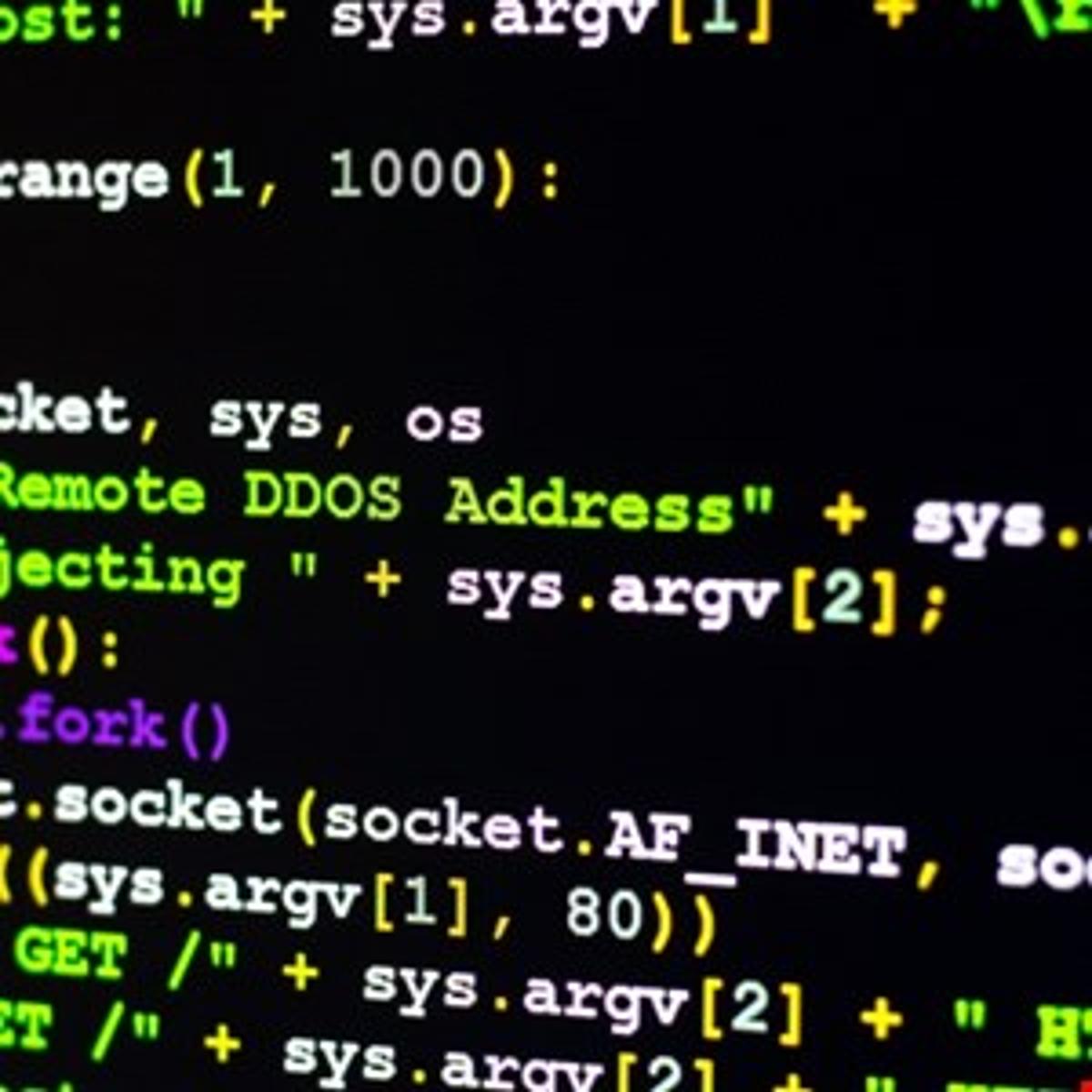
Operation PowerOff, a coordinated law‑enforcement effort across 21 nations, dismantled the infrastructure behind DDoS‑for‑hire services. Authorities seized 53 domains, removed over 100 URLs, and confiscated databases containing more than three million criminal user accounts. The operation led to four arrests...

Tycoon 2FA Is Down, but Not Out – Researchers Warn the Phishing as a Service Operation Is Still a Huge...
Security researchers say Tycoon 2FA attacks remain a major threat despite a law‑enforcement takedown last month. Incidents fell 77% but still top two million per month, with the service once targeting over 500,000 organizations monthly through an adversary‑in‑the‑middle proxy that stole MFA...

SAPS Medical Aid Scheme Probes Potential Data Breach
Polmed, the medical aid scheme for South African Police Service members, is investigating a suspected data breach after a threat actor issued a ransom demand on March 25. The scheme has engaged independent cyber‑security and forensic specialists and reported the...

Google Blocks 8.3B Policy-Violating Ads in 2025, Launches Android 17 Privacy Overhaul
Google announced that in 2025 it blocked or removed 8.3 billion policy‑violating ads and suspended 24.9 million accounts worldwide. At the same time it rolled out Android 17, which replaces the broad READ_CONTACTS permission with a granular Contact Picker and adds a one‑time...

As AI-Driven Fraud Grows More Sophisticated, Advanced Digital Defense Becomes Essential
TransUnion’s H1 2026 Top Fraud Trends report warns that AI‑driven scams are becoming more sophisticated, even as overall digital‑fraud rates dip. One in six U.S. consumers reported losing a median $2,307, with stolen‑card and fraudulent‑charge schemes accounting for a third of...
Palo Alto’s Helmut Reisinger Sees a Cyber Sea Change Ahead as AI Advances
Palo Alto Networks is deepening its AI‑centric security push by joining Anthropic’s Project Glasswing, an exclusive initiative that uses Claude Mythos to uncover zero‑day vulnerabilities. The company has accelerated its platformization strategy through recent acquisitions—Protect AI, Chronosphere and the soon‑to‑close...

Kuwait Banks Deploy Real-Time War Room to Fight Growing Cyber Fraud Threats
Kuwait’s banking sector has launched a virtual war room that connects banks, the Central Bank, the Ministry of Interior and the Public Prosecution in real time. The platform instantly flags suspicious transactions, halts fund movement and initiates legal action, shifting...

GitLab 18.11 Brings Agentic AI to Security Fixes, CI Pipelines, and Delivery Analytics
GitLab unveiled version 18.11, extending its agentic AI across security remediation, CI pipeline creation, and delivery analytics. The GA Agentic SAST Vulnerability Resolution automatically generates fixes for true‑positive findings and opens merge requests with confidence scores. Two new agents—CI Expert...