How to Set up Rolling Deployments with CircleCI
The article walks through configuring a fully automated rolling deployment pipeline for a Node.js app on Kubernetes using CircleCI. It details building a Docker image, tagging it with the commit SHA, and applying Kubernetes manifests that leverage maxSurge=1 and maxUnavailable=0 for zero‑downtime updates. CircleCI’s Deploys feature is integrated with deploy markers and status updates, while a separate rollback pipeline uses kubectl rollout undo to revert to the previous ReplicaSet. The guide also covers troubleshooting common rollout issues and when rolling updates are appropriate versus other strategies.

How to Prepare Your Company for the Era of Agentic ITops
Traditional rules‑based IT operations cost enterprises hundreds of billions annually, relying on manual work to bridge automation gaps. Agentic AI promises to automate incident detection and response, but it requires unified, contextual data to be effective. BigPanda’s IT Knowledge Graph...
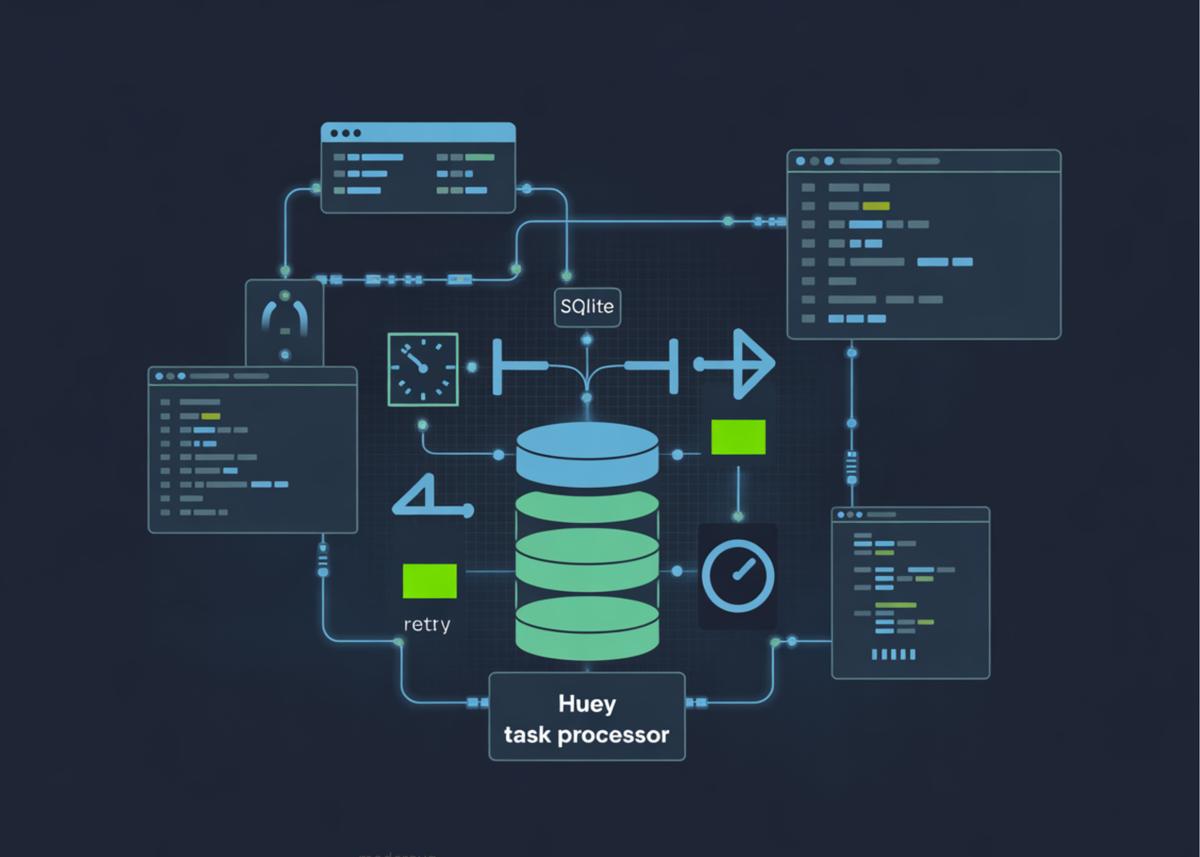
A Coding Guide to Build a Production-Grade Background Task Processing System Using Huey with SQLite, Scheduling, Retries, Pipelines, and Concurrency...
The tutorial walks readers through building a production‑grade background task system using Huey with a SQLite backend, avoiding external services like Redis. It sets up a threaded consumer in a notebook, defines tasks with priorities, retries, locking, and pipelines, and...

Show HN: Smol Machines – Subsecond Coldstart, Portable Virtual Machines
smolvm is an open‑source tool that launches lightweight Linux micro‑VMs in under 200 ms on macOS and Linux. It leverages Hypervisor.framework on Apple Silicon and KVM on Linux via the libkrun VMM, delivering full hardware isolation per workload. Users can run...

Solo Open-Source Projects Address Challenges of Agentic AI
Solo.io unveiled two open‑source projects, Agent Registry and Agent Evals, to tackle enterprise hurdles in adopting agentic AI. Agent Registry, now a CNCF sandbox, offers a centralized hub for governing AI agents, skills, and MCP tools on Kubernetes. Agent Evals...

Why AI’s Biggest Bottleneck Isn’t Intelligence, It’s Orchestration
Enterprises are hitting a hidden bottleneck: legacy orchestration tools can’t keep pace with AI‑driven workflows. A top‑10 global bank rebuilt a six‑month process in six days after adopting a modern coordination layer, highlighting the gap between AI ambition and execution...

Advancing Secret Sync with Workload Identity Federation
HashiCorp released Vault Enterprise 2.0, extending its secret sync feature with workload identity federation for AWS, Azure and Google Cloud. The new capability replaces long‑lived static cloud credentials with short‑lived, automatically refreshed federated tokens. This change makes secret distribution fully...

Why Postgres Wants NVMe on the Hot Path, and S3 Everywhere Else
PostgreSQL’s transaction commit path depends on ultra‑low‑latency storage, making enterprise‑grade NVMe drives essential for microsecond‑scale WAL flushes. By contrast, object storage such as Amazon S3, while cheap and durable, adds millisecond‑level delays that cripple hot‑path performance. Modern managed Postgres offerings...
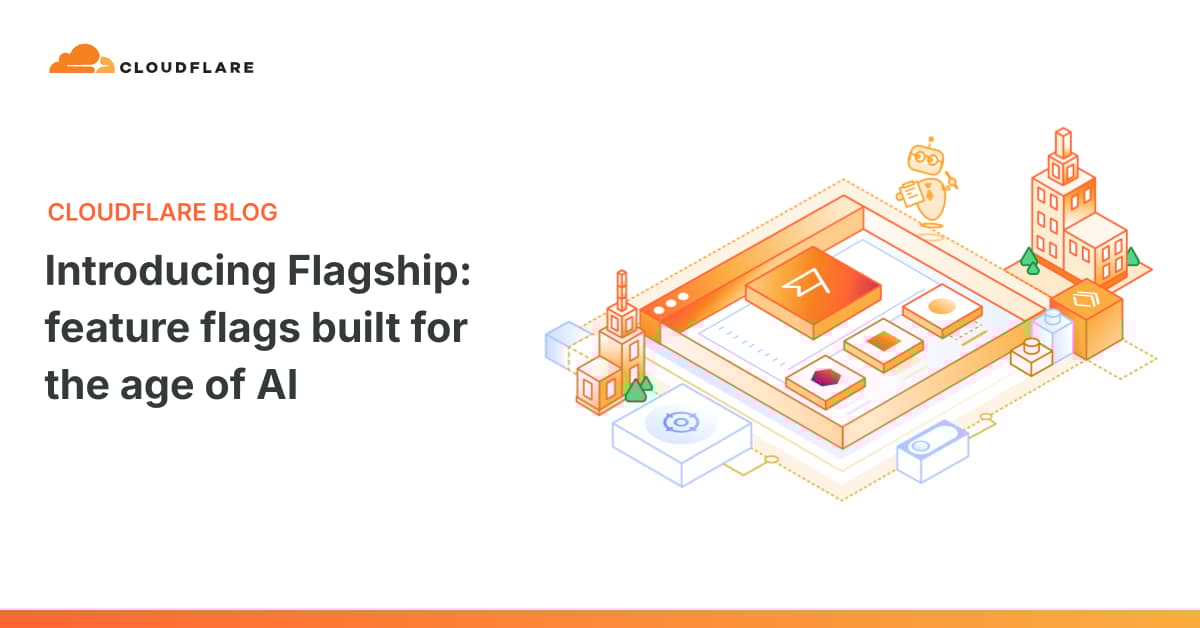
Introducing Flagship: Feature Flags Built for the Age of AI
Cloudflare announced Flagship, a native feature‑flag service designed for edge environments and AI‑generated code deployments. Flagship leverages Workers, Durable Objects, and KV to evaluate flags at the edge, eliminating external HTTP calls and providing millisecond latency. It implements the CNCF...

K3s on On-Prem Infrastructures the GitOps Way: Writing a Custom K0rdent Template From Scratch
The blog details how the authors built a fully declarative K3s cluster on a Proxmox on‑premise environment using k0rdent’s Bring‑Your‑Own‑Template (BYOT) approach. They created a custom Helm chart to serve as a k0rdent infrastructure provider that clones existing Proxmox VM...

GitLab 18.11 Brings Agentic AI to Security Fixes, CI Pipelines, and Delivery Analytics
GitLab unveiled version 18.11, extending its agentic AI across security remediation, CI pipeline creation, and delivery analytics. The GA Agentic SAST Vulnerability Resolution automatically generates fixes for true‑positive findings and opens merge requests with confidence scores. Two new agents—CI Expert...

6 Postman Alternatives So Good, I Almost Forgot Postman
The article reviews six leading Postman alternatives for 2025—APIdog, Bruno, Kong Insomnia, Stoplight, SwaggerHub, and Thunder Client—detailing their core strengths, pricing tiers and open‑source status. APIdog offers an all‑in‑one platform for development, documentation and schema generation at $9 per user per month. Bruno...

The Zero Touch Future: Enabling Telstra’s Path to a Fully Autonomous, Self-Healing Network
At MWC 2026, Telstra showcased a proof‑of‑concept that automatically detected and healed an unplanned infrastructure outage within minutes, leveraging Red Hat’s OpenShift AI and Ansible Automation Platform. The AI agent unified multivendor data, reasoned about the fault, and executed remediation through policy‑as‑code...

Why Test Visibility Breaks Down in Azure DevOps Workflows
Azure DevOps teams often manage test cases in separate tools, leaving test coverage, run results, and linked cases invisible on work items. This split-screen approach forces developers and release managers to piece together manual reports, increasing error risk and slowing...

Anthropic Debuts ‘Repeatable Routines’ in Major Claude Code Automation Update
Anthropic rolled out a major Claude Code update that adds “repeatable routines,” an AI‑driven automation feature, and a redesigned desktop IDE. Routines let developers schedule or trigger tasks—such as API calls, GitHub actions, or maintenance jobs—directly within Claude, running on...

As Agentic AI Explodes, Amazon Doubles Down on MCP
Amazon Web Services is deepening its involvement with the Model Context Protocol (MCP), the open‑source standard that links AI agents to tools and data. MCP, launched by Anthropic in late 2024 and now governed by the Linux Foundation, has become...
How the Cypress Cloud Errors Tab Helps You Triage Faster
Cypress Cloud’s Errors tab has been revamped to speed up test failure triage. The update adds direct Test Replay links on each error, correctly flags flaky test attempts, and expands all error groups by default. These changes let developers see...

Bring Your Own CNI: Inside VMware’s Open Kubernetes Strategy
VMware’s Cloud Foundation 3.6 removes the default‑CNI lock‑in by allowing customers to bring any CNCF‑compatible networking plugin, such as Cilium or Calico Enterprise. The update also unifies governance across virtual machines and containers, giving hybrid‑cloud operators a single policy framework....

Grokstream Expands Scope and Reach of AIOps Platform
Grokstream has upgraded its Grok AIOps platform with a Proactive Problem Identification engine that uses predictive and causal AI to cluster recurring anomalies, pinpoint root causes and recommend automation. The release also introduces GrokGuru, a generative AI assistant that captures...

OpenSearch Software Foundation Announces New Long-Term Support Versions
The OpenSearch Software Foundation launched a long‑term support (LTS) program, beginning with OpenSearch 2.1.9 and 3.6, to deliver 18‑month stability windows for enterprise deployments. The initiative introduces accredited vendors—BigData Boutique, Eliatra, and Resolve Technology—offering vendor‑neutral, production‑grade support while mandating upstream contributions. Security...

Postman Collaborates with Microsoft
Postman announced a strategic collaboration with Microsoft that adds OpenAI model support through Microsoft Foundry to its AI‑powered Agent Mode and launches the Model Context Protocol (MCP) server for deeper integration across VS Code, GitHub Copilot and other Microsoft tools. The...

Bridge the Visual Gap: How to Integrate Applitools Autonomous with PractiTest
Applitools Autonomous’s AI visual validation can now be tightly coupled with PractiTest through a serverless bridge built on AWS Lambda and DynamoDB. The integration eliminates data fragmentation, manual status updates, and latency by automatically syncing visual test results and links...

Why MicroVMs: The Architecture Behind Docker Sandboxes
Docker announced Docker Sandboxes, a microVM‑based solution that isolates each AI coding agent in its own lightweight virtual machine. The architecture couples a dedicated microVM with a private Docker daemon, delivering full Docker‑build, run, and compose capabilities without host‑level privileges....

InsightFinder Raises $15M to Help Companies Figure Out Where AI Agents Go Wrong
InsightFinder, an AI observability startup founded by NC State professor Helen Gu, secured a $15 million Series B round led by Yu Galaxy, bringing total funding to $35 million. The capital will fund its first sales and marketing hires as it scales the...

Capacity Efficiency at Meta: How Unified AI Agents Optimize Performance at Hyperscale
Meta’s Capacity Efficiency Program has deployed a unified AI agent platform that automates both detection and remediation of performance regressions and optimization opportunities across its hyperscale infrastructure. By encoding senior engineers’ domain expertise into reusable skills and standardized tool interfaces,...

OpenTelemetry Accepted Elastic's PHP Distro Donation
The OpenTelemetry community has accepted Elastic's donation of the OpenTelemetry PHP Distro, a pre‑packaged observability solution for PHP. The distro bundles native extensions, loaders, and auto‑instrumentation logic into deb, rpm, and apk packages, eliminating the need for custom builds. It...

VMware’s New Tanzu Platform And AI Agents: 10 Security, Data And AI Key Innovations
VMware unveiled Tanzu Platform 10.4 alongside the new Agent Foundations runtime, a pre‑engineered PaaS for AI agents built on VMware Cloud Foundation. The release adds a zero‑trust sandbox, immutable supply‑chain buildpacks, and structural secrets isolation to secure autonomous workloads. Tanzu Platform 10.4...

How AI Improves Decision-Making Across the Software Delivery Lifecycle - Xray Blog
Xray has integrated AI capabilities powered by Sembi IQ to enhance decision‑making across the software delivery lifecycle. Its AI Test Case Generation creates draft test cases from requirement text, while AI Test Model Generation visualizes behavioral coverage, and AI Test Script...

SBOM in Practice: Embedding Compliance Into the Software Delivery Lifecycle
Software Bill of Materials (SBOM) is becoming a mandatory inventory for modern applications, capturing every library, version, license and known vulnerability. The article explains the two leading formats—CycloneDX and SPDX—and argues that consistency matters more than choice. It outlines a...

Deploy Postgres and MySQL Databases with PlanetScale + Workers
Cloudflare announced that users can now create PlanetScale Postgres and MySQL databases directly from the Cloudflare dashboard and API, with billing routed through their Cloudflare account. The integration leverages Hyperdrive to manage connection pools and query caching, enabling fast, reliable...

Is Your Internal Platform Ready to Keep Up With AI-Accelerated Development?
AI‑powered coding assistants are pushing developers to ship code faster than traditional Continuous Delivery pipelines can reliably serve. As a result, platform engineers are inundated with ad‑hoc requests, manual handoffs, and inconsistent delivery across teams. The New Stack promotes an upcoming...

The Two-Pass Compiler Is Back – This Time, It’s Fixing AI Code Generation
The article proposes re‑introducing the classic two‑pass compiler architecture to AI‑driven code generation. In the first pass, a large language model translates design specifications into a structured intermediate representation (IR) rather than raw code. The second pass uses a deterministic...

Ease Into Azure Kubernetes Application Network
Microsoft unveiled Azure Kubernetes Application Network (AKN), a preview‑only, fully managed ambient service mesh built on Istio’s ambient mode for Azure Kubernetes Service (AKS). AKN removes the need for per‑pod sidecars, letting developers add secure networking, Gateway API support, and...

CircleCI Is Now Available as a Codex Plugin
CircleCI has joined OpenAI’s Codex plugin directory, enabling developers to interact with CI pipelines directly from the Codex agent. The plugin lets users monitor builds, debug failures, optimize configuration files, and run CLI commands without leaving their editor. It also...

How AI-Generated Code Is Changing Software Testing
AI coding assistants such as GitHub Copilot, Claude and ChatGPT are now mainstream, boosting developer velocity and code output. However, studies show AI‑generated code introduces more bugs, especially logic errors, security flaws like XSS, and performance issues than human‑written code....
Claude Opus 4.7 Is Now Available in GitLab Duo Agent Platform
GitLab Duo Agent Platform now supports Anthropic's Claude Opus 4.7, the latest large‑language model. The new model delivers stronger long‑running reasoning, more precise instruction following, and self‑verification of outputs across agent‑driven workflows. Internal tests show Opus 4.7 outperforms both Sonnet...

Ecommerce Replatforming without a Revenue Freeze: How Preview Environments Reduce Migration Risk
Upsun’s instant, data‑complete preview environments let ecommerce teams test replatforming on a 1:1 clone of production without halting the live store. By generating a full‑stack preview for every Git branch, developers can validate checkout flows, catalog behavior, and third‑party integrations...
GitLab 18.11: CI Expert and Data Analyst AI Agents Target Development Gaps
GitLab’s 18.11 release adds two AI‑driven agents to its Duo Agent Platform. The CI Expert Agent, now in beta, automatically inspects a repository and generates a runnable .gitlab-ci.yml, cutting weeks of manual setup to minutes. The Data Analyst Agent, generally...

GitLab 18.11 Release
GitLab 18.11 introduces a suite of AI‑driven and security enhancements, including Agentic SAST Vulnerability Resolution that auto‑generates merge requests for critical findings, and the Data Analyst Agent that answers natural‑language queries across the platform. The release also adds fine‑grained personal...

GitLab 18.11 Released with Automated Remediation & New Foundational Agents
GitLab 18.11 introduces Agentic SAST vulnerability resolution that automatically generates merge requests to fix critical and high‑severity findings. The release also makes the Data Analyst Agent generally available and launches the CI Expert Agent in beta, expanding AI‑driven assistance across...

How to Scale Value without Scaling Complexity
The article argues that Platform-as-a-Service (PaaS) has moved from optional to essential for modern software delivery. It frames software development as an assembly process that stitches together reusable components, APIs and libraries rather than writing code from scratch. By outsourcing...

When Kubernetes Breaks Session Consistency: Using Cosmos DB and Redis Together
A high‑throughput microservice on Kubernetes using Azure Cosmos DB with SESSION consistency experienced intermittent stale reads because session tokens were not shared across pods. The root cause was the loss of per‑client token state when requests were routed to different...

OpenAI’s Agents SDK Separates the Harness From the Compute
OpenAI unveiled a major upgrade to its Agents SDK, introducing sandboxed workspaces that separate the agent harness from the compute layer. The new toolbox lets developers run agents in containers or virtual machines from providers such as Cloudflare, Modal, Vercel,...

We Tested Anthropic’s Redesigned Claude Code Desktop App and 'Routines' — Here's What Enterprises Should Know
On April 14, 2026 Anthropic unveiled a redesigned Claude Code desktop app and introduced Routines in a research preview. The new app adds a Mission Control sidebar that lets developers monitor and steer multiple AI‑agent sessions across repositories, shifting the...
Hubert 'Depesz' Lubaczewski: Waiting for PostgreSQL 19 – Online Enabling and Disabling of Data Checksums
The PostgreSQL 19 patch adds online enabling and disabling of data checksums via the new pg_enable_data_checksums() and pg_disable_data_checksums() functions. A background‑worker rewrites every data page to compute or drop checksums, transitioning the data_checksums setting through an in‑progress state without requiring...

Leapwork Announces Continuous Validation Platform for Software Quality
Leapwork unveiled its Continuous Validation Platform, an agentic, application‑agnostic solution that unifies functional test automation, performance testing, and AI‑native orchestration across the software development lifecycle. The platform promises up to 75% faster test automation implementation, a 50‑70% cut in maintenance...

The Platform or the Pile: How GitOps and Developer Platforms Are Settling the Infrastructure Debt Reckoning
The article explains how platform engineering and GitOps are tackling the hidden infrastructure debt that builds up as ad‑hoc Kubernetes configurations proliferate. It cites a German firm wrestling with 4,000 YAML files that turned a routine upgrade into a six‑week...

Parasail Closes $32M Series A to Build the Supercloud that Puts Developers in Control of Their AI
Parasail announced a $32 million Series A round, bringing its total capital to $42 million, led by Touring Capital and Kindred Ventures. The funding will expand its AI Supercloud—a global GPU‑aggregated platform that automates inference optimization and lets developers launch custom AI models...

One-Click Security Scanning and Org-Wide Alert Triage Come to Advanced Security
Microsoft Azure DevOps Advanced Security now offers two major capabilities: a CodeQL default setup that enables one‑click, organization‑wide code scanning without manual pipeline configuration, and a combined alerts experience in Security Overview that consolidates all repository alerts into a single...

Beyond Scrum: How Kanban Supercharges Agile Software Delivery
Kanban is presented as a complementary framework that enhances Agile software delivery by visualizing work, limiting work‑in‑progress, and tracking flow metrics. The article outlines practical steps such as setting WIP caps, defining explicit entry and exit criteria, and using cycle‑time,...