
Curl Removed From Omnibus-GitLab FIPS Packages in 19.0
GitLab’s Omnibus‑GitLab 19.0 release removes the internally built curl binary from all FIPS‑compliant packages, switching to the curl supplied by the underlying Linux distribution. The change is driven by curl 8.18.0 dropping support for OpenSSL 1.x, which broke GitLab’s previous bundling on Amazon Linux 2, AlmaLinux 8, and other RHEL 8‑based systems. Starting May 21 2026, the new FIPS packages will function unchanged, but GitLab will no longer provide curl security patches; customers must keep their OS curl up to date. Scanner findings will now reflect the host‑OS curl version.

Git Review for TestComplete Projects
Teams using SmartBear TestComplete often see a flood of changed files after a minor test tweak, making code reviews inefficient. The article proposes a risk‑based classification of TestComplete artifacts and a disciplined Git workflow that prioritizes script and keyword‑test files,...

Orkes Raises $60M to Scale AI Workflow Orchestration
Orkes announced a $60 million Series B round, led by AVP with new investor Prosperity7 Ventures joining existing backers. The funding follows a $20 million Series A in 2024 and brings total capital raised to roughly $80 million. Orkes, built by the engineers behind Netflix’s...

Kubernetes v1.36: User Namespaces in Kubernetes Are Finally GA
Kubernetes 1.36 makes User Namespaces generally available, a Linux‑only feature that lets pods run with root privileges confined to a user namespace. Setting hostUsers:false isolates capabilities such as CAP_NET_ADMIN to the container, preventing host‑wide escalation. The GA release relies on...

How to Build a QA Culture: Why Your Whole Team Should Write Tests (Not Just Engineers)
Traditional QA departments are giving way to a shared‑responsibility model where every team member contributes to testing. Companies adopting this QA culture start testing during planning, have developers own their tests, and enable non‑technical staff to create codeless browser tests....

Jim Bugwadia on Why Finding a Kubernetes Problem Is only Half the Battle for Kyverno Users
Kyverno, the leading open‑source policy engine for Kubernetes, officially graduated from the Cloud Native Computing Foundation (CNCF) at KubeCon + CloudNativeCon in Amsterdam, becoming only the 35th project to achieve this milestone. The graduation marks a transition from incubation to a governance‑focused,...

Testing In The SDLC: Why Quality Can’t Wait Until The End
Testing should be embedded in every stage of the software development lifecycle rather than relegated to a final QA gate. Early‑stage testing—during requirements, design, and development—cuts defect‑fix costs from days to hours, while production monitoring supplies the most realistic test...

Gemini Deploys AI Solutions to Streamline Operations as Crypto Exchange Navigates Challenging Business Environment
Gemini unveiled its “First Responder” AI agent on April 20, 2026, automating alert investigation, log analysis, code review and triage decisions. The always‑on system is designed to reduce false‑positive alerts, curb engineer fatigue and free staff for higher‑value work. The...

Datadog Digs Down Into GPU Efficiency as AI Costs Soar
Datadog has integrated GPU monitoring into its observability platform as AI workloads drive up cloud compute costs. The vendor reports GPUs now account for 14% of cloud spend, and IDC forecasts AI infrastructure spending reached $89.9 billion in Q4 2025, up 62%...

Antithesis Teaches AIs To Correct Their Own Output
Antithesis, a software verification startup, unveiled tools that let AI coding agents automatically detect and fix their own code errors. The new suite operates without human intervention, alerting developers only when an issue cannot be resolved and offering remediation suggestions....

Mabl Unveils Next-Generation Agentic Testing Platform for the AI Development Era
mabl introduced a next‑generation agentic testing platform called “Active Coverage” to keep quality validation in step with AI‑generated code. The launch adds features such as Agent Instructions, Cloud Test Generation, Runtime Recovery, Conversational Results Analysis, and Atlassian Rovo integration. The...
CI/CD Integration: Running Playwright on GitHub Actions: The Definitive Automation Blueprint
Integrating Playwright with GitHub Actions turns manual end‑to‑end testing into an automated gate, delivering a reproducible Linux runner that matches OS, Node.js, and browser versions each time. The built‑in workflow generator eliminates boilerplate, while native sharding and matrix strategies split...
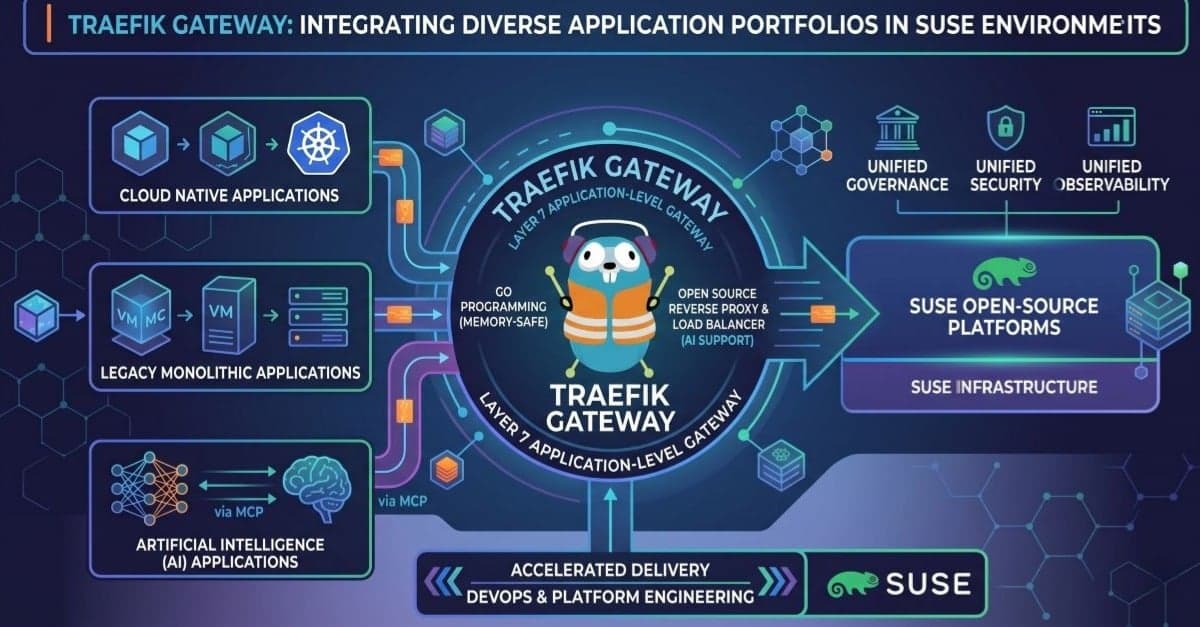
Traefik Labs Brings Application-Level Gateway to SUSE Platforms
Traefik Labs announced that its open‑source, Go‑based application‑level gateway is now integrated into SUSE’s open‑source platforms, simplifying Layer 7 connectivity for IT teams. The gateway can route cloud‑native containers, legacy virtual‑machine workloads, and AI services via an embedded Model Context Protocol...
From Ingress NGINX to Higress: Migrating 60+ Resources in 30 Minutes with AI
Following the official retirement of Ingress NGINX in March 2026, enterprises faced a compliance deadline to replace the now‑unsupported controller. An Alibaba engineer demonstrated a migration of more than 60 complex Ingress resources to Higress, an AI‑native API gateway built...

The Pod Prometheus Never Saw: Kubernetes' Sampling Blind Spot
The article reveals a fundamental observability gap in Kubernetes: any pod whose entire lifetime falls within a Prometheus scrape interval—known as the H5 evidence horizon—leaves no metric trace. Shortening the scrape interval merely moves the blind spot, it does not...
.png)
Introducing Active Coverage: Quality That Keeps Pace with Agentic Development
mabl announced Active Coverage, a self‑building, self‑running, self‑healing test automation platform designed for AI‑driven development. The solution stitches together test authoring, failure analysis, recovery and execution into a single autonomous loop, eliminating manual handoffs. Key capabilities include Agent Instructions, Cloud...

Big Blue Says Its Sleeper AI Tool 'Bob' Boosted Dev Productivity 45%
IBM has quietly released its homegrown AI coding assistant, Bob, a secure on‑prem fork of VS Code that integrates large‑language‑model capabilities. Internal adoption lifted developer productivity by 45%, a figure highlighted by CEO Arvind Krishna during the Q1 2026 earnings call....

AI Drives Software Productivity – and Challenges – for Motorway
Motorway has rebuilt its software development process around AWS Kiro, an agentic AI‑first IDE, delivering a four‑fold boost in engineering output and generating over a million lines of code each month. The shift embraces code disposability, using AI to iterate...
Your AI Coding Agent Isn’t a Tool. It’s a Junior Developer. Treat It Like One
The article argues that AI coding agents should be treated as junior developers rather than mere productivity tools. By onboarding, pairing, and mentoring these agents, organizations can harness their speed while avoiding rapid technical debt and security vulnerabilities. Treating them...

Is Your Node.js Project Really Secure?
Node.js projects often rely on vulnerability scanners that surface issues only after code reaches CI, leaving developers with late, ambiguous alerts. The real gap is actionable remediation—knowing which findings are direct, which are transitive, and how to fix them before...

How I Doubled My GPU Efficiency without Buying a Single New Card
A global retailer’s LLM search service was over‑provisioned, running 48 H100 GPUs at 55% average utilization because the inference workload alternates between compute‑heavy prefill and memory‑bound decode phases. Profiling revealed 92% compute usage during a 200 ms prefill, then a drop...

A Practical Guide to Optimizing Hosting Deployment
Optimizing a website’s hosting deployment requires deliberate planning from selecting the appropriate environment to ongoing performance monitoring. The guide stresses matching hosting type—shared, VPS, dedicated, or cloud—to actual traffic needs, and configuring server settings, database indexing, and multi‑layer caching before...

Deprecating OpenTracing Compatibility Requirements
On March 19, 2026 the OpenTelemetry Specification project merged PR #4938, officially deprecating OpenTracing compatibility requirements. The change reflects the reality that OpenTracing has been archived and most integrations now use native OpenTelemetry APIs and OTLP workflows. While existing shims can remain during...

Bridging the Trust Gap: Unified Public CA Orchestration with IBM Vault
HashiCorp Vault, now rebranded as IBM Vault, adds native public‑CA integration, allowing enterprises to manage both internal and externally trusted X.509 certificates from a single platform. The feature leverages the ACME protocol and supports Let’s Encrypt, DigiCert, GlobalSign (beta) and...

Bridging Legacy and Cloud-Native: A New Path with Red Hat OpenShift Dedicated Deployed on Google Cloud and Google Cloud NetApp...
Red Hat announced that Google Cloud NetApp Volumes are now certified as a storage provider for OpenShift Virtualization on OpenShift Dedicated, deployed on Google Cloud. The integration lets organizations run containers and virtual machines on a single Kubernetes‑based platform while leveraging...

The Data Context Gap: Why Agents Fail on Fragmented Stacks
AI agents and Retrieval‑Augmented Generation pipelines often falter because they are built on fragmented cloud stacks that lack production‑grade data. This creates a "repro gap" where agents operate on stale or mocked schemas, wasting over 57% of developers' time on...

Salt 3008 RC1 Is Now Available
The Salt Project announced the availability of Salt 3008 RC1, the third release candidate for its upcoming 3008 long‑term support (LTS) version. The candidate can be downloaded via the official install guide and is offered through PyPI, native OS packages, and Docker...
Policy Packs Can Now Access Pulumi ESC Environments
Pulumi announced that its policy packs can now reference Pulumi ESC environments, bringing centralized secret and configuration management to policy execution. This integration lets policies pull API tokens, cost thresholds, and other parameters directly from ESC at runtime, mirroring how...

Terminal Dependencies for CircleCI Workflows: Always Run What Matters
CircleCI introduced a new "terminal" dependency state that lets downstream jobs run once upstream work reaches any final state—success, failure, cancellation, or never starting. This eliminates the need for duplicate cleanup or notification jobs and fragile branching logic in workflow...
Google and AWS Split the AI Agent Stack Between Control and Execution
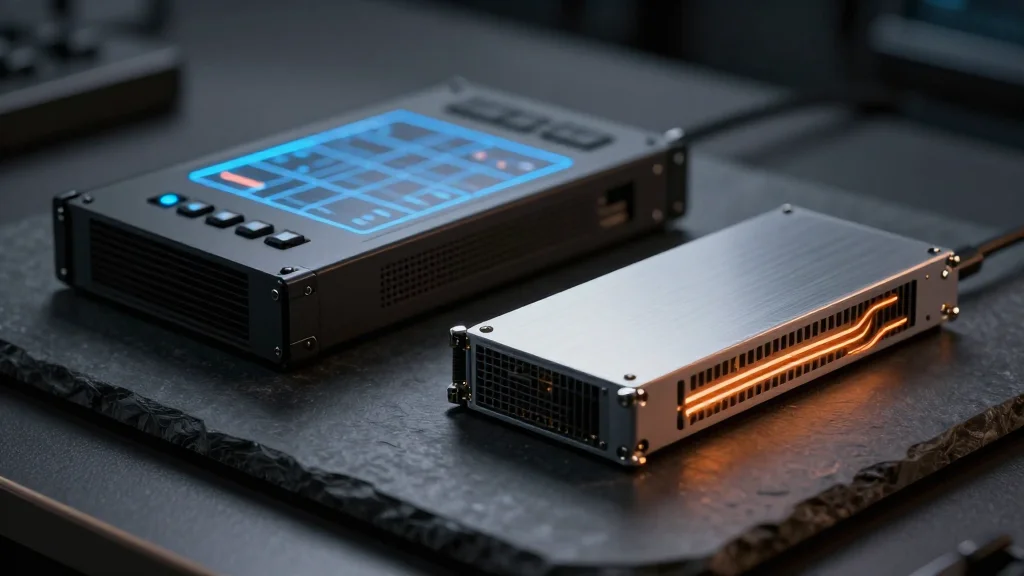
Google and AWS are diverging on how to manage enterprise AI agents, with Google placing governance on a system‑level control plane and Amazon Web Services focusing on rapid execution via a harness in Bedrock AgentCore. Google’s Gemini Enterprise now consolidates...

Introducing Snowflake DCM Projects: Declarative Infrastructure
Snowflake announced DCM Projects, a declarative infrastructure tool now in public preview. The solution lets users author manifest.yml and SQL definition files that describe the desired state of Snowflake objects, automatically computing diffs, resolving dependencies, and applying changes in the...
Kubernetes v1.36 Promotes Stability, Compatibility & Reproducibility
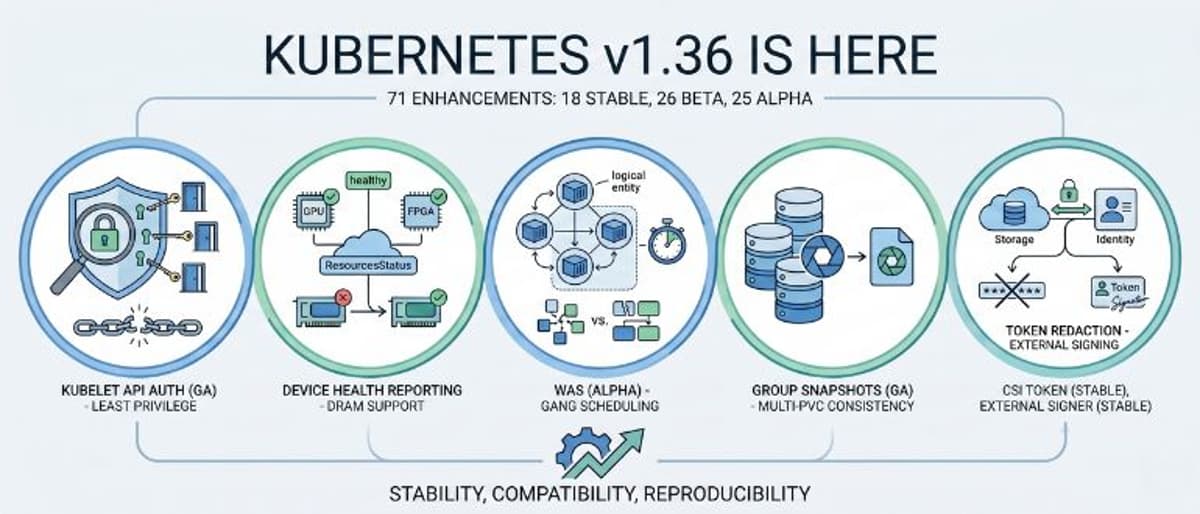
Kubernetes v1.36, released Spring 2026, adds 71 enhancements, with 18 features promoted to Stable, 26 to beta, and 25 to alpha. Key GA graduations include fine‑grained kubelet API authorization, Volume Group Snapshots, and CSI token secret redaction, boosting node‑level security and...

SD Times News in Brief
Gitar, a developer‑infrastructure startup, unveiled an AI‑driven code‑validation platform that automates pull‑request reviews, root‑cause analysis, and fix suggestions, integrating with GitHub, GitLab, Jira, Slack, and CircleCI. The tool aims to replace manual quality gates that can’t scale with the surge...

Neurotechnology Spinoff SkyBiometry Launches AI Infrastructure Suite
Lithuania‑based SkyBiometry, a Neurotechnology spinoff, unveiled an AI Factory and a full‑stack infrastructure suite that combines GPU‑rich hardware, private bare‑metal clouds, and managed Kubernetes orchestration. The offering is designed to accelerate large language model training, generative AI, and computer‑vision projects...

Rethinking Code Review in the Era of AI
AI tools are now a staple in developers' daily workflows, with roughly 70 % reporting higher productivity. While AI‑generated code often looks clean and well‑structured, it frequently lacks the system‑specific context that prevents subtle bugs. Traditional code review struggles to catch...

K2view vs Broadcom For Test Data Management
The article pits Broadcom’s traditional, schema‑centric test data management (TDM) platform against K2view’s newer, entity‑centric solution. Broadcom offers solid integration with legacy databases but struggles with modern SaaS, cloud‑native, and NoSQL environments, and its self‑service portal is often seen as...

Groundcover Adds Agentic AI Observability in Google Cloud
Groundcover has launched a generally‑available AI observability layer for Google Cloud that natively supports Vertex AI. The update requires no extra instrumentation and keeps all telemetry inside the customer’s own cloud environment. It adds full‑trace visibility across multi‑step agentic workflows...

Terraform Adds Pre-Written Sentinel Policies for ISO 27001
Terraform announced a new library of pre‑written Sentinel policies that map to ISO/IEC 27001 Annex A controls. The policies are co‑created by HashiCorp and AWS and are now published in the Terraform Registry. By providing ready‑made compliance rules, the offering...

The Moment I Stopped Using AI as a Chat Tool (And Started Using It as a Teammate)
The author describes a turning point after seeing a crypto developer’s autonomous AI agent that monitors code, detects bugs, and negotiates bounties without human input. This experience sparked a shift from using AI as a chat assistant to deploying self‑running...
Grafana Labs Releases Grafana 13 to Make Open Observability Easier to Run at Scale
Grafana Labs unveiled Grafana 13 at GrafanaCON 2026, introducing dynamic dashboards, guided onboarding, and expanded governance tools to accelerate observability adoption. The release also brings a revamped Grafana Loki architecture with Kafka‑backed ingestion and a parallel query engine, promising up to 20×...
OpenAI Teams up with Infosys to Bring AI Tools to More Businesses
OpenAI has teamed up with Infosys to embed its AI suite, including the Codex coding assistant, into the Indian IT firm’s Topaz AI platform. The integration will help Infosys’ clients modernize software development, automate workflows and scale AI deployments, initially...

I Set up This Linux 'Watchdog' And Now My System Auto-Reboots when It Locks Up
Jack Wallen’s ZDNET guide explains how the open‑source Watchdog utility can automatically reboot a Linux machine when it stops responding. By installing the softdog kernel module and configuring /etc/watchdog.conf, users set a countdown timer that triggers a reboot if the...
The Invisible OOMKill: Why Your Java Pod Keeps Restarting in Kubernetes
A Java‑based payment service repeatedly crashed in Kubernetes because the container hit an OOMKilled state despite a modest 512 MB heap setting. The root cause was off‑heap memory—metaspace, thread stacks, and direct buffers—pushing total usage above the 1 Gi pod limit. By...

Infisical Launches Agent Vault, Letting Engineering Teams Ship AI Agents to Production Without Exposing Credentials
Infisical unveiled Agent Vault, an open‑source credential‑security layer that lets AI agents operate in production without ever seeing API keys or other secrets. The forward‑proxy solution intercepts TLS traffic, injects credentials at the network edge, and works on‑prem, in Kubernetes,...

How Norway's Welfare System Moved 400GB of Daily Logs to Managed OpenSearch without a Service Interruption
Norway’s welfare agency NAV replaced its legacy Elasticsearch logging stack with a managed OpenSearch service from Aiven, driven by a license change and a broader cloud migration. The migration used a dual‑write approach, sending logs to both systems simultaneously, which...

Making Rust Workers Reliable: Panic and Abort Recovery in Wasm‑bindgen
Cloudflare has upgraded Rust Workers with full WebAssembly error recovery, adding `panic=unwind` support and abort‑handling mechanisms through wasm‑bindgen. The new runtime prevents a single panic or abort from poisoning the entire worker instance, preserving in‑memory state for concurrent requests. These...

Grafana Offers AI Assistant for Free, Warns Users Not to Go Mad
Grafana announced that its AI assistant, previously cloud‑only, is now free for open‑source and on‑premise users, though it requires a Grafana Cloud account for LLM connectivity. The company also unveiled Grafana 13, featuring dynamic dashboards, DORA‑aligned templates, a revamped query editor,...
Grafana Offers AI Assistant for Free, Warns Users Not to Go Mad
Grafana announced that its AI‑driven Grafana Assistant is now free for on‑premise and open‑source users, though it still requires a Grafana Cloud account for the large‑language‑model backend. At the same event the company unveiled Grafana 13, featuring dynamic dashboards, DORA‑style templates,...

"While the Engineers Slept, the Agents Kept Building": AWS UK Chief Touts Big Gains with AI-Powered Coding
At the AWS Summit London, VP Alison Kay highlighted that AWS developers used the company’s Kiro AI coding agent to rebuild the Bedrock inference engine in just 76 days, a task previously estimated to need 40 engineers for a year....
CoreWeave Expands Multi-Cloud AI Stack at Google Cloud Next
CoreWeave announced a suite of multi‑cloud AI tools at Google Cloud Next, including a private interconnect that slashes deployment times from months to days. The company also launched SUNK Anywhere, a unified Slurm‑on‑Kubernetes control plane that spans CoreWeave, Google Cloud,...