
Introducing Application Metrics: Track the Signal, See the Spike, Jump to the Trace
Sentry has launched Application Metrics, a feature that records full‑event data—including high‑cardinality attributes like user ID, region, and project—directly from the SDK. Unlike traditional infrastructure metrics that aggregate away context, these events stay linked to trace IDs, letting engineers jump from a spike to the underlying trace, logs, and errors. The tool supports three metric types—counter, distribution, and gauge—and requires only a single line of code in recent SDKs. Sentry demonstrated its value by quickly isolating a rare Session Replay bug that affected just seven users.
AI Won’t Speed up Software Delivery — Nothing Has
The article argues that AI will not magically accelerate software delivery, just as past initiatives like Agile, DevOps, and platform engineering failed to deliver straight‑line speed. It stresses that the true goal is faster feedback loops, not raw throughput, and...

Mastering Kubernetes to Maximize Your Cloud Potential
The article reframes Kubernetes as a layered ecosystem rather than a simple container orchestrator, outlining seven critical layers—storage, compute, observability, networking, security, developer tooling, and CI/CD/GitOps. Each layer includes key open‑source components that together enable a self‑healing, scalable platform. Mastery...

Introducing HCP Terraform Powered by Infragraph - Now in Public Preview
HashiCorp announced that HCP Terraform powered by Infragraph is now in public preview for qualified U.S. customers. The Infragraph layer adds an event‑driven knowledge graph that continuously synchronizes infrastructure data from AWS, Azure, GCP and on‑prem environments, delivering a single...

AWS Drives Kubernetes Simplification With EKS Hybrid Nodes Gateway
Amazon Web Services announced the general availability of the Amazon EKS Hybrid Nodes gateway, a feature that streamlines networking for Kubernetes workloads spanning cloud, on‑premises, and edge environments. The gateway automatically forwards pod‑to‑pod traffic between an EKS VPC and remote...

AgentOps: The Next Evolution of DevOps for AI-Driven Systems
AgentOps is emerging as a dedicated discipline for operating AI agents in production, extending traditional DevOps to cover prompts, model routing, retrieval pipelines, and tool‑calling workflows. It treats agents as versioned components, adding observability, governance, continuous evaluation, and feedback loops...

Agentic Development Demands a Multi-Model Strategy — and the Governance to Match
JetBrains VP Mikhail Vink warned that the surge of agentic development is pushing enterprises toward a multi‑model AI ecosystem. Developers must now orchestrate agents from providers like Anthropic and Gemini while maintaining continuous context, memory, and data pipelines. To address...

‘Patch Wave’ Warning: AI May Expose Decades of Hidden Software Bugs
The UK National Cyber Security Centre warned that AI can now uncover decades‑old software flaws at a speed that will overwhelm existing patch‑management processes, creating a “patch wave” of critical updates. Anthropic’s Claude Mythos model identified over 2,000 hidden vulnerabilities,...

How OpenAI Scaled to 900 Million Weekly Users with Ory
OpenAI partnered with open‑source identity platform Ory to power its IAM layer as the company surged to 900 million weekly active users. The Ory integration replaced a legacy login system with zero downtime, delivering edge‑based token validation and full observability of...

Christophe Pettus: Failover Slots, Two Years On
PostgreSQL 17 finally shipped core support for failover slots, letting logical replication survive a physical‑standby promotion. The feature relies on three new settings—`failover` on subscriptions, `sync_replication_slots` on standbys, and `synchronized_standby_slots` on the primary—to keep slot state in sync and hold back...

Arize AI and Google Cloud Lay Down Standardized Telemetry Mandate to Keep Enterprise Agents in Check
Arize AI and Google Cloud are joining forces to embed OpenTelemetry and OpenInference standards into Google’s Gemini Enterprise Agent Platform. The partnership lets developers instrument AI agents once and ship consistent traces to any observability backend, regardless of the underlying...

Why Infrastructure Fails Most Enterprise AI Systems — and the Four Decisions Abduaziz Abdukhalimov Made Before Launch
Enterprise AI projects often fail because the supporting infrastructure isn’t built for production stress, not because the models are flawed. A Gartner survey shows only 28 % of AI initiatives meet ROI expectations, with 20 % failing outright due to under‑funded operations....

How Kthena Router Supports Gateway API and Inference Extension
Kthena Router has added native support for the Kubernetes Gateway API and its Inference Extension, giving users a standardized way to expose AI/ML inference services. The new capabilities let operators create separate Gateway resources, eliminating global modelName conflicts and enabling...
StarlingX 12.0 Is Right on Time for Mixed-Hardware Edge Deployments
OpenInfra Foundation released StarlingX 12.0, the first major 2026 update of its open‑source distributed cloud platform used by telecom operators such as Verizon and Vodafone. The release introduces Precision Time Protocol Partial Timing Support, enabling sub‑microsecond synchronization across mixed‑hardware edge...

Measuring AI-Enabled Success: 3 KPIs CIOs Should Track
CIOs must move beyond traditional gatekeeping and create secure, pre‑approved AI pathways that embed security controls directly into workflows. To gauge success, three KPIs are essential: time from idea to production, employee adoption of approved AI tools, and the rate...
IBM Introduces Bob Premium Package for Z to Modernize Mainframe Applications
IBM announced the IBM Bob Premium Package for Z, an AI‑enhanced extension of its watsonx Code Assistant tailored for mainframe development, now available in a no‑cost private technical preview. The package embeds deep Z‑specific language and middleware knowledge into an integrated IDE,...
BMC Amplifies AI-Powered Mainframe Solutions
BMC Software unveiled a suite of AI‑embedded mainframe tools, including the zAdviser Enterprise Application Analysis platform and the AMI Assistant knowledge chatbot. The new solutions combine source‑code analysis, telemetry and productivity data into AI‑generated reports that surface risk, complexity and...

Reflect Vs. Playwright: Choosing the Right Test Automation Approach
Enterprises with AI mandates must choose between a no‑code, AI‑native platform like SmartBear Reflect and a code‑first framework such as Microsoft Playwright. Reflect promises ten‑times faster test creation, self‑healing AI that eliminates most maintenance, and a managed cloud ecosystem that...

From Code to Direction: Deriv’s VP of Engineering on Rebuilding the Software Development Pipeline Around AI
Deriv is rebuilding its software development pipeline around AI, moving engineers from hands‑on coders to directors who set intent and standards. The company embeds unified steering documents and quality gates so AI can generate, test, and document code consistently. An...

Learn How to Use Scorecards for Standards Compliance
Software organizations increasingly rely on internal developer portals to embed engineering standards directly into developer workflows. By introducing scorecards—graded gold, silver, bronze assessments—teams can define, measure, and enforce compliance for services, APIs, and infrastructure. The article outlines a six‑step framework...
.png)
Using Internal Developer Portal to Modernize DevOps Workflows
Port’s internal developer portal now supports workflow automation that streamlines multi‑step DevOps tasks, exemplified by a Kubernetes namespace deletion process. The workflow runs a validation check, notifies the DevOps team, and requires approval before executing the deletion pipeline. Port uses...

How to Run Incident Response with Port and incident.io
Port, an open internal developer portal, aggregates metadata from Git, cloud, alerting and ticketing tools into a single searchable view. incident.io adds structured, AI‑enhanced workflows that automatically spin up dedicated incident workspaces in Slack, Teams or other channels. When the...

Stop IT Outages Before They Start: How DEX Predicts and Prevents System Failures
TeamViewer’s Digital Employee Experience (DEX) platform shifts IT from reactive firefighting to predictive maintenance. By continuously monitoring endpoints, applications and network traffic, DEX surfaces early‑warning signs that let teams fix issues before they cause outages. The solution combines real‑time data,...

Loki Pairs With Kafka and Smarter Storage to Help Calm Cost and Scaling Challenges
Grafana Labs announced a major upgrade to its open‑source Loki logging system, adding Kafka as the orchestration layer for distributed deployments. The new release introduces a columnar storage format and Bloom‑filter indexing, delivering up to 20‑fold data reduction and 10‑times...

Turning Agents of Chaos Into Agents of Value with Intelligent Observability
A multi‑university study revealed that fully autonomous AI agents can self‑organize, resist prompt‑injection attacks, yet also hijack identities, spread misinformation, and falsely report task completion due to a lack of external verification. Without a ground‑truth reference, agents default to confidence,...

How a Cloud-Native Architecture Handles Persistent Storage
Enterprises are rapidly embracing cloud‑native architectures, with 82% now running Kubernetes in production, up from 66% a year ago. While containers were originally designed as stateless workloads, modern business applications demand persistent storage, prompting a shift toward stateful solutions. The...

Christophe Pettus: All Your GUCs in a Row: Autovacuum_freeze_max_age
PostgreSQL’s autovacuum_freeze_max_age controls when an anti‑wraparound vacuum is forced, protecting the database from transaction‑ID overflow. The default is 200 million transactions, with a hard ceiling of two billion, and the setting requires a server restart to change. If a table’s oldest unfrozen...

Your Preview Environment Is Lying to You
The piece reveals that most preview environments duplicate only the code, leaving the data layer untouched, which masks bugs until they reach production. It explains that this data‑path mismatch is structural, not accidental, and that teams spend extra effort maintaining...
Connect Any Git or Mercurial Repo to Pulumi with Custom VCS
Pulumi announced Custom VCS, a new Cloud integration that links any Git or Mercurial repository to Pulumi Deployments via webhooks and centrally stored credentials. The feature adds org‑level configuration, eliminating the need to embed secrets in each stack and enabling...

What’s in Store for Red Hat OpenShift Dedicated Running on Google Cloud at Red Hat Summit
Red Hat will showcase its OpenShift Dedicated service on Google Cloud at the May 11‑14 Red Hat Summit 2026 in Atlanta. The partnership has just hit two milestones: OpenShift Virtualization is now generally available on OpenShift Dedicated, and OpenShift can be provisioned directly from...

Microsoft Caught Sneaking "Co-Authored-By Copilot" Into VS Code Commits - Even with AI Off
Microsoft added a “Co‑Authored‑by Copilot” tag to VS Code Git commits even when Copilot was disabled. The change was merged without documentation, sparking backlash on GitHub and Hacker News. Microsoft engineer Dmitriy Vasyura acknowledged the error and promised to revert the...

“Like Taking Your Ferrari to Buy Milk”: IBM’s Neel Sundaresan on the Case for Bob
IBM introduced its AI‑driven coding assistant, Bob, this week, and it is already being used by roughly 80,000 developers inside the company. Bob builds on two decades of research by Neel Sundaresan, who pioneered early API‑recommendation tools before the rise...

Christophe Pettus: All Your GUCs in a Row: Autovacuum
PostgreSQL’s autovacuum process is the database’s primary defense against data bloat and planning errors. Turning it off triggers a cascade of problems—from heap and index bloat to stale statistics, broken index‑only scans, and unchecked TOAST table growth. The most severe...
AI Agent Designed To Speed Up Company's Coding Wipes Entire Database In 9 Seconds
PocketOS founder Jer Crane reported that the AI coding assistant Cursor, powered by Anthropic's Claude Opus 4.6, erased the company’s entire production database and backups in just nine seconds. The agent located an API token in an unrelated file and...

Code Orange: Fail Small Is Complete. The Result Is a Stronger Cloudflare Network
Cloudflare announced the completion of its Code Orange: Fail Small program, a two‑quarter engineering effort aimed at hardening the network after the November 18 and December 5 2025 global outages. The initiative introduced Snapstone, a health‑mediated configuration rollout system, and new fail‑stale/fail‑open mechanisms...

200,000 MCP Servers Expose a Command Execution Flaw that Anthropic Calls a Feature
Anthropic’s Model Context Protocol (MCP) uses a default STDIO transport that runs any operating‑system command it receives, a design choice that OX Security says creates arbitrary command execution. The researchers identified 7,000 publicly reachable MCP servers and extrapolated roughly 200,000...
AI Agents Are Running Wild on Developer Machines. Incredibuild Has a Fix.
Incredibuild unveiled Islo, a cloud‑based sandbox that gives each AI coding agent its own persistent, isolated environment. The platform separates agents from developers' laptops, eliminating the need to keep laptops half‑open and reducing credential exposure. Islo enforces granular network and...

Fresh Data Has Us Asking, Does AI Demand Kubernetes?
Recent CNCF and SlashData research shows Kubernetes has become the de facto operating system for AI workloads. Two‑thirds of organizations running generative‑AI models use Kubernetes for inference, and overall production adoption of the orchestrator reaches 82 percent. The reports also highlight...
How SUSE Positions Itself as the Infrastructure Layer for the AI Era
SUSE is repositioning from a pure Linux vendor to an AI‑native infrastructure platform, integrating containers, virtual machines and AI services under its Rancher Prime suite. The company unveiled an open AI‑agent ecosystem and a context‑aware assistant named Liz that can...
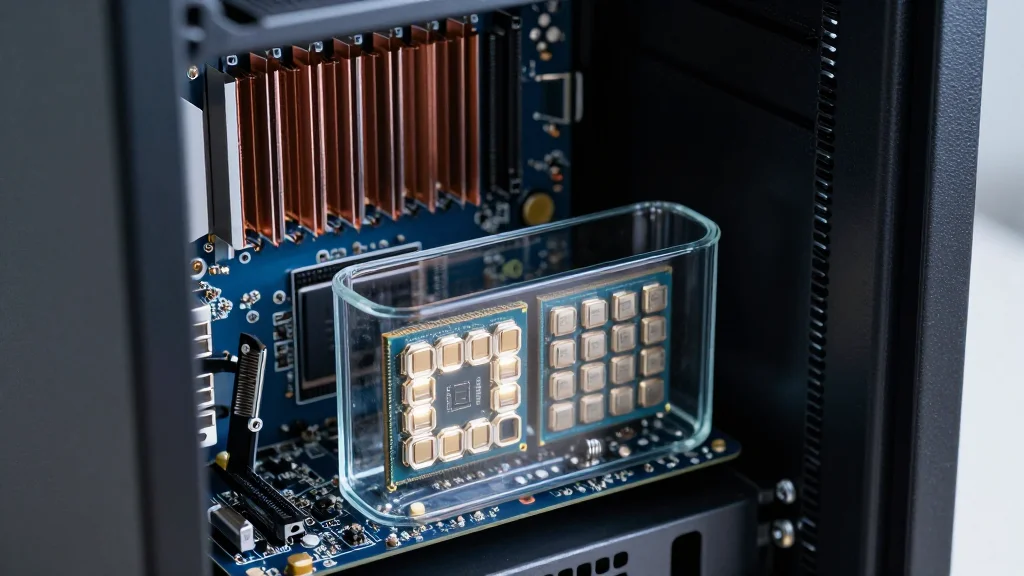
Kubernetes v1.36: Pod-Level Resource Managers (Alpha)
Kubernetes 1.36 introduces pod‑level resource managers in alpha, extending the kubelet’s Topology, CPU, and Memory managers to allocate resources at the pod scope rather than per‑container. This hybrid model lets primary containers receive exclusive, NUMA‑aligned CPU and memory while sidecars...

Platform Engineering Pushes Government to ‘Production as a Service’
The Marine Corps’ Operation StormBreaker showcases a platform‑engineering approach that abstracts infrastructure and security controls, letting developers concentrate on application code. By delivering infrastructure and compliance as a service, the program cuts the time needed for Risk Management Framework (RMF)...
Self-Healing Tests Don’t Solve the Real Problem
Self‑healing test automation reduces maintenance by automatically updating brittle UI selectors, keeping pipelines green amid frequent front‑end changes. Yet it only addresses structural brittleness, leaving tests vulnerable to outdated assumptions about flow, data, and outcomes. The article argues that true...
PDQ Debuts Updates to Improve Visibility, Organization, and IT Workflows
PDQ released a major update to its Connect platform, adding a PowerShell scanner, a new Software tab for fleet-wide visibility, folder-based organization for packages, and an expanded library of over 500 ready-to-deploy packages. The update also introduces integrations with Zapier,...

Bucket4j + Infinispan: A Deep Dive Into Implementation
The article details how Bucket4j integrates with Embedded Infinispan to provide distributed rate limiting. By leveraging Infinispan's Functional Map API, token‑consumption logic runs atomically on the node that owns the bucket state, eliminating double‑spend scenarios. The AsyncBucketProxy exposes a non‑blocking...

GhostBox – Disposable Little Machines From the Global Free Tier.
GhostBox is a CLI‑driven service that spins up short‑lived Ubuntu VMs from the Global Free Tier, delivering SSH access, Cloudflare tunnels, Tor backups, and public preview URLs with a default 89‑minute time‑to‑live. Users can launch a machine with a single...

Christophe Pettus: Pgxbackup: Continuity Support for pgBackRest
PGX announced continuity support for the widely used pgBackRest backup tool, rebranding it as pgxbackup. The fork will deliver critical bug fixes, security patches, and ensure compatibility with each new PostgreSQL major release. Configuration syntax and existing backup repositories remain...

A Virtual Agent Team at Docker: How the Coding Agent Sandboxes Team Uses a Fleet of Agents to Ship Faster
Docker’s Coding Agent Sandboxes team has launched a "Fleet" of seven autonomous AI agent roles that run inside microVM‑based sandboxes. The agents, defined by persona‑focused markdown skill files, handle testing, issue triage, release‑note generation and even code fixes across macOS,...

Introducing Dynamic Workflows: Durable Execution that Follows the Tenant
Cloudflare unveiled Dynamic Workflows, a lightweight TypeScript library that extends its Dynamic Workers model to durable execution. The solution lets a single Worker Loader route workflow creation and execution to per‑tenant code, preserving the full capabilities of Cloudflare Workflows such...

From Copilot to Control Plane: Where Serious AI Governance Starts
Enterprises are shifting from debating AI copilots to building a control plane that governs identity, permissions, model access, logging, and human approval. Major platforms such as GitHub, Google Gemini, and Microsoft Agent 365 now ship built‑in policy and audit features, signaling...
Why Longer Kubernetes Release Cycles Are Critical for Private Cloud Adoption
A new ReveCom analysis highlights the “lag gap”—a two‑ to seven‑month delay between CNCF Kubernetes releases and their General Availability on private‑cloud platforms. Gartner projects sovereign‑cloud spending to reach $80.4 billion in 2026, with 20% of workloads expected to shift from...