Microcks Becomes a CNCF Incubating Project
The CNCF Technical Oversight Committee voted to promote Microcks to an incubating project. Microcks is an open‑source, cloud‑native platform that turns API contracts—including OpenAPI, AsyncAPI, gRPC, GraphQL, and SOAP—into live mock servers and contract‑testing suites. Since joining the CNCF sandbox in June 2023, the project has grown to 645 contributors, 34 public adopters and over 2.5 million container image downloads in 2025, a three‑fold increase over the prior year. Incubation provides CNCF governance, broader ecosystem integrations and a clear path toward graduation.

Kloudfuse 4.0 Delivers AI-Governed Observability and Scalable Workload Isolation
Kloudfuse announced the general availability of version 4.0, a platform that combines AI‑driven observability with production‑grade governance while keeping all telemetry inside the customer’s cloud. The release addresses three urgent pressures: the 2026 FIPS 140‑2 sunset, the surge of AI agents...
8 Best AIOps Platforms for IT Operations Monitoring in 2026
The G2 Spring 2026 Grid Report ranks the top AIOps platforms for IT operations monitoring, highlighting ServiceNow ITOM, Atera, IBM Instana, Dynatrace, Datadog, Rakuten SixthSense, IBM Turbonomic and SysAid. Atera tops the list for lean teams with per‑technician pricing, while ServiceNow...

Anthropic Skill Scanners Passed Every Check. The Malicious Code Rode in on a Test File.
Anthropic Skill scanners correctly flag markdown and agent scripts but miss bundled test files. Gecko Security demonstrated that a malicious *.test.ts file can run via Jest/Vitest when a developer installs a Skill, exposing environment secrets and SSH keys. Audits by...

Open-Source MCP Server Monitoring for Python Apps
BlueRock has open‑sourced MCP Python Hooks, a runtime sensor that captures Model Context Protocol (MCP) server events and Python import activity without requiring code changes. The sensor leverages native audit hooks, import hooks, and wrapt‑based framework hooks to emit structured...

Multi-Model AI Is Creating a Routing Headache for Enterprises
Enterprises are treating AI inference as a core production workload, with 78% operating their own services and averaging seven models per deployment, according to F5’s 2026 State of Application Strategy Report. Multi‑model inference spreads across hybrid multicloud environments, demanding new...

Christophe Pettus: All Your GUCs in a Row: Autovacuum_naptime, Autovacuum_vacuum_cost_delay, Autovacuum_vacuum_cost_limit
PostgreSQL’s autovacuum subsystem relies on three inter‑related settings—autovacuum_naptime, autovacuum_vacuum_cost_delay, and autovacuum_vacuum_cost_limit—to balance cleanup work against I/O load. The defaults, calibrated for single‑digit database clusters on spinning disks, can cause excessive latency in modern multi‑tenant or NVMe environments. Adjusting naptime to...

Fixing JavaScript Observability, One Library at a Time
Over the past weeks Sentry has led a cross‑ecosystem push to replace fragile monkey‑patching in JavaScript APM tools with Node’s built‑in TracingChannel API. By having libraries publish structured events on tracing channels, APMs can subscribe without import‑in‑the‑middle hacks, eliminating ESM...

Q1 2026: Harness CD & GitOps Product Update
Harness released its Q1 2026 product update, introducing AI‑powered continuous verification that provides zero‑config health monitoring, native Azure Container Apps support with basic and canary strategies, and major Windows deployment enhancements such as session reuse and dynamic multi‑host targeting. The update...

Consolidate Your GitLab Stack with Gitaly on Kubernetes
GitLab 18.11 makes Gitaly on Kubernetes generally available, letting teams run the entire GitLab stack inside a single Kubernetes cluster. Previously, organizations had to maintain a hybrid architecture with Gitaly on virtual machines, adding operational complexity. The new deployment uses...

Infrastructure for AI Agents: What Platform Teams Need to Build Now
AI agents are moving from code‑assistant roles to autonomous platform citizens, demanding infrastructure that operates at machine speed. Traditional cloud platforms built around human‑centric ticketing and manual approvals become bottlenecks, causing delays that AI‑driven workflows cannot tolerate. The article advocates...

Why Developer Portals Matter More in the Age of AI Agents
Internal developer portals (IDPs) are not obsolete; they are evolving into infrastructure that serves both human developers and AI agents. While AI assistants can answer queries, they lack the enterprise context that IDPs provide, such as service catalogs, compliance policies,...

Limit Credential Exposure with Fine-Grained Personal Access Tokens
GitLab has launched a beta for fine‑grained personal access tokens (PATs), allowing users to restrict a token’s reach to selected projects or groups and assign per‑resource permissions such as Create, Read, Update, and Delete. This replaces the traditional broad‑scoped tokens...

How AI Coding Is Driving Efficiency Gains for Datacom
Datacom is integrating AI‑powered coding assistants such as GitHub Copilot, Cursor and Augment, achieving 20‑30% productivity gains across its digital engineering and SaaS teams. By embedding AI agents that act as business analysts, developers and QA testers, the firm reports...

Why Long-Running AI Agents Break on HTTP and How Ably Is Fixing It
Ably CEO Matthew O’Riordan explains that standard HTTP request/response falters when AI agents run for hours, handling multiple tool calls and user interruptions. To address this, Ably introduced a durable‑session layer called AI Transport, which moves the response stream to...
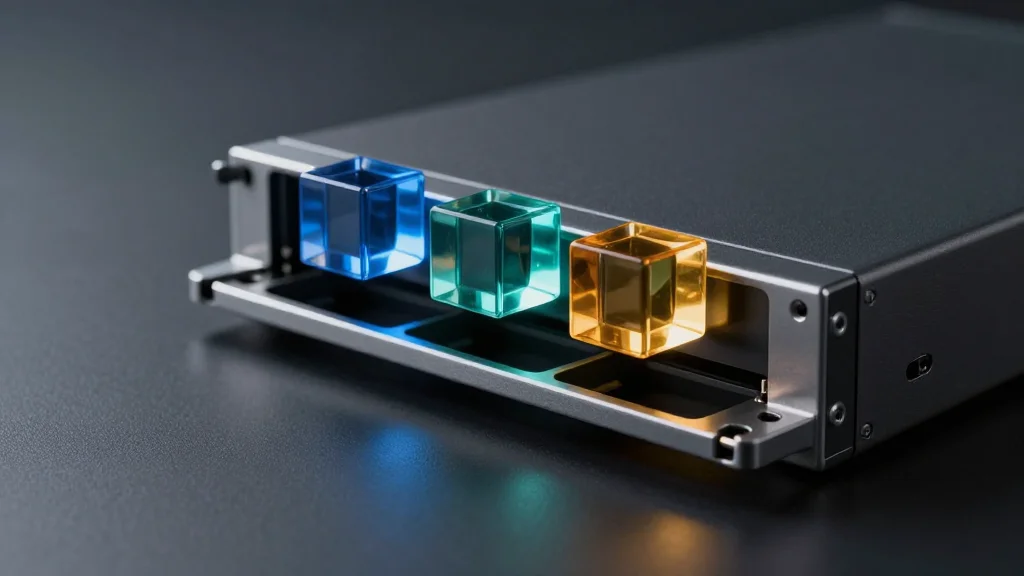
Kubernetes v1.36: Server-Side Sharded List and Watch
Kubernetes 1.36 adds an alpha‑stage server‑side sharded list and watch feature, letting the API server filter resource events before they reach controller replicas. By passing a shardSelector in ListOptions, each replica receives only the hash range it owns, cutting CPU,...

Dyna Software Adds AI Agents to Customize ServiceNow Applications
Dyna Software unveiled Platform Copilot, a suite of AI agents that automatically configure ServiceNow SaaS applications from natural‑language or image inputs. Integrated with ServiceNow’s development tools and large‑language models from OpenAI and Anthropic, the agents generate configurations, preview changes, and...

Introducing Chunk Sidecars: Inner Loop Validation that Keeps up with Your Agents
CircleCI unveiled Chunk sidecars, lightweight microVM environments that run alongside developers' local workflows to validate AI‑generated code in real time. By auto‑detecting the tech stack and executing scoped microbuilds within 60 seconds, sidecars give agents immediate feedback, keeping the inner...
Optimizing Performance with Reinforcement Learning at Data Summit 2026
Cisco’s Hina Gandhi presented a reinforcement‑learning framework that enables Apache Spark to self‑tune partitioning decisions before execution. By applying Q‑learning, the RL agent observes metrics such as shuffle size, task duration, data skew, and executor utilization, then selects actions that...

Troubleshoot Performance Issues Faster with the New Grafana Assistant Integration for Database Observability
Grafana Cloud has launched a new AI‑driven Assistant integrated into its Database Observability suite, letting users diagnose slow queries directly from live Prometheus and Loki data. The assistant automatically pulls schema, execution plans, and wait‑event metrics, then delivers a health...

Kubernetes Finally Lands User Namespace Support, but Shared Kernel Problem Remains
Kubernetes 1.36 introduces general‑availability user namespace support, allowing pods to remap root to an unprivileged host UID. This mitigates several high‑severity CVEs by limiting the impact of container escapes and lateral movement. However, all containers still share the same Linux...

Vultr, SUSE & Supermicro Debut Unified Cloud-to-Edge Architecture for Global AI Scaling
Vultr, SUSE and Supermicro announced a unified Cloud‑to‑Edge framework that links Vultr’s 33 global cloud regions with rugged Supermicro edge servers, all orchestrated through SUSE’s GitOps‑driven Kubernetes stack. The architecture splits AI workloads across three layers—cloud/near‑edge, metro edge, and a...

Meesho Says 70% of Its Code Is AI-Generated; AI Feeds Drive 75% of Orders
Meesho, the SoftBank‑backed Indian social commerce platform, reports that over 70% of its software code is now generated by AI tools, accelerating product development and testing. AI‑driven personalized feeds account for roughly 75% of all orders, boosting conversion rates by...

Ruby Inventor Matz Working on Native Compiler with AI Help
Ruby creator Yukihiro Matsumoto unveiled Spinel, a native compiler that translates Ruby code into C and then into a standalone executable. Using Anthropic's Claude Code, the project was built in weeks and delivers roughly an 11.6‑fold speed increase over MiniRuby...
How NetEase Games Cut LLM Cold Starts From 42 Minutes to 30 Seconds
NetEase Games reduced large language model cold‑start latency from 42 minutes to under 30 seconds by adopting Fluid, a CNCF‑incubated data orchestration layer on Kubernetes. The shift replaced direct cross‑region storage access and a basic Alluxio cache with Fluid’s prefetching...

I Gave Our Developers an AI Coding Assistant. The Security Team Nearly Mutinied
A technology leader approved an AI coding assistant to relieve developers from repetitive tasks, but the security team reacted strongly, fearing uncontrolled code generation. The tool can draft tests, explain legacy code, and suggest refactors, yet it raises questions about...

Scaling the Vision: Operationalizing Creative Workflows at Scale
Applitools is expanding its Customer Success model with a Success Blueprint that turns strategic intent into measurable value by embedding Visual AI into the CI/CD pipeline. The company introduces an Operational North Star framework focused on standardization, velocity, and consistency...

The Tools Are Ready. So Why Are Most Cloud Native Teams Still Running Three Observability Stacks?
A February 2026 survey of 407 cloud‑native practitioners shows that 46.7% of organizations still run two to three observability tools, while only 7.4% have achieved a single unified stack. Teams cite dashboard and alert configuration (54%) as the biggest setup...
What Is Crowdtesting? Benefits, Types & How It Works
Crowdtesting leverages a global network of real users to evaluate software on actual devices and networks, providing real‑world validation at scale. Platforms such as Global App Testing connect companies with testers in over 190 countries, covering functional, usability, localization, payment,...

Antony Pegg: I Built Three GitHub Codespaces Walkthroughs for Our Products. Would You Use Them?
Antony Pegg created three GitHub Codespaces walkthroughs that let developers spin up pgEdge’s distributed Postgres products with a single click, eliminating local installation and Docker setup. The demos cover a Helm‑based Kubernetes deployment, the pgEdge Control Plane API, and an...

Improved Debugging for Expo Apps with the React Native SDK
Expo apps generate roughly 75% of the React Native events Sentry receives, prompting the company to upgrade its React Native SDK for better debugging and performance monitoring. The new release automatically enriches every event with OTA update metadata, tags emergency...

EnforceAuth Open-Sources Zift — A Code Scanner Built to Close the Authorization Gap in Enterprise and AI Systems
EnforceAuth has released Zift, an Apache‑2.0 open‑source scanner that automatically discovers authorization decisions across multi‑language codebases and generates Open Policy Agent (OPA)‑ready Rego policy stubs. In an internal benchmark of a financial app, Zift found only 20% of enforcement points...

Salt 3008 RC2 Is Now Available
The Salt Project announced Salt 3008 RC2, the second release candidate of its upcoming long‑term support (LTS) version. RC2 is available for download via PyPI, native OS packages, and Docker containers, with source code hosted on GitHub. While master and minion versions...

Agents Write Code. Fixing It Is Still On You.
Amplitude’s new MCP platform embeds session replay data directly into AI coding assistants like Claude and Cursor, allowing developers to investigate bugs without leaving their code editor. By describing an issue in plain language, the system triggers specialized skills—debug‑replay, diagnose‑errors,...

Accelerate Innovation and Govern Integrity with Red Hat Satellite 6.19
Red Hat unveiled Satellite 6.19, its final RPM‑based release, adding AI‑assisted management, image‑mode support, and hardened vulnerability controls for air‑gapped sites. The update introduces a Model Context Protocol (MCP) server for natural‑language queries, granular RBAC, and SSH‑certificate remote execution. It also...

The Paved Road to Production: What Good Internal Developer Platforms Look Like
Internal developer platforms (IDPs) often fail because they prioritize platform‑team convenience over developer workflow, leading to shadow IT as developers seek faster alternatives. The article advocates a “paved road” approach where provisioning, environment parity, and governance are automated directly from...

PSMDB Sandbox: A Browser-Based UI for Deploying MongoDB with Terraform and Ansible
Percona released PSMDB Sandbox, a lightweight Go‑based web UI that wraps its existing Terraform and Ansible automation for Percona Server for MongoDB, PBM backup and PMM monitoring. The wizard‑style interface lets users spin up replica sets or sharded clusters across...

Observe by Snowflake: AI-Powered Observability at Scale for the Data Cloud
Snowflake's Observe platform unveiled an AI‑driven CLI that lets engineers and autonomous agents query and act on telemetry via reusable workflows. The update adds native read/write support for Apache Iceberg, enabling observability data to reside in low‑cost cloud storage and...
Modernization Is Not Migration
Modernization now means re‑architecting the release and observability processes, not just moving workloads to the cloud. A financial firm replaced a single‑threaded Jenkins‑driven DataStage migration with three parallel migration servers, shrinking weekly release windows from two hours to 45 minutes....
How We Diagnosed a Hidden Scheduler Failure in a Docker Swarm Cluster Serving 2 Million Users
A Docker Swarm cluster of 120 nodes serving over 2 million users began underweighting a worker node after the scheduler logged five placement failures in five minutes. The root cause was a mismatch between the number of service replicas and the...
Generate Images Locally with Docker Model Runner and Open WebUI
Docker Model Runner now lets developers pull and run image‑generation models locally, exposing a fully OpenAI‑compatible API that Open WebUI can consume. By using the DDUF packaging format, a stable‑diffusion model (≈7 GB) can be fetched with a single Docker command...

Evolving Spring Boot APIs to an Event-Driven Mesh
Modern Spring Boot applications are moving from synchronous REST endpoints to asynchronous, event‑driven communication using an event mesh built on Kafka, RabbitMQ or NATS. The guide shows how to publish domain events like OrderCreated from a REST POST, then let...
Vibe Coding or Spec-Driven Development? How to Choose
Vibe coding and spec‑driven development (SDD) are emerging AI‑assisted approaches that let devops teams generate entire applications from prompts. The article contrasts the rapid prototyping strengths of vibe coding with the structured, requirement‑first methodology of SDD, noting each fits different...

Christophe Pettus: All Your GUCs in a Row: Autovacuum_max_workers
PostgreSQL’s autovacuum_max_workers defaults to three and can only be changed with a server restart. Raising this setting alone does not speed up vacuuming because the total I/O budget, controlled by autovacuum_vacuum_cost_limit, is divided among all active workers. Consequently, adding workers...

8 Agentic AI Patterns Reshaping Team Collaboration
The article maps eight recurring AI‑agent patterns that are reshaping how teams collaborate, from automated status updates to role‑specific agents embedded in chat. These patterns consistently deliver three outcomes—moving faster, working smarter, and staying in control—by reducing manual coordination, improving...
Control Your AI Agent Traffic at Scale: Model Context Protocol Gateway for Red Hat OpenShift Is Now in Technology Preview
Red Hat has released a technology‑preview of the Model Context Protocol (MCP) gateway within its Connectivity Link platform, bringing enterprise‑grade traffic management to AI agents on OpenShift. The gateway federates multiple MCP servers behind a single endpoint, adds authentication, authorization, rate‑limiting and...
The Dark Factory Pattern for Infrastructure: Running Pulumi Lights-Out
The article adapts the "dark factory" concept—fully autonomous code generation and deployment—to infrastructure as code, focusing on Pulumi. It outlines a five‑level autonomy ladder, emphasizing that level 5 (dark factory) requires a strict separation between code generators and validators. Pulumi’s Automation...

Introducing Application Metrics: Track the Signal, See the Spike, Jump to the Trace
Sentry has launched Application Metrics, a feature that records full‑event data—including high‑cardinality attributes like user ID, region, and project—directly from the SDK. Unlike traditional infrastructure metrics that aggregate away context, these events stay linked to trace IDs, letting engineers jump...

When AI Finds the Bugs: Why Defense in Depth Was Always the Answer
Mozilla partnered with Anthropic to run AI models against Firefox, uncovering 22 critical bugs in one release and a staggering 271 vulnerabilities in a follow‑up scan. The AI identified the same classes of flaws that elite human researchers find, but...

AIOps and Ansible Automation Platform: Where AI Intelligence Meets Trusted Execution
Red Hat argues that AI can recommend fixes but enterprises need governed, repeatable execution to trust automation. The Ansible Automation Platform supplies RBAC‑scoped, auditable playbooks that turn AIOps insights into safe remediation across hybrid environments. While many firms have invested in...