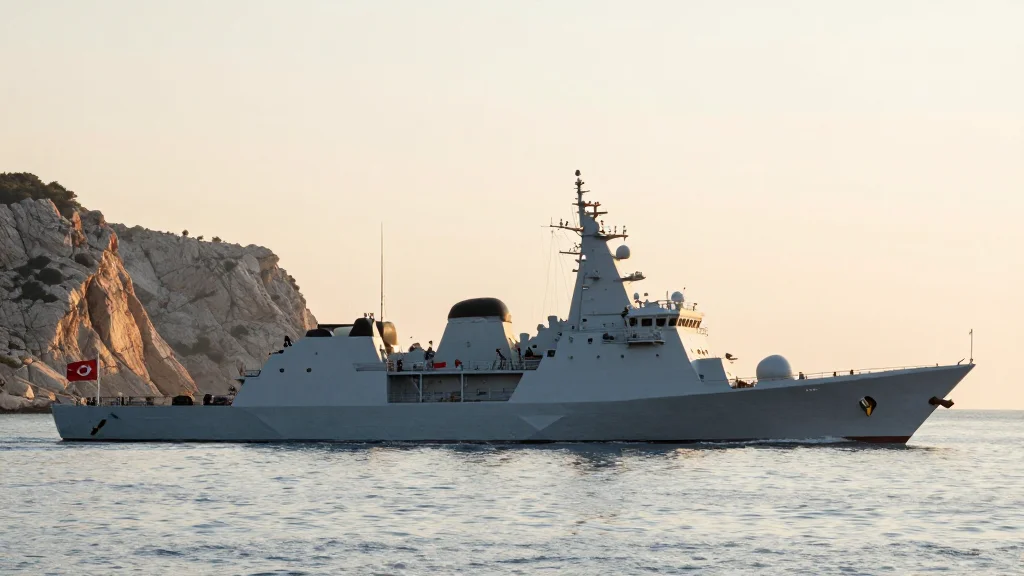
Lebanon’s Role in Turkey’s Vision for the Eastern Mediterranean
Turkey is positioning Lebanon as a cornerstone of its Eastern Mediterranean strategy, linking economic cooperation with security objectives. President Erdogan and Foreign Minister Hakan Fidan have highlighted Lebanon’s role in shaping post‑Israel‑Hezbollah dynamics and in accessing offshore gas reserves. Ankara’s outreach includes investment pledges, infrastructure projects, and diplomatic support for Lebanese reforms. The effort aims to counterbalance Israeli influence while deepening Turkey’s regional footprint.

Yuan Settlements Hit Record Amid Iran war...Beijing Looks to Curb Hidden Local debt...China’s Car Exports See Growth Despite Global Volatility
China’s cross‑border payment system hit a record RMB 1.22 trillion ($178.5 bn) single‑day settlement amid heightened Middle‑East tensions, while regulators moved to block banks from creating hidden local‑government debt through agricultural loans. March saw Chinese car exports surge 73.7% to roughly 700,000...

DEBATE | Marc Faber vs Brent Johnson: What Comes Next After The Iran War?
Thoughtful Money moderated a live debate between Marc Faber, editor of The Gloom, Boom & Doom Report, and Brent Johnson, founder of the Dollar Milkshake Theory, to assess the fallout from the US‑Israel war with Iran. The discussion explored whether...
Ceasefire of the Madman
HSBC’s latest geopolitical paper argues that a de‑escalation of global tensions will diminish the U.S. dollar’s safe‑haven appeal. With reduced risk, demand for the dollar should fall, allowing higher‑risk, undervalued currencies to rally. Emerging‑market (EM) currencies and those of energy‑importing...

“The West Has Completely Lost Its Soul, but the Iranians Are Searching for Theirs” — Interview with Alastair Crooke (Part...
In a three‑part interview, former MI6 officer Alastair Crooke argues that the West has succumbed to post‑modern nihilism, while Iran’s elite fuse Western philosophy with Shiite tradition to craft a broader worldview. He warns that Israel’s rhetoric about tactical nuclear...

Emerging Markets Outlook: Has the Asset Class Finally Turned a Corner?
Emerging‑market equities have finally outpaced U.S. stocks, delivering their widest performance gap in years after a decade‑plus of under‑performance. The Wealth Enterprise Briefing attributes the shift to stronger balance sheets, improved profitability and accelerating earnings momentum. The composition of the...

How Global Investors Are Thinking About India Today
Global investors are pulling back from India, citing heightened geopolitical risk, especially vulnerability to oil price shocks, and a lack of compelling AI investment opportunities. Valuations are viewed as rich, while a weakening rupee further erodes appeal. Recent tax reforms—higher...

Hormuz Re-Shuts Over Lebanon Strikes: Oil Prices Rise Again | Rapid Read 9 April 2026
Iran’s Islamic Revolutionary Guard Corps declared the Strait of Hormuz closed hours after a US‑Iran ceasefire, citing Israel’s large‑scale airstrikes in Lebanon. Marine tracking shows only three to seven vessels transited in the past 24 hours, a sharp drop from...

War in the Gulf Could Tilt the Cloud Race Toward China
Iranian drone attacks on three AWS data centers in the UAE and Bahrain in March disrupted banking, fintech and ride‑hailing services, marking the first confirmed strike on a hyperscale cloud provider. The incident has intensified calls for multi‑cloud strategies, highlighted...

China Real Estate Crisis: Millions Face Negative Equity
China’s property slump is deepening as falling home prices push mortgages into negative equity. Roughly 700,000 loans are already underwater, and analysts project up to 3.3 million by next year, affecting half of new‑home purchases. Banks are quietly restructuring debt—extending terms...

As Yogi Said: 'It Ain't Over Till It's Over' & 'It's Déjà Vu All Over Again'
Negotiators from the United States and Iran are set to meet in Islamabad to discuss a cease‑fire, after weeks of aerial strikes that failed to topple Tehran’s regime. The Islamic Revolutionary Guard Corps still commands the Strait of Hormuz, keeping...

Asian Marco Initial Thoughts: Ceasefire Already in Question. Expect Markets to Still Move on Headlines, Little Asian Data Today but...
A US‑Iran ceasefire was announced, reopening the Strait of Hormuz and allowing more than 800 vessels to seek passage. Global equities rallied, and the CME FedWatch tool lifted the probability of a year‑end Fed rate cut to roughly 43%. Shipping...

PETER’S ASIAN BUSINESS & FINANCE BRIEFING – Thursday 9 April 2026, 06:00 Hong Kong
US President Donald Trump announced a two‑week cease‑fire with Iran, contingent on reopening the Strait of Hormuz. The truce sent Brent crude down 15% to $92.97, its steepest fall in six years, and pulled WTI lower as well. Japan reported...

Daily Bulletin...
The United States announced a 14‑day ceasefire with Iran, prompting Trump to threaten 50% tariffs on any country that supplies Tehran with weapons. The ceasefire sent oil prices tumbling more than 16%, easing inflation pressures. Meanwhile, the Department of Homeland...

Prediction Markets on Trump Credibility Re: Reopening the Strait
Kalshi’s prediction market shows investors assign a low probability to former President Donald Trump’s claim that the Strait of Hormuz will be fully reopened soon. The market price reflects skepticism, pricing full reopening at under 20% likelihood. Meanwhile, December 2026...
Why China Might Have Pressed Iran To Compromise With The US
In late 2025, President Trump warned that if Iran did not accept a cease‑fire, the United States would target oil infrastructure, potentially cutting half of the seaborne oil that fuels China. Three unnamed Iranian officials told the New York Times...

Top Strategies for Foreign Investment in Singapore (2026)
Singapore’s inbound foreign direct investment surged to $143.4 billion in 2024, a 6.1% year‑on‑year rise, reaffirming its status as a top‑ranked global business hub. The city‑state maintains a 17% headline corporate income tax rate, with startup exemptions and a network of...
The Dollar’s Slow Unraveling: How Bitcoin, Digital Currencies, and a Secret Oil Deal Are Reshaping the World’s Money
A new paper in the Journal of Post‑Keynesian Economics details how the US dollar became the world’s primary currency, largely thanks to a secret 1974 Saudi‑oil‑for‑Treasury‑bond pact that expired in 2024. The study argues that the petrodollar arrangement allowed the...

NEWS: Trump Declares Victory in Iran Ceasefire But the Deal Reveals a Stunning Reality
After 39 days of conflict, a two‑week cease‑fire between the United States and Iran was announced, with President Trump touting a victory. The agreement, largely based on a 10‑point Iranian proposal, reopens the Strait of Hormuz, hints at lifting long‑standing...
Gulf Wars 1991 and 2026: India’s Economic Challenges and Policy Shifts
The article revisits the 1991 Gulf War’s shock to India’s economy—sharp oil price spikes, a ballooning import bill and a fiscal squeeze that accelerated market liberalisation. It then projects how a hypothetical Gulf conflict in 2026 could repeat and amplify...

Zhou Yongmei: The World Bank Remains Central to Reconstruction Finance—But in Gaza, It No Longer Sets the Rules.
Former World Bank official Zhou Yongmei argues the institution’s role in post‑conflict reconstruction is shifting from a governance gatekeeper to a mere financial conduit. In Afghanistan and Iraq, the Bank oversaw project design, procurement and audits, but in Gaza it...

From the Hype of Destruction to the Hype of Ceasefire
Oil prices plunged about 14% after President Trump posted that the United States would pause bombing Iran for two weeks, contingent on Iran reopening the Strait of Hormuz for safe shipping. Iran accepted the conditional ceasefire, and diplomatic talks are...

Ray Dalio Warns of “World War” Dynamics:
Bridgewater founder Ray Dalio cautioned that tensions among the United States, Israel and Iran signal a broader “world war” dynamic, marking a shift from episodic conflicts to a systemic multipolar rivalry. He argues markets are underpricing the inflationary and volatility...
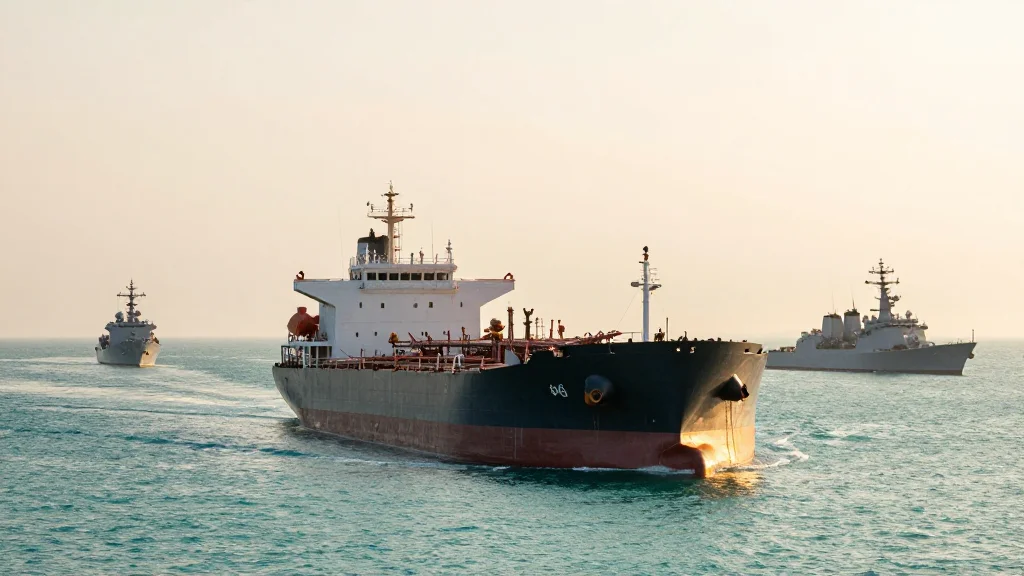
Iran War; Ma Xingrui; Industrial and Supply Chain Security; PLA Political Rectification; MSS Warns About Foreign Dinner Guests
China and Russia vetoed Bahrain's UN Security Council resolution that sought multilateral cooperation to reopen the Strait of Hormuz, a critical oil chokepoint. Beijing’s ambassador argued the draft was influenced by President Donald Trump’s recent remarks, framing it as provocative....

Understanding the War in Iran: A Private Discussion with Geopolitical Dispatch Experts
In a private roundtable, Geopolitical Dispatch experts dissected the Iran war, tracing its roots to a disputed election that ignited mass protests and a harsh government crackdown. They examined how regional rivals and global powers—Russia, China, the United States, and...

The Iran War Is Coming for Your Social Security
The author warns that a war involving Iran could destabilize the petrodollar system, the cornerstone of U.S. Treasury financing. By threatening the dollar’s dominance in global oil markets, the conflict could undermine the fiscal foundation that supports Social Security, Medicare...

Trump: "A Whole Civilization Will Die Tonight" If Iran Does Not Reach a Deal to Open the Strait of Hormuz
Former President Donald Trump warned that a failure to secure an Iranian agreement to reopen the Strait of Hormuz could trigger a catastrophic energy crisis. The United States delivered a 15‑point peace plan via Pakistan on March 25, demanding concessions...

AgDevCo Increases Commitment to East African Aquaculture Company
AgDevCo, the agriculture‑focused impact investor, has committed a $15 million mezzanine loan as a follow‑on investment to Victory Group, an East African tilapia producer. Victory Group, which farms Nile tilapia on Lake Victoria in Kenya and Lake Kivu in Rwanda, aims...
Europe’s Second Energy Reckoning
A joint U.S.-Israeli military strike on Iran has triggered the largest oil supply disruption ever recorded, sending shockwaves through global energy markets. Europe, still recovering from the 2022‑23 crisis caused by Russia’s invasion of Ukraine, now faces a second, acute...

Analyst: Middle Eastern Countries Have Reviewed The Policy Of Relations With Russian Federation
Analyst Bohdan Popov says Middle Eastern nations have long treated Russia pragmatically, profiting from oil sales and using Dubai to skirt sanctions. Recent Russian support for Iran, however, has turned Moscow into a perceived threat, prompting a policy rethink across...

QI Equity Gain Erase Muffles Mojo
Emerging‑market MSCI core and frontier indices rebounded from a two‑month, 15% sell‑off but closed the first quarter slightly negative, down 0.5% and 1.5% respectively. Despite the modest declines, both benchmarks outperformed the global market, which fell about 3% over the...

The Iran War Nightmare Scenario Trump Is Facing
The post imagines Iran telling President Trump that the Strait of Hormuz will stay open only if oil trades abandon the U.S. dollar in favor of euros, yuan or cryptocurrencies. Tehran claims it can rally dozens of nations to bypass...
Daily Memo: China Issues Peculiar Airspace Restrictions, Oil Cartel Raises Quotas
China announced temporary airspace restrictions along its eastern coast from March 27 to May 6, covering zones from the Yellow Sea to the East China Sea and areas north and south of Shanghai. The restrictions were imposed without any accompanying...

US Blames Mexico for Self-Inflicted Wound in Trade
The U.S. Trade Representative released its annual Non‑Tariff Measures report, dramatically expanding the section on Mexico, the United States’ biggest commercial partner. The report reiterates long‑standing grievances—an opaque regulatory system and caps on foreign investment in the energy sector—framing them...

China Build Focused Economy Versus India
Over the past five decades China pursued an investment‑led, export‑driven model, rapidly expanding manufacturing, infrastructure and urban housing, while India relied on a consumption‑led, services‑focused path. China’s GDP multiplied roughly 30‑fold versus India’s five‑fold, and its industrial sector now accounts...
Iran Has a Shocking Money Strategy up Its Sleeve
The long‑standing petrodollar system compels oil sales in U.S. dollars, creating massive dollar reserves that finance U.S. Treasury debt. Iran has hinted it could restrict oil shipments through the Strait of Hormuz unless the transactions avoid the dollar. Such a...

How the Iran War Could Scramble the Climate Tech Capital Stack
The Iran‑Iran war’s closure of the Strait of Hormuz is choking oil exports, slashing revenues for Gulf sovereign wealth funds and oil‑backed venture arms. Those investors have been a major source of early‑stage climate‑tech capital, funding electric mobility, clean hydrogen,...

2008: Bucharest NATO Summit
At the 2008 NATO summit in Bucharest, alliance leaders issued a declaration that Ukraine and Georgia would eventually become NATO members. The pledge was driven by strong U.S. advocacy and Ukraine’s pro‑Western president, Viktor Yushchenko. Germany and France blocked an...

Ukraine – Invest Now Rather than Later
Ukraine’s war‑torn economy, valued around $400 bn, is poised for a massive $800 bn capital influx that could double its size. Investors can tap high‑yield opportunities such as 22%+ gross returns from Kyiv real estate, 10× upside in blue‑chip stocks, and a...
EU Lawmakers Press China on Unsafe Products and Market access...China Takes Spot From Japan as Australia’s Top Auto supplier...China’s EV...
EU lawmakers confronted Chinese officials in Beijing over a wave of unsafe, non‑compliant products and limited market access for European firms, highlighting consumer safety and forced‑labour concerns. In February, China overtook Japan as Australia’s top source of imported vehicles, capturing...
Hormuz as Precedent
The UN Security Council is set to vote on Bahrain’s revised resolution to reopen the Strait of Hormuz, replacing the original language that authorized "all necessary means" with a more limited, defensive clause. China, which had opposed the initial draft,...
Wang Yi Works the Phones About Iran War; CICIR Head on National Security; Pig Overcapacity; Wemby's Time at Shaolin; Balanced...
Chinese Foreign Minister Wang Yi has been actively dialing diplomatic lines over the past 24 hours, speaking with the foreign ministers of Germany, Saudi Arabia and Bahrain as well as the EU’s High Representative on the Iran crisis. He has...

Sketches of the Middle East After the Iran War
The active phase of the Iran war appears to be drawing to a close, prompting analysts to step back from battlefield details and examine the emerging regional balance. While the future trajectory of Tehran's regime remains uncertain, the broader Iranian...

As China’s Science Investment Soars, U.S. Cuts Spending Dramatically
China announced a major boost to its science and technology spending, pledging at least a 7% annual increase in R&D outlays over the next five years. The central government’s science budget will reach 426 billion yuan ($61.6 billion) this year, a 10%...

Asia Daily: April 1, 2026
U.S. Trade Representative Jamieson Greer said no cabinet officials will travel to Beijing before the expected mid‑May Trump‑Xi summit, raising doubts about traditional pre‑meeting talks. A European Parliament delegation made its first visit to China in eight years, focusing on...

“This Is Unprecedented”: America’s AI Boom Is Leaving the Rest of the World Behind
The United States has reclaimed global venture capital dominance, with AI alone accounting for three‑quarters of worldwide AI funding in 2025 – roughly $194 billion – and 75% of all AI deals. Landmark rounds by Anthropic ($30 billion) and OpenAI ($110 billion) illustrate...

How Russia and China Are Winning the War in Iran
Iran’s aggressive campaign to close the Strait of Hormuz with mines, missiles and drone swarms has driven global energy prices sharply higher. The United States’ attempt at a quick, decisive strike has backfired, leaving a protracted conflict that threatens worldwide...

2026-04-01: Iran Doubles Oil Revenue, Strengthens Strait of Hormuz Control Amid Military Conflict
Iran announced legislation to levy transit fees and require cargo disclosures for ships passing the Strait of Hormuz, effectively turning the chokepoint into a revenue‑generating control zone. Despite U.S. threats to target Iranian oil facilities, Tehran’s oil exports have held...

A Month Into the Conflict: What Has Actually Changed?
A month after the Iran conflict escalated, oil prices jumped from $65 to $98 per barrel, prompting the Federal Reserve to raise its inflation outlook. Treasury yields rose 50 basis points in three weeks, eroding bonds' safe‑haven status. Market expectations...

What Happens to Latin America if the Strait of Hormuz Remains Closed?
The author evaluates three scenarios for the Strait of Hormuz after the Iran conflict, focusing on the most likely outcome: prolonged reduced traffic. A sustained closure would tighten global oil and gas supplies, pushing prices higher and triggering inflation across...