Global Economy Blogs and Articles
Global Economy Blogs and Articles
Global Economy Pulse
EMAIL DIGESTS
Daily
Every morning
Weekly
Tuesday recap
EMAIL DIGESTS
Daily
Every morning
Weekly
Tuesday recap

Latin America’s MSCI index surged 20% in the first two months of the year, lifting the region’s weight in the global benchmark from 5% to roughly 15%, a level not seen since the early 2000s. The original “Big 3” markets—Argentina, Brazil and Mexico—have re‑emerged as the primary drivers of this rally, echoing the triple‑digit growth cycles that once defined the region. Meanwhile, Buenos Aires was re‑classified to frontier status after a 5% decline, despite trading at a modest valuation discount to its peers. The shift underscores a renewed investor focus on the core Latin American economies while frontier exposure remains cautious.

U.S. nonfarm payrolls for February posted a solid gain of 210,000 jobs, nudging the unemployment rate down to 3.6%. The report arrived amid heightened geopolitical tension following the weekend assassination that sparked an Iran‑Israel conflict. Investors grappled with strong labor...

Over the weekend, coordinated US and Israeli strikes hit Iran, prompting missile and drone retaliation that shut Dubai’s airport and threatened oil flows through the Strait of Hormuz. The conflict pushed Brent crude toward $73 a barrel and heightened geopolitical...

Iran’s Supreme Leader Ayatollah Ali Khamenei has been eliminated, sparking a regional power vacuum and heightened political uncertainty. The Strait of Hormuz is operating at reduced capacity, causing semi‑shutdown conditions that disrupt global oil shipments. Market participants are closely watching...
Iran has evacuated all large oil tankers from the Persian Gulf, a maneuver that lifted its crude exports to the strongest levels seen since 2017. The clearance follows a recent attack on Iranian interests, which Tehran frames as a catalyst...

A U.S. and Israeli strike on Iran broke over the weekend, prompting immediate reactions in precious‑metal markets. Because traditional markets are closed, the first price signal came from crypto‑linked gold tokens, with Tether Gold jumping 1.57% to about $5,341 per...
The OPEC+ meeting on March 1 is expected to unwind 137,000 barrels per day of voluntary cuts, signaling a tentative supply increase as Brent hovers near $71. US economic data show a slowdown in manufacturing, with the ISM PMI dropping...

The Port of Yokohama remains Japan’s busiest container gateway, handling millions of TEUs each year and accommodating the world’s largest vessels. Its deep‑water berths link Japan’s export‑heavy industries—automobiles, electronics, food—to markets across Asia, North America and Europe. Beyond logistics, the...

USDJPY recorded a solid monthly gain in February as Japan's inflation slipped lower, strengthening expectations of a more dovish Bank of Japan. The currency pair’s upward momentum has reignited speculation that it could approach a multi‑decade high. Elliott Wave analysts...

The newsletter highlights a resurgence of U.S. geopolitical pressure on China, from Trump’s revived Monroe Doctrine in Latin America to a new 15% global tariff. Demographic data show major population gains in Texas and Florida while New York and California...

Brent crude has nudged into the low $70s as U.S.-Iran tensions rise, underscoring the market’s sensitivity to the Persian Gulf. About 20% of global oil passes through the Strait of Hormuz, a narrow chokepoint that could be disrupted by conflict....

The 10‑year versus 3‑month Treasury spread has been compressing sharply, as high‑frequency data show a pronounced narrowing. Analysts note that the traditional term premium calculation omits heightened default risk, which is evident in rising U.S. Treasury CDS spreads. When inflation...

In a recent ClubGPF live discussion, Geopolitical Futures chairman George Friedman revisited his book *The Storm Before the Calm* to argue that America is moving through an 80‑year institutional cycle. He compared today’s political polarization and economic anxiety to three...

A new BCG and UnternehmerTUM report crowns planqc as a leading European player in neutral‑atom quantum computing. The analysis projects quantum technologies could generate $450‑850 billion in global economic value by 2040, underscoring Europe’s need for industrial‑scale, sovereign solutions. It stresses...

U.S. equity markets opened with a sharp selloff, pulling the S&P 500 and Nasdaq toward monthly losses while the Dow remains on track for a February gain. Despite the decline, about 70% of S&P constituents closed higher, indicating broad participation....

The Economist’s language analysis shows State of the Union speeches have increasingly dwelled on past achievements, a trend echoed by President Trump’s nostalgic rhetoric. Investors are left questioning the outlook for a country that spends more time reminiscing than forecasting....

Institutional investors are rebalancing portfolios toward quantitative and global macro hedge‑fund strategies as volatility, rate uncertainty, and geopolitical shocks return. The shift reflects a deeper focus on true diversification, liquidity, and defensive alpha rather than pure yield hunting. Modern quant...

Tokyo’s February CPI showed headline inflation at 1.6% year‑on‑year, while core inflation slipped to 1.8%, falling below the Bank of Japan’s 2% target for the first time in 16 months. The core‑core measure, which excludes fresh food and energy, accelerated...

China's PBOC will cut the foreign‑exchange risk reserve ratio for forward FX sales from 20% to 0% starting March 2, 2026. The move aims to ease hedging costs, curb excessive yuan appreciation, and signal a shift from emergency policy tools....

Investigative reporting reveals that Chinese firms are profiting from the illicit extraction of Venezuela’s “black sands” – coltan, niobium and tin – by partnering with armed groups. The minerals travel via river and land routes into Colombia, where fraudulent paperwork...

The Global Questions Series explores the Butterfly Effect, showing how tiny diplomatic signals or policy tweaks can cascade into major geopolitical outcomes. It explains that initial conditions—power balances, leadership psychology, and economic interdependence—shape the trajectory of international systems. By contrasting...

Javier Milei’s liberal‑market agenda has sparked a sharp divide in Argentina, with early macro data showing a modest rebound while safety‑net programs crumble for the poor. Supporters hail the reforms as a break from historic boom‑bust cycles, whereas critics warn...
The new book *Avoid Fiscal & Economic Disaster with Ethics, Economics, and Excellence* by former Fed official Bill Bergman and retired Air Force Lt. Col. Larry Feltes warns that America’s greatest vulnerability is a collapsing trust in its institutions. They...

China dominates domestically with 60 reactors and a growing pipeline, yet its export push for the 1,100 MW Hualong One and 1,400 MW CAP1400 has stalled. Only three Hualong One units have been built abroad, all in Pakistan, while no CAP1400 deals...

Federal Reserve Governor Waller outlined a systematic rollout of artificial intelligence across the central bank. The Fed has built a common, general‑purpose AI platform that all Reserve Bank employees can access for drafting, summarizing, and analysis. Specialized AI tools support...

The U.S. State Department lodged a formal protest with Ukraine after a drone strike hit Russia’s Black Sea oil terminal in Novorossiysk, damaging American economic interests. Ukrainian Ambassador Olha Stefanishyna confirmed the warning, urging Kyiv to refrain from targeting U.S....

The Real Estate Institute of Australia (REIA) has publicly opposed the government’s plan to halve the capital gains tax (CGT) discount from 50 % to 25 %. REIA argues the cut will force landlords to raise rents to offset lower after‑tax returns,...

Supreme Court ruled the administration lacked authority under IEEPA to impose global tariffs, instantly invalidating duties ranging from 10 % to 50 %. The decision leaves $130 billion in collected tariffs without an approved refund process, while Section 301 and Section 232 tariffs remain in...

Four years after Russia’s 2022 invasion, the conflict has settled into a grinding stalemate, with Russia controlling roughly one‑fifth of Ukrainian territory and both sides suffering up to 1.8 million casualties. Civilian deaths exceed 15,000 and millions remain displaced, while reconstruction...

Interact Analysis projects global manufacturing output to grow 2.9% in 2026, up from 2.0% in 2025, with an average annual rate of 3.1% through 2030. Asia emerges as the strongest region, delivering 3.2% growth and a $30.1 trillion output, while India...

At the CARICOM summit in St. Kitts and Nevis, leaders denounced U.S. interventions, highlighting a de‑facto oil blockade on Cuba and pressure on the island’s medical‑mission exports. Prime Minister Terrance Drew described severe shortages of food, water and electricity, while...

Timor‑Leste is leveraging its recent ASEAN membership to accelerate a sustainable tourism strategy that showcases its pristine marine and mountainous assets. By joining ASEAN, the nation gains access to regional marketing channels and co‑branding opportunities, allowing it to present itself...

The Bank of Thailand cut its benchmark rate to 1.0 % on February 25, 2026, a 25‑basis‑point reduction from 1.25 % and the lowest level since October 2022. The move was unexpected, coming after a similar cut in December and reflecting a revised outlook...
Trump’s 2026 State of the Union devoted nearly 1,200 words to Latin American policy, far outpacing other regional references. The speech stressed new trade tariffs, immigration reforms, and security cooperation, echoing recent moves such as Honduras expelling Cuban doctors and...

The U.S. Supreme Court in Learning Resources v. Trump struck down President Trump’s expansive tariffs imposed under the International Emergency Economic Powers Act (IEEPA). The majority opinion, authored by Chief Justice John Roberts, held that the president cannot wield unlimited...
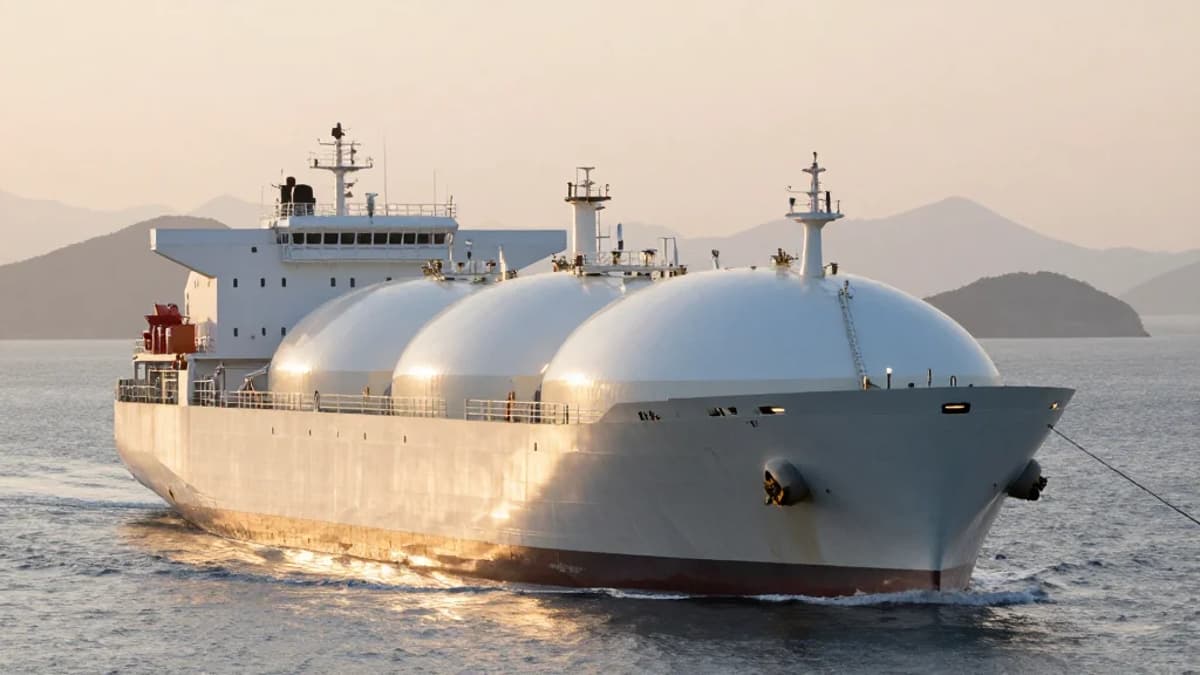
Japan’s LNG resales hit a record in fiscal 2024, surpassing the volume imported from any single supplier. Declining domestic consumption, driven by nuclear restarts, efficiency gains and renewable growth, has pushed utilities and trading houses to redirect surplus cargoes to...

On February 5, the United States and Argentina signed a bilateral agreement that goes beyond tariff cuts to align trade, investment, and national‑security priorities in critical minerals and energy. The pact obliges Argentina to facilitate U.S. investment across the entire...

European carbon prices have slumped from over €92 to about €72 per tonne, eroding the financial incentive for low‑carbon fertilizer production. The author highlights a stark price contrast by purchasing five kilograms of Russian NPK fertilizer for €6.60, underscoring how...

Russian oil drilling contracted 3.4% in 2025, marking the first decline since 2021, with a sharp 10% drop in the second half of the year. The slowdown is attributed to a weaker Urals crude price and a stronger ruble, which...

China signaled it will weigh counter‑measures after the United States imposed a temporary 15% tariff on all imports, while urging Washington to cancel unilateral duties and resume frank trade talks. A new IISS study warned that ongoing anti‑corruption purges have...
China has stepped in to purchase Russian crude that India declined, pushing Russian oil exports to their highest levels in two years. The shift has concentrated buying power among a few Asian importers, driving the Urals‑grade discount to a multi‑year...

President Trump used the International Emergency Economic Powers Act to unilaterally raise tariffs, prompting legal challenges that culminated in the Supreme Court’s 6‑3 ruling in Learning Resources v. Trump. The Court held that IEEPA does not grant the president authority...

The United States hosted its first Critical Minerals Ministerial in February 2026, unveiling a preferential trading bloc, price‑floor mechanisms and a $12 billion strategic stockpile to curb China’s dominance. At the same time, a US‑backed consortium struck a $9 billion deal with...

India has unveiled a revamped Consumer Price Index, shifting the base year from 2012 to 2024 and overhauling the basket composition and weighting methodology. The new series shows a headline retail inflation of 2.75% in January 2026, markedly lower than...

Bank of Canada Governor Tiff Macklem warned that Canada faces deep structural shifts as U.S. protectionism, rapid AI adoption, and demographic aging reshape the economy. He noted the central bank kept its policy rate at 2¼ % while highlighting heightened uncertainty around...

Panama’s Supreme Court has terminated the nearly 30‑year concession that gave Hong Kong‑based CK Hutchison control of two strategic ports on the Panama Canal. The decision clears the way for Danish carrier A.P. Møller‑Maersk to take over operations at the terminals,...

The U.S. Supreme Court struck down the Trump administration’s use of the International Emergency Economic Powers Act (IEEPA) to impose tariffs, prompting President Trump to issue an executive order that imposes a 10% global tariff under Section 122, with a possible...

China’s Ministry of Commerce escalated economic pressure on Japan by adding 20 Japanese firms to its export control list and another 20 to a watch list, targeting dual‑use items. Foreign Minister Wang Yi intensified rhetoric, accusing Japan of harboring ambitions...

The Erdmann Housing Tracker notes that core inflation—excluding rent—has now been tracking a 2% trend for roughly three and a half years. This prolonged alignment suggests price pressures are stabilizing outside the rental sector. The brief also hints at deeper...

Hong Kong announced a concerted push to become a premier international gold trading hub, aligning with China’s goal to expand its market share and influence on global bullion prices. The city plans to increase gold storage capacity to over 2,000...


