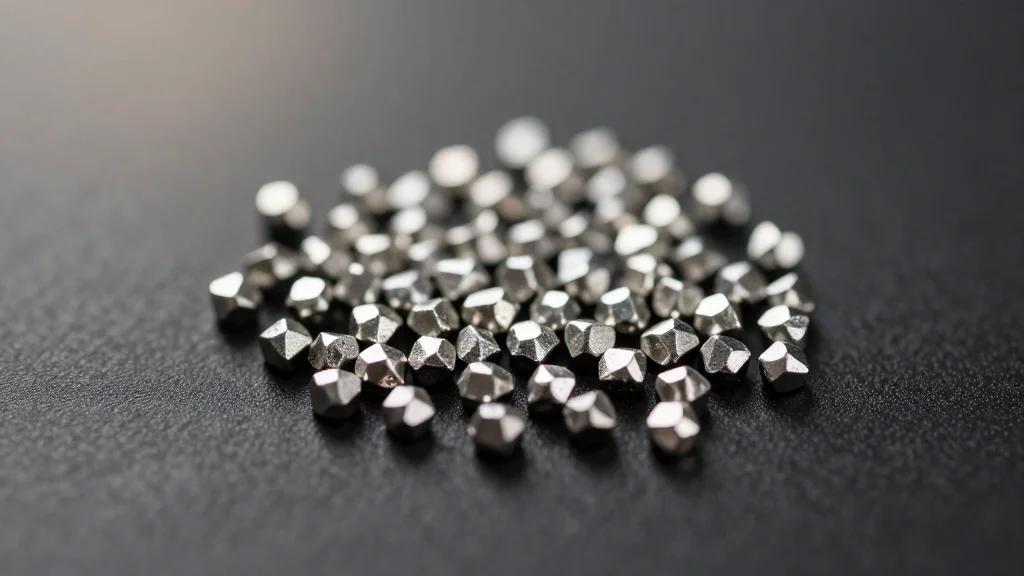
Cracking a Long-Standing Problem in High-Entropy Alloy Nanoparticle Synthesis
Researchers at Northwestern University have unveiled a three‑component synthesis that simultaneously controls composition and high‑index surface facets of high‑entropy alloy (HEA) nanoparticles. The method, demonstrated on a megalibrary chip, can produce roughly 36 million particles spanning 90 000 unique compositions, enabling high‑throughput catalyst discovery. Computational studies validated the stability of the engineered high‑index facets across multiple alloy systems. This breakthrough transforms HEAs from a “black box” into a tunable platform for catalytic applications.

Nanoengineered Wrist Sensor Detects Driver Fatigue Through Pulse Wave Analysis
Researchers at Xi’an Jiaotong‑Liverpool, Soochow and Liverpool universities unveiled a nanoengineered wrist‑worn triboelectric sensor that captures arterial pulse waves with high fidelity even under imperfect skin contact. Coupled with a one‑dimensional convolutional neural network, the device classifies driver fatigue with...
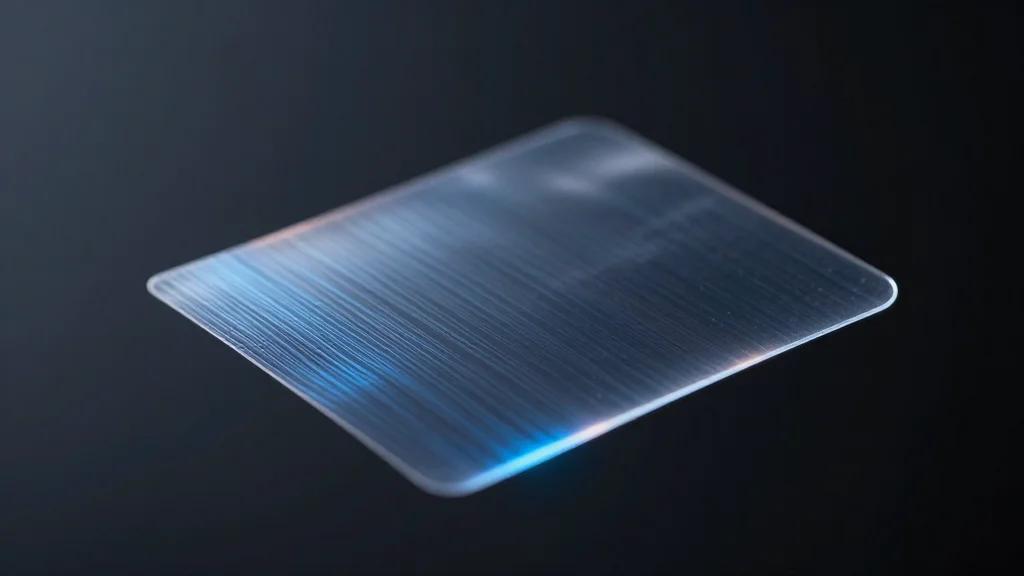
Ultra-Thin Thermal Memory Switches Heat Flow on and Off with Voltage
Researchers at CiQUS, the University of Barcelona and Zaragoza have demonstrated a thermal‑memory prototype that uses a few‑nanometer‑thick hafnium‑zirconium oxide ferroelectric film to toggle thermal conductivity on and off with modest electric voltages. The device exploits the coupling of ferroelectric...
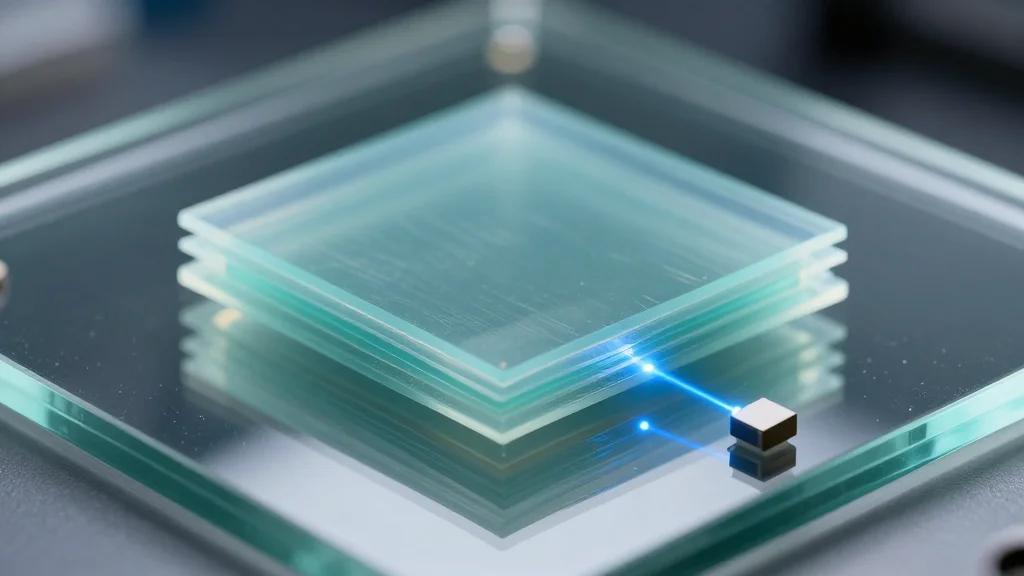
Twist-Angle Engineering Boosts Perovskite Optoelectronic Performance
Researchers demonstrated that twisting atomically thin hybrid perovskite (PEA)₂PbBr₄ with monolayer WSe₂ at controlled angles dramatically enhances interlayer coupling and photodetector performance. Six heterojunctions ranging from 0° to 15° were fabricated; the 15° device achieved 2.8 A W⁻¹ responsivity at 405 nm, an...

Self-Assembling Luminophores Form Nanotubes with Multidirectional Exciton Transport Transport
Researchers at Chiba University have demonstrated that sterically demanding diphenylanthracene‑based π‑luminophore dyads can fold and self‑assemble into well‑defined supramolecular nanotubes. The folding‑mediated process directs directional π–π stacking and hydrogen bonding, producing hollow cylindrical tubes that support multidirectional exciton transport—55 nm along...