Inner Work Office Hours (Monthly Q&A)
The author announced a monthly "Inner Work Office Hours" Q&A, inviting community members to submit personal questions about their inner‑work journey. The session offers direct guidance, interpretation support, and fresh perspectives on emerging life challenges. By framing the event as an open discussion thread, the author encourages active participation and deeper engagement. This initiative positions the platform as a live‑coach resource within the wellness space.

The Case For Universalism
The article presents "Universalism" as a rationalist framework that argues humanity must first acquire comprehensive cosmic knowledge before adopting any purpose or worldview. It critiques nihilism, existentialism, absurdism, religion, determinism, and idealism for relying on limited assumptions about meaning. By...

How Do We Know Jesus Even Existed?
The author, a former atheist, shares a personal quest to examine Jesus’ teachings amid a broader cultural search for meaning. He notes a dramatic resurgence in Bible engagement: U.S. sales reached 19 million copies in 2025—twice 2019 levels—and weekly reading among...

Covered with a Lot of Grace
The post reflects on humanity’s innate drive for life and liberty, linking that impulse to personal homesteading experiences and a community pizza night in Springfield, Missouri. It argues that direct connection to food origins cultivates humility and underscores the importance...

Never Is Where You Were Before Now
The blog post "Never Is Where You Were Before Now" muses on the elusive origin of self and the timeless stillness of a Sabbath day. It juxtaposes modern hustle—lawn‑mowing, football—with a yearning for a meditative pause where boundaries dissolve. The...

The Action That Always Sets You Apart
The post argues that lasting excellence stems from relentless commitment to simple, repeatable habits. Drawing on Stoic philosophy, it stresses focusing on what’s within one’s control and exposing personal weaknesses as a growth catalyst. It cites Michael Jordan and Olympic...

A Lesson on Living Free
The post reflects on former senator Ben Sasse’s terminal pancreatic cancer, highlighting his view that the disease stripped away his self‑idolatry and revealed a deeper sense of freedom. Author Brent Beshore uses Sasse’s experience to argue that suffering doesn’t build...

Day Seventy-Seven: The Wisdom of Love
Day 77 of Dr. McFillin’s “Wisdom of Love” series deepens the exploration of love as a guiding principle for personal transformation. The post links back to earlier entries, urging new readers to start at the beginning for full context. A...

Practice Nothing, the Most Profound of All Practices
The blog argues that the most advanced spiritual practice across Buddhist, Christian, and Hindu traditions is "nothing"—a deliberate suspension of intention. By sitting for an hour without trying to achieve any specific state, practitioners often encounter sudden clarity, timeless stillness,...

"Thinkhaven"
Thinkhaven is a proposed intensive writing program designed to train participants to generate novel, useful ideas daily. Participants must publish a 500‑word research journal each day, embed at least one new question, and produce a 2,500‑word effort post every two...

The Deep Code 07: The Miracle Has a Mechanism
The post unveils a six‑part framework that treats the subconscious as a generative substrate whose accumulated patterns dictate conscious behavior. By applying horizontal counter‑accumulation, readers can gradually erode entrenched aversion and attachment loops, while vertical concentration can inject change directly...
A View From Displacement
The author reflects on how rapid AI-driven automation is displacing workers, eroding the long‑standing optimism that human labor can shape the future. This sense of loss fuels existential questions about purpose, meritocracy, and the relevance of younger generations. Amid the...
Reframing the Problem of Being Human
Jim Palmer’s latest series introduces “existential health,” a nascent discipline that shifts the focus from belief‑based problems to the structural frameworks shaping how people engage reality. Across five interconnected essays, he argues that inherited linguistic, religious, and questioning patterns distort...

The Book Is Here
The Ultimate Guide to Tarot Reading has just launched worldwide, offering a fresh take on Tarot as a tool for self‑observation rather than prediction. Rooted in the Rider‑Waite tradition, the book blends symbolism, psychology, and spiritual practice, covering spreads, reversals,...

The Wound That Became the Ministry
The author reflects on how profound loneliness, depression, and adolescent atheism forged an interior depth that later became the foundation of a therapeutic ministry. This “intelligent isolation” created hyper‑vigilant monitoring, which was later reframed as professional attunement and empathy. The...
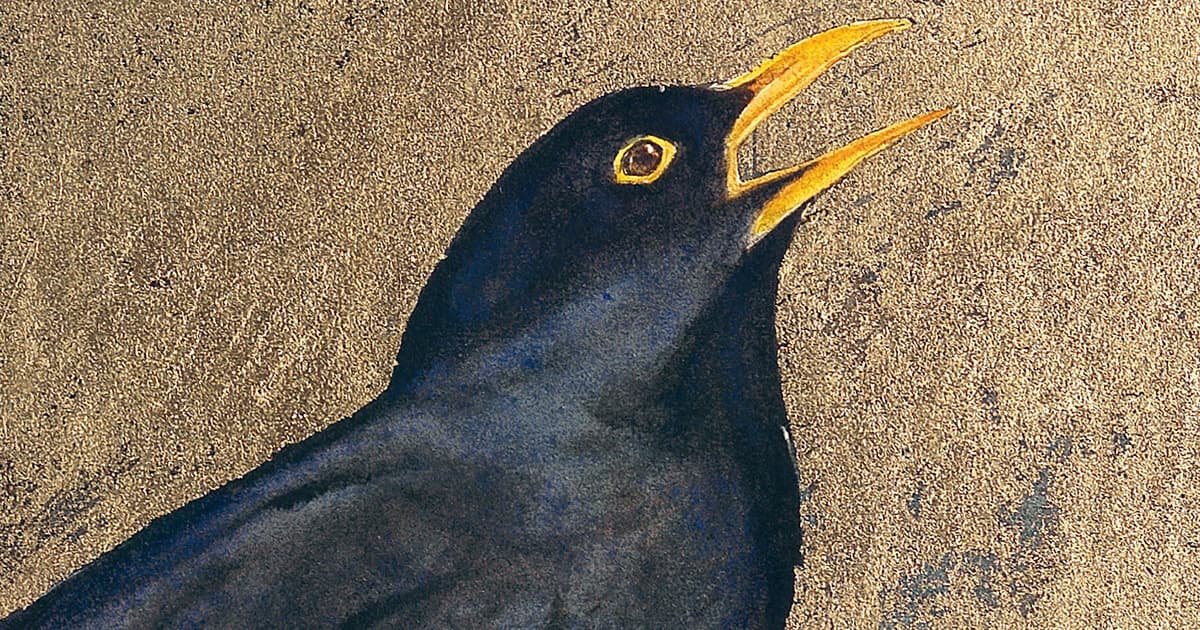
The Bird That Is Your Life
Emily Ogden’s essay in the collection On Not Knowing uses the bird metaphor to probe the anxiety of living a life that might be deemed an imbecility. Drawing on poets such as Dickinson, Szymborska and Murdoch, she argues that authentic devotion requires...

No Worry
The poem “No Worry” is a motivational piece that urges readers to release anxiety, embrace courage, and recharge personal energy. It frames resilience as an internal process that can ripple outward, influencing broader cultural attitudes. By encouraging authentic self‑expression and...
Do Not Complete This Thought
The piece explores a common early‑morning mental urge to "fix" an unfinished thought, which can surge within 30 seconds and trigger physical tension. It argues that the antidote isn’t analysis or action but mindful observation, citing Buddhist teachings that all...

Two Versions of Faith and Only One Feels Like Christ
The author recounts a Bangkok metro encounter where a stranger blurted “Jesus loves you” at her and her daughter, which felt like an unwanted imposition. She contrasts that moment with a memory of an Amish woman who quietly sent natural...
Day Seventy-Five: The Creation Story Within You
Day Seventy‑Five: The Creation Story Within You is the latest entry in Dr. McFillin’s daily‑message series, which blends spiritual guidance with personal development. The post invites readers to reflect on an inner “creation story,” positioning the day as a pivotal...

Musician Searows on Making Art in an Overwhelming World
Indie musician Searows released his new album “Death in the Business of Whaling,” a title lifted from a line in Herman Melville’s *Moby‑Dick*. The record delves into vulnerability, framing death as a natural component of life and spirituality. Unlike his...

The Refusal to Dehumanize - Rewilding Creativity
Indy Johar argues that the resurgence of dehumanizing logic and the automation of creativity stem from the same underlying drive to reduce life and mind to computable, optimizable substrates. He warns that ethical frameworks are being bypassed as systems treat...

Monks and Scientists Rethink the Nature of Consciousness
A seven‑year adversarial collaboration at the Allen Institute pitted Integrated Information Theory against Global Neuronal Workspace Theory in a joint experiment with 256 participants and three neuroimaging modalities. Published in Nature, the study found that neither framework outperformed the other,...

The Upanishads
Eknath Easwaran’s new translation of the Upanishads brings the 3,000‑year‑old Hindu scriptures to a modern audience with clear, readable prose. The edition includes introductions that frame each Upanishad’s philosophical debates, from the nature of consciousness in the Kena to the...

The Moon Is Not Here to Help You Understand
The essay reframes the Moon from a mystical omen to a symbol of creation born of catastrophe, noting its scientific origin as debris from a planetary collision. It links this origin to the way the Moon inspires night‑time writing, fostering...

5 Thought Experiments on Identity and Copies
The post outlines five speculative thought experiments that probe personal identity when a mind is copied, disassembled, or chemically altered. It questions whether death occurs during brain shipment, how a copy facing a puzzle would value preparation, and whether probabilistic...

Every Day Is a Gift
Freelance writer Heather Spiva reflects on turning 50 and the limited time she expects to have left, using minimalism as a framework to prioritize purpose over possessions. She argues that owning less reduces mental clutter and daily upkeep, allowing more...

What Does It Mean to Live Changed?
The post argues that the Christian call to "change the world" is better understood as living out the transformation Jesus already accomplished. It cites Brian Zahnd’s view that our task is modest: to be the part of the world already...

The Mystic Who Mapped the Soul: How Isaac Luria's Kabbalah Can Help You Repair a Broken World
Isaac Luria, the 16th‑century mystic known as the Ari, reshaped Jewish thought with Lurianic Kabbalah, introducing the concepts of Tzimtzum, Shevirat Ha‑Kelim, and Tikkun Olam. He explained the universe as a fragmented exile caused by divine light shattering spiritual vessels,...

Loneliness Vs. Solitude (Wilderness Warrior)
The post draws a clear line between loneliness and solitude, arguing that while both involve being alone, loneliness feels like abandonment and solitude feels like an invitation. Using Mark 1:35, it shows Jesus deliberately withdrew to a solitary place for prayer,...

Get On Your Hill • Daily Devo #528
Daily Devotional for Women released its #528 entry, titled “Get On Your Hill,” centered on Matthew 5:14‑16 and Romans 8:18‑19. The post urges readers to move from hidden seasons into visible, faith‑driven action, describing believers as a light for the...
By His Grace • Daily Devo #527
The post “By His Grace • Daily Devo #527” is a nightly devotional that opens with a prayer and argues that true rest is a divine gift, not a productivity flaw. It weaves scriptural references—from Luke’s Mary and Martha to Romans 8 and...

The Pulse of Place
Tony Cho’s Earth Day post launches the concept of regenerative placemaking, urging readers to reconnect with the land through mindful breathing and deep listening. He contrasts sustainability’s political fatigue with regeneration’s non‑partisan, nature‑based approach that seeks to give back more...
A Buddhism for Every Enneagram Type
The author proposes that an individual’s Enneagram type can guide the choice of Buddhist lineage, arguing that each tradition’s practice style addresses specific core wounds identified by the nine personality types. He maps Theravada to Types 1, 3, 5; Soto Zen to Type 4;...

Being Present but Mentally Somewhere Else
The author reflects on a common yet under‑examined state: being physically present while the mind drifts elsewhere. This partial attention feels functional, allowing conversations to continue without obvious breakdowns, but it creates a subtle gap between perception and experience. Over...

The Part of Prayer Nobody Talks About.
The article reflects on how contemporary prayer has become shorter, scattered, and often feels hollow amid busy schedules. It highlights the difficulty of moving from quick petitions to a sustained, still communion with God, a practice many believers find unprepared...

Wisdom in a World in Crisis: The Counterintuitive Need to Slow Down and Find Spaciousness
The Great Simplification podcast episode with philosopher‑neuroscientist Iain McGilchrist argues that during global crises, our instinct to double‑down on pragmatic, left‑brain thinking may be counterproductive. McGilchrist urges listeners to deliberately slow down, create mental spaciousness, and re‑engage with abstract values...

We Need to Heal.
Danielle LaPorte’s Substack post “We need to heal” calls for a shift toward personal and collective healing, arguing that emotional wellness is a prerequisite for sustainable success. She blends spiritual insight with practical habits—such as gratitude journaling and mindful pauses—to...
The Merits of Boredom
The post reflects on boredom as a timeless human experience, contrasting childhood days spent exploring woods and lakes with today’s screen‑driven passivity. The author recalls how limited entertainment forced active imagination, while modern digital options often mute the urge to...
The Book That Taught Me to Stop “Helping”
Rupert Ross’s 1992 memoir *Dancing with a Ghost* recounts his transformation as a Crown Attorney working in remote Indigenous communities in northwestern Ontario. He describes the community’s principle of non‑interference—a proactive respect for each person’s right to choose their own...

Love the World, Anyway.
In a recent Substack post, Kate Bowler reflects on finding joy amid global uncertainty, emphasizing that joy coexists with sorrow and can be cultivated through small, intentional actions. She shares insights from a podcast with pastor Nadia Bolz‑Weber and author...
5 Reasons Self-Improvement Is Lonely According to Warren Buffett
Warren Buffett argues that genuine self‑improvement is a solitary pursuit, driven by an inner scorecard rather than external validation. As individuals raise their standards, they gravitate toward higher‑quality associations, which naturally narrows their social circles. Protecting time by saying “no”...
The Physiology of Agency in the Age of AI
The article argues that AI’s growing role reshapes the human feeling of agency, turning users from drivers to passengers in decision loops. It draws on neuroscience, citing Wegner’s illusion of conscious will and Seligman’s learned helplessness, to show that perceived...

Not The Finger, The Moon
The post uses the Zen “finger‑pointing at the moon” story to illustrate that teachers can guide but must not become the goal of enlightenment. It argues that effective coaching empowers students to trust their own inner compass rather than fostering...
We Have Never Actually Met
The essay argues that human communication is fundamentally limited because language only conveys signals, not the private interior of experience. Drawing on Yogācāra Buddhism, it labels our shared perception a "common false view," where each individual constructs a unique world...
NAVIGATE: An Inner Map for the Age of AI
The "NAVIGATE" framework offers a human‑centered map for thriving in the AI age, shifting focus from mere survival to deep formation. It outlines eight dimensions—Niche, Agility, Vocation, Interiority, Groundedness, Attention, Trust, and Encounter—each highlighting how AI reshapes personal identity, purpose,...
Inside Hyderabad’s ‘Visa Temple’
The Chilkur Balaji Temple on the outskirts of Hyderabad has earned the nickname “Visa Temple” as software engineers and students circle its modest shrine seeking U.S. H‑1B visas and consular approvals. Visitors follow a ritual of eleven rounds to make...

The Conscious Self, Identitarian Disqualification, and More
The Arts & Letters Daily roundup spotlights three provocative essays: one questioning whether the conscious self is merely an illusion, another examining how Larry McMurtry’s novels were reshaped by Hollywood into films that reinforce the very Western myths he tried to...

Jesus Never Told You to Stay and Argue
The post argues that Christians are often taught to persist in debating white Christian nationalism, but Jesus’ instructions in Mark 6 advise moving on when listeners reject the message. It highlights personal anecdotes of failed persuasion attempts and stresses that endless...

A Week of Contrasts: Pressure, Breakthroughs, and a Turning Point in Consciousness
The blog outlines a bifurcated week driven by astrological forces, with Monday‑Wednesday dominated by Saturn’s weighty influence that sharpens thoughts, communication, and responsibility. Sun’s entry into Taurus adds a grounding tone, prompting reality checks and mental fatigue. Thursday‑Friday shift toward...