
Author Correction: Phenome-Wide Analysis of Copy Number Variants in 470,727 UK Biobank Genomes
Nature issued an author correction for the landmark study titled “Phenome‑wide analysis of copy number variants in 470,727 UK Biobank genomes.” The correction clarifies author contributions and institutional affiliations across a multinational AstraZeneca‑led consortium. The original research surveyed copy‑number variation (CNV) across nearly half a million participants, linking structural genomic changes to a broad spectrum of phenotypes. The article remains open‑access under a Creative Commons‑BY‑NC‑ND license, ensuring non‑commercial redistribution.

Imunon Inc (IMNN) Q4 2025 Earnings Call Transcript
Imunon reported Q3 2025 results, highlighting $5.3 million cash and a runway extending to mid‑Q1 2026 after a $4.5 million equity raise. Operating expenses fell 31% year‑over‑year, reducing monthly burn to $1.25‑$1.5 million. The pivotal OVATION 3 phase III ovarian‑cancer trial enrolled nine patients, surpassing internal targets,...

Tevogen Bio Holdings Inc (TVGN) Q4 2025 Earnings Call Transcript
VistaGen Therapeutics reported completing the randomized portion of its PALISADE III Phase 3 trial and using the data to implement operational and statistical refinements for the ongoing PALISADE IV study. The company is leveraging third‑party AI and machine learning to...

Tvardi Therapeutics Inc (TVRD) Q4 2025 Earnings Call Transcript
Teva reported Q4 2025 revenue of $4.5 billion, up 3% year‑over‑year, with adjusted EBITDA rising 6% and non‑GAAP EPS of $0.78, a 14% increase. The innovative portfolio contributed over $800 million, driven by AUSTEDO’s $618 million U.S. sales (+38%) and solid gains from...

A Longitudinal DNA Methylation Atlas and Its Link to Brain Structure and Mental Health
Researchers built a longitudinal DNA‑methylation atlas using the IMAGEN cohort of 506 adolescents, identifying 18 coordinated DNAm clusters that persist from age 14 to 19. The cluster architecture was validated in two older‑adult datasets (PPMI and ADNI), demonstrating lifespan stability....

Omeros Corp (OMER) Q4 2025 Earnings Call Transcript
Omeros Corp reported a Q3 2025 net loss of $30.9 million, but secured a transformative agreement with Novo Nordisk that could deliver up to $2.1 billion in upfront and milestone payments. The $240 million upfront cash will retire most short‑term debt and fund more...

Kairos Pharma Ltd (KAPA) Q4 2025 Earnings Call Transcript
Karyopharm Therapeutics posted Q4 2025 revenue of $34.1 million, an 11.8% year‑over‑year increase, while total 2025 revenue reached $146.1 million. Operating efficiency improved, with R&D and SG&A expenses down 17% and 16% respectively, yet the company recorded a GAAP net loss of...

Brainstorm Cell Therapeutics Inc (BCLI) Q4 2025 Earnings Call Transcript
Bristol‑Myers Squibb reported flat Q4 2025 revenue of $12.5 billion, with its growth portfolio expanding 15% YoY to $7.4 billion, offsetting roughly $4 billion of legacy decline. The company guided 2026 revenue between $46 billion and $47.5 billion, projecting 10‑15% growth for Eliquis despite a...

Bioatla Inc (BCAB) Q4 2025 Earnings Call Transcript
BioAtla reported that it is in the final stages of a strategic partnership transaction expected to close by year‑end and disclosed FDA alignment on the phase‑3 design of its OSFI (OSV) trial for second‑line oropharyngeal squamous cell carcinoma. The trial...
Galmed Pharmaceuticals Ltd (GLMD) Q4 2025 Earnings Call Transcript
MediWound reported a sharp Q4 revenue drop to $1.9 million, driven primarily by a U.S. government shutdown that delayed contract awards. R&D spending rose to $4.5 million as the company pushed the Phase III VALUE study for its EscharEx wound‑debridement therapy. A new...

Milestone Scientific Inc (MLSS) Q4 2025 Earnings Call Transcript
Milestone Scientific reported that the FDA accepted the New Drug Application for lorundrostat and set a PDUFA target date of December 22, 2026. The company highlighted a surge in cash to $656.6 million, extending its financial runway to 2028, while net...

Galectin Therapeutics Inc (GALT) Q4 2025 Earnings Call Transcript
Altimmune reported a strengthened cash position of roughly $340 million, extending its runway through 2028 to fund a pivotal Phase III NASH trial. The company disclosed that the trial will enroll about 1,800 patients globally, testing 1.8 mg and 2.4 mg doses of its...

Mink Therapeutics Inc (INKT) Q4 2025 Earnings Call Transcript
MiNK Therapeutics reported a cash position of $14.3 million, extended through 2026 after a $1.2 million raise, while posting a $2.9 million net loss for Q4. Clinical data showed AGENT‑797 combined with PD‑1 achieved a median overall survival of roughly 23 months in heavily...

Light Switch for Life: Controlling Molecular Droplets with UV
Leiden’s Mashaghi Lab demonstrated that ultraviolet‑induced thymine‑dimer formation can serve as a molecular switch to rewire biomolecular condensates, allowing precise control of droplet stiffness, elasticity and fusion. The team paired this photochemical trigger with a novel microscope‑based platform that measures...
The BioPharm Brief: Talking Lifecycle Optimization, Strategic Investment, and Collaboration Shaping Growth Trajectory
The FDA has approved a higher-dose regimen of nusinersen (Spinraza) for spinal muscular atrophy, aiming to boost drug exposure and improve long‑term motor function. The approval underscores a broader industry shift toward lifecycle optimization of RNA‑targeted therapies. Simultaneously, biopharma firms...

NIH Opens the Bidding for $3B Professional Services Recompete
The National Institutes of Health has launched a new five‑year, $3 billion Professional Scientific and Technical Support Services (PSTSS) recompete to back intramural and vaccine research. The solicitation, due by 3 p.m. ET on April 27, seeks multiple awardees with expertise in microbiology,...

Copper-Loaded Starch Nanoparticles Can Target Bacteria in Microbial Communities
University of Michigan researchers have engineered copper‑loaded starch nanoparticles that release antibacterial copper ions when specific bacteria degrade the starch carrier. The positively charged particles preferentially bind to bacterial surfaces and demonstrated potent activity against Staphylococcus aureus and Bacillus subtilis...

Scaling Certainty
Precision medicine is shifting pharma from a volume‑driven model to one focused on early patient identification and diagnostic certainty. Real‑world studies show genomic profiling yields actionable insights in about 61% of advanced solid‑tumor cases, yet only a fraction of patients...

HealthcareWATCH
Within3 unveiled Dataverse, a unified real‑world data ecosystem that merges electronic health records, claims, and specialty analytics to sharpen pharmaceutical launch decisions. Avalere Health released a global framework to broaden genomic profiling in cancer care, while Emota’s report highlighted rising...

Inventiva Reports 2025 Full Year Results and Provides a Business Update
Inventiva posted 2025 revenues of €4.5 million (≈ $4.9 million) and ended the year with €99.3 million ($108 million) in cash and €131.6 million ($143 million) in short‑term deposits. The company raised $172.5 million (≈ €149 million) in a U.S. public offering and expects its cash runway to last until...

RFK Jr.’s Peptide Deregulation Threatens the Foundations of Drug Safety
HHS Secretary Robert F. Kennedy Jr announced on a podcast that the federal government will lift restrictions on 14 injectable peptides, allowing compounding pharmacies to produce and sell them without the usual FDA review. The move bypasses the scientific advisory...

SCOUT-HCM: Mavacamten Can Benefit Teens With Obstructive HCM, Too
The phase III SCOUT‑HCM trial showed that mavacamten (Camzyos) significantly reduced left ventricular outflow tract (LVOT) gradients in adolescents with obstructive hypertrophic cardiomyopathy (HCM) compared with placebo. Forty‑four patients aged 12‑17 were randomized to weight‑based doses of 2 or 5 mg daily, achieving a...

Autism Risk Genes Largely Shared Across Global Populations
Scientists have long identified autism risk genes mainly in European‑ancestry cohorts, leaving gaps for other populations. The GALA Consortium sequenced over 15,000 Latin American individuals, including 4,700 with autism, and found 35 genome‑wide significant risk genes. These genes show substantial...

Link Between Ceramide Transport and Cell Senescence Could Inform Aging Biology Research
University at Buffalo researchers discovered that impairment of the ceramide transfer protein (CERT) blocks ER‑to‑Golgi ceramide transport, causing ceramide buildup in the endoplasmic reticulum and triggering ER stress that drives replicative senescence. Pharmacological inhibition of CERT reproduced the senescent phenotype...

Drug Trials Snapshots: INLURIYO
Eli Lilly’s oral selective estrogen receptor degrader INLURIYO (imlunestrant) received FDA approval on September 25 2025 for adults with advanced ER‑positive, HER2‑negative breast cancer harboring an ESR1 mutation after endocrine therapy failure. The decision rests on the EMBER‑3 trial, which enrolled 874...

After Missing Kezar Buyout in 2024, Tang Returns as CEO of Aurinia With $50M Offer
Kevin Tang, newly installed CEO of Aurinia Pharmaceuticals, has revived his bid for Kezar Life Sciences with a $50 million offer of $6.95 per share, roughly matching Kezar’s $47 million market cap. The proposal follows Tang’s earlier, unsuccessful $1.10‑per‑share attempt made through...

#ACC26: Merck Touts Comparator Data for Oral Cholesterol Drug
Merck reported that its experimental oral PCSK9 inhibitor, enlici‑tide, outperformed a range of commonly prescribed cholesterol‑lowering medicines in a head‑to‑head comparator trial. The data bring the drug a step closer to becoming the first oral PCSK9 therapy on the market....

Centivax Closes $37 Million Financing
Centivax, a clinical‑stage biotech focused on universal vaccines, closed an oversubscribed $37 million financing round led by Structure Fund. The round also attracted Meiji Seika Pharma, Sigmas Group, Kendall Capital Partners, and Stripe co‑founder Patrick Collison. The capital will fund pre‑clinical...

#AAD26 Roundup: Takeda, Alumis, Priovant and Incyte Take the Stage
At the American Academy of Dermatology (AAD) meeting in Denver, Takeda, Alumis, Priovant and Incyte each unveiled late‑stage dermatology data, ranging from novel biologics to targeted small molecules. Sanofi and Biogen also presented, highlighting mixed results in eczema and lupus...
A ‘Doomsday Vault’ of Microbes Could Save Species—Including Us
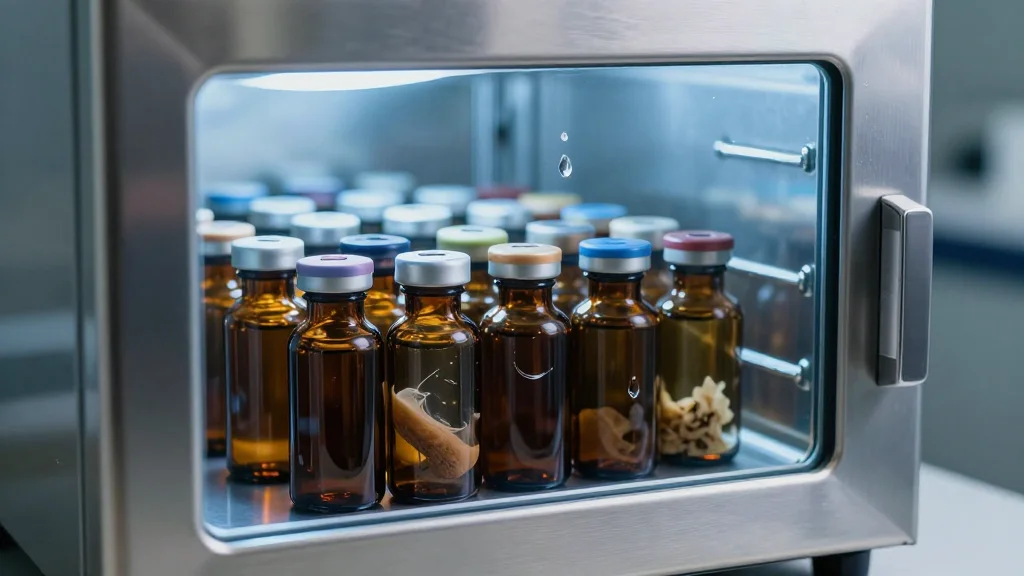
The Microbiota Vault Initiative (MVI), launched in 2023 at the University of Zurich, aims to preserve global microbial diversity by storing fecal, fermented‑food, soil, water and air samples. Its pilot phase collected 1,200 stool and 190 fermented‑food specimens from seven...

Discovery of Noma-Linked Bacteria Opens Path to Early Diagnosis and Prevention
Researchers at Liverpool School of Tropical Medicine have discovered a previously undescribed Treponema species strongly associated with noma, a fatal disease affecting impoverished children. Using metagenomic sequencing and machine learning on saliva samples, they identified the bacterium early in disease...

Researchers Compare Brain Markers Affected by Brief versus Lengthy Exposure to Alcohol in Mice
Researchers at Washington University in St. Louis examined how single versus repeated alcohol exposures affect gene‑regulatory mechanisms in mouse brains. They found that brief exposure altered epigenetic markers in select regions, while prolonged exposure produced changes across all examined areas,...

Gene Therapy Reduces Geographic Atrophy Lesion Growth
Ocugen’s phase‑2 ArMaDa trial of the modifier gene therapy OCU410 showed a 31% reduction in geographic atrophy lesion growth and a 27% slower rate of ellipsoid zone loss at the medium dose, with 55% of treated eyes achieving at least...

Depression Improves with Mebufotenin
A phase‑2b trial of inhaled mebufotenin (GH001) in 81 adults with treatment‑resistant depression showed rapid symptom relief, with 57.5% of the active‑treatment group achieving remission by day 8 versus none on placebo. The mean MADRS score fell by 15.2 points compared...

How a Growth Factor and SIRT1 Might Combat Disc Degeneration
Researchers reported that administering the metabolic hormone FGF21 boosts SIRT1 expression, which in turn activates the PINK1‑Parkin mitophagy pathway and reduces cellular senescence in intervertebral disc cells. In a rat model of puncture‑induced disc degeneration, FGF21 treatment partially restored nucleus...
US Stocks: Viridian Shares Plunge 34% as Eye Disease Drug Disappoints on Efficacy Despite Trial Success
Viridian Therapeutics’ shares tumbled 34% to $18.66 after its late‑stage trial of elegrobart for thyroid eye disease (TED) fell short of investor efficacy expectations, despite meeting the primary endpoint of reducing eye bulging. The four‑week regimen showed a 54% improvement...

MedCity Pivot Podcast: How Fujifilm Tackled An Existential Crisis
Fujifilm faced a 60% revenue collapse in 2006 as digital cameras displaced film, prompting a strategic pivot toward healthcare. The company launched a contract development and manufacturing organization (CDMO) in 2011, acquiring Biogen’s large‑scale site and expanding its biotech capabilities....

Transcatheter ViV a Solid Option for Failed Mitral Bioprostheses: SURViV
The SURViV randomized trial compared transcatheter mitral valve‑in‑valve (ViV) with redo surgical replacement in 150 patients with failed bioprosthetic mitral valves, many of whom had rheumatic disease. At one year, ViV showed a markedly lower all‑cause mortality (5.3% vs 20.8%)...

Inflammaging in Clinical Practice: GlycanAge’s New Data
GlycanAge is translating two decades of glycan research into clinical tools that measure inflammaging, the chronic low‑grade inflammation linked to age‑related disease. By profiling complex sugar structures on proteins, the company offers a long‑term biomarker that differs from short‑term markers...

Abbott Integrates Precision Oncology Portfolio Into Flatiron Health’s OncoEMR to Streamline Cancer Care
Abbott has partnered with Flatiron Health to embed its Precision Oncology testing suite directly into Flatiron’s cloud‑based OncoEMR platform. The integration lets oncologists order tests such as Oncotype DX, OncoExTra, Oncodetect and Riskguard from within the patient chart, with results automatically...

Beyond Glyphosate: Quercus Bio Targets Weeds with Designer Proteins
Herbicide resistance is driving a search for new weed‑control tools, and Quercus Biosolutions is pioneering AI‑designed mini proteins that act like chemicals while offering biological benefits. Using protein‑structure prediction technology from drug discovery, the startup creates proteins that can enter...

The Crucial Role of Payload Linker Innovation in the Growth of ADCs
Antibody‑drug conjugates (ADCs) are becoming a cornerstone of oncology, with the global market expected to reach $65.2 billion by 2031. The number of ADC programs has more than tripled, rising from 557 in 2020 to 1,643 in 2025, driven by advances...

The Dosing Problem That Precision Medicine Has Yet to Solve
Only about 45% of cancer patients receive a dose within the optimal therapeutic window, leaving many under‑dosed or over‑dosed. True Dose is introducing an at‑home capillary blood‑spot kit that lets patients collect finger‑prick samples for therapeutic drug monitoring, with results...

Lilly Races to Become First Longevity Big Pharma
Eli Lilly has signed a deal with AI‑focused biotech Insilico Medicine valued up to $2.75 billion, with $115 million paid upfront and the remainder tied to milestones. The agreement grants Lilly an exclusive worldwide license to several preclinical oral candidates and access...

Kardigan Blood Pressure Drug Proves Hypothesis Despite Split Phase 2 Readout
Kardigan reported that its experimental hypertension drug tonlamarsen achieved a 67% average reduction in the angiotensinogen biomarker after five monthly doses, confirming target engagement. However, the Phase 2 trial showed no statistically significant difference in office systolic blood pressure between the...

Fermentation Growth Collides with Manufacturing Shortage – iFAB Aims to Fix It
The iFAB accelerator in central Illinois secured a $51 million federal grant and $30 million state contribution to build a precision‑fermentation hub. Partnering with corn giants ADM and Primient, iFAB creates contract‑manufacturing pathways that let startups use large‑scale facilities instead of building...

Biogen Bounces Back With FDA Nod for High-Dose Spinal Muscular Atrophy Drug
The FDA approved a high‑dose formulation of Biogen’s SMA drug Spinraza, cutting the loading phase from four to two injections and adding a four‑month maintenance schedule. The new regimen, backed by the DEVOTE study, showed significant motor‑skill gains versus sham...

Triple Therapy Momentum: Caterina Brindicci of AstraZeneca on Breztri in Asthma
AstraZeneca is testing its COPD triple‑inhaler Breztri Aerosphere in uncontrolled asthma. Phase III KALOS and LOGOS trials showed 76‑90 mL improvements in FEV₁ and a 14% reduction in severe exacerbations versus standard ICS/LABA therapy. The studies enrolled about 4,300 patients across 20...

Red Light Therapy’s Regulatory Implications
Red and near‑infrared light therapy, known as photobiomodulation, has shifted from clinics to the consumer health market, prompting a surge in device sales and investor interest. In the United States, products reach consumers via distinct FDA pathways: 510(k) clearance for...

New Hope for Children with Severe Epilepsy
Scientists at Manchester University have identified a recessive RNU2‑2‑related neurodevelopmental disorder as one of the most common genetic causes of childhood epilepsy. The condition, which manifests with seizures and severe delays in speech and walking before age one, has been...