
Anthropic Mythos - We’ve Opened Pandora's Box
Anthropic’s Mythos AI system has automatically discovered thousands of zero‑day vulnerabilities, many of which were previously known only to nation‑state actors. By turning sophisticated exploits into low‑skill, script‑kiddie‑ready tools, Mythos shifts the cyber‑security balance toward attackers. The article warns that the rapid AI‑driven exploit cycle will outpace traditional defensive doctrines, especially across the long‑tail of municipal and industrial systems. It calls for new metrics—gap measurement, response time, and speed‑focused specifications—to keep pace with the accelerating offensive AI capabilities.

The Palantir Problem
Palantir Technologies unveiled a 22‑point manifesto derived from co‑founder Alex Karp’s book, positioning the firm as a political actor rather than a neutral data‑analytics provider. The document frames Silicon Valley as morally indebted to the United States and dismisses consumer‑product...

Petro to Meet with Delcy
Colombian President Gustavo Petro will meet Venezuelan acting president Delcy Rodríguez in Caracas to discuss border security and the prospect of Colombian gas imports from Venezuela. The talks mark the first high‑level contact since the U.S. military ousted former President...

Unauthorized Users in Discord Group Had Weekslong Access to Anthropic’s Supposedly-Super-Dangerous Claude Mythos Model
Anthropic announced its Mythos model on April 7, touting it as a super‑dangerous AI capable of facilitating sophisticated cyber‑attacks. The same day, a Discord community of AI enthusiasts gained unauthorized access and has been using the model for weeks. The breach...

Justices Reject Certain Protections for Contractors in War Zones
The Supreme Court in Hencely v. Fluor rejected the notion of absolute immunity for military contractors operating in war zones. Justice Thomas wrote that state tort claims are not preempted because Fluor’s actions violated federal instructions, distinguishing the case from...

Operation Epic Failure
President Donald Trump and Pentagon spokesperson Pete Hegseth announced that Operation Epic Fury had eliminated Iran’s navy, air force and leadership, declaring the regime combat‑ineffective. However, CBS News and senior intelligence officials contradict those claims, reporting that roughly half of...

Royal Navy Tests Drone Tech for North Atlantic Sub Hunting
The Royal Navy wrapped a four‑month technology demonstration under the Atlantic Bastion programme, inviting small and medium‑sized enterprises to field off‑the‑shelf autonomous systems for anti‑submarine warfare. Participants showcased uncrewed surface vessels, acoustic detection arrays, AI‑linked operation centres, sonobuoy‑armed drones, subsea...

Police Will Lose Control During Coordinated Terror Attacks EP747
The Survival Dispatch episode "Police Will Lose Control During Coordinated Terror Attacks" (EP747) warns that law‑enforcement agencies are ill‑prepared for simultaneous, multi‑site terrorist incidents. The hosts cite recent intelligence indicating that extremist groups are rehearsing synchronized attacks on transportation hubs,...

Growing Military Demand Drives Strategic Pivot Across 3D Printing Companies
The 3D‑printing sector is undergoing a strategic pivot as military demand surges, prompting manufacturers to form dedicated defense units and sign lucrative contracts. This mirrors a previous industry shift a decade ago when consumer‑focused printers faltered, driving firms toward education...

The Missing Framework: How Political Warfare Can Restore American Strategic Coherence
David Maxwell’s UPI piece warns that the United States wields vast power but lacks a unified framework to apply it. He revives George Kennan’s 1948 notion of political warfare—coordinated, non‑military tools—to counter the “Dark Quad” of China, Russia, Iran and...

One‑way Attack Drones: Low‑cost, High‑tech Weapons ‘Democratize’ Precision Warfare.
One‑way attack drones—cheap, expendable UAVs that fly into targets—are reshaping modern warfare. Iran’s Shahed‑136, costing $20‑$50k and capable of 1,250 mi range, has spawned copies like Russia’s Geran‑2 and the U.S. LUCAS, while short‑range FPV drones generate 60‑70% of Ukrainian frontline...

UK Launches Inquiry Into Security Risks of Chinese-Made 3D Printing Equipment
Britain’s Defence Secretary has launched an investigation into the British Army’s use of Chinese‑manufactured Bambu Lab 3D printers, which were deployed during a training exercise in Kenya. The inquiry focuses on potential security risks stemming from the printers’ default cloud...

Henry Huiyao Wang on How China’s Patient Diplomacy Can Help Secure Peace in Iran
Henry Huiyao Wang argues that China’s patient diplomacy, embodied in a four‑point cease‑fire proposal, can help de‑escalate the Iran‑Israel conflict and reopen the Strait of Hormuz. Beijing has intensified outreach, with Xi meeting leaders from Abu Dhabi and Spain, and...

DIANA Initiative Aims to Transform Naval Logistics With On-Demand 3D Printing
Italian printer maker ROBOZE is spearheading the DIANA initiative to overhaul naval logistics with on‑demand, high‑temperature 3D printing. The project will create a full‑stack system that detects damaged components, reverse‑engineers replacements, validates designs, and produces parts in decentralized, containerized hubs...
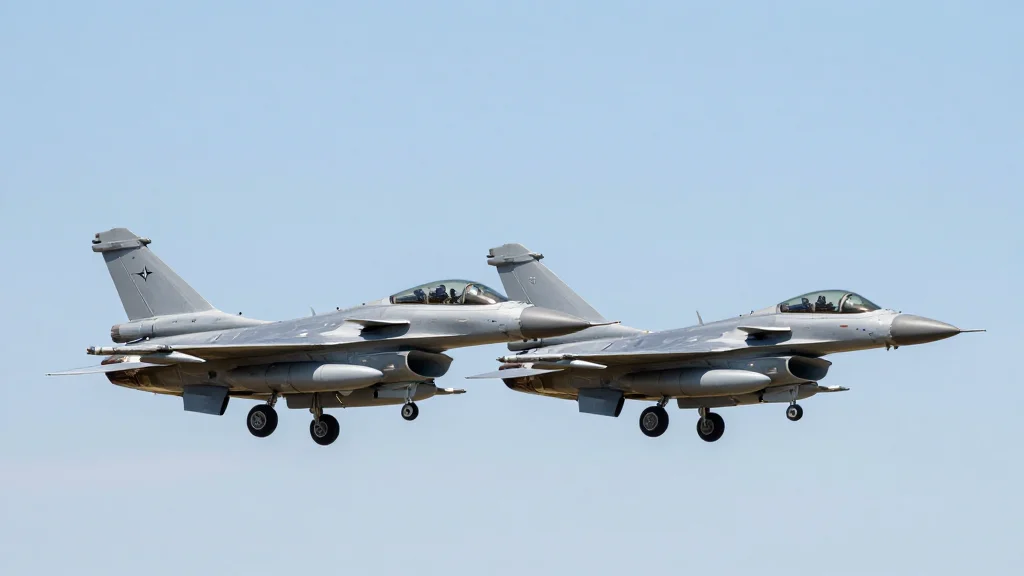
Daily Memo: French-Polish Nuclear Exercise, German Military Ambitions
France and Poland announced a joint military exercise on NATO’s eastern flank that will simulate nuclear strike operations. French Rafale jets will fly with nuclear‑capable missiles, while Polish F‑16s will mimic cruise‑missile attacks and Polish aircraft will conduct long‑range reconnaissance....

Economic War Comes of Age | Foreign Affairs
Edward Fishman’s Foreign Affairs piece argues that economic warfare has become the core of great‑power competition, especially between the United States and China. He warns that indiscriminate use of sanctions and trade tools erodes U.S. leverage and can push rivals...

Today’s Terrorism Threats: Everything, Everywhere, All at Once (with Rebecca Weiner)
In a new episode of the Stay Tuned podcast, NYPD Deputy Commissioner Rebecca Weiner outlines an "everything, everywhere, all at once" terrorism landscape that fuses ISIS, Iran‑linked plots, grievance‑driven violence, and online radicalization. She warns that traditional categories miss attacks...

CCW on Military Bases
On April 2, Secretary of War Hegsdeth announced that off‑duty service members may carry concealed firearms on military installations. The video sparked strong support among most troops but drew criticism from military police and some senior leaders. The directive lacks...

So, the SECNAV Has Departed
Secretary of the Navy John C. Phelan was removed after 393 days amid reported clashes with senior Pentagon officials and disagreements over the Navy's lagging shipbuilding program. The New York Times cited infighting with Defense Secretary Pete Hegseth and Deputy...
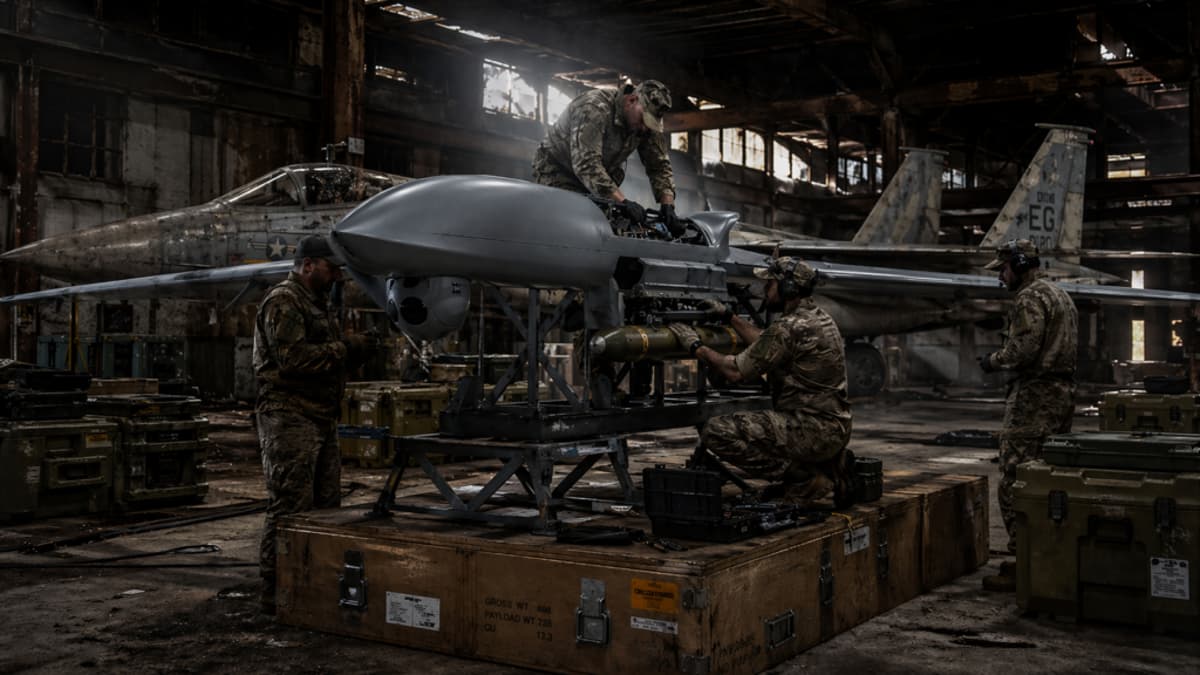
Assessing the Credibility of Manned Platforms in Contemporary Drone-Rich Combat Environment
The rise of drones in the Russia‑Ukraine war and other conflicts has sparked claims that manned platforms are becoming obsolete, but recent combat experience shows otherwise. Modern armored vehicles are adapting with armor cages, jammers, and active protection systems to...
America’s Cyber Strategy Has a Budget Problem
The Trump administration’s FY2027 budget proposes a $707 million cut to the Cybersecurity and Infrastructure Security Agency (CISA), shrinking its budget to just over $2 billion—well below the $2.6 billion Congress had earmarked. The proposal also trims the Office of the National Cyber...

Guam and the Practical Impact of Climate Change
Guam serves as the United States' premier forward base for projecting power across the Asia‑Pacific, but climate change is amplifying super‑typhoon activity that threatens its operational viability. The island has endured two class‑4/5 typhoons within seven years, and rising sea‑level...

China’s Y-20B Airlifter’s First Trip to South Korea Repatriates Korean War Soldiers’ Remains
On April 20‑22, 2026, China’s PLAAF deployed the new Y‑20B strategic airlifter on its first overseas mission, transporting the remains of 12 Chinese People’s Volunteers from South Korea back to Shenyang. The aircraft was escorted by four J‑20 stealth fighters...

Former MoD Permanent Secretary Rejects Fall Guy Claim
Former Ministry of Defence Permanent Secretary David Williams testified before the Defence Committee, rejecting claims he was the “fall guy” for the Afghan data breach. He reiterated his apology and highlighted that the resettlement ARAP scheme was vastly underestimated, receiving...

America’s Submarine Surge: How Additive Manufacturing Is Powering the Golden Fleet
In March 2026 the U.S. Navy announced a $15.38 billion contract modification for General Dynamics Electric Boat’s Columbia‑class submarine program and a $1.27 billion Virginia‑class engineering support award, underscoring a massive procurement surge. At the same time, advanced‑manufacturing startup Hadrian opened its $2.4 billion...

Royal Navy Hydrography – Mapping the Oceans in the Age of Autonomy
The UK Hydrographic Office (UKHO), now part of the MoD’s National Armaments Directorate Group, continues to supply the world’s most trusted maritime charts, generating roughly $275 million in revenue and returning $25 million in profit to the Ministry of Defence. About 90%...

Arabian Peninsula Security Beyond the Iran War
The February 28 outbreak of war in Iran has fundamentally reshaped security on the Arabian Peninsula. A direct Iranian attack on Gulf Arab targets, notably Saudi oil infrastructure, has turned a long‑standing fear into reality. Gulf states are now scrambling...

Even More Second-Order Effects Of The Conflict In Iran
The Iran conflict is generating a second‑order wave of nuclear signalling as states shift from pure capability to perception‑driven security postures. Fragmentation in the international system pushes the United States and Iran into a high‑stakes rhetorical contest, while other nations...

Worse Things Happen at Sea
Iran escalated maritime pressure by seizing two vessels in the Strait of Hormuz, pushing Brent crude back above $100 a barrel, while the United States intercepted three ships in the Indian Ocean. The abrupt departure of Navy Secretary John Phelan,...

The Pentagon's Pivot: Why the US Military Now Sees Bitcoin as the Ultimate Weapon of Power Projection.
The Pentagon has publicly embraced Bitcoin as a strategic asset after Admiral Samuel Paparo, head of U.S. Indo‑Pacific Command, testified before the Senate Armed Services Committee. Paparo described Bitcoin’s proof‑of‑work consensus as a zero‑trust, peer‑to‑peer tool for cyber‑defense and power...

Acting US Secretary of the Navy Cao Is Highly Qualified Veteran; Specialist in Ordnance Disposal-Diving; Vietnamese Refugee; Former Secretary...
Hung Cao, a decorated Navy EOD diver and former CACI executive, has been serving as the acting United States Secretary of the Navy since April 22, 2026. His 30‑year career includes mine‑clearance missions, counter‑drone operations, and deployments to Iraq, Afghanistan...

About US Navy Explosive Ordnance Disposal Forces
The U.S. Navy’s Explosive Ordnance Disposal (EOD) force eliminates explosive threats on land, sea, and air, leveraging parachuting, diving, and advanced robotics to render safe IEDs, mines, and chemical‑biological‑radiological hazards. Its Mobile Diving and Salvage Units clear harbors, conduct underwater...

Iran Releases Footage of Seized Container Ships in Strait of Hormuz
Iran’s Islamic Revolutionary Guard Corps released video showing the IRGC Navy seizing two civilian container vessels, the Liberia‑flagged EPAMINONDAS and the MSC Francesca, in the Strait of Hormuz on April 22. The ships were immobilised earlier that day before Iranian...

The Last Spy (2025)
The Last Spy, directed by Katharina Otto‑Bernstein, is a 2025 documentary that follows the extraordinary life of Peter Sichel, the CIA’s first post‑war Berlin station chief dubbed the “Jewish James Bond.” Drawing on extensive archival footage and in‑depth interviews, the film...

China Is Expanding Its Trade War Toolbox
China has enacted a sweeping industrial and supply‑chain security law that establishes an early‑warning system to monitor disruptions and empowers the government to retaliate against foreign firms perceived as threatening Chinese interests. The regulation gives Beijing the authority to prohibit...

Unrestricted Warfare Without War: China’s Below-Threshold Strategy in Latin America
China is deploying an "unrestricted warfare" strategy in Latin America, leveraging trade, loans, infrastructure, legal frameworks, and digital standards to reshape the regional strategic environment below the threshold of armed conflict. In 2024 Chinese trade with the region exceeded $500 billion,...

The Limits of Leadership Decapitation: Strategic Consequences of Overreliance on Military Force for Political Transformation
U.S. strategy has long favored leadership decapitation—using military force to remove heads of authoritarian regimes—promising rapid political transformation. While operations in Iraq, Afghanistan, and the 2026 capture of Venezuela’s Nicolás Maduro achieved swift tactical victories, they failed to dismantle the...

Laws of War
The U.S. State Department’s legal adviser Reed Rubinstein released a detailed statement defending recent U.S. and Israeli airstrikes against Iran as lawful self‑defence and collective defence of Israel. Rubinstein argues the hostilities constitute an ongoing armed conflict that began at...

Sullivan & Cromwell Discusses Warnings to Bank CEOs About Cybersecurity Risks of Anthropic’s New AI Model
On April 7, 2026 Treasury Secretary Scott Bessent and Fed Chair Jerome Powell held a closed‑door meeting with CEOs of the nation’s largest banks to warn about the cybersecurity threats posed by Anthropic’s new AI model, Claude Mythos Preview. Anthropic...

India’s Maritime Ambition: Rewriting the Bay of Bengal
India is accelerating its maritime strategy in the Bay of Bengal to counter China’s growing port network across the Indian Ocean. The government has announced plans for multiple deep‑water ports, a new naval base at Sagarika, and a strategic partnership...

Iran Is In Control
On April 22, Iran fired on three ships and seized two in the strategically vital Strait of Hormuz, contradicting President Donald Trump’s public claim that Tehran had agreed to extend a cease‑fire. Fox News Pentagon correspondent Jennifer Griffin confirmed no...

China Tests Directed Energy Beam That Recharges Drones Mid-Flight
Chinese researchers at Xidian University demonstrated a ground‑based microwave emitter that wirelessly powers a fixed‑wing drone in flight. The system kept the drone aloft for 3.1 hours at roughly 15 meters altitude while both the drone and the emitter moved. Precise...

U.S. Deploys Ukrainian Acoustic Sensors, Interceptor Drones At Prince Sultan Air Base
After an Iranian Shahed drone strike destroyed a U.S. E‑3 Sentry AWACS and damaged KC‑135 tankers at Prince Sultan Air Base, the United States deployed Ukrainian counter‑drone technology to close the air‑defense gap. The Sky Map platform, built by Ukraine’s Sky...

Death by A.I.
U.S. Special Operations Command is creating its first Special Operations Autonomous Warfare Center, referenced in the Pentagon’s $1.5 trillion FY 2027 budget request. The unit will integrate AI models into existing targeting pipelines to automate kill‑chain decisions for elite units such as...

George Friedman on Why Australia and Japan Are the Future of the Pacific
Japan and Australia announced a $7 billion agreement for Mitsubishi Heavy Industries to build three stealth frigates for Australia, with eight more to be constructed locally. George Friedman argues the deal marks a strategic shift, positioning the two maritime nations as...

THE 2026 DEFENSE PRODUCTION ACT & GRID EMERGENCY: The Critical Metals Demand Stack Is Unstoppable & Why Trump's Wartime Mobilization...
President Trump invoked Section 303 of the Defense Production Act, designating the U.S. electric grid as essential to national defense. The White House granted the Energy Secretary authority to bypass standard procedures and deploy federal capital for rapid domestic grid...

GE’s $36 Million ITAR Penalty — A Wake-Up Call for Export Control Compliance
The U.S. State Department’s Directorate of Defense Trade Controls fined General Electric $36 million for 116 ITAR violations spanning 2018‑2024, including unauthorized export of F‑35 engine data to China. The breaches stemmed from misclassifying items, faulty licensing, and inadequate controls over...

Why Minerals-for-Security Deals Won’t Save the DRC – by Bram Verelst, Said Abdullahi and Veronica Chepseba (Institute for Security Studies...
In March 2026 the United States imposed sanctions on senior Rwandan army officers for backing the M23 rebel group in the Democratic Republic of the Congo. The sanctions follow Rwanda’s December 2025 offensive on Uvira, a breach of the US‑mediated...

4/22/26 National Security and Korean News and Commentary
The Pentagon unveiled a record‑setting $1.5 trillion budget request for FY27, underscoring expanding defense priorities. Simultaneously, diplomatic overtures with Iran remain stalled, keeping the Middle‑East flashpoint alive. In the Korean theater, North Korean hackers were tied to a $290 million cryptocurrency heist,...

6,000 Meters Under the Pacific, Japan Seeks Independence From China on Rare Earths – by Lorenzo Lamperti (Wired Magazine –...
Japan’s research team successfully extracted rare‑earth‑rich sediments from the seabed 6,000 meters beneath Minamitorishima, a remote Pacific atoll. The operation, carried out with the Chikyu deep‑sea drilling vessel, marks the world’s first sampling of rare‑earth deposits at such extreme depth. By...