Global Economy Blogs and Articles
Global Economy Blogs and Articles
Global Economy Pulse
EMAIL DIGESTS
Daily
Every morning
Weekly
Tuesday recap
EMAIL DIGESTS
Daily
Every morning
Weekly
Tuesday recap

The Federal Reserve’s rate‑setting calculus is increasingly tied to volatile energy prices, which have surged amid geopolitical tensions and supply constraints. Market participants are using SOFR and Fed Funds futures to price the likelihood of upcoming policy moves, with recent charts showing a modest tilt toward a 25‑basis‑point hike. Analysts on Marketplace argue that higher oil and gas costs could keep core inflation above the Fed’s 2% target, prompting tighter monetary stance. Consequently, betting markets reflect heightened uncertainty about the timing and magnitude of future rate adjustments.

The recent surge in global natural‑gas prices has laid bare Britain’s over‑reliance on imports, costing households roughly three times what Americans pay. The author argues that a decade‑old decision to ban on‑shore shale fracking has left the UK vulnerable, missing...

Core CPI remained mild in January‑February 2026, but the Fed‑preferred core PCE is projected to outpace it sharply. Economists expect core PCE to rise about 3.1% year‑over‑year, creating the widest CPI‑PCE gap in decades. The divergence stems from differing weightings,...

Former President Donald Trump proclaimed victory in Kentucky even as the world faces the deepest oil supply shock in modern history, with Brent crude breaching $100 a barrel after Iran’s new supreme leader, Mojtaba Khamenei, threatened U.S. bases and kept...

U.S. equities posted their worst weekly decline in nearly a year as an energy‑driven stagflation scenario unfolded following a sharp spike in oil prices tied to the closure of the Strait of Hormuz. The article attributes the shock to escalating...

Albert Edwards warns that markets are overlooking the inflationary pressure from a new oil price spike, arguing that bond yields could rise if the risk is ignored. He notes that unlike the previous surge, stimulus cash has largely vanished, so...

The United States and Israel’s February 28 strikes on Iran triggered an immediate retreat by major maritime insurers, who canceled or sharply repriced war‑risk coverage for vessels transiting the Persian Gulf. Premiums surged by more than 1,000%, making tanker voyages...

The IMF’s 2025 Article IV report highlights Canada’s dual challenge: external uncertainty from shifting U.S. tariff policy under former President Trump and deep‑seated internal productivity weaknesses. Output per hour is about 30 percent lower than the United States, with the gap widening...

The Trump administration casts the United States as a global defender of liberty while domestic democratic norms crumble. It justifies a hard line on Iran with rhetoric about security and democracy, echoing decades‑old foreign policy scripts. Meanwhile, attacks on elections,...

On February 20, 2026 the Supreme Court ruled that the Trump‑era tariffs were not authorized under the International Emergency Economic Powers Act, and on March 4 the Court of International Trade began liquidating refunds for those duties. The rulings trigger...

Canada’s merchandise trade balance posted a C$3.65 billion deficit in January, far worse than the C$0.9 billion shortfall analysts expected. Exports slipped 4.7% to C$62.48 billion while imports fell 1.1% to C$66.13 billion, with motor‑vehicle and parts shipments plunging 21.2% to $5.4 billion – the...

The U.S. trade deficit narrowed to $54.5 billion in January, well below the $66.6 billion forecast and the revised $72.9 billion December figure. A surge in gold and other precious‑metal exports contributed roughly $9 billion of the improvement, while imports fell modestly. Capital‑goods exports,...

The U.S. dollar opened the North American session mixed, firming against the euro and pound while slipping against the yen after testing 2026 highs. Technical analysis highlights key support and resistance levels on EUR/USD, GBP/USD and USD/JPY as traders brace...

U.S. Energy Secretary Jennifer Wright said Iran‑related naval operations in the Strait of Hormuz will last weeks, not months, and that a U.S. Navy escort for commercial tankers is expected by the end of the month. Washington is working with allied...

The article argues that the long‑standing US‑UK "special relationship" has morphed into a coercive partnership under Donald Trump, characterized by threats, intimidation, and financial pressure. It cites Trump’s public insults toward Prime Minister Keir Starmer, his warnings about military action...

The Supreme Court ruled 6-3 that President Trump exceeded his authority under the International Emergency Economic Powers Act, striking down most of his tariffs and opening the door to roughly $175 billion in refunds. A federal judge ordered Customs and Border...

Costa Rica is leveraging its globally recognised sustainability record, highly educated bilingual workforce, and long‑standing institutional stability to attract high‑value, knowledge‑intensive investment. The "essential COSTA RICA" brand, coordinated across trade, tourism and foreign affairs agencies, underpins a data‑driven strategy that showcases measurable...

Geopolitical tensions with Iran triggered a rare, coordinated drawdown across the world’s largest multi‑strategy hedge funds. Citadel’s Wellington fund fell about 2%, Millennium Management incurred roughly $1.5 billion in losses, and Coatue saw a 3.8% decline. The episode exposed how broad...

Grocery prices are climbing faster than last year, according to recent CPI‑food‑at‑home data. The Bureau of Labor Statistics shows a year‑over‑year increase of about 5% in the first quarter of 2024, outpacing the 2023 rate. The Economic Research Service’s forecast...

The International Energy Agency (IEA) has launched a historic 400 million‑barrel emergency oil release, the largest in its 52‑year history, after the Strait of Hormuz closure removed roughly 20 million barrels per day from global supply. Brent crude rose $6.50 to $98.68,...

Alex Joiner, chief economist at IFM Investors, argues that the recent surge in energy prices is boosting Australia’s federal budget while simultaneously eroding household purchasing power. Higher gas prices are expected to lift export earnings and improve the nation’s terms...

The piece argues that geopolitical shocks, while capable of causing short‑term commodity price spikes, do not alter the long‑run pricing trajectory, which is anchored in supply‑demand fundamentals, technological progress, and investment cycles. It cites historical data showing oil, copper and...

Global shipping’s reliance on Chinese Tier‑1 shipyards is simultaneously financing the People’s Liberation Army Navy. CSIS data shows these yards produce 40% of China’s commercial tonnage while building virtually every major warship, generating $165 billion in export revenue from 2019‑2024. Freight‑rate...

Rotterdam’s 2025 container statistics show a structural reorientation of global trade, with imports rising 3.9% while exports continue to fall, especially to Asia. The export slump has widened the import‑export gap by 1.47 million TEU, increasing empty‑container circulation. Carrier alliance reshuffles...
Gasoline prices in the United States jumped from $2.98 to $3.58 per gallon within two weeks, with California hitting $5.40. The surge follows a series of geopolitical shocks tied to former President Trump’s foreign‑policy moves, including renewed sanctions on Russian...

The International Energy Agency’s member states voted unanimously to release 400 million barrels of oil from their emergency strategic reserves, a move that more than doubles the 182 million‑barrel drawdown in 2022 when Russia invaded Ukraine. The sizable release is intended to...

Jeff Currie, former head of commodity research at Goldman Sachs, warned that the ongoing disruption of the Strait of Hormuz makes oil prices virtually unstoppable in the near term, and no policy response—such as strategic petroleum reserve releases or government...

Tariffs are reshaping cost structures and supply chains for small‑ and midsize‑businesses, turning agility into a survival imperative. The article proposes disciplined scenario planning as a leadership super‑power, outlining four distinct tariff environments that SMBs may face. Each scenario highlights...

The U.S. Bureau of Labor Statistics reported underlying price growth of 0.2% in February, a slight dip to 0.216% versus the whisper forecast. The figure aligned with most economists’ expectations, easing concerns about a resurgence of core inflation. Despite the...

The Mexican Embassy highlighted that Mexico invested $61.7 billion in the United States in 2025 and that bilateral trade now totals $873 billion—roughly $1.7 million each minute. Mexico’s exports to the U.S. reach $535 billion while imports stand at $338 billion, meaning the U.S. buys...

The latest Wide Boundary News episode examines the U.S. and Israeli military offensive against Iran and the resulting closure of the Strait of Hormuz, a chokepoint that handles roughly 20% of global oil and a significant share of LNG, sulfur...

The Middle East war intensified with three tankers attacked in the Strait of Hormuz, prompting the International Energy Agency to propose a coordinated release of 300‑400 million barrels from strategic reserves. The G7 will discuss the plan, which dwarfs the 180 million‑barrel...

Excise taxes on alcohol, tobacco and sugar remain a key tool for raising revenue and improving public health, especially in low‑income nations. However, the rapid emergence of products such as e‑cigarettes, nicotine pouches and low‑alcohol beverages is exposing gaps in...

U.S. Customs and Border Protection announced a new ACE‑based system to refund IEEPA tariffs within 45 days after a Court of International Trade ruling. The solution aggregates refunds by importer, bypassing the need to process each entry individually. Only about...

Tomorrow the 32 International Energy Agency members will vote on a proposal to tap up to 400 million barrels from their strategic petroleum reserves, a release larger than the 240‑million‑barrel drawdown after Russia’s 2022 invasion of Ukraine. The IEA holds 1.8 billion...

Peter Lewis hosted a Money Talk podcast on March 11, 2026, featuring David Roche, President and Global Strategist at Quantum Strategy. Roche analyzed how the ongoing US‑Israel war could spill over to Iran, reshaping oil supply dynamics and broader economic...
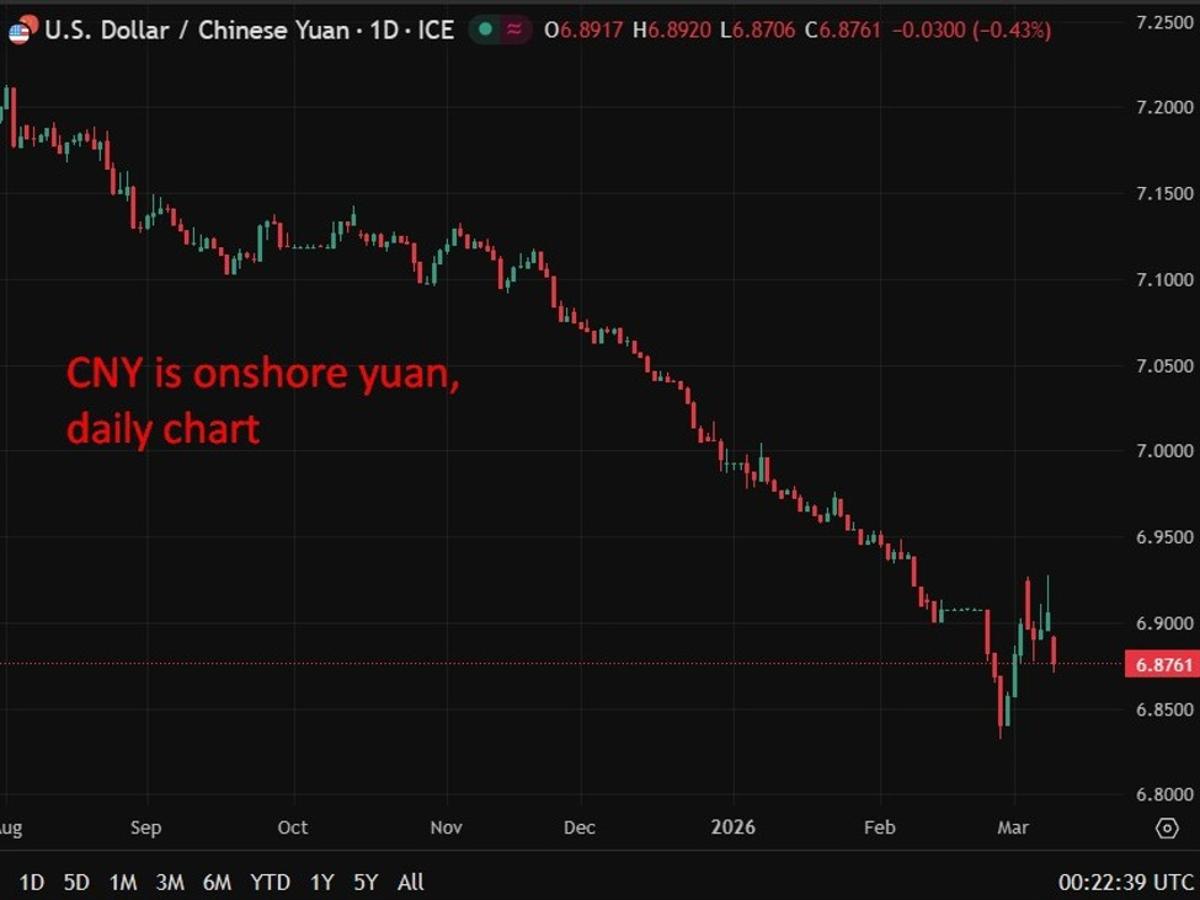
The People’s Bank of China set the USD/CNY reference rate at 6.8824, a 35‑month low for the dollar and a record‑strength yuan. The fixing, announced around 0115 GMT, follows a managed‑float system that permits a ±2% trading band. By choosing...

Australia's wage price index shows real wages slipped 0.3% in 2025, leaving earnings about 6% below the pandemic‑era high of late 2011. The Reserve Bank of Australia’s February monetary policy statement signals no near‑term recovery, projecting real wages will stay...

Japan's corporate goods price index (wholesale PPI) for February 2026 rose 2.0% year‑on‑year, slightly under the 2.1% forecast and down from 2.3% in January. On a month‑to‑month basis, the index slipped 0.1%, missing the expected 0.2% increase. The data indicates...

ANZ‑Roy Morgan consumer confidence dropped 3.7 points to 73.4, pulling the four‑week moving average down to 77.0. At the same time, the four‑week average of inflation expectations rose 0.3 percentage points to 5.5%, while weekly inflation expectations climbed 0.8 points to...
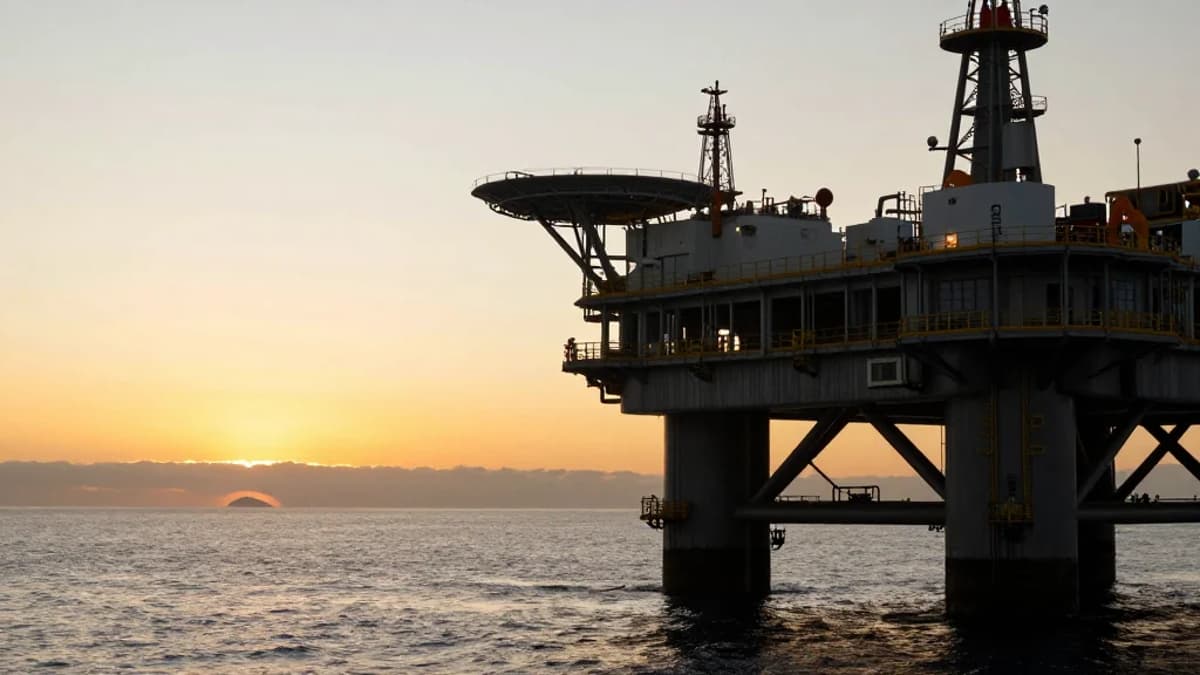
Independent senator David Pocock highlighted that Australia’s Petroleum Resource Rent Tax on offshore gas exports generates less revenue than the excise on beer. Treasury Deputy Secretary Shane Johnson confirmed the comparison during a February Senate estimates hearing. The revelation underscores...

The G‑7 is debating a coordinated release of 300‑400 million barrels from IEA strategic petroleum reserves to mitigate the Hormuz supply crisis. Historical draw‑down rates have never exceeded about 2 million barrels per day, meaning the release would cover only a fraction...
Asian markets will watch Japan’s wholesale price index (PPI) on March 11, with analysts expecting a modest softening that could signal easing inflation pressures. However, the primary market narrative is shifting toward heightened geopolitical risk after the United States destroyed...
Christina Romer’s new paper reviews historic episodes where fiscal and monetary policy moved in tandem, showing that coordination only helps when both tools aim at the right goal. The Great Depression, 1970s stagflation, Volcker’s anti‑inflation campaign, and the 1990s deficit‑reduction...

Physicians are being warned that inflation can erode retirees' purchasing power more sharply than for working‑age patients, especially when fixed incomes meet rising healthcare costs. The article outlines how price spikes in prescription drugs, long‑term care, and everyday expenses disproportionately...

An analyst cited by the Wall Street Journal estimates that if the U.S.-Israeli conflict with Iran ended today, shipping traffic in the Persian Gulf would normalize in about two weeks and oil production would return to pre‑war levels within two...

The post notes that oil prices have slipped from recent highs while gasoline costs continue to climb, highlighting a disconnect between crude and retail markets. It contrasts the Trump administration’s quick, low‑cost intervention in Venezuela with the more complex Iran‑focused...

The latest Wide Boundary News episode dissects the U.S. and Israeli offensive against Iran and the looming threat of a Strait of Hormuz closure. It argues that oil, often seen as a modest 3% of GDP, actually underlies virtually all...

The post dissects Donald Trump’s contradictory trade stance, arguing he wants foreign buyers and investors to pour dollars into the United States to spur demand, regardless of conventional deficit definitions. It frames his view as a simplistic Keynesian push for...

Iran’s Islamic Revolutionary Guard Corps announced it will condition passage through the Strait of Hormuz on Arab or European nations expelling U.S. and Israeli ambassadors, while simultaneously barring oil exports to the United States and its allies. The move signals...


