
A Recessionary Bear Ahead?
Betting markets have lifted the implied probability of a U.S. recession in 2026 following the onset of Gulf War III, signaling heightened concern over an oil‑price shock. Although the implied recession odds have eased slightly since their peak, they remain well above pre‑conflict levels. The analysis links the geopolitical tension to potential energy‑driven economic slowdown, noting that recessions historically extinguish bull markets. The piece quantifies the risk and explores how an oil shock could trigger a broader downturn.

Fed Independence Now Secured by Courts, Not Norms
The Fed won a sweeping court victory Friday. But the fact that it needed one tells you everything about how much has changed. The unsealed filings are something else—the Fed catalogued 100 Trump attacks on Powell and told a court...

Core Services Inflation Spreading Across over Half of Categories
Further proof we have an inflation problem, even before Iran. Core PCE services (ex-housing) shows more and more broadening out of higher prices. Proportion of 105 categories with 3%+ y/y inflation Dec '19: 26% Jun '22: 69% Jan '25: 53% Jan '26: 59% https://t.co/nA65sTTb6A

Business Cycle Indicators: GDP Growth Downshifts, Consumption Slows, Downside Surprise
The latest business‑cycle data show Q4 GDP growth slashed by roughly half compared with the prior estimate, while consumer spending missed consensus by almost 0.5 percentage point on an annualized basis. Revised non‑farm payroll figures indicate a modest downward bias...

Risk‑Off Signals Rise, Yet Core Market Levels Hold
Today felt like a textbook risk-off session. Weak GDP revision. VIX back above 20. Short-term breadth rolling over. Dollar up. Rates pushing toward 4.3%. Oil surging. In CHART THIS I walk through what’s actually changing — and what isn’t. Six viewer questions. Clear levels. No drama. Watch...

Treasury Yields Surge, Inflation Concerns Resurface
"Inflation isn't a problem at all." Ten Year Treasury Yield: "Hold my beer." 🍺 One of the biggest shifts from February to March? $TNX bounced of support at 4.0% as rates move higher as prices appear to be 📈. https://t.co/Y10UC0y7lL

Gundlach Unlocked: Positioning for Inflation and a Weaker Dollar
In the debut episode of Gundlach Unlocked, DoubleLine founder Jeffrey Gundlach warned that inflation is likely to stay above the Federal Reserve’s 2 percent target and that long‑term rates have stalled despite recent cuts. He also sees the U.S. dollar entering a...

Hawkish Rate Shift Triggers Lower Growth Expectations
GS: A hawkish rate move has coincided with a decline in the market's pricing of economic growth https://t.co/JO5RIgmjDP
Contentious Fed Decision Will Heighten Market Concerns About Iran
Video of what I'm watching for next week: A Contentious Fed Decision Will Add to Market's Iran Concerns https://t.co/Ikll4zvVyq
Is Stagflation Creeping Into the Picture?
In this episode of Motley Fool Money, hosts Travis Hoyam, Jason Moser, and Lou Whiteman dissect the risk of stagflation in 2026, highlighting the recent dip in Q4 GDP growth to 0.7% and persistent inflation above 3%. They explore how...

Fed Leadership Split Complicates Inflation and Labor Outlook
My take on the difficultly navigating the splintering within Fed leadership amidst tension of inflation and the labor market.
Q4 GDP Halved, Inflation Rises: Stagflation Hits Markets
The number Wall Street was dreading arrived today. Q4 GDP was revised down to 0.7% — literally half the initial reading — while core PCE inflation climbed to 3.1%, its highest since early 2024. The S&P 500 responded by hitting...

What Happens at $200 a Barrel?
Economists warn that a sustained $200 per barrel WTI price would trigger a systemic shock to the U.S. economy. At that level, gasoline could top $7 per gallon, eroding over $400 billion in discretionary consumer spending and deepening energy poverty. The...
Underlying PCE Inflation Hits 3.2% in January
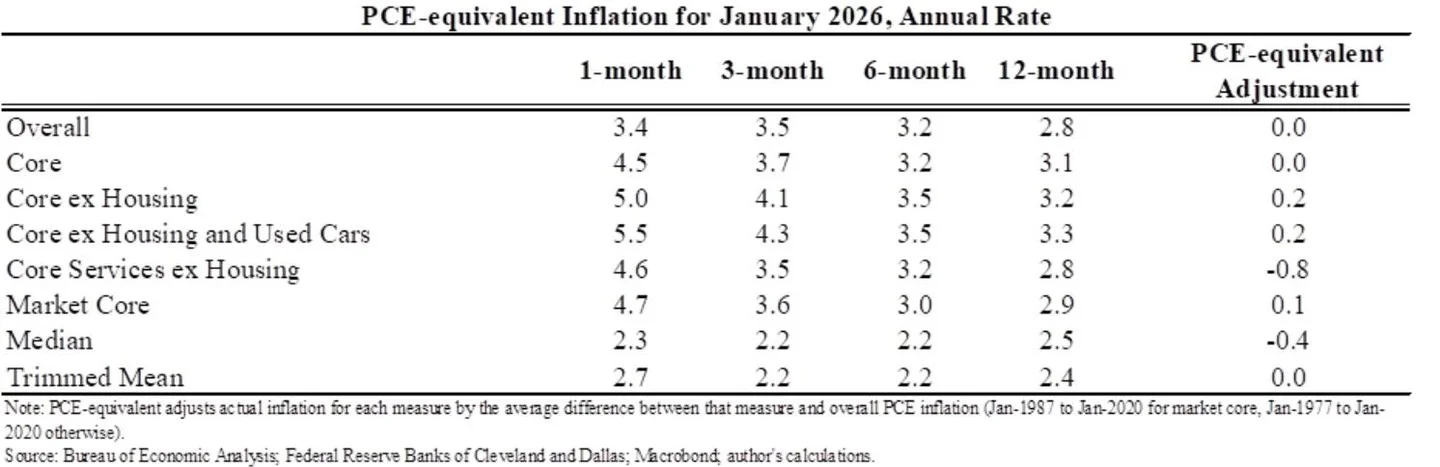
The PCE-based ecumenical underlying inflation measure was 3.2% in January. This is the median of 24 numbers: 8 concepts measured over 3, 6 and 12 months.

U.S. Job Openings Rise to a Better-than-Expected 7 Million Despite Sluggish Labor Market
U.S. job openings rose to 6.95 million in January, surpassing economists' expectations. Layoffs edged lower while quits slipped modestly, indicating tepid worker confidence. Despite the higher posting count, hiring remains weak, with the market described as a hiring recession. The broader...

Hiring Remains Flat While Layoffs Edge Down in January
January job openings increased by 396,000 to 6.9 million, lifting the openings rate to 4.2% after a five‑year low in December. Hires held steady at 5.3 million, while total separations fell, with quits down 88,000 and layoffs decreasing by 35,000 to the...

U.S. Economy Has Lost Jobs Under Trump Tariffs, 'Gold Standard' Jobs Data Shows
The Quarterly Census of Employment and Wages (QCEW) – the “gold standard” of jobs data – shows U.S. employers added only 123,000 jobs in the 12 months through September 2025, far below the 636,000 reported by the Bureau of Labor Statistics...

Weekly: War Comes To The US Front-End
U.S. Treasury markets experienced a sharp front‑end rally this week, with two‑year yields climbing roughly 20 basis points while ten‑year yields added about 12 basis points. The differential move produced a bear‑flattened curve, indicating heightened short‑term rate pressure. Market participants...

Flat Conditions for Open Construction Jobs
The Bureau of Labor Statistics reported that construction job openings were essentially flat in January, with 231,000 vacancies, matching the level a year earlier. Overall U.S. job openings rose to 6.20 million, up from December but down from a year ago....

More Questions Than Answers: Thinking Through Recession Risks
The ongoing Middle East conflict is driving oil prices up, reviving concerns about a U.S. recession. Economists note that higher energy costs could reignite inflation, forcing the Federal Reserve to balance rate cuts against potential hikes. Multiple geopolitical flashpoints—from Iran...
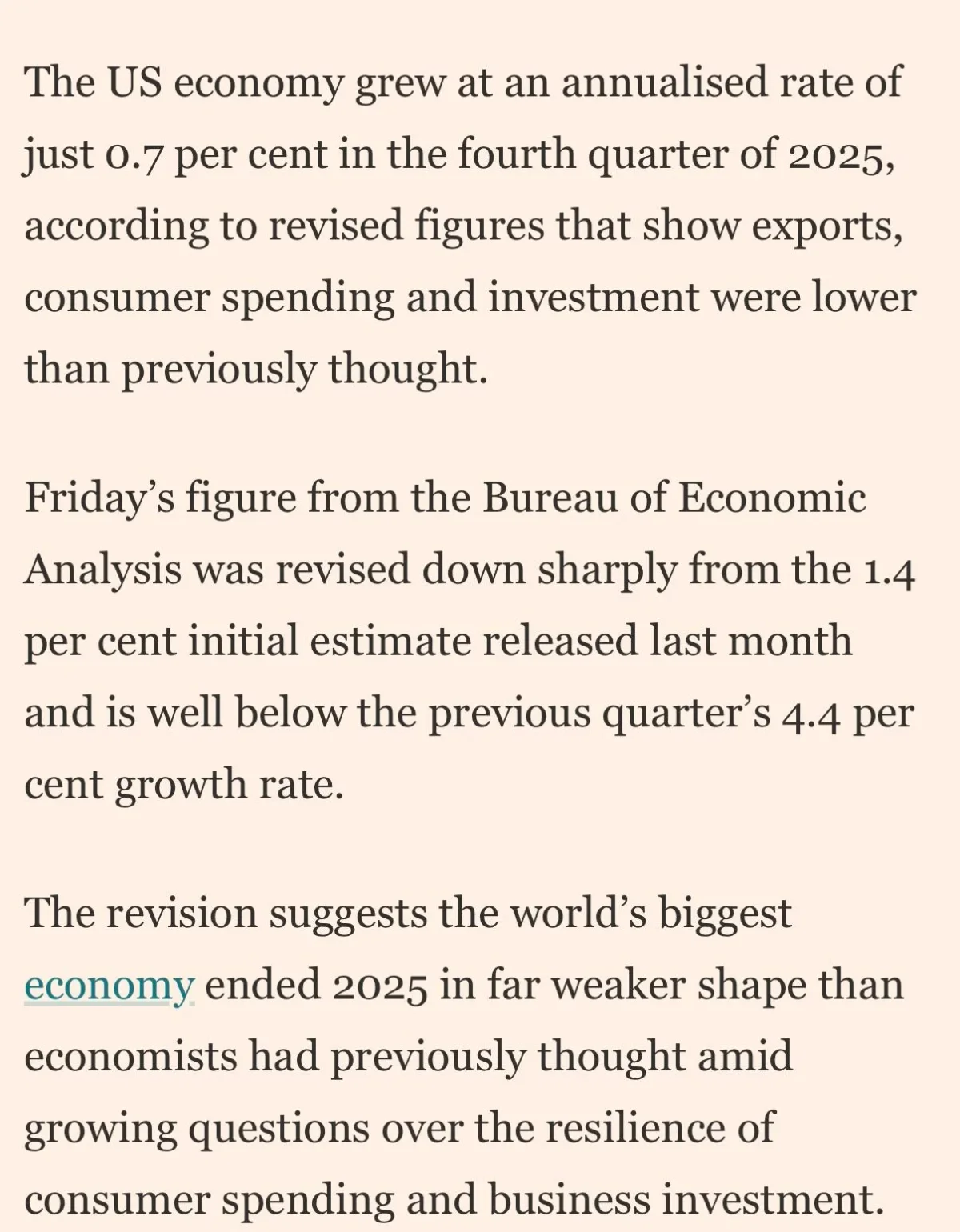
Revised Q4 GDP Signals Slowing US Economy Amid Stagflation Risks
Here’s the Financial Times on today's revised data on US fourth-quarter GDP. Similar to the consumer spending figures also released today (please see previous post), Q4 GDP growth now suggests a less dynamic American economy in the run-up to the...

U.S. Economy Expanded at Just 0.7% in 4th Quarter
The Commerce Department revised fourth‑quarter 2023 GDP growth to a modest 0.7% annualized, far below the initial 1.4% estimate and the 3.8%‑4.4% pace of the prior two quarters. The downgrade reflects a 16.7% plunge in federal government spending after the...

BEA's Data Switch Trims Core PCE by 8bps
The BEA’s decision to change legal services source data in the PCE from CPI (around 11.3% in Jan) to PPI (1.8% in Jan) cut the core PCE MoM chg by 8bps (would have been 0.44% vs 0.36%). Could defend...
Goldman Sachs Raises Recession Odds To 25%, Warns U.S. Economy Is Slipping As Jobs Slow
Goldman Sachs lifted its 12‑month recession probability to 25%, up five points after February’s disappointing jobs report and rising oil prices. The bank highlighted a 92,000‑job loss, unemployment climbing to 4.44% and a projected 4.6% rate by Q3, signaling a...
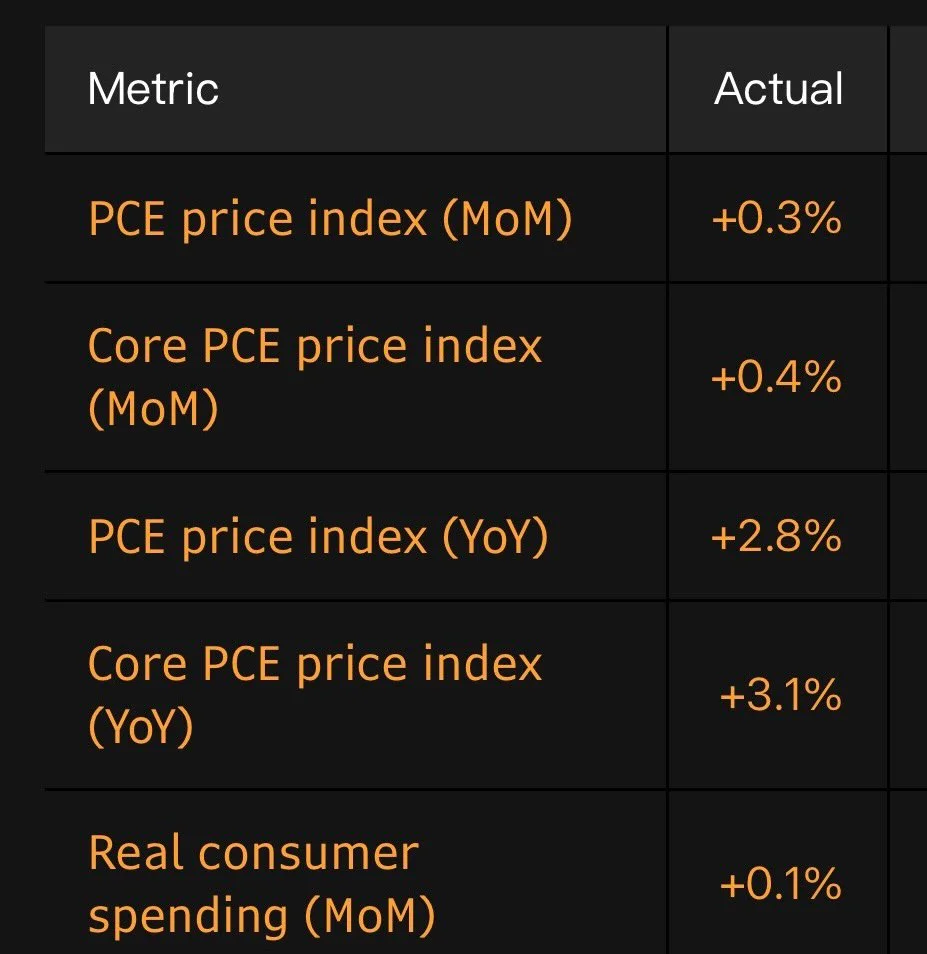
Consumer Spending Slows, Core Inflation Stays Stubbornly High
US economic data released today suggests that, leading up to the Middle East War, hitherto robust consumer spending had begun to soften. Meanwhile, inflation — as measured by core PCE, the Federal Reserve’s favorite measure — remained sticky, holding well...

Inflation Rising Pre‑Conflict Signals Trouble for Economy, Fed
Inflation was hearing up even before the US-Iran conflict began. Bad news for the economy and bad news for the Fed

Barclays Pushes Back Expectations for Fed Rate Cuts
Barclays economists now expect the Federal Reserve’s first rate cut in September 2024, pushing the next reduction to March 2027. This postpones the earlier June and September 2024 cuts the bank had forecast. Market pricing has collapsed to just 22.5...

Bond Yields Rise on Moderate Oil Shock, Easing Doubtful
How to interpret the rise in bond yields across the G10? Here's a guess: the market has priced in moderate oil disruption that marginally raises upside inflation risks and lowers probability of central bank easing this year. If at some...

Trump Pushes Fed Cut as Oil Spikes Amid Iran Conflict
As oil prices surged on Thursday during the intensifying Iran war, President Donald Trump again urged Federal Reserve Chair Jerome Powell to cut interest rates, even as markets increasingly bet that rising energy costs would keep inflation elevated and delay...

China’s Import Silence Is Deafening. The Corn & Ethanol Report 03/13/2026
USDA’s TOTAL survey shows over 2.1 million landlords control 347.8 million rented acres, generating $34.1 billion in rent, with non‑operating entities owning 79% of this land. Meanwhile, US sorghum prices remain flat as Chinese import demand stays silent, leaving future demand uncertain pending...
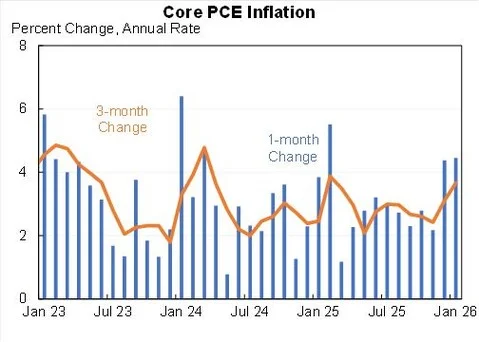
Core PCE Inflation Slips to 3.1% in January
January was another hot month for PCE inflation (we're getting these data two weeks later than usual due to shutdown). Annual rates for core PCE: 4.5% 3.7% 3.1% 3.1%

Why Jerome Powell Is Going to Focus on Stagflation
Federal Reserve Chair Jerome Powell is shifting focus to stagflation as sluggish growth meets persistent core‑PCE inflation, prompting the Fed to keep policy rates steady. The resulting “higher‑for‑longer” stance is lifting 10‑year Treasury yields, which directly raise 30‑year mortgage rates....

Fed Cuts Would Spike Yields Amid Oil‑driven Demand Destruction
If the Fed cut rates, bond yields would soar. Crude oil prices are surging due to supply constraints. The market needs demand destruction to restore balance. In plain English, there is not enough crude oil to go around because of the...

Prime‑age Participation Rates Hit Record Highs Despite Aging Workforce
The *number* outside the labor force will organically rise as the population ages. It says *zero* about labor market health. A better measure is the participation *rate* of prime-age individuals, which excludes those likeliest to be retired or students. It's near...

Economy Expanded at Sluggish 0.7% in Q4
The Commerce Department’s third estimate cut fourth‑quarter 2025 GDP to a 0.7 percent annualized rate, half the 1.4 percent advance figure. Growth fell sharply from a 4.4 percent surge in Q3 2024, driven by a 43‑day federal shutdown that slashed government spending and...

New Fed Chair Likely to Push Rates Higher Soon
Hikes? Get the 🍿 ready when the usually hawkish new Fed Chairman turns hawkish later this year.

Q4 Domestic Inflation Rises to 3.8%, Worst Since 2022
BEA also released its revised GDP data for Q4, including the Price Index Gross Domestic Purchases, broadest inflation index for domestic inflation, which excludes import prices. It was revised up today to 3.8% for Q4, worst since Q4 2022 https://t.co/ATVMhOch9V...

US Economy Ended 2025 on Weaker Footing than Previously Thought
The Bureau of Economic Analysis revised fourth‑quarter 2025 data, showing GDP growth slowed to 1.5% annualized, well below the 2.2% forecast earlier this year. The downgrade reflects weaker consumer spending, a modest rebound in inflation, and a softening labor market....

Core PCE Inflation Peaks at 3.1%, Surpassing CPI
Core PCE Inflation Hits 3.1%, Worst in 2 Years, in Unique Twist Blows way past CPI Inflation. Driven by Core Services. Energy spike is still to come. The Fed needs to pay attention https://t.co/ATVMhOch9V https://t.co/fBae4ie2QQ

Economy Risks Highlighted Despite No Recession Watch
“I am not on recession watch, but I am concerned.” My new post shares excerpts from three recent interviews on risks facing the U.S. economy. https://t.co/poGM4kmiYY

Fed’s Favorite Core Inflation Measure Hit Multi-Year High Before War
U.S. core inflation accelerated to a 3.1% year‑over‑year increase in January 2026, the fastest pace in nearly two years. The Bureau of Economic Analysis released the data after a delay caused by the prolonged government shutdown. This measure, the Fed’s...

War-Driven Rate Hike Adds $130/Month on $600k Mortgage
For a $600,000 home, a borrower will now have to pay $130 more per month than what they would have paid the day before the war started when rates were 5.99%

Fed Still Engaged in QE Despite Denials
BESSENT: A LONG WAY FROM FED GOING BACK TO QE Talk about blatant BS- the Fed is doing QE

JOLTs Job Openings for January 6.946M vs 6.700M Estimate
The Labor Department’s JOLTS report showed January job openings at 6.946 million, surpassing the 6.7 million forecast. Hires rose modestly to 5.294 million, while quits slipped to 3.137 million and layoffs edged down to 1.631 million. Looking ahead, the 2025 annual averages project job openings...

Revised Data Shows Milder Job Opening Decline, Jan Ratio Improves
After downward revisions to the 2025 employment data, the drop-off in job openings at the end of last year looks less pronounced than it initially appeared. January shows some improvement in the job vacancy-to-unemployed worker ratio, which rose to 0.97 from...

Fed Stalls Amid One‑Time War Inflation, Awaiting SEP Clarity
Fed's in a tough position here. Labor market and economy in general need a bit of TLC but war inflation may be one too many one-time price level increase. Default reaction will be no reaction for now. FOMC...

Saez and Zucman Analyze Sanders' Billionaire Tax Plan
Emmanuel Saez and Gabriel Zucman on the Sanders proposal for a billionaire tax. More on this in the Chartbook Top Links today. https://t.co/985S5J7cYd

Fed Treasury Holdings Surge, Keeping Gold Bullish
The Fed's balance sheet holdings of US Treasuries is now at October 2024 levels and rising. This is why it's difficult to get secularly bearish on gold. Material balance sheet expansion has begun with asset prices at ATHs and no...
Fast‑food Spending Drops 3% Since September.
My quick measure of affordability, real spending at fast-food restaurants, is down 3% since September https://t.co/Ge3YaPH3PU

Fed Stuck: Low CPI Hides 68% Oil Surge
CPI at 2.4%. Looks fine. Except $WTI is up 68% YTD and none of it is in the data yet. The Fed is trapped. Cut → inflation explodes. Hold → recession deepens. Goldman pushed cut to September. Futures say December 2027. https://t.co/WFbW5IQa0u