
Rapid Nanofiber Spinning Fills the Gap in Small-Diameter Vascular Grafts
Researchers at Harvard have demonstrated a focused rotary jet spinning (FRJS) process that fabricates custom small‑diameter vascular grafts in minutes. The technique produces nanofiber scaffolds with tunable architecture, achieving 0.5 mm inner‑diameter tubes in under 90 seconds and larger 10 mm grafts within ten minutes. In a rat femoral artery/vein model, the grafts sustained physiological blood flow for four weeks, showed no thrombosis, and supported endothelial and smooth‑muscle cell integration. Mechanical testing revealed pressure resistance of 276 mmHg and suture pullout strength three times that of native vessels.

This Week: Gene Editing Babies-Life Saving Science or Risky Business?
The debate over human germline editing intensified as two startups, Manhattan Genomics and Bootstrap Bio, folded after months of scrutiny, while Preventive announced a $30 million funding round backed by Coinbase CEO Brian Armstrong and OpenAI CEO Sam Altman. The controversy...

Weekly Reads: $1B+ Neurona Acquisition, Cells + Organs = Better Transplant?, DAXX in Germ Cells, KRAS
UCB announced a strategic acquisition of Neurona Therapeutics for over $1 billion, including a $650 million cash payment. The deal brings Neurona’s lead cell‑therapy candidate NRTX‑1001, a line of engineered inhibitory interneurons targeting drug‑resistant epilepsy, into UCB’s pipeline. The acquisition signals UCB’s...

HIV Medication Reverses Epigenetic Aging Markers in First Human Proof-of-Concept Trial
A proof‑of‑concept trial found that the HIV pre‑exposure drug FTC/TAF (Descovy) significantly reduced several epigenetic aging clocks in healthy adults, with declines of up to 3.4 years in heart, brain and metabolic markers. The molecular data showed an improved immune...

The Rich and Powerful Want to Live Forever. What if They Could?
President Vladimir Putin has formalized a multi‑year, $26 billion National Project to develop anti‑aging therapies, aiming to extend healthy life expectancy for 175,000 Russians by 2030. The initiative, overseen by Kurchatov Institute director Mikhail Kovalchuk, targets sarcopenia, osteoporosis, cognitive decline and...

How Blood-Based Brain Biomarkers Predict Alzheimer’s Progression
Recent research highlights plasma phosphorylated tau217 (p‑tau217) as the most accurate blood‑based marker for forecasting Alzheimer’s disease, achieving up to 96% diagnostic precision. Elevated p‑tau217, together with GFAP, neurofilament light chain and low amyloid‑beta ratios, predicts incident dementia, while obesity...

I Test for 50+ Cancers Every Year. Here's What's Actually Worth It.
Multi‑Cancer Early Detection (MCED) blood tests now screen for 50+ cancers in a single annual draw, promising earlier diagnosis than traditional organ‑specific screens. The FDA‑cleared Galleri test leads the market, showing about 70% sensitivity for early‑stage disease but also a...

FDA Grants Quick Review Psychedelic Drugs, First Approvals Could Come As Soon As Summer
The FDA announced an accelerated review pathway for psychedelic therapies, aiming to clear the first approval by the end of summer. The move follows President Trump’s executive order, which allocates $50 million for state‑level research partnerships and directs faster rescheduling of...

Classified Information Finds A Side Hustle
The FDA unveiled a new voucher program that will fast‑track psychedelic drug approvals, potentially bringing treatments for depression and PTSD to market as early as this year, though safety experts warn the accelerated timeline could compromise thorough review. In a...

EXPOSED: One in Seven Vaccinated People Report Serious Adverse Events — And the Cover-Up Continues
A UK Medicines and Healthcare products Regulatory Agency (MHRA) active‑surveillance study of 30,281 COVID‑vaccine recipients reported that 13.7% experienced medically serious adverse events, while over half reported any reaction. The data, collected between 2020 and 2022, were released only in...

Liquid Metal Nanoparticles Freeze Into Spikes that Kill Drug-Resistant Cancer
Researchers have engineered bismuth‑doped gallium liquid‑metal nanoparticles that become spiky during freezing, puncturing cancer cells and killing drug‑resistant lung, colorectal and ovarian tumor organoids. The alloy reduces supercooling, raising the fraction of deformable particles from 2% to roughly 10% and...

How Advances in Chronic Lymphocytic Leukemia Medications Are Shaping Patient Care Protocols
Over the past decade, chronic lymphocytic leukemia (CLL) treatment has shifted from broad chemotherapy to targeted, oral therapies such as BTK and BCL‑2 inhibitors, monoclonal antibodies, and personalized regimens based on genetic profiling. These drugs deliver higher response rates, longer...

Sunnybrook Announces $41-Million Gift to Advance Canada’s Global Leadership in Clinical Trials
Sunnybrook Health Sciences Centre announced a $41 million CAD (≈$30 million USD) philanthropic gift to expand its Sunnybrook Clinical Trials program. The funding creates new leadership positions, boosts biobanking, data management and precision diagnostics, and supports first‑time investigators. By strengthening infrastructure and...

Carefully Guided FGF8 Expression via Gene Therapy Enhances Digit Tip Regrowth in Mice
Researchers used a zebrafish-derived tissue‑regeneration enhancer to deliver fibroblast growth factor 8 (FGF8) via adeno‑associated virus, achieving focused up‑regulation of the gene in mouse digit tips. The therapy partially rescued regeneration in mice lacking SP6/SP8 transcription factors and accelerated tip...

Pharmaceutical Executive Daily: FDA Issues CRL to AbbVie
The U.S. Food and Drug Administration issued a complete response letter to AbbVie, rejecting its biologics license application for trenibotulinumtoxinE due to manufacturing and CMC deficiencies. The setback delays AbbVie’s entry into the lucrative neurotoxin market, a segment dominated by...

Building a Better Delivery System for Gene Editing Machines by Re-Engineering the Cellular Factory
A genome‑wide knockout screen conducted by the Whitehead Institute revealed specific producer‑cell genes that govern the assembly and potency of virus‑like particles (VLPs) used for gene‑editing delivery. Disabling a single brake gene dramatically increased guide‑RNA loading, boosting particle potency across...

Lantern Pharma to Debut Public Demonstration of withZeta.ai – A Platform to Conquer Rare Cancers on April 30 Following AACR...
Lantern Pharma announced a public, unscripted demonstration of its withZeta.ai AI co‑scientist platform on April 30, 2026. CEO Panna Sharma will lead two live sessions—morning and afternoon ET—to showcase real‑time drug‑discovery workflows for rare cancers. The event follows the platform’s...

A Watershed Event.
The FDA approved Regeneron’s gene therapy that restores hearing in children born deaf, with the company pledging free access. At the same time, Anthropic unveiled Mythos, an AI model that autonomously discovers and exploits software vulnerabilities, prompting the U.S. to...

Dasatinib and Quercetin Outperform Navitoclax in a Mouse Model of Intervertebral Disc Degeneration
Researchers compared two senolytic strategies in a mouse model of intervertebral disc degeneration, finding that the dasatinib‑quercetin (DQ) cocktail outperformed navitoclax. In SM/J mice, DQ lowered degeneration grades, reduced senescence markers such as p19ARF, p21, and SASP, and preserved nucleus...

Lessons Learned in the Current Biotech Funding Environment
MaxCyte CEO Maher Masoud says the recent lumpy biotech funding climate has forced companies to sharpen their focus on lead assets rather than spreading resources across multiple programs. He notes that leaner financing is sufficient to advance cell and gene...

The Long Wait for Rare Disease Treatment Approval: Q&A with Dr. Patricia E. Greenstein
In early 2026 the FDA issued draft guidance that elevates real‑world data (RWD) to a primary evidentiary role in rare and ultra‑rare disease drug approvals. The agency now accepts a single pivotal trial supported by high‑quality RWD, reducing the need...

Results May Vary, But Reporting Shouldn’t: FDA Sends a Not-So-Gentle Reminder on ClinicalTrials.gov Compliance
On March 30, 2026, the FDA emailed more than 2,200 sponsors and investigators linked to over 3,000 clinical trials that have not posted required results on ClinicalTrials.gov or failed quality‑control review. The agency reminded that results must be posted within...

This Nasal Spray Rewinds the Aging Brain, Restoring Memory and Reversing Inflammation in Preclinical Models
Researchers at Texas A&M have created an intranasal spray containing extracellular vesicles derived from human induced pluripotent stem cell‑derived neural stem cells. In 18‑month‑old mice, equivalent to 60‑year‑old humans, two doses dramatically reduced hippocampal inflammation, restored mitochondrial function in microglia,...
Brad Stanfield Rapamycin Trials
Brad Stanfield’s recent clinical study found that participants receiving a placebo performed better than those given rapamycin, a drug touted for its anti‑aging potential. The unexpected outcome was reported within hours of the trial’s completion, prompting immediate scrutiny from the...

RAS Cracked… yet the Hard Part Starts Now
A new RAS‑targeted therapy delivered a 58% overall response rate and a hazard ratio of 0.40 in previously treated pancreatic cancer, data unveiled at AACR in San Diego and slated for full presentation at ASCO. These outcomes, once thought impossible,...

SurGenTec Adds Navigation Option to FDA-Cleared SI Joint Fusion System
SurGenTec received FDA 510(k) clearance for its TiLink navigation instruments, which integrate with Medtronic’s StealthStation platform to provide real‑time guidance during minimally invasive sacroiliac (SI) joint fusion. The new tools are designed to help surgeons locate, access, and prepare the...
Pharmaceutical Executive Daily: FDA Expands Approvals for Tzield and Dupixent
The FDA broadened Tzield’s approval to treat children as young as one year with stage 2 type 1 diabetes, aiming to delay progression to stage 3 disease. It also expanded Dupixent’s label to cover young patients with uncontrolled chronic spontaneous urticaria, adding another...
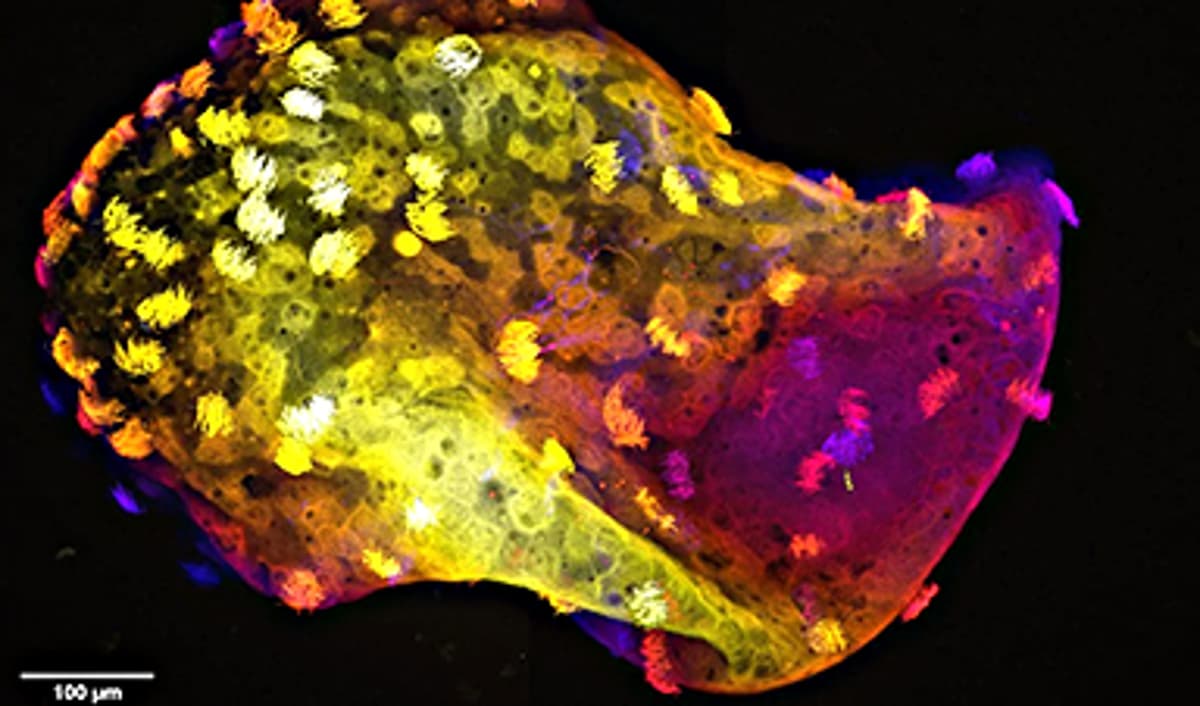
Scientists Create “Neurobots” – Living Machines With Their Own Nervous Systems
Scientists at Tufts University and the Wyss Institute have engineered "neurobots," a new class of living machines that combine frog‑derived xenobot bodies with self‑organizing neural networks. By inserting neural precursor cells into developing xenobots, the team created constructs that grow...

Zotatifin
Effector Therapeutics and Switzerland’s SJP Biotec have entered Phase 2 trials of zotatifin, an intravenous eIF4A inhibitor, in selected advanced solid tumors. The study targets cancers such as breast, lung and pancreatic that rely heavily on dysregulated protein translation. Early Phase 1...

Advancing Drug Discovery with Cell Line Development: Past, Present and Future
Cell line development underpins biologics manufacturing and drug discovery, from historic HeLa and CHO lines to modern CRISPR‑engineered clones. Recent advances in automation, artificial intelligence, and gene editing have accelerated clone selection, improved monoclonality verification, and increased protein yields. Tools...

New Genetically Engineered CHO Cell Line Boosts Protein Expression and Productivity
Sartorius has unveiled a genetically engineered Chinese hamster ovary (CHO) cell line that delivers up to twice the protein expression titers and three times the productivity of traditional wild‑type CHO hosts. The new line was validated across multiple therapeutic formats—including...

In Whales, a Long Life Absent Cancer Results From Superior DNA Repair Mechanisms
Researchers have identified that bowhead whales, which can live over 200 years, exhibit an unusually robust DNA repair system that underpins their low cancer incidence. Unlike elephants, which rely on multiple TP53 copies, whales appear to use alternative genome‑maintenance pathways...

Cell Line Development: Pitfalls, Challenges and Solutions
Cell line development is critical for discovering targets and manufacturing biotherapeutics, yet achieving reliable monoclonality and early productivity assessment remains a bottleneck. Traditional approaches such as limiting dilution and FACS are labor‑intensive, often yield low‑viability clones, and delay project timelines....

Viewpoint — ‘Completely Unethical’: RFK, Jr.’s Medical Ignorance Deprives Melanoma Cancer-Sufferers of a Life-Saving Therapy
Replimune’s RP1, a promising therapy for metastatic melanoma, received an initial FDA advisory panel recommendation for approval, but the agency’s biologics chief Vinay Prasad overruled the decision and halted the drug’s launch. At a House hearing, Health and Human Services...
Pharmaceutical Executive Daily: Idvynso Receives FDA Approval
The FDA granted approval to Idvynso, a new oral therapy for HIV‑1 infection in adults, citing trial data that showed sustained viral suppression and a safety profile on par with existing regimens. The drug adds to a shifting HIV market...

The Immune System Ages Differently in Men and Women
A new Nature Aging study used single‑cell analysis of over 1 million peripheral blood mononuclear cells from 982 donors aged 19 to 97 to map how the immune system ages. The researchers found that women experience more pronounced age‑related changes in...

Curve Biosciences Announces Key AI and Clinical Advancements of Whole-Body Intelligence for Chronic Diseases
Curve Biosciences announced two major milestones: its genomic AI foundation model will be presented at the International Conference on Learning Representations (ICLR) and its Whole‑Body Blood Test demonstrated strong performance in a real‑world liver cirrhosis monitoring study. The study enrolled...

New Review Casts Doubt On Alzheimers Drugs But Is Controversial
A new Cochrane review of 17 trials involving more than 20,000 Alzheimer’s patients concludes that amyloid‑targeting monoclonal antibodies deliver only trivial cognitive benefits and carry safety risks. The analysis groups together all anti‑amyloid antibodies—including older failures—thereby diluting the modest gains...

Progress Against Pancreatic Cancer, Part One
Revolution Medicines reported that its RAS‑targeting small molecule daraxonrasib more than doubled overall survival for patients with metastatic pancreatic ductal adenocarcinoma, extending median survival to 13.2 months versus 6.7 months on standard chemotherapy. The drug works by stabilizing a novel...
New Study Reveals CRISPR Enzyme that Responds to Human DNA Methylation
A collaborative team from Wageningen University & Research and the Van Andel Institute has identified a CRISPR-associated enzyme that senses DNA methylation, a key epigenetic mark distinguishing cancer cells from normal tissue. The enzyme selectively binds to methylated human DNA,...

Age-Related Degeneration of the Pineal Gland
A recent study examined how the human pineal gland’s structure changes with age, identifying two distinct aging pathways: an increase in astrocytes that may compensate for pinealocyte function, and a disruption of lobular architecture that leads to astrocytic atrophy and...

CovAngelo Accurately Models Reaction Barriers for Covalent Drug Discovery
BEIT introduced CovAngelo, a layered QM/QM/MM platform that accurately predicts activation barriers for covalent inhibitors. By combining classical molecular mechanics, quantum‑mechanical embedding (ECC‑DMET), and high‑level quantum chemistry focused on the bond‑forming event, the method captures subtle electronic and environmental effects...

The Great Unbalding. Fallen Follicles, Rise! (NY Mag)
Scientists at Pelage Pharmaceuticals unveiled PP405, a novel drug that reprograms dormant hair‑follicle stem cells to regrow thick hair on balding scalp. Early Phase 2a data released in June 2024 showed rapid regrowth in areas previously considered irreversibly lost, sparking intense...

BiomEdit Secures Patents for Probiotic Delivery Platform Supporting Lead Poultry Biologic BE-101
BiomEdit announced the issuance of foundational U.S. patents covering its engineered Lactobacillus reuteri probiotic delivery platform, which underpins its lead biologic BE-101. BE-101 is a probiotic‑vectored antibody designed to neutralize Clostridium perfringens toxins and prevent necrotic enteritis in broiler chickens....

Pairwise Partners with Ball Horticultural Company for Ornamental Crop Gene Editing
Pairwise has licensed its Fulcrum® genome‑editing platform to Wild Bioscience Ltd., giving the AI‑driven agritech firm access to proprietary CRISPR tools, enzymes and trait libraries. The agreement covers both research and commercial applications across a broad portfolio of row crops....

Divalent siRNA Clinical Trial Is Now Recruiting
A first‑in‑human trial of a divalent PrP‑siRNA (2439‑s4) is now enrolling 15 symptomatic prion disease participants. The FDA‑cleared IND permits a single‑ascending‑dose study, testing 50 mg, 100 mg and 200 mg levels to assess safety and target engagement. The trial includes an optional...

Annexon Biosciences (ANNX) Buy Rating Retained
Annexon Biosciences (NASDAQ:ANNX) retained a Buy rating from Needham analyst Joseph Stringer, who set a new price target of $11. The small‑cap biotech has rallied 289.3% over the past year and is up 39.5% year‑to‑date. CEO Douglas Love highlighted progress...

Discovery of a Small Molecule HPK1 Inhibitor for Immuno-Oncology
A biotech firm has disclosed a novel small‑molecule inhibitor of hematopoietic progenitor kinase 1 (HPK1) that demonstrates potent immuno‑oncology activity in preclinical models. The compound achieves sub‑micromolar potency, oral bioavailability, and drives up to 70% tumor regression when combined with...

What Does It Take to Scale Cell and Gene Therapies From Discovery to Commercialization
MaxCyte CEO Maher Masoud says scaling cell and gene therapies requires developers to partner with manufacturers that can move seamlessly from R&D to commercial production. Integrated, best‑in‑class platforms eliminate the need for repeated process re‑optimization, enabling consistent, automated manufacturing. Advances...

Acorys System Gains FDA Clearance for Real-Time 4D Cardiac Mapping
Corify Care’s Acorys system received FDA clearance, offering clinicians a real‑time, four‑chamber view of cardiac electrical activity without the need for CT or MRI scans. The platform merges 3D anatomical modeling with live electrical signals, creating what the company calls...