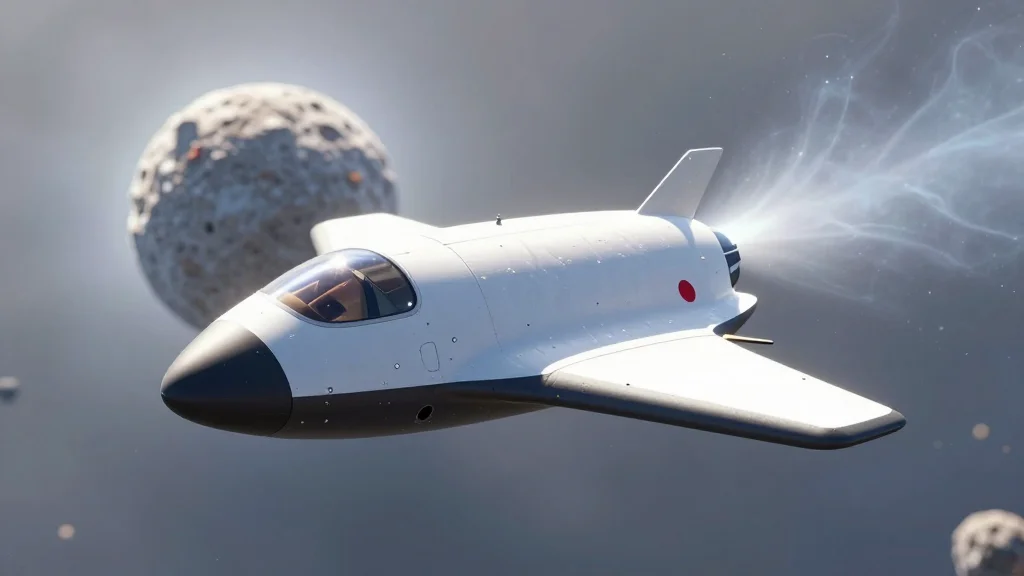
JAXA Plans to Bring Back Pristine Early Solar System Samples From a Comet
Japan’s space agency JAXA has outlined the Next Generation Small‑Body Return (NGSR), a large‑class mission to retrieve pristine material from comet 289P/Blanpain. The 2034 launch will send a lander that will impact the comet’s surface, collect subsurface ice and dust, and analyze volatiles in situ before returning a freeze‑dried sample to Earth in 2048. By targeting a low‑activity, 160‑meter comet, NGSR seeks to avoid the weathered surfaces of asteroids and capture unaltered solar‑system building blocks. The mission also plans to deploy seismometers and bistatic radar to probe the comet’s interior, shedding light on early planetesimal formation.
Untitled
On April 6, 2026, NASA’s Artemis II mission performed a historic lunar flyby, the first since Apollo 17 in 1972. The Orion spacecraft rounded the Moon’s far side, reaching a peak distance of roughly 407,000 km—making it the farthest humans have traveled from Earth...

UK’s SatVu Expands Thermal “Eyes in the Sky” With HotSat‑2 Launch
SatVu, a UK‑based space data firm, launched HotSat‑2 on SpaceX’s Transporter‑16 rideshare from Vandenberg. The satellite carries mid‑wave infrared sensors that deliver high‑resolution thermal imagery capable of seeing heat signatures through roofs and other structures. HotSat‑2’s data is positioned for...

Epic, Must-Watch 4K Footage of the Artemis II Launch
NASA’s Space Launch System lifted off from Kennedy Space Center on April 1, 2026, carrying the Orion spacecraft named Integrity on a ten‑day lunar flyby. The Artemis II mission marks the first crewed flight beyond low‑Earth orbit since Apollo 17 and the inaugural crewed...

What Lit up the Night Sky? PhilSA Explains Strange Glow Seen over PH
On April 11, a luminous “space jellyfish” lit up the Philippine night sky, which the Philippine Space Agency (PhilSA) attributes to the Chinese Jielong‑3 rocket launched minutes earlier from the South China Sea. The high‑altitude exhaust plume reflected sunlight, creating a...

Rocket Lab’s iQPS Deal Hits 15 Missions: What Repeat Customers Tell Us About the Small Launch Market
Rocket Lab has added three more Electron launches for Japanese radar operator iQPS, bringing the partnership to 15 dedicated missions. The deal underscores a shift in the small‑launch market from one‑off sales to recurring revenue streams. At roughly $7.5 million per...
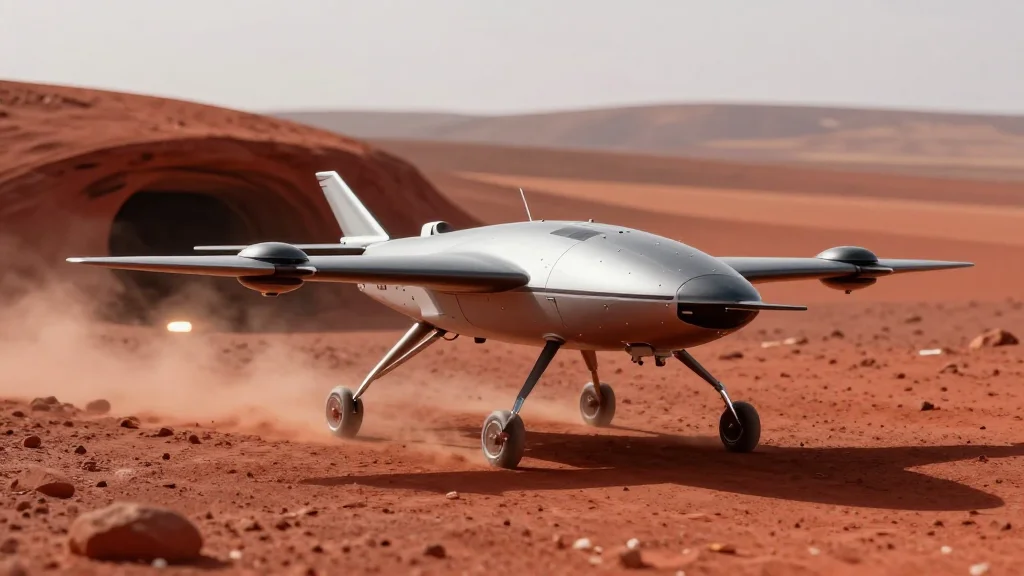
Meet Orpheus—A Hopper Mission Built to Hunt for Life in Martian Volcanoes
Researchers at the SETI Institute have proposed Orpheus, a vertical take‑off and landing (VTOL) hopper designed to explore the volcanic fissures, pits, and vents of Mars’s Cerberus Fossae region. Targeting the young volcanic deposits and a specific vent (Vent #5)...
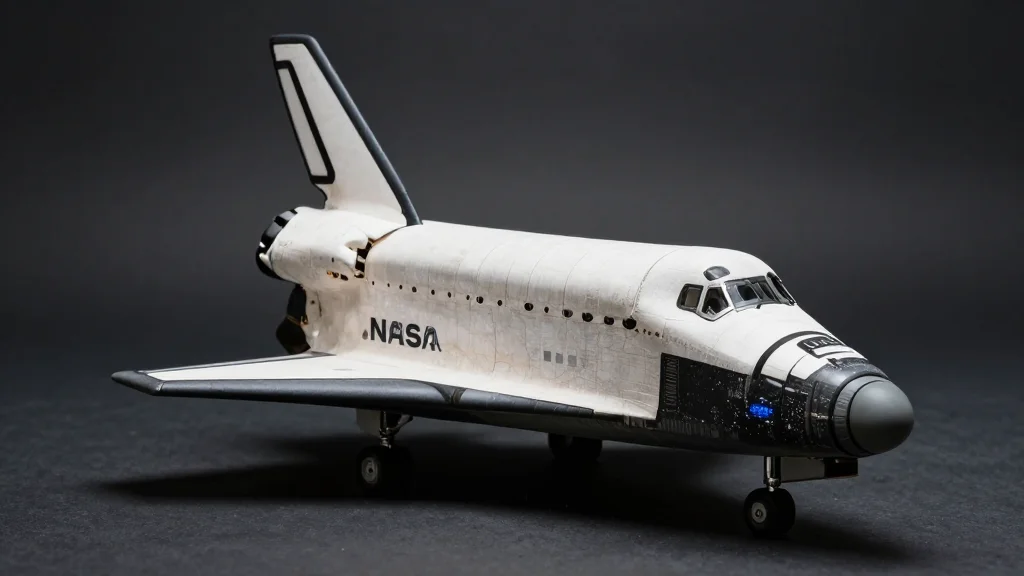
April 12, 1981: Columbia Lifts of for the First Space Shuttle Mission
On April 12, 1981, NASA’s Space Shuttle Columbia lifted off on STS‑1, the inaugural flight of the United States’ reusable spacecraft program. Piloted by John Young and Robert Crippen, the two‑day mission demonstrated successful launch, orbit, and safe return, validating...

Launch Services Procurement: How Buyers Choose Rockets, Rideshares, and Mission Assurance Partners
Launch procurement is evolving from a price‑centric exercise to a risk‑allocation strategy that prioritizes schedule certainty, mission assurance, and integration fit. Buyers start with mission constraints—orbit, timing, payload value—and then evaluate rockets, rideshares, or dedicated services based on how each...

Aer Lingus Introduces Starlink-Powered High-Speed Onboard WiFi to Transform Digital Passenger Experience
Aer Lingus has equipped its first aircraft with SpaceX’s Starlink satellite system, delivering onboard Wi‑Fi speeds exceeding 500 Mbps. The airline will begin the rollout on North America routes, expanding to European long‑haul flights, with the entire fleet expected to be...

Rocket Lab Wins Contract for Three More iQPS Launches
Rocket Lab announced a new contract with Japan’s iQPS to launch three more Electron missions beginning in 2028. The agreement adds to an existing pipeline that already includes seven completed iQPS flights and five launches on order. Each Electron flight...

Victor Glover's First Words After Returning From the Moon Will Tug At Your Heart
NASA astronaut Victor Glover delivered an emotional address after the Artemis II crew splashed down, thanking God and his five daughters before speaking to the broader public. The Artemis II mission marked a ten‑day, crewed test flight that looped around the Moon—the...

NASA Chief Says Artemis III Crew Announcement Is Coming Soon After 'Greatest Adventure in Human History'
NASA Administrator Jared Isaacman announced that the Artemis III crew will be revealed in the coming weeks, following the successful return of the Artemis II crew after a historic 10‑day lunar flyby. The Artemis III mission, targeted for 2027, will launch on the...

Christina Koch Shares Strong Message After Artemis II Return to Earth
NASA’s Artemis II crew completed a 10‑day lunar flyby and splashed down safely off San Diego, with all four astronauts emerging unassisted and in good health. Astronaut Christina Koch used the moment to reflect on the deeper meaning of crew, describing a...

The Artemis II Crew Made It Through 10 Days in Space – but Could They Have Survived My First Office...
NASA’s Artemis II mission returned its four‑person crew after a ten‑day orbital flight in a capsule barely larger than a family tent. Beyond the engineering triumph, the crew endured nonstop proximity, testing their ability to cooperate without the usual off‑hours reprieve....

A History of Space Debris Impacts on the ISS and ISS Conjunction Avoidance Actions
Since its launch, the International Space Station has endured a continuous barrage of orbital debris, with tiny, untracked particles responsible for the majority of documented hardware damage. While NASA conducts collision‑avoidance burns when the calculated risk exceeds a 1 in 10,000...
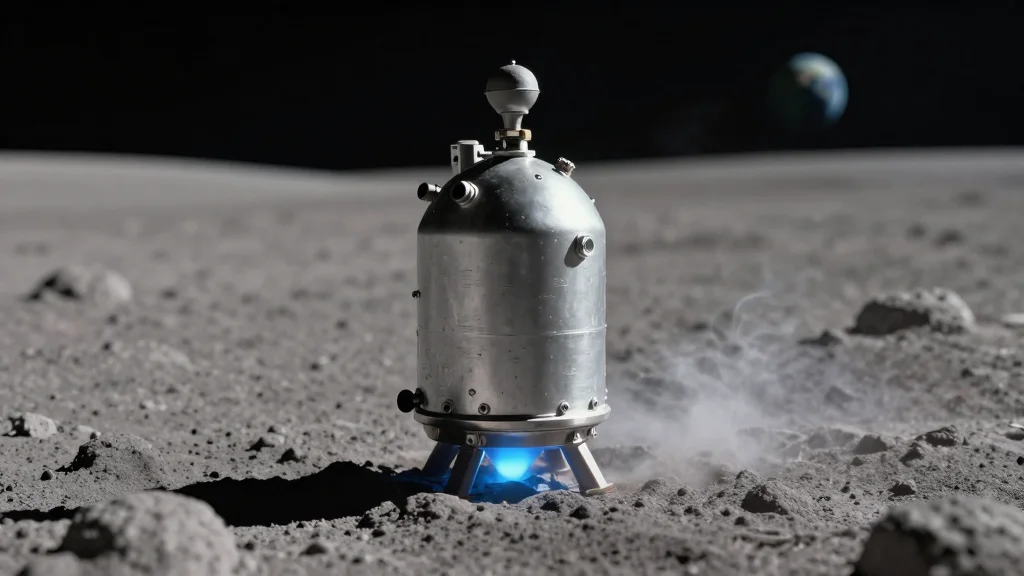
Oxygen Made From Moon Dust For First Time
Blue Origin announced its Air Pioneer reactor can generate breathable oxygen from lunar regolith by applying an electric current, marking the first successful in‑situ oxygen extraction on the Moon. The compact system also liberates iron, aluminium and silicon, and would...

NRL to Showcase Sovereign Space Capabilities at 41st Space Symposium
At the 41st Space Symposium, the U.S. Naval Research Laboratory will unveil a suite of technologies aimed at bolstering space domain awareness and autonomous orbital infrastructure. The lab recently launched three experimental payloads—LARADO, GOSAS, and GARI‑1C—on the STP‑S29A mission, showcasing...

How Satellite Communications Support Aviation, Maritime, and Defense Customers
Satellite communications have become essential for aviation, maritime and defense users that operate beyond the reach of terrestrial networks. Providers such as SES, Viasat and Inmarsat are shifting from pure bandwidth sales to offering continuity, coverage and secure, mission‑critical links....

The New Market for Dual-Use Space Technology
Dual‑use space technology is emerging as a major market as governments seek commercial speed and firms pursue diversified demand. NASA’s FY 2026 performance plan and the U.S. Space Force Commercial Space Strategy embed commercial capabilities into defense and civil missions, turning...

Lunar Communications, Navigation, and Power as Commercial Infrastructure Markets
Lunar communications, navigation, and power are evolving from mission‑specific support into early commercial infrastructure markets as NASA’s Artemis, CLPS, and Ignition programs demand continuous services. Private firms like Intuitive Machines, KSAT, and Nokia are already prototyping relay satellites and surface...

Northrop Grumman Minotaur IV Lofted USSF Tech Demonstration Payloads to Orbit
On April 7, 2026 Northrop Grumman launched the DoD Space Test Program S29A mission from Vandenberg using a Minotaur IV rocket. The launch deployed the primary STPSat‑7 satellite with five experiments and six secondary CubeSats, including Army‑sponsored Rawhide. The Minotaur IV, powered by three retired...

How Satellite Services Support Smart Airports, Shipping, and Logistics Hubs
Satellite services are becoming core components of smart airports, ports, and logistics hubs, delivering outside‑the‑fence visibility, precise timing, and resilient communications. Providers such as Aireon and Spire are expanding from raw position data to integrated tracking, Earth observation, and connectivity...

Frontier Technologies of the Space Industry as of 2026
In 2026 space technology has shifted from single‑mission spectacles to an industrial ecosystem built on reusable launch, on‑orbit servicing, and autonomous data handling. Companies such as SpaceX, Blue Origin, Rocket Lab and Relativity are deploying fully or partially reusable vehicles,...
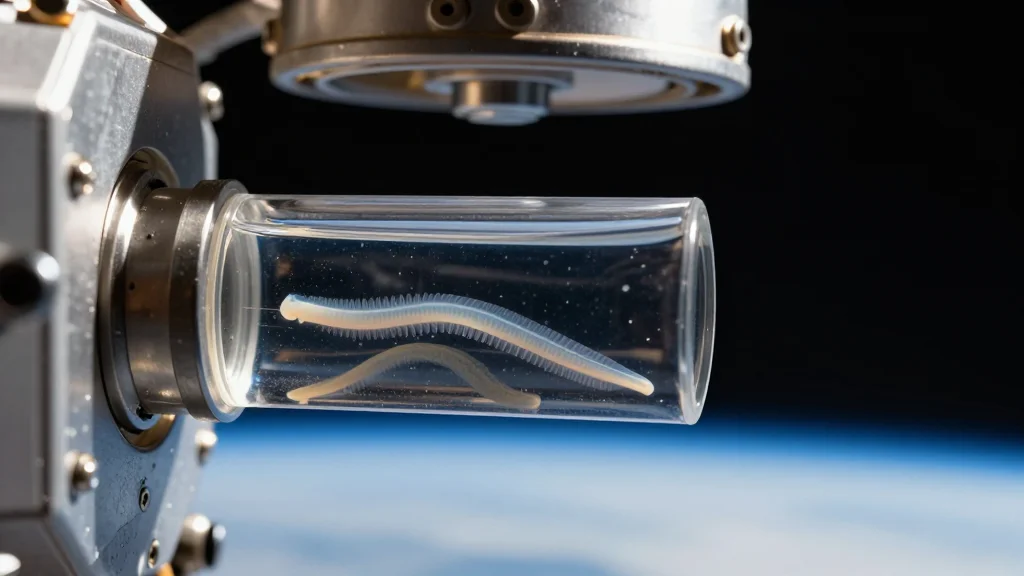
Regarding Those Worms Outside The ISS
University of Exeter’s Fluorescent Deep Space Petri‑Pods (FDSPP) will carry millimeter‑long C. elegans worms outside the International Space Station for a 15‑week exposure. Launched on NASA’s CRS‑24 mission, the 3 kg Petri Pod contains 12 sealed chambers that independently control temperature,...

Artemis Reached The Moon. The Grid Can Reach The 21st Century.
Artemis II returned four astronauts from lunar orbit, highlighting how modern spacecraft rely on redundant, software‑driven digital control systems that are thousands of times faster than the Apollo era. In stark contrast, the United States electrical grid still operates on largely...

How Governments Buy Commercial Earth Observation Data
Governments are increasingly integrating commercial Earth observation (EO) data into their core operations, moving beyond one‑off pilots to repeatable contracts. Agencies such as NOAA and NASA now procure raw imagery, processed analytics, and managed services to fill mission gaps in...
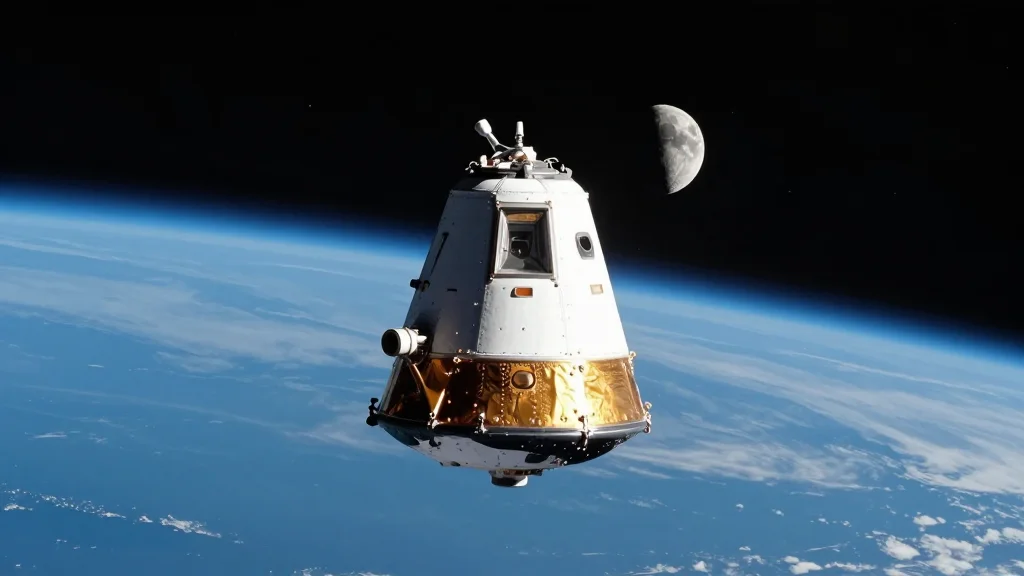
The National Space Society Welcomes the Crew of Artemis 2 Home
Artemis 2 returned to Southern California on April 10 after a flawless nine‑day flight that included launch, high‑Earth orbit, trans‑lunar injection, a lunar flyby and safe splashdown. The mission proved Orion’s systems operated as planned, earning praise from NASA veterans and the...

Ground Stations as a Service: The Quiet Infrastructure Behind the Space Economy
Ground stations as a service (GSaaS) are turning the traditionally hidden ground segment into a commercial platform. Satellite operators now purchase global antenna access, telemetry delivery, and integrated cloud workflows from providers such as AWS Ground Station, KSAT, and Atlas...
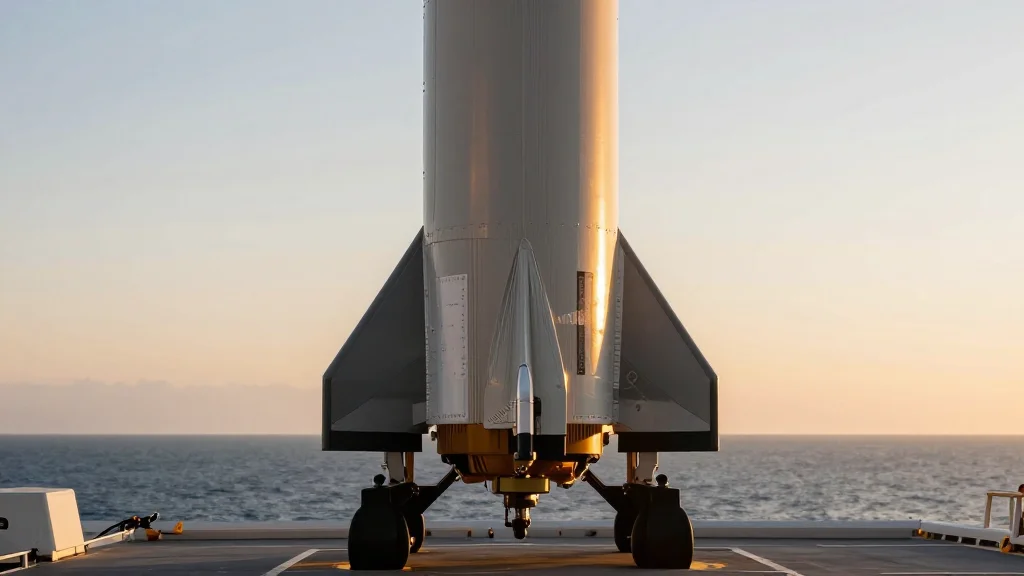
Three Launches, Two by SpaceX and One by China
SpaceX conducted two launches on April 11, 2026, placing 25 Starlink satellites from Vandenberg and sending Northrop Grumman’s Cygnus cargo capsule to the ISS from Cape Canaveral. The Falcon 9 booster B1063 completed its 32nd flight, tying for fourth‑most‑flown launch vehicle,...

ESA’s Celeste Mission First Signal Sets New European PNT Records
On 8 April 2026 ESA’s Celeste IOD‑1 transmitted the first dual‑frequency L‑ and S‑band navigation signal from a European low‑Earth‑orbit satellite, marking a historic milestone for Europe’s positioning, navigation and timing (PNT) ambitions. The Celeste pair, launched by Rocket Lab on...

Falcon 9 Launches Cygnus Cargo Spacecraft to the ISS
On April 11, a SpaceX Falcon 9 lifted off from Cape Canaveral carrying Northrop Grumman’s Cygnus NG‑24 cargo spacecraft, named S.S. Steven R. Nagel, to the International Space Station. The launch, delayed by weather, placed the 5‑ton XL‑class vehicle into low‑Earth orbit, where it will dock...

Trump Hires Orbital Towing Company to Build Space Interceptors
Donald Trump’s team has selected Impulse Space, a fledgling orbital‑tug firm founded by former SpaceX engineer Tom Mueller, to build the orbital layer of his “Golden Dome” missile‑defense concept. The contract pairs Impulse with Anduril Industries and a Pentagon prototype...

SPARTA Countermeasures: The Complete Guide to Defending Spacecraft From Cyber and Counterspace Threats
The Aerospace Corporation’s SPARTA Countermeasures guide (v3.2) presents a comprehensive, eight‑layer defense‑in‑depth framework for protecting spacecraft against cyber and counter‑space threats. It catalogs 90 specific countermeasures, aligns each with NIST SP 800‑53, ISO 27001, NASA best practices and MITRE D3FEND, and introduces...

Boeing’s Moon Rocket Faces Uncertain Future Under Trump’s NASA
NASA’s $24 billion Space Launch System (SLS) propelled Artemis II crew around the Moon, yet the Trump administration is already soliciting commercial alternatives, casting doubt on the rocket’s future. The White House budget request and a direct outreach to rivals aim to...

New Era For Space Dawns, As Artemis II Returns
Artemis II successfully splashed down, confirming Orion’s heat shield endured the high‑speed, 400,000‑foot re‑entry despite earlier concerns from Artemis I. NASA reaffirmed its commitment to the Space Launch System and Orion through the “Ultimate 5” flights, even as the program faces cost overruns...
Anthony Scaramucci Says He Owns SpaceX Stock And Won't Miss Out On The IPO Despite Elon Musk's 'Cult Of Personality'...
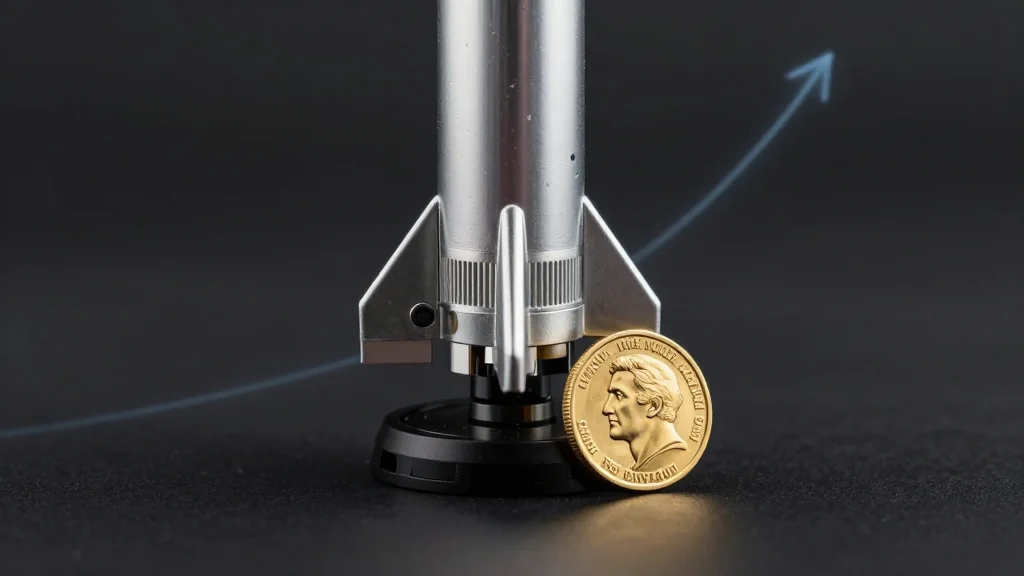
Anthony Scaramucci announced he will buy into SpaceX’s upcoming IPO, despite acknowledging that Elon Musk’s personal brand inflates the company’s valuation. He already owns SpaceX from a private round and points to Starlink as a massive revenue engine. The launch‑pad...

NASA Science, Cargo Launch Aboard Northrop Grumman CRS-24
NASA launched the Commercial Resupply Services‑24 (CRS‑24) mission on April 11, 2026, using a Northrop Grumman Cygnus XL mounted on a SpaceX Falcon 9. The spacecraft carried roughly 11,000 lb of scientific experiments, crew provisions, and hardware to the International Space Station....
The Final Frontier Is Becoming Big Business. Here Are 3 Space Stocks to Buy Now.
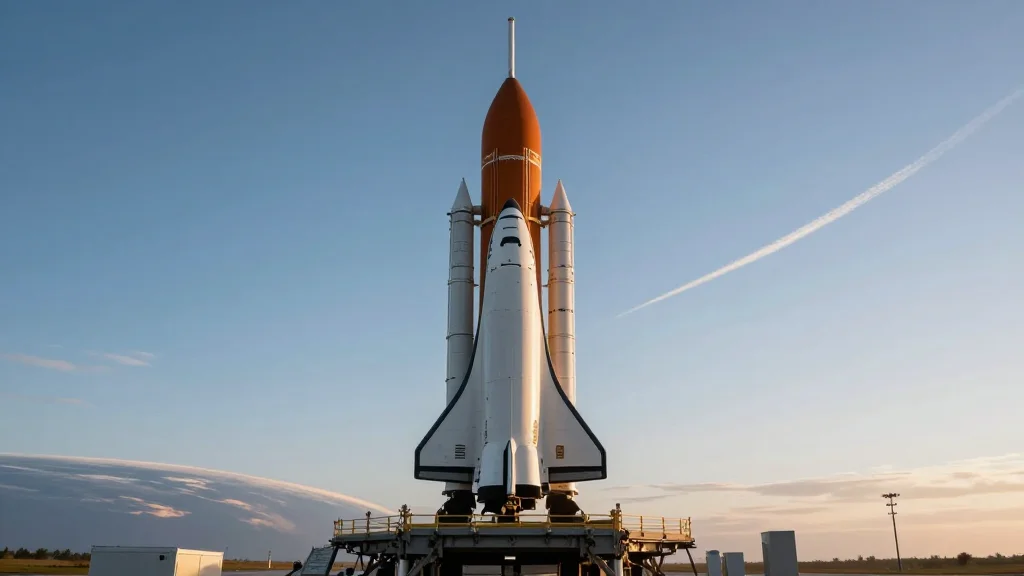
The global space economy, now valued at $613 billion, is set to hit $1.8 trillion by 2035, driven by rapid advances in launch services, satellite imaging, and defense contracts. Rocket Lab, the second‑most‑used U.S. launch provider, has completed 85 launches and is...

Another Giant Leap Reminds Us How Small We Are
NASA’s Artemis II mission concluded on Friday with a clean splashdown in the Pacific after a ten‑day lunar orbit. The four‑person crew gathered scientific data, photographed the Moon and tested life‑support systems, marking a critical step toward sustained lunar exploration. Beyond...

The SPARTA Matrix: A Complete Guide to Space System Attack Tactics, Techniques, and Sub-Techniques
The Aerospace Corporation released SPARTA version 3.2, a publicly available matrix that catalogs more than 85 techniques and hundreds of sub‑techniques used to attack spacecraft and their supporting infrastructure. Modeled on MITRE ATT&CK, the framework spans cyber intrusion, electronic warfare, and...
April 11, 1970: Apollo 13 Blasts Off for the Moon
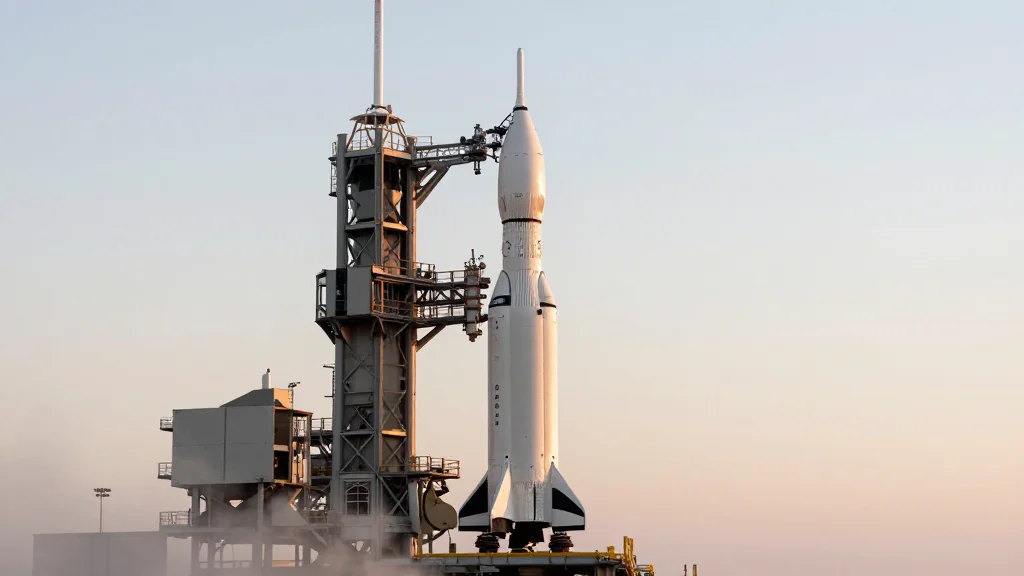
On April 11, 1970 Apollo 13 launched as NASA’s third attempted lunar landing, crewed by Jim Lovell, Fred Haise and last‑minute replacement Jack Swigert. Ten minutes after a live TV broadcast, an oxygen tank in the Service Module exploded, crippling the spacecraft’s power and...

Original Apollo 11 Code Open-Sourced by NASA — Original Command Module and Lunar Module Code Repos Are Now Public Domain...
NASA has released the original Apollo 11 Guidance Computer software for the Command Module (Comanche 055) and Lunar Module (Luminary 099) as public‑domain code on GitHub. The repositories were digitized by Virtual AGC and the MIT Museum, providing full machine‑code listings and build tools....

Artemis II Splashes Down
NASA’s Orion spacecraft safely splashed down in the Pacific Ocean on April 10, 2026, concluding the ten‑day Artemis II mission. The crew set a new distance record for human spaceflight, surpassing Apollo 13, and returned with unprecedented images of the Moon’s far...

Artemis 3 and Beyond: What's Next for NASA After Artemis 2 Moon Success
NASA’s Artemis 2 crew safely returned on April 10, 2026, marking the first U.S. crewed lunar mission since 1972. The agency has now redirected Artemis 3 from a lunar landing to an Earth‑orbit test of Orion’s docking with SpaceX’s Starship and Blue Origin’s...

Congratulations to the Artemis II Crew – but the Case for Sending Astronauts Into Space Is Rapidly Shrinking | Martin...
NASA’s Artemis II mission marked the first crewed flight of the new lunar system, returning astronauts safely after a 10‑day lunar loop. The program has already consumed roughly $100 billion, with Congress earmarking an additional $9.9 billion for Artemis IV and V. While the scientific...

Artemis II Splashdown Gives NASA Momentum in Renewed Moon Race
NASA’s Artemis II mission splashed down safely in the Pacific on April 11, 2026, concluding the first crewed deep‑space flight since 1972. The four‑person crew—three Americans and a Canadian—completed a lunar‑orbit trajectory that demonstrated the Space Launch System’s performance and re‑entry capabilities....

The Artemis II Mission Has Ended. Where Does NASA Go From Here?
NASA’s Artemis II mission successfully completed a 700,000‑mile lunar flyby and splash‑down, marking humanity’s first deep‑space crewed flight in over 50 years. The Space Launch System delivered a near‑perfect orbit insertion, while Orion returned safely, providing valuable data on heat‑shield performance and...

NASA’s Artemis II Mission Was a Historic Success
NASA’s Artemis II mission returned safely on 10 April after a historic crewed flyby of the Moon, the first human trip beyond low Earth orbit since Apollo 17 in 1972. The Orion capsule traveled to a record‑breaking 406,771 km from Earth, surpassing Apollo 13’s distance...

How Recovery Personnel Will Secure Artemis II Capsule at Sea After Splashdown
NASA’s Artemis II Orion capsule splashed down in the Pacific off San Diego, leaving four astronauts afloat in a vessel that survived re‑entry temperatures near 5,000 °F. Five airbags on the capsule’s top automatically inflated, righting the spacecraft and stabilizing it against waves...