1st Quarter 2026 Review
The S&P 500, Nasdaq and Dow slipped in Q1 2026, marking the first broad decline across large‑cap and growth indices since late 2024. Despite the slide, macro data showed resilience: unemployment fell to 4.3 % in March, jobless claims hovered near 200 000 and core CPI cooled. Consumer confidence weakened over job‑inflation concerns, and pending home sales dropped about 9 % month‑over‑month. Geopolitical tension, a Supreme Court‑blocked emergency tariff and a new 10 % global tariff added volatility to an already complex landscape.

Rising Rates Pushed Mortgage Payments Higher in March
Mortgage payments jumped in March as rates and loan sizes rose, pushing the median new purchase‑loan payment 3.4% higher to $2,131, still 1.8% below the year‑ago level. The Mortgage Bankers Association’s affordability index climbed to 154.9, signaling reduced buyer purchasing...
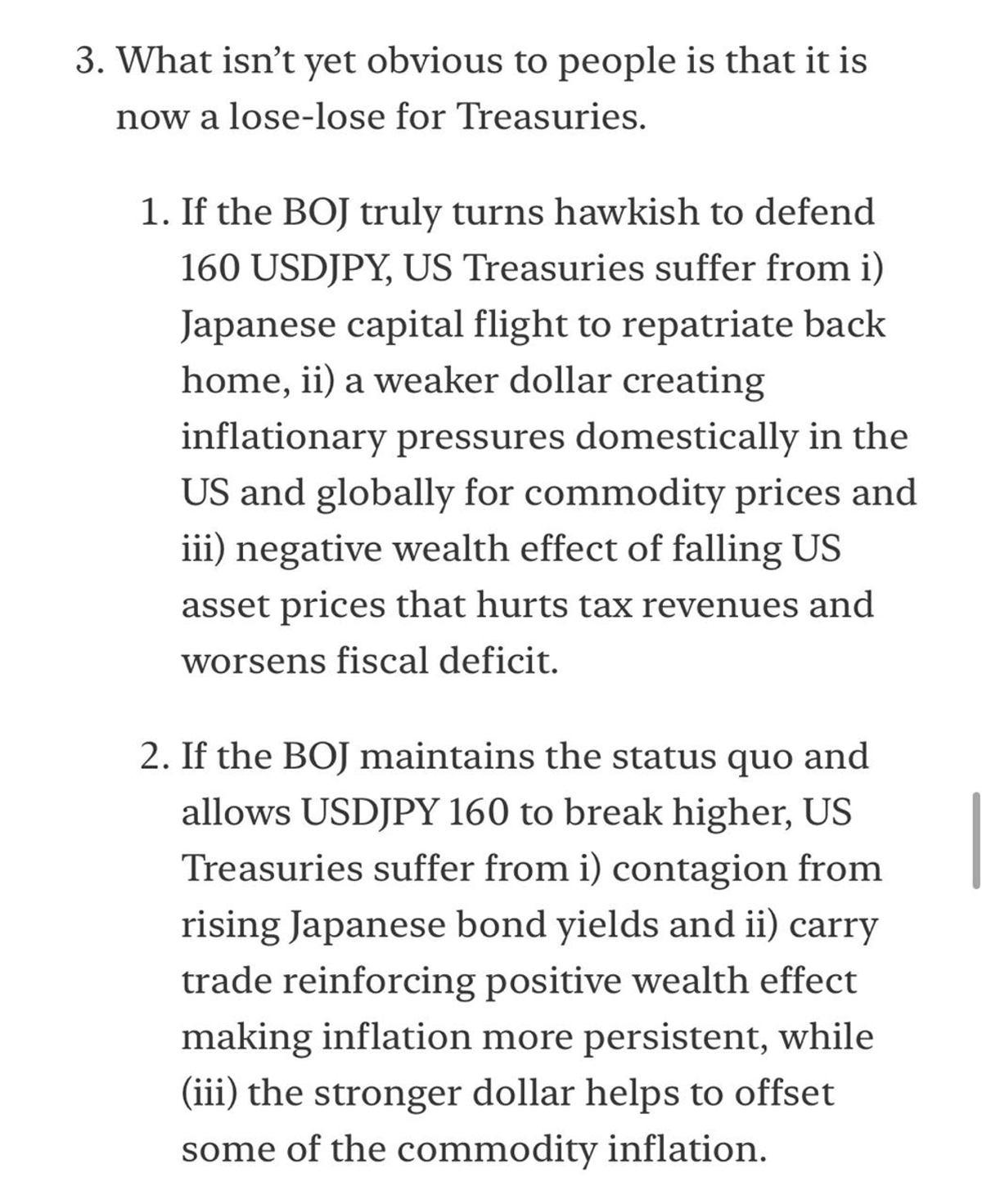
Treasury's Hidden QE Fuels Reckless Economic Overheating
Policymakers are running the economy so unbelievably hot right now that I am starting to think it has approached or surpassed recklessness. The Treasury has completely taken over control of the money supply and financial conditions with their ongoing ATI/YCC...
Listen: Why the Federal Reserve Matters More than Ever
In a new Big Brains podcast, Nobel laureate Douglas Diamond examines the future of Federal Reserve leadership and the importance of its independence. He draws lessons from the 2023 Silicon Valley Bank collapse, warning that the Fed must stay vigilant...

Ethan Harris: Core Concerns, Fed Follies
The Loadstar premium piece aggregates recent Federal Reserve developments, noting a series of modest rate hikes, a criminal investigation into Chairman Jerome Powell, and mixed inflation signals that keep markets uneasy. Minutes from the last policy meeting reveal that a...

Purchase Applications Rise Again Despite Higher Rates and Fewer Refis
Mortgage applications slipped 1.6% week‑over‑week as rates edged up to 6.37%, but purchase demand stayed strong, with the Purchase Index rising 1% and sitting 21% above a year ago. Refinance activity fell 4% and now accounts for just 42.5% of...

Mortgage Rates Rise on Iran Standoff, FOMC Meeting News
Mortgage rates halted a three‑week slide on April 30, with the 30‑year fixed advancing 7 basis points to an average of 6.3%. The 10‑year Treasury yield briefly topped 4.4% following the Federal Reserve’s decision to keep short‑term rates unchanged and...

The Wrap: FOMC Rejects Rate Cut; Mag7+ Dominates Equity Markets
The Federal Open Market Committee voted 8‑4 to keep rates steady, marking the strongest dissent since 1992, while Senate leaders moved forward with Kevin Warsh’s nomination to replace Jerome Powell as Fed chair. Powell will remain on the Board of...
U.S. Labor Costs Rise As Benefit Growth Outpaces Wages In Cooling Job Market
The Labor Department reported that the Employment Cost Index rose 0.9% in the first quarter, slightly above the 0.8% consensus. Annual labor‑cost growth held steady at 3.4%, while benefits surged 1.2% quarter‑over‑quarter, outpacing wage growth which ticked up 0.8%. The...

US Economy Grows by 2pc in First Quarter
The Bureau of Economic Analysis reported that U.S. gross domestic product grew at a 2% annualized rate in the first quarter, driven primarily by a rebound in government spending and a sharp rise in artificial‑intelligence‑related investment. Private investment jumped 8.7%,...

Energy Surge Signals Crisis, Yet Offers 10x Gains
I'm personally afraid of the coming 3-5 years for the economy and our society. The economy has become fragile amid global uncertainties. A sudden rise in gold isn't a signal of a strong economy; it's the exact opposite. Additionally, the rise in energy...
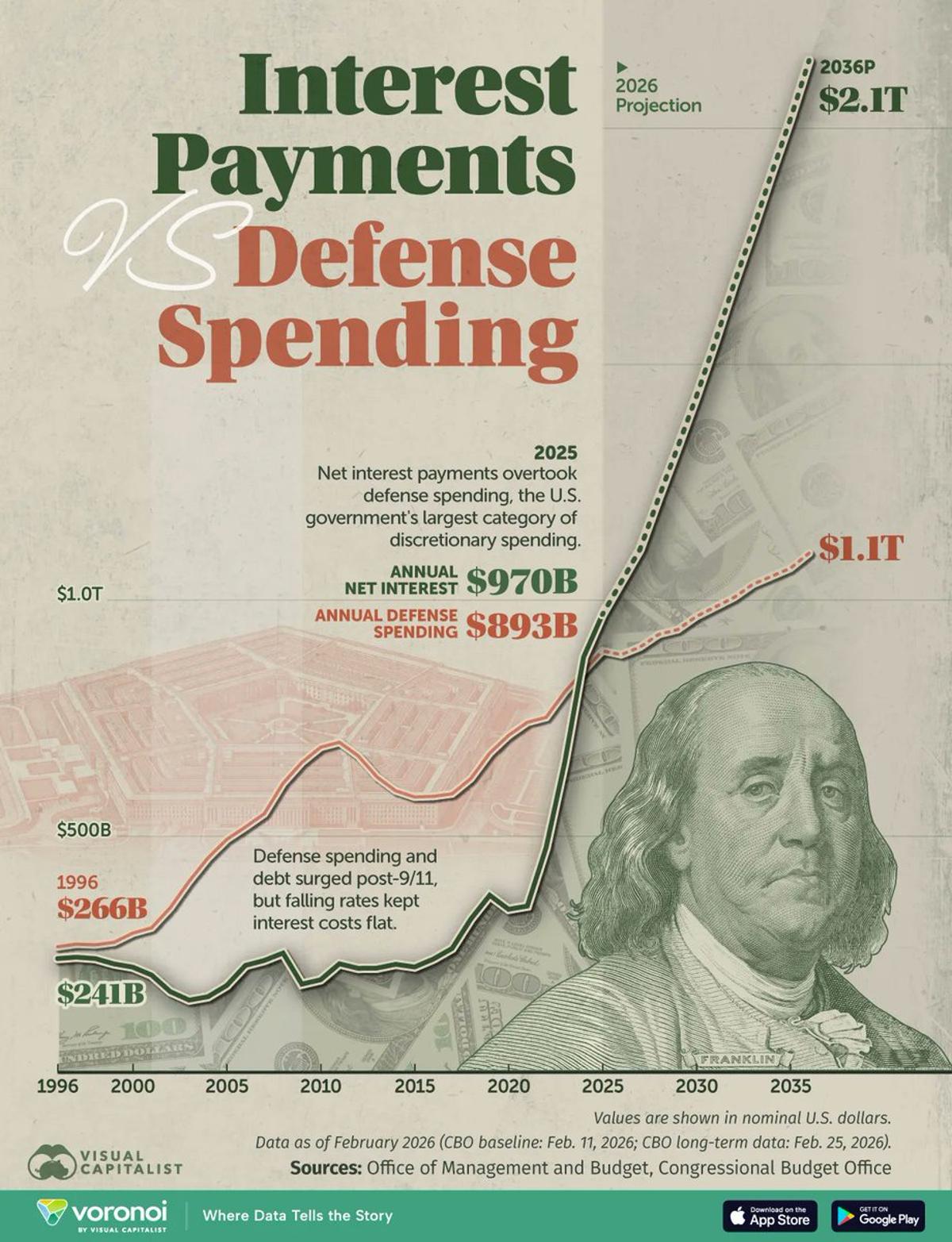
Interest Payments Overtake Defense Spending, Debt Soars
For the first time since the late 1920s, the U.S. is spending more on interest payments than on national defense. This isn't new—it's been true for two years. However, worth a reminder given the Trump administration's proposed $1.5 trillion defense...

Q1 2026 Employment Cost Index: Why Insurers Are Getting Larger Raises Than Workers
The Bureau of Labor Statistics’ Q1 2026 Employment Cost Index shows private‑sector compensation rose 3.4% year‑over‑year, while employer‑paid health‑insurance costs surged 5.7%, outpacing wages for the fifth consecutive quarter. Real wages barely improved, increasing only 0.1% after inflation. The widening gap...
California's $600 Million Inflation Relief Funds Set to Expire April 30
California officials warn that $600 million in one‑time inflation‑relief payments will vanish at midnight on April 30 if recipients do not transfer the funds off their debit cards. The deadline affects an estimated several hundred thousand residents who received the money through...
Fed Holds Rates as Powell Stays, Raising Stakes for Stock Traders
The Federal Reserve kept its benchmark rate unchanged in a divided vote and announced that Chair Jerome Powell will remain on the Board as a governor after his term ends. Powell's unprecedented move and the record four dissenters signal a...

Fed Holds Rates Steady, Mortgage Rates Likely to Remain Stable Amid Political Tension
The Federal Reserve left its benchmark interest rate unchanged for the third consecutive meeting, a decision that keeps mortgage rates anchored despite a sharply divided FOMC vote. The move comes as Chairman Jerome Powell announced he will remain on the...
Oil Futures Surge as Fed’s Hawkish Tone Pushes Treasury Yields Higher
Crude oil futures jumped after the Federal Reserve issued a hawkish post‑meeting statement, citing elevated energy prices, while Treasury yields rose on the sell‑off in bonds. The dual shock sparked heightened activity in oil and Treasury options as traders priced...
The David Rubenstein Show: Charlie Scharf (Podcast)
Wells Fargo Chairman and CEO Charlie Scharf told host David Rubenstein that the Federal Reserve’s independence is “critically important” for the stability of the U.S. financial system. He evaluated the current state of the U.S. economy, noting that heightened tensions with...
Powell to Remain Fed Governor, Blocking Trump’s Board Appointment
Jerome Powell announced he will remain a Federal Reserve governor after his chairmanship ends on May 15, denying President Donald Trump a chance to install a new appointee on the board. The decision comes as the Fed kept its benchmark...
Powell to Remain Fed Governor, Blocking Trump’s Board Pick
Jerome Powell announced he will remain a Federal Reserve governor after his chairmanship ends on May 15, effectively denying President Donald Trump a seventh‑member seat. The move comes amid legal attacks on the Fed and a sharply divided FOMC vote,...

Mortgage Rates Rise to 6.3%
Mortgage rates edged higher this week, with Freddie Mac’s 30‑year fixed rate rising 7 basis points to 6.3% as the Federal Reserve kept policy rates unchanged. The move coincided with the 10‑year Treasury yield climbing past 4.4% after stalled U.S.–Iran peace...

Burgum Defends Proposed Cuts To Park System Budget During Committee Hearing
Interior Secretary Doug Burgum defended a proposed 40% cut to the National Park Service’s maintenance budget and a 13% cut to the Interior Department in the FY2027 budget request during a Senate Energy and Natural Resources committee hearing on April 29....

Bloomberg Surveillance TV: April 30th, 2026 (Podcast)
Bloomberg Surveillance TV aired its April 30, 2026 episode featuring Sharmin Mossavar‑Rahmani, chief investment officer for wealth management at Goldman Sachs, National Economic Council Director Kevin Hassett, and Heritage Foundation vice‑president Victoria Coates. The trio dissected current macroeconomic data, monetary‑policy...
Warsh Takes Fed Helm, Signals Lower Short Rates
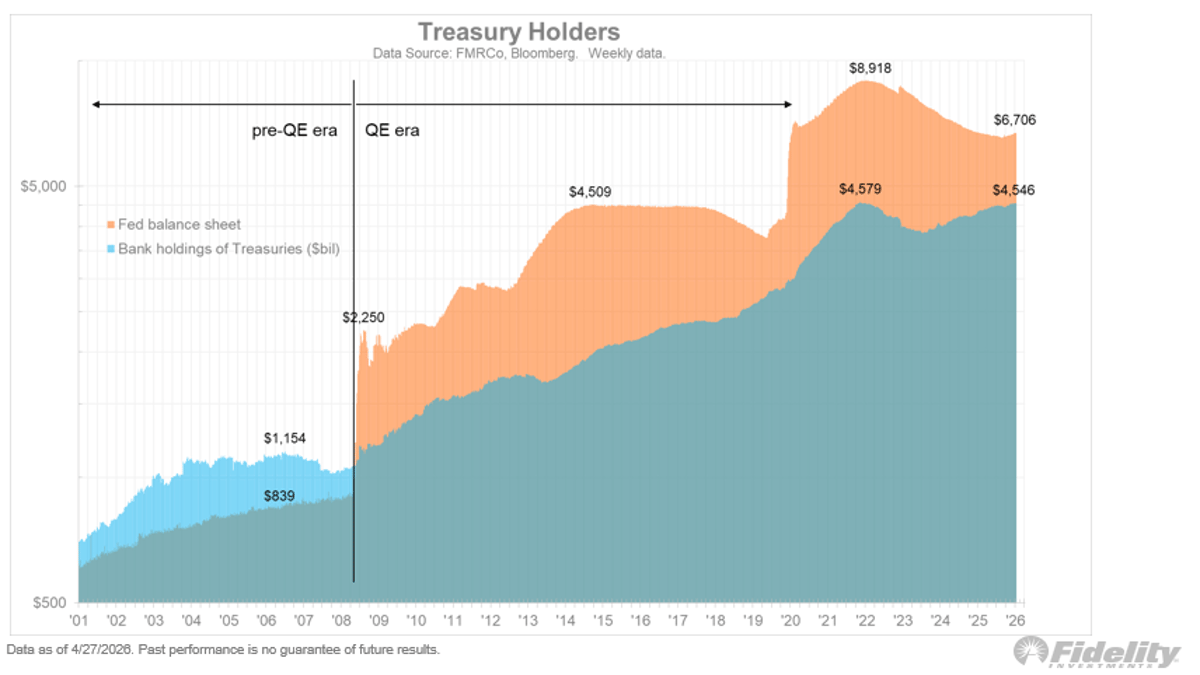
Bonds have remained eerily quiet and continue to sit near the apex of a long triangle. With Kevin Warsh now about to take the helm of the Fed, we are about to enter what we might call the Warsh-Bessent Treasury-Fed...

Fed Faces New Test as Hot Inflation Data Clouds Rate‑cut Hopes
U.S. inflation data showed core personal consumption expenditures rising 0.3% in March and 3.2% year‑over‑year, the strongest pace since late 2023. Headline PCE climbed 0.7% month‑over‑month, driven largely by an 11.6% surge in energy prices linked to the Iran conflict....

Kevin Warsh Wanted a Family Fight at the Fed. Oil Has Provided the Spark
Kevin Warsh, the incoming Federal Reserve chair, has signaled a desire for a more contentious, "family fight" style of policy discussion. Four of the Fed's 12 voting members dissented from the latest statement, the largest split since 1992, as oil...
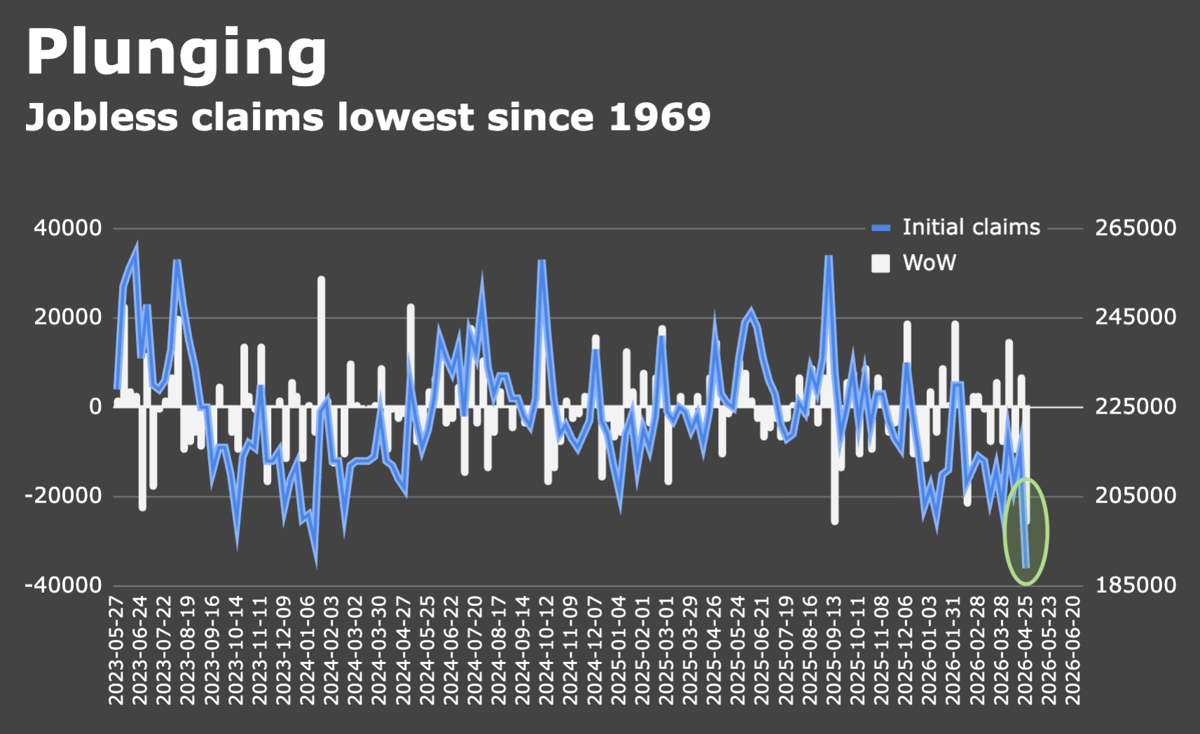
‘Labor Crisis’? Someone Forgot To Tell Jobless Claims
U.S. initial jobless claims fell to 189,000 for the week ending April 25, the lowest level since late 1969. Continuing claims also dropped to 1.785 million, a two‑year low. Both figures beat economists’ expectations, underscoring a labor market still resilient despite...

Kalshi Bettors Called It: Powell Says He Will Stay on as Fed Governor After Chair Term Ends
Federal Reserve Chair Jerome Powell announced he will remain on the Board of Governors after his chairmanship ends, confirming the 30% probability prediction on Kalshi that he would not resign by June. The Department of Justice dropped its criminal probe...
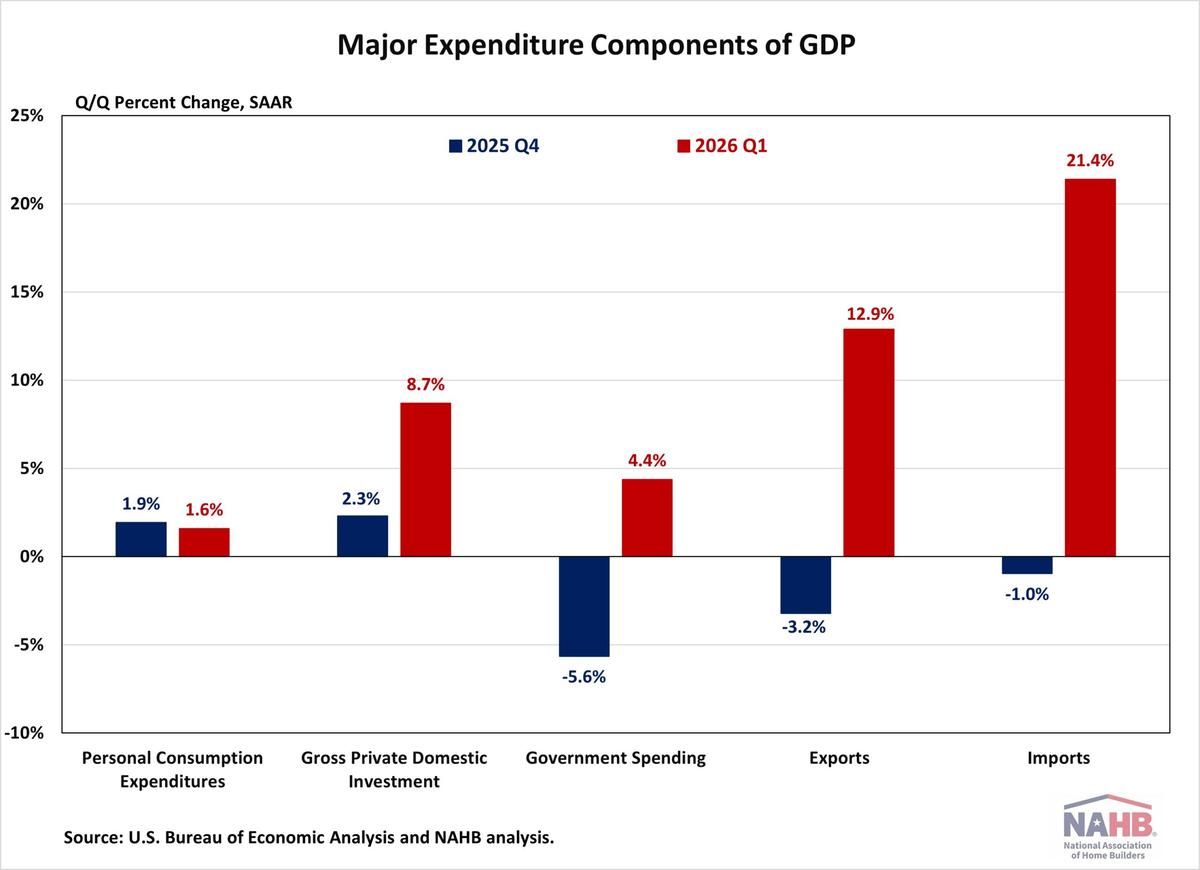
U.S. Economy Rebounded in the First Quarter of 2026
U.S. real GDP expanded at a 2.0% annualized rate in Q1 2026, rebounding sharply from a 0.5% gain in Q4 2025. The surge was anchored by a resurgence in federal non‑defense spending and a 17.2% jump in business equipment investment driven by...

Federal Reserve Holds Rates Steady for Fourth Straight Meeting as Inflation Risks Persist
The Federal Reserve held the federal funds target range at 3.5%‑3.75% for the fourth consecutive meeting, citing persistent inflation and heightened geopolitical uncertainty. Inflation measured by the PCE index rose 3.5% year‑over‑year, with core PCE at 3.2%, while the unemployment...
U.S. Jobless Claims Sink to a 57-Year Low. Jobs Aren’t Easy to Find — or Lose.
Initial jobless claims fell by 26,000 to 189,000 for the week ending April 25, marking the lowest level since 1969. Continuing claims also slipped to a two‑year low of 1.79 million, reflecting fewer layoffs and benefit expirations. The tight labor market has...
US Economy Grows 2% in January–March; Iran War Clouds Outlook
U.S. gross domestic product expanded 2 percent in the first quarter of 2026, rebounding from a modest 0.5 percent gain in the previous quarter. The acceleration was powered by a 9.3 percent annualized surge in federal government spending and an 8.7 percent jump in...

Powell's Fed Tenure Remains a High-Stakes Gamble
NEW: Powell has often said the Fed faces "no risk-free paths" as it contends w/ economic shocks that lift inflation and dent growth. The same could be said for his momentous decision to stay on at the Fed as a...

US Growth Rebounds, Inflation Resurges; Iran Uncertainty Looms
Came into this year saying US growth would reaccelerate and inflation would become an issue again. Seems pretty clear that was right.... now we just need some clarity on this Iran situation to understand if the first part is still...
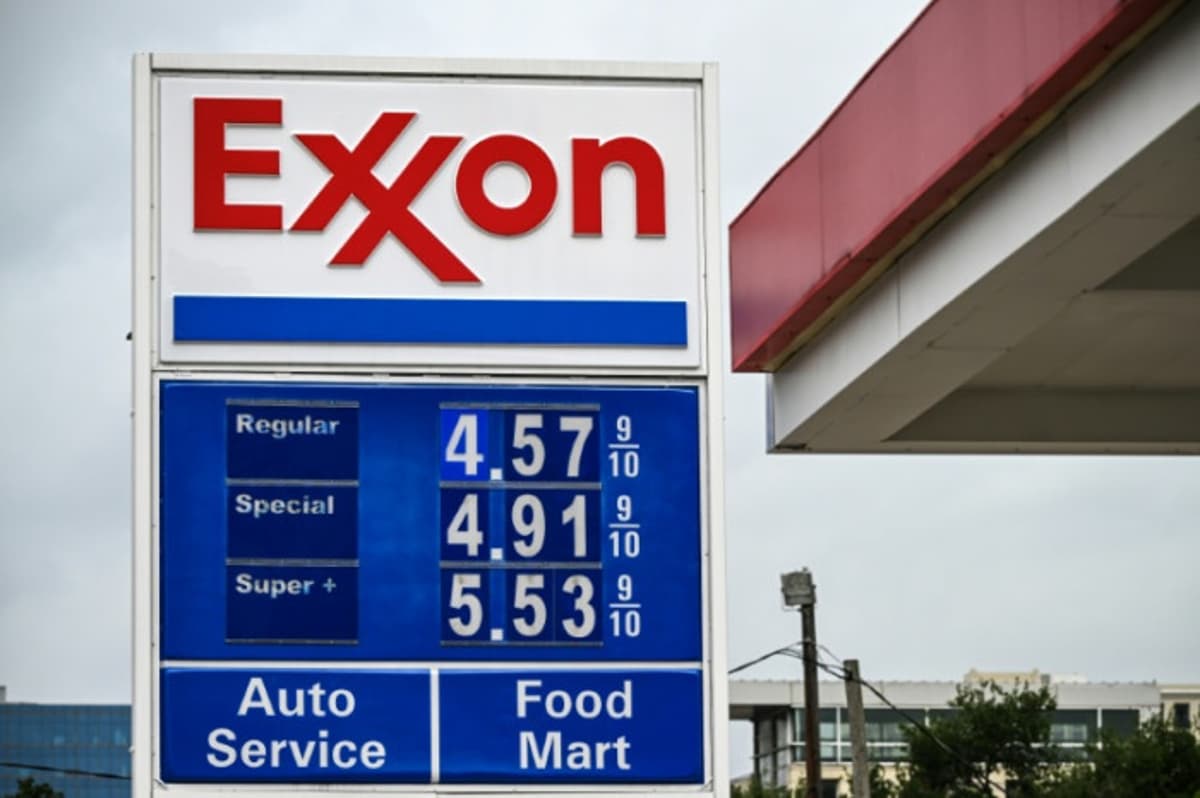
US First-Quarter Growth Rebounds Less than Expected as Inflation Surges
U.S. gross domestic product expanded at a 2.0% annualized pace in Q1, falling short of the 2.2% consensus but well above the 0.5% rate recorded in the prior quarter. Growth was anchored by a sharp rebound in business investment, especially...
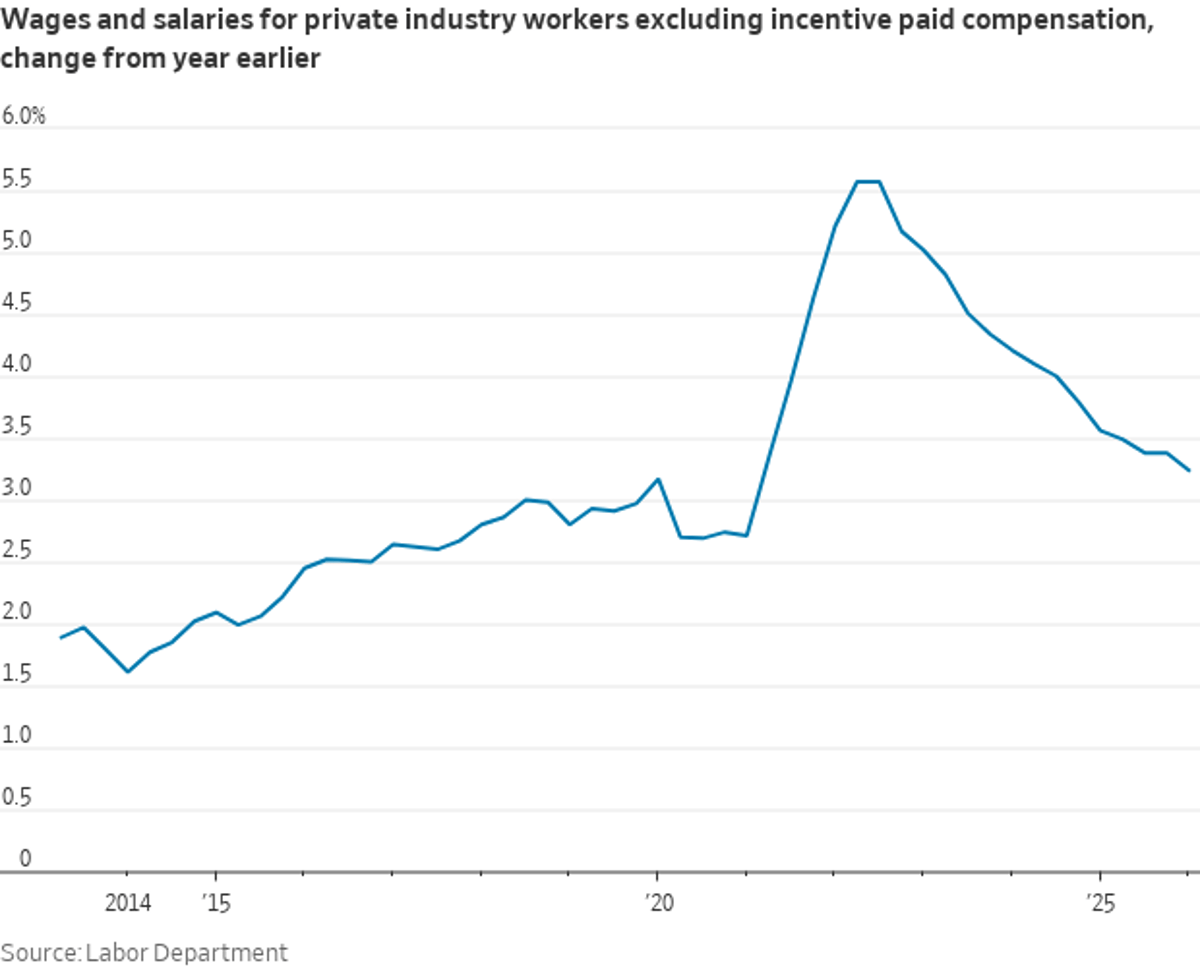
Private‑sector Wage Growth Eases to 3.2% in Q1
Private-sector pay growth decelerated ever so slightly in Q1 when looking at wages and salaries for private sector workers ex-incentive paid occupations. It was +3.2% in Q1 from a year earlier, vs 3.4% in Q4 and +3.6% in the same quarter...
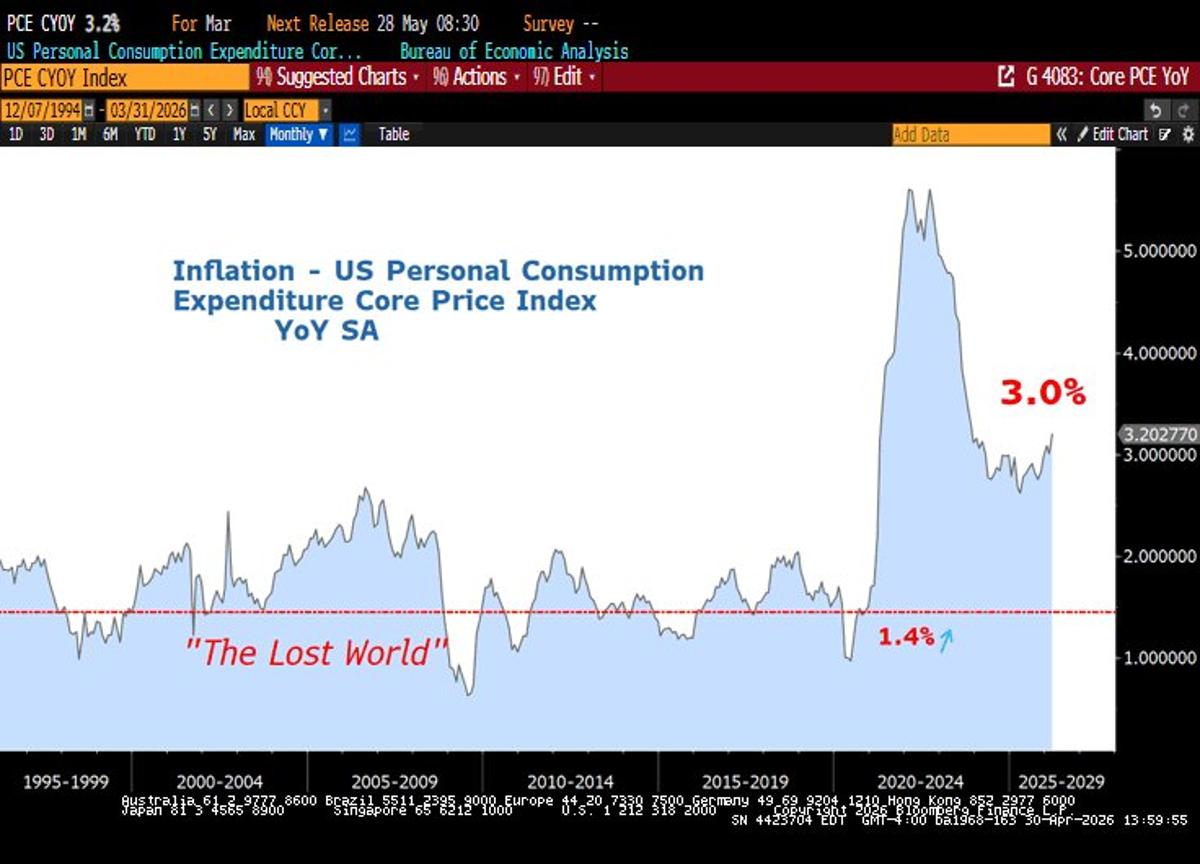
Fed Quietly Admits 2% Target Is Really 3%
Federal Reserve - "We are really committed to our 2% inflation target, we mean 3%." *Special thanks to the Bloomberg terminal. https://t.co/9T3yivFz8n
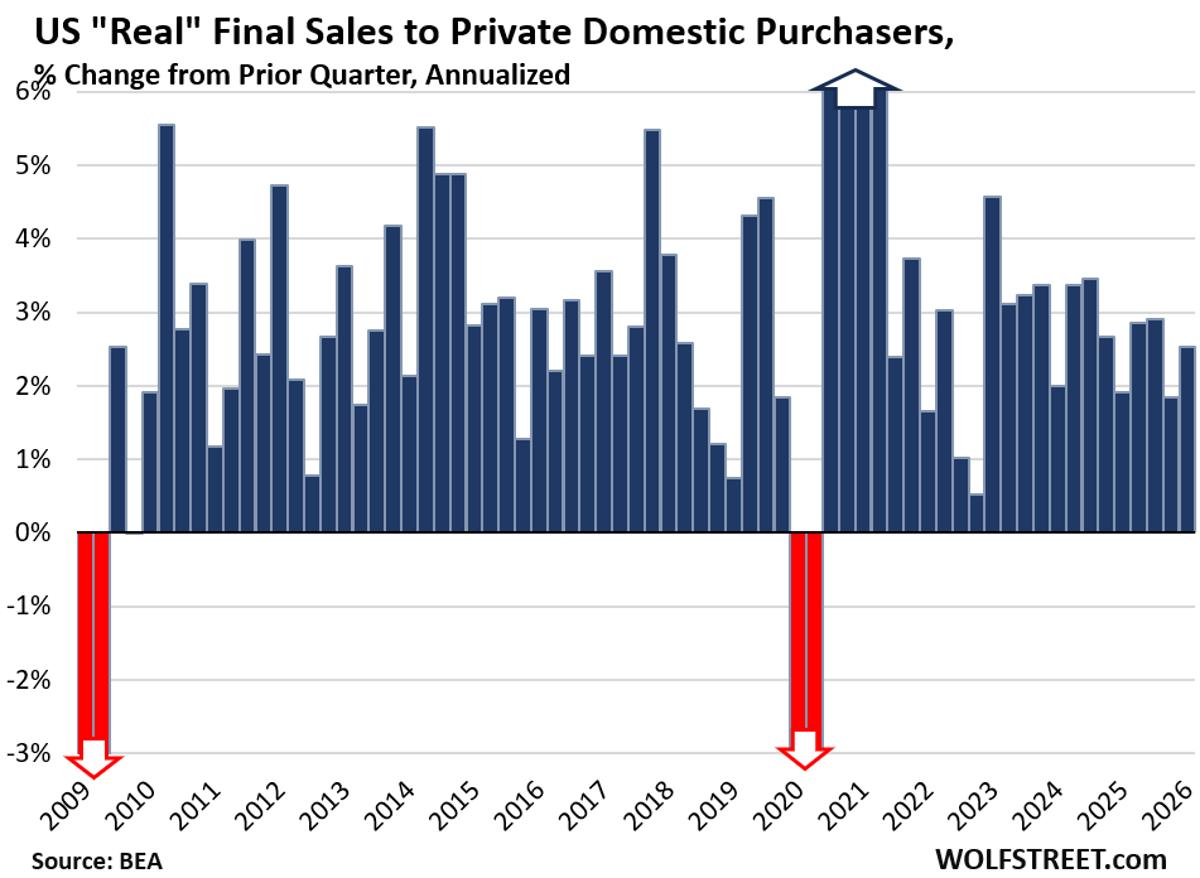
AI Fuels 2.5% Q1 GDP Growth Amid Shrinking Government Spending
Without Government Spending & Trade, GDP Rose by 2.5% in Q1, Boosted by AI Investments. Debt-to-GDP ratio Ticks up to 122.6%. Consumer Spending Was OK-ish. Federal government spending spiked back partially after collapsing during the shutdown. Trade worsened https://t.co/8UANSTsuey
Cross‑border Debt Now Props the Dollar, Fuels Deficits
These days, the dollar is supported less by the US Navy, and more by all the crossborder dollar-denominated debt outstanding. But the real punchline is that it's also the source of the US structural trade deficits and industrial stagnation.
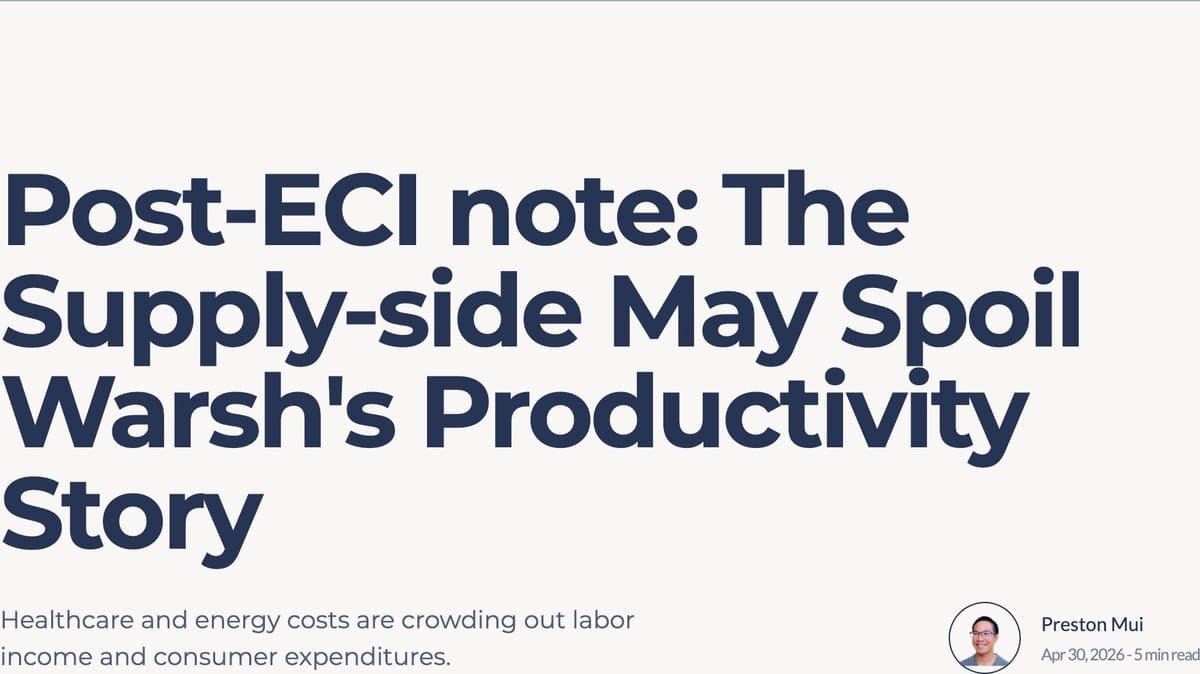
Supply‑side Pressures Threaten US Productivity and Wages
Check out @PrestonMui's latest: The Supply-side May Spoil Warsh's Productivity Story The US economy is facing multiple pressures: tariffs, AI bottlenecks, war...Now healthcare costs are eating into wages Productivity was poor in Q4. Will be in Q1 too https://t.co/RBInolTCWS https://t.co/OAVJH4tUc4
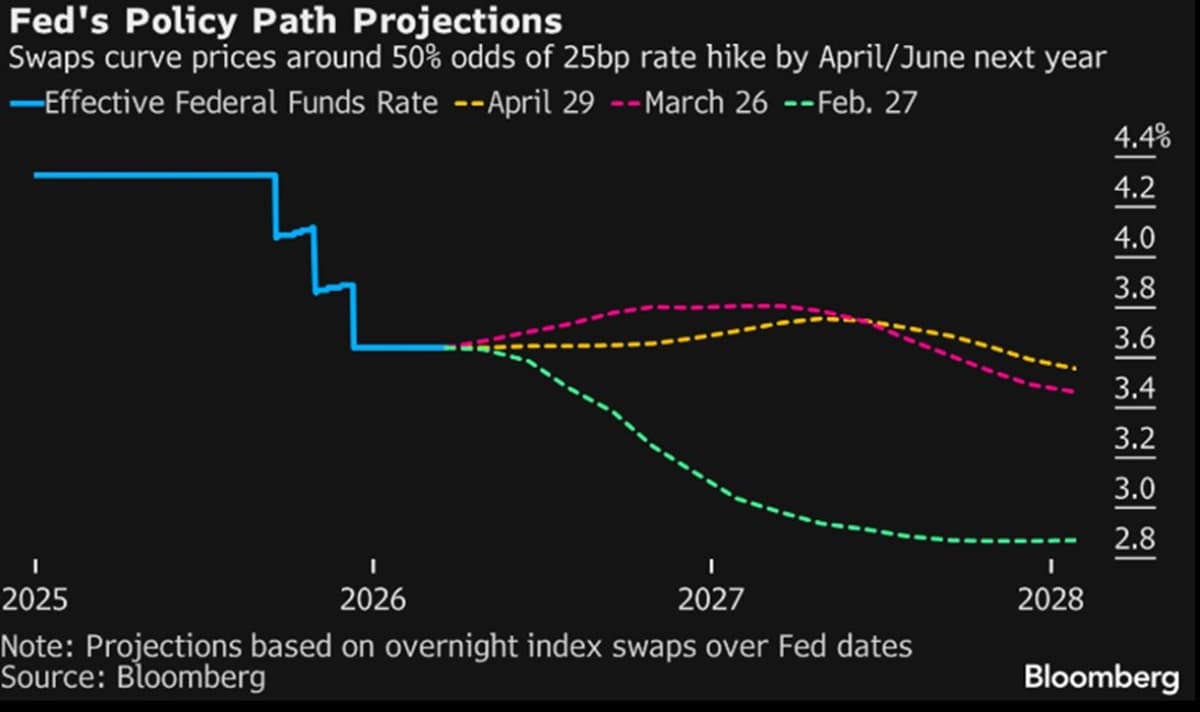
Rate Cuts Done, Fed May Hike by 2027
The interest rate cutting cycle is officially over. With previously forecast rate cuts off the table, the market is now pricing in 50% odds the Fed will hike rates by April 2027. Position accordingly. https://t.co/LBGUwo4wXJ
Tariffs Drive Policy; Deny It, Adopt Hawkish Stance
If you don't think this is driven by tariffs, then you probably should be a lot more hawkish in your monetary policy views (all else equal)
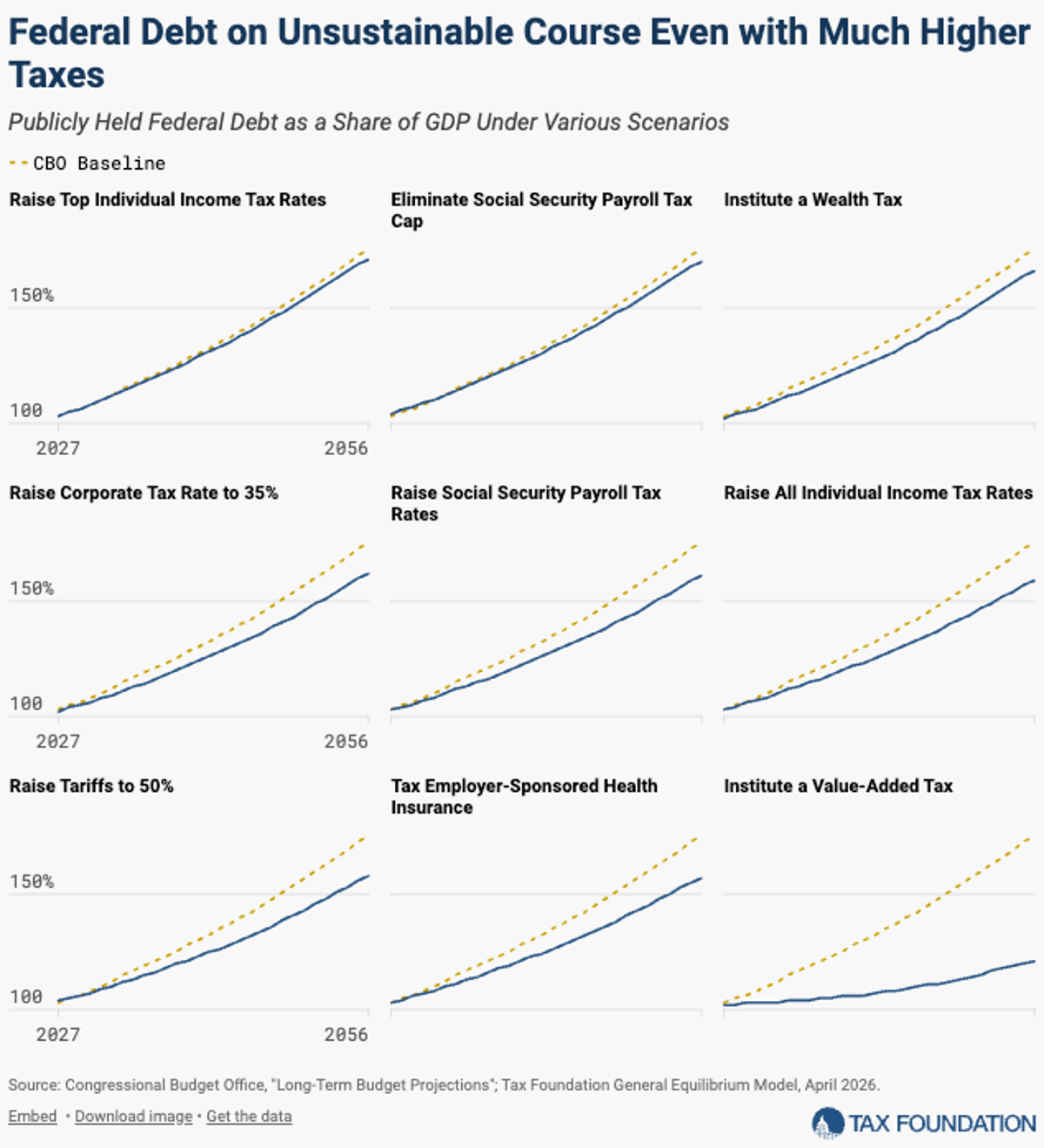
Popular Tax Proposals Fail to Fund Debt Solution
New @TaxFoundation research from @EconoWill on the troubling trajectory of the national debt and the role of tax reform in reaching a solution: the most popular proposals, from wealth taxes to tariffs, cannot produce sustainable revenues sufficient to address the debt...
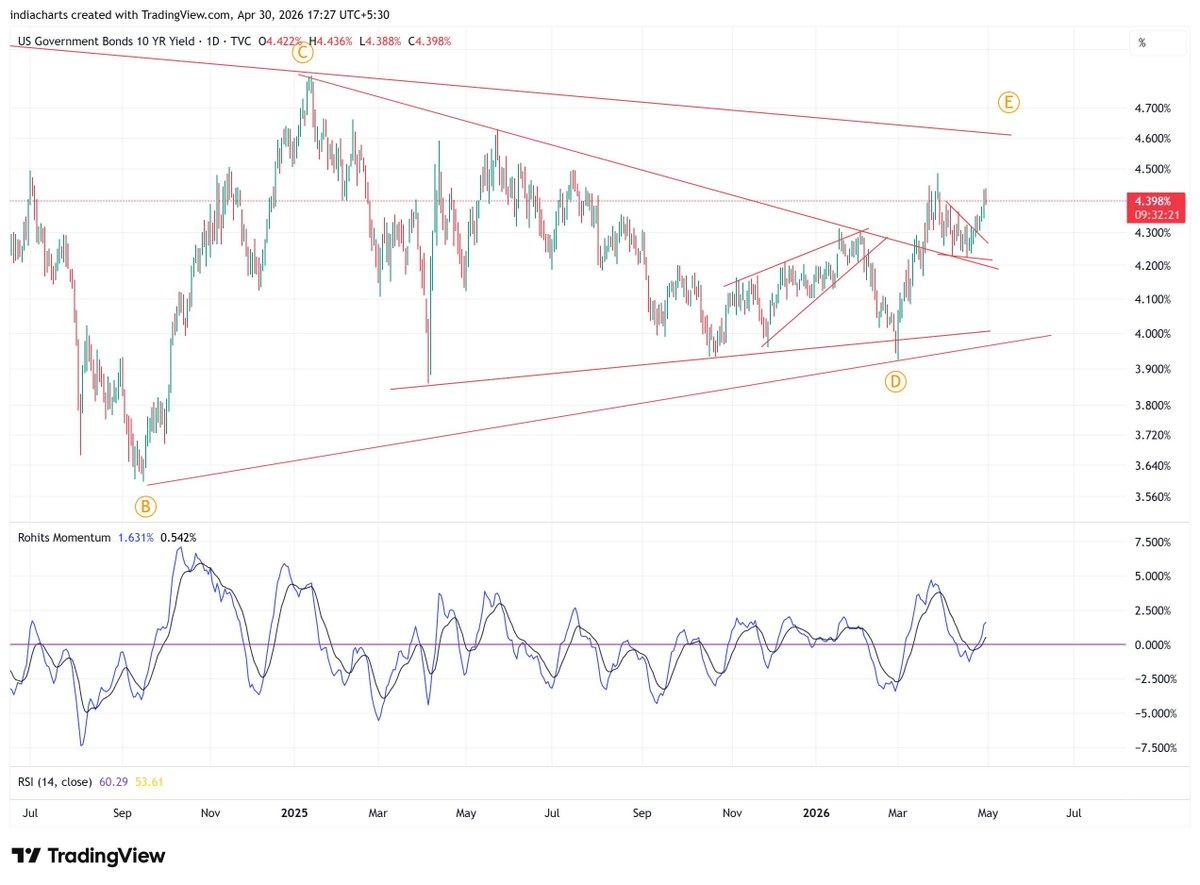
10-Year Yield Near Breakout, Markets Brace for Volatility
US 10-Year Yields are approaching a crucial breakout zone—are we heading toward the final leg higher? This could trigger volatility across equities and signal a major macro shift. 👉 Read the full analysis: https://t.co/O1bdBUqOoi https://t.co/tP9WV8oG6w
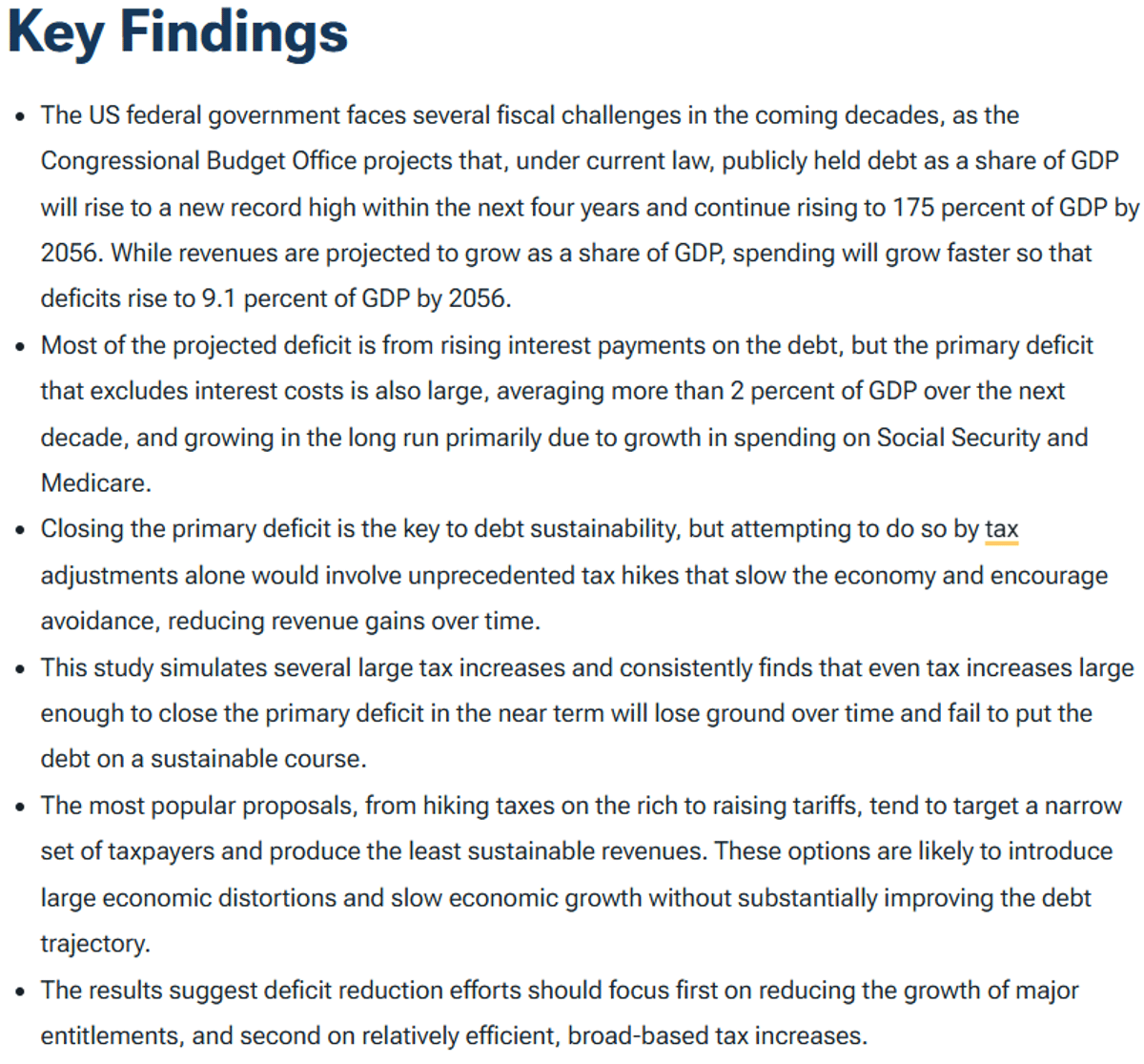
Debt Crisis Deepens; Simple Tax Hikes Won’t Fix It
🚨New report out today on the unsustainable federal debt trajectory, what's driving it, and what tax policy can do about it. Several fun charts but not a pretty picture. Hopefully dispels the myths of easy solutions, such as tax hikes...
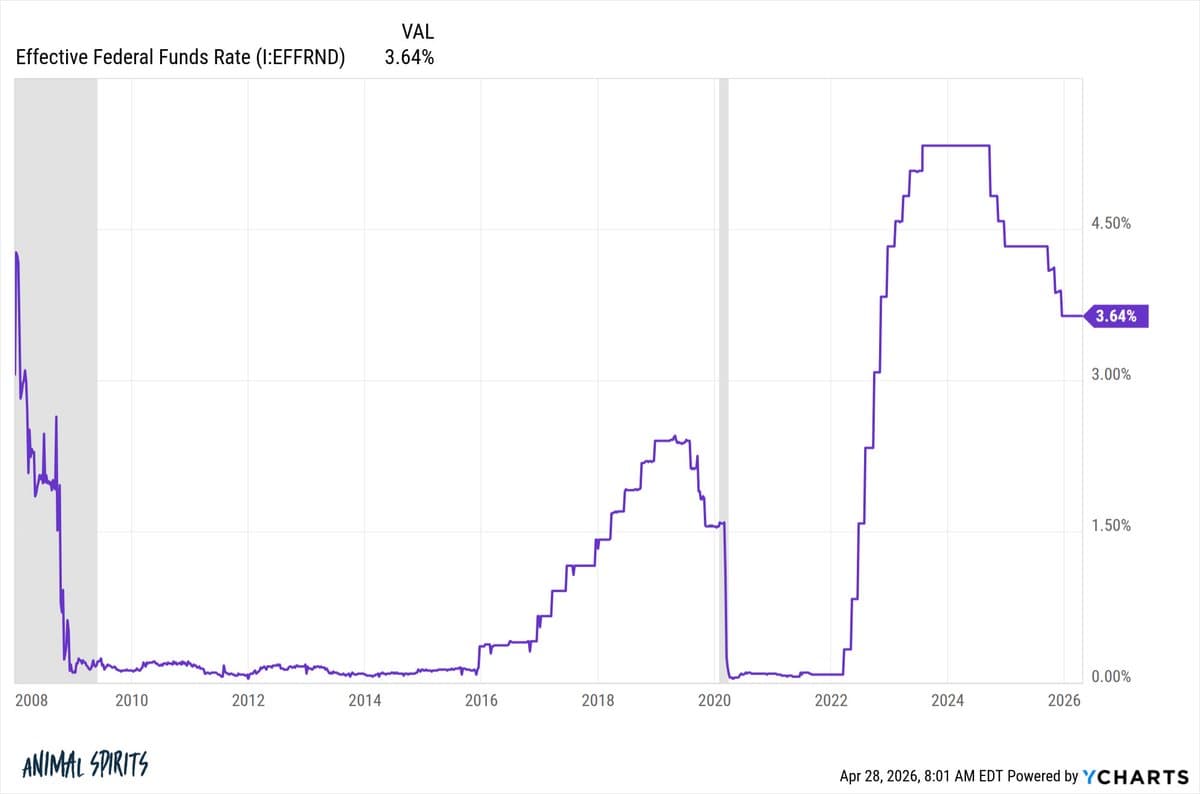
Fed's Rate Moves Defy Crisis Predictions
The Fed kept rates at 0% for a long time Lots of pundits predicted it would lead to a crisis and maybe even hyperinflation Didn't happen Then they raised rates b/c of the pandemic inflation Still no crisis Why? https://t.co/JqtrhQ1AHs https://t.co/g75B9IkwoQ
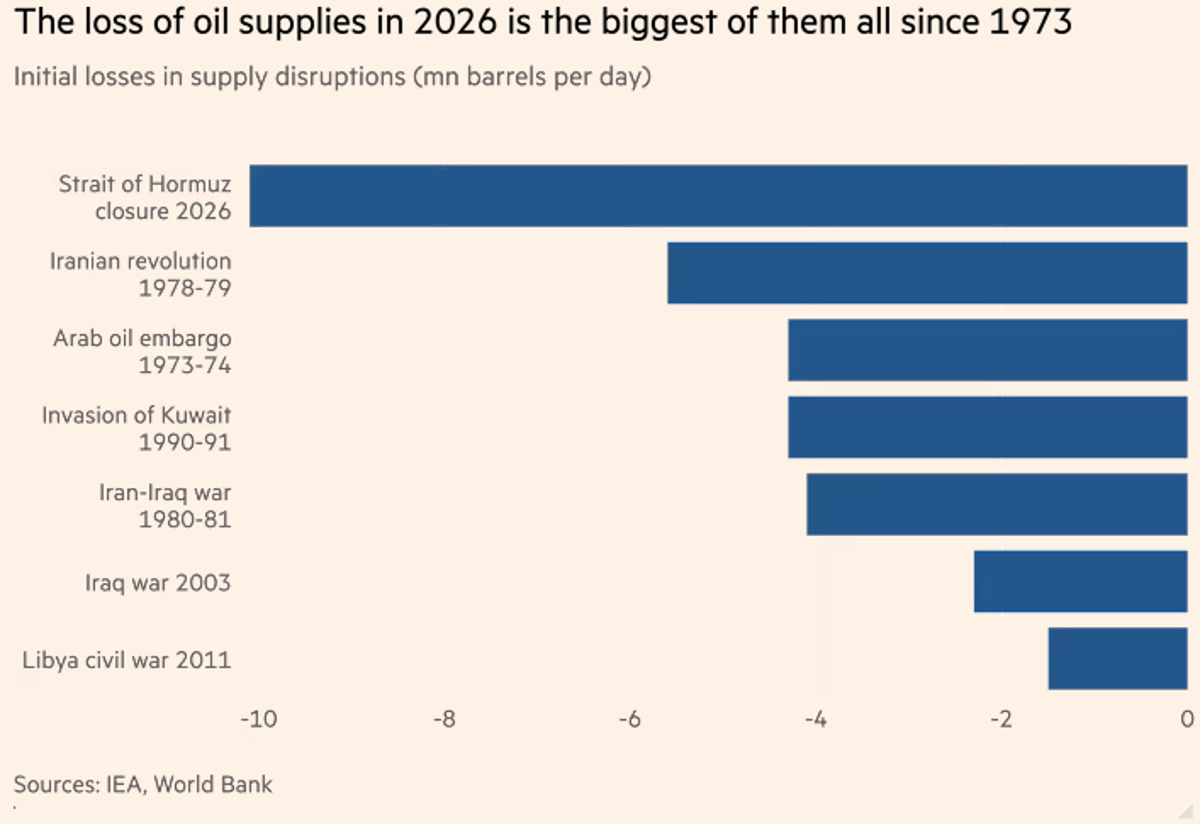
US Economy Proves Teflon Against Decade’s Crises
One of the big lessons of the 2020s is the US economy can sustain massive disruptions and keep chugging along The pandemic Supply chain shocks 9% inflation Rising rates Tariffs War Now oil It's the Teflon economy https://t.co/SrFxevPWeG
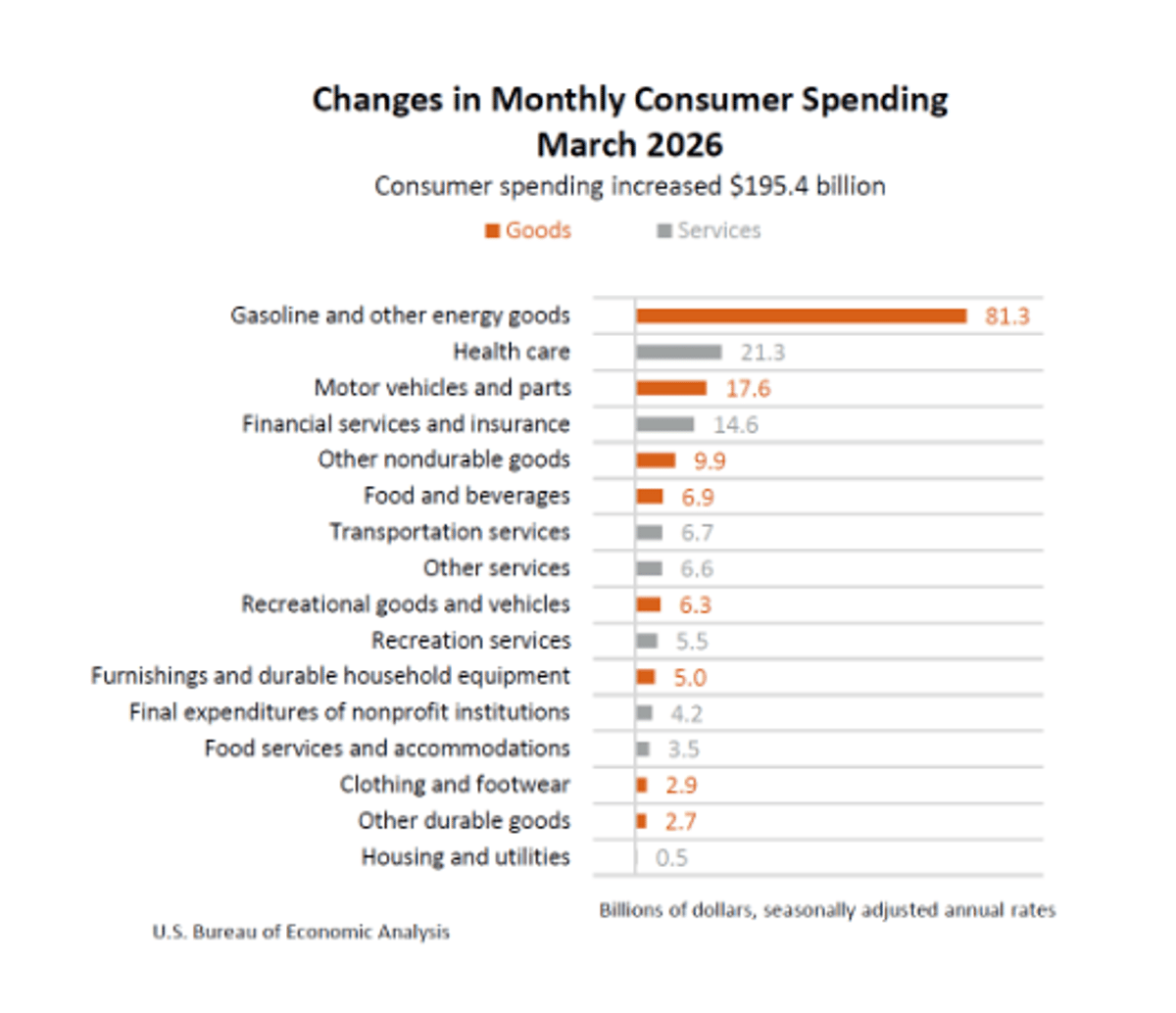
Consumer Spending Rises, Driven Solely by Necessities
Really ugly consumer spending number, with nearly all of the increase going to gasoline, health care, and financial services - aka necessities. https://t.co/c769eaCaLK https://t.co/0fOen66jNp
War Saves Fed From Failed Inflation Forecast
Yep, though the Fed will never admit they had a failing inflation forecast. The war bailed them out.

AI Spending Won’t Shield Economy From Recession
Q1 GDP is out, and the strongest piece of the economy is business investment (data center construction and AI spending). People will try to tell you AI can keep us out of a recession. Don't believe them. The facts say otherwise. https://t.co/uRz236P0fY