
Mike Lustgarten Video Series
Dr. Natalia Mitin’s video series argues that conventional CBCs miss critical immune aging signals, showing that adaptive immunosenescence typically precedes the accumulation of senescent cells and that indiscriminate senolytic use harms the majority of patients. The series also highlights centenarians’ unique immune phenotypes—marked by extreme HSC clonality and expanded CD4⁺ cytotoxic T‑cells—while proposing the kynurenine‑to‑tryptophan ratio as an affordable proxy for neurofilament‑light brain damage. Finally, a longitudinal biometric record demonstrates that targeted lifestyle changes can reverse age‑related autonomic decline, lowering resting heart rate and boosting heart‑rate variability.
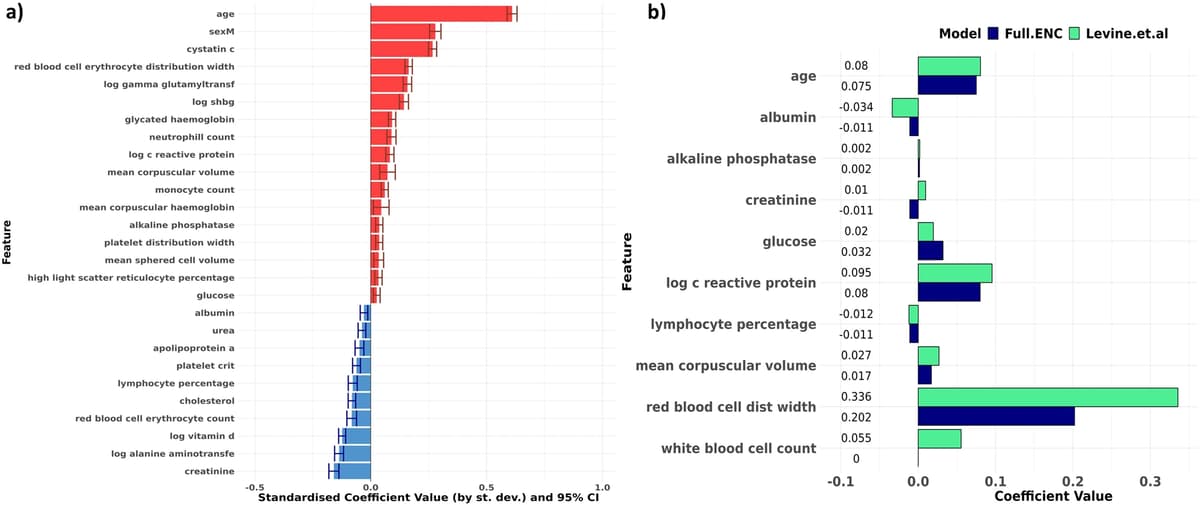
Biological Age Estimation Using Circulating Blood Biomarkers
A new study using UK Biobank data (n=306,116) applies an Elastic‑Net Cox model with 25 blood biomarkers to estimate biological age and predict mortality risk. The model achieves a C‑Index of 0.778, an 11% relative improvement over the established PhenoAge...
Mike Lustgarten Video Series
The report provides a peer‑review of a third‑party critique that challenged speculative longevity protocols derived from animal studies. It confirms that the critique correctly identified over‑extrapolation of pre‑clinical data, such as unvalidated mushroom and cruciferous vegetable regimens, while also exposing...
Mike Lustgarten Video Series
The Mike Lustgarten video series presents a detailed analysis of the immunometabolic paradigm, arguing that intestinal immune dysfunction is the primary driver of systemic aging and metabolic decline. It links Western dietary components—saturated fats, refined sugars, and food additives—to gut...
Pushing the Limits of Cardiovascular Longevity: Intensive Blood Pressure Targets Safely Extend Lifespan in the Very Old
A large real‑world analysis of 132,430 hypertensive adults aged 60 and older shows that targeting blood pressure below 130/80 mmHg cuts major cardiovascular events and all‑cause mortality, even in patients over 80. The intensive strategy outperformed the standard 130‑140/80‑90 mmHg range without...
Gene Therapy for Aging and Longevity (Paper June 2026)
A new review outlines gene‑therapy as a potential avenue to slow aging, boost healthspan, and treat age‑related disease by targeting genetically modifiable pathways. It highlights mouse studies where AAV‑delivered telomerase, SIRT6, KL and other genes extended lifespan without raising cancer...
Do You Use Low-Dose Doxycycline?
Low‑dose doxycycline (20 mg twice daily) is being highlighted for its anti‑inflammatory and blood‑brain‑barrier‑protective properties, especially in ApoE4 carriers. At 40 mg per day it inhibits matrix‑metalloproteinases without significant antibacterial activity, minimizing gut‑microbiome disruption. Clinical anecdotes and small trials cite benefits in...
The Stiffening Trap: How Aging Tissues Strangle Their Own Blood Supply
The article reviews commercially available fisetin supplements that claim enhanced bioavailability, highlighting a mismatch between low‑dose daily products and the higher doses used in senolytic protocols. Life Extension’s Bio‑Fisetin delivers only 8 mg per capsule despite a 25× absorption claim, while...
The Stiffening Trap: How Aging Tissues Strangle Their Own Blood Supply
A recent perspective piece evaluates five aging‑tissue interventions—Urolithin A, fisetin, pyridoxamine, NMN, and structured aerobic exercise—by mapping each to a mechanistic node in a proposed microvascular‑perfusional loop. The author validates dosing protocols against pre‑clinical and clinical studies, then ranks the options...

A Combination Senolytic and Stem Cell Therapy Assessed in a Mouse Model of Aging
The study published in Scientific Reports evaluated a novel senolytic vaccine (SenoVax) together with autologous, age‑specific mesenchymal stem cells (pMSCs) in accelerated‑aging mouse models of liver failure. Mice receiving the combination showed marked improvements in liver function tests, reversal of...
There Are Multiple Distinct Approaches to Metabolic Adjustment for Greater Longevity
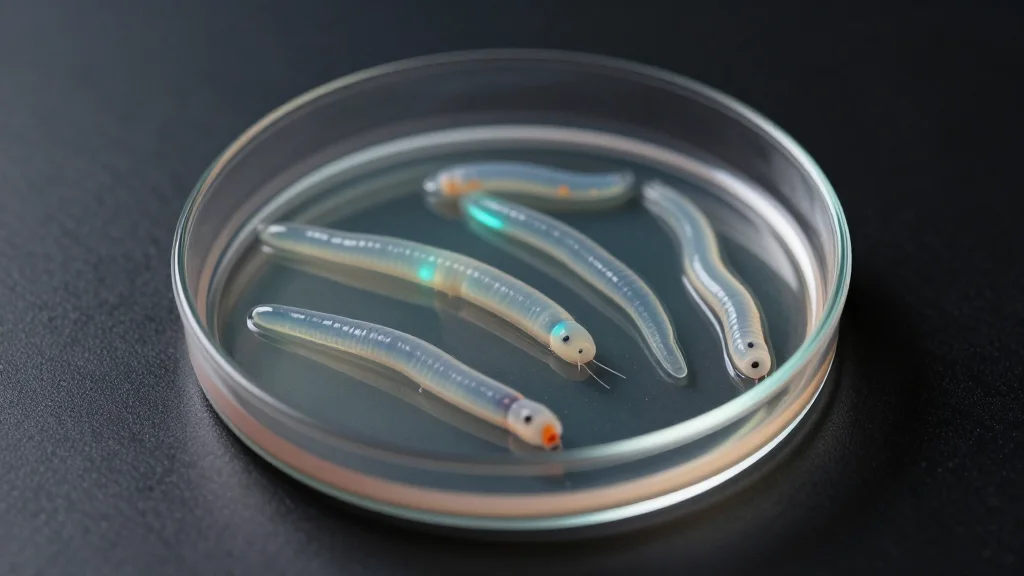
Researchers used RNA sequencing on nine long‑lived C. elegans mutants representing seven longevity pathways and discovered three distinct gene‑expression clusters linked to lifespan extension. Across the mutants, 196 genes were consistently up‑regulated and 62 down‑regulated, with the former enriched in...
One Molecule to Rule Them All? Why the Anti-Aging World Is Quietly Abandoning "Take More NAD+"
A new Chinese review in *Mechanisms of Ageing and Development* positions NAD+ as the metabolic hub linking all fourteen hallmarks of aging, but warns that indiscriminate supplementation is becoming obsolete. The authors map a feedback loop where cellular damage depletes...
Old Brains, Young Brains, Same Smoke: Why Cannabis Cools Inflammation in Aged Mice but Stokes It in Young Ones
University of Florida researchers exposed young (4 months) and aged (22 months) mice to cannabis smoke for 30 days. Aging alone caused a broad rise in inflammatory proteins across serum, prefrontal cortex and hippocampus. In the hippocampus, cannabis smoke lowered IL‑13 and Dkk1...

Ability to Resist Mutational Damage in Fibroblast Cells Correlates with Species Life Span
Researchers compared primary fibroblasts from ten mammalian species spanning short to long lifespans, exposing them to a low, non‑toxic dose of the mutagen N‑ethyl‑N‑nitrosourea (ENU). Using single‑molecule sequencing they quantified excess single‑nucleotide variants (ΔSNVs) as a proxy for DNA‑repair efficiency....

Reducing Loss of Calcium Homeostasis to Treat Aging in Mice
Researchers uncovered that age‑related disruption of calcium homeostasis causes cytoplasmic buildup of the calcium‑binding protein S100A6, which drives DNA damage, cGAS‑STING activation and the pro‑inflammatory SASP secretome. By antagonizing serotonin receptors HTR2B/2C, the antidepressant mianserin restores calcium balance, reduces senescent...

Aslihan Ozgur of TheLifeCo on the Caribbean’s First Longevity Village, Physician-Led Detox, and the Future of Health-Integrated Hospitality
TheLifeCo General Manager Aslihan Ozgur discussed the Caribbean’s inaugural Longevity Village, a physician‑led detox program, and the broader shift toward health‑integrated hospitality. The project blends residential living, medical supervision, and luxury hotel services to extend guests’ healthspan. Ozgur highlighted partnerships...
Reversing Humanity’s #1 Killer - Arterial Plaque | Dr. Matthew O’Connor - Cyclarity Therapeutics
Cyclarity Therapeutics, a biotech focused on engineered cyclodextrins, reported first‑in‑human Phase 1 data for its dimeric molecule UDP‑0003. The study in 72 healthy volunteers demonstrated that the drug is safe, has a three‑hour half‑life, and produces a dose‑dependent increase in urinary...

The "Black Gold" Of Grains: Black Rice Intake Sharpens Memory and Dampens Inflammation in Seniors
A recent clinical trial found that daily intake of black rice significantly sharpened memory and lowered inflammation markers in seniors aged 65 and older. Participants who consumed a half‑cup of cooked black rice for 12 weeks showed a 15% improvement...
Lifestyle and Metformin Interventions and Risk of Multimorbidity in Adults With Prediabetes (Paper June 15 2026)
A 21‑year follow‑up of the Diabetes Prevention Program shows that participants who received an intensive lifestyle intervention had a 21% lower risk of developing multimorbidity compared with placebo, while metformin offered no measurable benefit. The study linked original trial participants...
Inside Putin’s $26 Billion Quest for Longevity (WSJ)
Russia has earmarked a $26 billion "New Health Preservation Technologies" program to accelerate anti‑aging research, a priority championed by President Vladimir Putin. The initiative focuses on gene‑therapy, 3D bioprinting of tissues, and xenotransplantation—growing human organs in genetically engineered mini‑pigs. Led by...

Rugiet Sets a New Standard for Performance Medicine with Launch of Physician-Prescribed Peptide and Longevity Therapies
Rugiet, the men’s health performance‑medicine firm that has served more than 500,000 patients, announced a new longevity line featuring physician‑prescribed NAD+, Glutathione, Lipo‑C, L‑Carnitine and Sermorelin. The compounds will be dispensed by a 503A compounding pharmacy, third‑party tested, and integrated...

Naked Mole Rats Exhibit a Consistently Low Resting Metabolic Rate with Aging
A new study quantifies resting metabolic rate (RMR) in naked mole‑rats, finding an average of 45.5 ml O₂ per hour—significantly lower than the 51.6‑71.1 ml O₂ range predicted for similarly sized mammals. Body mass explains most of the variation in RMR, while age shows...
Thrombospondin-1 Secreted by Senescent Cells Impairs Bone Regeneration
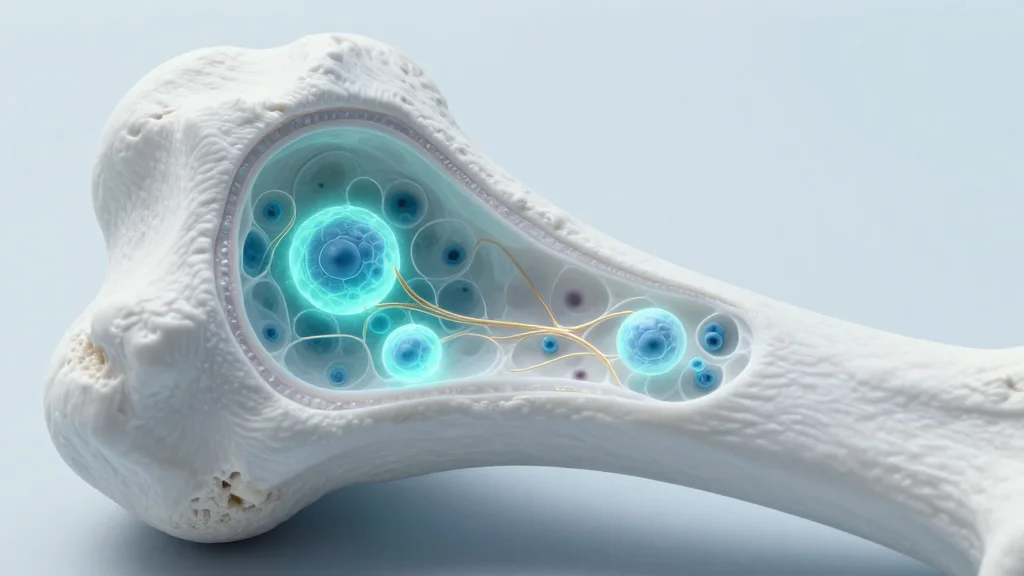
Researchers identified thrombospondin‑1 (Thbs1) secreted by senescent bone‑marrow stromal cells as a driver of chronic inflammation and impaired bone regeneration. Thbs1 binds the TGF‑β type II receptor on macrophages, suppresses PINK1‑Parkin mitophagy via Smad3, and forces a shift toward pro‑inflammatory M1...
Running Low on Red: Does a Falling Red Blood Cell Count Set a Ceiling on Human Lifespan?
The article separates two problems—keeping hematopoietic stem cells (HSCs) youthful versus boosting mature red‑cell output. It reviews a mouse study showing rapamycin prevents HSC enlargement when given early but cannot reverse damage in old mice, and surveys emerging strategies such...

Sirolimus Now Available at TrumpRx Dot Gov ($0.66/mg)
Sirolimus, the rapamycin analog touted for longevity, is now listed on TrumpRx.gov at roughly $0.66 per milligram, translating to about $30 for a 30‑day supply of 1 mg tablets. The article breaks down three primary sourcing channels—telehealth providers, low‑cost domestic fulfillment...

The Bidirectional Relationship Between the Burden of Cellular Senescence and Immune Aging
Cellular senescence triggers a pro‑inflammatory secretome that, in youth, is swiftly cleared by immune cells. As the immune system ages, its surveillance wanes, allowing senescent cells to accumulate and amplify chronic inflammation. This bidirectional feedback loop accelerates tissue dysfunction, fibrosis,...

Late-Life Gene Therapy Boosts Lifespan in Mice by 20%
Researchers at the Autonomous University of Barcelona used an adeno‑associated virus to deliver the FGF21 gene to leg muscles of 13‑month‑old male mice, creating a permanent hormone factory. The therapy raised circulating FGF21, leading to weight loss without lower food...
Diet and Healthspan - Uncertain but High Value
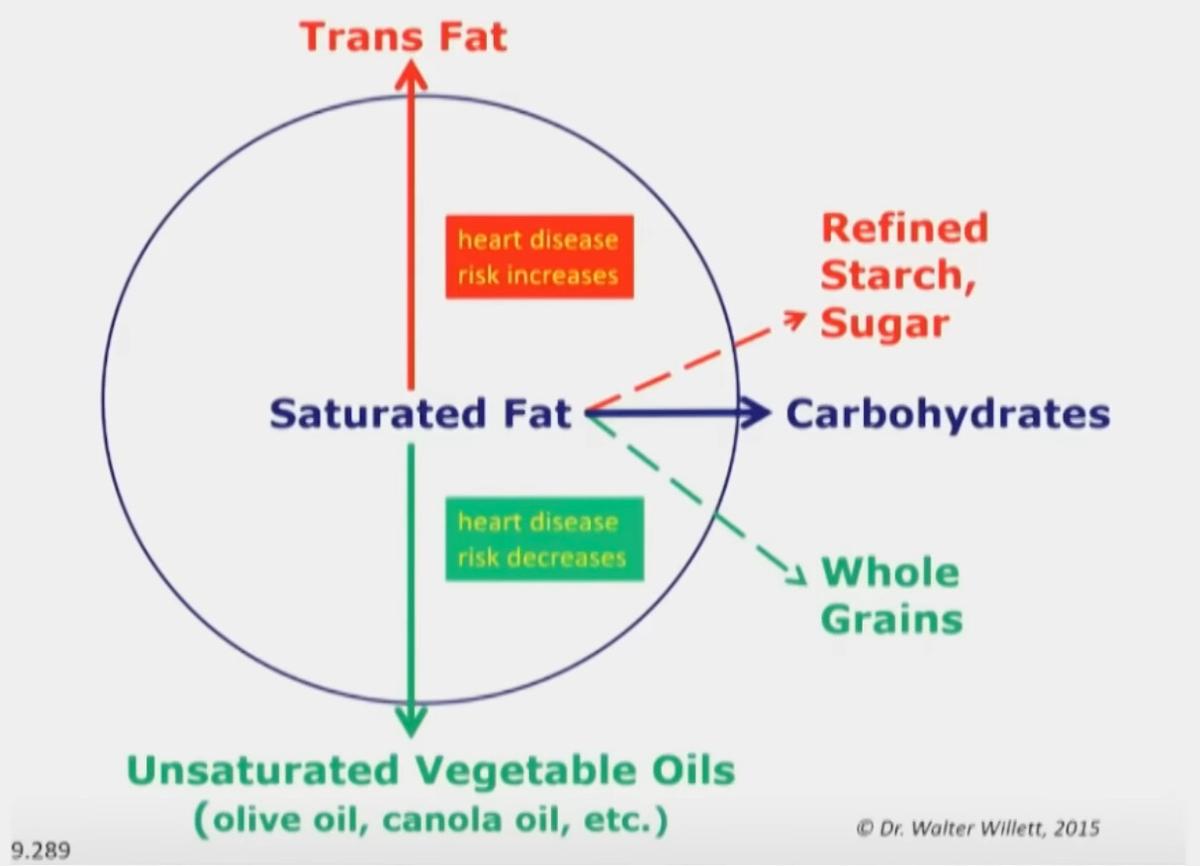
A new analysis of UK Biobank data by University of Bergen researchers finds that adopting a plant‑forward, whole‑food diet can add roughly a decade to life expectancy for middle‑aged adults. The study quantifies gains of 10.8 years for 40‑year‑old men...

Using Macrophages to Clear Circulating MMP9 Improves Bone Tissue in Aging Mice
Researchers engineered apoptosis‑mimicking lipid nanoparticles to deliver short‑lived mRNA to macrophages, turning them into factories that secrete anti‑MMP9 antibodies. The resulting clearance of circulating matrix metalloproteinase‑9 (MMP9) in aged mice restored bone microarchitecture, enhanced cartilage integrity, and accelerated fracture healing....
The Antioxidant Paradox: High-Dose Vitamins Blunt Exercise Adaptations in Older Adults
The review finds that high‑dose vitamin C and E combined with collagen blunt exercise‑induced muscle growth, bone density gains, and neuroprotective adaptations in older adults, while moderate doses support structural health. Randomized trials show lean‑mass increases of only 1.4 % versus 3.9 %...
The Longevity Revolution Is Here | Lifespan with Dr. David Sinclair - Season 2, Ep 1
The episode introduces the Information Theory of Aging, arguing that epigenetic drift—not random molecular damage—drives age‑related decline. Researchers validated this by using the ICE mouse model, which accelerates aging through targeted DNA breaks without altering the genome. A major milestone...
Fit Body, Resilient Brain: High Cardiorespiratory Fitness Halves Alzheimer's Pathology Conversion Risk and Blunts Cognitive Decline
A longitudinal study of 533 middle‑aged adults shows that high estimated cardiorespiratory fitness (eCRF) halves the risk of converting to amyloid‑beta PET positivity and reduces plasma p‑tau217 conversion by over 50%. While fitness does not slow the accumulation of amyloid...
Decoding Human Longevity: Genetic and Molecular Insights From Accelerated to Successful Ageing
The 2024 narrative review frames human ageing as a spectrum between accelerated progeroid disorders and successful longevity in centenarians and long‑lived species. It proposes a genetic dichotomy where damaging variants drive instability while protective alleles reinforce resilience across shared pathways...
David Sinclair (Life Biosciences) OSK Human Trials Is Now Live. We Will See OSK Being Injected Into Humans in 2026
Life Biosciences announced FDA IND clearance for its OSK‑based gene therapy ER‑100, launching the first human trial aimed at age‑related glaucoma in 2026. The treatment uses AAV vectors to deliver the Oct4‑Sox2‑Klf4 (OSK) transcription factors, which have already extended mouse...
The Silent Tax on Memory: How Internalized Stress Drives Cognitive Decline
A new longitudinal study of 1,528 older Chinese Americans finds that internalized stress, defined by high perceived stress, hopelessness, and low conscientiousness, drives accelerated memory decline. While social engagement and neighborhood cohesion boost baseline cognitive scores, they do not affect...
Gut Feelings: How the Microbiome Programs Cellular Longevity
A new review in Frontiers in Aging introduces the microbiome‑gerogene axis, arguing that gut microbes act as upstream regulators of cellular aging networks. Age‑related dysbiosis reduces key metabolites, leading to leaky gut, chronic inflammation and epigenetic drift that accelerate organ...
Bryan Johnson Longevity Protocol Discussion (2024 / 25 /26)
Bryan Johnson’s high‑priced longevity protocol was dissected by Dr. Gil Carvalho, who found its scientific core aligns with basic nutritional principles rather than exclusive commercial products. The analysis highlights that indefinite caloric restriction can endanger lean, active individuals, while a...
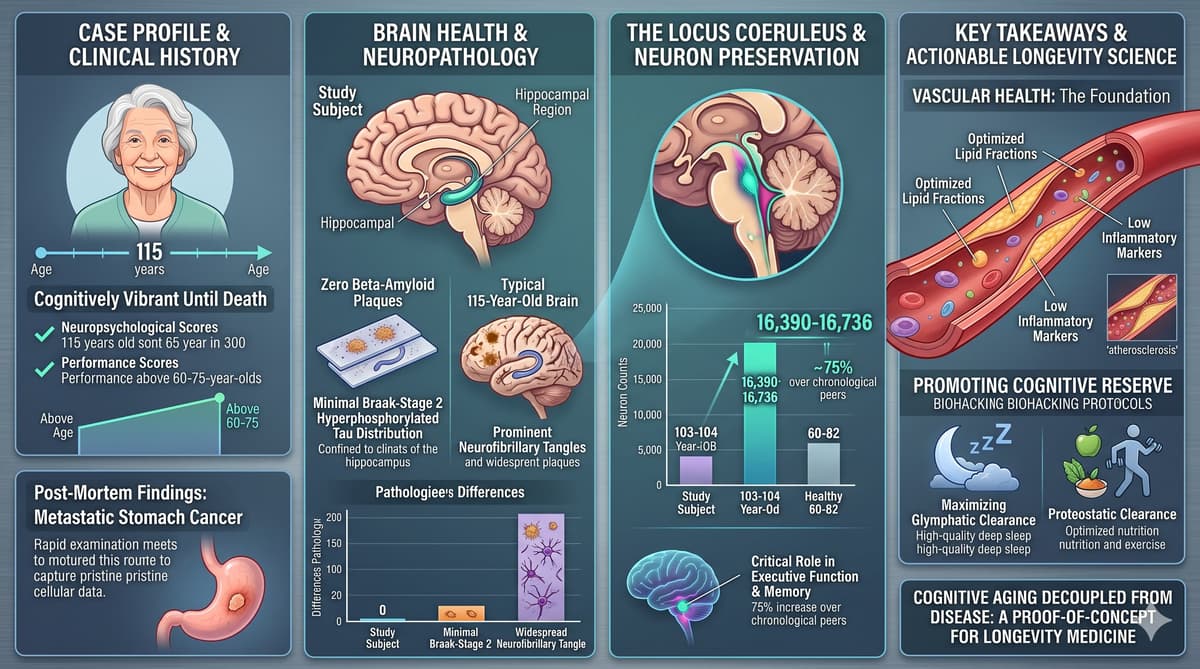
The 115-Year-Old Brain That Escaped Aging: Supercentenarian Autopsy Challenges the Inevitability of Cognitive Decline
A new longitudinal analysis of 340 Dutch centenarians reveals that a baseline Mini‑Mental State Examination (MMSE) score of 26 or higher sharply separates those who maintain cognitive health from those who decline. Seventy‑three percent of the high‑scoring group preserved mental...
The 115-Year-Old Brain That Escaped Aging: Supercentenarian Autopsy Challenges the Inevitability of Cognitive Decline
Researchers have leveraged the post‑mortem tissues of Hendrikje van Andel‑Schipper, a 115‑year‑old supercentenarian, to uncover unprecedented insights into human aging. Whole‑genome sequencing showed her blood derived from only two hematopoietic stem‑cell clones and that telomeres in blood were 17 times shorter...

Predicting and Preventing Alzheimers & Dementia (and Minimizing Risk)
Researchers now view the 40‑60 age range as a pivotal window for staving off dementia, emphasizing that habits formed in midlife can dramatically shape later cognitive health. Large‑scale studies show that staying physically active, securing seven to eight hours of...

Testosterone and Aging: What the Research Shows
Testosterone levels begin a gradual decline in men’s mid‑30s to 40s, with total testosterone falling about 0.4 % per year and free testosterone dropping roughly three times faster. The drop is driven by age‑related changes in the hypothalamic‑pituitary‑gonadal axis, Leydig cell...

Next Health Announces Inaugural Longevity Summit in Nashville Featuring Leading Health Experts
Next Health announced its first Longevity Summit, a one‑day event on September 12, 2026 at The Conrad Nashville. The summit will showcase six renowned experts in functional medicine, traditional Chinese medicine, cardiology, orthopedics, neurophysiology, and performance coaching. Attendees can engage in keynote...
The Iron Reference Misclassification: Why Standard Blood Panels Fail Precision Longevity
Standard blood panels report systemic iron markers such as serum ferritin, transferrin saturation, and total iron‑binding capacity, but these metrics only indicate extracellular iron availability, not the intracellular ferroptotic activity that drives cell death. Ferritinophagy can rapidly liberate ferrous iron,...
The Longevity Tax: Why Women's Extended Lifespan Mandates More Years in Ill Health
A new European Journal of Epidemiology study resolves the long‑standing morbidity‑mortality paradox by showing that women’s higher share of unhealthy years stems primarily from their greater longevity, not faster biological decay. Analyzing data from 22 European nations using three statistical...
Early Adulthood Cardio Fitness Predicts Vascular Aging Decades Later Better Than Cholesterol Subfractions
A 30‑year Swedish cohort study found that aerobic capacity at age 34 predicts aortic pulse‑wave velocity at age 63, out‑performing traditional and advanced lipid markers. The relationship held after adjusting for BMI, smoking, blood pressure and medication use. Women showed...
Rusting the Neurogenic Reserve: Ferroptosis as the Hidden Rheostat of Brain Aging
Researchers led by Zhang et al. (2026) identified ferroptosis as a key regulator of adult hippocampal neurogenesis, showing that iron‑dependent lipid peroxidation disproportionately eliminates quiescent neural stem cells and intermediate progenitors. Aging disrupts the balance between ferroptosis‑inducing and protective genes,...
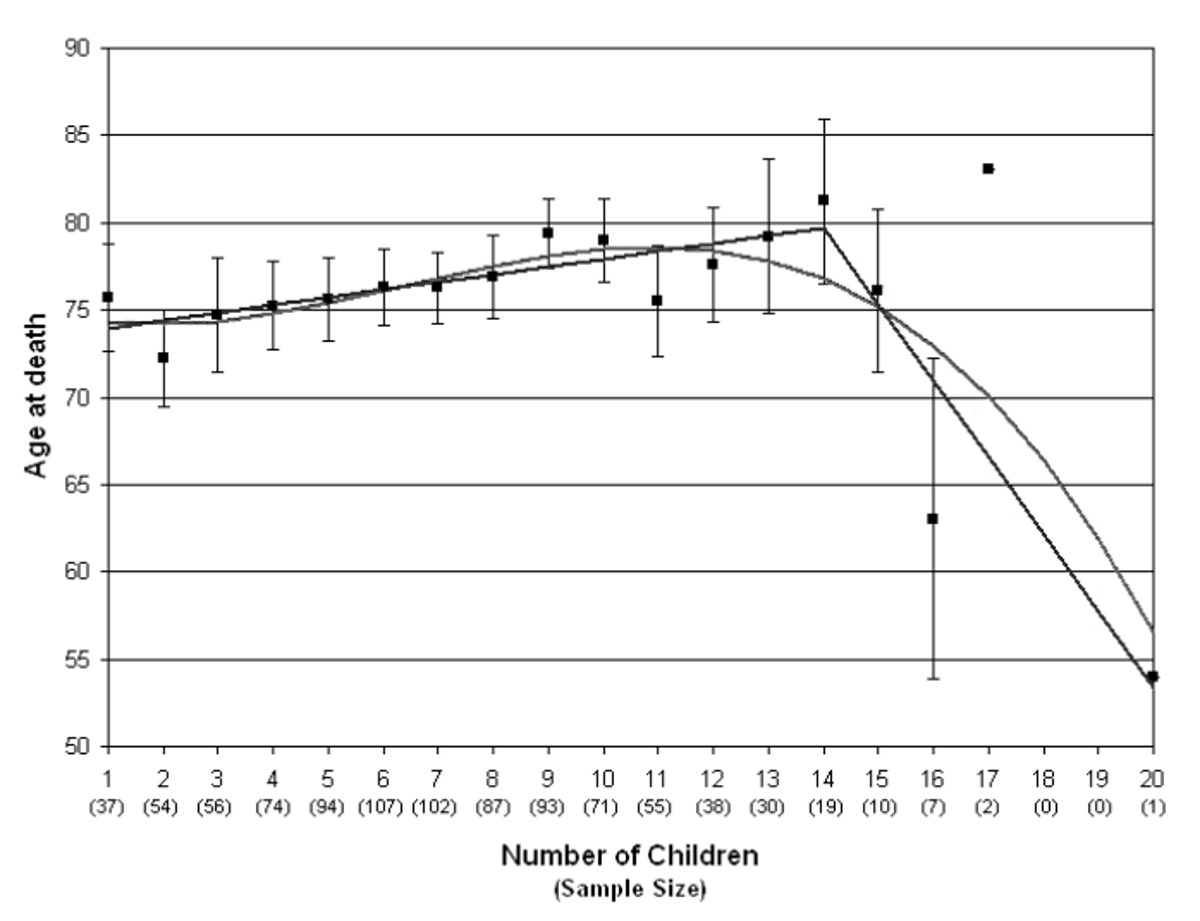
Does Having Children Extend Life Span? A Genealogical Study of Parity and Longevity in the Amish
A genealogical analysis of 2,015 Old Order Amish individuals born between 1749 and 1912 found a linear increase in lifespan with each additional child—0.23 years for fathers and 0.32 years for mothers up to 14 offspring. Women who exceeded 14...
Dividing Current Efforts to Treat Aging Between Two Camps: Senescent Cells and Metabolic Manipulation
A recent review in Cell & Bioscience categorizes anti‑aging research into two primary camps—cellular senescence and metabolic manipulation—highlighting how each targets distinct aging hallmarks. It outlines senolytics, senomorphics, and senoreversion as strategies to clear or neutralize senescent cells, while caloric‑restriction...
Omega-3 Supplements May Increase Risk of Cognitive Decline, Scientists Warn
A recent randomized trial found that DHA‑rich omega‑3 oil performed worse than placebo on cognitive measures, while EPA‑rich formulations improved memory accuracy but slowed processing speed. The results challenge the prevailing view that all omega‑3 supplements are beneficial for brain...
Strong Links Between Mitochondrial Dysfunction and Chronic Inflammation in Aging
A new review confirms that mitochondrial dysfunction is a primary driver of chronic inflammation, or "inflammaging," in older adults. Age‑related mtDNA mutations and loss of mitochondrial quality control reshape cellular metabolism, epigenetics, and stem‑cell function. The paper details how mtDNA...