
Space Force Unveils Vision for Future Space Operations in 2040
U.S. Space Force chief Gen. B. Chance Saltzman introduced the Future Operating Environment 2040 at the Space Symposium, outlining a long‑term vision for space operations through the next decade and beyond. The strategy treats space as a contested domain, emphasizing AI‑driven autonomous systems, cyber‑resilient capabilities, and protection of critical satellite infrastructure. It signals a shift from a purely supportive role to an operational battlefield mindset, guiding technology development and procurement. Saltzman described the document as a starting point, not a finished blueprint.
Teledyne Space Imaging President Megan Tremer Shares Enabling Tech for Artemis II
Teledyne’s Space Imaging division is supplying critical hardware for NASA’s Artemis II mission, including the launch vehicle stage adapter and ground‑based solid‑state power amplifiers. President Megan Tremer highlighted the company’s ability to adapt technologies originally built for flagship programs like the...
Blue Origin One Step Closer to Launching New Glenn From Vandenberg Space Force Base
Blue Origin has been down‑selected by the U.S. Space Force to develop Space Launch Complex 14 at Vandenberg Space Force Base, marking a critical step toward securing a lease and building a West Coast launch pad for its New Glenn heavy‑lift...

Defining Acquisition on a Wartime Footing
The Space Force has placed its acquisition enterprise on a wartime footing, demanding faster, risk‑tolerant development cycles to protect warfighters. New policy prioritizes commercial‑first solutions, reduced regulation, and iterative production, backed by $700 million in STRATFI/TACFI funding matched by $1.9 billion of...
NASA Selects Voyager for Seventh Private Mission to Space Station
NASA announced that Voyager Technologies has been selected for the agency’s seventh private astronaut mission to the International Space Station, slated for launch no earlier than 2028. The mission, designated VOYG‑1, will carry a crew of up to four astronauts...

NASA Seeks Proposals for Commercial TDRSS Replacement
NASA issued a draft solicitation on April 10 for Project NEXUS, a commercial Ka‑band data‑relay service intended to replace the aging Tracking and Data Relay Satellite System (TDRSS). The agency cites a continuity risk for legacy assets such as the Hubble Space...
![[Podcast] IP Networking in Deep Space](/cdn-cgi/image/width=1200,quality=75,format=auto,fit=cover/https://blog.apnic.net/wp-content/uploads/2026/04/PIA14761.jpg)
[Podcast] IP Networking in Deep Space
Marc Blanchet of Viagenie discussed extending Internet Protocol beyond low‑Earth orbit, targeting the Moon, asteroid belt and interplanetary missions. Using Linux TUN, TC‑NETEM and 64‑bit delay modeling, his team can simulate round‑trip times of hours, revealing TCP’s limitations in deep‑space environments....

NASA Launches Six CubeSats to International Space Station
On April 11, 2026 NASA’s Commercial Resupply Services‑24 mission lifted off a Cygnus XL spacecraft carrying roughly 11,000 lb of cargo to the International Space Station. As part of the payload, the CubeSat Launch Initiative deployed six nanosatellites—Coconut, HUCSat, LEOPARDSat‑1, and...
Rocket Lab Accelerates Vertical Integration to Cut Costs and Boost Growth
Rocket Lab announced a rapid expansion of its vertical‑integration strategy, moving key engine, structure and avionics production inside the company. The shift is designed to reduce reliance on external suppliers, tighten cost control and support the upcoming Neutron heavy‑lift rocket,...

Defense Business Brief: Robotic Arms + Satellite Refueling | Iran War Costs | Unmasking Shadow Fleets…from Space
MDA Space unveiled the Midnight platform, a satellite equipped with a robotic arm that can inspect, refuel, and defend other spacecraft in orbit. The system compensates for relative drift, enabling seamless refueling while maintaining a safe distance. Selected for the...

"God of Chaos" Asteroid Will Pass Close to Earth in 3 Years, NASA Says
NASA confirmed that near‑Earth asteroid Apophis, about 1,115 feet across, will swing within 20,000 miles of Earth on 13 April 2029. The flyby, closer than most low‑Earth‑orbit satellites, offers an unprecedented chance to study a three‑football‑field‑size rock with modern instruments. After decades of tracking,...

I'm Artemissing
Artemis II, NASA’s first crewed Orion test flight, splashed down successfully, drawing enthusiastic crowds as it completed a critical step toward lunar return. The author witnessed the splashdown live at an awards gala where retired astronaut Colonel Eileen Collins, the first...

'Bathtub Ring' Hints at Ancient Martian Ocean
Caltech researchers Abdallah Zaki and Michael Lamb have identified a broad, flat band encircling Mars’ northern highlands that resembles Earth’s continental shelf. The feature—dubbed a “bathtub ring”—implies a stable ocean once covered roughly one‑third of the planet’s surface. Supporting evidence...
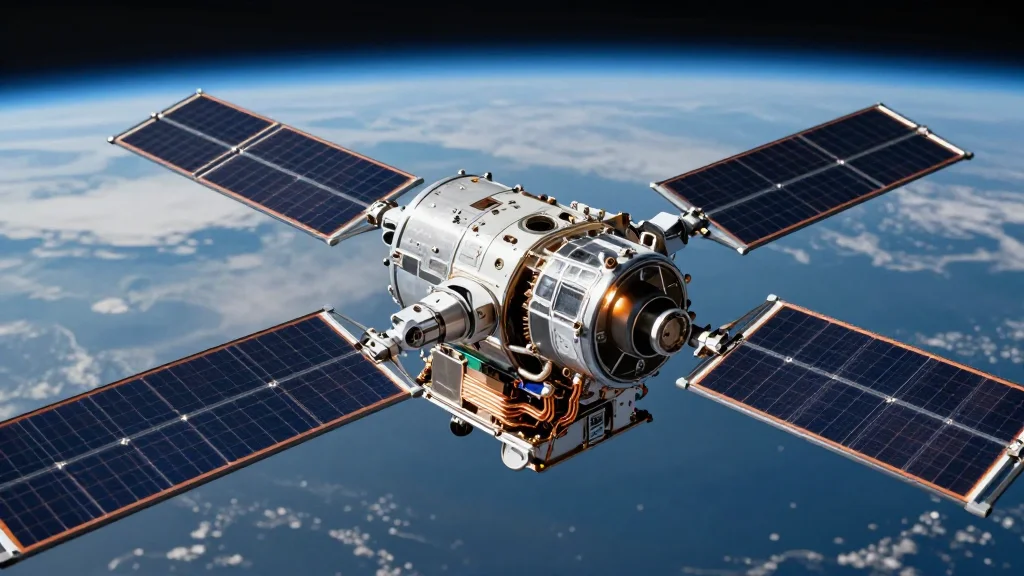
Could Space Become the Next Frontier for AI Data Centers?
Tech giants are moving the AI compute conversation off‑planet, with NVIDIA unveiling a Space‑1 Rubin module that promises up to 25× more AI performance in orbit and Google’s “Suncatcher” project probing solar‑powered chips for space. Startups such as Starcloud have...

Space Combat Was 'Critical to Mission Success' In US War in Iran, Space Force Chief Says
U.S. Space Force Chief Gen. Chance Saltzman told the Space Symposium that space combat has become a core element of the United States’ ongoing war in Iran. He highlighted real‑world electronic‑warfare operations, system relocations, and personnel tracking that directly supported...

Iran Used Chinese Spy Satellite to Target US Bases, ‘Financial Times’ Reports
According to the Financial Times, Iran’s Islamic Revolutionary Guard Corps acquired China’s TEE‑01B spy satellite, launched by Earth Eye Co, in late 2024. The IRGC used the satellite’s imaging capability to monitor U.S. military installations across the Middle East, including Prince Sultan Air...

NASA Wants to Put Nuclear Reactors on the Moon
NASA, together with the Departments of Defense and Energy, announced a plan to deploy nuclear reactors in orbit by 2028 and on the Moon’s surface by 2030. The reactors will initially deliver at least 20 kW of electricity for three years...

Vulcan Woes Will "Absolutely" Be a Factor in Pentagon's Next Rocket Competition
The U.S. Space Force is grappling with two solid‑rocket booster nozzle failures on United Launch Alliance’s Vulcan rocket, prompting a reassessment of its launch‑service procurement. With roughly half of the next four years’ missions slated for Vulcan, the Pentagon’s upcoming...
A Review of India’s Government Space Program Suggests It Is Behind Schedule
India’s human‑spaceflight effort, Gaganyaan, is stalled after two PSLV launch failures triggered a prolonged investigation. The probe has delayed the first unmanned orbital test, originally set for March, pushing the crewed launch beyond the early‑2027 target. ISRO’s 2026 launch manifest,...

Citra, Turion Detail Their Newest Capital Raises
Citra Space secured $15 million Series A funding, led by Washington Harbour Partners, to expand its object‑identification software for government and commercial users. Founded by former Air Force and Space Force officers, Citra aims to add context to roughly 10,000...

Space‑Based Solar Power: The Next Clean Energy Frontier
What if the future of clean energy isn’t on Earth… but in orbit? ☀️⚡ The sun sets. The wind stops. Demand doesn’t. On April 21, during SF Climate Week, we’re bringing together the people building the future of space-based solar power and...
Moog Space SVP Mark Covelli Details Meteor Satellite Bus at Space Symposium
Moog’s Space division, led by senior vice president Mark Covelli, highlighted its role in NASA’s Artemis II mission, providing environmental control and life support systems for both the Space Launch System rocket and the Orion crew capsule. Covelli also detailed the...

Senators Seek Increased Funding for NASA Mars Missions
Senators are urging the Senate Appropriations Committee to allocate at least $400 million to NASA’s Mars Future Missions account for FY 2027, warning that the $110 million provided in FY 2026 is insufficient and could cause irreversible damage to U.S. Mars capabilities. NASA’s own...

Report: OCI TerraSus Of Malaysia And SpaceX In Talks For Polysilicon Supply
OCI TerraSus, the Malaysian arm of South Korea's OCI Holdings, is reportedly in multi‑year talks with SpaceX to supply high‑purity solar‑grade polysilicon. The material is essential for both solar panels and the semiconductor components SpaceX plans to develop as it...
Lonestar Expands Launch Plans for Orbital Data Storage Payload
Lonestar announced the launch date for StarVault, the first commercially operational space‑based sovereign data storage platform, targeting an autumn 2026 debut on Sidus Space’s LizzieSat‑4 mission. Growing demand from governments, banks and critical‑infrastructure firms prompted Lonestar to double its payload commitment,...
Amazon Satellite Deal Takes the Battle of the Billionaires Into Orbit
Amazon secured a multi‑year, roughly $1.5 billion launch contract with SpaceX to deploy its Project Kuiper broadband satellites, marking a decisive step toward commercial service. The agreement covers up to 1,000 launches over the next decade, enabling Kuiper’s planned constellation of...

Canadian Strategic Missions Corporation Awarded $400K in Aqualunar Challenge
The Canadian Space Agency, together with Impact Canada, awarded Toronto‑based Canadian Strategic Missions Corporation (CSMC) a $400,000 grand prize in the Aqualunar Challenge. CSMC’s winning concept, LunaPure, is a self‑sustaining system that filters raw lunar ice and produces drinkable water....

SmallSat Europe Speaker Focus: Col. Marcin Mazur, Polish Space Agency
Poland’s nascent space sector recorded its first profitable year in 2026, buoyed by a surge in defense procurement and a ten‑fold rise in ESA contributions. The growth is overseen by Col. Marcin Mazur, POLSA’s Vice‑President, who brings a military‑intelligence background to...

Artemis II Quiz: Is Your Knowledge of NASA's Historic Moon Mission Out of This World?
NASA’s Artemis II mission marked humanity’s first crewed lunar flyby in over five decades, completing a ten‑day Orion flight that looped around the Moon and returned safely to Earth. The crew of four, including Canada’s Jeremy Hansen, tested critical life‑support, navigation...

What Can Space Lasers Do for Business Broadband?
NASA’s Laser Communications Relay Demonstration (LCRD) achieved a 1.2 Gbps laser link from the International Space Station, showcasing speeds ten times faster than typical broadband. The same laser technology later enabled the Artemis II mission to transmit 4K video at 260 Mbps from...

United's Starlink Shift Leaves Flights Wi‑Fi Dead
A bunch of anecdotes making me think that as @united moves the fleet over to Starlink their ground station partner has cut them off. I know of 5 people on 5 EWR-SFO flights who haven't had wifi in the last...

Progress MS-34 Fueled for April 26 ISS Resupply
Roskosmos reports completion of propellant and pressurized gases loading aboard Progress MS-34 spacecraft in preparation for ISS resupply mission on April 26: https://t.co/RJw3e4HJ5Y https://t.co/LELndrx6iy
SpaceX Launches Two Starlink Missions 19 Hours Apart
SpaceX conducted two Starlink missions on April 14, launching Falcon 9 rockets from Cape Canaveral and Vandenberg within a 19‑hour window. Both flights were successful, deploying dozens of broadband satellites into low‑Earth orbit. The back‑to‑back launches underscore SpaceX’s ability to...
NASA Picks Voyager for Seventh Private Astronaut ISS Mission
NASA has chosen Voyager Technologies for the 7th Private Astronaut Mission (PAM) to the ISS. Axiom Space got the first five, but it's expanding now. Vast got the 6th and now Voyager the 7th. https://t.co/2wNTeOpJYU Axiom, Vast and Voyager each are...

Voyager Secures Seventh Private ISS Mission for 2028
Just in: Voyager gets the 7th private astronaut mission to the ISS, joining Axiom Space and Vast Space. Launching NET 2028. https://t.co/m3wiSmrnkx

Amazon Buys Globalstar Satellite Constellation
Amazon has finalized an $11 billion acquisition of the Globalstar satellite constellation, bringing the operator that powers Apple’s iPhone Emergency SOS feature under its Leo internet‑satellite umbrella. The deal secures a new fleet of low‑Earth‑orbit satellites, valuable mobile spectrum, and a high‑profile...

German Space Command Outlines Capability Development Decision Process
German @bundeswehrInfo Space Command: Here's how we decide if a capabiilty is best developed inside @defis_eu, @NATO or in a German national program. @esa @SpaceFoundation. https://t.co/UZ3q0oSTXA https://t.co/GQIi88DvEO
Starlink Drives 75%‑80% of SpaceX’s $1.75T Value
Here's what most people miss about SpaceX: 75–80% of its value isn't rockets. It's Starlink. The satellite internet business that nobody believed in is now the backbone of a $1.75 trillion company.

Why Amazon Is Buying Globalstar—And What It Means for Your iPhone
Amazon announced a $11.57 billion acquisition of Globalstar, securing low‑Earth‑orbit spectrum and satellite assets for its Project Leo network. The deal gives Amazon direct‑to‑device connectivity capabilities and a partnership with Apple to power emergency SOS features on iPhones and Apple Watches. Globalstar’s...
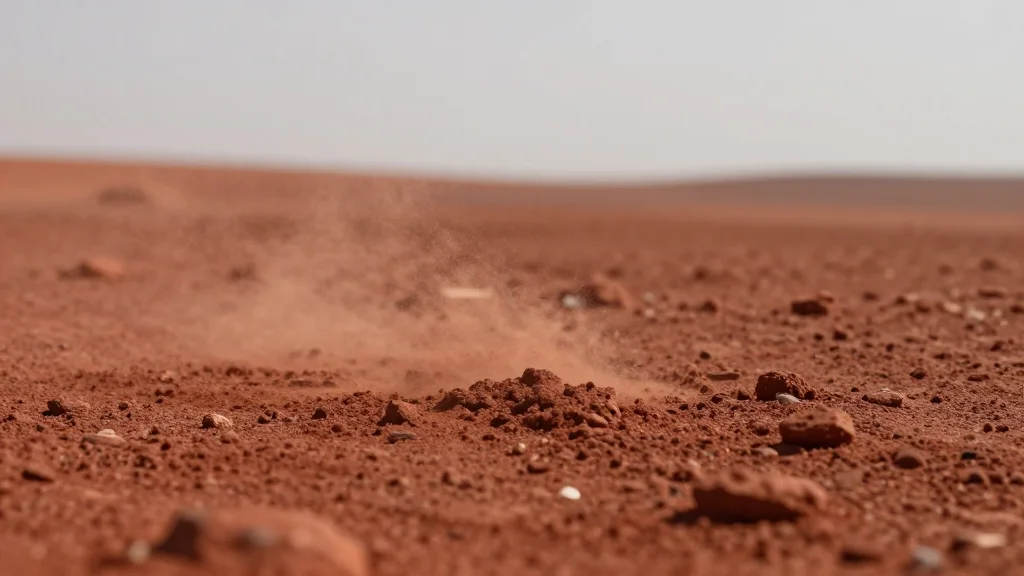
New Image Shows Ash Creeping Across Mars
The European Space Agency released a new high‑resolution image from its Mars Express orbiter that shows ash creeping across the Martian surface. The photo captures fine, dark deposits moving downstream of a suspected volcanic vent, suggesting either recent volcanic activity...
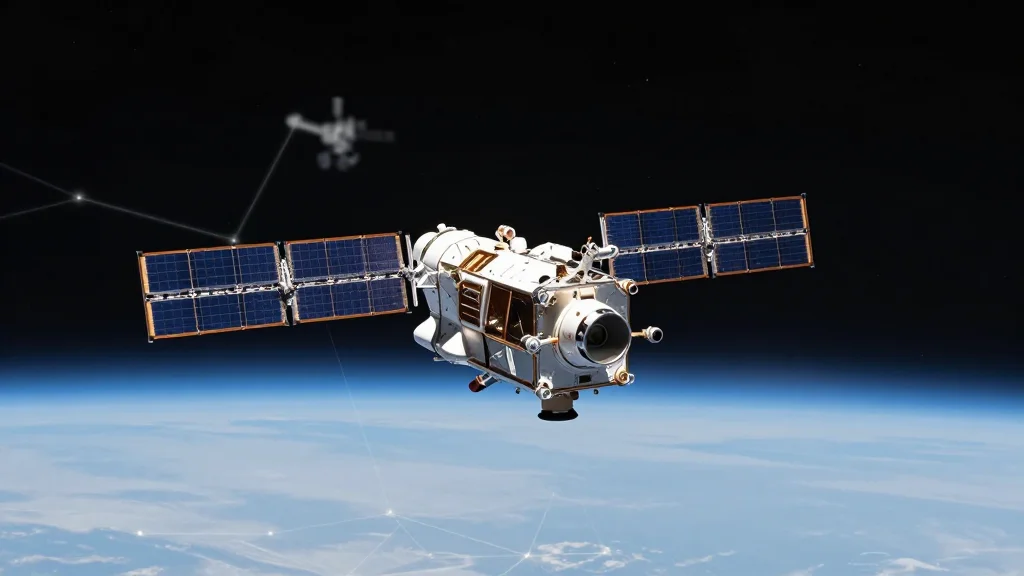
Defense Firms Target Next Phase of Space Warfare With Agile Satellite Designs
U.S. defense giants BAE Systems and Lockheed Martin are ramping up internal investments in maneuverable satellite designs. At the Space Symposium each company outlined plans to fund and launch demonstration spacecraft that can maneuver on‑orbit, shadow other assets, and operate...

Interstellar Invader 3I/ATLAS Is Spraying Tons of Water Into Space Every Second. Jupiter-Bound Spacecraft JUICE Discovers
The European Space Agency’s Jupiter Icy Moons Explorer (JUICE) has measured the interstellar comet 3I/ATLAS ejecting roughly two tons of water vapor each second—equivalent to 70 Olympic‑size swimming pools per day. The detection was made with JUICE’s MAJIS spectrometer and...
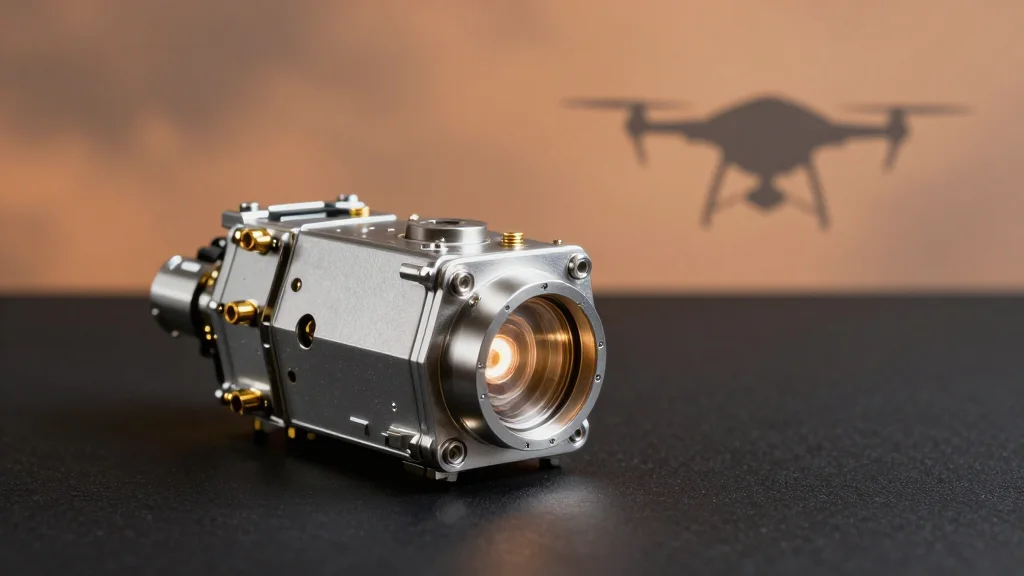
Advanced Gamma-Ray Spectrometer Delivered for NASA’s Dragonfly Mission to Explore Titan
Lawrence Livermore National Laboratory has handed over an Advanced Gamma‑Ray Spectrometer to NASA for the Dragonfly mission, the first rotorcraft lander destined for Saturn’s moon Titan. The instrument, weighing less than 5 kg, is engineered to survive Titan’s extreme cold and...

2026 NSTA Hyperwall Schedule
NASA will host a three‑day Hyperwall showcase at the NSTA conference from April 16‑18, 2026, located at Booth #1265 in the exhibit hall. The agenda features 20+ expert‑led sessions covering space weather, 5E StoryMaps, Earth‑observing data, the NISAR satellite, and flagship...

NASA Shifts Focus to Permanent Lunar Base and Nuclear Propulsion
NASA Administrator Jared Isaacman announced the "Ignition" initiative, redirecting resources from the Gateway station to build a permanent lunar south‑pole outpost by 2030. The plan also includes launching the SR‑1 Freedom, the first nuclear‑powered interplanetary spacecraft, slated for 2028 with...

229 - What Does It Take to Maintain Decision Advantage in Space?
In this episode, Colonel Tim Tramello, director of the Space Force’s Commercial Space Office, explains how the service is accelerating the integration of commercial space capabilities to maintain a decision advantage against fast‑moving adversaries. He outlines a flexible integration model—from...

Go Behind the Scenes of NASA's Artemis 2 Moon Mission with NOVA's 'Return to the Moon' Documentary Tonight (Interview)
NASA’s Artemis 2 mission returned safely to Earth last week, marking the first crewed flight of the program. PBS’s science series NOVA is releasing a one‑hour documentary, *Return to the Moon*, that gives viewers an inside look at the mission’s engineering...

Artemis II Crew Returns to Houston
NASA’s Artemis II crew returned to Houston on April 11, 2026 after a nearly 10‑day lunar flyby, landing at Ellington Airport near Johnson Space Center. The mission marked the first crewed flight of the Orion spacecraft, testing life‑support, navigation and re‑entry systems...

Artemis II Crew’s Excellent Adventure Recap
NASA’s Artemis II crew will hold a news conference on Thursday, April 15, 2026 at 2:30 pm EDT to discuss their upcoming lunar flyby. The briefing will be streamed live on NASA’s YouTube channel and other viewing options, with Keith Cowing providing real‑time commentary on...
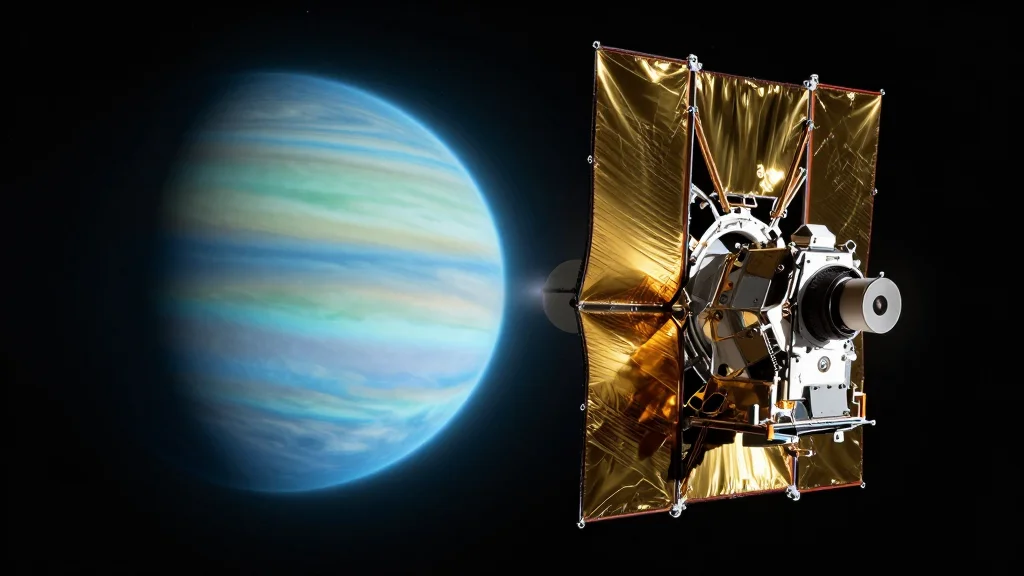
JWST Images 29 Cygni B, Redefining Planet‑Star Boundary
NASA's James Webb Space Telescope directly imaged the massive exoplanet 29 Cygni b, revealing chemical signatures that confirm it formed through planetary accretion. The finding narrows the divide between giant planets and low‑mass brown dwarfs, reshaping classification schemes.