
ESA and JAXA Team up on Planetary Defence, Ramses Mission to Asteroid Apophis
The European Space Agency and Japan’s JAXA have signed a Memorandum of Cooperation to deepen planetary‑defence collaboration, launching the Rapid Apophis Mission for Space Safety (Ramses). Ramses will lift off in 2028 and rendezvous with asteroid (99942) Apophis ahead of its ultra‑close 32,000 km Earth flyby in April 2029. The mission will monitor tidal deformation and surface changes, feeding data into future deflection strategies. ESA leads spacecraft development while JAXA provides lightweight solar arrays, an infrared imager and a H3 launch vehicle.

Lockheed Martin Fights Request to Ease 2018 Restrictions on Northrop Grumman’s Solid Rocket Business
Lockheed Martin has formally objected to Northrop Grumman’s petition to the FTC to lift a 2018 consent order that obligates Northrop to sell its solid rocket motors (SRMs) to competitors on a non‑discriminatory basis and to keep the SRM unit...
Indian Rocket Startup Skyroot Raises $60 Million in Private Investment Capital
Indian launch startup Skyroot announced a $60 million private‑investment round that lifts its total capital to $160 million and values the company at $1.1 billion. The round was co‑led by Sherpalo Ventures, backed by early Google investor Ram Shriram, and Singapore’s sovereign wealth...

For 6 Days, NASA’s Mars Rover Battled a Rock
NASA’s Curiosity rover became entangled with a 28‑lb, 1.5‑foot‑wide rock dubbed Atacama during a routine drill on April 25. The rock clung to the drill sleeve, forcing engineers to spend six days employing vibration, arm reorientation, and spin to free...
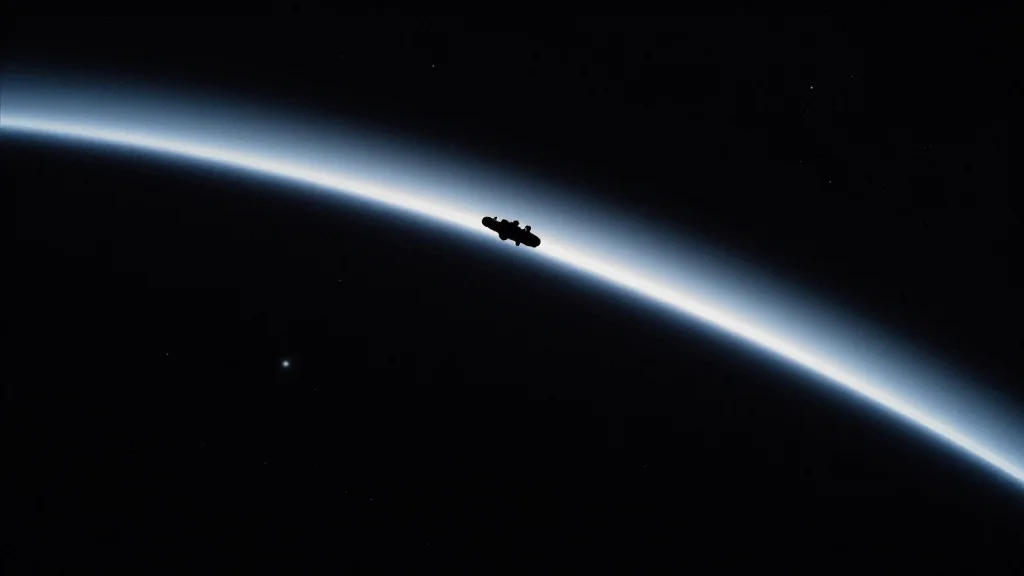
A Light in the Dark
NASA released a striking April 3 2026 image from the Artemis II mission, showing Earth’s thin, sun‑lit limb against the darkness of space. Artemis II was the agency’s first crewed deep‑space flight, orbiting the Moon to test Orion’s life‑support, propulsion and navigation systems. The...

Shake It Off—NASA’s Curiosity Rover Gets Its Robotic Arm Stuck Inside a Rock on Mars
NASA’s Curiosity rover became stuck on April 25 when its drill arm lodged onto a 28.6‑lb, 1.5‑ft Atacama rock. After several failed shake‑and‑vibrate attempts, engineers tilted, rotated and spun the bit on May 1, freeing the arm and breaking the rock into...

Military Space Boom Meets Beltway Friction
Washington plans to more than double the Space Force budget to over $71 billion in FY2027, marking the largest peacetime infusion of funds into U.S. military space. While the budget promises a wave of contracts for satellite makers and launch firms,...

ASCEND 2026 Program to Launch with NASA Administrator Jared Isaacman
ASCEND 2026 launches on May 19 with NASA Administrator Jared Isaacman delivering the opening keynote. The week‑long event features more than 200 speakers from commercial space firms, national‑security agencies, NASA, and international partners. New event partners add a Classified Day with NRO...
2 Top Space Stocks I Like Better Than SpaceX
Wall Street anticipates a SpaceX IPO this year, valuing the Musk‑led rocket maker at roughly $2 trillion. Analysts argue that such a massive valuation leaves limited upside for public investors, especially as the company pivots into generative‑AI through its xAI acquisition....

SatVu’s New HotSat-2 Satellite Captures Cuban Attempts At Oil Refining
SatVu announced that its HotSat‑2 satellite has achieved first‑light, delivering high‑resolution thermal infrared imagery of three strategic energy sites: Jamnagar refinery in India, Gorgon LNG plant in Australia, and the Hermanos Díaz refinery in Cuba. The satellite detected Cuba’s attempt to...

SmallSat Europe Speaker Focus: Araz Feyzi, Kayhan Space
Kayhan Space, co‑founded by Araz Feyzi, launched its Satcat Product Suite in February 2025, delivering the first unified platform that merges real‑time space situational awareness with autonomous traffic coordination. The system monitors over 60,000 objects in orbit and claims to slash...
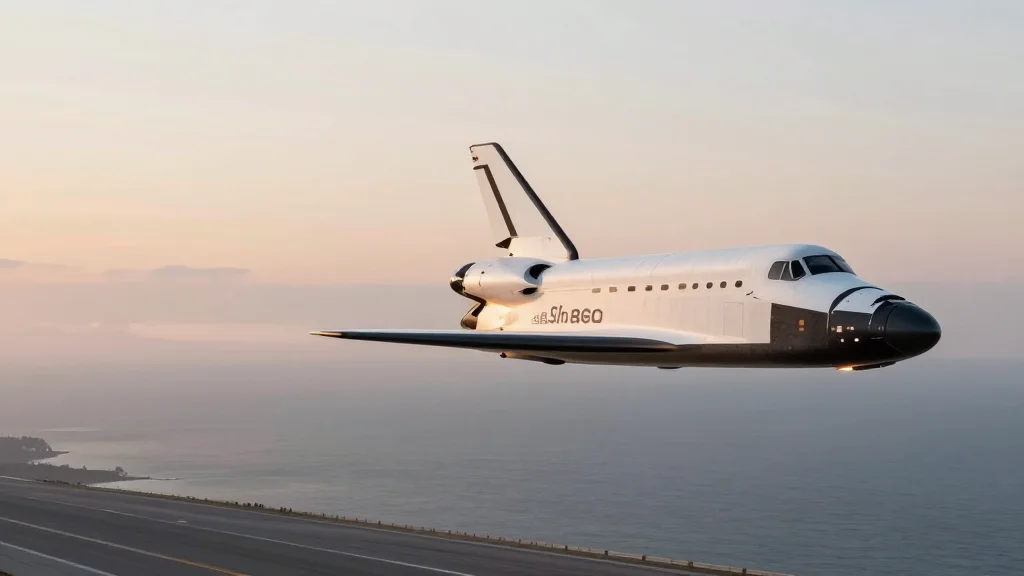
ESA’s Space Rider Passes Critical Hurdles on Path to Spaceflight
European Space Agency’s Space Rider, its first reusable spacecraft, has cleared two pivotal milestones: a high‑temperature reentry test and a precision autonomous landing demonstration. The tests validate the vehicle’s thermal protection system and guidance, navigation and control software, bringing the...

Rohde & Schwarz and Greenerwave Achieve Precise and Fast ESA Antenna Characterization Using Near-Field Technology
Rohde & Schwarz and Greenerwave demonstrated a near‑field measurement that captured a full Ku‑band radiation pattern of a 50 cm electronically steerable array in just 32 minutes. The results matched simulation and CATR data within 1 dB, proving the method’s accuracy. By using the...
Two Blue Origin Operators Just Joined a MACH 2+ Air-Launch Platform
Starfighters Space (FJET) announced the appointment of two senior leaders from Blue Origin’s New Glenn program—Jose Arias as Vice President of Space Operations and Catrina L. Medeiros as Director of STARLAUNCH Operations. Arias previously slashed integration cycles from 76 to 13 days, while Medeiros...

Pentagon Tells Satellite Builders: Good Enough Now Beats Perfect Later
The U.S. Space Force is redefining satellite acquisition by making speed the top priority, urging contractors to deliver "good enough" capabilities now and improve them later. Gen. B. Chance Saltzman framed this as a shift from an all‑or‑nothing model to...

The Market Has Evolved and the Technology Has Evolved Sheila Kavanagh, Engineer and Network Director Vodafone Ireland
Vodafone Ireland achieved a milestone by completing the country’s first mobile video call via satellite using a standard smartphone. The service relies on AST SpaceMobile’s BlueBird satellite, allowing data to be beamed directly between the phone and orbiting hardware. Sheila...

Going to Space? Always, Always Pack a Camera
Artemis II astronauts captured striking lunar and Earth‑from‑space photos, reviving the awe of the Apollo 8 “Earthrise.” The piece honors planetary scientist Candice Hansen‑Koharcheck, whose five‑decade career shaped imaging on Voyager, Juno, and HiRISE missions. Her work turned raw spacecraft data into...

Uzbekistan And China Explore Possible Space Cooperation
Uzbekistan’s space agency, Uzcosmos, met with Chinese Ambassador Yu Jun to explore cooperation on space technology. The talks highlighted China’s civil‑space expertise as a catalyst for integrating space tools into Uzbekistan’s agriculture, water management, and infrastructure planning. Both parties discussed joint...

Roadmap for a Space-to-Space Economy
The space industry’s growth is now limited by orbital congestion rather than launch capacity, as low‑Earth‑orbit satellites double every two years. This bottleneck drives up propellant use, shortens mission lifespans, and raises costs. Analysts propose a space‑to‑space (S2S) economy built...

Odin Space Opens U.S. Office in Los Angeles
Odin Space, a British startup that maps sub‑centimeter orbital debris, announced the opening of its first U.S. office in Los Angeles, led by former Iceye CEO Jerry Welsh. The office will serve commercial and government satellite operators needing data on debris...

Anthropic to Consider Using SpaceX Orbital Data Center Satellites
Anthropic announced it will purchase the entire capacity of SpaceX’s new Colossus 1 terrestrial data center, delivering more than 300 MW of compute power for its Claude AI suite. The agreement also gives Anthropic early access to SpaceX’s planned orbital data‑center satellites,...

Starfighters Hires Blue Origin Veterans to Accelerate Air-Launch Platform
Starfighters Space has recruited two former Blue Origin New Glenn managers—Jose Arias as vice president of space operations and Catrina Medeiros as director of operations for its Starlaunch air‑launch service. Arias previously cut integration cycle time from 76 to 13...

Skyroot Raises $60 Million Ahead of First Orbital Launch Attempt
Skyroot Aerospace raised $60 million in a Series round that values the Hyderabad‑based startup at $1.1 billion, making it India’s first space unicorn. The funding, co‑led by Sherpalo Ventures and Singapore’s sovereign wealth fund GIC, also includes BlackRock and will finance the...
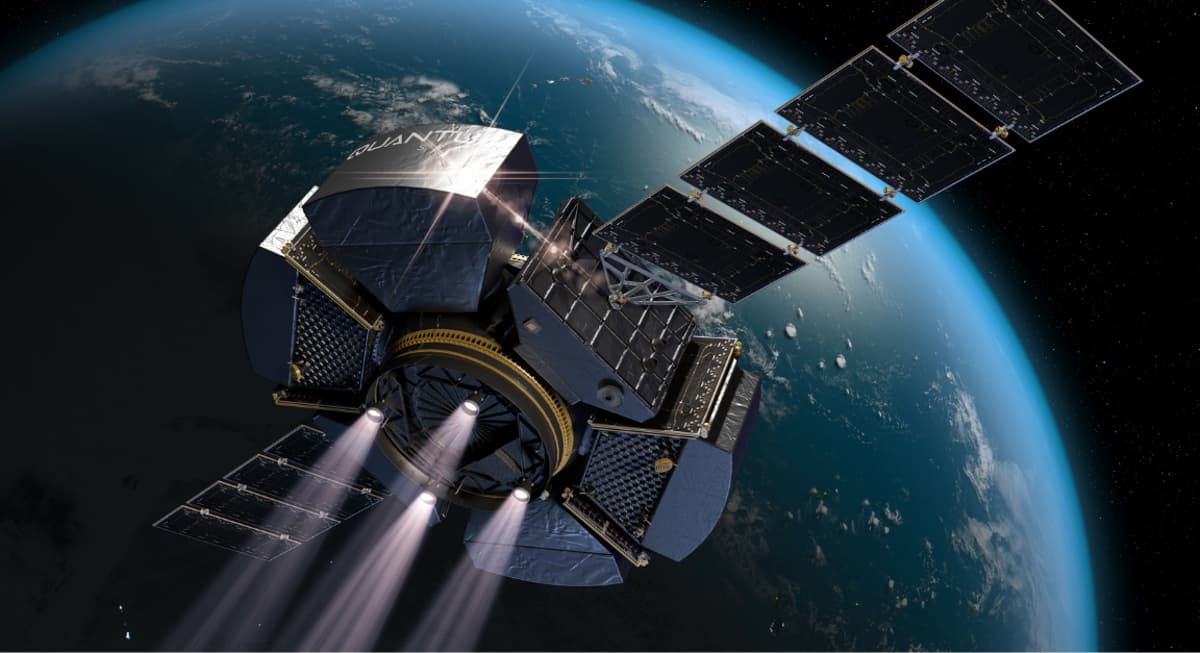
Former NASA Chief Takes Helm of National Security Space Firm
Former NASA administrator Jim Bridenstine has been appointed chief executive of Quantum Space, a Maryland‑based firm developing advanced maneuverable spacecraft for national‑security missions. The company’s flagship vehicle, Ranger, the size of a Volkswagen Beetle, will carry 4,000 kg of hydrazine and...

Speed Tops Price in National Security Contracting Decisions
U.S. Space Force officials now treat speed as a strategic requirement, reshaping national‑security space contracting. Agencies are pushing for delivery timelines half as long as a year, even if it means compromising on cost or some technical specs. Contractors must...

Nature’s Hardware Store: Building the Future with Biology
Lynn Rothschild, a leading US astrobiologist, argues that synthetic biology could solve one of space colonization’s toughest problems: sourcing building materials on other worlds. By tapping the “genetic hardware store” of microbes, engineers can grow construction‑grade biopolymers directly on the...

Should Saturn's Huge Moon Titan Be Humanity's Next Destination, After the Moon and Mars?
The Humans to Titan Summit, set for June 11‑12, 2026 in Boulder, Colorado, will outline a roadmap for crewed missions to Saturn’s moon after lunar and Martian exploration. It builds on NASA’s upcoming Dragonfly octocopter, slated for a 2028 launch,...
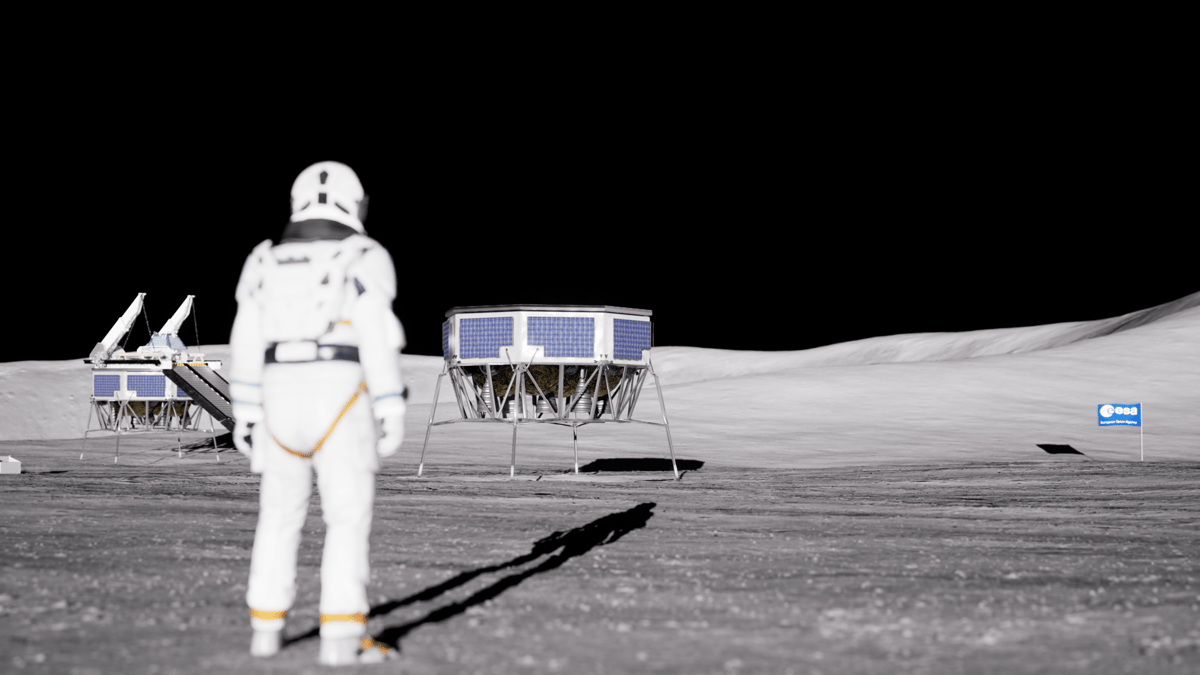
Extended Reality at ESA Opens New Pathways for Space Exploration
The European Space Agency has formalized its extended reality (XR) strategy by launching an XR Competence Centre and releasing the open‑source ESA XR Plugin built on Unreal Engine and OpenXR. The centre coordinates XR development across member states, while the...

WARP ETF: Question & Answer>
VanEck launched the WARP Space ETF to give investors pure‑play exposure to the rapidly expanding space economy. The fund tracks the MarketVector Space Index, requiring at least 50% of a company’s revenue to come from space‑related activities. It offers a...

How ISS Reboosts Raise Orbit and Affect Station Structure
The International Space Station performed a five‑minute Progress 93 burn on April 16 2026, raising its orbit to maintain altitude and phase for upcoming arrivals. Reboosts counteract daily orbital decay caused by thin atmospheric drag in low Earth orbit, adding forward velocity rather...

May 6, 2026 Zimmerman/Batchelor Podcast
Robert Zimmerman’s new book *Genesis: the Story of Apollo 8* chronicles the historic 1968 mission that first took humans to another world. The title is now available in hardback, paperback, ebook and audiobook formats, with a foreword by Valerie Anders and...

Impersonators Claim The Pakistan EO-3 Satellite Has Released Its First Image
Pakistan’s EO-3 Earth‑observation satellite lifted off on April 25, 2026 aboard a Chinese Long March‑6 from the Taiyuan launch centre. Within weeks a counterfeit SUPARCO Facebook page circulated a multispectral image, claiming it was the satellite’s first picture of Karachi...

NASA’s Railroad
NASA built a 38‑mile government‑owned short line in the 1960s to move massive rocket hardware, construction materials, and hazardous cargo between the Florida East Coast mainline and Kennedy Space Center. The railroad proved essential during the Apollo and Shuttle eras,...

The Lunik Heist: How U.S. Intelligence Examined a Soviet Moon Probe
In 1959 the CIA covertly diverted a Soviet Lunik lunar‑probe exhibit during its U.S. tour, opened the crate, photographed and measured the hardware, then resealed it before Soviet handlers noticed. The operation yielded rare physical intelligence on tank shapes, weld...

U.S. and Australia Expand Space Surveillance Network to Counter Emerging ASAT Threats
The U.S. Space Force and Australian Defence Force announced on May 1, 2026 an expansion of their joint space‑surveillance network, adding the Deep Space Advanced Radar Capability (DARC) in Western Australia alongside upgraded optical and C‑Band sensors. The new assets can track...

Commercial Satellite Services for Missile Launch Detection Market Analysis 2026
The U.S. Space Development Agency awarded roughly $3.5 billion for 72 Tracking Layer satellites that use infrared (OPIR) sensors to provide missile‑launch detection, tracking, and defense support. Infrared sensing is the only commercial satellite capability that can directly detect the brief...

Increased Solar Activity Accelerates Space Junk Re-Entry
A new 36‑year analysis of 17 tracked debris objects shows that once solar‑activity indices exceed roughly two‑thirds of a cycle’s peak, atmospheric drag spikes and orbital decay accelerates dramatically. The study provides satellite operators with a concrete sunspot‑threshold metric to...

SpaceX Is Starting to Move on From the World's Most Successful Rocket
SpaceX’s Falcon 9 launch cadence is beginning to taper as the company pivots toward its larger Starship system. After 165 Falcon 9 flights in 2025, the firm projects roughly 140‑145 launches in 2026, with a gradual decline thereafter. The shift is most...

Defence to Deploy Classified Version of Space Data Repository
Defence has signed a $37 million Australian‑dollar contract—about $24 million USD—with Bluestaq to deploy a classified version of its Unified Data Library (UDL) for space situational awareness. The UDL, originally trialled in a non‑classified environment since December 2023, will catalog satellites, debris and...

Proposal for Streamlined U.S. Regulatory Approval for Novel Commercial Space Activities
The U.S. Office of Space Commerce unveiled a draft "Space Commerce Certification" to streamline approvals for novel commercial space activities such as in‑space manufacturing, orbital computing and lunar stations. The proposal introduces a presumption of approval, limiting denials to security,...

How NASA’s Chief Plans to Bring Back the Moonwalk — And Beat China
NASA Administrator Jared Isaacman outlined a renewed push to land astronauts on the Moon by 2027, leveraging the Artemis III mission and a $10 billion budget boost. He emphasized building an enduring lunar presence, a demand signal for 30 landers and...
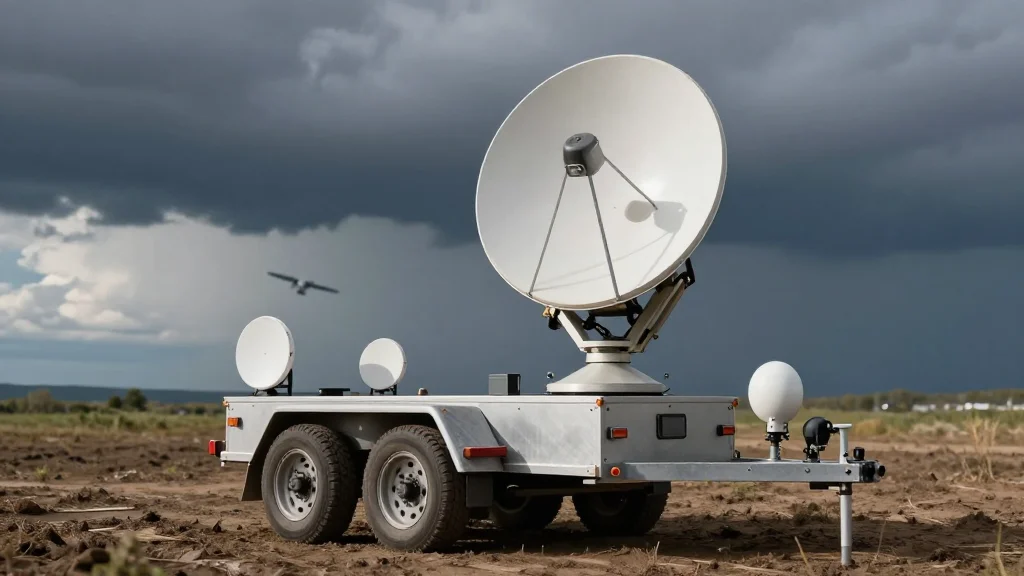
Verizon Details ‘Satellite-Everywhere’ for Disaster Response, Expands Satellite Fleet
Verizon announced a major expansion of its disaster‑response satellite fleet, now totaling 2,600 assets. The rollout includes a new multi‑orbit off‑road trailer that can switch between GEO and LEO satellites to deliver mobile 5G hotspots in hard‑to‑reach areas. The company...

Astranis, Scout Space Lay Out Next Steps Following Capital Rounds
Astranis secured $455 million in new capital—a $300 million Series E led by Snowpoint Ventures and Franklin Templeton plus a $155 million delayed‑draw credit from Trinity Capital—to accelerate production of its micro‑GEO communications satellites and chase U.S. military contracts, including a potential $4 billion GEO...

Anthropic, SpaceX Deal Boosts Claude Compute and Points to Space-Based AI
Anthropic has secured full access to SpaceX’s Colossus 1 supercomputer, a 220,000‑GPU system delivering over 300 MW of AI compute. The added capacity will boost performance and raise rate limits for Claude Pro, Claude Max and Claude Code services. The agreement is part of Anthropic’s...
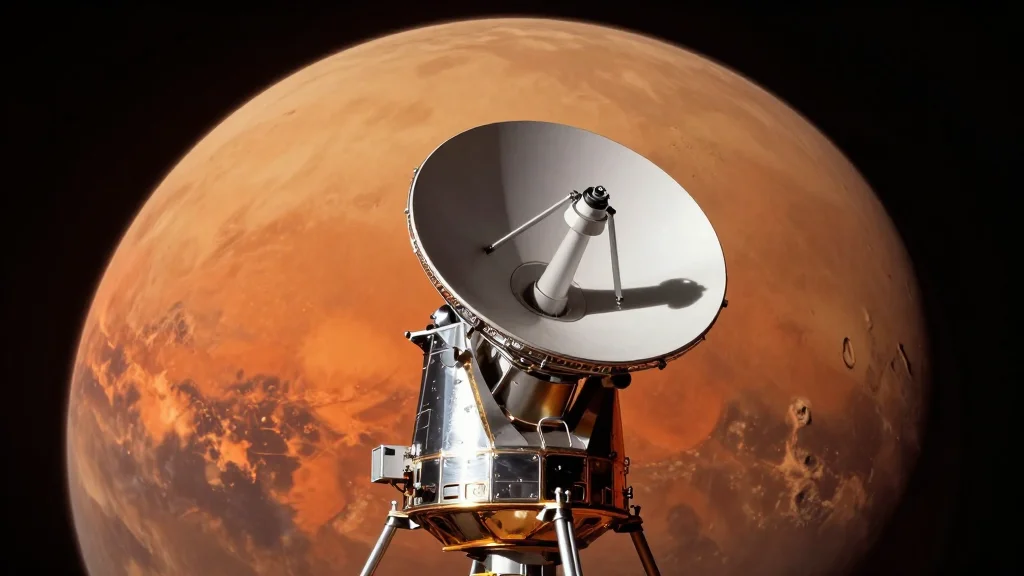
Data Fusion Provides a High-Definition Look at Mars' Temperature Maps
Researchers at Curtin University applied a data‑fusion technique that blends low‑resolution THEMIS infrared data with high‑resolution CRISM spectral imagery, using an Extra Tree Regressor to predict thermal inertia at 12‑meter scale. The resulting thermal maps dramatically sharpen Mars’ temperature profile,...

Pee Planet: Scientists Discover Distant Planet with Atmosphere that Actually Smells Like Urine
Scientists using the James Webb Space Telescope have identified ammonia‑rich cirrus clouds in the atmosphere of the gas‑giant exoplanet Epsilon Indi Ab, located about 12 light‑years from Earth. The ammonia gives the clouds a scent comparable to urine, earning the planet the...

Brian Cox Declares Humanity on the Threshold of Becoming a Multi-Planetary Species
Renowned physicist Brian Cox warned that humanity stands on the brink of a historic shift from a single‑planet civilization to a multi‑planetary species. He highlighted the dramatic drop in launch costs, the operational Lunar Gateway, and commercial lander successes as...
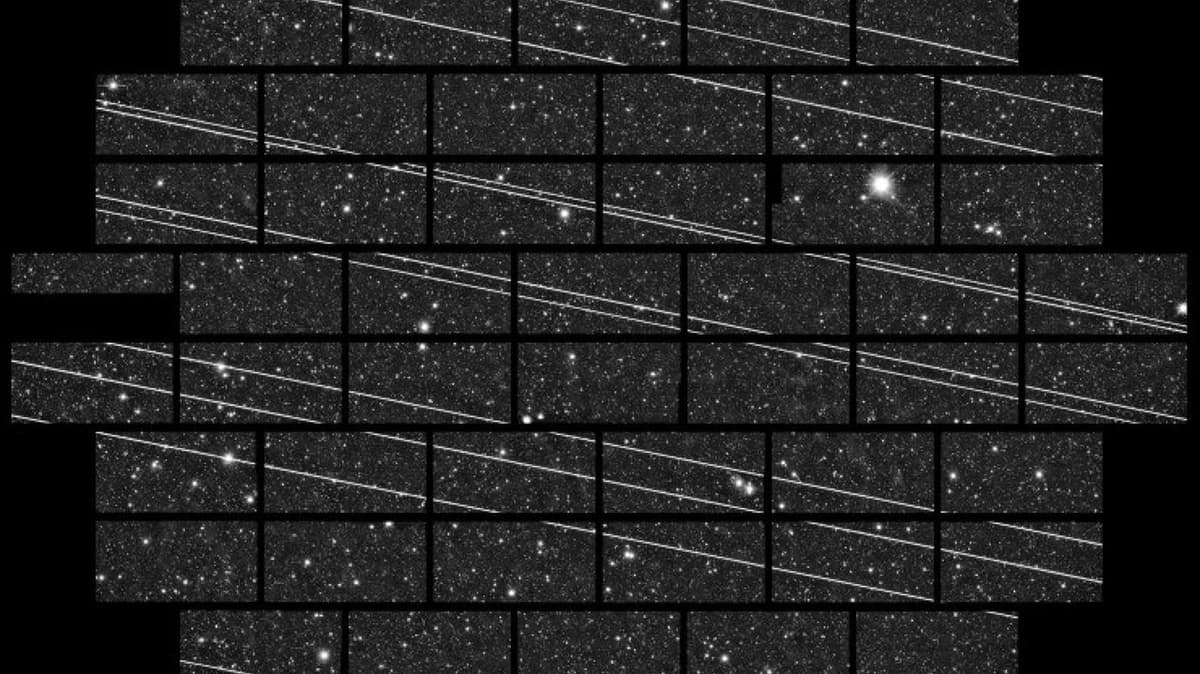
The Night Sky Could Get Three Times Brighter as New Satellites Launch — All but Ruining the Vera C. Rubin...
A new arXiv study warns that upcoming ultra‑bright satellite constellations could make the night sky up to three times brighter, jeopardizing all‑sky surveys such as the Vera C. Rubin Observatory’s LSST. Modeling shows a 60,000‑satellite fleet dimmer than magnitude 7 adds...
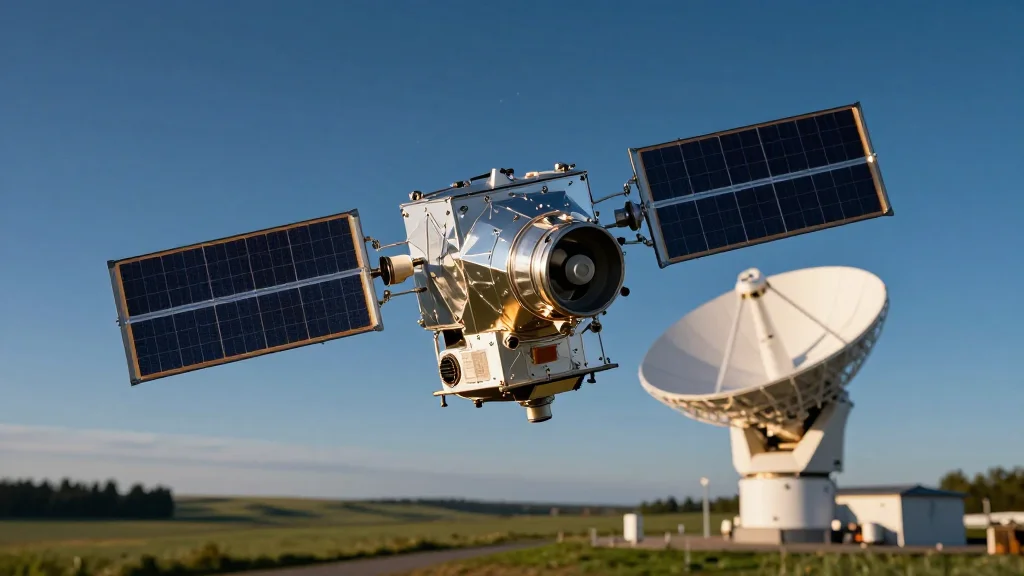
Will Canada’s Telesat Really Complete Its Lightspeed Constellation by 2028?
Telesat says its Lightspeed low‑Earth‑orbit satellite network will be fully operational by the first quarter of 2028, after investing $171 million in Q1 and bringing total spend to roughly $2.7 billion. The company reported progress on design reviews, user terminals, software and...

Juno Snaps Rare Close-Up of Jupiter’s Shadowy Moon Thebe
NASA’s Juno spacecraft captured a record‑close view of Jupiter’s inner moon Thebe on May 1, 2026, imaging the irregular satellite from roughly 5,000 km away. Thebe, a 49‑km‑radius body orbiting 222,000 km from Jupiter, is heavily cratered and the primary source of dust for...