
US Adds 115,000 Jobs in April, Jobless Rate Flat
The U.S. Bureau of Labor Statistics reported a gain of 115,000 non‑farm jobs in April, keeping the unemployment rate unchanged at 4.3%. This marks the first set of back‑to‑back monthly job gains in almost a year, with March’s figure revised up to 185,000 and February’s loss adjusted to 156,000. Wage growth accelerated, with average hourly earnings up 3.6% year‑over‑year. Sectoral shifts showed strong hiring in transportation, warehousing and health services, while the information sector and federal employment continued to decline.

The Big Four Recession Indicators: April 2026 Employment
The latest U.S. employment report showed non‑farm payrolls rose by 115,000 in April, a slowdown from March’s 185,000 gain but still above the 65,000 jobs forecast. The unemployment rate held steady at 4.3%, matching expectations. These figures feed into the...

Trump Beats His Own Dubious ‘Vibecession’ Record
The University of Michigan’s preliminary consumer‑sentiment index slipped to 48.2 in May, marking a second consecutive month at an all‑time low. The decline represents the third straight month of falling sentiment, driven primarily by heightened concerns over prices and personal...

Fed's Goolsbee: Inflation Has Not Been Great. Job Market Is Pretty Much Stable
Federal Reserve President Austan Goolsbee told investors that inflation remains stubbornly high even as the labor market shows little sign of weakening. He highlighted that price pressures stem from more than just energy costs and pre‑date the Ukraine war, suggesting...
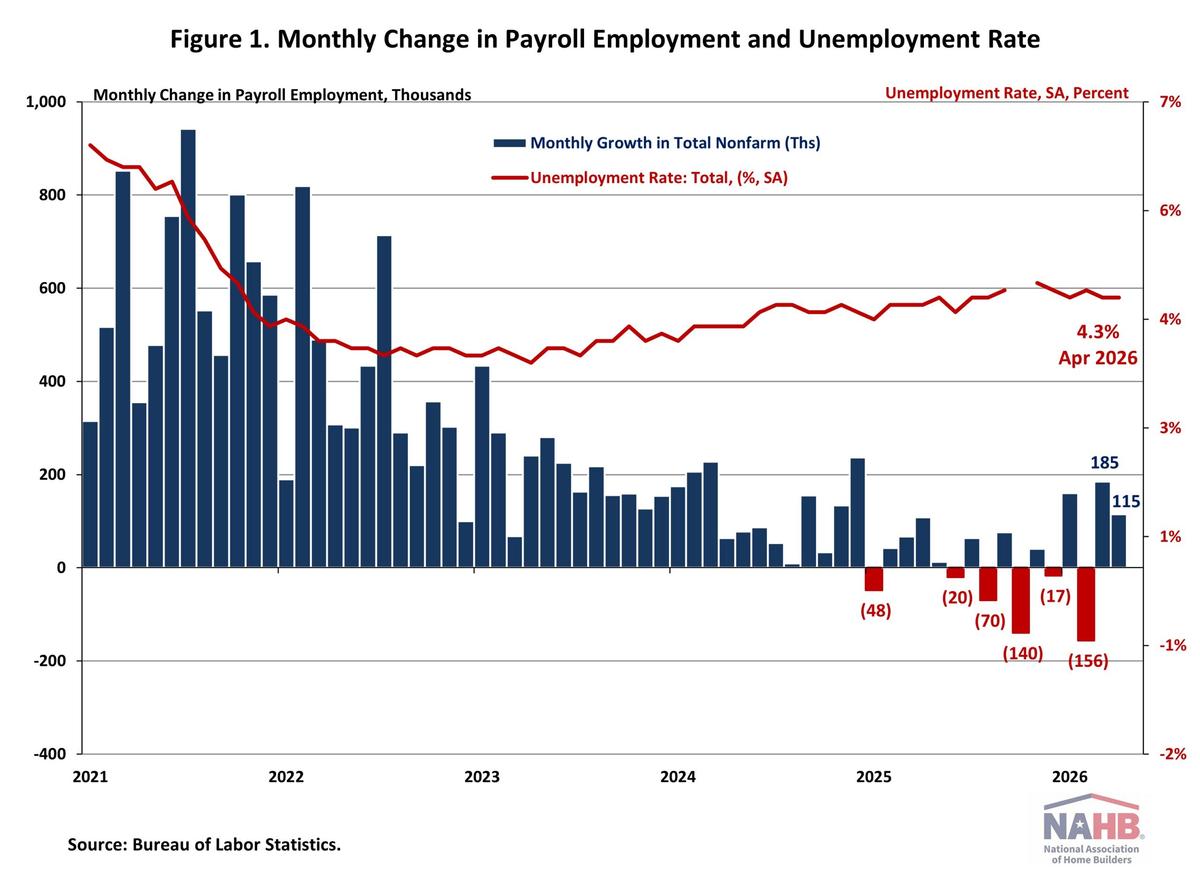
U.S. Economy Adds 115,000 Jobs in April
The Bureau of Labor Statistics reported that U.S. nonfarm payrolls rose by 115,000 in April, keeping the unemployment rate steady at 4.3%. Job gains were concentrated in health care (+37,000), transportation and warehousing (+30,000), and retail trade (+22,000). Average hourly...

Employers Added 115K Jobs in April, Including 1.2K in Accounting
U.S. non‑farm payrolls rose by 115,000 jobs in April, outpacing economists' forecasts while the unemployment rate held at 4.3%. The gains were led by health‑care, transportation and warehousing, and retail‑trade, with professional and business services adding 7,000 jobs, including 1,200...

The Job Market Is Healing for Everyone—Except in the Office
The U.S. labor market added 115,000 jobs in April, keeping the unemployment rate at 4.3% and marking the second consecutive month of solid growth after a sluggish 2025. Gains were broad, led by health care, transportation and warehousing, while the...

BLS Jobs: +115K, Double Expectations
The U.S. Bureau of Labor Statistics reported 115,000 jobs added in April, more than double the 55,000 consensus forecast, while the unemployment rate held at 4.3%. Healthcare (+37K), transportation/warehousing (+30K) and retail (+22K) drove the gains, whereas information, federal government...

Healthcare Adds 37,300 Jobs in April: 4 Things to Know
Healthcare employment rose by 37,300 jobs in April, aligning with the sector’s 12‑month average of 32,000 monthly gains, according to the U.S. Bureau of Labor Statistics. Ambulatory services led the surge with 18,200 new positions, while hospitals added 4,300 and...

Fed Data Suggest Japan Sold U.S. Debt Amid Intervention
The Federal Reserve reported a $8.7 billion drop in its custody of marketable U.S. Treasuries, bringing the total to $2.73 trillion for the week ending May 6. The decline coincides with Japan’s Ministry of Finance spending roughly $55 billion to support the yen, suggesting...

Record South American Feed Grain Surpluses. The Corn & Ethanol Report 05/08/2026
A USDA Economic Research Service analysis shows record feed‑grain surpluses in South America, with Argentina’s corn harvest already 30% complete and projected at 63‑67 MMT—about 4 MMT above domestic demand. The excess supply is pressuring global corn markets, and U.S. corn is...

Payroll Gains Mask Small Business Strain and Hidden Unemployment
Payrolls surprise to the upside but should be taken with a grain of salt. The household survey has shed jobs since the start of the year. Payrolls are revised and often miss the real-time stress felt by small &...

BofA Delays Fed Rate Cuts to 2027
"We push the two cuts in our Fed forecast out from Sep-Oct '26 to Jul-Sep '27. The data simply don't warrant cuts this year." - BofA
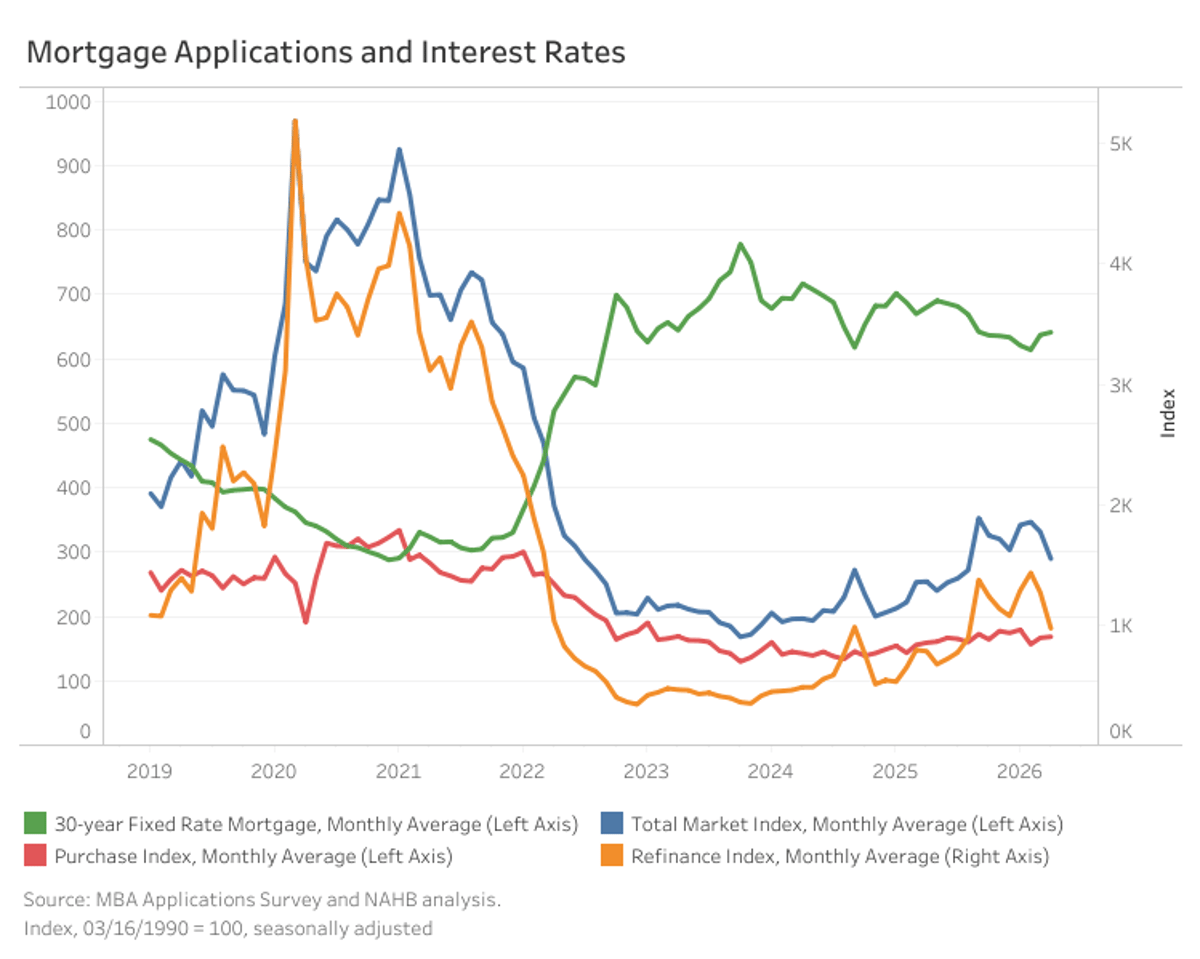
Mortgage Applications Retreats Further in April
Mortgage application activity declined in April, with the Mortgage Bankers Association’s Market Composite Index dropping 12.4% month‑over‑month, though it remained 14.2% higher than a year earlier. The average 30‑year fixed‑rate mortgage rose to 6.41%, up four basis points but still...
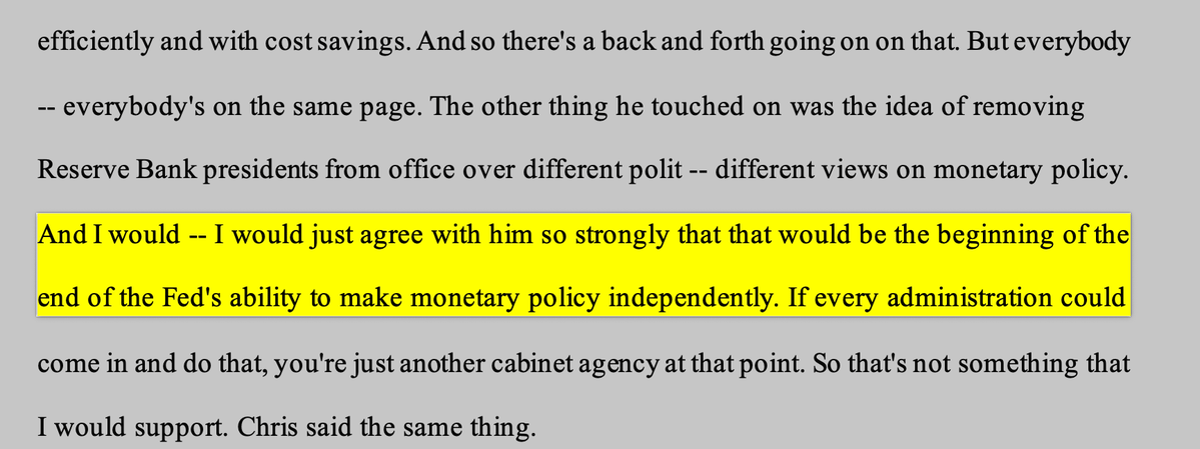
Powell Warns Removal Power Threatens Fed Independence
David Wilcox points out Powell, without being explicitly asked about, pointed to the governors' ability to remove regional Fed Presidents as a risk to independence in his latest press conference. @HooverInst https://t.co/J4Uy69mrei https://t.co/Q0ltpyO3sf

Citi CEO Warns Inflation Will Persist Longer Than Expected
“I don’t think it’s fully appreciated” Jane Fraser, Citi CEO, says she expects a more protracted inflation problem

April Trucking Jobs Report Shows a Big Increase in Hiring
Truck transportation employment rose by 4,300 jobs in April, bringing the sector to 1,496,600 positions—the strongest monthly gain since September 2023. The increase follows a sharp layoff wave after Yellow Corp.’s shutdown, suggesting some displaced workers found new roles. Industry...
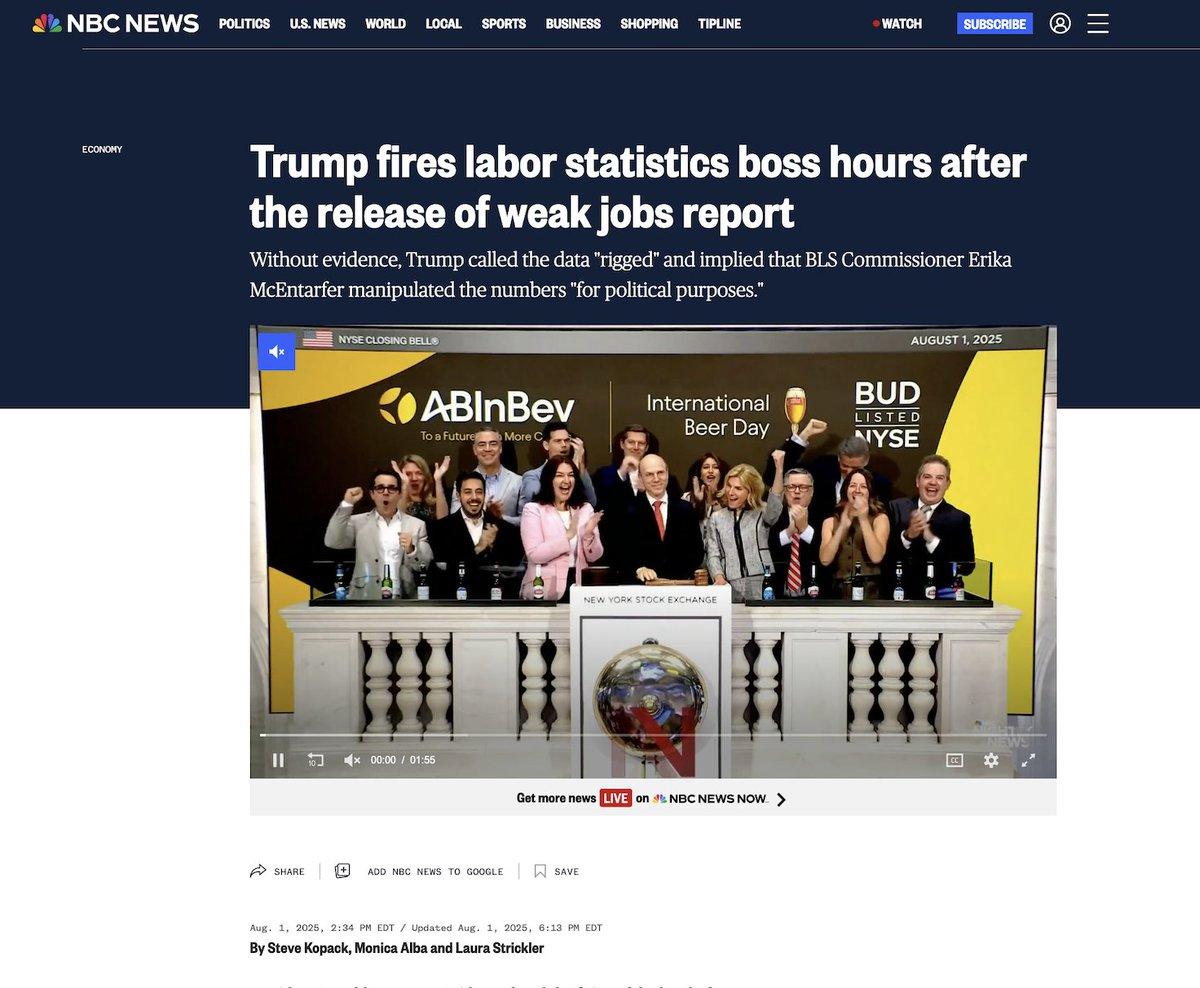
Current Job Figures Are Both Unreliable and Disappointingly Low
These would be paltry jobs numbers EVEN IF they were still reliable. Which they aren't: https://t.co/Qk4Hma1RfF https://t.co/DKqdfxk1vx

1970s Policy Errors Stemmed From More Than Fed Independence
"Monetary policy mistakes in the 1970s were not due to a lack of Fed independence" Edward Nelson, Senior Adviser Federal Reserve Monetary Affairs @HooverInst

April's Blockbuster Jobs Report Dims Hopes for Imminent Fed Rate Cuts
The U.S. Bureau of Labor Statistics reported 115,000 jobs added in April, keeping the unemployment rate at 4.2% and labor‑force participation at a 2021 low of 61.8%. The gain outpaced consensus forecasts by roughly 40,000 jobs, driven primarily by health‑care,...

Monetary Policy Nerd Live-Tweets Hoover Conference, Ditches Ballgames
I'm attending @HooverInst's annual monetary conference today. Caution: I'll be tweeting nerdy monetary policy details as someone who thinks monetary policy is far more exciting than a ballgame - I let my dogs chase balls, never quite understood why humans...

Male Labor Participation Hits Lowest Since 1948
Young and old men are leaving the labor force at record rates ... The share of American men working or searching for a job recently hit the lowest level since 1948, aside from the pandemic, Labor Department data shows....

Federal Reserve Turns Focus to Inflation as Job Market Stabilizes
The Federal Reserve can keep its policy rate steady at 3.5%‑3.75% as the labor market shows resilience, adding 115,000 jobs in April and holding unemployment at 4.3%. However, the war in Iran has pushed oil‑related costs higher, sending gasoline to...

Income Outlook Dims as Gas Prices, Tariffs Concern Consumers
"Real income expectations continued a decline that began in March. About one-third of consumers spontaneously mentioned gasoline prices and about 30% mentioned tariffs." - UMich consumer sentiment
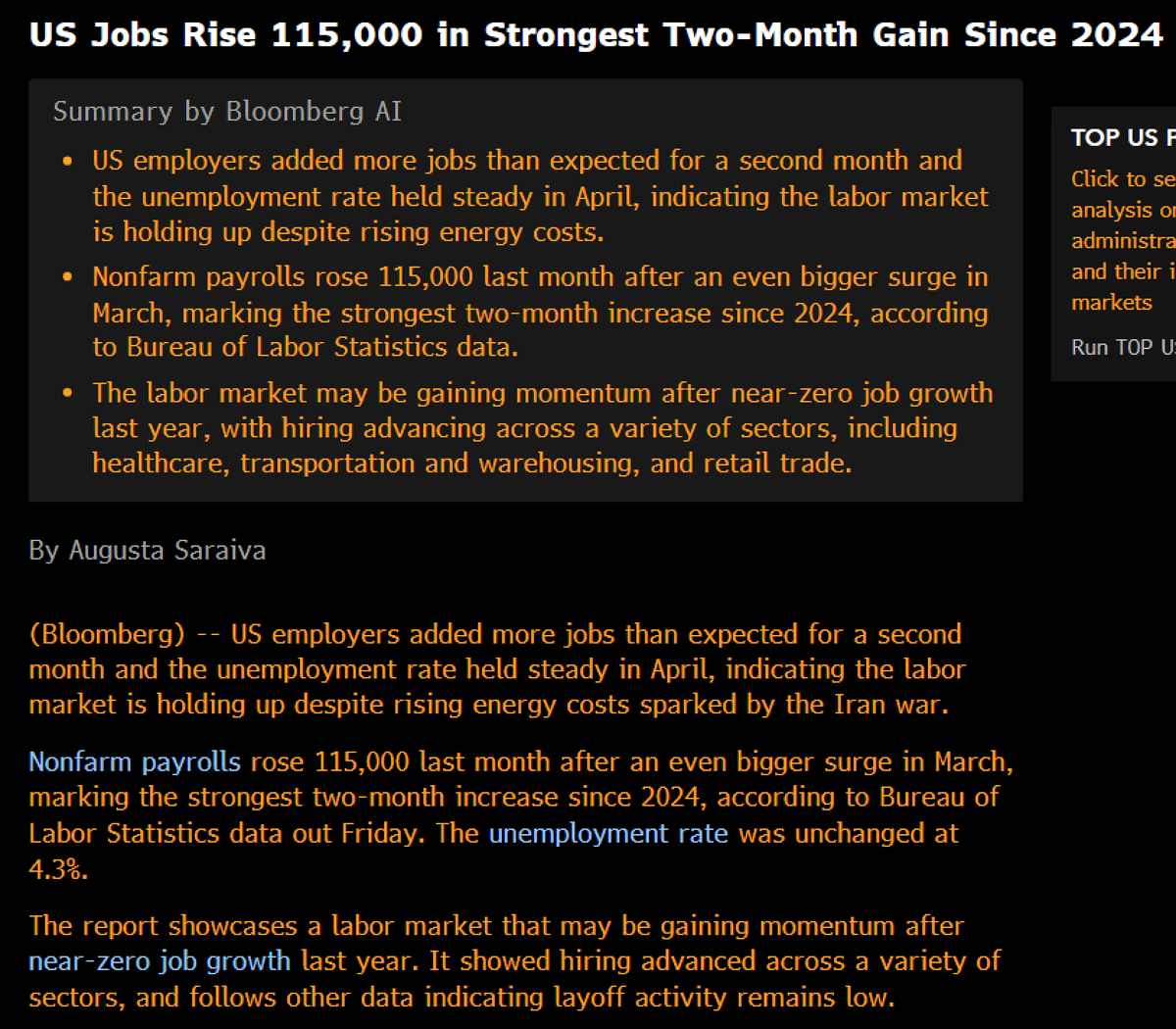
Record Two-Month Job Gains, Yet Economists Lose Again
Biggest two-month job growth in two years.. as economists now tied w/ the NY Jets for # of Ls in the past two yrs https://t.co/OwQ0cW28TU

Mortgage Rates Likely to Hold Steady After April Jobs Report Shows Stronger Hiring, Softer Wages
The April jobs report showed employers added 115,000 positions, far exceeding the 62,000 forecast, while the unemployment rate held at 4.3% with a slight unrounded uptick. Wage growth slowed to a 0.2% monthly increase and 3.6% year‑over‑year, below expectations. The...

Robust Job Market: Claims Rise, ADP Grows, Layoffs Fall
Very solid job data this week overall: Weekly Claims 4 wk MDA +203K, ADP 10th consecutive wk of growth, Challenger Gray layoffs dn 50% YTD, and today's NFP with last month's higher revisions.

May Consumer Sentiment Hits Record Low Amid Gas Surge
Consumer sentiment falls to fresh record low in May as surging gas prices hit outlook: CNBC

The U.S. Economy Keeps Adding Jobs but Full-Time Work Is Getting Harder to Find
The U.S. added 115,000 jobs in April, keeping the unemployment rate at 4.3%, but the quality of those jobs is shifting. Part‑time employment surged by 445,000, pushing the total to 4.9 million, indicating that full‑time openings are drying up. While healthcare,...

Consumer Confidence Hits Record Low Despite Easing Inflation
JUST IN: Even though inflation concerns are diminishing, American Consumers are at an all-time low in assurance.
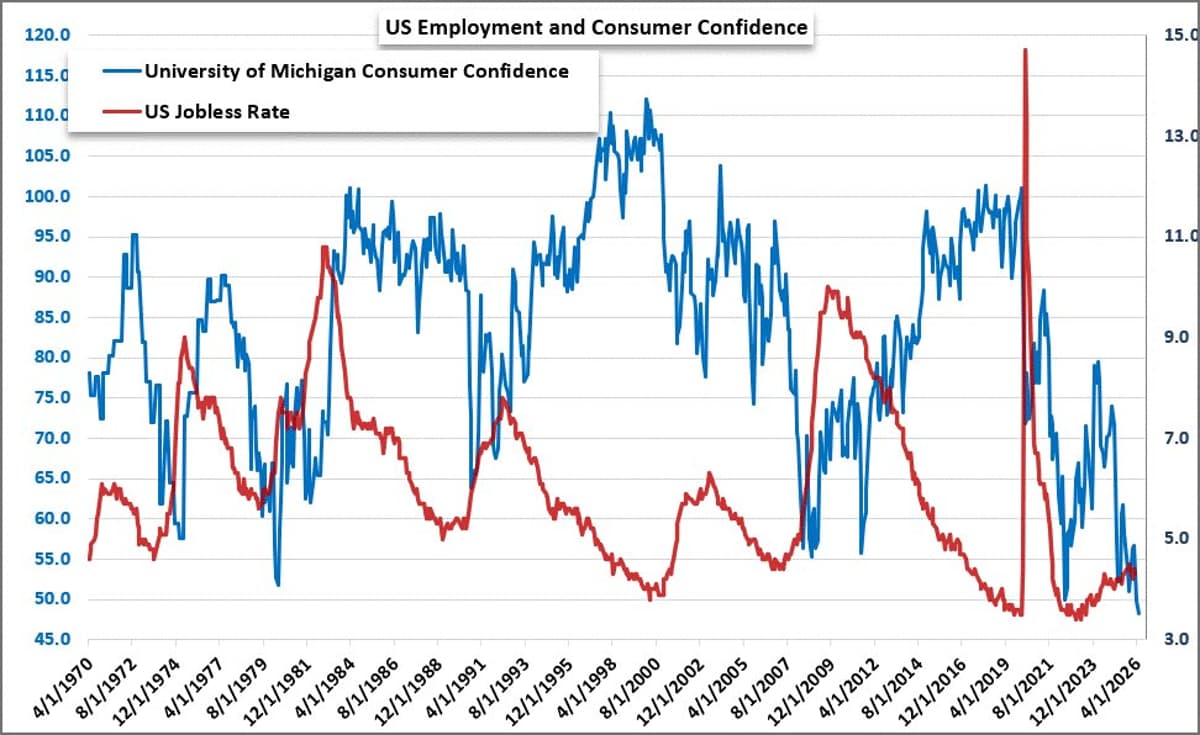
US Consumer Confidence Hits Record Low Amid Strong Economic Data
US consumer confidence from the University of Michigan extended to a fresh record low. The 48.2 reading is down from 49.5 and current conditions component added the biggest impact. We are sporting a serious contrast in confidence and traditional economic data......

April 2026 Jobs Report: Moving, But Not Moving Along
The U.S. Bureau of Labor Statistics reported that nonfarm payrolls rose by 115,000 in April, keeping the unemployment rate steady at 4.3%. Average hourly earnings increased 0.2% from March and are up 3.6% year‑over‑year. Healthcare added 618,000 jobs over the...
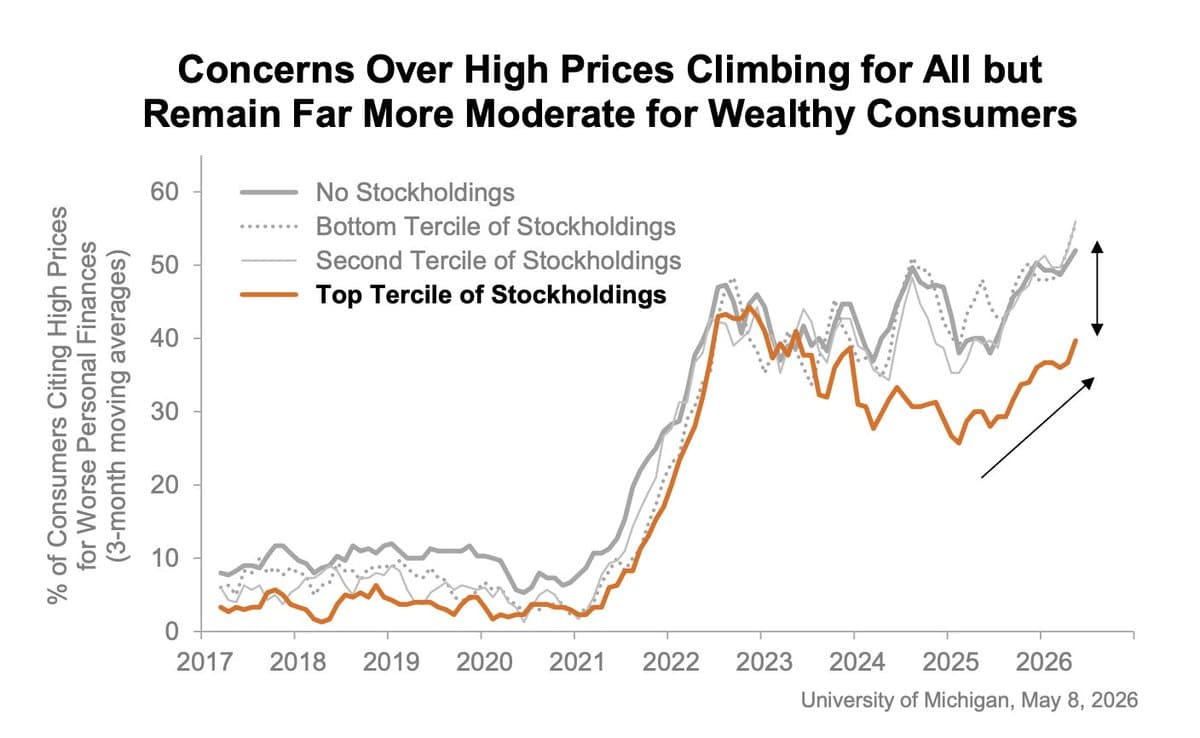
Price Worries Rise for Everyone, Less for the Rich
"Concerns Over High Prices Climbing for All but Remain Far More Moderate for Wealthy Consumers" - UMich consumer sentiment survey https://t.co/U26k1ps8DR
Strong Jobs Market Lets Fed Target Iran‑driven Inflation, Delaying Cuts
A stable labor market has given the Fed more flexibility to focus on mounting inflation risks stemming from the war in Iran, which have weakened the case among officials for rate cuts https://t.co/k8VoRWUSjB @nytimes

Job Gains Were Steady in April, but Wage Growth Continued to Weaken
U.S. payrolls added 115,000 jobs in April, pushing the three‑month average to 48,000 per month. Gains were concentrated in health care, transportation and warehousing, while the federal workforce shed another 9,000 jobs, marking a cumulative loss of 345,000 since January...
Kevin Warsh Struggles to Push Rate Cuts At
It’s getting harder for Kevin Warsh to come into the Fed and push for rate cuts, if he even still wants them…

US Labour Market Stable in April
April’s US labour market showed solid stability, with the unemployment rate unchanged at 4.3% and non‑farm payrolls rising by 115,000 jobs. Job growth was concentrated in healthcare, while government and information sectors posted declines. The data weakens arguments for further...
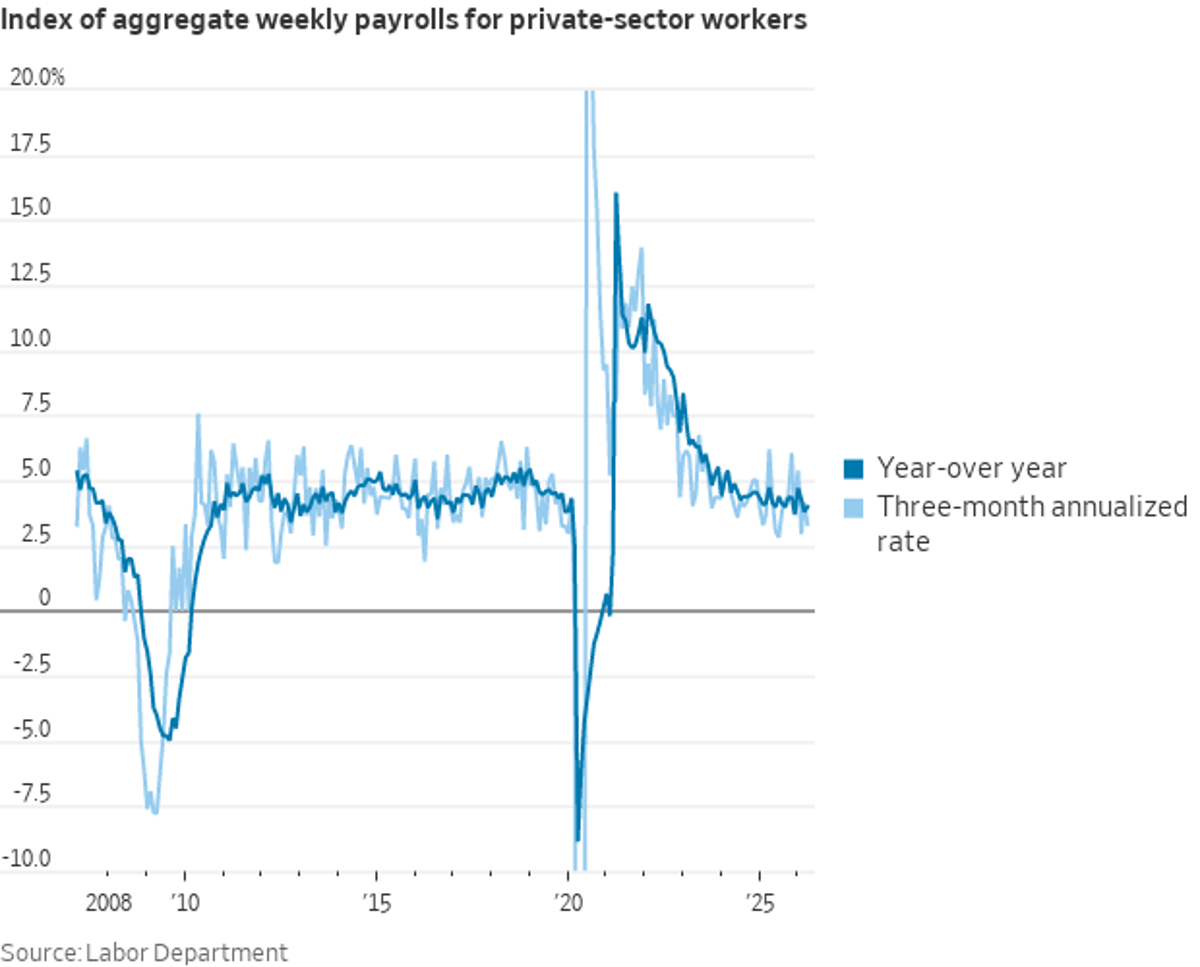
April Workweek Rises; Private Payrolls up 4% YTD
From the April payroll report: INCOMES: The average workweek ticked up in April after falling in March. The index of aggregate weekly payrolls for private-sector workers (which combines hiring, wages, and hours) was +4% for the year. https://t.co/brQvF8k1Xw

April Jobs Report: Reversals in 2025 Trends Give Rise to the Second Positive Report in a Row
April’s employment report showed the economy added 115,000 jobs, driven largely by a 123,000‑job gain in the private sector while government employment fell 8,000. The headline unemployment rate held steady at 4.3%, but the broader U‑6 underemployment measure rose to...
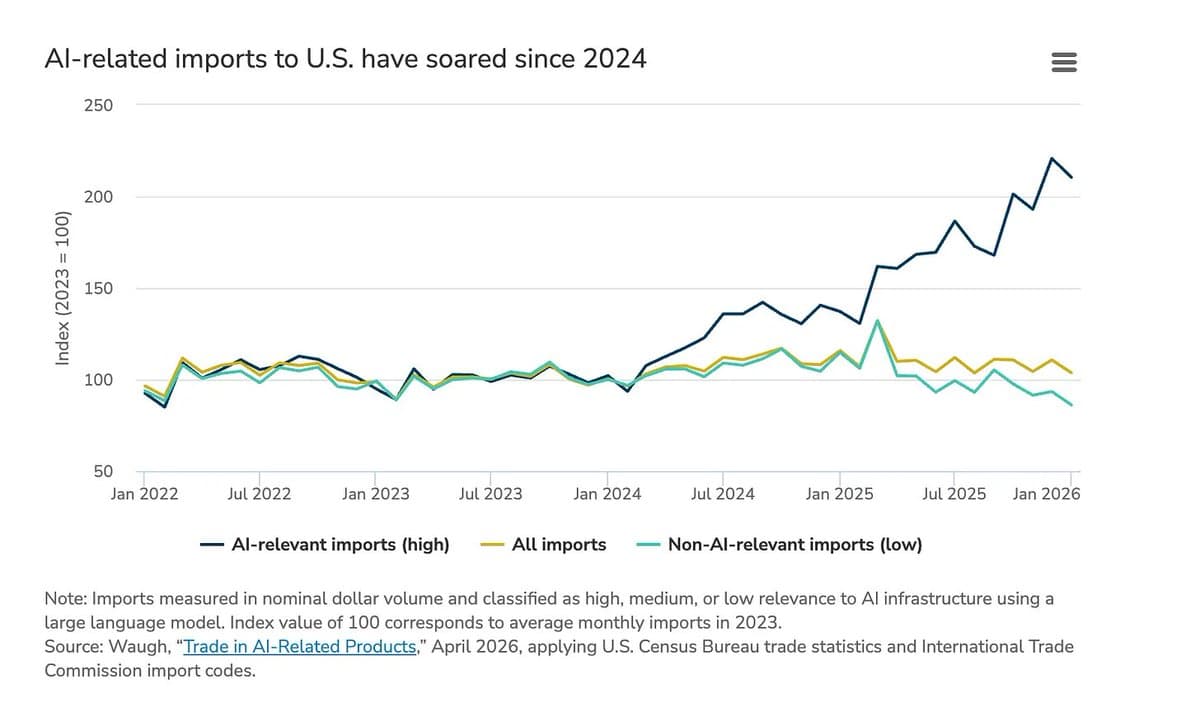
AI Investment Surge Fuels US Trade Deficit Despite Tariffs
Despite record tariff levels, the US trade deficit is widening in large part because of the boom in AI-related investment. More featured on today's Chartbook Top Links in the comment below. https://t.co/e7hFtYSr2M

Strong April Jobs Report Masks a Looming Workforce Crisis
The U.S. added 115,000 jobs in April, outpacing expectations and keeping the unemployment rate at 4.3%. Economists warn that a shrinking labor pool, driven by an aging population, reduced immigration and discouraged workers, masks a looming talent shortage. A looming...
April Jobs Data Frees Fed to Focus on Inflation
The April jobs report allows the Fed to sweat over inflation (as opposed to inflation *and* jobs) https://t.co/6iYFTTwKfI

Ford and Carhartt Unveil $4,200‑Plus ‘Essential Economy’ Super Duty Truck
Ford Motor Co. and workwear maker Carhartt introduced a co‑branded 2027 Super Duty pickup, priced $4,195 above the standard model and bundled with a new “From Our Business to Yours” pricing program. The launch, framed as an “essential economy” campaign,...
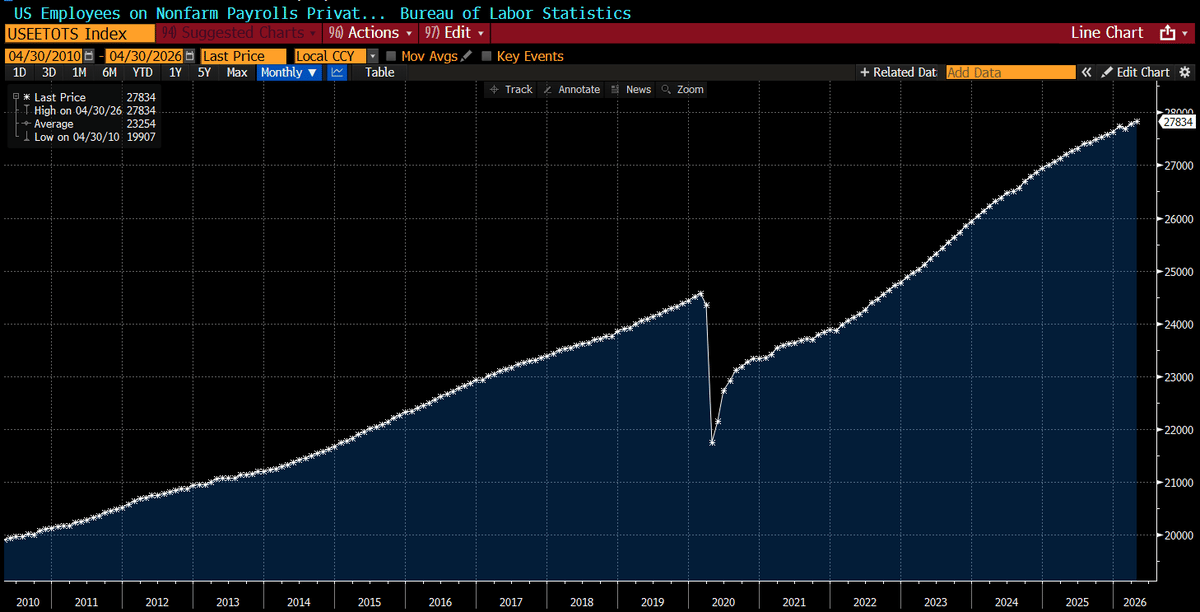
Healthcare and Education Jobs Surge as Finance Declines
If you look under the hood of the US labor market, you find a lot of healthcare and education jobs being created. There are outright job losses in the financial and information industries. A chart of jobs in the education...

Back-to-Back US Jobs Gains, but Hiring Caution Lingers
U.S. payrolls posted a second straight monthly increase, with April adding 115,000 jobs versus a 65,000 consensus forecast. The unemployment rate held at 4.3% even as household surveys showed a modest rise in joblessness. Average hourly earnings grew 0.2% month‑over‑month,...

Business Adds 115K Jobs, Unemployment Steady at 4.3%
Biz shrugs off #Iran War, higher gas prices, creates 115K jobs. Unemployment unchanged at 4.3%. Numbers are from mid-April, w/employers still evaluating what w/going on. #realestate #CRE #interestrates #Trump #DOL #BLS #AI https://t.co/WERxgWvnVU
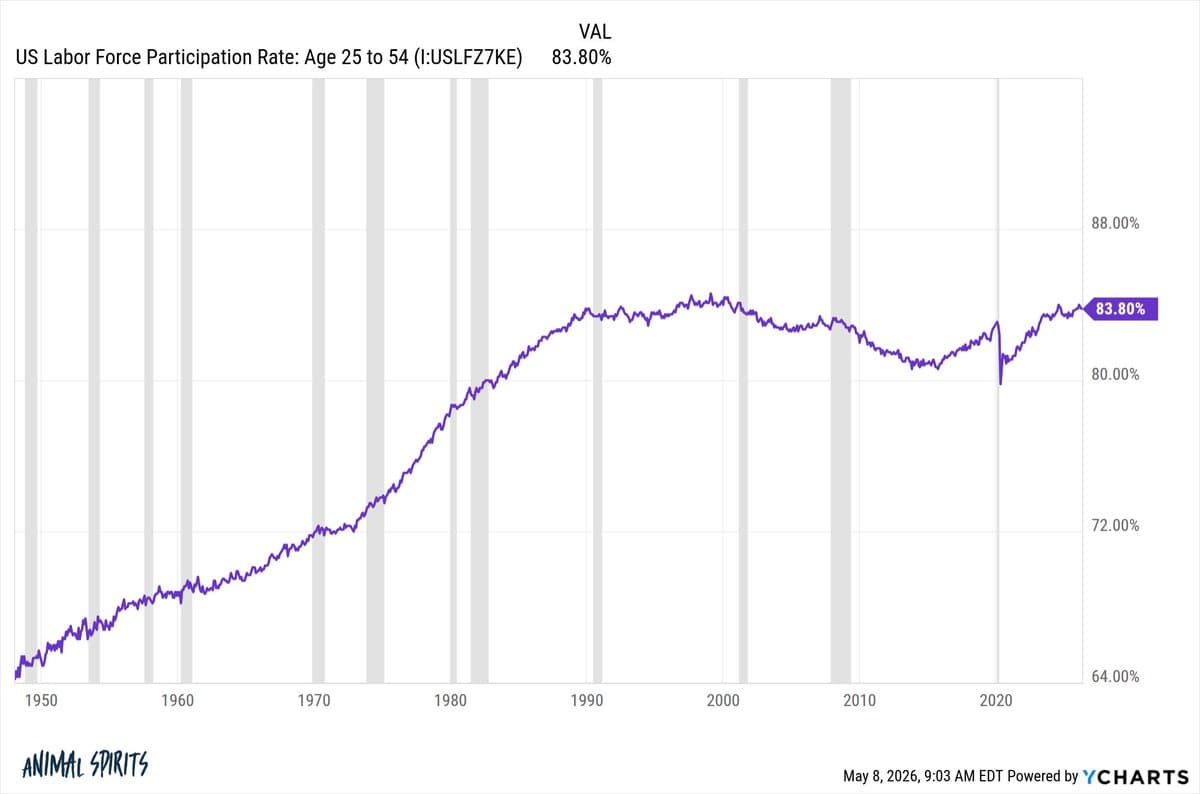
AI Hasn't Sparked Job Crisis; Unemployment at Historic Lows
Everyone is waiting for AI to take all the jobs but it's not happening yet The unemployment rate was higher than the current level (4.3%) from March 1970 to March 1998 Prime age labor force participation ratio is essentially at the all-time...

Markets Embrace Strong US Employment Report, but Iran Remains the Bigger Risk
The U.S. April jobs report showed non‑farm payrolls rising by 115,000, nearly double expectations, while the unemployment rate held at 4.3%. Average hourly earnings grew only 0.2% month‑over‑month, keeping wage‑inflation pressure modest. Meanwhile, Canada’s labor market surprised on the downside,...

Economy Added 115,000 Jobs in April Despite Mixed Signals
The U.S. added 115,000 jobs in April, keeping the unemployment rate steady at 4.3%. Gains were led by health care, transportation and warehousing, and retail, while federal employment fell. Underlying softness appeared as newly unemployed workers rose 358,000 and part‑time‑for‑necessity...

30‑Year Mortgage Rate Stays at 6.37% as 10‑Year Treasury Yield Rises to 4.37%
The average 30‑year fixed‑rate mortgage held at 6.37% on Thursday, matching a rise in the 10‑year Treasury yield to 4.37%. The uptick reflects renewed bond‑market volatility driven by higher oil prices and geopolitical tension, keeping borrowing costs elevated for prospective...