Today's Nanotech Pulse

Left‑handed DNA origami tubes double chemotherapy efficacy against AML
Researchers at the Cancer Center at Illinois showed that left‑handed DNA origami tubes loaded with Daunorubicin achieve more than twice the cell‑killing efficacy of right‑handed tubes. The tubes display aptamers that target the CD117 protein on acute myeloid leukemia cells and their left‑handed geometry promotes rapid internalization.

The Invisible Bubbles that Spread Cancer Could Also Help Stop It
Researchers at ÉTS and McGill are engineering lipid nanoparticles that replicate extracellular vesicles to study how cancer spreads. By producing liposomes with matching size and charge, they can observe real‑time uptake by liver cancer cells and measure metastasis mechanisms. The team has reached 50 % protein encapsulation and aims for 90 % to accurately model natural vesicles before moving to animal trials. Parallel work encapsulates compounds such as turmeric and paclitaxel, showing how these nanocarriers could both illuminate and block metastatic pathways.
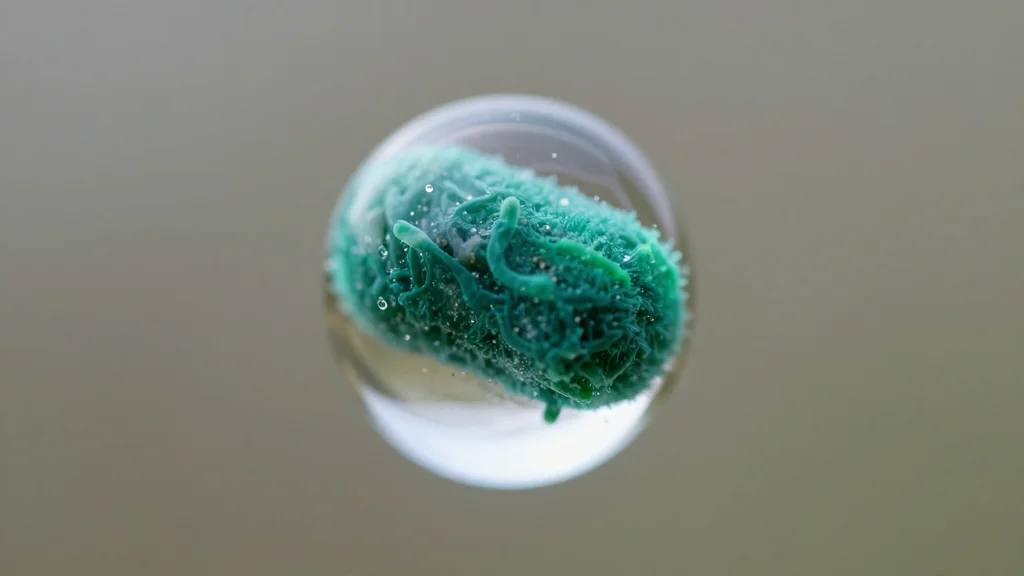
The Hidden Dangers of Nanoplastics
Researchers at Virginia Tech have shown that nanoplastics in drinking‑water systems can enhance biofilm formation, making bacterial communities more robust and resistant to disinfectants. The study found nanoplastics trigger prophage activation and quorum‑sensing signals, leading to thicker, chemically resilient biofilms...

Graphene Speakers Bend, Stretch, and Fold without Losing Their Sound
Researchers at Korea Research Institute of Chemical Technology have created vertically aligned reduced graphene oxide (VrGO) thermoacoustic speakers that break the traditional thickness‑performance trade‑off. By using a dual‑laser process to convert flat graphene oxide films into 3‑D micro‑forests, the devices...

The Magnetic Secret Inside Steel Finally Explained
Researchers at Illinois’ Grainger College have identified the first physical mechanism by which magnetic fields impede carbon diffusion in iron. Using spin‑space averaging simulations, they showed that aligned iron spins increase the energy barrier for carbon atoms moving between octahedral...

A Strange In-Between State of Matter Is Finally Observed
Scientists at the University of Vienna have directly observed the elusive hexatic phase in an atomically thin silver iodide crystal, confirming that a true intermediate state between solid and liquid can exist in real two‑dimensional materials. The experiment used a...

Researchers Pioneer Defect-Free High-Quality Graphene Electrodes
Researchers at Chungnam National University unveiled a one‑step free patterning (OFP‑G) technique that etches graphene without photoresists, achieving sub‑5 µm features on large‑area monolayer sheets. The vacuum‑based process uses a conductive glass substrate at 380 °C and 1,000 V to convert carbon bonds...

Specially Textured Metasurfaces for Identifying Aggressive Cancer
Researchers at Hebrew University have created textured metasurfaces that reveal aggressive cancer cells through their physical interactions, not genetic markers. The nano‑patterned surfaces cause aggressive cells to grip more tightly, engulf particles, and alter shape, behaviors missed on flat substrates....

Nb Cl Demonstrates F > 1 Frustration and Potential Quantum Spin Liquid Behaviour
Researchers at the University of Washington have shown that the two‑dimensional material NbCl exhibits short‑range antiferromagnetic correlations and strong magnetic frustration, hallmarks of a quantum spin‑liquid candidate. Using ab initio density‑functional calculations with Hubbard‑U and spin‑orbit coupling, they mapped anisotropic exchange...
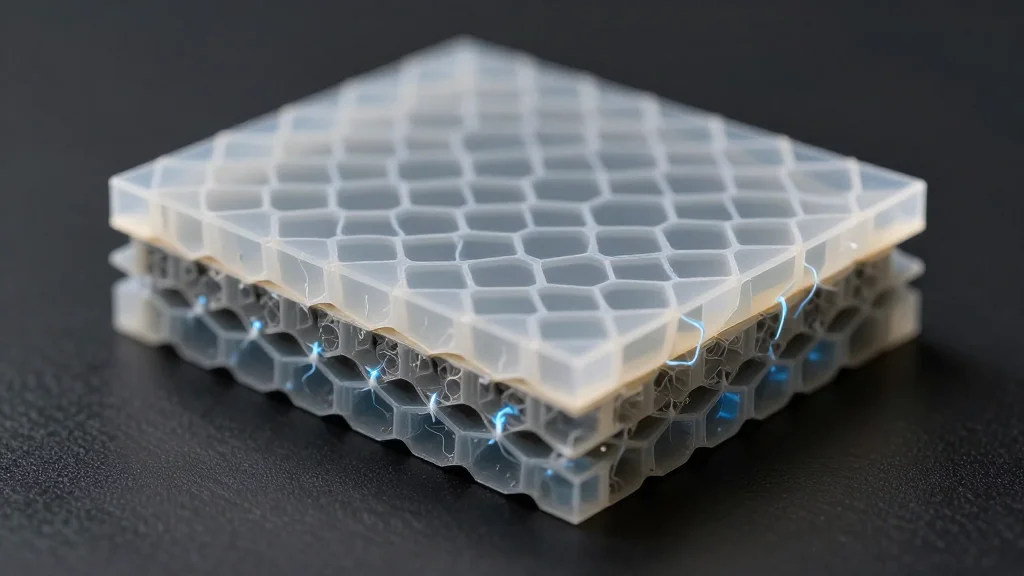
Stacked Atom Thin Materials Enable a New Form of Ultralow Power Memory
Researchers at DGIST and KAIST demonstrated a new memory principle by stacking graphene, hexagonal boron nitride, and α‑RuCl₃ into a heterostructure. The sandwich‑like stack induces interfacial dipoles that behave like ferroelectric material, allowing data to be written and erased electrically....
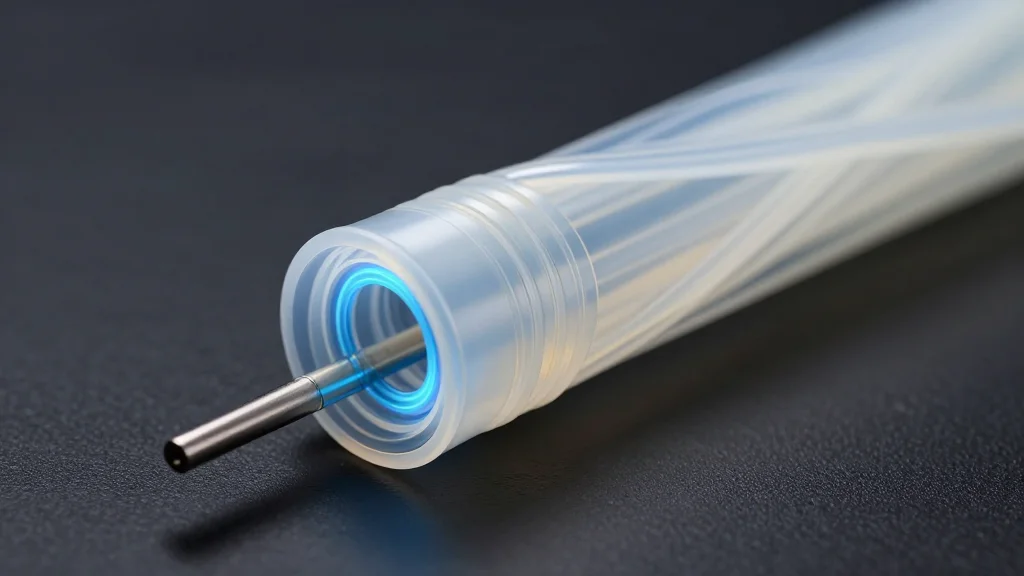
A Spinning 3D Printer Creates Air-Powered Soft Robots that Curl, Twist, and Grip
Harvard and Stanford researchers unveiled a rotational multimaterial 3D‑printing process that embeds asymmetrical pneumatic channels inside elastomeric filaments in a single continuous operation. By co‑extruding a photocurable urethane acrylate and a fugitive Pluronic ink through a rotating nozzle, they can...

Watching Atoms Roam Before They Decay
Scientists have, for the first time, visualized how atoms rearrange before undergoing electron‑transfer‑mediated decay (ETMD) after X‑ray excitation. Using a COLTRIMS reaction microscope at BESSY II and PETRA III, they tracked a NeKr₂ trimer for up to a picosecond, capturing the roaming...

Granzyme B-Mimic Nanozyme Targets Cancer Cells
Researchers have engineered a granzyme B‑mimic nanozyme that selectively attacks cancer cells by replicating the proteolytic activity of the immune‑system enzyme granzyme B. Laboratory tests show the nanozyme cleaves tumor‑specific membrane proteins, triggering apoptosis while sparing healthy tissue. In mouse...

Two-Faced Nanoparticles Revive Antibiotics Against Superbugs
Researchers at the University of Osaka have engineered amphiphilic Janus nanoparticles that physically breach the outer membrane of drug‑resistant Gram‑negative bacteria. By creating pores, these two‑faced particles enable conventional antibiotics to enter cells and kill pathogens such as Escherichia coli...

Researchers Use Agricultural Waste to Produce Graphene
Australian researchers at James Cook University and Flinders University have demonstrated a sustainable route to graphene by converting woody‑derived nanocellulose into bio‑char and then exfoliating it in a vortex fluidic device (VFD) using only water. The process operates at 500‑800 °C,...

Cellulose Nanofibril‐Filled Damping and Lubricating Hydrogels for Mitigating Friction‐Induced Vibration of Polyurethane Composites
Researchers introduced a multi‑crosslinked polyvinyl alcohol hydrogel reinforced with carboxylated cellulose nanofibers (MCPH) and blended it into thermoplastic polyurethane. The hydrogel supplies both hydration lubrication and reversible bonding that dissipates mechanical energy, dramatically improving the composite’s friction and damping behavior....

Impact of Device Architecture on Proton Detection Efficiency in 2D Perovskite Thick Film Detectors
Researchers compared planar and stacked architectures for 2D perovskite thick‑film detectors targeting 5 MeV protons. The stacked configuration, featuring a vertical electric field, delivered superior charge collection, higher sensitivity, and stable, energy‑independent response across 3–5 MeV. Experiments spanning fluxes from 10⁸ to...

A Customizable Perovskite Quantum Dots Platform for Visual Fluorescent Discrimination of Molecular Homologs and Enantiomers
Researchers have created a customizable fluorescence platform using chiral polymer‑coated perovskite quantum dots (CsPbBr3@PAAR/PAAS). The system delivers quasi‑mirror symmetric emission, allowing naked‑eye discrimination of (R)- and (S)-2‑butanol enantiomers. The achiral counterpart (CsPbBr3@PAA) differentiates C1–C4 monohydric alcohols, sulfoxides, and formamides through...

Designing with Li2S in Lithium–Sulfur Batteries: From Fundamental Chemistry to Practical Architectures
The perspective outlines how Li2S‑based lithium‑sulfur batteries are reshaping cell design by tackling sulfur’s insulating nature and polysulfide shuttling. It highlights atomic‑level catalytic engineering, hierarchical carbon scaffolds, and electrolyte‑solvation co‑design as levers to activate Li2S and achieve reversible cycling. These...
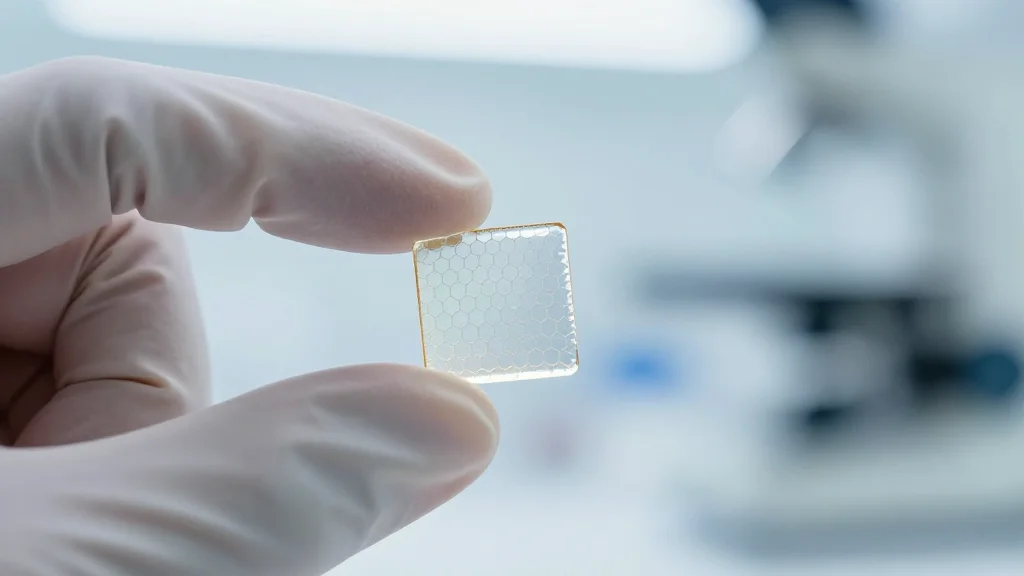
Liquid NaK‐Enabled Strategy for the Facile and Scalable Synthesis of Porous Fe/Co/Ni‐Based Materials for Magnetically Enhanced OER Catalysis
Researchers have introduced a room‑temperature liquid NaK‑enabled alloy‑to‑alloy method to produce porous, multiphase Fe/Co/Ni magnetic electrocatalysts. The process avoids high‑temperature calcination and toxic etchants, delivering yields above 80 % and enabling solvent recovery. The resulting amorphous materials exhibit mesoporosity up to...
Determination of Nucleation Process and Spherical Micelle Growth by Time‐Resolved SAXS During PISA: Evidence From Liquid Crystalline Spherical Nanoparticles
Researchers employed time‑resolved small‑angle X‑ray scattering (TR‑SAXS) to monitor polymerization‑induced self‑assembly (PISA) of liquid‑crystalline spherical micelles. The data reveal that nucleation occurs early and particle growth proceeds through a structural shift from interdigitated to non‑interdigitated core conformations, a shift governed...

D‐Band Modulation by Elements Synergistic Design for High‐Performance Zinc Air Batteries
Researchers engineered ultrafine high‑entropy nitride (HEN) nanoparticles that exploit elemental synergy to shift the d‑band center, accelerating *OH adsorption and desorption. Tungsten plays a pivotal role by reconstructing the electronic environment of the other metals. The resulting catalyst delivers an...

Bifunctional Cu–Sn Oxides for Electrocatalytic Upgrade of Nitrate and Glucose to Ammonium Formate
Researchers have introduced a bifunctional Cu‑Sn oxide catalyst that simultaneously drives nitrate reduction and glucose oxidation in a paired electrochemical cell. The catalyst delivers an NH₃ yield of 26.57 mg h⁻¹ cm⁻² with 85.3% Faradaic efficiency, while generating formate at 44.88 mg h⁻¹ cm⁻² and 81.8%...

Tuning Charge Storage in Bimetallic CoV–LDH for High‐Performance Supercapacitor: A Synergistic Experimental and Machine Learning Approach
Researchers employed a controlled partial‑reduction protocol to introduce oxygen vacancies into cobalt‑vanadium layered double hydroxides (CoV‑LDH). Density functional theory showed that these vacancies narrow the bandgap and increase electronic states near the Fermi level, boosting conductivity. Machine‑learning models linked synthesis...

Nanocomposite Cellulose Membranes for High‐Performance Water Evaporation Electricity Generation
Researchers at Nanjing University of Aeronautics and Astronautics have created a nanocomposite cellulose membrane for hydrovoltaic electricity generation. By depositing bismuth oxyiodide (BiOI) nanoparticles onto cellulose nanofibers via a two‑step liquid‑vapor method, the membrane achieves an open‑circuit voltage of ~3.7 V,...

Deconstruction Engineering of Lignocellulosic Biomass for the Preparation of High‐performance Hard Carbon Anode Materials in Sodium‐Ion Batteries
Researchers introduced a low‑corrosive maleic‑acid hydrothermal pretreatment to selectively strip hemicellulose from coconut shells, enriching lignin and cellulose while recovering xylose and furfural. The resulting hard‑carbon precursor exhibits a reduced closed‑pore size (1.64 nm) and increased closed‑pore volume (0.236 cm³ g⁻¹) after carbonization....
Liquid Metal‐Architected Thermal Management Materials: Void Engineering for Simultaneous High Thermal Conductivity and Flame Retardancy
Researchers have introduced liquid‑metal‑architected silicone composites that use mechanochemical encapsulation of aluminum nitride with eutectic gallium‑indium to eradicate processing‑induced voids. The void‑free architecture creates continuous thermal pathways, delivering 4.60 W m⁻¹ K⁻¹ in‑plane and 5.27 W m⁻¹ K⁻¹ out‑of‑plane conductivity at just 50 vol.% filler loading. Simultaneously,...

Beyond Thin Stacks: Physics, Materials, and Architectures of Thick Perovskite Light‐Emitting Diodes
The review outlines how thick perovskite light‑emitting diodes—ranging from 100 nm to several micrometers—offer distinct physics, material, and architectural advantages over conventional thin stacks. By increasing the emitter‑metal separation, these devices suppress plasmonic loss, boost photon‑recycling, and achieve higher out‑coupling efficiency....

Dual Enhancement of Electrochemical Ozone Production and Chlorine Evolution Reaction over Sulfur‐Doped 3D Ni‐Sb‐SnO2 Electrodes
Researchers introduced sulfur into a three‑dimensional Ni‑Sb‑SnO2 (DLS‑NATO/TiF) electrode, creating a dual‑function catalyst for electrochemical ozone production (EOP) and chlorine evolution reaction (CER). The sulfur‑doped electrode achieved a Faradaic efficiency of 50.10% for ozone and 95.70% for chlorine under acidic...

Beyond the Chill: Emerging Electrolytes, Cathodes, and Air Electrodes for Cryogenic Aqueous Zn Batteries
The review surveys recent breakthroughs in cryogenic aqueous zinc batteries, focusing on electrolyte engineering, cathode design, anode stabilization, and separator modification. Researchers have introduced liquid, suspension, and gel polymer electrolytes that disrupt hydrogen‑bond networks and improve Zn2+ solvation, enabling operation...

Low Temperature MOCVD Synthesis of High‐Mobility 2D InSe
Researchers have demonstrated low-temperature, wafer-scale metal-organic chemical vapor deposition (MOCVD) of phase-pure two-dimensional indium selenide (InSe) on c-plane sapphire. By systematically varying the Se/In precursor ratio and growth temperature, they mapped the In-rich to Se-rich InxSey phase space and identified...

Miniaturized Self‐Powered Perovskite Spectrometer
Researchers have built a miniaturized perovskite spectrometer that uses only eight self‑powered photodetectors to deliver high‑resolution spectral data. The device achieves a peak external quantum efficiency of 75% and resolves wavelengths at ~5 nm across the 680–800 nm band. By leveraging compressive‑sensing...

Anion Component Engineering of Spontaneous Perovskite Passivators for Energy Alignment Modulations in Perovskite Solar Cells
Researchers introduced n‑octylammonium bis(fluorosulfonyl)imide additives (OA‑FSI, OA‑TFSI, OA‑PFSI) to the spiro‑OMeTAD hole‑transport layer of perovskite solar cells. The anion component of these additives modulates the ionization energy of the HTM, shifting energy levels and improving charge extraction. Larger C‑F groups...
Fully Printed and Integrable Zn‐Ag Battery‐Hierarchical Sensor for Scalable Manufacturing of Monolithic Wearables
Researchers demonstrated a fully printed zinc‑silver (Zn‑Ag) battery paired with a hierarchical pressure sensor using screen‑printing technology. A mild ZnCl2 electrolyte curtails cathode dissolution, boosting battery stability, while the sensor’s multi‑scale structure delivers a record‑high sensitivity of 413.03 kPa⁻¹. The two...

Boosting Piezoelectric Catalytic H2O2 Production in Pure Water of Graphitic Carbon Nitride via Defect Engineering With Tunable Oxygen‐Doping
Researchers introduced tunable oxygen defects into graphitic carbon nitride (g‑C₃N₄) via a one‑step co‑calcination process, creating a metal‑free piezoelectric catalyst that converts mechanical energy into hydrogen peroxide. The optimized material, designated CN‑40, achieves a H₂O₂ production rate of 671 µmol g⁻¹ h⁻¹, roughly...
Integrated Single‐Atom and Cluster Catalysts for Electrocatalytic Hydrogen Energy Technologies: Current Achievements and Challenges
The review highlights integrated single‑atom and cluster catalysts (ISACCs) as a breakthrough for electrocatalytic hydrogen technologies. By coupling atom‑level precision with multi‑site reactivity, ISACCs dramatically improve the kinetics of HER, OER, ORR and HOR while cutting dependence on scarce platinum‑group...

Spin Density Modulation by Ru Nanoparticles in ZIF‐67 Framework for Magnetically Enhanced Water Splitting Reaction
Researchers engineered a Ru nanoparticle‑decorated ZIF‑67 framework (RuNP/ZIF‑67) that reshapes cobalt oxidation states and boosts spin density, inducing ferromagnetism. The magnetic catalyst, tested under a 240 mT field, cuts the hydrogen evolution reaction overpotential from 68 mV to 51 mV and the oxygen...

Low Temperature Site‐Specific Pulsed Laser Annealing of MoS2
The study introduces a non‑thermal, ultrashort pulsed laser annealing technique that selectively modifies CVD‑grown MoS2 thin films at fluences below 12 mJ cm⁻², well under the damage threshold. High‑overlap laser scanning on SiO₂‑Si substrates converts amorphous regions to crystalline MoS2, as confirmed...

Ga‐Assisted Free‐Standing Growth of CsPbBr3 Nanowires for High‐Performance Optoelectronic Applications
Researchers have developed a gallium‑assisted method to directly grow free‑standing CsPbBr3 nanowires, allowing easy transfer onto any substrate. The transferred nanowires act as high‑Q optical cavities, achieving single‑mode lasing with a polarization ratio of 0.908. Integrated photodetectors based on these...

Stress Engineering in Flexible Thermoelectrics
Flexible thermoelectric generators (F-TEGs) are emerging as a viable route to harvest low‑grade heat from both flat and irregular surfaces. The review highlights stress engineering as a pivotal technique to reconcile the long‑standing trade‑off between thermoelectric efficiency and mechanical pliability....

Enzyme‐Activated Programmable Theranostic Platform for Spatiotemporal Imaging of Intracellular MicroRNA and On‐Demand Manipulation‐Mediated Therapy
Researchers have engineered a cerium‑based metal‑organic framework (Ce‑MOF) loaded with DNA hairpins that responds to intracellular APE1 and miRNA‑21. The dual activation triggers a hybridization chain reaction, producing a Cy3‑Cy5 FRET signal for spatiotemporal imaging of miRNA expression in living...

Design Principles and Experimental Evidence for Semiconducting Heusler Thermoelectrics by Vacancy‐Filling
Researchers applied a vacancy‑filling strategy to selectively occupy 4d sites in Heusler alloys, creating an energy gap between occupied t2g and empty eg states while dramatically reducing lattice thermal conductivity to 2.77 W·m⁻¹·K⁻¹ at room temperature. The TiFeₓCoᵧSb system, constrained by...

Ultrathin and High‐Efficiency Passive Daytime Radiative Cooling Coating via Polymer‐Particle Co‐Design
Researchers have created an ultrathin passive daytime radiative cooling (PDRC) coating using a polymer‑particle co‑design approach. By matching functional‑group resonances and applying Lorenz‑Mie scattering theory to size particles, the coating reaches 93.8 % solar reflectance and 97.1 % mid‑infrared emissivity. The film...

Nanoengineering‐Based Strategies for Enhancing Dynamic Therapy
Dynamic therapy, a ROS‑driven cancer treatment, is gaining traction for its high efficacy and low systemic toxicity. Recent nanoengineering advances focus on redesigning sensitizer nanostructures, deploying sophisticated nanocarriers, and modulating the tumor microenvironment to boost reactive oxygen species production. The...

Efficient, Reversible Lead Adsorption in a Thiol‐Decorated Zirconium‐Metal–Organic Framework
Researchers have introduced a zirconium‑based metal‑organic framework (Zr‑DMSA) functionalized with thiol groups that captures lead(II) ions from water with high efficiency. The material leverages mixed sulfur/oxygen chelation via flexible dangling ligands, as confirmed by solid‑state NMR and pair‑distribution function analyses....

Triboelectric Capacitance Supplementation in Energy Storage Composites with Functionalized Carbon Fiber Electrodes
Researchers demonstrate that surface‑functionalized carbon‑fiber electrodes combined with electrospun polymer nanofiber separators can substantially boost the performance of structural supercapacitors. The triboelectric effect at the carbon‑fiber/separator interface generates additional charge, while a hybrid piezo‑triboelectric layer further raises voltage and specific...

Multifunctional Superwetting Sea‐Urchin‐Mimetic Nanosheet‐Based Interface for Remote Oil‐Water Separation
Researchers have developed a fluorine‑free, barium carbonate‑functionalized reduced graphene oxide (FBC‑rGO) coating that exhibits superhydrophobic (water contact angle >154°) and superoleophilic properties, enabling rapid oil uptake of 15‑65 g per gram and >97% separation efficiency. The coating’s hierarchical sea‑urchin‑like nanostructure stabilizes...
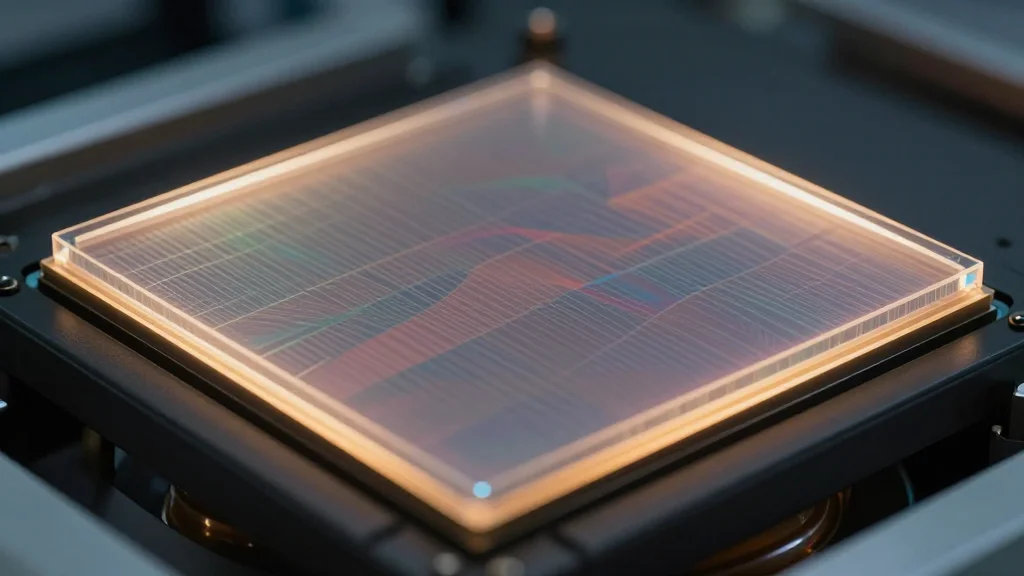
Engineering Metastability in Atomic Layer Deposition: Polymorph and Valence Control
The review outlines how atomic layer deposition (ALD) can be engineered to access metastable material phases, focusing on structural polymorphs and multivalence states. It details strategies such as temperature modulation, substrate lattice matching, grain‑size control, doping, solid‑solution formation, and precursor...

Lewis Acid‐Base Effects on Molecular Structure and Charge Density in Solid Polymer Electrolytes for Solid‐State Batteries
Researchers examined solid polymer electrolytes (SPEs) based on PVDF‑HFP incorporating LiFSI, LiTFSI, and a 1:1 binary mixture. They found that salt polarity and Lewis basicity dictate dehydrofluorination, crystallinity, and charge density, directly influencing ionic conductivity and mechanical robustness. The binary...
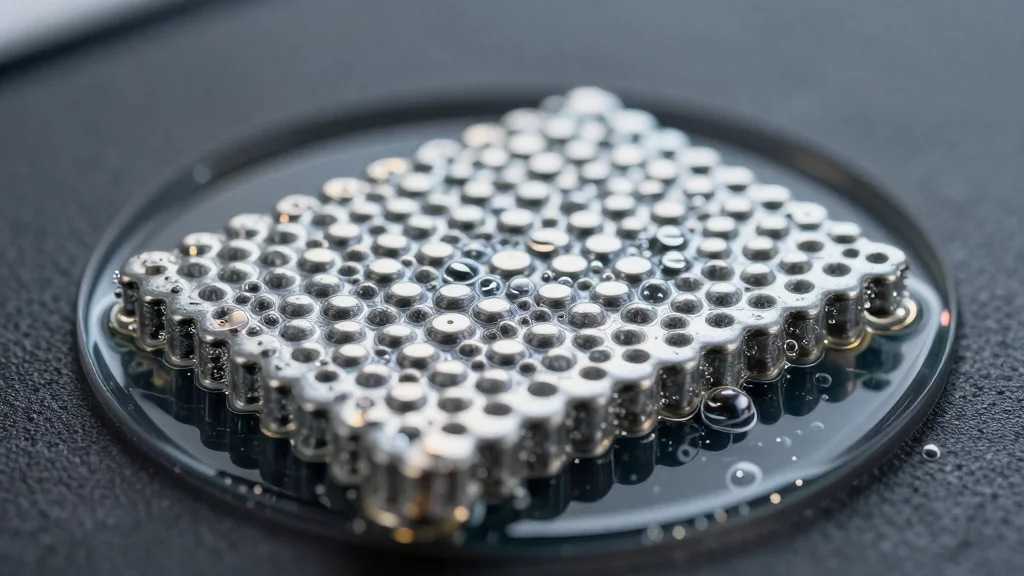
Dynamic Adsorption of Molybdate Promoted Self‐Optimization and Self‐Healing of NiFe/NiMo in Alkaline Water Electrolysis
Researchers have engineered a NiFe/NiMo heterojunction catalyst that delivers exceptional bifunctional performance in alkaline water electrolysis. The material achieves 100 mA cm⁻² at only 99 mV overpotential for the hydrogen evolution reaction (HER) and 233 mV for the oxygen evolution reaction (OER). Free molybdate...

Superconducting Nanowire Memory Array Achieves Significantly Lower Error Rate
MIT researchers have demonstrated a 4 × 4 superconducting nanowire memory array that operates at 1.3 K and delivers a bit‑error rate of roughly 10⁻⁵, a ten‑fold improvement over earlier designs. The cell architecture combines temperature‑dependent switches with a kinetic inductor, enabling precise...