
Allianz: Unemployment Rates Could Be Shaken by Immigration, Iran War, and AI
Allianz warns that despite historically low unemployment in the U.S. and Europe, three forces—tightening immigration policies, the Iran‑related energy‑price shock, and accelerating AI adoption—could destabilize labor markets. Immigration inflows, which accounted for over half of U.S. job creation in 2024, are expected to vanish by 2025, reducing hiring potential. AI is projected to affect roughly 23% of jobs in major economies within three years, with the U.S. seeing the highest exposure at 28.7%. The firm stresses that policy choices on upskilling, taxation and competition will determine whether AI amplifies or mitigates these pressures.

America Is Experiencing a Productivity Miracle
After a decade of stagnant output following the 2007‑09 financial crisis, U.S. productivity has surged, posting an annualized 2.5% growth rate in 2025. The Congressional Budget Office, long‑time pessimist on productivity, upgraded its outlook after the first‑quarter data revealed a...

Manufacturing Industry Lost 2,000 Jobs in April: BLS
The U.S. Bureau of Labor Statistics reported that manufacturing shed 2,000 jobs in April, a 50% year‑over‑year increase but a 113% drop from March’s 15,000‑job gain. The ISM employment index fell to 46.4%, confirming a contraction in hiring. Transportation equipment...

Bond Traders Brace for Inflation Data as Fed's Powell Era Ends
Bond traders are bracing for the upcoming U.S. CPI report as oil‑driven price pressures keep Treasury yields elevated. Two‑year yields climbed to 3.93% after the U.S.–Iran standoff pushed crude higher, and the market is already pricing a more than 40%...
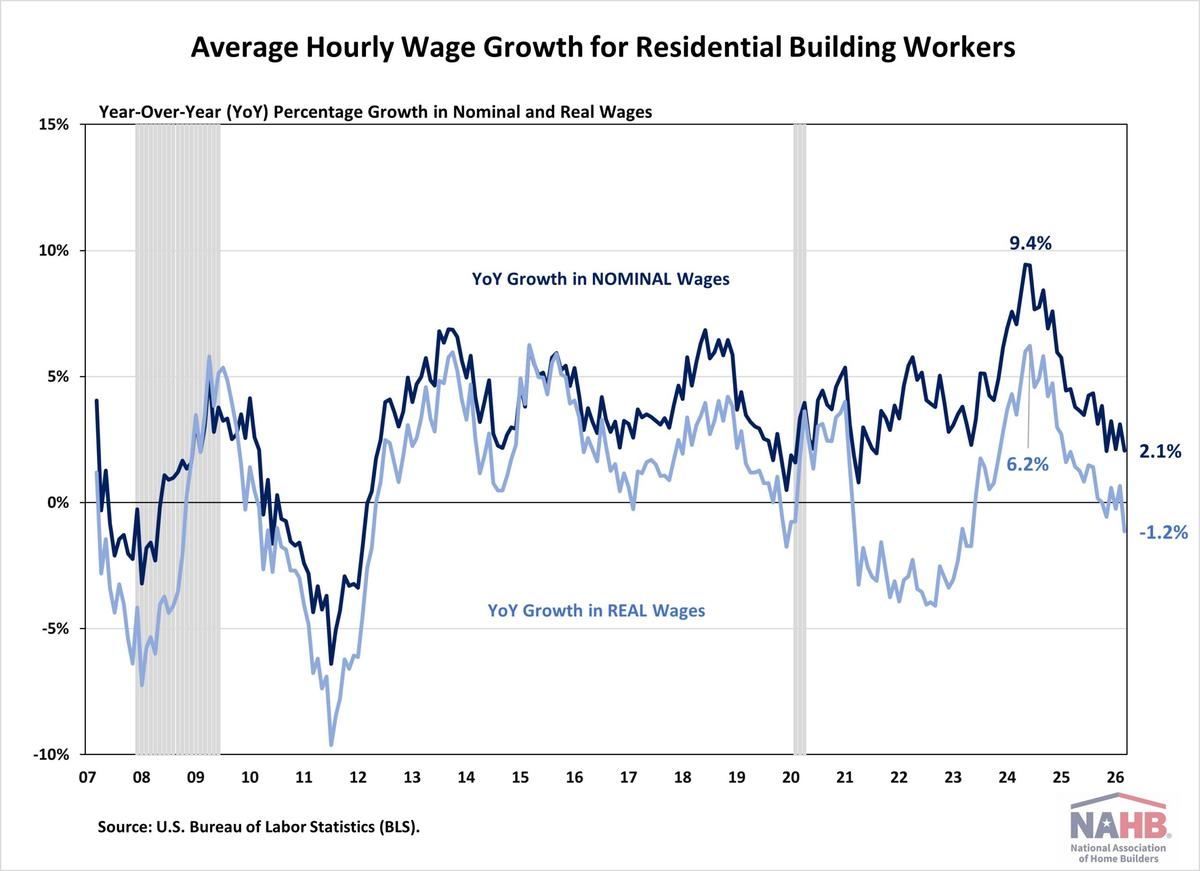
Residential Building Worker Wages Remain Soft in Early 2026 Amid Slower Housing Activity
Residential building workers saw nominal hourly earnings rise 2.1% year‑over‑year in March 2026, a sharp slowdown from the 9.4% peak in mid‑2024. After inflation adjustment, real wages actually fell 1.2% YoY, indicating earnings are not keeping pace with price growth....

The Peculiar Recent Behavior of Unemployment
The traditional “plucking model” of unemployment—slow declines in expansions and rapid spikes in recessions—has been broken over the past three years. Since 2023 the U.S. unemployment rate has risen gradually from historically low levels without a concurrent recession, a pattern...

Nonresidential Construction Spending Down Again in March
National nonresidential construction spending slipped 0.2% in March, reaching $1.244 trillion on a seasonally adjusted annualized basis. The decline affected 9 of 16 subcategories, with both public and private sectors posting identical month‑over‑month drops. Private‑sector spending is now more than 2%...

Market Outlook for the Week of 11th - 15th May
The week of May 11‑15 is data‑heavy, starting with U.S. existing‑home sales and followed by core CPI, PPI and retail sales releases that will test inflation trends. A Senate vote is expected to confirm Kevin Warsh as the next Federal...

Elizabeth Warren Says Mother's Day Shopping Under Trump Became 'More Expensive' — Senator Says Prices Of Cupcakes, Flowers And Candy...
Senator Elizabeth Warren posted a list of Mother’s Day items that have become more expensive, attributing the price hikes to the Trump administration’s policies. She cited specific increases such as cupcakes up 5.2%, coffee up 18.7%, and candy up 10.6%,...

The Conference Board Employment Trends Index™ (ETI) Increased in April
The Conference Board’s Employment Trends Index (ETI) rose to 105.77 in April, up from 105.52 in March, signaling a likely rebound in payroll growth. The increase was driven by a drop in consumers reporting jobs as hard to get and...

Young Americans' Job Market Pessimism Stands Out Globally
Gallup’s 2025 World Poll shows only 43% of Americans aged 15‑34 consider it a good time to find a local job, a 21‑point gap with the 55+ cohort. The United States has the widest generational optimism divide among 141 surveyed...
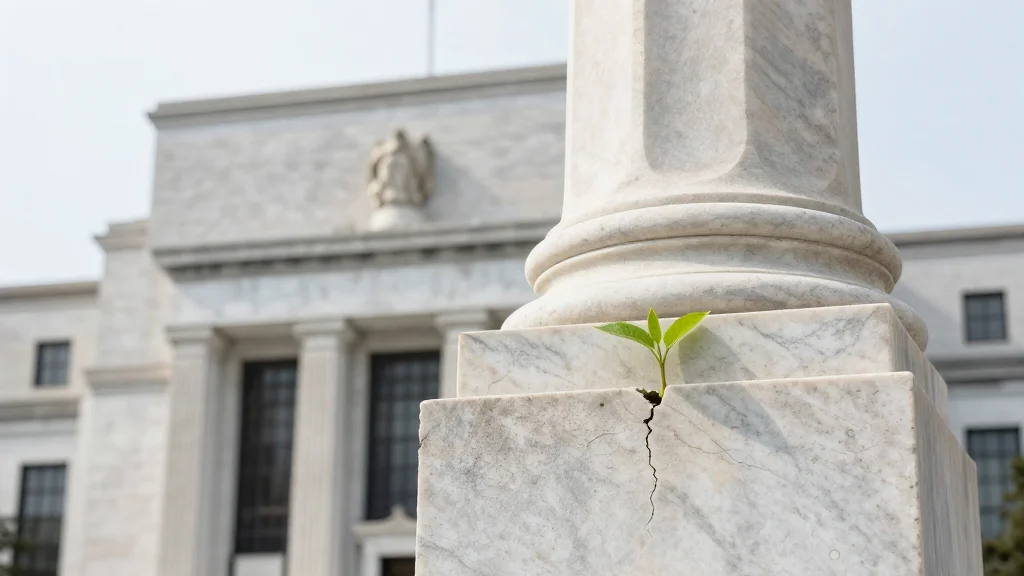
Powell’s Legacy as Fed Chair Is Fighting Inflation and Trump. He May Lose the Battle Against Both.
Jerome Powell’s tenure as Federal Reserve chair will be judged by two intertwined battles: taming the post‑pandemic inflation surge and defending the central bank’s independence from political pressure, especially from former President Donald Trump and his allies. After a series...

America’s Economy Grows Four Times Faster Than EU—Here’s What Changed
U.S. GDP grew at an annualized 2% in Q1 2026, four times the eurozone's 0.1% rise. The surge was driven by a 9.3% jump in federal spending and an 8.7% rise in business investment, with AI infrastructure accounting for roughly three‑quarters...

Big Take: Taking Stock of Jerome Powell as Fed Chair (Podcast)
Jerome Powell’s eight‑year term as Federal Reserve chair concludes this week, prompting Bloomberg’s Big Take podcast to assess his legacy. Host David Gura and Fed correspondents Catarina Saraiva and Amara Omeokwe dissect the central bank’s low‑inflation success, the aggressive rate‑hiking...

Powell Stays…Should the Dot Plot?
Federal Reserve Chairman Jerome Powell announced he will remain a Fed governor through 2028, while Kevin Warsh is set to assume the chairmanship in June. The April FOMC meeting held rates steady but recorded four dissenters—the most since 1992—signaling resistance...

Looking Back at Jerome Powell's 8-Year Term as Federal Reserve Chair
Federal Reserve Chair Jerome Powell concludes his eight‑year tenure on May 15, 2026, but will stay on the Board as a governor. In an NPR interview, former Philadelphia Fed president Patrick Harker praised Powell’s steady, consensus‑building style and his forceful...
What to Expect From the April CPI Report
The Bureau of Labor Statistics will publish the April CPI on May 12, with headline inflation expected to rise 0.6% month‑over‑month to a 3.7% year‑over‑year pace, driven by surging energy costs linked to the Iran‑Israel‑U.S. conflict. March’s CPI showed a 0.9%...

The Federal Government Must Issue More Debt than It Expected as Cash Flow Weakens, and ‘the Bond Market Is Shouting’
The Treasury Department now projects $189 bn of borrowing for the April‑June quarter, roughly $79 bn higher than its February outlook and $122 bn above the figure adjusted for the quarter’s opening cash balance. The uptick occurs despite the spring filing season’s usual...
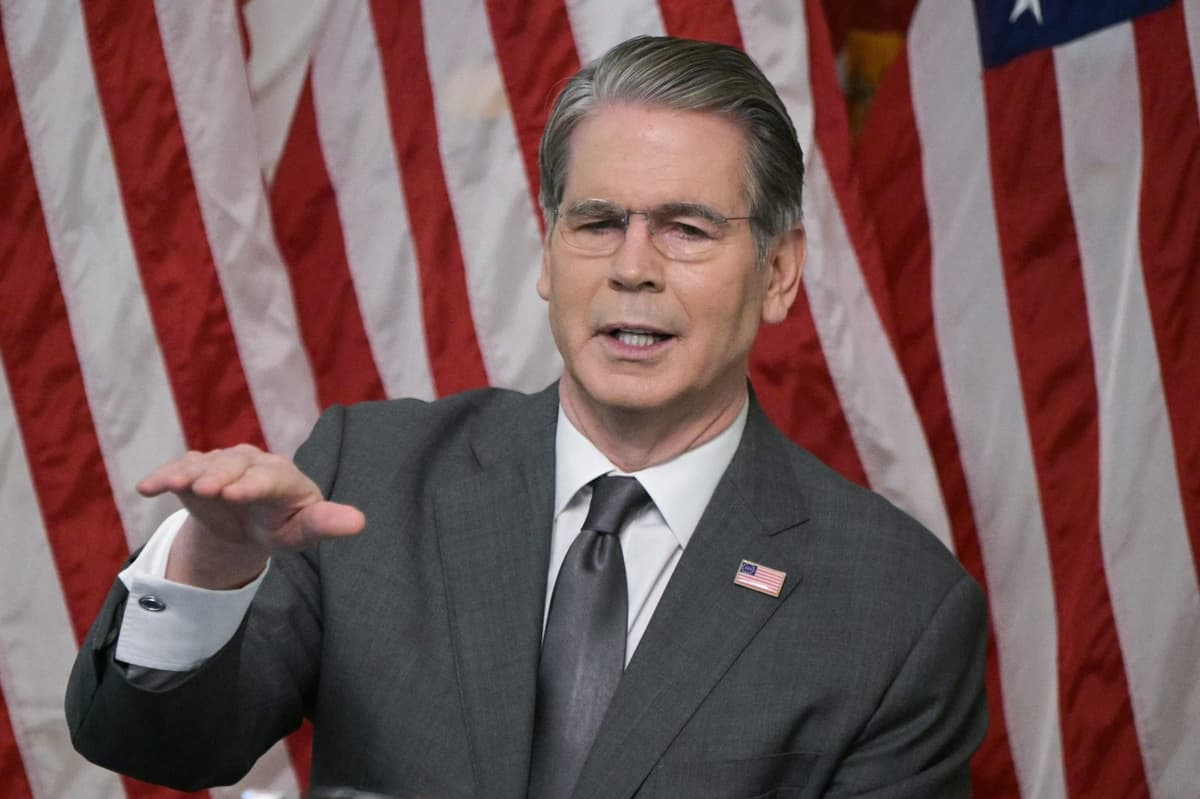
The Federal Government Must Issue More Debt than It Expected as Cash Flow Weakens, and ‘the Bond Market Is Shouting’
The Treasury Department now projects $189 billion in borrowing for the April‑June quarter, $79 billion more than its February forecast and $122 billion higher after adjusting for the opening cash balance. Weaker cash flow reflects new tax breaks and up to $166 billion in...
Goldman Sachs Sends Warning in New U.S. Economic Report
Goldman Sachs released a new outlook on May 8 warning that U.S. personal consumption expenditures (PCE) inflation will linger near 3 percent through 2026, well above the Federal Reserve’s 2 percent target, driven by higher energy costs. The bank pushed back its forecast...
Inflation Drumbeat Persists for Unnerved US Consumer
The Bloomberg consensus projects a 0.6% jump in the U.S. consumer price index for April, following March’s biggest monthly gain since 2022. Gasoline prices have surged more than 50% since the Iran‑related conflict began, now averaging $4.50 a gallon, adding...

Inflation Drumbeat Persists for Unnerved US Consumer
Bloomberg’s latest survey projects the U.S. consumer price index will climb 0.6% in April. The increase follows March’s biggest monthly gain since 2022, underscoring a renewed inflation surge. The Bureau of Labor Statistics will release the official data on Tuesday,...

The Unsinkable U.S. Economy Cruises on, Despite Headwinds From the Iran W...
The U.S. economy continues to expand despite the geopolitical shock of the Iran‑Israel war. For the second straight month, payroll data showed job creation far exceeding Wall Street expectations, reinforcing the labor market’s strength. Core inflation remains subdued, and manufacturing...

The Unsinkable U.S. Economy Cruises on, Despite Headwinds From the Iran War
The U.S. economy continues to expand despite the geopolitical shock of the Iran‑Israel conflict. For the second month running, payrolls added far more jobs than analysts on Wall Street forecast, reinforcing a robust labor market. Core indicators such as manufacturing...

Introducing the ‘NACHO’ Trade: How Wall Street Is Betting on Higher Oil Prices and Persistent Inflation
Wall Street has coined “NACHO” (Not a Chance Hormuz Opens) to describe a trade that profits from higher oil prices and lingering inflation. The strategy pairs long exposure to oil‑linked assets with short positions in short‑term Treasuries, betting that the...

The Bottom Line - Friday, May 8
The Bottom Line roundup on May 9, 2026 spotlights several market‑moving stories. Incoming Federal Reserve Chair Kevin Warsh, President Trump’s pick, pledges independence and hints at a policy shift, pulling investors’ focus to future rate moves. Meanwhile, equities showed mixed reactions as...

Investors Have Worries About Trump’s Pick for Fed Chair. Should They?
President Donald Trump nominated former Fed governor Kevin Warsh as his next Federal Reserve chair, prompting a wave of investor anxiety about possible political meddling. Warsh told the Senate he would not act as a "human sock puppet," but markets...

Fed Flags Overheated Markets as Top Stability Risk
The Federal Reserve’s latest Financial Stability Report warns that market froth remains the top risk to financial stability. Asset valuations, especially equities, stay at the high end of historical ranges while equity volatility has risen since the November report. Treasury...

Fed’s Eyes Turn to Inflation: Heard on the Street Recap
The U.S. added 115,000 jobs in April, keeping the unemployment rate at 4.3% and prompting the Federal Reserve to pivot its focus from rate cuts to inflation data. Four months ago the Fed worried about a fragile labor market; today...

InvestingLive Americas Market News Wrap: US Jobs Growth Surprises to the Upside
U.S. non‑farm payrolls jumped by 115,000 in April, far exceeding the 62,000 forecast, underscoring a resilient labor market. The strong jobs data bolstered equity optimism, with the Nasdaq climbing another 5% this week and up 30% over the past six...
Labor Economy Workers Keep the Jobs Market Moving
The U.S. labor market added 115,000 jobs in April, keeping the unemployment rate steady at 4.3%. Hiring was concentrated in front‑line sectors—healthcare, transportation and warehousing, and retail—showing continued demand for in‑person workers. Average hourly earnings rose 3.6% year‑over‑year, staying slightly...
Fed Sees Private Credit Redemptions as ‘Manageable’ Risks
The Federal Reserve’s latest financial‑stability report says that redemption requests from private‑credit funds remain “limited and manageable,” despite modest outflows exceeding inflows in the first quarter of 2026. The central bank highlighted that several large private‑credit managers have temporarily blocked...

Weak Consumer Confidence, Rising Inflation Dim Peak Season Hopes
The National Retail Federation and Hackett Associates warn that the U.S. peak shipping season could be muted in 2026 due to weak consumer confidence and rising inflation. The ongoing war with Iran, now in its third month, is identified as...
Kevin Warsh Is Right About Fed Reform — but His Inflation Solution Is a T...
Kevin Warsh, the Fed chair nominee, argues that a coming AI‑driven productivity boom will act as a disinflationary force and give the Federal Reserve room to cut rates. He couples this view with a broader reform agenda that includes balance‑sheet...

Labor Market Adds 115,000 Jobs, Exceeds Forecasts Despite Iran War
U.S. payrolls added 115,000 jobs in April, outpacing forecasts despite the highest tariffs since the 1930s and a war‑driven surge in fuel prices. The unemployment rate held steady at 4.3%, with gains spread across retail, warehousing, healthcare and transportation. Chicago...

Jobs Report Encouraging, but Consumers Remain Pessimistic
The U.S. Labor Department reported 115,000 nonfarm jobs added in April, far surpassing the 55,000 forecast and prompting an upward revision of March’s gain to 185,000. The unemployment rate held steady at 4.3% and wages rose 3.6% year‑over‑year, marking the...

The Federal Reserve Is Quickly Running Out of Reasons to Cut Interest Rates
The Federal Reserve’s window for cutting rates is narrowing as recent data show a steadier labor market but persistent inflation. April’s payrolls rose by 115,000, a modest gain that eases pressure for easing, while the March CPI held at 3.3%,...

April 2026 Jobs Report: Labor Market Shows Signs of Stabilization
The April 2026 jobs report shows the U.S. labor market stabilizing. Employers added 115,000 nonfarm jobs, well above the 55‑70k forecast, while the unemployment rate held steady at 4.3%. Real wages rose 3.6% year‑over‑year, outpacing inflation. The data gives the...

April's Jobs Report Revealed a Hidden Talent Pool of 4.9 Million
April’s jobs report showed 115,000 new positions and a headline unemployment rate of 4.3 percent, but it also uncovered a surge in underemployment. The number of workers in part‑time jobs for economic reasons rose by 445,000 to 4.9 million, pushing the broader...
What to Know About the Report.
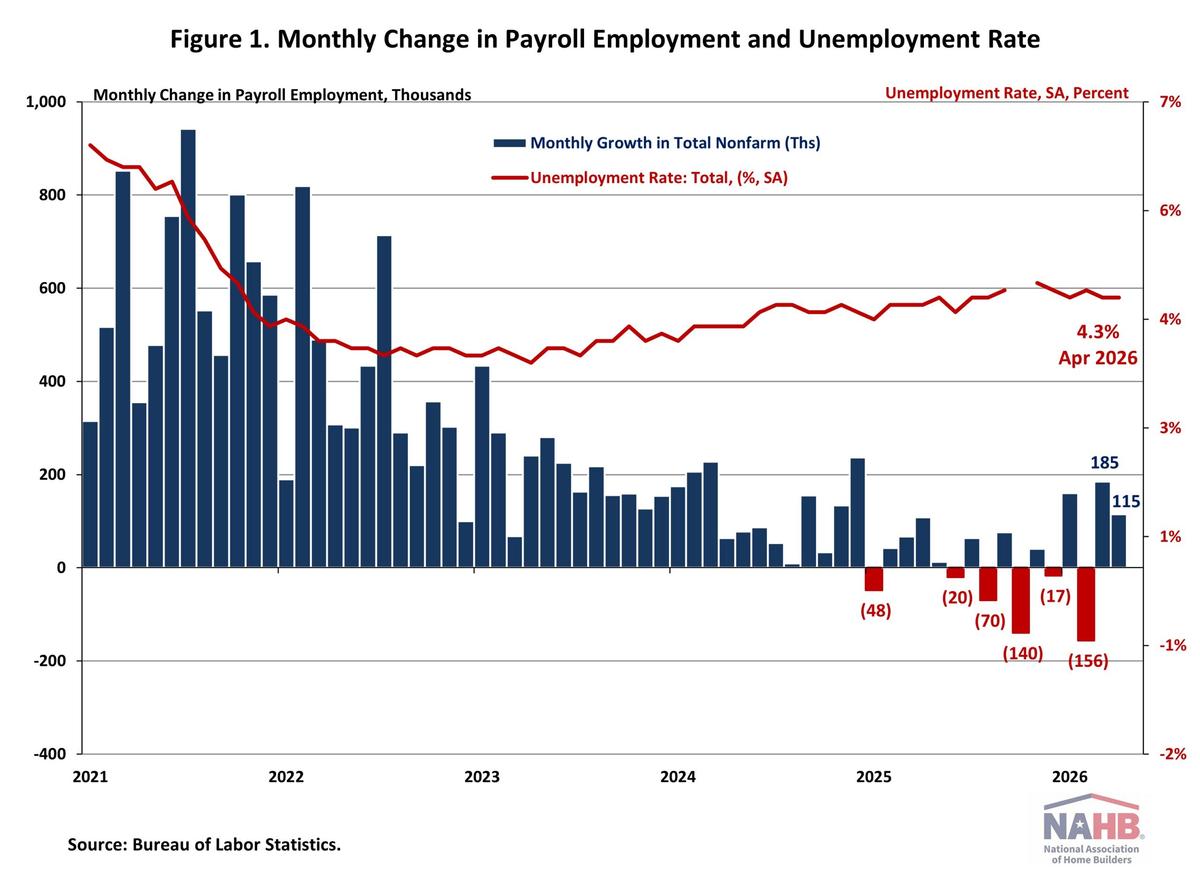
U.S. employers added 115,000 jobs in April, beating forecasts and keeping unemployment at 4.3%. This follows a revised March gain of 185,000, marking two months of solid hiring after a two‑year low‑hire, low‑fire period. However, average monthly gains over the...

U.S. Economy Adds 115,000 Jobs in April, Construction Sector Sees Gains
U.S. nonfarm payrolls added 115,000 jobs in April, keeping unemployment at 4.3% and pushing average hourly earnings up 3.6% year‑over‑year. The gain follows a revised 185,000‑job increase in March, with monthly averages now 76,000 since the start of 2026. Construction...

US Consumer Confidence Hits Record Low as Americans Fret About Rising Prices; Jobs Report Beats Forecasts – as It Happened
U.S. consumer sentiment slipped to a record‑low 48.2 in May, reflecting heightened anxiety over inflation and energy costs. Meanwhile, the April jobs report showed the economy added 115,000 jobs, well above the 62,000 forecast, keeping the unemployment rate steady at...

Jobs Data Comes in Strong, Crushing Estimates. This Is What It Means for Advisors
U.S. nonfarm payrolls rose by 115,000 in April, beating Reuters' forecast of 62,000 and the Wall Street Journal's 55,000 estimate, while the unemployment rate held steady at 4.3%. The stronger‑than‑expected jobs report lifted the S&P 500 0.7% and the Dow 0.2%,...

Prices for Everyday Household Items Experience Highest Monthly Increase Since September
Numerator’s April 2026 Consumer Goods Price Index shows everyday household items rose 0.49% month‑over‑month and 2.4% year‑over‑year, marking the strongest monthly gain since September 2025. Prices were flat in March after a 0.21% rise in February. The CGPI, which tracks roughly 20%...

US Adds 115,000 Jobs in April, Jobless Rate Flat
The U.S. Bureau of Labor Statistics reported a gain of 115,000 non‑farm jobs in April, keeping the unemployment rate unchanged at 4.3%. This marks the first set of back‑to‑back monthly job gains in almost a year, with March’s figure revised...

The Big Four Recession Indicators: April 2026 Employment
The latest U.S. employment report showed non‑farm payrolls rose by 115,000 in April, a slowdown from March’s 185,000 gain but still above the 65,000 jobs forecast. The unemployment rate held steady at 4.3%, matching expectations. These figures feed into the...

Fed's Goolsbee: Inflation Has Not Been Great. Job Market Is Pretty Much Stable
Federal Reserve President Austan Goolsbee told investors that inflation remains stubbornly high even as the labor market shows little sign of weakening. He highlighted that price pressures stem from more than just energy costs and pre‑date the Ukraine war, suggesting...
U.S. Economy Adds 115,000 Jobs in April
The Bureau of Labor Statistics reported that U.S. nonfarm payrolls rose by 115,000 in April, keeping the unemployment rate steady at 4.3%. Job gains were concentrated in health care (+37,000), transportation and warehousing (+30,000), and retail trade (+22,000). Average hourly...

Employers Added 115K Jobs in April, Including 1.2K in Accounting
U.S. non‑farm payrolls rose by 115,000 jobs in April, outpacing economists' forecasts while the unemployment rate held at 4.3%. The gains were led by health‑care, transportation and warehousing, and retail‑trade, with professional and business services adding 7,000 jobs, including 1,200...

The Job Market Is Healing for Everyone—Except in the Office
The U.S. labor market added 115,000 jobs in April, keeping the unemployment rate at 4.3% and marking the second consecutive month of solid growth after a sluggish 2025. Gains were broad, led by health care, transportation and warehousing, while the...