Today's Global Economy Pulse

China's producer price index rose 3.9% year‑on‑year in May, the strongest increase since July 2022, driven by a 10% jump in fuel and power costs and a 22% surge in non‑ferrous metal prices. Consumer inflation eased to 1.2% YoY, below expectations, highlighting a split between rising wholesale prices and subdued retail inflation.
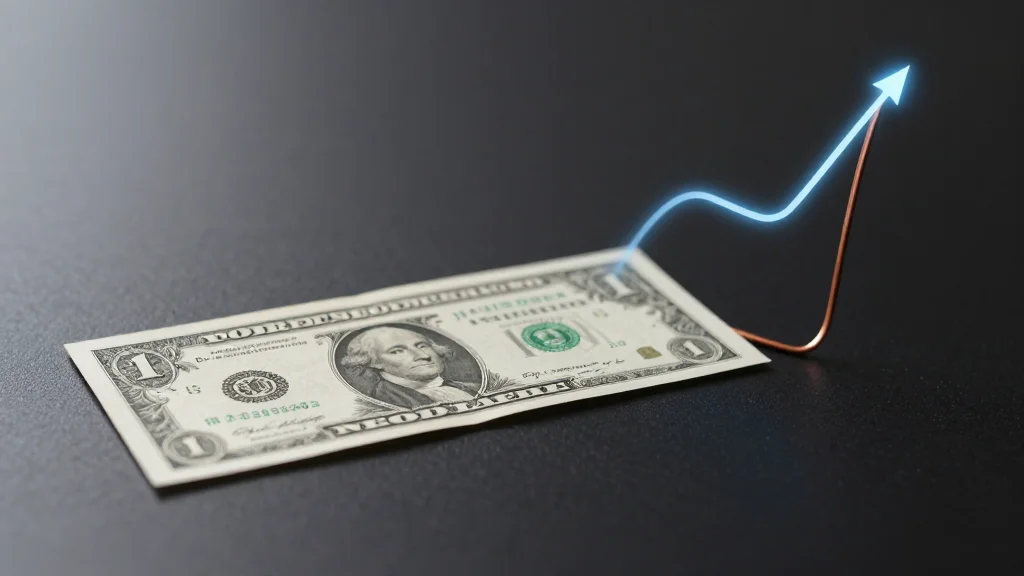
Higher‑for‑Longer Rates Push Bank Earnings Up, Credit Spreads Wider
The Federal Reserve’s decision to keep the federal funds rate in a 3.5%‑3.75% band through year‑end is driving a steeper yield curve, prompting JPMorgan Chase to forecast $103 billion in net interest income – an 8% rise – and widening credit spreads across the corporate bond market.

EU Trade Chief Swipes at China’s Overcapacity, but Seeks ‘Meaningful’ Talks with Beijing
EU trade chief Maros Sefcovic called for practical, result‑oriented dialogue with China after meeting Li Chenggang at the OECD in Paris, warning that Chinese overcapacity and non‑market practices are distorting global markets. He highlighted the EU’s growing trade deficit with China of...

MacroVoices #535 Michael Every: NAFTA and NAPTHA – Warcraft & Fartcraft
MacroVoices episode #535 features former Treasury official Michael Every discussing the Federal Reserve’s direction under Kevin Warsh, China’s expanding role in the global oil market, and how the upcoming U.S. midterm elections could reshape commodity prices. The conversation also dives...

On the Right Track
The Middle East conflict jolted global oil markets, exposing the Philippines’ heavy reliance on imported crude—about 98% from the region—and driving inflation above 7%. In response, the government is accelerating a shift toward indigenous renewables such as solar, wind, hydro,...

Fed's Daly: Policy Is in a Good Place and We Are Prepared to Respond Either Way
Federal Reserve Governor Michelle Daly told investors that forward guidance is limited right now and the Fed’s policy stance is "in a good place," but she stopped short of confirming the current rate path. Daly acknowledged uncertainty about how the economy...
Jobs Report Crucial: Growth Fuels Spending, Risks Rate Hikes
Tomorrow's jobs report still matters more than the market is treating it. A strong labor market is what keeps the consumer spending high during high inflation. A labor market that runs too tight pulls Fed rate hikes forward. Both cut against this rally....

Trump Order Directs Customs to Crack Down on Tariff Cheats
President Donald Trump signed an executive order on June 3 directing U.S. Customs and Border Protection to tighten enforcement against tariff evasion and forced‑labor imports. The order mandates new AI‑driven shipment tracking, stricter reporting of importers‑of‑record, and tighter bond requirements to...
Nationalizations Get Another Look: Nicholas Mulder
In this episode, Cornell historian Nicholas Mulder explains why governments are revisiting nationalizations amid rising geopolitical and climate risks, highlighting recent moves in Europe’s energy sector and Latin America’s lithium industry. He argues that state ownership can make sense for...

Trump’s Empire of Debt
The Financial Times argues that the United States is edging toward imperial overstretch as successive wars have been financed almost entirely by borrowing, pushing public debt toward its highest post‑World War II level. President Trump has asked Congress for a $1.5 trillion...

Mexico Investment Extends One of Longest Slumps in Decades
Mexico's gross fixed investment continued its multi‑month decline in March, falling 3.1% from a year earlier. The contraction follows a 3.5% drop in February, extending the longest investment slump in decades. The downturn reflects heightened uncertainty over domestic policy choices...

Outdated Payments Cost Singapore $7 Billion
Airwallex and the Centre for Economics and Business Research report that Singapore’s businesses lose roughly $7 billion each year because legacy cross‑border payment systems impose high fees, FX spreads and settlement delays. The study labels these hidden costs the “Global Growth...
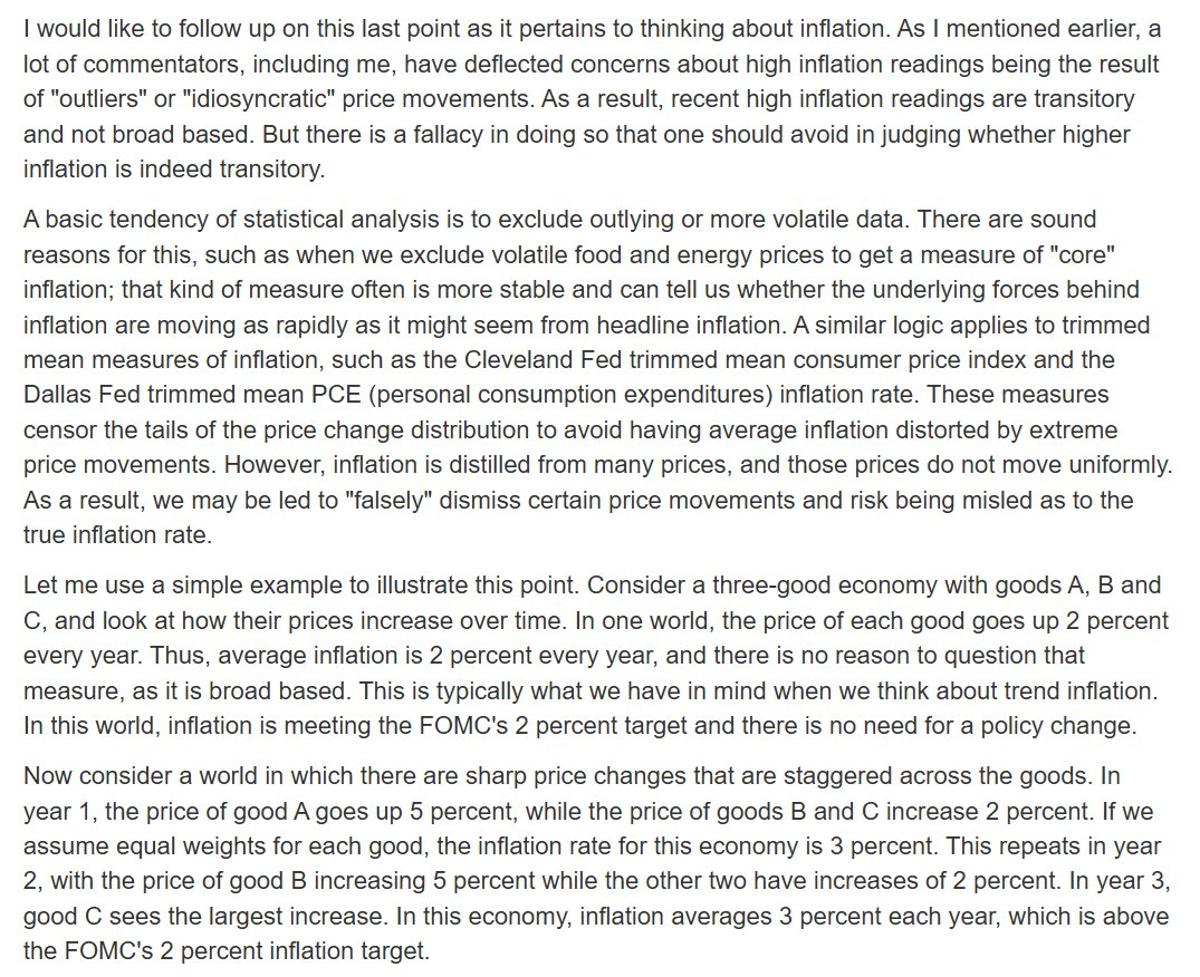
Don't Dismiss Outliers: Inflation Data Demands Vigilance
This *2021* Waller speech makes for interesting reading today. At the time, Fed doves had been pointing to trimmed mean measures of inflation to argue against overreacting to spot inflation. Waller's point was that serially excluding 'one-off' outliers assumes no new one-offs...
Fed's New Chair Warsh Signals Policy Shift as 10‑Year Treasury Yields Edge Higher
Kevin Warsh, the Federal Reserve’s new chair, warned that future policy could adapt to unprecedented external shocks. At the same time, 10‑year Treasury yields rose four basis points to 4.48% as oil prices surged on Middle‑East hostilities, underscoring volatility in...
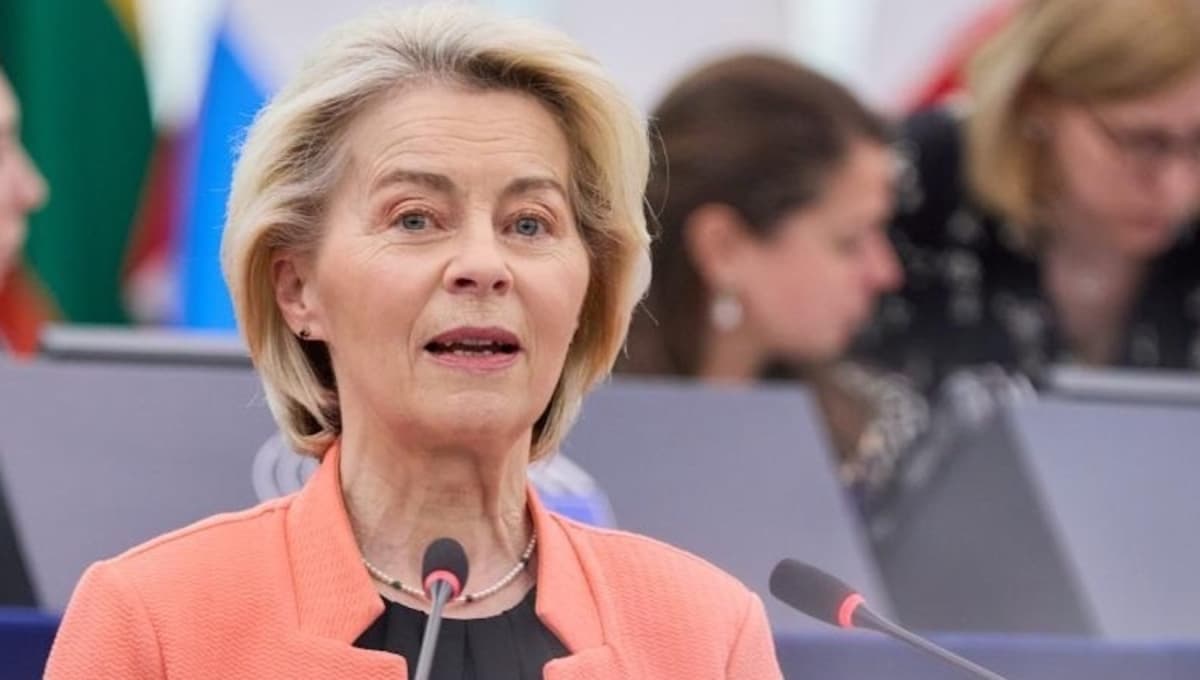
EU Pledges Aid to Armenia, Accuses Russia of Economic Coercion
The European Union announced more than €50 million (about $55 million) in immediate aid for Armenia after Moscow imposed new trade restrictions, particularly on agri‑food products like flowers. EU Commission President Ursula von der Leyden pledged assistance to diversify Armenian exports and support infrastructure...

Concerning Interest In Redefining “Inflation”
Kevin Warsh, nominated by President Trump, has been confirmed as chair of the Federal Reserve. In his Senate testimony, Warsh advocated that the Fed base policy on a trimmed‑mean or core inflation measure rather than the headline CPI. The post...
Why Exclude Food and Energy From Inflation Measures? : Explaining Core PCE
The Federal Reserve relies on the personal consumption expenditures (PCE) price index as its preferred inflation gauge, with a particular focus on the core PCE that strips out food and energy components. Food and energy prices are prone to sharp,...
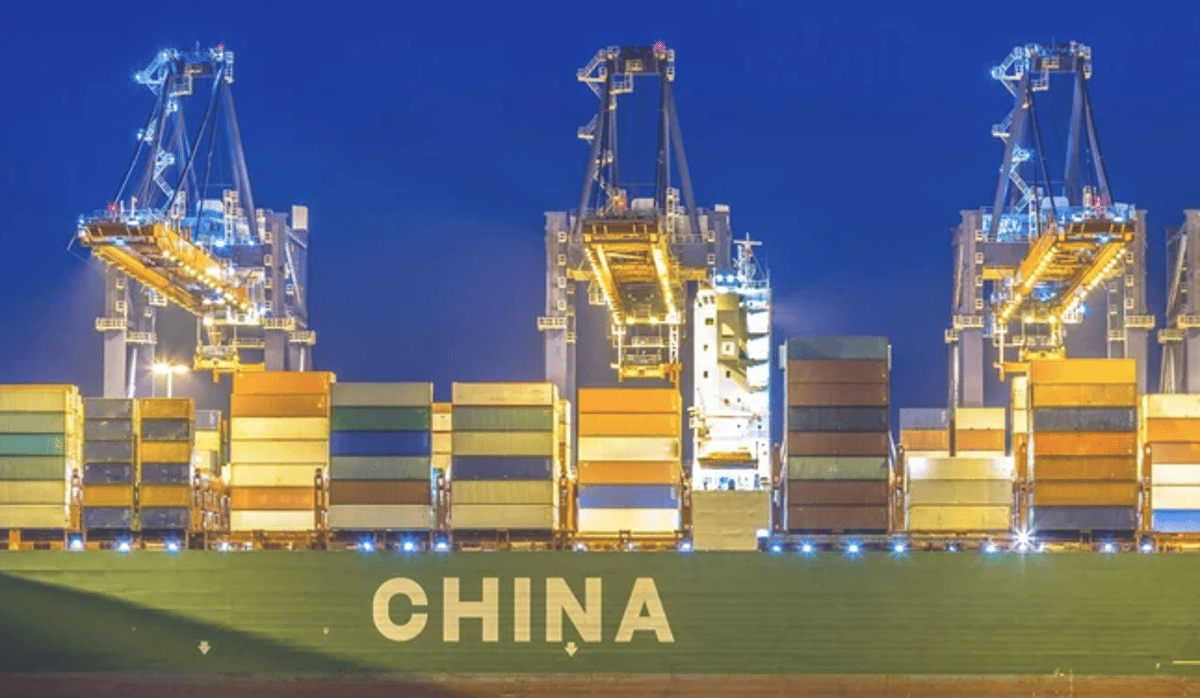
China's Aggressive Push for Global Economic Supremacy
Here is 45 or so mins of Engelsberg's @jackfdickens podcasting with me on China's bid for economic supremacy. Summits, trade, truces, industrial policy, mercantilism, the economy and more https://t.co/jtjHb96Ofm https://t.co/y911vJyPbE

China Lifts Telecom Foreign Ownership Cap Amid US Curbs
China courts foreign firms with telecoms opening as US tightens curbs China lifted the previous 50 per cent foreign ownership cap to allow wholly foreign-owned enterprises to operate within pilot zones https://t.co/tJq78YqFYE via @scmpnews

Chinese Carmakers BYD, Chery Chart 80% Growth Overseas as EV Demand Spikes
Chinese automakers BYD and Chery are accelerating overseas sales as global EV demand spikes. In May, Chery shipped 181,571 vehicles abroad, an 81% year‑on‑year increase, while BYD delivered 160,177 units overseas, also up 81% and accounting for 42% of its...
Piero Cipollone: Europe's Money Evolves so People's Freedom to Pay Remains
ECB policymaker Piero Cipollone highlighted recent progress on the digital euro, noting that the Single Currency Package is moving through the ECON Committee and awaits a European Parliament position. He stressed that cash remains a core freedom, welcoming legislation that...
Kazuo Ueda: Economic Activity and Prices, and Monetary Policy in Japan
Bank of Japan Governor Kazuo Ueda warned that the recent surge in Middle‑East‑driven crude‑oil prices is adding inflationary pressure to Japan’s economy. He compared the current shock to past oil crises of the 1970s, the mid‑2000s boom, and the 2022...
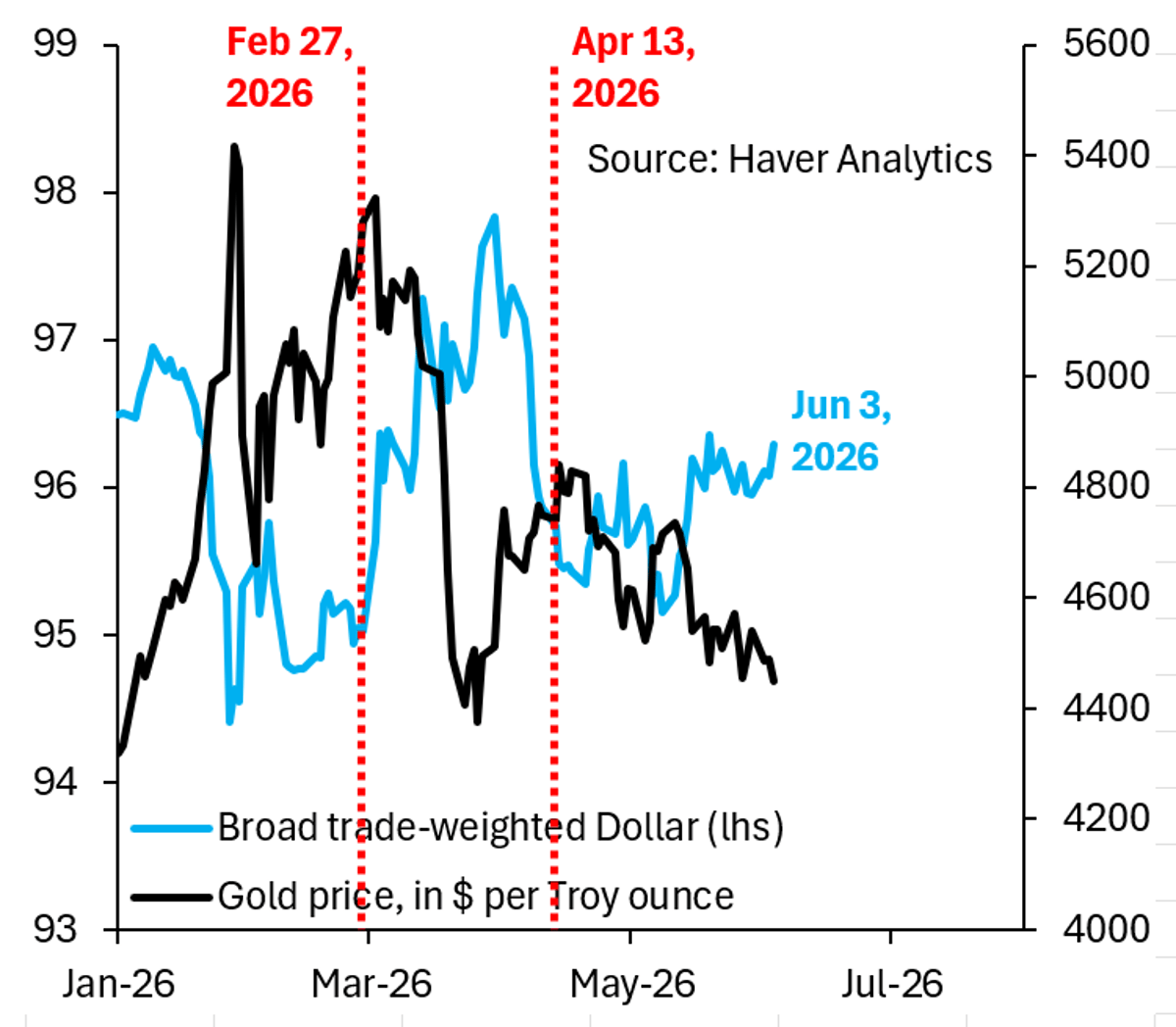
Gold’s Safe‑Haven Status Questioned as Dollar Rises
An ECB report this week created the impression gold is surpassing the Dollar as a safe haven. It's the other way around. The Dollar in this shock rises when risk aversion goes up, while gold falls. It's the safe haven...
Isabel Schnabel: From Money Market Funds to Stablecoins - Lessons for Central Banks
In a recent BIS speech, Isabel Schnabel warned that the rapid expansion of stablecoins—privately issued digital tokens pegged to fiat—poses fresh challenges for monetary authorities. She drew a historical parallel to the Bank of Amsterdam’s "bank money," an early form...

As India Rises in Critical Minerals Race, Can It Dent China’s Dominance?
India and the United States signed a framework agreement on May 26 to cooperate on critical minerals and rare‑earths, aiming to reduce reliance on China’s dominant supply chain. The pact follows a $20 billion Quad initiative and includes provisions for joint mining,...

Since 2022 Just A Handful Of Countries Have Driven All Sovereign Gold Demand
Since the 2008 global financial crisis, sovereign gold holdings have risen sharply, with roughly 85% of the increase occurring between August 2008 and February 2022. A tight group of six nations—Russia, China, Turkey, India, Poland and Kazakhstan—accounted for almost all...

Softer Oil, Softer Greenback
A tentative cease‑fire between Israel and Lebanon, which notably excludes Hezbollah, has raised cautious optimism for broader regional de‑escalation and may influence US‑Iran diplomatic overtures. Oil markets remain steady, with July WTI hovering around $95 per barrel, reflecting limited demand...

Wealthy Families Are Using Geopolitics as a Catalyst to Rethink Not Just Portfolios, but Purpose
AlTi Tiedemann Global’s co‑head of US client advisory, Kimberly Evans, says ultra‑high‑net‑worth families are using heightened geopolitical risk to rethink both portfolio composition and the purpose behind their wealth. Clients are increasingly refusing exposure to regions or industries that clash...
Australia's Q1 GDP Grows 0.3% as Early Slowdown Fuels Recession Fears
The Australian Bureau of Statistics reported a modest 0.3% GDP rise in the first quarter of 2026, the slowest pace in years. Economists cite surging inflation, oil price shocks and weakening productivity as catalysts for a potential recession, while the...
Middle East Tensions Lift U.S. 10‑Year Treasury Yield to 4.49%
U.S. Treasury yields jumped as renewed Iran‑U.S. hostilities sent investors fleeing to safety. The 10‑year Treasury rate rose to 4.49%, its highest level since the conflict began, underscoring how geopolitical risk is reshaping bond markets.

Trump Administration Proposes 12.5% Tariffs on 60 Nations Amid Forced‑Labor Review
The U.S. Trade Representative unveiled a plan to levy a 12.5% duty on goods from 60 trading partners after a forced‑labour investigation. The move comes as the Trump administration pushes the proposal forward, even as the United States and India...

De-Risking the Strait of Hormuz After the Iran War
The Iran‑Israel conflict has turned the Strait of Hormuz from a theoretical choke point into an active security threat for Gulf oil exporters. In response, Gulf Arab states are accelerating projects to bypass the waterway, including new pipelines, offshore storage,...
Piero Cipollone: Money in the Digital Age
Central banks have long issued stable, trusted money, but the digital revolution is reshaping how consumers pay and how financial services operate. As digital wallets, fintech platforms, and instant settlement networks proliferate, central bank money risks becoming a legacy relic...
The Euro as a Safe-Haven Currency Amid Geopolitical Tensions and Policy Uncertainty
A new ECB focus paper finds the euro has begun to act like a safe‑haven currency during recent risk‑off episodes in 2025‑2026. While historically the euro’s effective exchange rate rose only about 0.1% in stress periods, it showed notable appreciation...
The Iran War Is Fueling a Global Debt Shock
The war in Iran has sent oil, gas and food prices soaring, turning a price shock into a debt shock for many developing economies. Governments across the Global South now face sharply higher borrowing costs as investors demand higher yields....

The Promise and Limits of the New G20 Template for Debt Restructuring
On May 27 the G20 published an illustrative template memorandum of understanding to guide future sovereign debt restructurings with official bilateral creditors under the Common Framework. The document spells out a step‑by‑step process involving an Official Creditor Committee, an IMF...
UK to Challenge EU over ‘Devastating’ Plans to Almost Halve Tariff-Free Steel Import Quotas
The European Union plans to slash tariff‑free steel import quotas from the United Kingdom by 47% compared with 2024 levels, prompting UK Business Secretary Peter Kyle to raise the issue with EU Trade Commissioner Maroš Šefčovič. The UK has responded...

India’s Plunging Rupee Puts Surprise Rate Hike Bets on the Table
The Reserve Bank of India (RBI) is weighing a surprise rate hike as the rupee slides to record lows against the dollar. While most economists expect a hold at the 5.25% policy rate, a minority anticipate a move to curb...
Bank of Japan Expected to Raise Rates This Month, Sources Say
The Bank of Japan is poised to raise its short‑term policy rate to 1% at the June 16 meeting, up from 0.75%, marking the highest level since 1995. Governor Kazuo Ueda’s recent remarks have solidified expectations for a June hike,...

Mint Explainer | Why Has the US Proposed Fresh Tariffs on India?
The United States announced a new 12.5% tariff on Indian imports under Section 301 of the Trade Act, targeting goods linked to forced‑labour and excess industrial capacity. The move comes as the two nations near a bilateral trade agreement, raising questions...

GovGurus Episode 20 – Headwinds & Liquidity
In GovGurus Episode 20, host J. Richard Jones and Canadian Government Executive Editor‑in‑Chief Lori Turnbull dissect the Bank of Canada’s latest Financial Stability Report, highlighting rising household costs, mortgage strain, and waning investor confidence as warning signs of a possible...

Proposing Section 301 Sanctions on… the World (or Most of It)
The United States is proposing Section 301 tariffs of at least 10% on imports from roughly 60 trading partners, citing forced‑labor concerns. A 10% rate would apply to the EU, Canada, Mexico, the UK and Taiwan, while China, India, Japan,...

Global Market: Japanese Bond Yields Mixed as BOJ Rate-Hike Expectations and Inflation Concerns Shape Sentiment
Japanese government bond yields moved in opposite directions on Thursday as the 10‑year benchmark edged up 0.5 basis points to 2.645% while the two‑year rose 1 basis point to 1.410%, marking its second consecutive gain. The moves reflect growing market...
Slumping Chinese Oil Imports ‘Shield’ Global Market From Higher Prices
China’s oil imports have dropped sharply, falling about 15% year‑on‑year in the first half of 2024. The decline has removed a major source of demand, helping to keep Brent and WTI prices below levels that would have otherwise risen amid...

Iran Oil Exports Plunge over 90% as US Blockade Bites
Iran’s seaborne oil exports collapsed by 93% in May, falling to 2.01 million barrels from 29.7 million in April, after the U.S. blockade line was enforced on 13 April. The crackdown forced a shift from VLCC crude shipments to smaller Panamax and Handymax...
UCLA Anderson Forecast Flags Iran Oil Shock as Top U.S. Economic Risk, Overtaking Tariffs
The June 2026 UCLA Anderson Forecast warns that a war‑driven oil shock in Iran has supplanted tariffs as the leading macro‑risk to the U.S. economy. It projects GDP growth steady at 2.1% while inflation could peak at 4.5% by year‑end,...

Moldova’s Russian Trade Share Plummets to 2%, Signaling Eastern European Realignment
Former president Igor Dodon told the St. Petersburg International Economic Forum that Russia’s share of Moldova’s trade balance has shrunk to roughly 2%, down from 20‑30% in prior years. The collapse coincides with a near‑zero GDP growth, inflation above 70%,...

India Launches Producer Price Index and Revamps Wholesale Price Index Ahead of June 15
India's Department for Promotion of Industry and Internal Trade (DPIIT) announced that on June 15 it will launch a Producer Price Index (PPI) and publish a revised Wholesale Price Index (WPI) with a new base year of 2022‑23. The overhaul...

Record Singapore-US Rate Gap May Widen Further on Inflows and Hawkish Fed Outlook
The two‑year Singapore dollar swap is now 246 basis points below its U.S. counterpart, the widest gap recorded since 2020. Strong economic growth and safe‑haven inflows have kept Singapore’s liquidity ample, pushing its overnight rate to a nine‑month low and...

No Strait Answers: Energy Shocks, AI Stocks, and Trade Talks
In this episode recorded at PwC’s Asia‑Pacific Global Tax Symposium, Doug McHoney and PwC chief economist Dr. Alexis Crowe examine the geopolitical fallout from the Iran‑Houthi conflict and its ripple effects on global energy markets, highlighting how disruptions to LNG,...
The Commodities Feed: Dwindling Oil Inventories Leave Market Increasingly Vulnerable
U.S. commercial crude inventories dropped 7.97 million barrels last week, widening the 32‑million‑barrel draw over six weeks, while strategic‑reserve releases push the total decline to 15.97 million barrels. The tightening stockpiles come amid renewed Persian Gulf tensions that have lifted oil prices...