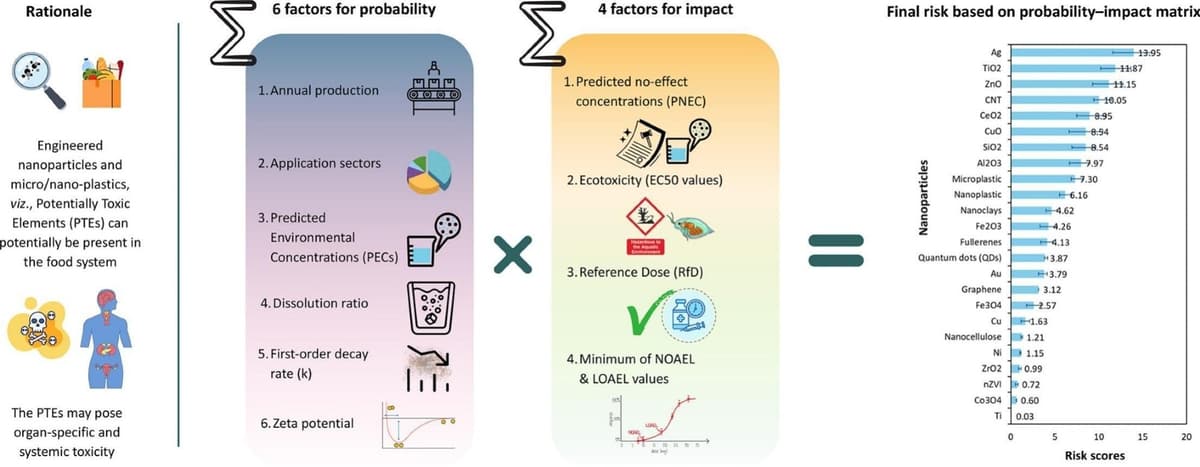
New Framework Reveals Which Food-System Nanoparticles Need Closer Safety Checks
Researchers have introduced a semi‑quantitative probability‑impact framework to rank engineered nanoparticles and micro/nanoplastics by their potential human‑health hazards from dietary exposure. The model combines six exposure factors—production volume, application breadth, predicted environmental concentrations, dissolution, persistence, and surface reactivity—with four toxicity metrics such as PNEC and NOAEL, converting them into percentile scores. Monte Carlo simulations with 100,000 iterations propagate uncertainty, and weighting schemes (equal, entropy, AHP) consistently highlight silver, titanium dioxide, zinc oxide, carbon nanotubes, cerium dioxide and copper oxide as top priorities. The approach also reveals that many particles receive intermediate scores because of sparse toxicity data rather than low inherent risk.

From Passive to Active: Self‐Propelled Colloids in Coatings Formulation and Film Formation
Researchers introduced self‑propelled Janus colloids into coating formulations to overcome passive transport limits during drying. By tuning the balance between fuel depletion and evaporation rates, the active particles accumulate at both the top and bottom interfaces of the film. The...
Scalable Aqueous Polymerization Via Nanoconfinement Effect Generating Two‐Dimensional Polymers With Excitation‐Dependent Clusteroluminescence
Researchers introduced a scalable aqueous nanoconfinement method to synthesize organic two‑dimensional polymers (O2DPs) at an unprecedented 50 mg/mL concentration. Amphiphilic monomers self‑assemble into bilayer sheets, where radical polymerization creates a covalent 2D network. The resulting polymers display excitation‑dependent clusteroluminescence, room‑temperature phosphorescence,...

Approaching Gold‐Standard Sensitivity in a Portable and Versatile Gold Nanoprisms Thermoplasmonic Platform for Lateral Flow Detection of Biomolecules
The study introduces a thermoplasmonic lateral flow assay that leverages gold nanoprisms activated by near‑infrared laser to deliver ultrasensitive detection of biomarkers and viral RNA. ThermoLFIA achieved clinically relevant detection of gastrointestinal cancer markers, surpassing traditional ELISA performance. ThermoOLFA detected...
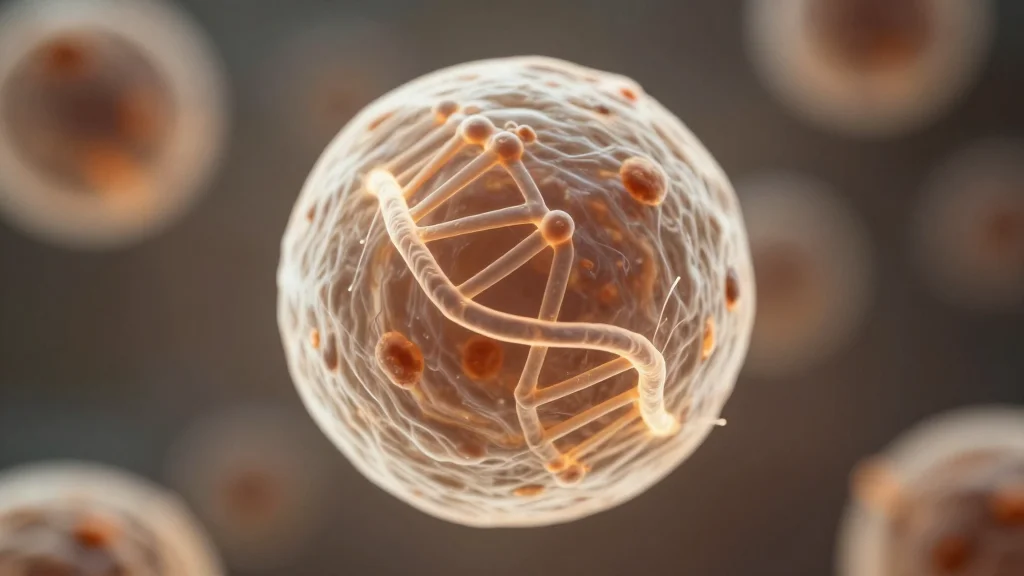
DNA Framework Nucleator‐Enabled Intelligent Hydrogel Interfaces on Living Cells
Researchers introduced a DNA framework nucleator (DFN) that creates ordered hydrogel interfaces on living cell membranes. The rigid tetrahedral DNA scaffold directs localized branched hybridization chain reactions, delivering an ATP‑responsive hydrogel with ~90.7% efficiency—2.9‑fold higher than flexible dsDNA nucleators. The...

Engineering Proton‐Deficient Micro‐Environments on Co‐cluster/Atom Ensembles for Efficient Cyclooctasulfur Electrosynthesis From Sulfur Dioxide
Researchers have engineered dense cobalt‑cluster/atom ensembles that create a proton‑deficient micro‑environment, enabling highly selective electrocatalytic conversion of sulfur dioxide to cyclooctasulfur. The CoC/SA‑NC catalyst achieved a Faradaic efficiency of 87 % and a production rate of 2,802 µmol S₈ per mg of catalyst...

Researchers Convert HDPE Plastic Waste Into High-Quality Graphene via Flash Joule Heating for Supercapacitor Applications
Researchers at India’s Homi Bhabha National Institute and BARC have shown that flash Joule heating can transform high‑density polyethylene (HDPE) plastic waste into high‑quality turbostratic graphene in milliseconds. The solvent‑free, furnace‑less process reaches temperatures above 2,500 °C, carbonizing the polymer in...
Intrinsic Manipulation of Interfacial Water in Titanium Carbide MXene via Carbon Vacancy Engineering for Superior Pseudocapacitive Storage
Researchers introduced carbon vacancies into Ti3C2Tx MXene to polarize surface oxygen groups, strengthening hydrogen‑bonding with interlayer water. This intrinsic engineering created a thermally stable “active and fixed” interlayer architecture that markedly improved pseudocapacitive performance. The vacancy‑engineered Ti3C1.7 electrode reached 348 F g⁻¹...

Shallow Zirconia Diffusion Synergistically Enhances Surface Charge Transport in Ge‐Doped Hematite for Efficient Photoelectrochemical Water Splitting
Researchers introduced a dual co‑doping strategy—germanium (Ge) during nucleation and shallow zirconium (Zr) diffusion during sintering—to overcome hematite’s intrinsic low conductivity and surface recombination. Ge increases bulk electron density, while Zr forms a gradient near the surface that lowers charge‑transfer...

New Embodied AI System Realizes First AI-Created Graphene and Graphene FET
Researchers from Princeton, Michigan, CSU and Japan's NIMS unveiled Qumus, an embodied AI system that autonomously exfoliates bulk crystals, isolates device‑scale graphene flakes and assembles a functional graphene field‑effect transistor. In a four‑hour run the AI optimized temperature, contact time,...

Silver Nanoparticles Enable Assembly of a Theorized, Previously Unobserved Crystal Metallic Structure
Researchers at Brown University and the University of Michigan have used shape‑controlled silver nanoparticles to lock in a fleeting intermediate crystal phase predicted by the Nishiyama‑Wassermann pathway. By synthesizing truncated‑octahedron “mecon” nanocrystals and coating them with flexible ligands, they induced...

Nanotube-Coated Catheter Could Detect Bladder Cancer Biomarker 50,000 Times More Sensitively
MIT researchers have created a catheter coated with carbon‑nanotube nanosensors that can detect the bladder‑cancer biomarker NMP‑22 up to 50,000 times more sensitively than standard urinalysis. In animal models the sensor produced fluorescent chemical images that pinpointed tumors as small...

K+‐Intercalation Engineering of 1D Ultrathin K0.25IrO2 Electrocatalyst for Industry‐Level Proton Exchange Membrane Water Electrolysis
Researchers have engineered a potassium‑intercalated 1D K0.25IrO₂ electrocatalyst that restructures the IrO₂ lattice and directs epitaxial growth via cysteamine. The new material delivers an ultralow oxygen‑evolution overpotential of 237 mV at 10 mA cm⁻² and achieves a cell voltage of 1.70 V at 2 A cm⁻²...

Synthesis of a Library of Transition Metal Sulfide@MoS2 Core@Shell Nanostructures via Post‐Synthetic Cation Exchange
Researchers have introduced a post‑synthetic cation‑exchange route that transforms Ag2S@MoS2 nanocrystals into a library of transition‑metal sulfide@MoS2 core‑shell heterostructures. The process separates MoS2 shell growth from core composition, enabling single‑metal sulfide, heterostructured, and solid‑solution cores while preserving a monolayer MoS2...

Litus, UWin Nanotech Enter MOU to Explore Projects Including Critical Mineral Recovery, Battery Recycling
Litus, a Calgary‑based critical‑minerals firm, and Taiwan’s UWin Nanotech have signed a memorandum of understanding to explore joint projects in lithium extraction, cobalt and nickel recovery, and battery recycling. The partnership will test Litus’s nanocomposite‑based LiNC direct lithium extraction platform...

The Impact of Nanoplastics on Neurons May Depend on Their Size
Researchers at the University of Eastern Finland found that polystyrene nanoplastics are taken up by primary neurons and that smaller particles trigger more pronounced morphological and gene‑expression changes than larger ones, even at low doses. The study, published in NanoImpact,...

Chemical Efflux Imaging Using an Annular Nanosensor Array for in Situ Bladder Cancer Detection
Researchers at MIT and Harvard have created an annular nanosensor array that mounts on a standard urinary catheter, enabling three‑dimensional chemical efflux imaging inside the bladder. The device integrates near‑infrared fluorescent single‑walled carbon nanotubes functionalized to detect the bladder‑cancer biomarker...
Single-Step 8-9x Expansion Reveals Nanoscale Centrioles without Electron Microscopy
Researchers at National Taiwan University introduced high‑fold homogeneous expansion microscopy (hiHomoExM), a single‑step technique that expands samples 8–9× isotropically while maintaining ultrastructural integrity. The method replaces the need for electron microscopy by allowing conventional fluorescence microscopes to resolve nanoscale features...
Silanol Networks Control Methanol Reactivity in Nano‐ and Micron‐sized Silicalite‐1
Researchers have shown that silanol groups in pure‑silica MFI zeolite (silicalite‑1) are not inert defects but active participants in methanol conversion. By comparing micron‑sized (Sil1_micro) and nano‑sized (Sil1_nano) crystals, in‑situ FTIR and operando studies revealed distinct hydrogen‑bonding networks that dictate...

Researchers Upcycle Pomegranate Peel Into High-Performance Water Purifier
Researchers at the National University of Singapore have transformed discarded pomegranate peels into a nanoscale carbon material, called nanobiochar, that can adsorb the industrial pollutant 4‑nitrophenol (4‑NP) from water. The material is produced by heating the peels to 600 °C and...

Argo Graphene Solutions Enters License and Technology Agreement with Grapherry
Argo Graphene Solutions has signed an exclusive 10‑year worldwide license agreement with Grapherry for its proprietary STREAM graphene production platform. The deal grants Argo the right to use, develop, manufacture and commercialize the technology, with full ownership transferring after Argo...
Copper‐Zinc Bimetallic Two‐Dimensional Conjugated Coordination Polymers for Highly‐Selective Electrochemical CO2 Reduction to Ethanol
Researchers have introduced a two‑dimensional conjugated coordination polymer (2D c‑CP) that embeds spatially separated Cu and Zn S4 active sites. The BHT‑Cu0.8‑Zn0.2 variant delivers a Faradaic efficiency of 92.3 % for electrochemical CO₂‑to‑ethanol conversion at a current density of 126.7 mA cm⁻². The...
Nanoscale Drug Delivery Systems for Ovarian Cancer: Targeting Strategies, Theranostic Platforms, and Translational Challenges
A new review maps the evolution of nanoscale drug delivery systems (DDS) for ovarian cancer, shifting focus from blunt chemotherapy to precision nanomedicine. It outlines three core design strategies—active targeting, microenvironment‑responsive release, and theranostic integration—across carriers such as liposomes, polymeric...

Alkynyl‐Bipyridine–Based Conjugated Microporous Polymer Anode for Lithium Storage
Researchers have synthesized a novel alkynyl‑bipyridine conjugated microporous polymer (Alk‑Bpy‑CMP) featuring regular hexagonal pores and abundant active sites for lithium‑ion storage. The material delivers a specific capacity of 674 mAh g⁻¹ after 100 cycles at 0.1 A g⁻¹, and when encapsulated with reduced graphene...

An Anthracenyl‐Functionalized Boron Dipyrromethene Based Glutathione‐Responsive Nanoplatform for Efficient Photodynamic Therapy Enhanced by Perfluorooctanoic Acid
Researchers introduced enBDP‑F nanoparticles that combine a heavy‑atom‑free BODIPY photosensitizer with perfluorooctanoic acid (PFOA) to overcome photodynamic therapy (PDT) resistance. The particles disassemble in glutathione‑rich tumor microenvironments, releasing PFOA to boost oxygen levels and depleting GSH to suppress antioxidant defenses....

A Photothermally Triggered Cascade Nanodelivery Platform for On‐Demand Nitric Oxide Release in Targeted Hepatocellular Carcinoma Therapy
Researchers have engineered a gold nanocage‑based nanoplatform (GIL9R) that co‑encapsulates indocyanine green and L‑arginine and is surface‑functionalized with the HCC‑targeting peptide 9R‑P201. Upon near‑infrared irradiation, the platform produces localized heat, reactive oxygen species, and catalyzes nitric‑oxide release, delivering combined photothermal,...
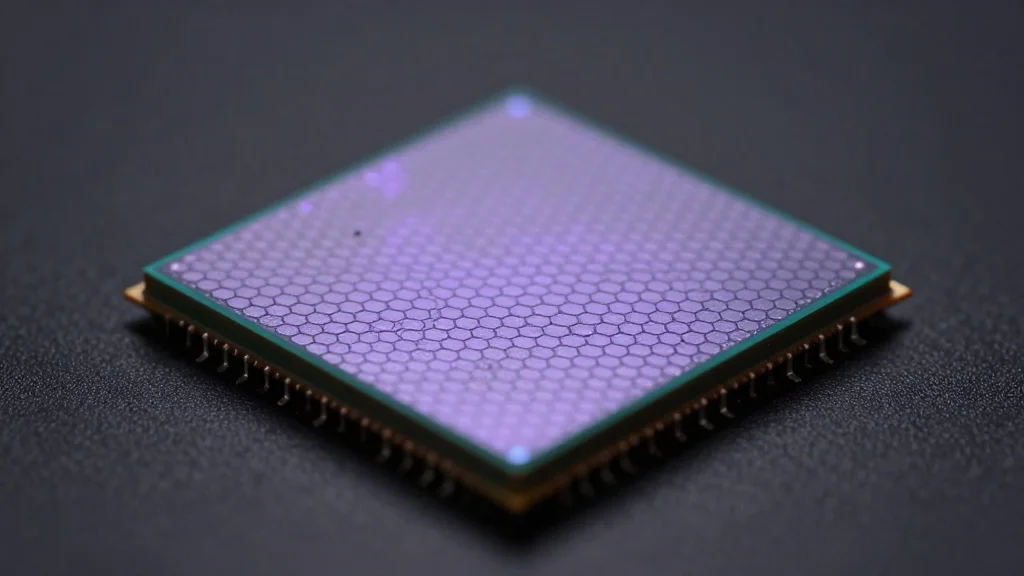
Tiny On-Chip Circuit Could Power Next-Generation Quantum and AI Technologies
Researchers at Monash University have unveiled a nanoscale on‑chip circuit that can generate, direct, and read light‑based information using the valley degree of freedom. The integrated device combines atom‑thin materials with metasurface nanostructures, achieving full signal control on a single...
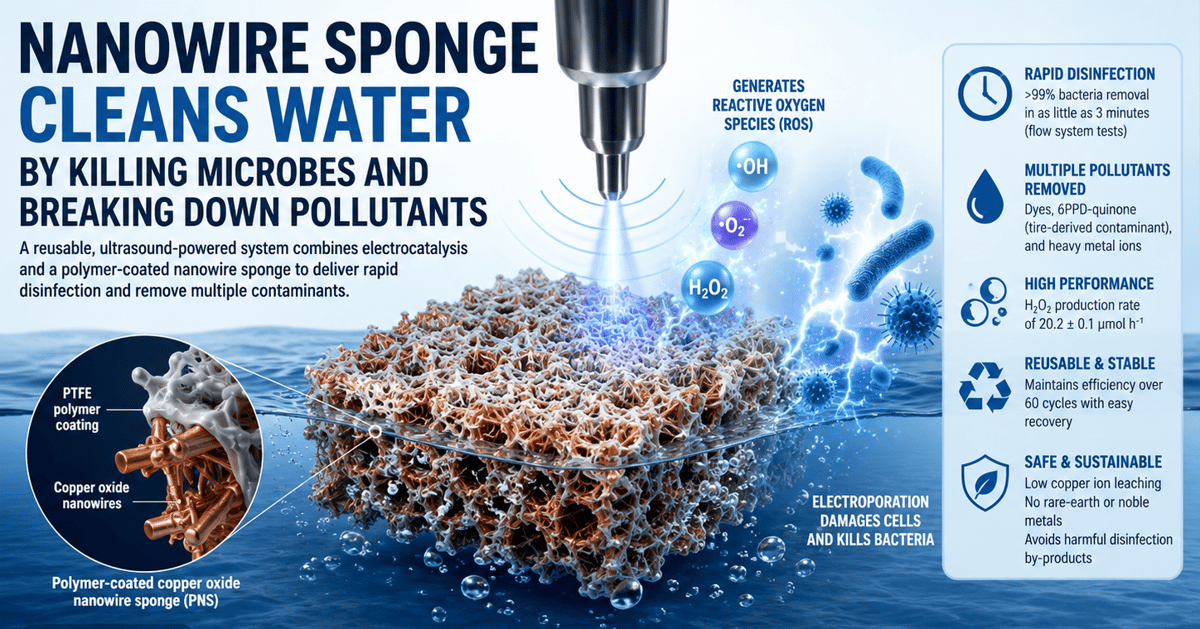
Nanowire Sponge Cleans Water by Killing Microbes and Breaking Down Pollutants
Researchers reported a polymer‑coated nanowire sponge that, when activated by ultrasound, triggers contact electrocatalysis to produce reactive oxygen species. The system achieved over 99% bacterial disinfection in just three minutes while simultaneously breaking down stubborn micropollutants such as 6PPD‑quinone and...
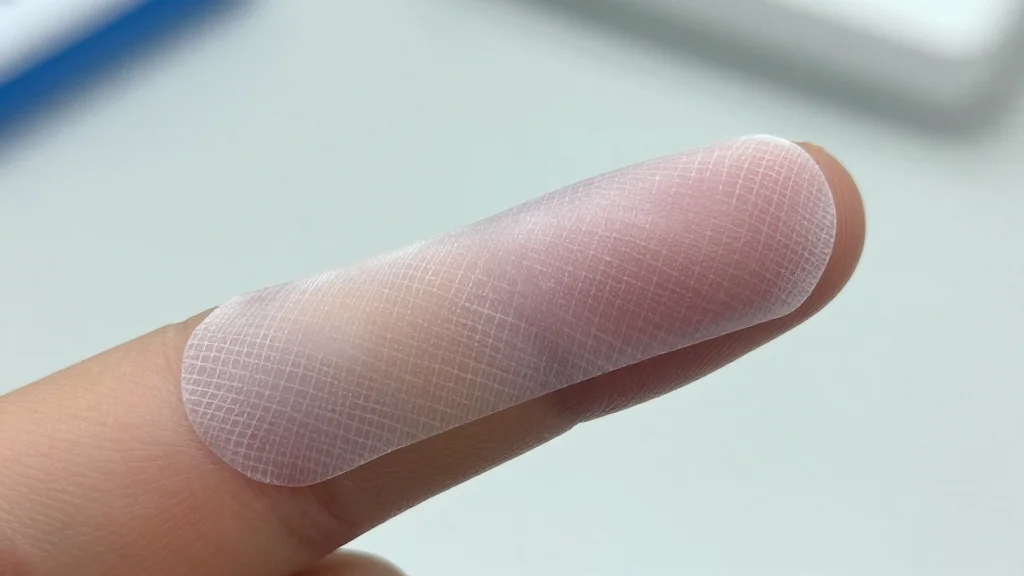
Layered Graphene/Hydrogel‐Based Multi‐Modal Sensors Enabled by Ion‐Electron Synergistic Conduction
Researchers have fabricated stretchable multi‑modal sensors by laminating chemical vapor deposition graphene onto hydrogel layers, exploiting ion‑electron synergistic conduction. The resulting composite delivers low skin interfacial impedance (≈28.7 kΩ at 100 Hz), 95 % self‑healing efficiency, and a wide sensing range up to...

Interfacial Plating Driving Convection‐Like Motion of a Sandwiched Nanocrystal
Researchers demonstrated that nanoscale copper, silver and aluminum crystals confined between two plates move in a closed‑loop fashion when exposed to extreme axial temperature gradients of about 108 K m⁻¹. Atoms migrate along the surface from the hot side to the cold...

Asymmetrical FeN4‐O‐FeO4 Dual‐Atom Sites in Fe─N─C for Robust pH‐Universal Oxygen Reduction Reaction Catalysis
Researchers have engineered an asymmetric FeN4‑O‑FeO4 dual‑atom configuration within Fe‑N‑C catalysts, breaking the traditional symmetric electronic distribution of Fe‑N4 sites. This structural tweak creates a dumbbell‑shaped active site that channels electron flow from FeN4 through a bridged oxygen to FeO4,...

When Order Gives Way to Chaos—The Turbulent Birth of Magnetic Nanovortices
Researchers at Max Born, Ferdinand Braun, Augsburg and Helmholtz‑Zentrum Berlin used picosecond X‑ray microscopy to film spin‑orbit‑torque‑driven skyrmion dynamics in a 100‑nm spot. They discovered that when current pulses exceed a threshold, the skyrmion briefly fragments into a turbulent vortex cloud before...
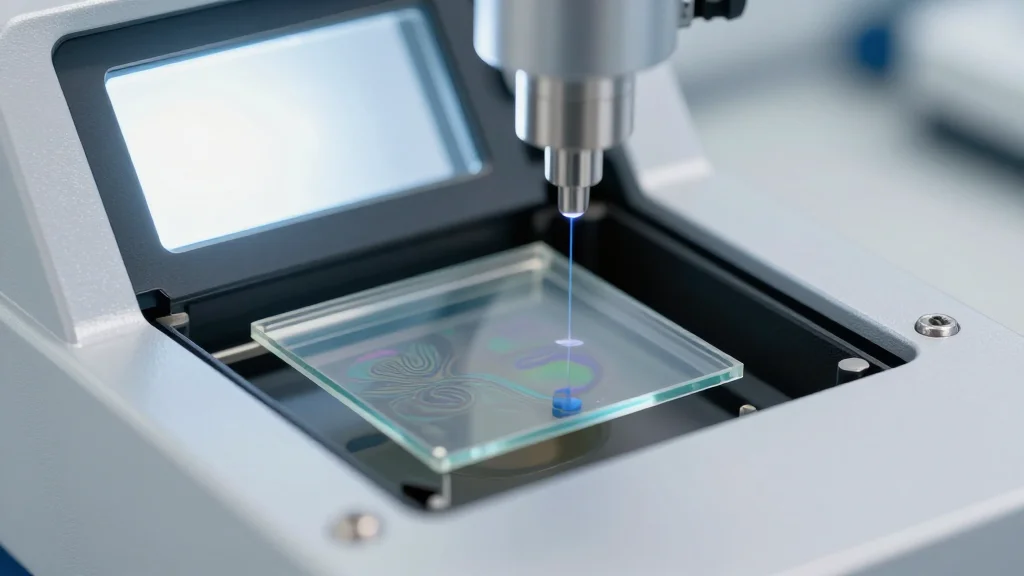
Imaging Ellipsometry Tracks MXene Thin-Film Quality During Fabrication without Damage
A German‑Israeli research team has shown that imaging ellipsometry can non‑destructively monitor MXene thin‑film quality throughout device fabrication. By pairing spectroscopic micro‑ellipsometry for rapid spot checks with imaging spectroscopic ellipsometry for full‑device maps, the method captures thickness, composition and conductivity...
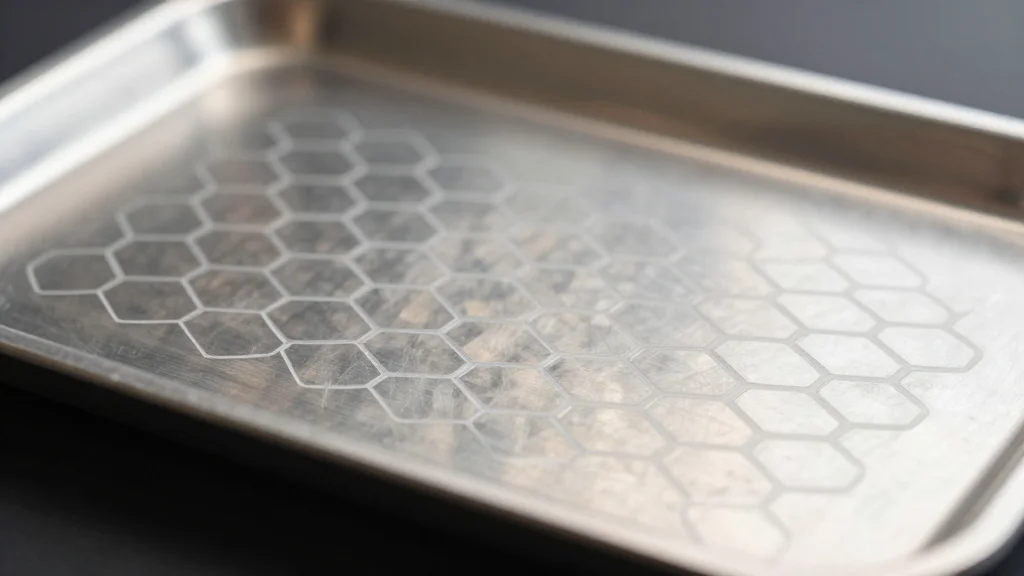
On‐Surface Synthesis of B3N3‐Substituted Two‐Dimensional Covalent Organic Frameworks with Distinct Pore Sizes and Kagome Band Structures
Researchers have achieved on‑surface synthesis of single‑layer, B3N3‑substituted two‑dimensional covalent organic frameworks (COFs) on Ag(111) and Au(111) substrates under ultra‑high vacuum. Multi‑method characterization—including STM, bond‑resolved AFM and photoemission spectroscopy—reveals a non‑planar, chiral lattice with kagome topology. By varying the spacer...
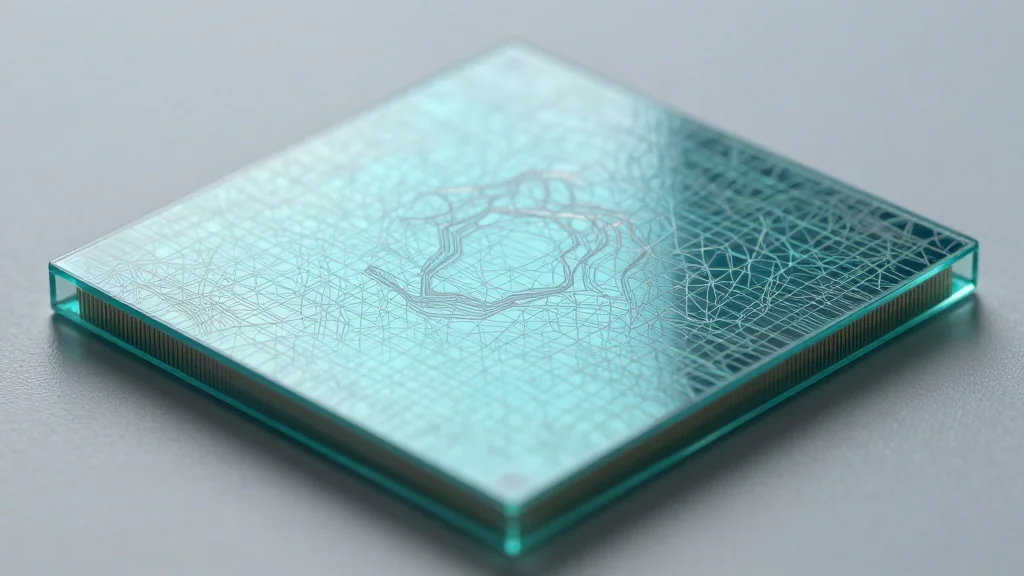
Stressed Crystal Creates Nanoscale Patterns on Chip Materials at Room Temperature
Rice University researchers introduced a room‑temperature method that uses an anisotropic alpha‑molybdenum trioxide crystal to imprint nanoscale ripple patterns onto hard dielectrics such as silica, aluminum oxide and silicon nitride. The electron‑beam‑induced stress buckles the crystal layer while softening the...

Monash University Develops New Hydrogen Fuel Cell Membrane for Water-Free Operation at 250°C
Scientists at Monash University have created an ultra‑thin graphene‑boron nitride membrane that lets hydrogen fuel cells run at temperatures up to 250 °C (482 °F) without any water. The membrane uses atomically thin nanosheets infused with nanoconfined phosphoric acid to maintain rapid...

Liquid Biopsy Differentiation of Pancreatic Cancer From Non‐Cancerous Pancreatic Disease Using Dielectrophoresis‐Recovered Nanoparticles Carrying Cell‐Free DNA and Protein Biomarkers (Small...
Researchers led by Stuart D. Ibsen have unveiled a microfluidic chip that uses dielectrophoretic forces to pull extracellular‑vesicle nanoparticles out of undiluted plasma. The captured vesicles carry cell‑free DNA and protein biomarkers that together distinguish pancreatic cancer from non‑cancerous pancreatic...
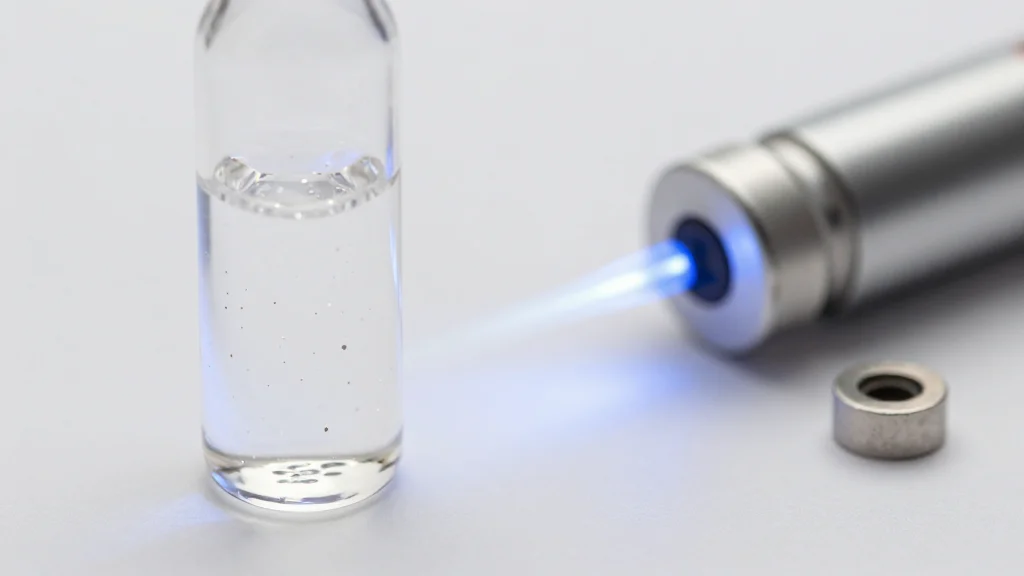
External Stimuli‐Activable Single‐Atom Nanozymes for Bioapplications
The review outlines how single‑atom nanozymes (SANs) can be engineered to respond to external stimuli such as light, ultrasound, and magnetic fields. It details electronic‑structure tuning and synthesis routes that amplify catalytic activity and enable on‑demand activation. Case studies demonstrate...

Dynamic Interactions of Micro‐ and Nanoparticles for Generating Random Patterns in Physically Unclonable Functions
The paper reviews solution‑processed micro‑ and nanoparticle assemblies as a practical source of random patterns for physically unclonable functions (PUFs). It details how coating methods and interparticle forces generate entropy, enabling both optical and electrical PUF designs. The authors highlight...

Oriented Nano‐Homogeneous Biomimetic Scaffolds Regulate Cell Alignment and Promote Endogenous Bone Regeneration
The researchers engineered a radially oriented, nano‑homogeneous scaffold using directional freeze‑casting, combining tunicate nanocellulose, carbon nanotubes, chitosan, and in‑situ hydroxyapatite. The scaffold delivers >98% photothermal antibacterial activity against Staphylococcus aureus and markedly improves cell adhesion, alignment, and proliferation compared with...

Complexity Isn't Subjective—The Right Amount Results in New Material Properties
Researchers at the University of Michigan, USC and UIUC have introduced a quantitative graph‑theory metric that measures the structural complexity of nanoparticle assemblies. The metric translates the balance of order and randomness into a single number, allowing engineers to design...

Particle-by-Particle Tracking Reveals Uneven Nanoparticle Drug Release
Researchers at the Institute of Materials Science of Barcelona used dSTORM microscopy to track drug release from individual PLGA nanoparticles over 30 days, uncovering highly heterogeneous release profiles. Some particles discharged their cargo within hours, others retained it until polymer...
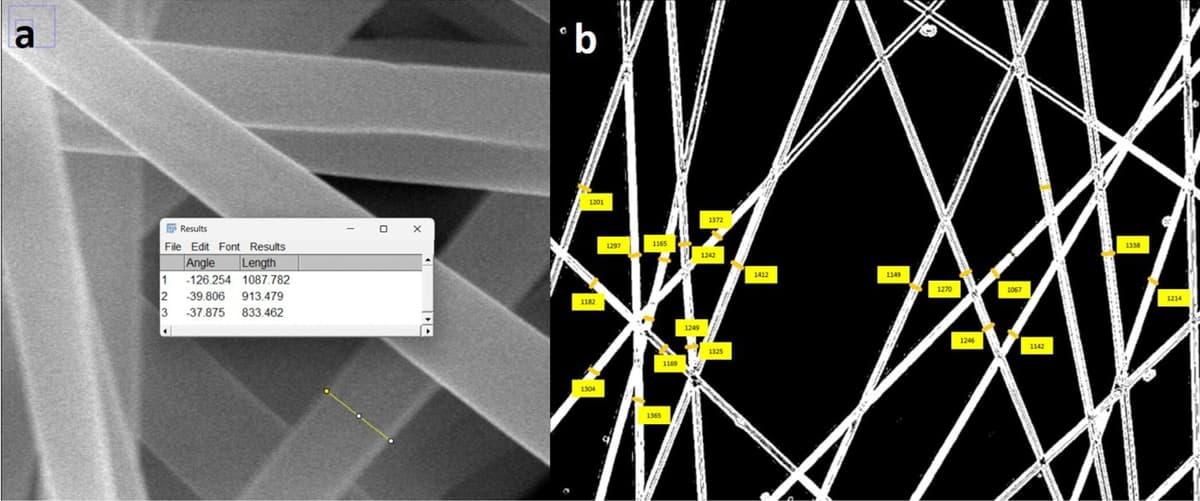
AI Helps Researchers Measure Nanofibers Beyond Diameter Alone
Researchers reviewing AI‑driven image analysis in ACS Omega show that deep‑learning models now enable rapid, multiparameter measurement of electrospun nanofibers, surpassing manual and traditional software methods. The study highlights how convolutional networks, Mask R‑CNN and generative AI can deliver pixel‑level segmentation, accurate...

Emerging Nanoreactors for Precision Disease Treatment: From Principles to Biomedical Applications
Nanoreactors—engineered nanostructures that emulate cellular compartments—are reshaping precision nanomedicine. By confining reactants, integrating synergistic catalytic sites, and responding to physiological cues, they dramatically accelerate therapeutic reactions and enable controlled drug release. Recent advances span organic, polymeric, and organic‑inorganic hybrids, showing...

Visualizing Metal Nanoparticle Electrochemical Dissolution Atom by Atom
Researchers employed identical‑location annular dark‑field scanning transmission electron microscopy (IL‑ADF‑STEM) to capture atom‑by‑atom snapshots of gold nanoparticle dissolution on carbon electrodes in chloride solution. By measuring integrated image intensities, they quantified atom loss and gain for the same particle over...

Linkage Engineering in Porous Aromatic Frameworks for Recyclable Iodine Adsorption and Applications in Iodine‐Mediated Organic Reactions
Researchers introduced a linkage‑engineering strategy for porous aromatic frameworks (PAFs) that precisely tunes iodine capture and release. The carbon‑carbon‑linked TPM‑TTA variant delivers the highest surface area (1,086 m² g⁻¹) and record iodine uptakes of 3.27 g g⁻¹ from vapor and 6.93 g g⁻¹ from KI/I₂ solution,...

Engineered Nanomaterials Optimize Delivery Barriers in Cancer Immunotherapy
A new review outlines how engineered nanomaterials can overcome delivery bottlenecks in cancer immunotherapy by matching material design to each step of the immunity cycle. It details active‑targeting ligands, intracellular escape mechanisms, and co‑delivery of antigens, adjuvants, mRNA or CRISPR...

Optimizing Arsenic Removal Using Surface-Modified Magnetic Nanoparticles via Taguchi Experimental Design
Researchers enhanced iron‑oxide magnetic nanoparticles with humic acid, raising their specific surface area from 48.2 to 92.2 m²/g and dramatically improving arsenic(V) adsorption. Using the Taguchi experimental design, optimal conditions—pH 3, 5 g/L adsorbent dosage, 180 minutes contact time, and 20 mg/L co‑existing ions—delivered a...

Plaid Technologies Shares Updates on Graphene-Enhanced Concrete Testing
Plaid Technologies announced that its graphene‑infused concrete composite (Plaid‑GCC) has achieved notable laboratory gains, including a 33% faster cure time, up to 50% carbon‑reduction potential, and 30‑50% material efficiency. CEO Guy Bourgeois linked the breakthrough to soaring infrastructure spending, labor...
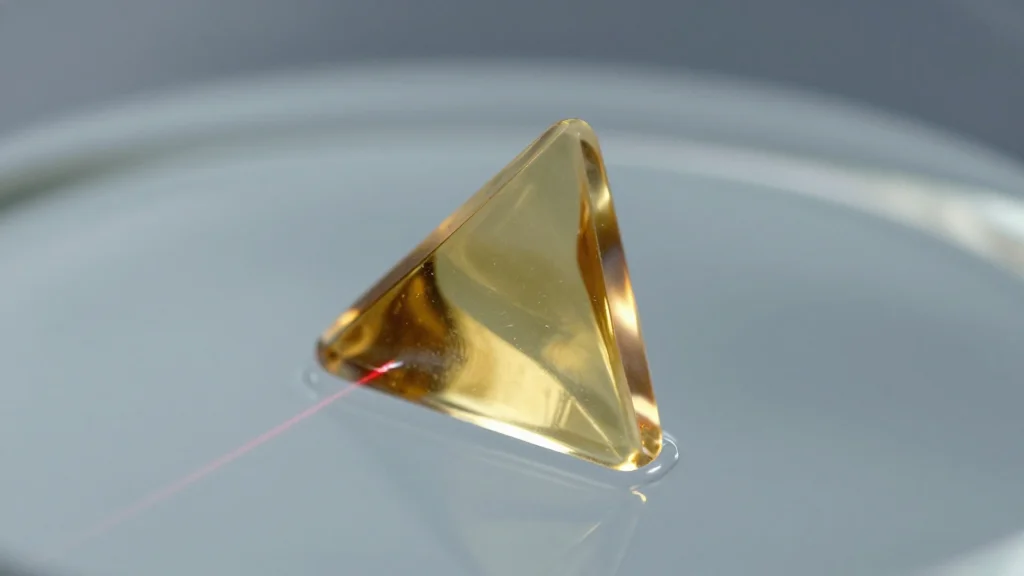
New Shell Helps Gold Nanoparticles Keep Shape Under Laser Heat Longer
Researchers from Córdoba, Strasbourg and the Sorbonne have developed a polymer‑based shell that preserves the distinctive bipyramidal shape of gold nanoparticles during laser‑induced heating. The protective layer outperforms traditional sodium citrate ligands, keeping the particles stable longer and maintaining their...